Author: Jake Koch-Gallup
Translation: Plain Blockchain
If you haven't read Carlos's newsletter from this Tuesday, go read it first. Essentially, he argues that Ethereum is losing its last moat—liquidity. We debated this on the 0xResearch podcast (you can listen here), and I strongly disagree with his view (can you believe it? Blockworks analysts actually disagree).
His first example: Tokenized US stocks on Ethereum have almost no trading volume, with only $25 million in the past 30 days, accounting for about 3% of the total supply. But Ethereum holds the second-largest market share in Tokenized US stock supply. Carlos anticipated this, but I still believe that the original purpose of Tokenized US stocks was to expand global access to the US market, not for lending and DeFi. His response on the podcast was: Tokenized US stocks sitting idly on your blockchain do nothing because they don't generate revenue, and trading volume generates revenue.
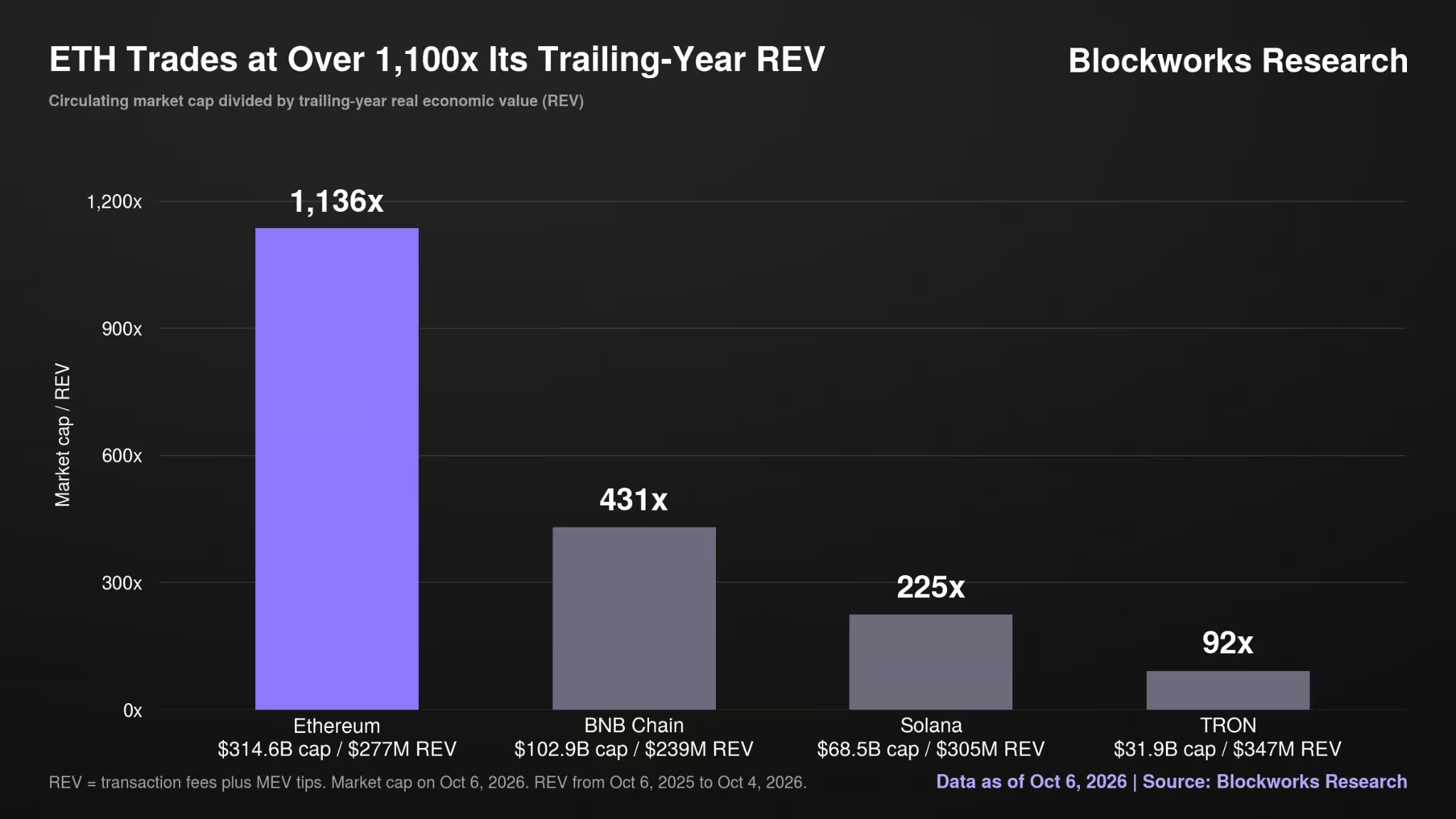
Dear reader, this is where you and I might truly disagree. I don't think Ethereum necessarily needs to generate revenue. Like many other L1s, it already possesses a monetary premium. Real economic value (REV) alone cannot explain the market cap of most L1s—ETH's current market cap is over 1,100 times its REV from the past year. Since the market clearly prices Ethereum partly as a reserve and collateral asset (ETFs, treasuries, DeFi collateral), ignoring this is akin to asserting that ETH and most L1s are perpetually overvalued by 99%, which is nonsense.
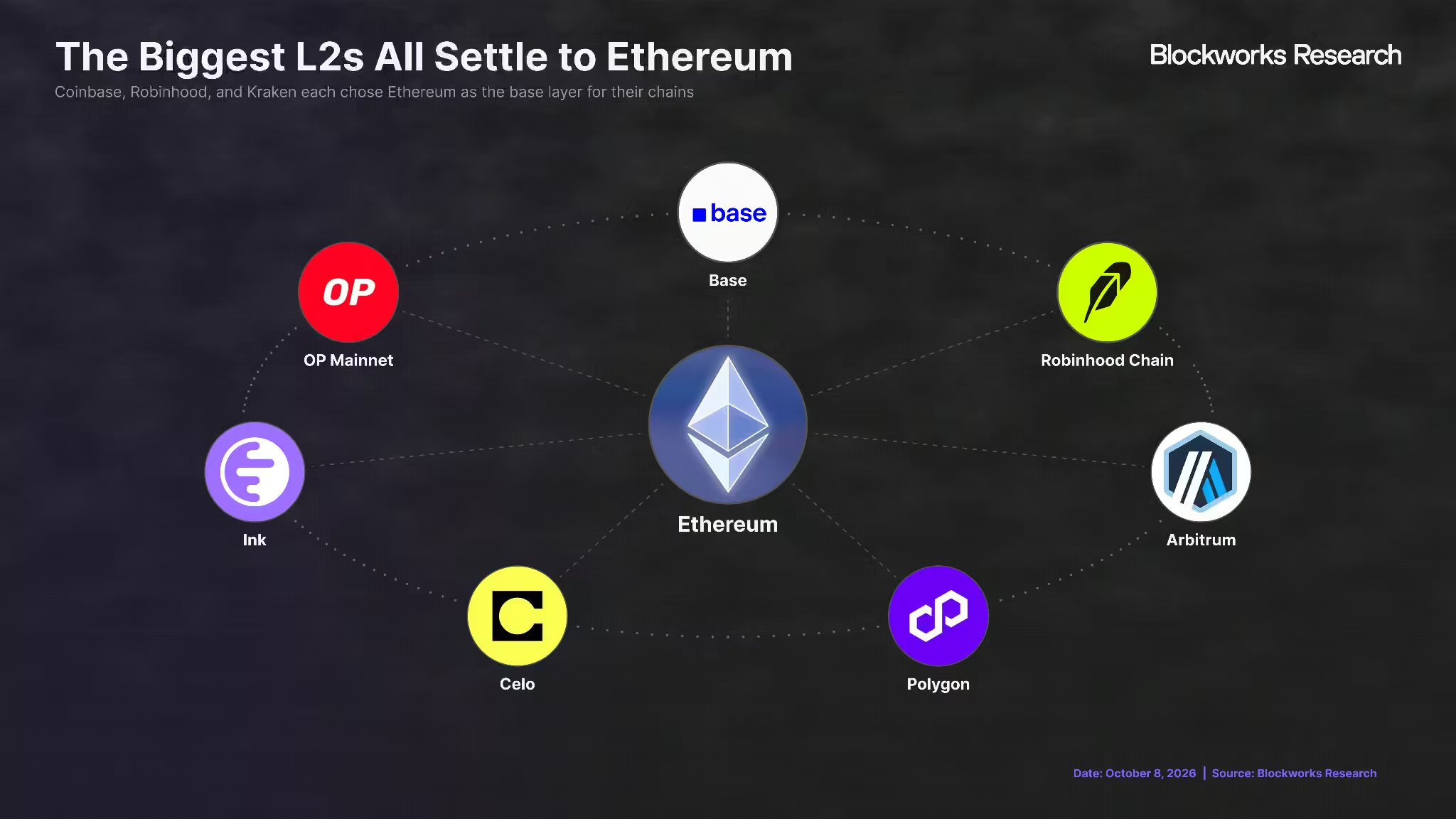
His second point: Flagship applications are shifting their growth focus elsewhere. He cites that in the past 30 days, Robinhood Chain accounted for 43% of Uniswap's trading volume, while Ethereum only accounted for 32%. He also mentioned Ethena's growth on Base. Both points are valid, but Robinhood Chain and Base are essentially Ethereum L2s. If we agree that REV is less important for L1s, then the growth of Ethereum L2s is a victory for Ethereum itself. To be fair, Ethena has also expanded to non-L2 chains like Solana, TRON, and Avalanche. Ethereum's share in USDe has dropped from 88% to 56%, but it still dominates. Ethena is increasing distribution channels, not leaving Ethereum.
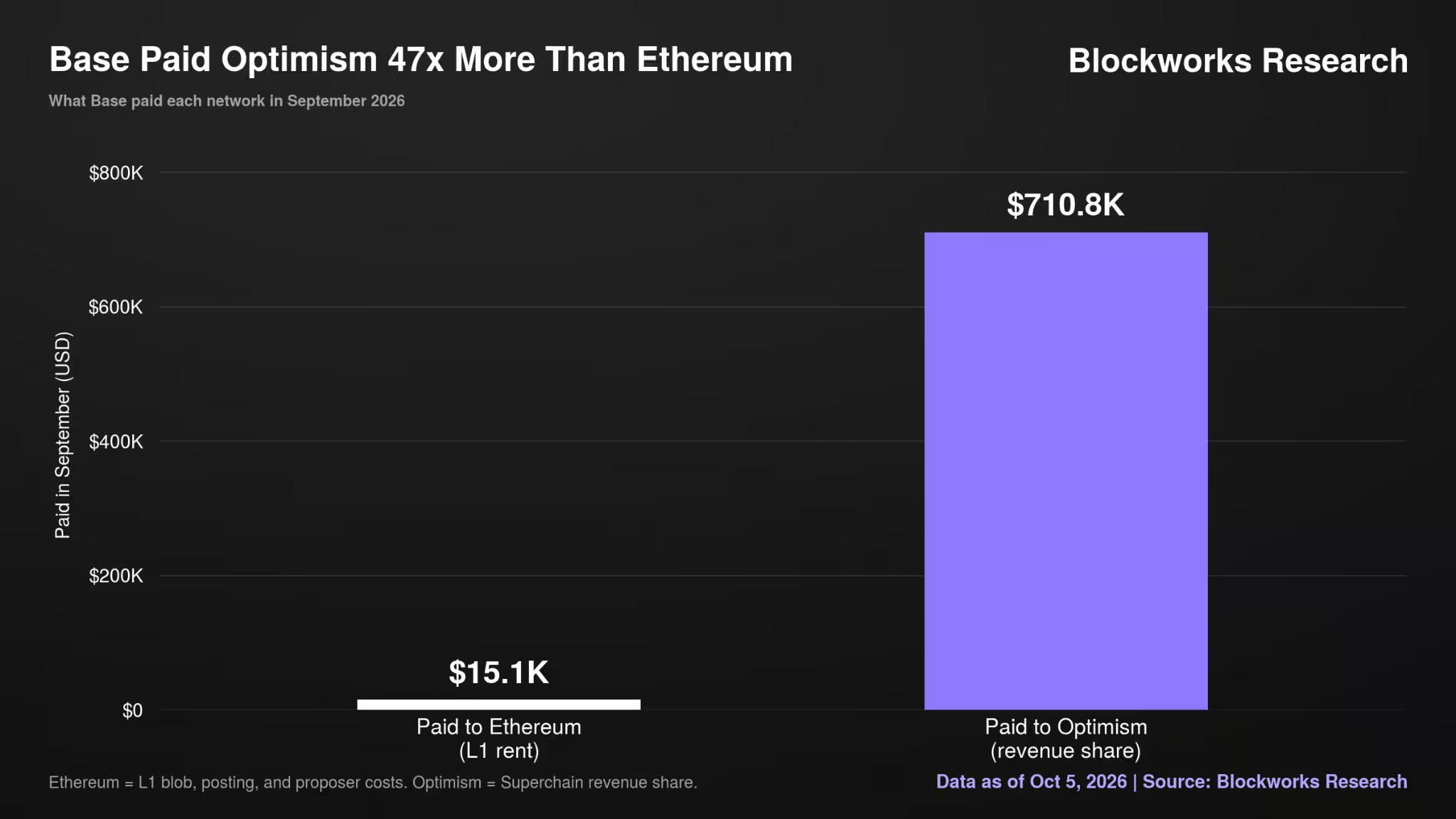
However, if you do believe REV is crucial, consider this: in September of this year, Base paid Ethereum about $15,000 in "rent" to publish data; in the same month, it paid the Optimism Collective a whopping $711,000. Now imagine a future, 3 to 5 years from now, where Ethereum decides: "You know what? We want that share that Optimism is getting," and raises the minimum fee for publishing data. Base might not be too happy, but if L2s have grown 10x by then, wow, that's a huge sum. Therefore, market share is crucial, even if it currently brings little REV.
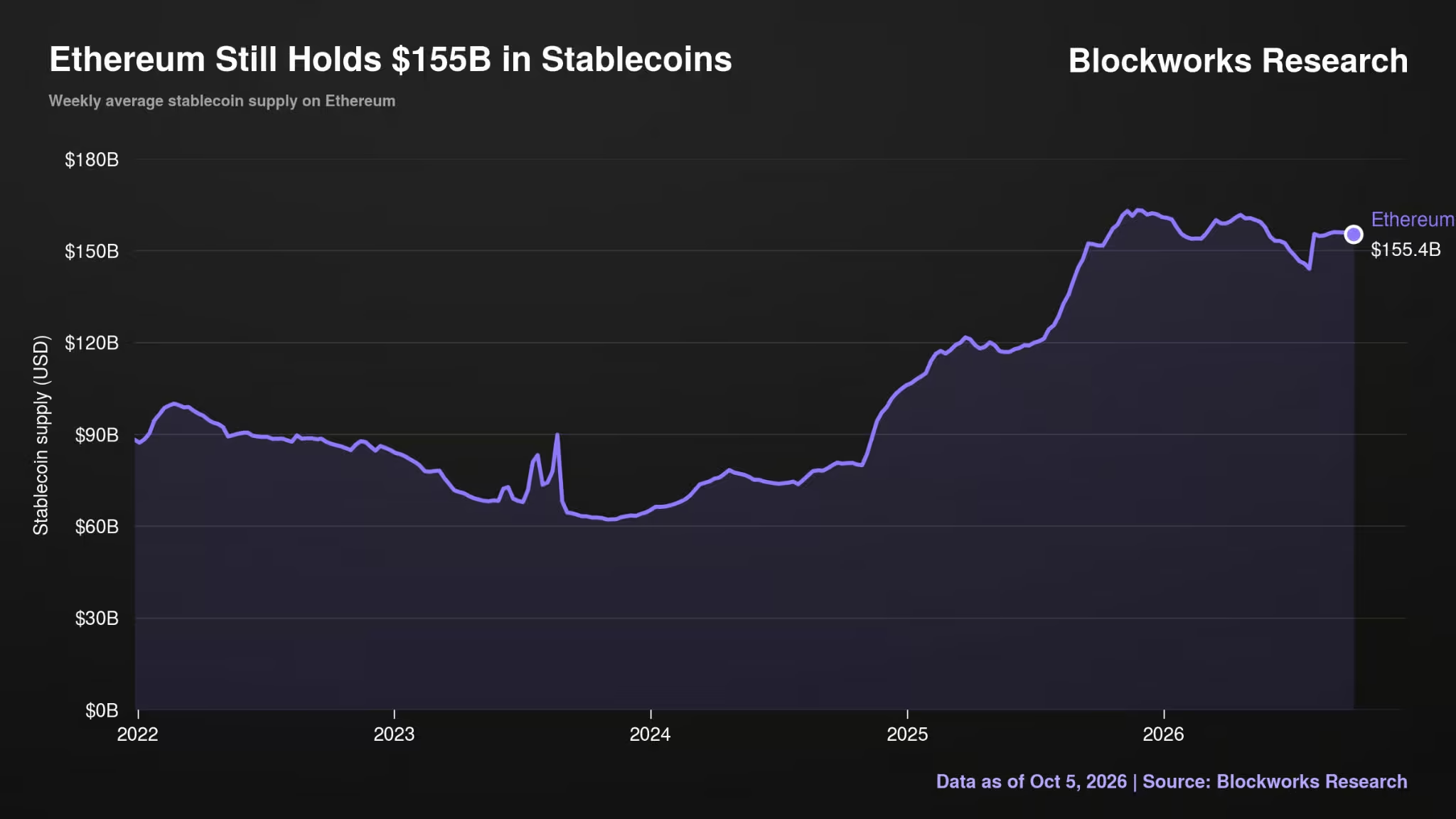
His final argument: Ethereum's dominance in stablecoins is slowly declining, which is true. But the stablecoin market is not a winner-takes-all market. Even if Ethereum's dominance drops from 51% to 30% over the next 10 years, the overall stablecoin market continues to expand. If the total stablecoin market cap reaches $3 trillion in 10 years, Ethereum will still hold nearly $1 trillion in stablecoins, almost 6 times its current $155 billion.
If you want to hear Carlos's response to the counterarguments I've presented here, be sure to listen to the podcast. Now that we've cleared that up, let's look at why Ethereum still has value and will continue to hold its value.
-
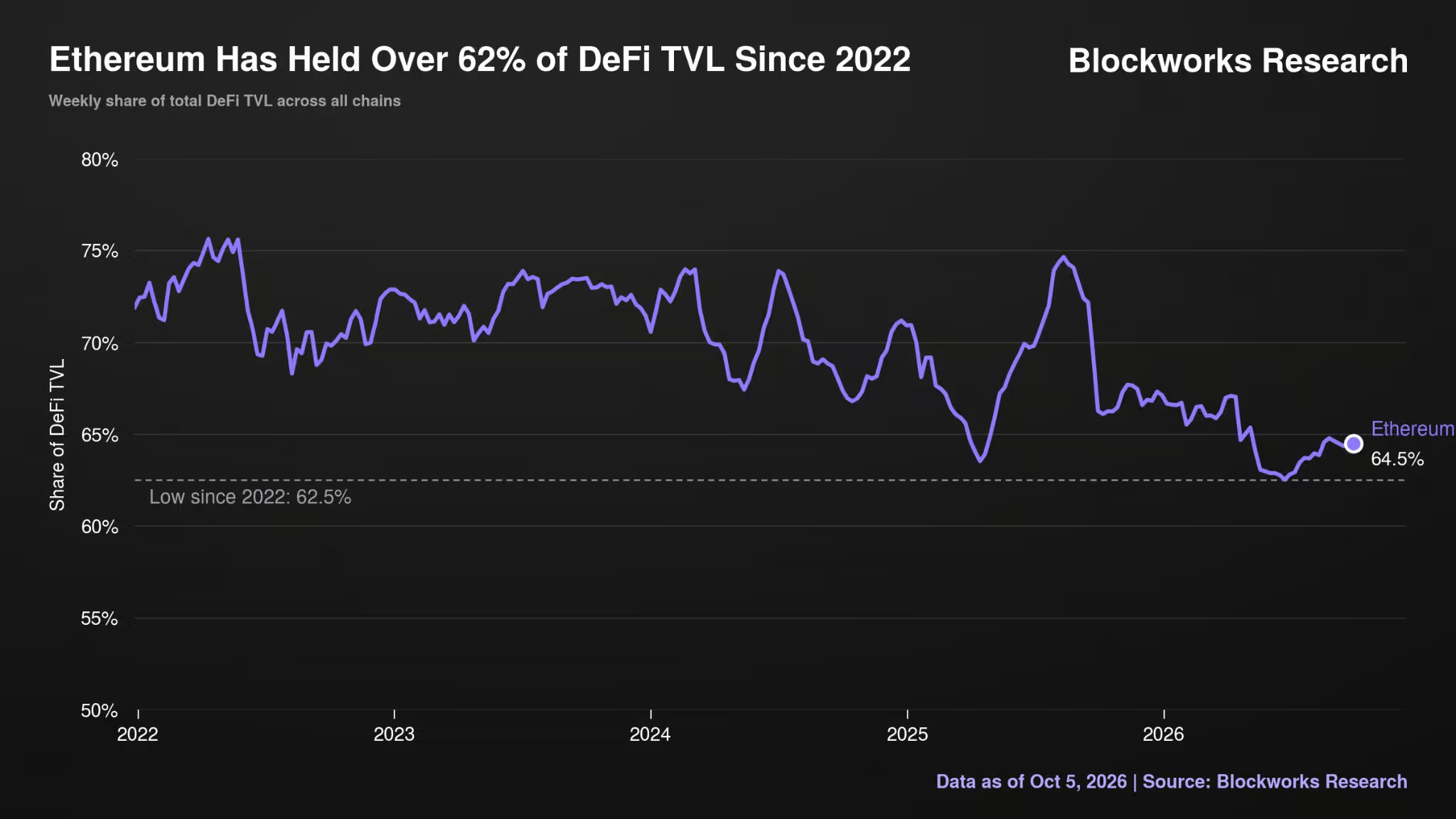
Ethereum has by far the largest DeFi TVL, accounting for 65% of the total. This share has never dropped below 62% in any week since 2022.
-
After Bitcoin, Ethereum still has the deepest liquidity, the most secure network, and the largest institutional participation.
-
Ethereum has the largest on-chain RWA AUM (though its market share has declined from 99% in 2022 to 45% today).
-
Institutions hold ETH as an asset, not for its revenue. Spot ETFs and asset management firms hold approximately 13% of the total ETH supply.
-
Robinhood and Coinbase could have issued their own L1s, but they both chose to settle on Ethereum.
-
The largest tokenized funds (like BlackRock's BUIDL) were all first issued on Ethereum mainnet.
-
Ethereum has been running stably for over 10 years without a single network-wide outage.
-
Ethereum and its L2s have the largest developer community in the crypto industry, with EVM as the default toolkit, even imitated by competing L1s.
-
36% of the ETH supply is staked and just hit a new all-time high, providing native yield for holders, and institutions can participate via staking ETFs.
-
Ethereum is the cryptographic world computer.
At the end of the day, I am a fundamentals investor. Crypto projects (usually) should have revenue, and that value should be returned to token holders. Therefore, thinking that ETH can endure solely on monetary premium and meager REV might be pure bagholder cope, but perhaps—just perhaps—Ethereum should be revalued as the "world computer" it is.
— Jake
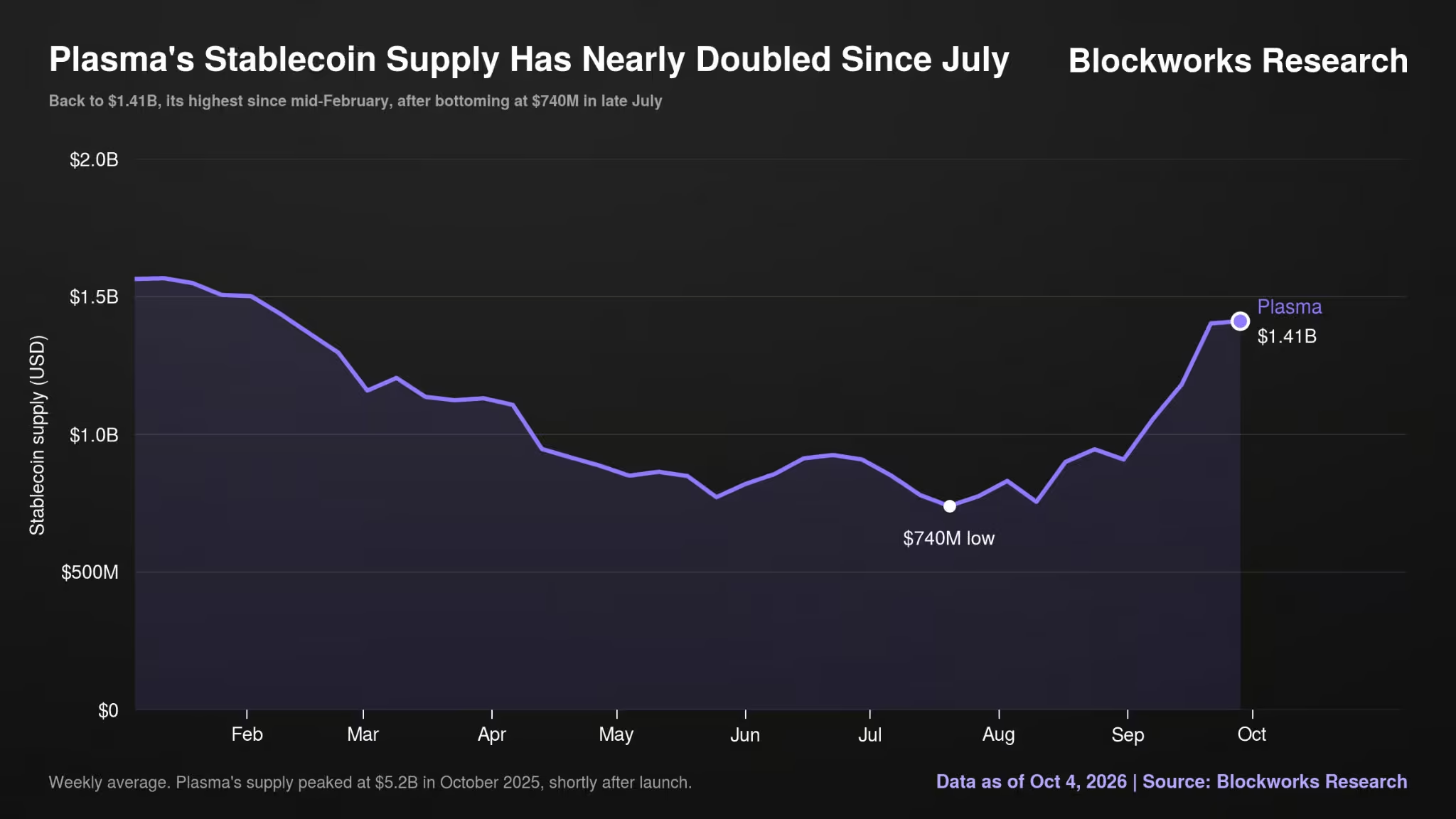
After falling for a full year, Plasma's stablecoin supply has nearly doubled since July to $1.41 billion, reaching its highest level since mid-February. Although still a significant gap from its $5.2 billion peak at launch, the competition among stablecoin public chains is far from over.