Canadian Prime Minister's Davos Speech: The Old Order Is Dead, Middle Powers Must Stop 'Living a Lie'

marsbitPublié le 2026-01-21Dernière mise à jour le 2026-01-21

Résumé

Canadian Prime Minister delivered a forceful speech at the World Economic Forum in Davos, declaring that the old U.S.-led, rules-based international order is over. He argued that middle powers like Canada must abandon the illusion that the old rules still function, as powerful nations now weaponize economic interdependence. Instead of living in what he termed a "lie," countries should pursue strategic autonomy through collective action and domestic strength-building. He emphasized that Canada is adopting a "value-based realism" approach—upholding principles while pragmatically engaging globally. This includes diversifying international partnerships, boosting defense spending, cutting taxes, and removing trade barriers. The goal is to form flexible, issue-based coalitions with like-minded nations to reduce vulnerability and increase influence. The Prime Minister concluded that middle powers must cooperate to avoid being marginalized in an era of great power competition, asserting that nostalgia is not a strategy. Canada invites other nations to join this path of honest engagement and shared resilience.

Source: Phoenix News

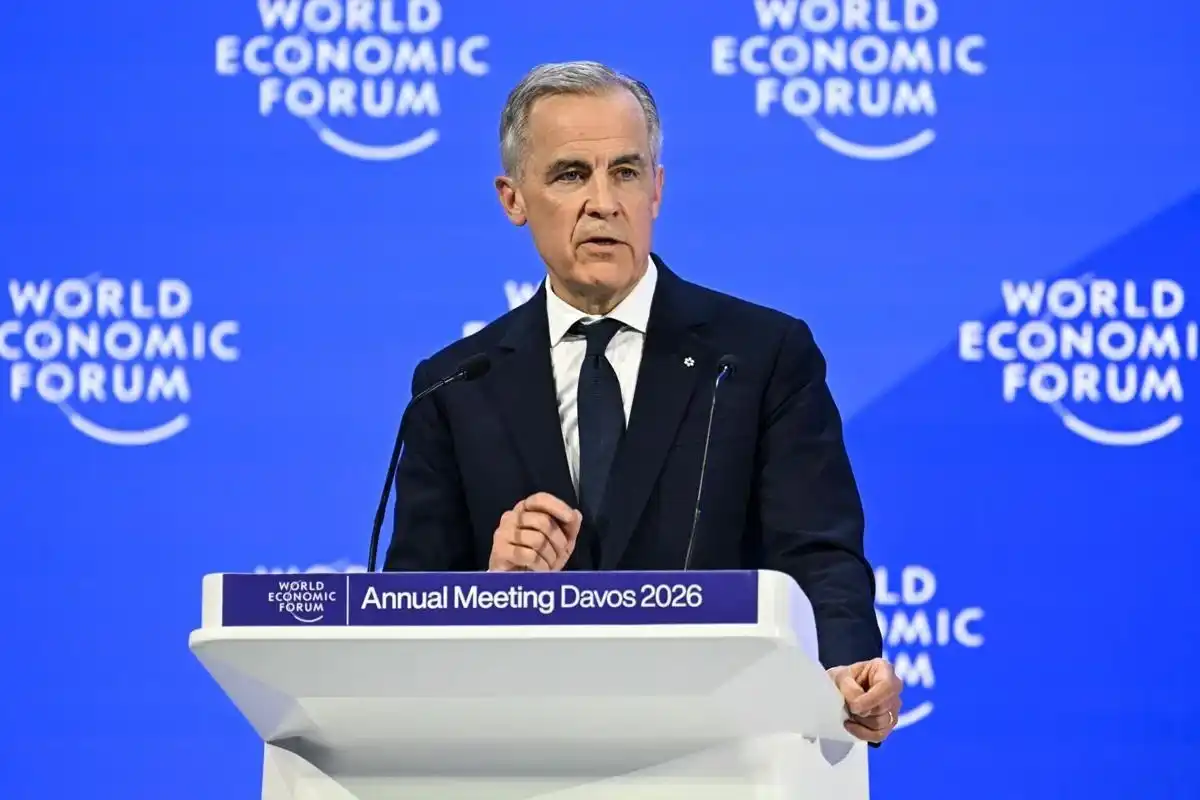
Canadian Prime Minister Mark Carney delivered a strongly-worded speech at the World Economic Forum in Davos, Switzerland, on Tuesday, making the significant assertion: "The old order will not return." He stated that the long-standing U.S.-led, rules-based international order has ended, and middle powers like Canada must shift their strategies to avoid becoming victims of further coercion by powerful forces.

Carney did not directly name U.S. President Trump but referred to "American hegemony," noting that major powers are using economic integration as a "weapon." He called on middle powers to stop "pretending the rules still work" and to strive for genuine strategic autonomy through collective action.
Below is a compilation by Phoenix News "World Affairs" (abridged):

We seem to be reminded daily: we are living in an era of great power competition—the so-called "rules-based order" is fading, the strong can do as they please, and the weak must endure the consequences they have to bear.

Thucydides' adage is presented as an inevitable reality, as if it were the re-emergence of the natural logic of international relations. Faced with this logic, countries often tend to go with the flow, accommodate each other, avoid trouble, and hope that compliance will buy security.

But that is not the case. So, what are our choices?

In 1978, Czech politician Václav Havel wrote an essay about a greengrocer.

Every morning, the shop owner would place a sign in his window with a symbolic slogan. He did not believe in the message. But he still displayed it to avoid trouble, show compliance, and keep the peace. And because every shopkeeper on every street did the same, the system persisted—not just through force, but through ordinary people participating in rituals they privately knew were false.

Havel called this state "living a lie." The system's strength came not from its truthfulness, but from everyone's willingness to pretend it was true. And its fragility lay precisely in this: if even one person stopped performing, if that greengrocer took the sign out of the window, the illusion would begin to crumble.

Friends, it is time for businesses and countries to take these signs down.

For decades, countries like Canada have thrived under what we call the "rules-based international order." We joined these institutions, praised their principles, and benefited from their predictability. Because of this, we were able to pursue value-based foreign policies under their protection.

We also knew that this story of an international rules-based order was, to some extent, a fiction: the most powerful nations would exempt themselves when convenient, trade rules were enforced asymmetrically, and the application of international law depended on the identity of the accused or the victim.

This fiction was once useful. Particularly, American hegemony helped provide public goods—open sea lanes, a stable financial system, collective security, and an institutional framework for dispute resolution.

So, we put the sign in the window. We participated in these rituals and largely avoided pointing out the gap between rhetoric and reality.

But that bargain is no longer working.

Let me be blunt: we are in a rupture, not a transition.

Over the past two decades, successive crises in finance, public health, energy, and geopolitics have exposed the risks of highly global integration. More recently, major powers have begun to turn economic integration into a weapon, using tariffs as leverage, financial infrastructure as a tool of coercion, and supply chains as vulnerabilities to be exploited.

When integration itself becomes the source of your vulnerability, you can no longer live in the lie of "mutual benefit and win-win."

The multilateral institutions on which middle powers rely—the WTO, the UN, the climate conference mechanism, and the entire institutional architecture of collective problem-solving—are under threat. As a result, many countries have reached the same conclusion: they must develop greater strategic autonomy in energy, food, critical minerals, finance, and supply chains. This impulse is understandable.

A country that cannot feed itself, power itself, or defend itself has very limited choices. When the rules no longer protect you, you must protect yourself.

But we must be clear-eyed about where this path leads. A world of fortresses will be poorer, more fragile, and less sustainable.

There is also the fact: if major powers abandon even the pretense of rules and values, pursuing only unconstrained power and interest, then the gains from transactional diplomacy will become increasingly difficult to replicate.

Hegemonic powers cannot constantly monetize relationships. Allies will hedge against uncertainty through diversification, buying "insurance," and increasing options to rebuild sovereignty—a sovereignty once built on rules will increasingly depend on the ability to withstand pressure.

Everyone here understands that this is classic risk management. Risk management has a cost, but the cost of strategic autonomy and sovereignty can be shared. Collective investment in resilience is much cheaper than each building their own fortress. Common standards can reduce fragmentation, and complementarity creates positive-sum effects.

For middle powers like Canada, the question is not whether to adapt to this new reality—we must adapt.

The question is, will we merely build higher walls, or can we be more ambitious?

Canada was among the first to hear this alarm, which prompted us to fundamentally adjust our strategic posture. Canadians understand that our old comfortable assumptions—that geography and alliance membership automatically brought prosperity and security—are no longer valid. Our new path is based on what Finnish President Stubb calls "value-based realism."

In other words, we adhere to principles while acting pragmatically. In principle, we firmly defend fundamental values, sovereignty, territorial integrity, adherence to the prohibition of the use of force unless in accordance with the UN Charter, and respect for human rights.

Pragmatically, we also recognize that progress is often gradual, interests diverge, and not all partners share all our values.

Therefore, we engage with the world broadly and strategically, with clear eyes. We proactively face the world as it is, rather than waiting for the ideal world to arrive.

We are calibrating relationships so their depth reflects our values, while maximizing our influence in today's fluid and risky world through broad engagement.

We no longer rely solely on the strength of our values, but also on the value of strength itself.

We are building that strength at home. Since this government took office, we have cut personal income taxes, capital gains taxes, and taxes on business investment; eliminated all federal-level interprovincial trade barriers; and accelerated investments totaling one trillion dollars in energy, AI, critical minerals, new trade corridors, and other areas. We plan to double defense spending by the end of this decade and are advancing this process with the goal of strengthening domestic industry. At the same time, we are rapidly advancing external diversification.

We have reached a comprehensive strategic partnership with the EU, including joining the European defense procurement mechanism SAFE, and have signed 12 trade and security agreements across four continents in six months.

In the past few days, we have reached new strategic partnerships with China and Qatar, and are negotiating free trade agreements with India, ASEAN, Thailand, the Philippines, and Mercosur.

We are also doing something else: to address global issues, we are promoting "variable geometry," meaning forming different coalitions on different issues based on shared values and interests. On Ukraine, we are one of the core members of the "coalition of the willing" and one of the largest per capita contributors to defense and security.

On Arctic sovereignty, we stand firmly with Greenland and Denmark, fully supporting their unique right to determine Greenland's future.

Our commitment to NATO Article 5 is unwavering, so we are working with NATO allies, including the "Nordic-Baltic Eight," to enhance security on the alliance's northern and western flanks, including Canada's unprecedented investments in over-the-horizon radar, submarines, aircraft, and ground forces—ice-capable troops.

Canada firmly opposes tariffs related to the Greenland issue and calls for targeted dialogue to achieve our shared security and prosperity goals in the Arctic.

In multilateral trade, we are promoting bridges between the CPTPP and the EU to create a new trade bloc covering 1.5 billion people, with critical minerals at its core.

We are building a "buyers' club" based on the G7 to help the world break free from dependence on highly concentrated supplies. In AI, we are working with like-minded democracies to ensure we are not ultimately forced to choose between a hegemonic power and hyper-scale platforms.

This is not naive multilateralism, nor mere reliance on existing institutions, but building viable coalitions with partners who share enough common ground on specific issues. In some cases, this will include the vast majority of the world's countries. The goal is to build a dense network of connections in trade, investment, culture, and other areas to address future challenges and opportunities.

Our view is that middle powers must act together because if we are not at the table, we will be on the menu.

Let me also say that major powers still have the ability to go it alone for now. They have market size, military capability, and leverage, which middle powers lack. But when we negotiate bilaterally only with hegemonic powers, we negotiate from a position of weakness, accepting what we are given, and competing with each other to see who is more compliant.

This is not sovereignty; it is performing sovereignty while accepting subordination.

In a world of great power competition, countries caught in the middle have a choice: compete with each other for favor, or unite to carve out a third path with real influence. We should not let the rise of hard power blind us to the strength of legitimacy, integrity, and rules—which remain powerful if we choose to wield them together.

This brings me back to Havel. What does "living in truth" mean for middle powers?

First, it means facing reality. Stop pretending the "rules-based international order" still works as advertised, and instead be honest: this is a system of intensifying great power competition where the strongest use economic integration to coerce and pursue self-interest.

It means acting consistently, applying the same standards to allies and adversaries. When middle powers criticize economic coercion from one direction but remain silent about another, we are still hanging the sign in the window.

It means building what we claim to believe in, not waiting for the old order to return. It means creating institutions and agreements that actually function as described, reducing the leverage that makes coercion possible.

It means building a strong domestic economy—this should be the top priority of every government.

And international diversification is not just economic prudence; it is the material basis for an honest foreign policy. A country can only take principled stands if it reduces its vulnerability to retaliation.

So, Canada. Canada has what the world needs. We are an energy superpower, with vast reserves of critical minerals, one of the world's most highly educated populations, and our pension funds are among the largest and most sophisticated global investors. In other words, we have capital and talent. We also have a government with significant fiscal capacity and the ability to act decisively, and values that many countries aspire to.

Canada is a well-functioning pluralistic society. Our public space is noisy, diverse, and free. Canadians remain committed to sustainable development. We are a stable and reliable partner in an extremely unstable world, a partner that values and cultivates relationships for the long term.

And one more thing: we understand what is happening and are determined to act accordingly. We understand that this rupture requires not just adaptation, but honesty about the real world.

We are taking the sign out of the window.

We know the old order will not return, and we should not mourn it. Nostalgia is not a strategy. But we believe that from this rupture, a larger, better, stronger, and more just order can be built. This is the task of middle powers—those who stand to lose the most in a fortress world and gain the most from genuine cooperation.

The strong have their power. But we also have our own power: the ability to stop pretending, face reality, build strength at home, and act together collectively.

This is the path Canada has chosen. We walk it openly and confidently, and we welcome any country willing to join us.

Thank you very much.

Questions liées

QWhat is the main argument made by Canadian Prime Minister Mark Carney in his Davos speech?

ACarney argues that the old US-led, rules-based international order is over, and middle powers like Canada must stop 'living in the lie' that the old rules still function. They need to pursue strategic autonomy through collective action to avoid coercion by powerful nations.

QAccording to the speech, how have powerful nations been using economic integration?

APowerful nations have weaponized economic integration by using tariffs as leverage, financial infrastructure as tools of coercion, and supply chains as vulnerabilities to be exploited for their own interests.

QWhat does Carney suggest is the alternative to building higher walls (fortress world) for middle powers?

ACarney suggests that instead of building isolated fortresses, middle powers should collectively invest in resilience, share the costs of strategic autonomy, establish common standards to reduce fragmentation, and form flexible coalitions based on shared values and interests across different issues.

QWhat specific actions has Canada taken to adapt to the new geopolitical reality as mentioned in the speech?

ACanada has cut taxes, removed interprovincial trade barriers, pursued massive investments in energy and AI, plans to double defense spending, signed numerous trade and security agreements globally (e.g., with EU, China, Qatar), and is negotiating deals with India, ASEAN, and others. It is also building issue-based coalitions.

QWhat does 'living within the truth' mean for middle powers according to Carney's reference to Havel?

A'Living within the truth' means facing reality by no longer pretending the rules-based order works as advertised, applying consistent standards to allies and adversaries, building institutions that function as promised, strengthening domestic economies, and pursuing international diversification to reduce vulnerability to coercion.

Lectures associées

Trading

Spot
Futures

Articles tendance

Qu'est ce que $S$

Comprendre SPERO : Un aperçu complet Introduction à SPERO Alors que le paysage de l'innovation continue d'évoluer, l'émergence des technologies web3 et des projets de cryptomonnaie joue un rôle central dans la façon dont se dessine l'avenir numérique. Un projet qui a attiré l'attention dans ce domaine dynamique est SPERO, désigné comme SPERO,$$s$. Cet article vise à rassembler et à présenter des informations détaillées sur SPERO, afin d'aider les passionnés et les investisseurs à comprendre ses fondations, ses objectifs et ses innovations dans les domaines du web3 et de la crypto. Qu'est-ce que SPERO,$$s$ ? SPERO,$$s$ est un projet unique dans l'espace crypto qui cherche à tirer parti des principes de décentralisation et de la technologie blockchain pour créer un écosystème qui favorise l'engagement, l'utilité et l'inclusion financière. Le projet est conçu pour faciliter les interactions entre pairs de nouvelles manières, offrant aux utilisateurs des solutions et des services financiers innovants. Au cœur de SPERO,$$s$, l'objectif est d'autonomiser les individus en fournissant des outils et des plateformes qui améliorent l'expérience utilisateur dans l'espace des cryptomonnaies. Cela inclut la possibilité de méthodes de transaction plus flexibles, la promotion d'initiatives dirigées par la communauté et la création de voies pour des opportunités financières via des applications décentralisées (dApps). La vision sous-jacente de SPERO,$$s$ tourne autour de l'inclusivité, visant à combler les lacunes au sein de la finance traditionnelle tout en exploitant les avantages de la technologie blockchain. Qui est le créateur de SPERO,$$s$ ? L'identité du créateur de SPERO,$$s$ reste quelque peu obscure, car il existe peu de ressources publiques fournissant des informations détaillées sur son ou ses fondateurs. Ce manque de transparence peut découler de l'engagement du projet envers la décentralisation—une éthique que de nombreux projets web3 partagent, privilégiant les contributions collectives plutôt que la reconnaissance individuelle. En centrant les discussions autour de la communauté et de ses objectifs collectifs, SPERO,$$s$ incarne l'essence de l'autonomisation sans désigner des individus spécifiques. Ainsi, comprendre l'éthique et la mission de SPERO reste plus important que d'identifier un créateur unique. Qui sont les investisseurs de SPERO,$$s$ ? SPERO,$$s$ est soutenu par une diversité d'investisseurs allant des capital-risqueurs aux investisseurs providentiels dédiés à favoriser l'innovation dans le secteur crypto. L'objectif de ces investisseurs s'aligne généralement avec la mission de SPERO—priorisant les projets qui promettent des avancées technologiques sociétales, l'inclusivité financière et la gouvernance décentralisée. Ces fondations d'investisseurs s'intéressent généralement à des projets qui non seulement offrent des produits innovants, mais qui contribuent également positivement à la communauté blockchain et à ses écosystèmes. Le soutien de ces investisseurs renforce SPERO,$$s$ en tant que concurrent notable dans le domaine en rapide évolution des projets crypto. Comment fonctionne SPERO,$$s$ ? SPERO,$$s$ utilise un cadre multifacette qui le distingue des projets de cryptomonnaie conventionnels. Voici quelques-unes des caractéristiques clés qui soulignent son unicité et son innovation : Gouvernance décentralisée : SPERO,$$s$ intègre des modèles de gouvernance décentralisée, permettant aux utilisateurs de participer activement aux processus de décision concernant l'avenir du projet. Cette approche favorise un sentiment de propriété et de responsabilité parmi les membres de la communauté. Utilité du token : SPERO,$$s$ utilise son propre token de cryptomonnaie, conçu pour servir diverses fonctions au sein de l'écosystème. Ces tokens permettent des transactions, des récompenses et la facilitation des services offerts sur la plateforme, améliorant ainsi l'engagement et l'utilité globaux. Architecture en couches : L'architecture technique de SPERO,$$s$ supporte la modularité et l'évolutivité, permettant une intégration fluide de fonctionnalités et d'applications supplémentaires à mesure que le projet évolue. Cette adaptabilité est primordiale pour maintenir la pertinence dans le paysage crypto en constante évolution. Engagement communautaire : Le projet met l'accent sur des initiatives dirigées par la communauté, utilisant des mécanismes qui incitent à la collaboration et aux retours d'expérience. En cultivant une communauté forte, SPERO,$$s$ peut mieux répondre aux besoins des utilisateurs et s'adapter aux tendances du marché. Accent sur l'inclusion : En proposant des frais de transaction bas et des interfaces conviviales, SPERO,$$s$ vise à attirer une base d'utilisateurs diversifiée, y compris des individus qui n'ont peut-être pas engagé auparavant dans l'espace crypto. Cet engagement envers l'inclusion s'aligne avec sa mission globale d'autonomisation par l'accessibilité. Chronologie de SPERO,$$s$ Comprendre l'histoire d'un projet fournit des aperçus cruciaux sur sa trajectoire de développement et ses jalons. Voici une chronologie suggérée cartographiant les événements significatifs dans l'évolution de SPERO,$$s$ : Phase de conceptualisation et d'idéation : Les idées initiales formant la base de SPERO,$$s$ ont été conçues, s'alignant étroitement avec les principes de décentralisation et de concentration sur la communauté au sein de l'industrie blockchain. Lancement du livre blanc du projet : Suite à la phase conceptuelle, un livre blanc complet détaillant la vision, les objectifs et l'infrastructure technologique de SPERO,$$s$ a été publié pour susciter l'intérêt et les retours de la communauté. Construction de la communauté et engagements précoces : Des efforts de sensibilisation actifs ont été entrepris pour construire une communauté d'adopteurs précoces et d'investisseurs potentiels, facilitant les discussions autour des objectifs du projet et recueillant du soutien. Événement de génération de tokens : SPERO,$$s$ a organisé un événement de génération de tokens (TGE) pour distribuer ses tokens natifs aux premiers soutiens et établir une liquidité initiale au sein de l'écosystème. Lancement de la première dApp : La première application décentralisée (dApp) associée à SPERO,$$s$ a été mise en ligne, permettant aux utilisateurs d'interagir avec les fonctionnalités principales de la plateforme. Développement continu et partenariats : Des mises à jour et des améliorations continues des offres du projet, y compris des partenariats stratégiques avec d'autres acteurs de l'espace blockchain, ont façonné SPERO,$$s$ en un acteur compétitif et évolutif sur le marché crypto. Conclusion SPERO,$$s$ se dresse comme un témoignage du potentiel du web3 et de la cryptomonnaie pour révolutionner les systèmes financiers et autonomiser les individus. Avec un engagement envers la gouvernance décentralisée, l'engagement communautaire et des fonctionnalités conçues de manière innovante, il ouvre la voie vers un paysage financier plus inclusif. Comme pour tout investissement dans l'espace crypto en rapide évolution, les investisseurs et utilisateurs potentiels sont encouragés à mener des recherches approfondies et à s'engager de manière réfléchie avec les développements en cours au sein de SPERO,$$s$. Le projet illustre l'esprit d'innovation de l'industrie crypto, invitant à une exploration plus approfondie de ses nombreuses possibilités. Bien que le parcours de SPERO,$$s$ soit encore en cours, ses principes fondamentaux pourraient en effet influencer l'avenir de nos interactions avec la technologie, la finance et entre nous dans des écosystèmes numériques interconnectés.

101 vues totalesPublié le 2024.12.17Mis à jour le 2024.12.17

Qu'est ce que $S$

Qu'est ce que AGENT S

Agent S : L'avenir de l'interaction autonome dans Web3 Introduction Dans le paysage en constante évolution de Web3 et des cryptomonnaies, les innovations redéfinissent constamment la manière dont les individus interagissent avec les plateformes numériques. Un projet pionnier, Agent S, promet de révolutionner l'interaction homme-machine grâce à son cadre agentique ouvert. En ouvrant la voie à des interactions autonomes, Agent S vise à simplifier des tâches complexes, offrant des applications transformantes dans l'intelligence artificielle (IA). Cette exploration détaillée plongera dans les subtilités du projet, ses caractéristiques uniques et les implications pour le domaine des cryptomonnaies. Qu'est-ce qu'Agent S ? Agent S se présente comme un cadre agentique ouvert révolutionnaire, spécifiquement conçu pour relever trois défis fondamentaux dans l'automatisation des tâches informatiques : Acquisition de connaissances spécifiques au domaine : Le cadre apprend intelligemment à partir de diverses sources de connaissances externes et d'expériences internes. Cette approche double lui permet de construire un riche répertoire de connaissances spécifiques au domaine, améliorant ainsi sa performance dans l'exécution des tâches. Planification sur de longs horizons de tâches : Agent S utilise une planification hiérarchique augmentée par l'expérience, une approche stratégique qui facilite la décomposition et l'exécution efficaces de tâches complexes. Cette fonctionnalité améliore considérablement sa capacité à gérer plusieurs sous-tâches de manière efficace et efficiente. Gestion d'interfaces dynamiques et non uniformes : Le projet introduit l'Interface Agent-Ordinateur (ACI), une solution innovante qui améliore l'interaction entre les agents et les utilisateurs. En utilisant des Modèles de Langage Multimodaux de Grande Taille (MLLMs), Agent S peut naviguer et manipuler sans effort diverses interfaces graphiques. Grâce à ces fonctionnalités pionnières, Agent S fournit un cadre robuste qui aborde les complexités impliquées dans l'automatisation de l'interaction humaine avec les machines, préparant le terrain pour d'innombrables applications en IA et au-delà. Qui est le créateur d'Agent S ? Bien que le concept d'Agent S soit fondamentalement innovant, des informations spécifiques sur son créateur restent insaisissables. Le créateur est actuellement inconnu, ce qui souligne soit le stade naissant du projet, soit le choix stratégique de garder les membres fondateurs sous le radar. Quoi qu'il en soit, l'accent reste mis sur les capacités et le potentiel du cadre. Qui sont les investisseurs d'Agent S ? Étant donné qu'Agent S est relativement nouveau dans l'écosystème cryptographique, des informations détaillées concernant ses investisseurs et soutiens financiers ne sont pas explicitement documentées. Le manque d'aperçus publiquement disponibles sur les fondations d'investissement ou les organisations soutenant le projet soulève des questions sur sa structure de financement et sa feuille de route de développement. Comprendre le soutien est crucial pour évaluer la durabilité du projet et son impact potentiel sur le marché. Comment fonctionne Agent S ? Au cœur d'Agent S se trouve une technologie de pointe qui lui permet de fonctionner efficacement dans divers environnements. Son modèle opérationnel est construit autour de plusieurs caractéristiques clés : Interaction homme-ordinateur semblable à l'humain : Le cadre offre une planification IA avancée, s'efforçant de rendre les interactions avec les ordinateurs plus intuitives. En imitant le comportement humain dans l'exécution des tâches, il promet d'élever l'expérience utilisateur. Mémoire narrative : Utilisée pour tirer parti des expériences de haut niveau, Agent S utilise la mémoire narrative pour suivre les historiques de tâches, améliorant ainsi ses processus de prise de décision. Mémoire épisodique : Cette fonctionnalité fournit aux utilisateurs un accompagnement étape par étape, permettant au cadre d'offrir un soutien contextuel au fur et à mesure que les tâches se déroulent. Support pour OpenACI : Avec la capacité de fonctionner localement, Agent S permet aux utilisateurs de garder le contrôle sur leurs interactions et flux de travail, s'alignant avec l'éthique décentralisée de Web3. Intégration facile avec des API externes : Sa polyvalence et sa compatibilité avec diverses plateformes IA garantissent qu'Agent S peut s'intégrer sans effort dans des écosystèmes technologiques existants, en faisant un choix attrayant pour les développeurs et les organisations. Ces fonctionnalités contribuent collectivement à la position unique d'Agent S dans l'espace crypto, alors qu'il automatise des tâches complexes en plusieurs étapes avec un minimum d'intervention humaine. À mesure que le projet évolue, ses applications potentielles dans Web3 pourraient redéfinir la manière dont les interactions numériques se déroulent. Chronologie d'Agent S Le développement et les jalons d'Agent S peuvent être encapsulés dans une chronologie qui met en évidence ses événements significatifs : 27 septembre 2024 : Le concept d'Agent S a été lancé dans un document de recherche complet intitulé “Un cadre agentique ouvert qui utilise les ordinateurs comme un humain”, présentant les bases du projet. 10 octobre 2024 : Le document de recherche a été rendu publiquement disponible sur arXiv, offrant une exploration approfondie du cadre et de son évaluation de performance basée sur le benchmark OSWorld. 12 octobre 2024 : Une présentation vidéo a été publiée, fournissant un aperçu visuel des capacités et des caractéristiques d'Agent S, engageant davantage les utilisateurs et investisseurs potentiels. Ces jalons dans la chronologie illustrent non seulement les progrès d'Agent S, mais indiquent également son engagement envers la transparence et l'engagement communautaire. Points clés sur Agent S Alors que le cadre Agent S continue d'évoluer, plusieurs attributs clés se distinguent, soulignant sa nature innovante et son potentiel : Cadre innovant : Conçu pour offrir une utilisation intuitive des ordinateurs semblable à l'interaction humaine, Agent S propose une approche nouvelle de l'automatisation des tâches. Interaction autonome : La capacité d'interagir de manière autonome avec les ordinateurs via une interface graphique signifie un bond vers des solutions informatiques plus intelligentes et efficaces. Automatisation des tâches complexes : Avec sa méthodologie robuste, il peut automatiser des tâches complexes en plusieurs étapes, rendant les processus plus rapides et moins sujets aux erreurs. Amélioration continue : Les mécanismes d'apprentissage permettent à Agent S de s'améliorer grâce à ses expériences passées, améliorant continuellement sa performance et son efficacité. Polyvalence : Son adaptabilité à travers différents environnements d'exploitation comme OSWorld et WindowsAgentArena garantit qu'il peut servir un large éventail d'applications. Alors qu'Agent S se positionne dans le paysage Web3 et crypto, son potentiel à améliorer les capacités d'interaction et à automatiser les processus représente une avancée significative dans les technologies IA. Grâce à son cadre innovant, Agent S incarne l'avenir des interactions numériques, promettant une expérience plus fluide et efficace pour les utilisateurs à travers divers secteurs. Conclusion Agent S représente un saut audacieux en avant dans le mariage de l'IA et de Web3, avec la capacité de redéfinir notre interaction avec la technologie. Bien qu'il soit encore à ses débuts, les possibilités de son application sont vastes et convaincantes. Grâce à son cadre complet abordant des défis critiques, Agent S vise à mettre les interactions autonomes au premier plan de l'expérience numérique. À mesure que nous plongeons plus profondément dans les domaines des cryptomonnaies et de la décentralisation, des projets comme Agent S joueront sans aucun doute un rôle crucial dans la façon dont la technologie et la collaboration homme-machine évolueront à l'avenir.

759 vues totalesPublié le 2025.01.14Mis à jour le 2025.01.14

Qu'est ce que AGENT S

Comment acheter S

Bienvenue sur HTX.com ! Nous vous permettons d'acheter Sonic (S) de manière simple et pratique. Suivez notre guide étape par étape pour commencer votre parcours crypto.Étape 1 : Création de votre compte HTXUtilisez votre adresse e-mail ou votre numéro de téléphone pour ouvrir un compte sur HTX gratuitement. L'inscription se fait en toute simplicité et débloque toutes les fonctionnalités.Créer mon compteÉtape 2 : Choix du mode de paiement (rubrique Acheter des cryptosCarte de crédit/débit : utilisez votre carte Visa ou Mastercard pour acheter instantanément Sonic (S).Solde :utilisez les fonds du solde de votre compte HTX pour trader en toute simplicité.Prestataire tiers :pour accroître la commodité d'utilisation, nous avons ajouté des modes de paiement populaires tels que Google Pay et Apple Pay.P2P :tradez directement avec d'autres utilisateurs sur HTX.OTC (de gré à gré) : nous offrons des services personnalisés et des taux de change compétitifs aux traders.Étape 3 : stockage de vos Sonic (S)Après avoir acheté vos Sonic (S), stockez-les sur votre compte HTX. Vous pouvez également les envoyer ailleurs via un transfert sur la blockchain ou les utiliser pour trader d'autres cryptos.Étape 4 : tradez des Sonic (S)Tradez facilement Sonic (S) sur le marché Spot de HTX. Il vous suffit d'accéder à votre compte, de sélectionner la paire de trading, d'exécuter vos trades et de les suivre en temps réel. Nous offrons une expérience conviviale aux débutants comme aux traders chevronnés.

1.4k vues totalesPublié le 2025.01.15Mis à jour le 2025.03.21

Comment acheter S

Discussions

Bienvenue dans la Communauté HTX. Ici, vous pouvez vous tenir informé(e) des derniers développements de la plateforme et accéder à des analyses de marché professionnelles. Les opinions des utilisateurs sur le prix de S (S) sont présentées ci-dessous.

活动图片