Déblocage de jetons hebdomadaire : DBR débloque l'équivalent de 11,4% des jetons en circulation

marsbitPublished on 2026-07-12Last updated on 2026-07-12

Abstract

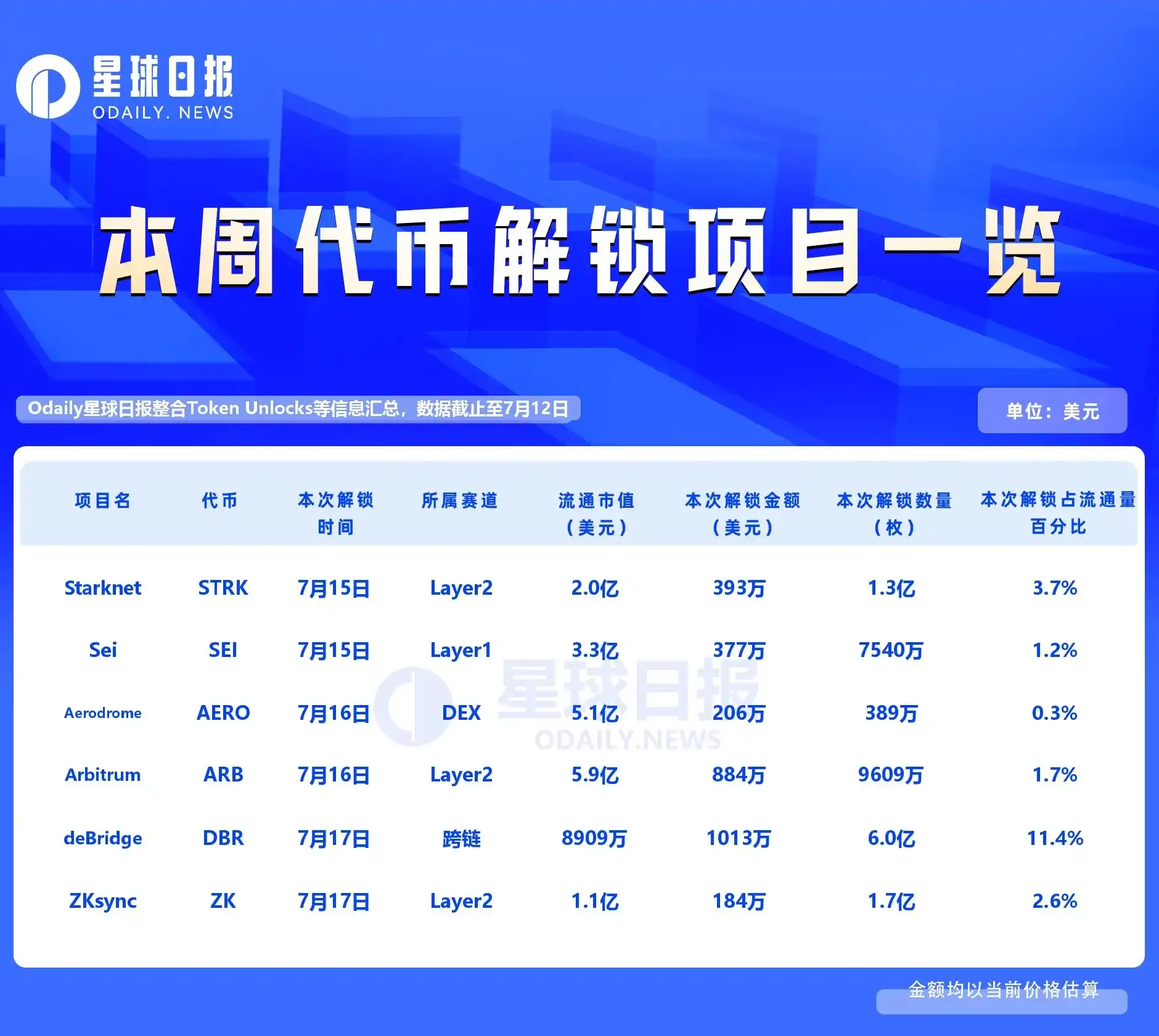
Cette semaine, deux projets notables procèdent à des déverrouillages importants de leurs jetons. **deBridge (DBR)** DeBridge, couche d'interopérabilité sécurisée pour le Web3 permettant le transfert décentralisé de messages et de valeur entre blockchains, effectue un déblocage majeur de 600 millions de jetons, d'une valeur d'environ 10,13 millions de dollars. Cette quantité représente 11,4% de l'offre en circulation. Le réseau repose sur des validateurs indépendants sélectionnés par sa gouvernance. **Starknet (STRK)** Starknet, une solution de couche 2 (Layer 2) pour Ethereum utilisant la technologie zk-STARKs pour accélérer les transactions et réduire les coûts, déverrouille 130 millions de jetons, d'une valeur d'environ 3,93 millions de dollars. Développé par StarkWare, il permet de valider les calculs sans que chaque nœud du réseau n'ait à vérifier chaque opération, augmentant ainsi le débit. Les deux articles incluent des graphiques illustrant les courbes de libération futures de leurs jetons respectifs.

deBridge

Twitter du projet :https://x.com/deBridgeFinance

Site web du projet :https://debridge.finance/

Quantité débloquée cette fois : 600 millions de jetons

Valeur du déblocage : Environ 10,13 millions de dollars

deBridge est la couche d'interopérabilité sécurisée du Web3, permettant le transfert décentralisé de messages et de valeur arbitraires entre différentes blockchains. La validation des transactions inter-chaînes est effectuée par un réseau de validateurs indépendants, sélectionnés par la gouvernance de deBridge et travaillant pour elle.

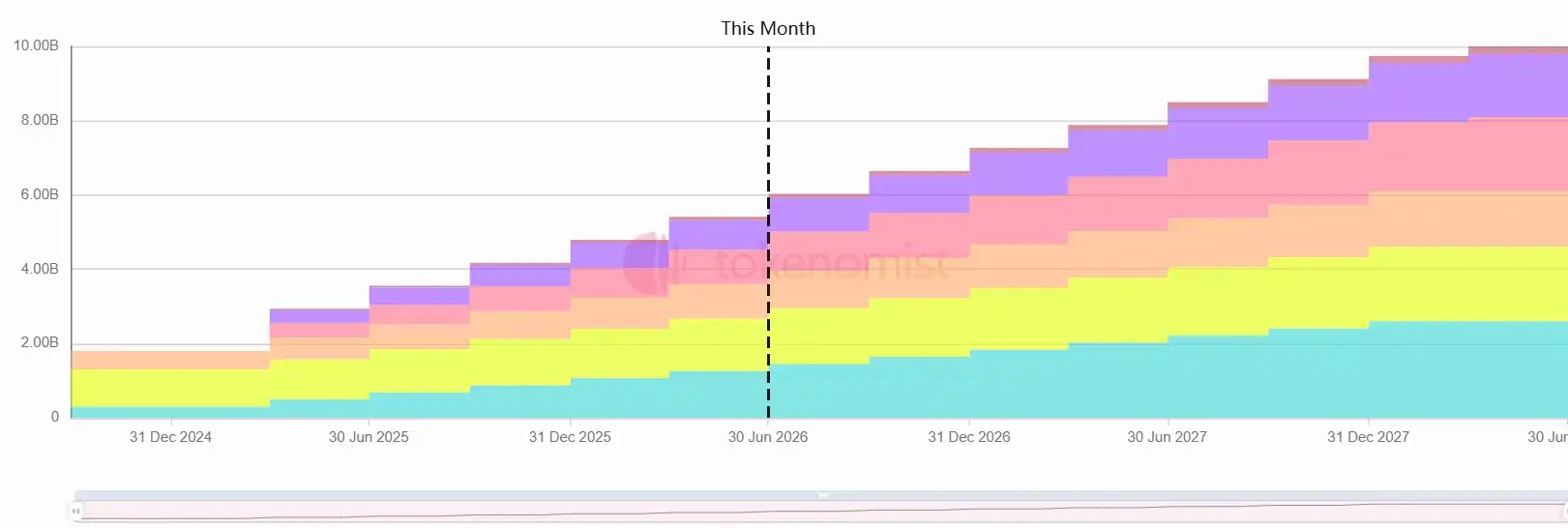
La courbe de libération spécifique est la suivante :

Starknet

Twitter du projet :https://twitter.com/Starknet

Site web du projet :https://starknet.io/

Quantité débloquée cette fois : 130 millions de jetons

Valeur du déblocage : Environ 3,93 millions de dollars

Starknet est un Layer 2 d'Ethereum qui utilise la technologie zk-STARKs pour rendre les transactions Ethereum plus rapides et moins chères. La société mère de Starknet, StarkWare, a été fondée en 2018, basée en Israël. Ses principaux produits développés sont Starknet et StarkEx. En utilisant les STARKs, Starknet valide les transactions et les calculs sans que tous les nœuds du réseau aient besoin de vérifier chaque opération. Cela réduit considérablement la charge de calcul et augmente le débit du réseau blockchain.

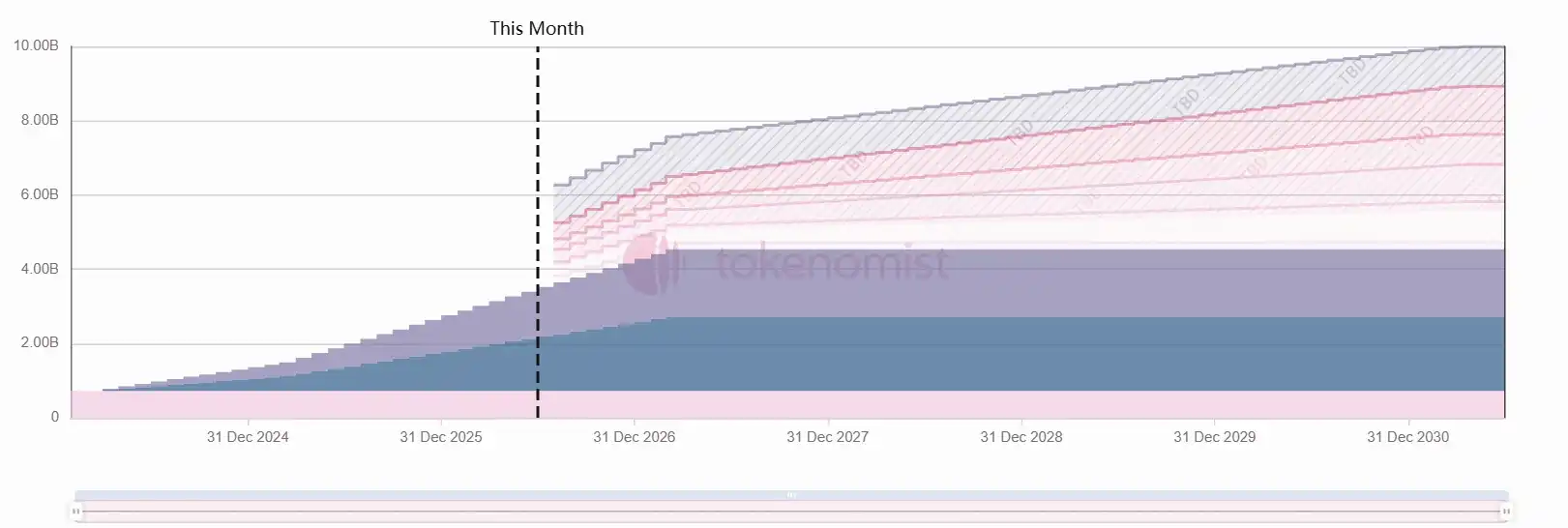
La courbe de libération spécifique est la suivante :

Trending Cryptos

Related Questions

QQuelle est la signification du titre de l'article 'Une semaine de déverrouillage de tokens : DBR atteint 11,4% de l'offre en circulation' ?

ALe titre indique que l'article traite des déverrouillages prévus de tokens pour la semaine à venir, en mettant en évidence le projet deBridge (DBR) dont le déverrouillage représentera 11,4% de son offre totale de tokens en circulation.

QCombien de tokens DBR seront déverrouillés pour deBridge et quelle est leur valeur approximative en dollars ?

APour le projet deBridge, 600 millions de tokens DBR seront déverrouillés, ce qui représente une valeur d'environ 10,13 millions de dollars.

QQuel est l'objectif principal du projet deBridge selon l'article ?

AdeBridge est décrit comme la couche d'interopérabilité sécurisée du Web3. Il permet le transfert décentralisé de messages et de valeur entre différentes blockchains, validé par un réseau de validateurs indépendants.

QQuelle technologie utilise Starknet pour améliorer les performances d'Ethereum et quels sont ses deux principaux produits ?

AStarknet utilise la technologie zk-STARKs pour rendre les transactions Ethereum plus rapides et moins chères. Ses deux principaux produits, développés par sa société mère StarkWare, sont Starknet lui-même (un Layer 2) et StarkEx.

QCombien de tokens seront déverrouillés pour Starknet et quelle est la valeur approximative de ce déverrouillage ?

APour le projet Starknet, 130 millions de tokens seront déverrouillés, pour une valeur d'environ 3,93 millions de dollars.

Related Reads

Jensen Huang Resigns, CFO Appointed as NVIDIA Interim CEO — Who Is Kress?

NVIDIA announced on the evening of November 12 that co-founder Jensen Huang has resigned as president, CEO, and board member, effective immediately. The 63-year-old founder, who led the company for 33 years, stepped down after a scandal involving extramarital affairs. The board accepted his resignation on November 11, and Huang also exited the board entirely, giving up all director seats. Huang co-founded NVIDIA in 1993 and built it into a core supplier for the AI boom, with the company's market value once reaching about $4 trillion. He holds roughly 3.6% of NVIDIA shares, making him the fourth-largest shareholder. NVIDIA has appointed CFO Colette Kress as interim CEO until the board selects a permanent successor. Kress will continue as executive vice president and CFO while serving as interim CEO. At the board level, Harvey C. Jones, former Synopsys CEO and a director since 1993, became the company's first board chairman. Previously, NVIDIA had no independent board chair, with Huang holding both CEO and board seats. The board will search for a permanent CEO both internally and externally. Jones said the board has full confidence in Kress and the management team and expects operations, customer commitments, and the product roadmap to be unaffected. Colette Kress, born in 1967 in the U.S. and about 59, is NVIDIA's long-serving EVP and CFO. Her appointment makes her the first female leader in NVIDIA's history. She holds a bachelor's degree in finance from the University of Arizona and an MBA from SMU's Cox School of Business. She began her career at Texas Instruments, working about eight years in various finance roles, then joined Microsoft in 1997 for 13 years, becoming CFO of the Server and Tools Division in 2006. In 2010 she moved to Cisco as senior VP and CFO of its business technology and operations finance organization. In September 2013, recruited personally by Huang, she joined NVIDIA as EVP and CFO, when annual revenue was only about $4.13 billion. During her 13 years, NVIDIA transformed from a gaming graphics maker into a global AI and accelerated computing leader, with revenue soaring from $4.13 billion in fiscal 2014 to $215.9 billion in fiscal 2026, about 52 times growth. In July 2025, thanks to her NVIDIA shares, she became a billionaire with net assets of about $1–1.2 billion. She received the Silicon Valley Business Journal's CFO of the Year award in 2016 and has repeatedly appeared on Forbes and Fortune most powerful women lists. NVIDIA shares fell sharply after the resignation news. After The Wall Street Journal reported the board was preparing to force Huang out, the stock dropped over 9% in after-hours trading; at the U.S. open it continued falling, briefly breaking below $150 to a new low since June 15, before narrowing losses to about $160. Dan Ives of Yorkville Ives said the investigation is a blemish for Huang, could trigger congressional probes, and that he risked being ousted, pressuring the stock. Huang's departure stems from two reports of extramarital affairs. On Sunday, November 8, Huang emailed employees admitting infidelity to his wife and apologizing to employees, the board, and shareholders. The board announced an investigation by a committee of independent directors with outside counsel, saying there was no reason to believe company secrets leaked. On Wednesday, November 11, The New York Times reported Huang had a romantic relationship with Kimberly Powell, NVIDIA's vice president of healthcare, both married, with Powell reporting to Huang; the report said intimate behavior was filmed at a San Jose hotel in March. The Wall Street Journal then reported the board was preparing to force Huang out. CBS cited sources saying the Trump administration was aware. CNBC confirmed the board met that night to discuss whether to remove Huang, with the meeting running into the evening. The next day, NVIDIA announced Huang's resignation.

Odaily星球日报1h ago
Jensen Huang Resigns, CFO Appointed as NVIDIA Interim CEO — Who Is Kress?

Odaily星球日报1h ago
Farewell, Jensen Huang

Nvidia founder and CEO Jensen Huang has resigned from his roles as president, CEO, and board director, effective immediately, following revelations of an extramarital affair with an executive who directly reported to him. The scandal, which began surfacing in late October, escalated rapidly after Huang issued an internal apology letter on November 8 admitting infidelity. Nvidia's stock has plunged, wiping out roughly $450 billion in market value, with analysts warning of potential further losses exceeding $1 trillion if leadership instability persists. Huang's wife may pursue divorce proceedings under California's community property law, potentially resulting in a settlement of $62.6–81.1 billion—possibly the most expensive divorce in history. CFO Colette Kress has been appointed interim CEO while the board searches for a permanent successor, and Harvey C. Jones has been named the company's first board chairman. Huang co-founded Nvidia in 1993 and built it into the world's most valuable chip company, pioneering the CUDA architecture that enabled the AI revolution. His unusually flat management structure—with roughly 60 executives reporting directly to him and no public succession plan—has left the company vulnerable at a critical moment. Given that major tech giants like Google, Microsoft, OpenAI, and Anthropic depend heavily on Nvidia's chips for their AI ambitions, Huang's departure raises urgent questions about whether the AI industry is prepared for an Nvidia without its longtime leader.

marsbit1h ago

Farewell, Jensen Huang

marsbit1h ago

Trading

Spot

Hot Articles

How to Buy DBR

Welcome to HTX.com! We've made purchasing deBridge (DBR) simple and convenient. Follow our step-by-step guide to embark on your crypto journey.Step 1: Create Your HTX AccountUse your email or phone number to sign up for a free account on HTX. Experience a hassle-free registration journey and unlock all features.Get My AccountStep 2: Go to Buy Crypto and Choose Your Payment MethodCredit/Debit Card: Use your Visa or Mastercard to buy deBridge (DBR) instantly.Balance: Use funds from your HTX account balance to trade seamlessly.Third Parties: We've added popular payment methods such as Google Pay and Apple Pay to enhance convenience.P2P: Trade directly with other users on HTX.Over-the-Counter (OTC): We offer tailor-made services and competitive exchange rates for traders.Step 3: Store Your deBridge (DBR)After purchasing your deBridge (DBR), store it in your HTX account. Alternatively, you can send it elsewhere via blockchain transfer or use it to trade other cryptocurrencies.Step 4: Trade deBridge (DBR)Easily trade deBridge (DBR) on HTX's spot market. Simply access your account, select your trading pair, execute your trades, and monitor in real-time. We offer a user-friendly experience for both beginners and seasoned traders.

9.7k Total ViewsPublished 2024.10.17Updated 2026.09.11

How to Buy DBR

Discussions

Welcome to the HTX Community. Here, you can stay informed about the latest platform developments and gain access to professional market insights. Users' opinions on the price of DBR (DBR) are presented below.

活动图片