Earning Bounty with a Forehead Tattoo? pump.fun Keeps Memes Alive Through 'Bounties'

Foresight NewsPublié le 2026-06-08Dernière mise à jour le 2026-06-08

Résumé

The article discusses the launch of pump.fun's new bounty platform "Pump.fun GO," which allows meme coin holders to lock funds as rewards for completing specific, often outrageous, marketing tasks to promote their tokens. Examples include a $50,000 bounty to skydive into a World Cup match in a mascot costume and a bounty for getting a forehead tattoo (with a typo) of a token name. The platform has sparked controversy for its perceived copycat nature compared to existing Web3 bounty platforms and its "crazy" tasks, while also granting pump.fun unilateral authority to approve or reject submissions. The move is analyzed as a strategic effort by pump.fun to revive declining platform revenue and meme coin engagement, following a pattern from its earlier, chaotic live-streaming feature. The core logic is that meme coins, lacking fundamentals, rely on manufactured attention and events, with GO formalizing this by outsourcing promotional stunts to bounty hunters, all aimed at boosting token visibility and price.


Written by: angelilu, Foresight News


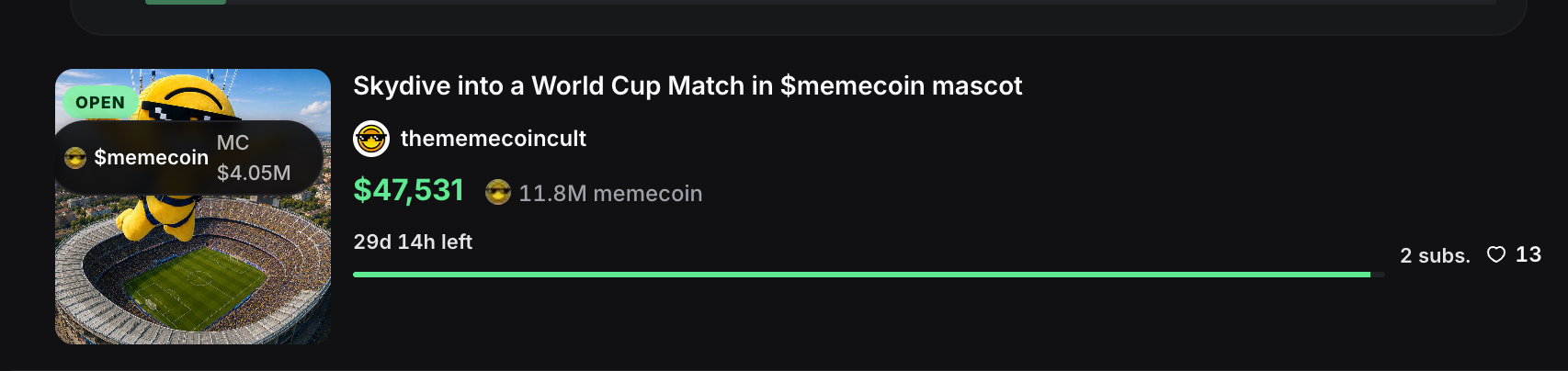
If someone offered you $50,000 to skydive into a World Cup stadium while wearing bizarre costumes to attract the attention of the entire crowd, would you do it?


Most people wouldn't, because in most countries, unauthorized entry into an ongoing sports event constitutes trespassing and can lead to imprisonment. The request is as absurd as a joke, or at least a marketing stunt. But this was precisely the highest-bounty task on the first day of pump.fun's newly launched bounty platform, "Pump.fun GO."


Mechanism of Pump.fun GO


Pump.fun GO attempts to shift the competition for attention around Meme assets from passive dissemination to active output via a task economy. The mechanism of GO isn't complex: an issuer (often a holder of a particular Meme coin) connects a wallet, locks the bounty into an escrow smart contract, and posts a bounty for completing a specific task; a task-taker completes the task, submits proof, and receives the payment after pump.fun's approval. The minimum bounty is $5, with no upper limit. The official launch copy grandly states: "Pay anyone to do anything."


Each task issuer holds a certain Meme coin—the task is a customized marketing campaign for their coin, and the bounty is the promotion fee drawn from their holdings. The coin comes first, the task follows; GO is not a "simple" task platform but an outsourced tool for marketing existing Meme coins.


However, the community's response to this new product is also highly contentious. Firstly, the Web3 bounty platform space already has established professional players like Dework, Gitcoin, and Layer3, leading to accusations that pump.fun is yet another clumsy "copycat." Secondly, the tasks currently listed on the platform often have a "touch of madness," and event adjudication is entirely at the platform's discretion—the terms state: the platform reserves the right to approve, reject, modify, or cancel any task and any submission, with decisions being final and non-appealable.


Why Launch GO Now


But to understand why pump.fun is launching GO now, we must first look at some numbers.


In January 2025, the platform's daily revenue peak exceeded $15 million, with annual cumulative revenue nearing $1 billion. However, by August 2025, daily revenue once fell below $300,000 and has recently hovered around $1 million.


The PUMP token has fallen from its issuance high of $0.006 to today's $0.0016, and SOL has also declined over 55% from its $150 high this year.
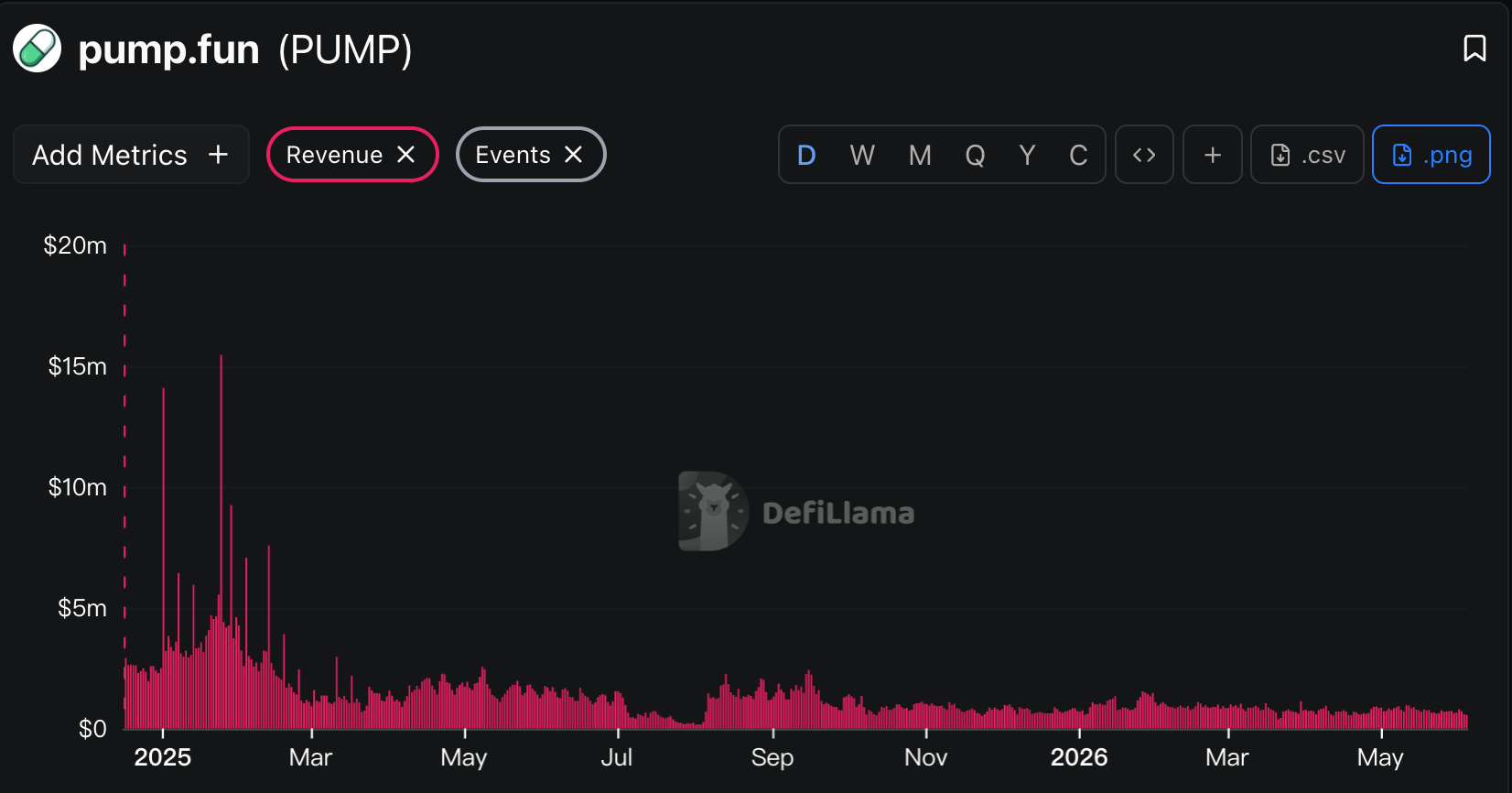


Meanwhile, in April of this year, pump.fun changed its "all revenue used for PUMP buyback and burn" policy to a 50/50 split—half continues for buybacks, and the other half is reserved for product development, hiring, and marketing. GO is the first project funded by this budget allocation.


Hot Content on GO


A closer look at the GO task list reveals that most content is "quite entertaining."


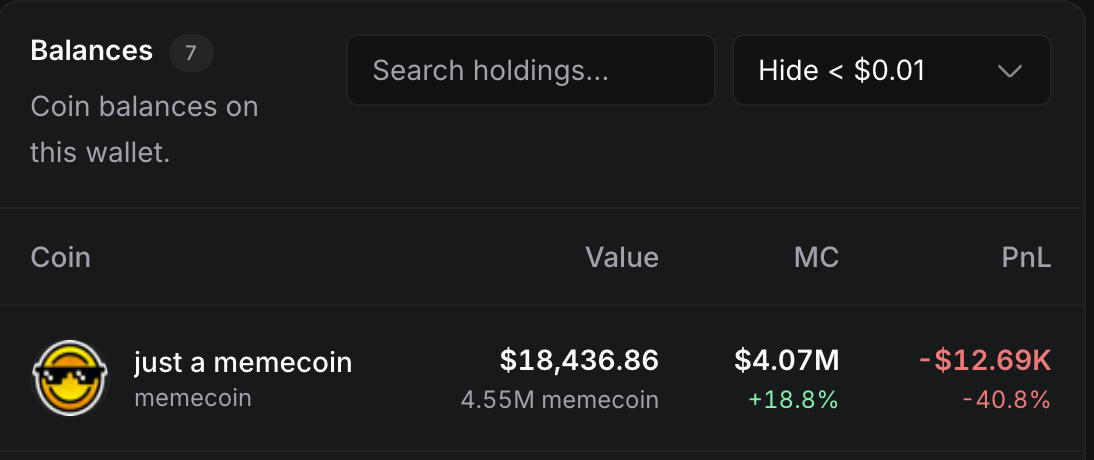
As of writing, the task "requiring the taker to skydive into the World Cup match venue while wearing the memecoin mascot costume throughout" might be "too sensitive" and is no longer displayed on the page. Perhaps related to topping the GO task list that day, the price of the related memecoin rose 18.8% on the day the task was posted, with its market cap exceeding $4 million; its current market cap is $3.73 million.


The bounty issuer "thememecoincult" also posted two other "sensational" tasks: wearing the same mascot costume to break the world record in long-distance running; and spraying the token code and logo on a car while wearing their mascot costume.


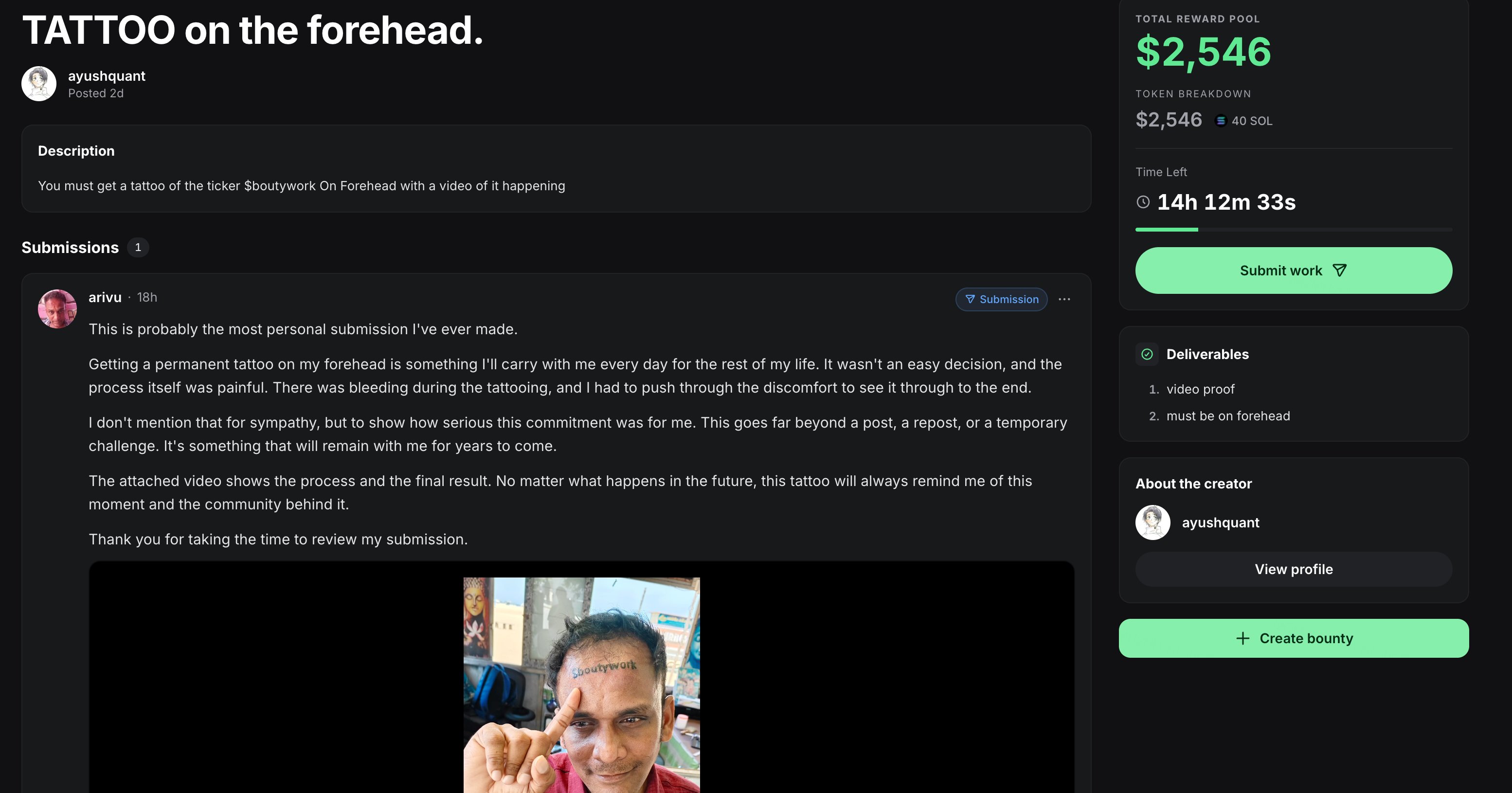
But some are indeed willing to do "crazy" things for the bounty. An Indian man named arivu accepted a bounty task worth 40 SOL (approximately $2,640) to get "$boutywork" tattooed on his forehead as required by the issuer, documenting the entire process in a video. However, there is a missing 'n' compared to the correct spelling "$bountywork." This typo sparked debate over the validity of the reward. Some claimed he wouldn't get a penny, while the issuer side opened a new bounty task for him to correct the tattoo. Ultimately, it's up to the platform to decide whether he receives the bounty after the task concludes.


The story doesn't end there. After the photos and video circulated, the community spontaneously launched a Meme coin featuring the man's photo as its logo. Its current market cap is $220,000, and he reportedly earned $15,000 from transaction fees.


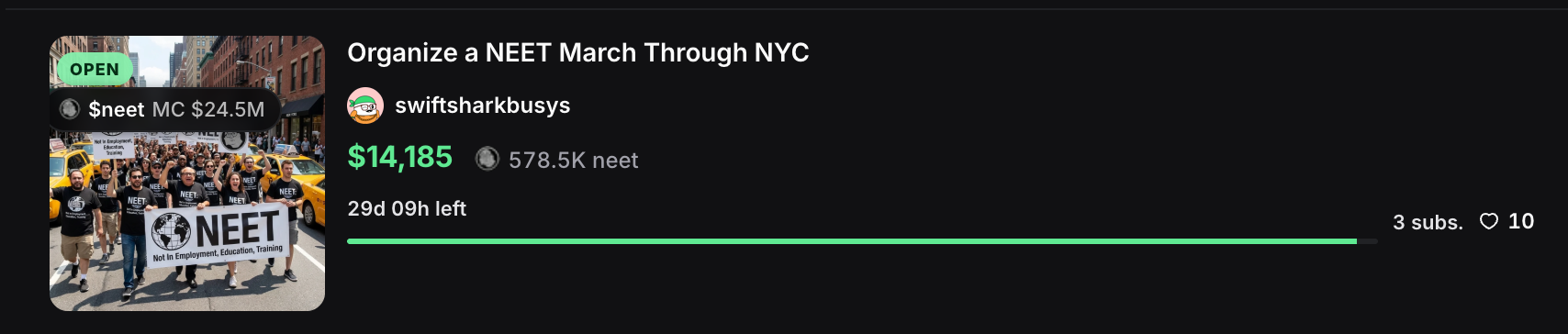
Other popular tasks include: someone offering a $13,728 bounty to "organize a NEET parade through New York City." The logic is to convert on-chain money into offline crowds and signs, film it into a video, bring it back on-chain, and boost the NEET coin price, completing the loop. The related token NEET currently has a market cap of $25.4 million, with 7 submissions.


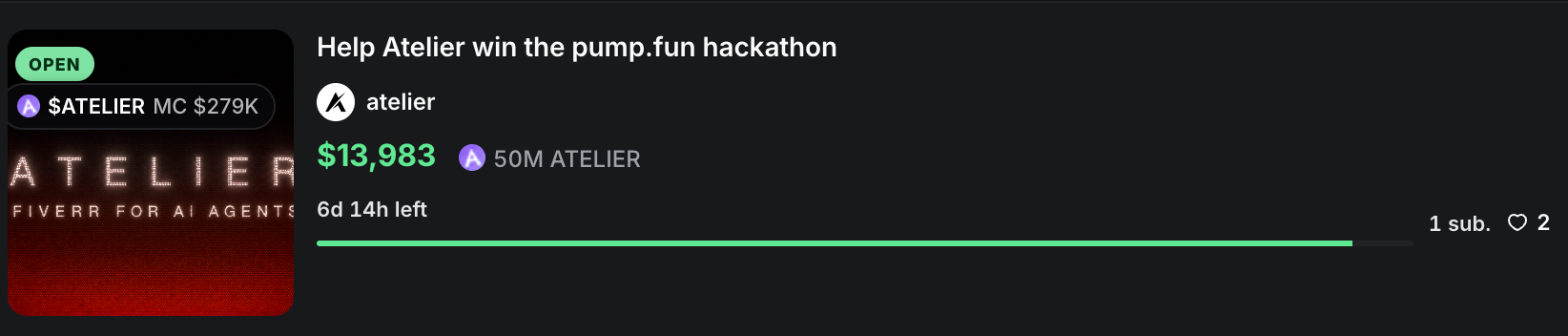
There's also the Atelier project winning pump.fun's hackathon—meaning using pump.fun's own product on its own platform to hire people to win a competition hosted by pump.fun itself.


These tasks lay bare the survival logic of Meme coins. These assets have no fundamentals; their survival depends on sustained attention. Attention comes from events, events need to be created by people, but project teams either can't or dare not do it themselves. GO formalizes this long-implicit chain: lock money into a contract, post a bounty, and wait for someone in the world to claim it.


Here, the employers are a group of token holders, and the takers complete tasks with the goal of making the token more widely known. Ultimately, all proceeds point to the same thing: stop this thing from falling further.


From Livestreams to Bounties


This logic is something pump.fun has already run through once. In 2024, the platform launched a livestreaming feature, which quickly turned into an uncontrolled content experiment: people livestreamed drug use, threatened self-harm, claimed to broadcast from prison, and used Russian roulette to pump prices. The sole purpose was to make the Meme coin rise. In November 2024, livestreaming was urgently taken offline; five months later, it quietly returned with new content moderation policies.


Livestreaming was about getting users to perform voluntarily on stage; GO is about paying people to perform. The underlying logic is exactly the same.


And this time, pump.fun cannot use "too much content to review" as an excuse. Every GO task requires manual platform approval to go live, and every bounty payout requires the platform's nod. What pump.fun learned from "the livestream shutdown" was clearly not "don't do this kind of thing," but rather "continue doing it with a different structure."


Questions liées

QWhat is the core function of the new 'Pump.fun GO' platform, and how is it different from a general task bounty system?

AThe core function of 'Pump.fun GO' is to serve as a marketing outsourcing tool for existing memecoins. It's not a general task platform. Project holders lock a bounty in a smart contract to create tasks that promote their specific memecoin. The goal is to generate attention and events to sustain or increase the coin's value, differing from platforms that fund general projects or development work.

QAccording to the article, what are two main reasons for the community's controversy surrounding 'Pump.fun GO'?

AFirst, it is seen as a copy of established Web3 bounty platforms like Dework, Gitcoin, and Layer3. Second, the tasks often have a 'senseless' or extreme nature (e.g., illegal trespassing), and the platform has unilateral, non-appealable authority to approve, reject, or modify any task and its submissions.

QWhat significant change did pump.fun make to its revenue distribution policy in April, and how is 'GO' related to this change?

AIn April, pump.fun changed its policy from using 100% of revenue to buy back and burn the PUMP token to a 50/50 split. Half continues for buybacks, and the other half is allocated for product development, hiring, and marketing. 'Pump.fun GO' is the first major initiative funded from this new marketing and development budget.

QDescribe the example of the Indian man 'arivu' and the bounty task. What unexpected outcome did his action lead to?

AA man named arivu from India accepted a 40 SOL (~$2,640) bounty to tattoo '$boutywork' (missing an 'n') on his forehead to promote a memecoin. The spelling error sparked debate about the reward's validity. Subsequently, the community autonomously created a new memecoin using his photo as the logo, which reached a $220,000 market cap, earning him $15,000 in fees from that new coin.

QHow does the article connect the logic behind 'Pump.fun GO' to pump.fun's previous 'live streaming' feature, and what key lesson did the platform learn from the streaming experience?

ABoth features share the same underlying logic: generating attention/events to pump memecoin prices. Live streaming relied on users voluntarily performing extreme acts. GO formalizes this by paying people to perform marketing tasks. The lesson learned from the streaming shutdown wasn't to stop such activities, but to 'change the structure and continue.' GO introduces platform pre-approval for tasks and payouts to maintain more control.

Lectures associées

Après trois trimestres consécutifs de baisse, le marché des cryptomonnaies pourra-t-il connaître une fenêtre de stabilisation au troisième trimestre ?

Le marché des cryptomonnaies a enregistré son pire trimestre depuis 2022, avec une capitalisation totale chutant de 12,6% à 2 100 milliards de dollars. Tous les indicateurs clés (volume des échanges, valeur des stablecoins) montrent une sortie nette de capitaux. Le Bitcoin a perdu 14,2% et l'Ethereum 25,4% sur le trimestre, rompant sa corrélation antérieure avec les actions technologiques. Les ETF spot américains sur le Bitcoin ont subi des rachats massifs, avec une sortie nette de 4,67 milliards de dollars au Q2, indiquant une pression de vente continue. Le resserrement de la politique de la Fed et les ventes d'entreprises comme Strategy ont accentué la déleveragisation du secteur. L'attention du marché se porte désormais presque exclusivement sur la réunion de la Fed fin juillet. Une position accommodante pourrait stabiliser le Bitcoin entre 68 000 et 84 000 dollars, tandis qu'un ton hawkish pourrait le faire osciller autour de 50 000-56 000 dollars. Parallèlement, la progression du *CLARITY Act*, une loi cruciale pour la clarté réglementaire, est au point mort au Sénat, réduisant les chances d'adoption en 2026 et maintenant une prime de risque élevée sur l'ensemble du secteur. Malgré ce contexte difficile, quelques secteurs résistent : les marchés de prédiction ont vu leur volume nominal augmenter de 48,7% et les biens collectionnables tokenisés ont progressé d'environ 143%. La tokenisation d'actifs du monde réel (RWA) continue également sa croissance régulière, portée par des fondamentaux indépendants du cycle crypto. Les bases d'un effondrement extrême semblent absentes, mais le marché est désormais guidé par les politiques monétaires, les prix et les attentes de taux, plutôt que par le simple récit haussier. La fin des sorties massives des ETF et le retour des achats des détenteurs à long terme pourraient indiquer une phase de stabilisation potentielle.

marsbitHier 08:42

Après trois trimestres consécutifs de baisse, le marché des cryptomonnaies pourra-t-il connaître une fenêtre de stabilisation au troisième trimestre ?

marsbitHier 08:42

The SpaceX Trade, Unlocked: SPCXON Débarque sur WEEX

En juin 2026, SpaceX a réalisé la plus grande introduction en bourse de l'histoire, mais l'accès à l'action a été limité pour de nombreux investisseurs en raison de restrictions régionales et de frictions liées aux courtiers. La plateforme WEEX propose désormais une solution via SPCXON/USDT, un instrument tokenisé sur le marché au comptant qui permet d'obtenir une exposition au cours de SpaceX en utilisant l'USDT, sans nécessiter de compte de courtage américain. SPCXON est un produit tokenisé construit sur l'infrastructure d'Ondo, conçu pour refléter l'économie de la détention d'actions SpaceX pour les traders éligibles en dehors des États-Unis, avec des dividendes réinvestis. Le cas d'investissement repose sur la croissance des revenus de Starlink et les progrès de Starship, malgré un valorisation déjà élevée et des risques liés à un flottant public réduit et à des déblocages d'actions internes à venir. Il est important de noter que SPCXON offre une exposition, et non la propriété directe d'actions ou de droits de vote. Son prix peut évoluer avec une prime ou une décote par rapport à la valeur liquidative. WEEX propose également d'autres produits tokenisés comme MSTRON et MUON dans un compte unifié, permettant une rotation entre crypto-monnaies et actions traditionnelles sans transfert de fonds. La plateforme souligne ainsi comment les barrières entre la finance traditionnelle et les actifs numériques s'estompent.

TheNewsCryptoHier 08:34

The SpaceX Trade, Unlocked: SPCXON Débarque sur WEEX

TheNewsCryptoHier 08:34

BIT Trading Moment : Le BTC reste sous la pression de l'EMA 200 hebdomadaire, un rejet pourrait relancer la baisse, les actions de stockage et de semi-conducteurs qui ont bondi cette nuit ont baissé en séance de nuit

**Résumé des marchés : Bitcoin sous pression, actions technologiques en réajustement** Le marché crypto poursuit son rebond, avec Bitcoin évoluant autour de 66 000 $. Il fait face à une résistance clé vers 68 000 $, niveau correspondant au coût moyen des investisseurs sur cinq mois. Les traders surveillent les moyennes mobiles clés (200 MA à ~63 333 $ et 200 EMA à ~68 328 $ en hebdomadaire). Une rupture au-dessus de 68 000 $ ouvrirait la voie à une hausse, tandis qu'un échec pourrait entraîner un retest des 63 000 $. L'analyse suggère que la dynamique actuelle ressemble à un rebond estival à faible liquidité plutôt qu'au début d'un véritable marché haussier. Sur le marché actions américain, après une forte séance mardi portée par les semi-conducteurs et les titres du stockage (Micron, AMD, Intel...), les contrats à terme indiquent une ouverture en baisse. Les secteurs ayant récemment bondi, comme les semi-conducteurs et le stockage, reculent en séance de nuit. Certaines valeurs se démarquent néanmoins, comme Super Micro Computer (SMCI), en hausse après des résultats et des perspectives robustes liées à la demande de serveurs IA. Des vents contraires persistent : les prix du pétrole (Brent >91$) et les rendements des obligations d'État américaines grimpent, ravivant les craintes inflationnistes. En Asie, les marchés ont suivi le rebond technologique américain, mais de manière hésitante. La tension reste forte sur le yen japonais, qui atteint son plus bas niveau depuis des décennies. **Points clés à surveiller :** * **Crypto :** Niveaux techniques de Bitcoin (68k$/63k$), flux des ETF spot. * **Actions :** Saison des résultats (Tesla, Alphabet, Intel...), activité d'AMD sur l'IA. * **Économie :** Données américaines sur l'emploi, décision de la BCE, tensions géopolitiques et prix de l'énergie.

marsbitHier 08:34

BIT Trading Moment : Le BTC reste sous la pression de l'EMA 200 hebdomadaire, un rejet pourrait relancer la baisse, les actions de stockage et de semi-conducteurs qui ont bondi cette nuit ont baissé en séance de nuit

marsbitHier 08:34

Gate Research Institute : La vague de « Wall Streetisation » des produits financiers cryptographiques, concurrence ou fusion ?

Le titre de l'article est : "Gate Institute : La vague de 'Wall Street-isation' des produits financiers cryptos, est-ce une compétition ou une fusion ?" Résumé en français (environ 1400 caractères) : Il y a dix-sept ans, Bitcoin fut créé avec une vision décentralisée et anti-establishment financier. Aujourd'hui, paradoxalement, son adoption massive passe souvent par des ETF émis par des géants comme BlackRock. Cet article analyse cette "Wall Street-isation" apparente des actifs cryptos : les institutions traditionnelles s'emparent-elles du pouvoir d'émission, de tarification, de garde et de distribution ? La réalité est plus nuancée. C'est une convergence à double sens. D'un côté, les plateformes cryptos comme Gate.io étendent leurs services aux actions traditionnelles (états-uniennes, hongkongaises, sud-coréennes), aux CFD et aux produits tokenisés, offrant un compte unifié. De l'autre, des courtiers traditionnels comme Robinhood intègrent les cryptomonnaies et explorent la tokenisation d'actions sur blockchain. Cette fusion vise à créer le "super-compte" financier de demain, où actions, cryptos, ETF et obligations tokenisées (RWA) coexistent dans une même interface, comblant les faiblesses de chaque écosystème. Les RWA, notamment les obligations d'État tokenisées, agissent comme une couche intermédiaire unificatrice. En conclusion, Wall Street n'a pas conquis la crypto, et la crypto n'a pas contourné Wall Street. Ils construisent ensemble une nouvelle forme de marché des capitaux, plus efficace et mondial, où l'idéal décentralisé persiste dans les protocoles, tandis qu'une expérience utilisateur unifiée émerge à l'interface.

marsbitHier 08:09

Gate Research Institute : La vague de « Wall Streetisation » des produits financiers cryptographiques, concurrence ou fusion ?

marsbitHier 08:09

Trading

Spot
活动图片




