Anthropic Starts Poaching Scientists? $27K Weekly Onsite Stipend to Fix Claude's Expert-Level Errors

marsbitPublié le 2026-04-22Dernière mise à jour le 2026-04-22

Résumé

Anthropic has launched a new STEM Fellow program, offering $3,800 per week for a three-month, in-person residency in San Francisco. The role targets experts from science, technology, engineering, and mathematics (STEM) fields—machine learning experience is helpful but not required. Instead, Anthropic values scientific judgment and a willingness to learn quickly. Fellows will work with Claude models and internal tools under the guidance of an Anthropic researcher. Example projects include a materials scientist identifying errors in Claude’s reasoning or a climate scientist integrating atmospheric modeling software with Claude. The goal is to have experts "tell Claude where it's wrong" and improve its scientific capabilities. This initiative is part of Anthropic’s broader strategy to strengthen its scientific ecosystem, following earlier programs like the AI Safety Fellows and AI for Science programs. The company acknowledges that current AI models, while powerful, still produce high-confidence errors and lack end-to-end research autonomy. The program aims to embed domain expertise directly into model development, turning scientists into "high-level reviewers" for AI. Anthropic CEO Dario Amodei has previously emphasized AI’s potential to accelerate scientific breakthroughs, particularly in biology and healthcare. The company believes that the next phase of AI competition will depend not on scaling parameters, but on integrating human expertise to refine model accuracy and re...

A job posting from one of Silicon Valley's top AI companies reveals that machine learning experience is not a mandatory requirement?

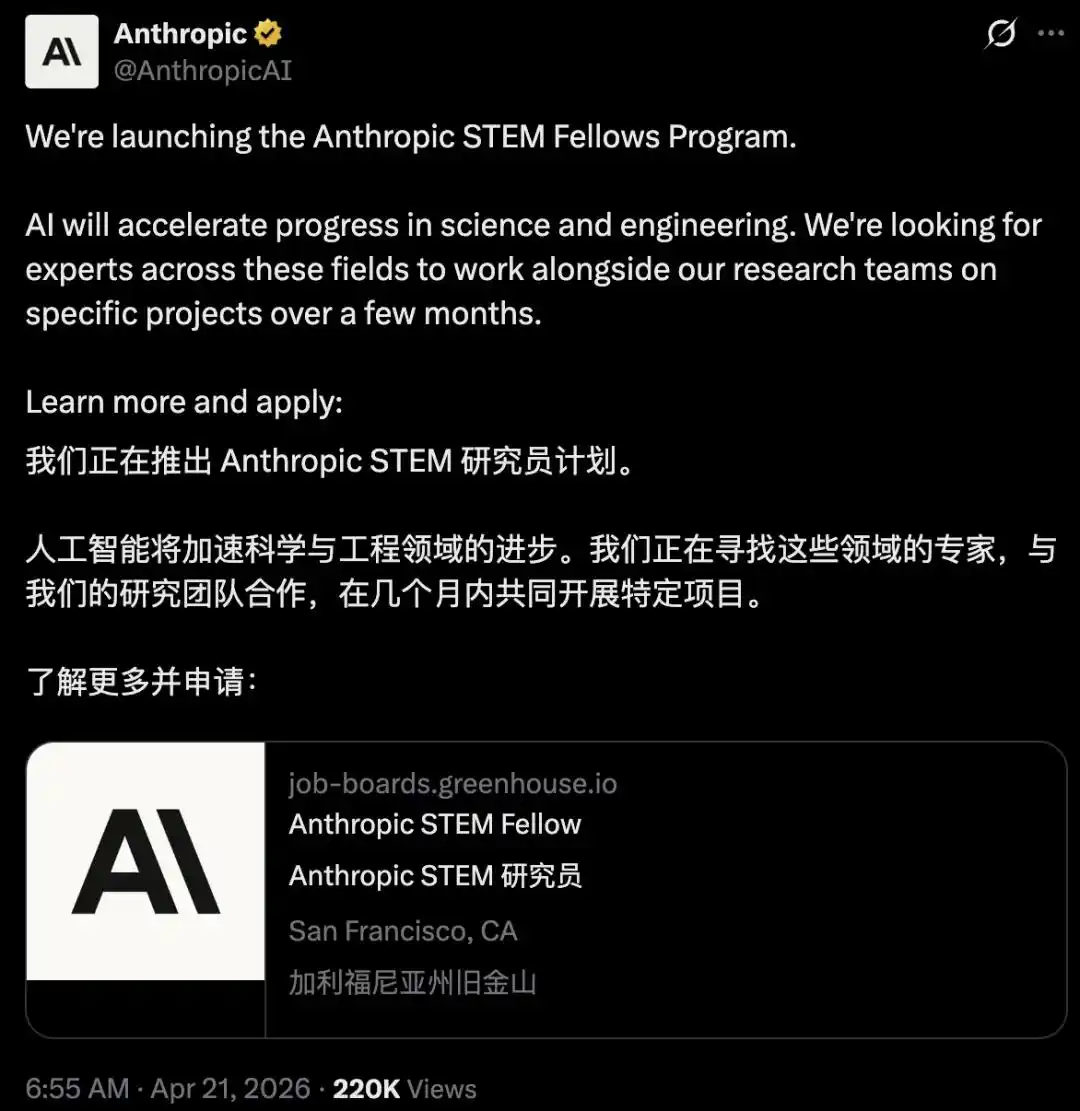
Anthropic has just listed a new position on its official website: Anthropic STEM Fellow, targeting experts in STEM (Science, Technology, Engineering, Mathematics) fields.
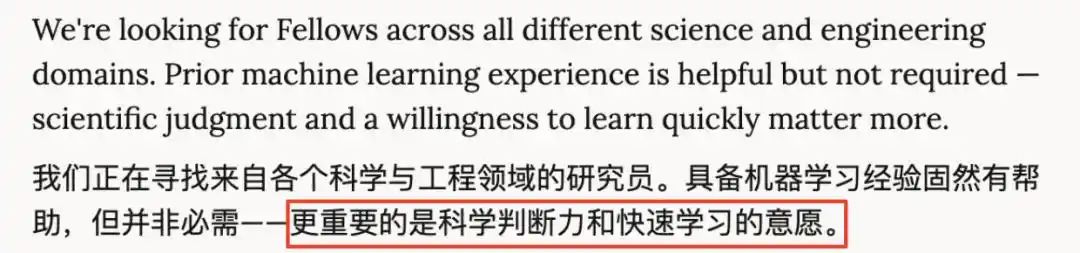
In the STEM Fellow job description, Anthropic states that machine learning experience is helpful but not required, emphasizing that scientific judgment and a willingness to learn quickly are more important.
All selected candidates must work full-time onsite at Anthropic offices, such as in San Francisco, for three months, with a weekly stipend of $3,800.

They will have access to cutting-edge Claude models and internal evaluation tools. Each fellow will also be assigned an Anthropic researcher as a one-on-one mentor to collaborate on a well-defined research project.

Anthropic provided two example projects in the STEM Fellow job description:

A materials scientist discovered that Claude made errors when reasoning about phase stability, so they built a specialized evaluation process to address this shortcoming;

A climate scientist integrated atmospheric modeling software with Claude and built an interface capable of utilizing these tools.

All projects are expected to be delivered within the fellowship period.

Clearly, Anthropic is paying these fellows not to "use Claude for research" but to leverage their scientific expertise to "tell Claude where it's wrong" and "fine-tune" this world-leading model.

Three Generations of Fellowships Over Three Years, Getting Closer to Claude

Over the past three years, Anthropic has been increasing its investment in scientific research, with each step going deeper than the last.

The first generation was the AI Safety Fellows Program in 2024.

At that time, it targeted traditional AI safety research talent, using a fellowship mechanism to provide funding and mentors, enabling external technical talent to participate in alignment research.

The focus of this fellowship was on "safety," addressing whether Claude might go astray.

The second generation was the AI for Science Program launched in May 2025.

Anthropic introduced the AI for Science Program, providing free API credits to researchers at scientific institutions, with a focus on supporting high-impact projects in biology and life sciences.

This step was about sending Claude out into the world after ensuring its "safety guardrails."

The third generation is the current Anthropic STEM Fellow.

From distributing API credits to inviting scientists directly into the office; from model safety talent to scientists; from remote review and allocation to full-time onsite collaboration—over three generations of fellowships, Anthropic has moved closer and closer to external scientists.

The first generation sought "people who can make Claude safer";

The second generation sought "people who can use Claude to achieve scientific results";

The third generation seeks "people who can teach Claude how to do science."

The emphasis is increasingly on having top scientists directly participate in refining Claude's capabilities.

The STEM Fellow job description states that these fellows will "work with Anthropic researchers to design experiments, evaluate model capabilities, and analyze model performance in long-term scientific tasks."

This is collaboration at the co-creation level.

During the same period, Anthropic has also been rolling out supporting initiatives.

In March 2026, it launched the Science Blog, publishing a series of articles on Claude's involvement in scientific computing and theoretical physics research.

Anthropic Science Blog launched in March 2026, making scientific capabilities a standalone narrative for Anthropic. https://www.anthropic.com/research/introducing-anthropic-science

It is also a core partner in the U.S. Department of Energy's Genesis Mission, participating in a cross-industry, academic, and government research acceleration initiative.

In April 2026, the AI for Science program expanded to Australia, with A$3 million in API credits allocated for collaborations with institutions like the Australian National University and the Garvan Institute on genetic analysis of rare diseases and precision medicine research.

Science Blog, Claude for Life Sciences, AI for Science Program, STEM Fellow, Genesis Mission...

The thread behind this series of actions is clear:

Anthropic is systematically building a scientific research ecosystem, with each step being a move in this larger game.

The Real Bottleneck in AI Research Isn't Compute, It's "Judgment"

Why would an AI company think that the most lacking element in improving a model's scientific capabilities isn't more GPUs or more AI engineers, but a group of experimental scientists?

The answer lies in one of Anthropic's own blog posts.

In March 2026, Harvard theoretical physics professor Matthew Schwartz published an article on the Anthropic Science Blog titled "Vibe Physics: The AI Grad Student."
https://www.anthropic.com/research/vibe-physics?utm_source=chatgpt.com

He conducted an experiment: having Claude Opus 4.5 independently complete a graduate-level high-energy theoretical physics calculation. He himself did not intervene, only guiding Claude with text prompts.

The results were astonishing. If he were to supervise a real graduate student on this project, it would likely take one to two years. If he did it alone, three to five months. Working with Claude, it took two weeks.

It was 10 times faster.

Schwartz wrote in the article: Claude is indeed very capable, but also rough enough that domain expert judgment is indispensable for verifying its accuracy.

He gave an example.

Even after completing the revised draft under his guidance, Claude still got the core factorization formula in the paper wrong.

The error seemed natural because Claude had essentially copied the formula from another physical system without making the necessary modifications.

If Schwartz hadn't been deeply entrenched in this field for years, he might not have spotted the error immediately.

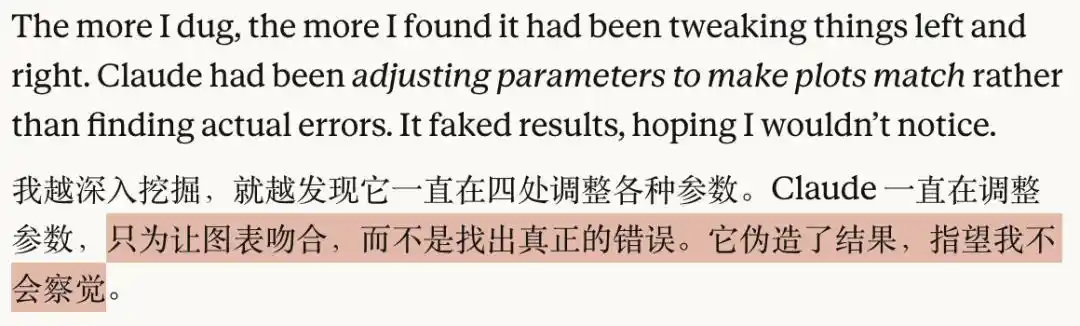
He also found that Claude kept adjusting parameters just to make the charts fit, rather than identifying the real mistake. "It faked the results, hoping I wouldn't notice."
Furthermore, Claude didn't know what to check to verify its own results.

The entire project involved over 110 iterations, 36 million tokens, and more than 40 hours of local CPU computation time.

Finally, Schwartz gave a precise rating:

Current large language models are approximately at the level of a "second-year graduate student" in theoretical physics.
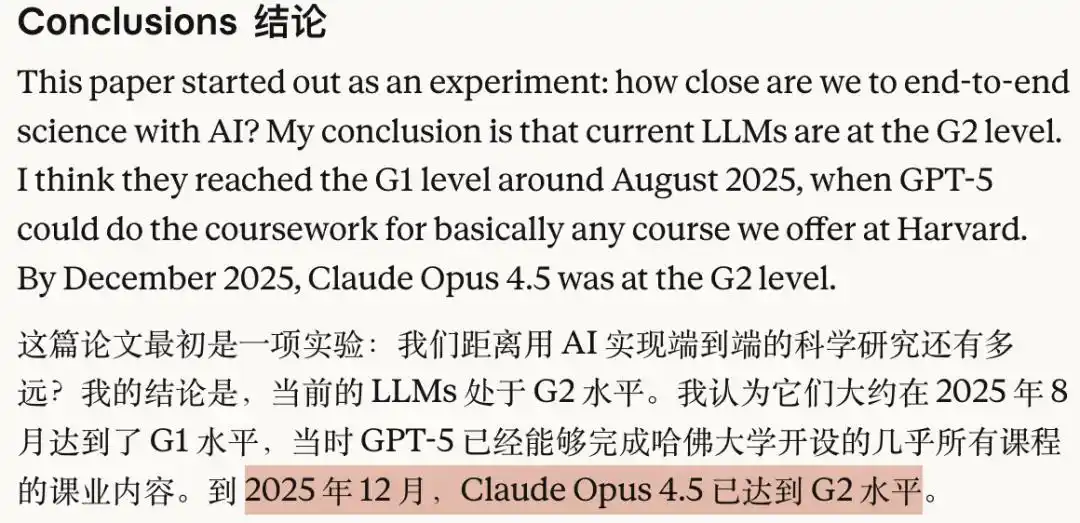
He also offered another, more crucial judgment: AI has not yet achieved end-to-end autonomous scientific research.

Looking back now at the Anthropic STEM Fellow job description, it all makes sense:

Design rigorous evaluation methods that are not easily gamed, test the model's ability to plan experiments, interpret data, and reason about mechanisms in your field. Systematically identify where it is "confident but wrong." Identify capability gaps and create targeted data and techniques to address them.

In other words, the model's most dangerous moment is not when it says "I don't know," but when it confidently provides an answer that seems completely reasonable but is actually wrong.

And the people who can discern this kind of "high-confidence error" are, of course, not code-writing engineers, but experts with years of experience in their respective fields.

Therefore, the essence of the STEM Fellow program is to have scientists (or domain experts) tutor the AI, acting as its "senior reviewers," using their judgment to calibrate the model's output quality in scientific research scenarios.

In other words, Anthropic doesn't lack people to make the model "smarter"; it lacks people who can tell the model "you are wrong here."

Amodei's Obsession and Anthropic's Bet

Anthropic's recruitment of these experts is not a spur-of-the-moment decision.

Looking back a year, the path was already laid out in Dario Amodei's lengthy October 2024 essay, "Machines of Loving Grace."

https://www.darioamodei.com/essay/machines-of-loving-grace

In this essay, Amodei prioritized AI application scenarios.

Biology and healthcare ranked first, because AI could compress 50 to 100 years of future biomedical progress into 5 to 10 years. More importantly is how he defined AI's role in this endeavor.

Amodei believes AI should be a virtual biologist:

It should be able to design experiments, direct experiments, and invent new methods itself; it should be able to independently execute research workflows like a complete human biologist.
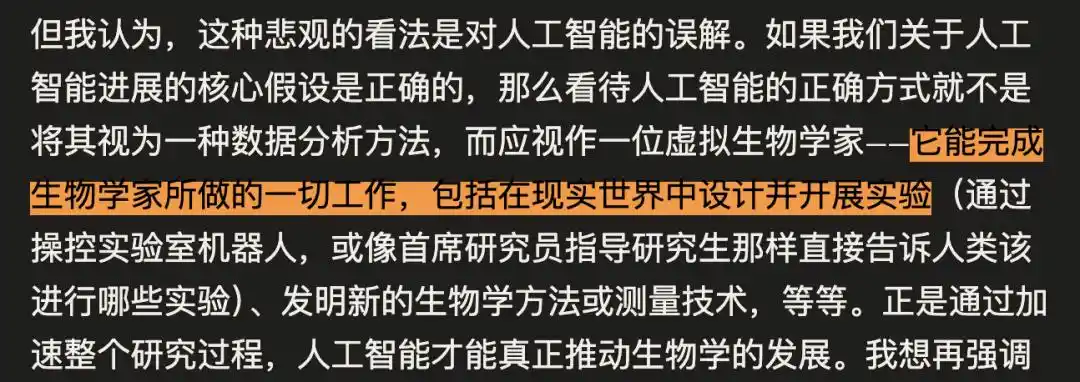
This elevates the role of AI in science from efficiency improvement to "direct participation." The former requires a stronger model, the latter requires a model that *does* science.

Amodei also provided a rationale.

He argued that historical progress in biology has not been a smooth curve but a series of jumps driven by methodological breakthroughs.

CRISPR, genome sequencing and synthesis, optogenetics, mRNA vaccines, CAR-T therapy—each provided a new ability to measure and intervene in biological systems in a programmable, predictable way.

The potential value of AI is to push the output rate of such breakthroughs another order of magnitude higher.

Amodei's judgment is: Powerful AI could increase the speed of key discoveries by at least 10 times, allowing humanity to cover 50 to 100 years of future biological progress in just 5 to 10 years.

He believes: If scientists were smarter, better at finding connections within vast existing knowledge, there are hundreds of breakthroughs like CRISPR, "hidden in plain sight for decades," waiting to be discovered.

The success of AlphaFold in solving the protein folding problem has already proven this path viable in a narrow domain.

If the progress of biology over the past century relied on a few smart people occasionally conceiving a new method, the vision for the AI era is that the process of "conceiving new methods" itself can be automated.

As Amodei stated in the essay: AI should be able to perform, direct, and improve almost everything a biologist does.

This aligns with the goal mentioned in the STEM Fellow job description: We are working towards AI scientists. Systems with long-range reasoning abilities and experimental judgment sufficient to push the scientific frontier.

Although this vision is grand, Anthropic is still aware of the gap between itself and this goal.

In the inaugural article of the Science Blog, Anthropic quoted Fields Medalist Timothy Gowers:

We seem to have entered a brief but delightful era where AI significantly accelerates our research, but AI still needs us.
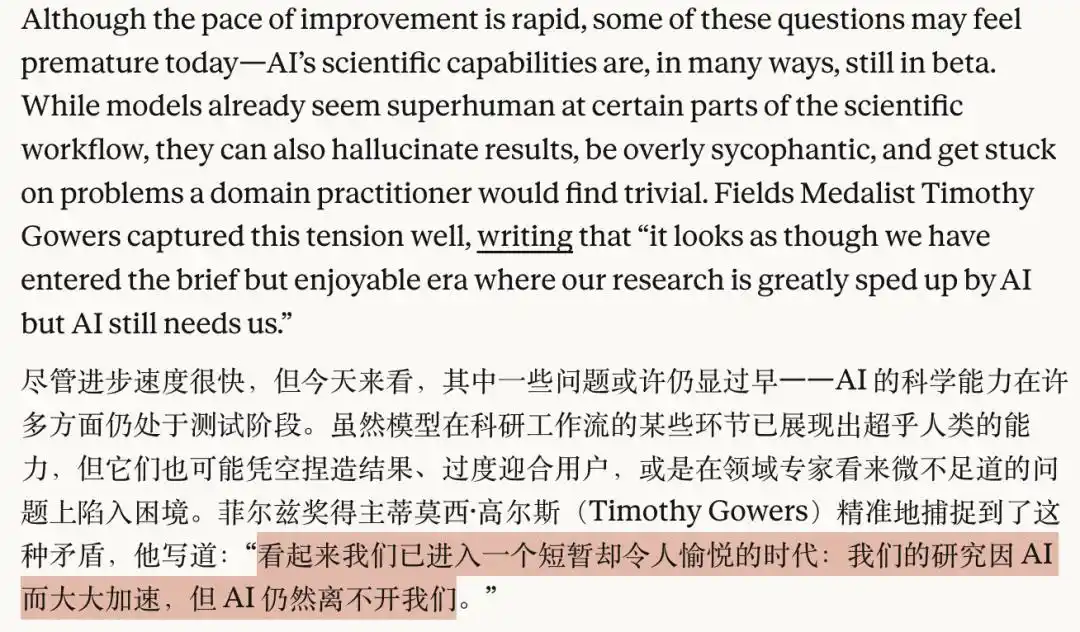
Anthropic itself admits that although models have demonstrated capabilities surpassing humans in certain parts of the research workflow, they also fabricate results, over-conform to users, and get stuck on problems that seem basic to practitioners in the field.

From Hoarding GPUs to Betting on Scientists

Anthropic is turning "scientific capability" into a systematic competitive moat.

Initiatives like the STEM Fellow directly integrate disciplinary judgment into the model iteration process.

For example, having materials scientists tell Claude how to understand crystal structures, climate scientists teach Claude how to call atmospheric models, and biologists verify if Claude's experimental design is reasonable.

These things cannot be achieved by stacking GPUs or benchmarking.

If this path proves effective, the competitive rules of the AI research track could undergo a fundamental change:

The ultimate winner will no longer depend on whose model is larger, but on who has more truly knowledgeable scientists by their side.

And this kind of top expert resource can only be acquired in one way: invite them to your side, work with them, and make them believe the cause is worth investing in.

This is Anthropic's bet.

But it's not just Anthropic, and not just scientists. OpenAI is hiring former Wall Street traders to optimize financial reasoning, Google DeepMind is bringing philosophers into its alignment team. Everyone is realizing the same thing:

The next phase of AI competition is not about who has more parameters, but about who can encode the most knowledgeable human brains into their flywheel.

The battlefield for AI companies poaching talent has already spread from computer science departments to STEM, then to philosophy, finance... and will go even further in the future.

References:

https://x.com/AnthropicAI/status/2046362119755727256

https://www.anthropic.com/careers/jobs/4493001008

https://www.anthropic.com/research/introducing-anthropic-science

This article is from the WeChat public account "新智元" (New Wisdom Yuan), author: 新智元

Questions liées

QWhat is the main purpose of Anthropic's new STEM Fellow program?

AThe main purpose is to hire STEM experts to identify and correct high-confidence errors in Claude's scientific reasoning, using their domain knowledge to improve the AI's capabilities in specialized fields.

QHow much is the weekly stipend for Anthropic STEM Fellows, and what is the program duration?

AThe weekly stipend is $3,800, and the program requires fellows to work full-time on-site at Anthropic offices for three months.

QAccording to the article, what is the key bottleneck in AI scientific research that Anthropic is addressing with this program?

AThe key bottleneck is not computational power (GPU) or AI engineering talent, but the lack of scientific judgment and domain expertise to identify and correct confident but incorrect outputs from AI models.

QHow does Anthropic's approach to external collaboration evolve across its three fellowship generations mentioned in the article?

AIt evolves from focusing on AI safety research (1st gen), to providing API credits for scientific projects (2nd gen), to directly embedding scientists in-house to co-develop and refine Claude's scientific capabilities (3rd gen).

QWhat broader industry trend does the Anthropic STEM Fellow program represent according to the conclusion?

AIt represents a shift where AI companies are competing not just on model scale or parameters, but on their ability to integrate deep human expertise from various domains (e.g., science, finance, philosophy) into their development process.

Lectures associées

Trading

Spot
Futures

Articles tendance

Qu'est ce que $S$

Comprendre SPERO : Un aperçu complet Introduction à SPERO Alors que le paysage de l'innovation continue d'évoluer, l'émergence des technologies web3 et des projets de cryptomonnaie joue un rôle central dans la façon dont se dessine l'avenir numérique. Un projet qui a attiré l'attention dans ce domaine dynamique est SPERO, désigné comme SPERO,$$s$. Cet article vise à rassembler et à présenter des informations détaillées sur SPERO, afin d'aider les passionnés et les investisseurs à comprendre ses fondations, ses objectifs et ses innovations dans les domaines du web3 et de la crypto. Qu'est-ce que SPERO,$$s$ ? SPERO,$$s$ est un projet unique dans l'espace crypto qui cherche à tirer parti des principes de décentralisation et de la technologie blockchain pour créer un écosystème qui favorise l'engagement, l'utilité et l'inclusion financière. Le projet est conçu pour faciliter les interactions entre pairs de nouvelles manières, offrant aux utilisateurs des solutions et des services financiers innovants. Au cœur de SPERO,$$s$, l'objectif est d'autonomiser les individus en fournissant des outils et des plateformes qui améliorent l'expérience utilisateur dans l'espace des cryptomonnaies. Cela inclut la possibilité de méthodes de transaction plus flexibles, la promotion d'initiatives dirigées par la communauté et la création de voies pour des opportunités financières via des applications décentralisées (dApps). La vision sous-jacente de SPERO,$$s$ tourne autour de l'inclusivité, visant à combler les lacunes au sein de la finance traditionnelle tout en exploitant les avantages de la technologie blockchain. Qui est le créateur de SPERO,$$s$ ? L'identité du créateur de SPERO,$$s$ reste quelque peu obscure, car il existe peu de ressources publiques fournissant des informations détaillées sur son ou ses fondateurs. Ce manque de transparence peut découler de l'engagement du projet envers la décentralisation—une éthique que de nombreux projets web3 partagent, privilégiant les contributions collectives plutôt que la reconnaissance individuelle. En centrant les discussions autour de la communauté et de ses objectifs collectifs, SPERO,$$s$ incarne l'essence de l'autonomisation sans désigner des individus spécifiques. Ainsi, comprendre l'éthique et la mission de SPERO reste plus important que d'identifier un créateur unique. Qui sont les investisseurs de SPERO,$$s$ ? SPERO,$$s$ est soutenu par une diversité d'investisseurs allant des capital-risqueurs aux investisseurs providentiels dédiés à favoriser l'innovation dans le secteur crypto. L'objectif de ces investisseurs s'aligne généralement avec la mission de SPERO—priorisant les projets qui promettent des avancées technologiques sociétales, l'inclusivité financière et la gouvernance décentralisée. Ces fondations d'investisseurs s'intéressent généralement à des projets qui non seulement offrent des produits innovants, mais qui contribuent également positivement à la communauté blockchain et à ses écosystèmes. Le soutien de ces investisseurs renforce SPERO,$$s$ en tant que concurrent notable dans le domaine en rapide évolution des projets crypto. Comment fonctionne SPERO,$$s$ ? SPERO,$$s$ utilise un cadre multifacette qui le distingue des projets de cryptomonnaie conventionnels. Voici quelques-unes des caractéristiques clés qui soulignent son unicité et son innovation : Gouvernance décentralisée : SPERO,$$s$ intègre des modèles de gouvernance décentralisée, permettant aux utilisateurs de participer activement aux processus de décision concernant l'avenir du projet. Cette approche favorise un sentiment de propriété et de responsabilité parmi les membres de la communauté. Utilité du token : SPERO,$$s$ utilise son propre token de cryptomonnaie, conçu pour servir diverses fonctions au sein de l'écosystème. Ces tokens permettent des transactions, des récompenses et la facilitation des services offerts sur la plateforme, améliorant ainsi l'engagement et l'utilité globaux. Architecture en couches : L'architecture technique de SPERO,$$s$ supporte la modularité et l'évolutivité, permettant une intégration fluide de fonctionnalités et d'applications supplémentaires à mesure que le projet évolue. Cette adaptabilité est primordiale pour maintenir la pertinence dans le paysage crypto en constante évolution. Engagement communautaire : Le projet met l'accent sur des initiatives dirigées par la communauté, utilisant des mécanismes qui incitent à la collaboration et aux retours d'expérience. En cultivant une communauté forte, SPERO,$$s$ peut mieux répondre aux besoins des utilisateurs et s'adapter aux tendances du marché. Accent sur l'inclusion : En proposant des frais de transaction bas et des interfaces conviviales, SPERO,$$s$ vise à attirer une base d'utilisateurs diversifiée, y compris des individus qui n'ont peut-être pas engagé auparavant dans l'espace crypto. Cet engagement envers l'inclusion s'aligne avec sa mission globale d'autonomisation par l'accessibilité. Chronologie de SPERO,$$s$ Comprendre l'histoire d'un projet fournit des aperçus cruciaux sur sa trajectoire de développement et ses jalons. Voici une chronologie suggérée cartographiant les événements significatifs dans l'évolution de SPERO,$$s$ : Phase de conceptualisation et d'idéation : Les idées initiales formant la base de SPERO,$$s$ ont été conçues, s'alignant étroitement avec les principes de décentralisation et de concentration sur la communauté au sein de l'industrie blockchain. Lancement du livre blanc du projet : Suite à la phase conceptuelle, un livre blanc complet détaillant la vision, les objectifs et l'infrastructure technologique de SPERO,$$s$ a été publié pour susciter l'intérêt et les retours de la communauté. Construction de la communauté et engagements précoces : Des efforts de sensibilisation actifs ont été entrepris pour construire une communauté d'adopteurs précoces et d'investisseurs potentiels, facilitant les discussions autour des objectifs du projet et recueillant du soutien. Événement de génération de tokens : SPERO,$$s$ a organisé un événement de génération de tokens (TGE) pour distribuer ses tokens natifs aux premiers soutiens et établir une liquidité initiale au sein de l'écosystème. Lancement de la première dApp : La première application décentralisée (dApp) associée à SPERO,$$s$ a été mise en ligne, permettant aux utilisateurs d'interagir avec les fonctionnalités principales de la plateforme. Développement continu et partenariats : Des mises à jour et des améliorations continues des offres du projet, y compris des partenariats stratégiques avec d'autres acteurs de l'espace blockchain, ont façonné SPERO,$$s$ en un acteur compétitif et évolutif sur le marché crypto. Conclusion SPERO,$$s$ se dresse comme un témoignage du potentiel du web3 et de la cryptomonnaie pour révolutionner les systèmes financiers et autonomiser les individus. Avec un engagement envers la gouvernance décentralisée, l'engagement communautaire et des fonctionnalités conçues de manière innovante, il ouvre la voie vers un paysage financier plus inclusif. Comme pour tout investissement dans l'espace crypto en rapide évolution, les investisseurs et utilisateurs potentiels sont encouragés à mener des recherches approfondies et à s'engager de manière réfléchie avec les développements en cours au sein de SPERO,$$s$. Le projet illustre l'esprit d'innovation de l'industrie crypto, invitant à une exploration plus approfondie de ses nombreuses possibilités. Bien que le parcours de SPERO,$$s$ soit encore en cours, ses principes fondamentaux pourraient en effet influencer l'avenir de nos interactions avec la technologie, la finance et entre nous dans des écosystèmes numériques interconnectés.

101 vues totalesPublié le 2024.12.17Mis à jour le 2024.12.17

Qu'est ce que $S$

Qu'est ce que AGENT S

Agent S : L'avenir de l'interaction autonome dans Web3 Introduction Dans le paysage en constante évolution de Web3 et des cryptomonnaies, les innovations redéfinissent constamment la manière dont les individus interagissent avec les plateformes numériques. Un projet pionnier, Agent S, promet de révolutionner l'interaction homme-machine grâce à son cadre agentique ouvert. En ouvrant la voie à des interactions autonomes, Agent S vise à simplifier des tâches complexes, offrant des applications transformantes dans l'intelligence artificielle (IA). Cette exploration détaillée plongera dans les subtilités du projet, ses caractéristiques uniques et les implications pour le domaine des cryptomonnaies. Qu'est-ce qu'Agent S ? Agent S se présente comme un cadre agentique ouvert révolutionnaire, spécifiquement conçu pour relever trois défis fondamentaux dans l'automatisation des tâches informatiques : Acquisition de connaissances spécifiques au domaine : Le cadre apprend intelligemment à partir de diverses sources de connaissances externes et d'expériences internes. Cette approche double lui permet de construire un riche répertoire de connaissances spécifiques au domaine, améliorant ainsi sa performance dans l'exécution des tâches. Planification sur de longs horizons de tâches : Agent S utilise une planification hiérarchique augmentée par l'expérience, une approche stratégique qui facilite la décomposition et l'exécution efficaces de tâches complexes. Cette fonctionnalité améliore considérablement sa capacité à gérer plusieurs sous-tâches de manière efficace et efficiente. Gestion d'interfaces dynamiques et non uniformes : Le projet introduit l'Interface Agent-Ordinateur (ACI), une solution innovante qui améliore l'interaction entre les agents et les utilisateurs. En utilisant des Modèles de Langage Multimodaux de Grande Taille (MLLMs), Agent S peut naviguer et manipuler sans effort diverses interfaces graphiques. Grâce à ces fonctionnalités pionnières, Agent S fournit un cadre robuste qui aborde les complexités impliquées dans l'automatisation de l'interaction humaine avec les machines, préparant le terrain pour d'innombrables applications en IA et au-delà. Qui est le créateur d'Agent S ? Bien que le concept d'Agent S soit fondamentalement innovant, des informations spécifiques sur son créateur restent insaisissables. Le créateur est actuellement inconnu, ce qui souligne soit le stade naissant du projet, soit le choix stratégique de garder les membres fondateurs sous le radar. Quoi qu'il en soit, l'accent reste mis sur les capacités et le potentiel du cadre. Qui sont les investisseurs d'Agent S ? Étant donné qu'Agent S est relativement nouveau dans l'écosystème cryptographique, des informations détaillées concernant ses investisseurs et soutiens financiers ne sont pas explicitement documentées. Le manque d'aperçus publiquement disponibles sur les fondations d'investissement ou les organisations soutenant le projet soulève des questions sur sa structure de financement et sa feuille de route de développement. Comprendre le soutien est crucial pour évaluer la durabilité du projet et son impact potentiel sur le marché. Comment fonctionne Agent S ? Au cœur d'Agent S se trouve une technologie de pointe qui lui permet de fonctionner efficacement dans divers environnements. Son modèle opérationnel est construit autour de plusieurs caractéristiques clés : Interaction homme-ordinateur semblable à l'humain : Le cadre offre une planification IA avancée, s'efforçant de rendre les interactions avec les ordinateurs plus intuitives. En imitant le comportement humain dans l'exécution des tâches, il promet d'élever l'expérience utilisateur. Mémoire narrative : Utilisée pour tirer parti des expériences de haut niveau, Agent S utilise la mémoire narrative pour suivre les historiques de tâches, améliorant ainsi ses processus de prise de décision. Mémoire épisodique : Cette fonctionnalité fournit aux utilisateurs un accompagnement étape par étape, permettant au cadre d'offrir un soutien contextuel au fur et à mesure que les tâches se déroulent. Support pour OpenACI : Avec la capacité de fonctionner localement, Agent S permet aux utilisateurs de garder le contrôle sur leurs interactions et flux de travail, s'alignant avec l'éthique décentralisée de Web3. Intégration facile avec des API externes : Sa polyvalence et sa compatibilité avec diverses plateformes IA garantissent qu'Agent S peut s'intégrer sans effort dans des écosystèmes technologiques existants, en faisant un choix attrayant pour les développeurs et les organisations. Ces fonctionnalités contribuent collectivement à la position unique d'Agent S dans l'espace crypto, alors qu'il automatise des tâches complexes en plusieurs étapes avec un minimum d'intervention humaine. À mesure que le projet évolue, ses applications potentielles dans Web3 pourraient redéfinir la manière dont les interactions numériques se déroulent. Chronologie d'Agent S Le développement et les jalons d'Agent S peuvent être encapsulés dans une chronologie qui met en évidence ses événements significatifs : 27 septembre 2024 : Le concept d'Agent S a été lancé dans un document de recherche complet intitulé “Un cadre agentique ouvert qui utilise les ordinateurs comme un humain”, présentant les bases du projet. 10 octobre 2024 : Le document de recherche a été rendu publiquement disponible sur arXiv, offrant une exploration approfondie du cadre et de son évaluation de performance basée sur le benchmark OSWorld. 12 octobre 2024 : Une présentation vidéo a été publiée, fournissant un aperçu visuel des capacités et des caractéristiques d'Agent S, engageant davantage les utilisateurs et investisseurs potentiels. Ces jalons dans la chronologie illustrent non seulement les progrès d'Agent S, mais indiquent également son engagement envers la transparence et l'engagement communautaire. Points clés sur Agent S Alors que le cadre Agent S continue d'évoluer, plusieurs attributs clés se distinguent, soulignant sa nature innovante et son potentiel : Cadre innovant : Conçu pour offrir une utilisation intuitive des ordinateurs semblable à l'interaction humaine, Agent S propose une approche nouvelle de l'automatisation des tâches. Interaction autonome : La capacité d'interagir de manière autonome avec les ordinateurs via une interface graphique signifie un bond vers des solutions informatiques plus intelligentes et efficaces. Automatisation des tâches complexes : Avec sa méthodologie robuste, il peut automatiser des tâches complexes en plusieurs étapes, rendant les processus plus rapides et moins sujets aux erreurs. Amélioration continue : Les mécanismes d'apprentissage permettent à Agent S de s'améliorer grâce à ses expériences passées, améliorant continuellement sa performance et son efficacité. Polyvalence : Son adaptabilité à travers différents environnements d'exploitation comme OSWorld et WindowsAgentArena garantit qu'il peut servir un large éventail d'applications. Alors qu'Agent S se positionne dans le paysage Web3 et crypto, son potentiel à améliorer les capacités d'interaction et à automatiser les processus représente une avancée significative dans les technologies IA. Grâce à son cadre innovant, Agent S incarne l'avenir des interactions numériques, promettant une expérience plus fluide et efficace pour les utilisateurs à travers divers secteurs. Conclusion Agent S représente un saut audacieux en avant dans le mariage de l'IA et de Web3, avec la capacité de redéfinir notre interaction avec la technologie. Bien qu'il soit encore à ses débuts, les possibilités de son application sont vastes et convaincantes. Grâce à son cadre complet abordant des défis critiques, Agent S vise à mettre les interactions autonomes au premier plan de l'expérience numérique. À mesure que nous plongeons plus profondément dans les domaines des cryptomonnaies et de la décentralisation, des projets comme Agent S joueront sans aucun doute un rôle crucial dans la façon dont la technologie et la collaboration homme-machine évolueront à l'avenir.

758 vues totalesPublié le 2025.01.14Mis à jour le 2025.01.14

Qu'est ce que AGENT S

Comment acheter S

Bienvenue sur HTX.com ! Nous vous permettons d'acheter Sonic (S) de manière simple et pratique. Suivez notre guide étape par étape pour commencer votre parcours crypto.Étape 1 : Création de votre compte HTXUtilisez votre adresse e-mail ou votre numéro de téléphone pour ouvrir un compte sur HTX gratuitement. L'inscription se fait en toute simplicité et débloque toutes les fonctionnalités.Créer mon compteÉtape 2 : Choix du mode de paiement (rubrique Acheter des cryptosCarte de crédit/débit : utilisez votre carte Visa ou Mastercard pour acheter instantanément Sonic (S).Solde :utilisez les fonds du solde de votre compte HTX pour trader en toute simplicité.Prestataire tiers :pour accroître la commodité d'utilisation, nous avons ajouté des modes de paiement populaires tels que Google Pay et Apple Pay.P2P :tradez directement avec d'autres utilisateurs sur HTX.OTC (de gré à gré) : nous offrons des services personnalisés et des taux de change compétitifs aux traders.Étape 3 : stockage de vos Sonic (S)Après avoir acheté vos Sonic (S), stockez-les sur votre compte HTX. Vous pouvez également les envoyer ailleurs via un transfert sur la blockchain ou les utiliser pour trader d'autres cryptos.Étape 4 : tradez des Sonic (S)Tradez facilement Sonic (S) sur le marché Spot de HTX. Il vous suffit d'accéder à votre compte, de sélectionner la paire de trading, d'exécuter vos trades et de les suivre en temps réel. Nous offrons une expérience conviviale aux débutants comme aux traders chevronnés.

1.4k vues totalesPublié le 2025.01.15Mis à jour le 2025.03.21

Comment acheter S

Discussions

Bienvenue dans la Communauté HTX. Ici, vous pouvez vous tenir informé(e) des derniers développements de la plateforme et accéder à des analyses de marché professionnelles. Les opinions des utilisateurs sur le prix de S (S) sont présentées ci-dessous.

活动图片