The Guy Who Free-Solo Climbed Taipei 101 Yesterday Is a Spokesperson for a Trading Software

marsbitPublié le 2026-01-26Dernière mise à jour le 2026-01-26

Résumé

Alex Honnold, a 40-year-old professional rock climber, free-soloed Taipei 101—a 508-meter, 101-story skyscraper—in a live-streamed event watched by millions. Known for his historic free solo ascent of El Capitan documented in the Oscar-winning film *Free Solo*, Honnold is also a brand ambassador for TradingView, a popular financial charting and trading platform. The partnership, which began in 2021 under the slogan “Look first / Then leap,” may seem unusual at first. However, Honnold’s approach to risk aligns closely with prudent trading principles. He avoids uncertainty and emphasizes meticulous preparation, having spent nearly a decade planning his El Capitan climb and rehearsing each move repeatedly. He views fear not as a barrier to overcome, but as a signal that he isn’t yet prepared. His method is defined by extreme risk management: extensive practice, patience for ideal conditions, and eliminating unpredictability. This contrasts sharply with impulsive trading behaviors common in meme stocks and leverage trading, where decisions are often made without analysis or risk calculation. Ultimately, TradingView’s choice of Honnold symbolizes survival—the goal isn’t just to reach the top, but to do so safely and live to continue climbing. Similarly, in trading, long-term success depends on preparation, discipline, and managing risk, not blind courage.

Written by: Curry, Deep Tide TechFlow

Yesterday, millions of people worldwide watched a live stream: a man free-solo climbing Taipei 101.

No ropes, no protection, 508 meters, 101 floors. Netflix streamed it live for 1 hour and 31 minutes, and he successfully reached the top.

This man is Alex Honnold, 40 years old, a professional rock climber.

In 2017, he free-solo climbed El Capitan in Yosemite, a 900-meter-high granite rock face, without any protective equipment. The documentary Free Solo recorded this feat and won an Oscar.

The New York Times' review at the time called it: one of the greatest athletic achievements in human history.

But that's not what I want to talk about today.

I don't know if you noticed a detail: Alex Honnold is actually the spokesperson for the famous trading software TradingView, essential for trading stocks and crypto.

TradingView, used for chart analysis by traders in stocks, crypto, and forex, signed Alex in 2021 during a brand upgrade. The slogan at the time was "Look first / Then leap."

Look first, then leap.
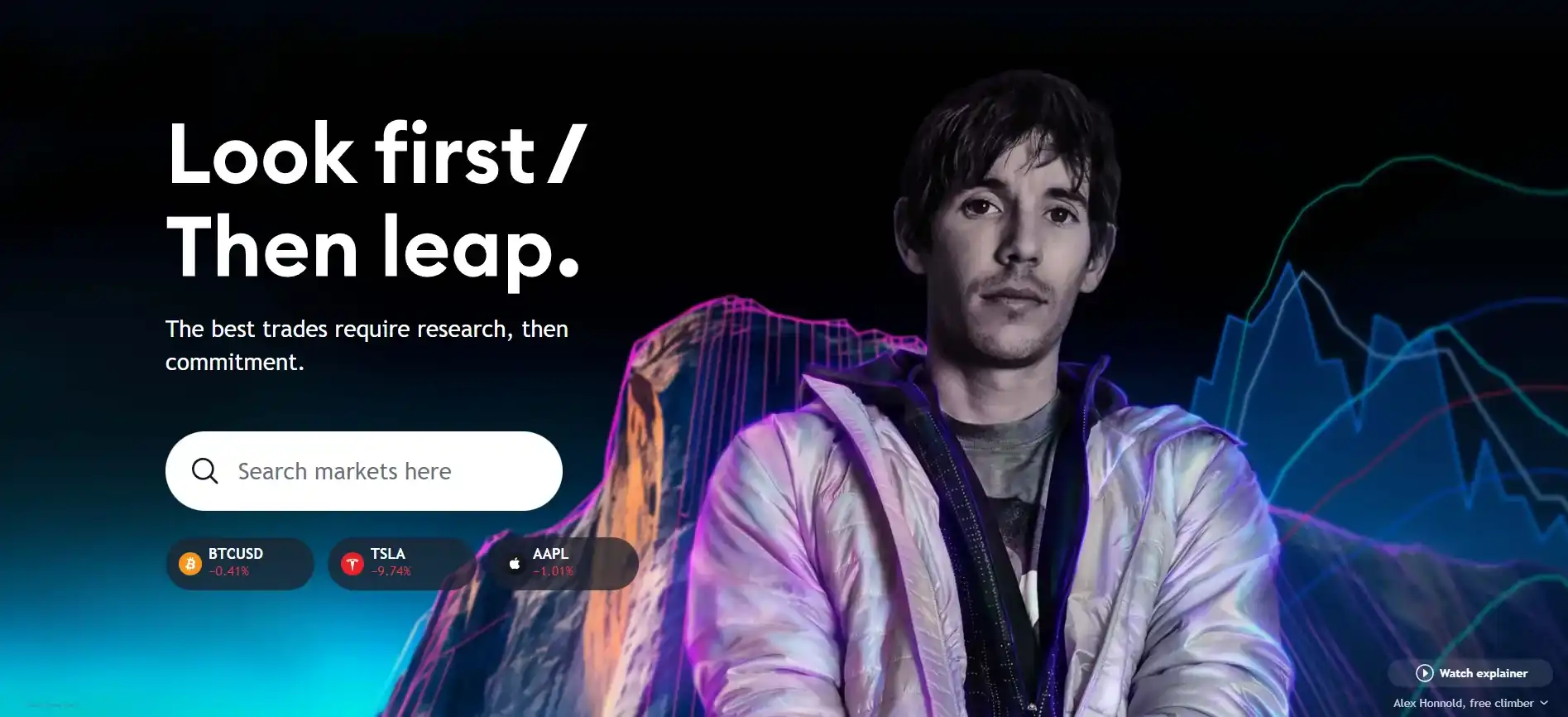
At first glance, it seems strange for a trading software to choose a free solo climber as a spokesperson.

What are they demonstrating—look at the K-line and then jump? But upon closer inspection, this cross-border choice of spokesperson is actually quite accurate.

Alex once discussed his understanding of "risk" in an interview with TradingView. He said:

"Risk to me means uncertainty, means rolling the dice to see the outcome. That's exactly what I try to avoid in climbing."

What Alex does, free solo climbing, more professionally called Free Solo, looks like an extreme sport, like risking his life.

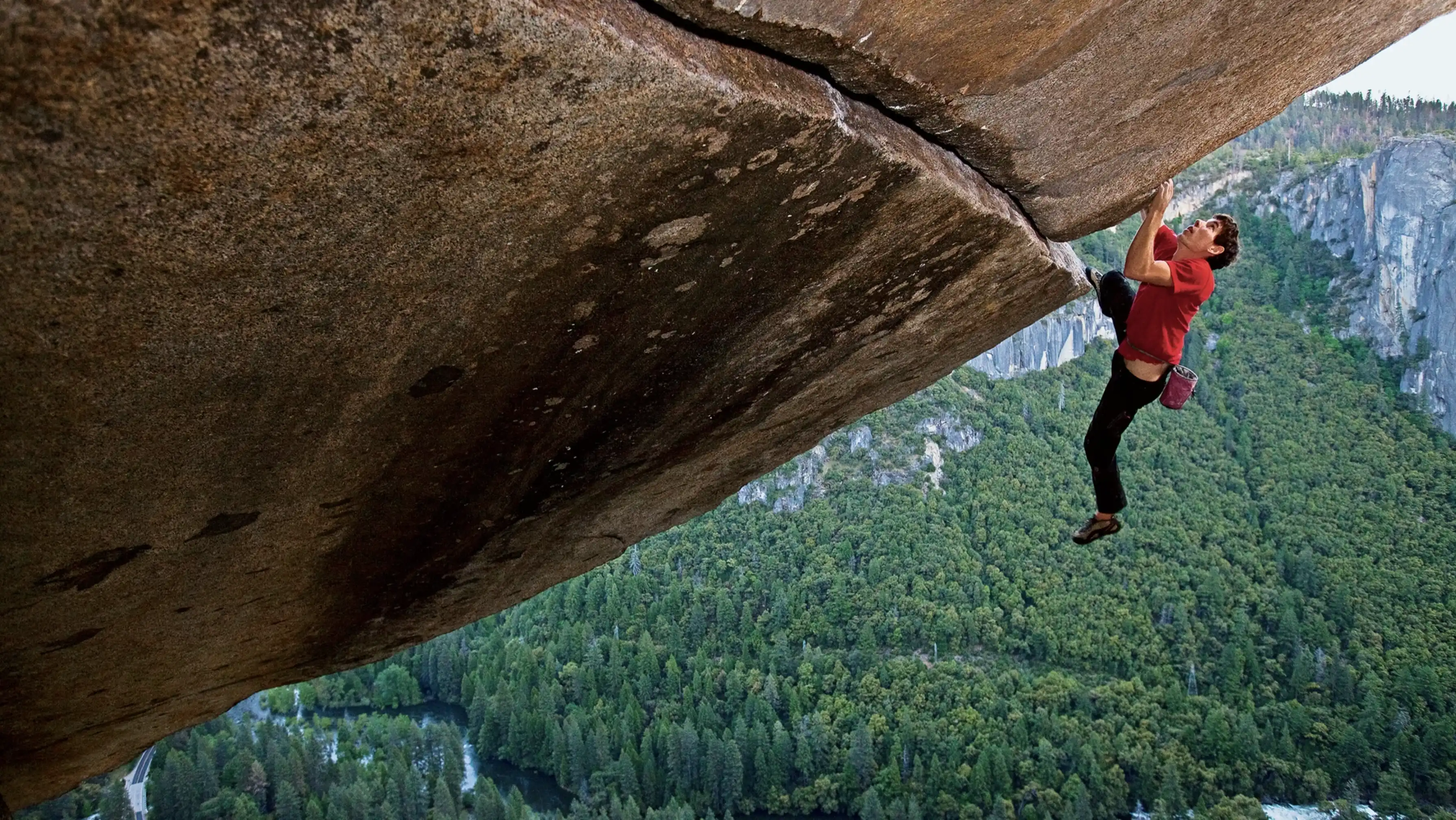
But if you've seen the documentary of him climbing that 900-meter granite rock, you'll find that Alex's methodology is actually extremely conservative.

For that climb, he spent nearly a decade conceptualizing it and a year and a half in actual preparation. He climbed every section of the route dozens of times with ropes until he knew every handhold and foothold by heart, even with his eyes closed.

He carried a notebook with him, recording details of every critical move.
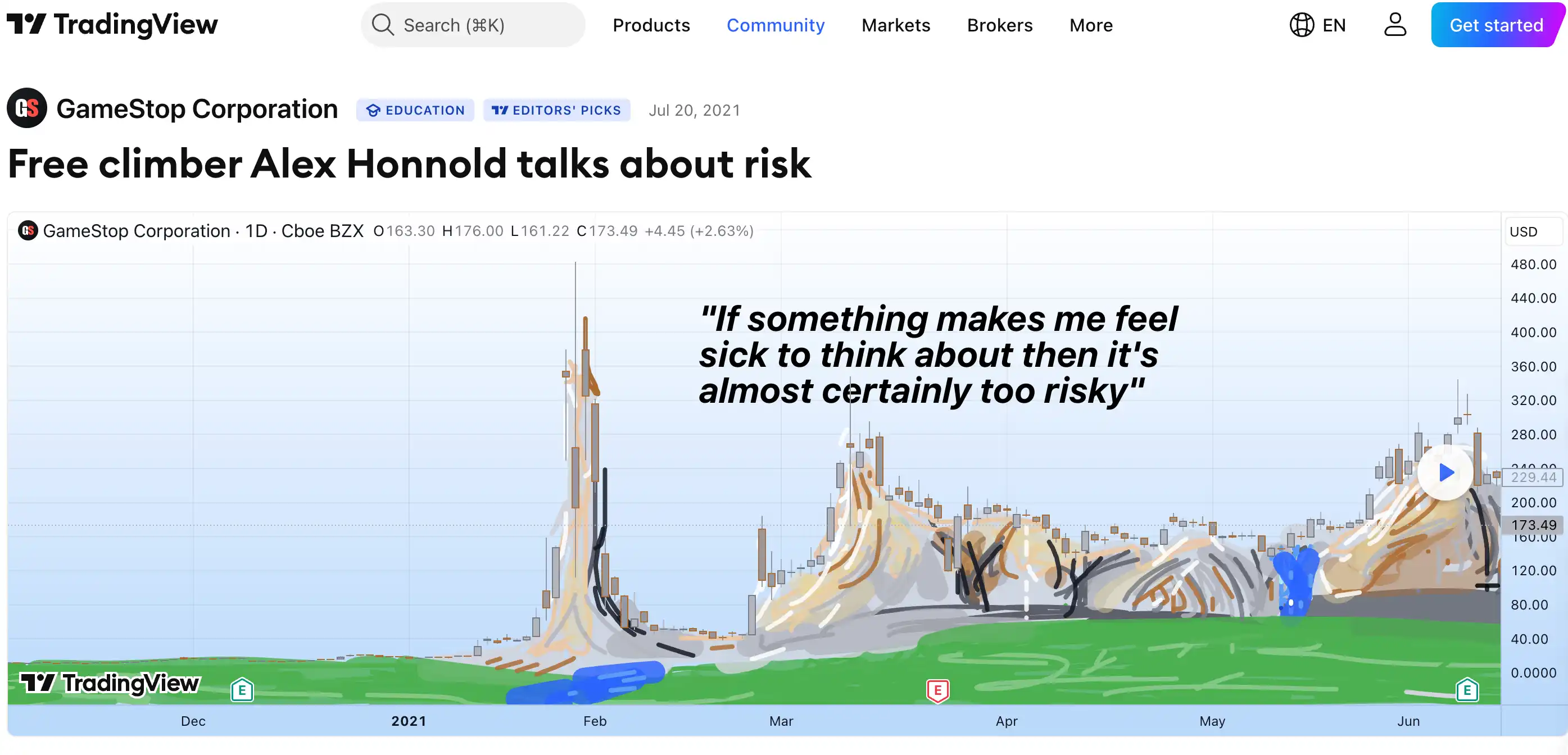
He has a saying that applies not just to climbing but probably to trading as well:

"If the thought of a move makes me feel nauseous, that means the risk is still too high, I'm not ready yet."

Fear is a signal, not an obstacle to overcome.

It was the same with this unprotected climb of Taipei 101. Before the live stream, he did a full rehearsal with ropes, testing every grip on every floor. The live stream, originally scheduled for the 23rd, was postponed to the 24th due to weather, and then from the 24th to the 25th.

Wait for the wind to stop, wait for the right conditions, then act.

What Alex Honnold does seems like one of the most dangerous things in the world—no protection, a fall if he slips—but the methodology behind it is极致 (ultimate) risk control:

Ten years of preparation, repeated rehearsals, waiting for conditions, rejecting uncertainty.

What many people do seems mundane: trading, opening contracts, buying a coin. But the methodology behind it might be much more radical than Alex's: jumping in at the sight of a social media signal, following a whale's purchase.

In the world of meme and contract trading, where gambling is rampant and being a second slow means missing out on gains, waiting seems like the enemy of making money. Let alone preparing for ten years, sometimes we haven't even calculated where our liquidation price is.

Alex says he tries to avoid rolling the dice.

But open any contract trading platform, and you'll find most people are rolling the dice, though we think we're analyzing.
That said, TradingView choosing Alex as a spokesperson might not be because he represents bravery or "extremeness."

But because he represents "surviving."

In an industry with an extremely high liquidation rate, surviving itself is the best advertisement. The ultimate goal of Free Solo is not reaching the summit; it's reaching the summit alive, coming down alive, and being able to climb again tomorrow.

The same goes for trading.

Alex Honnold could free-solo El Capitan not because he's brave, but because he knows more clearly than anyone else where every step lands.

He prepared for ten years.

What about you?

Note: Alex's spokesperson relationship with TradingView began in 2021. "Look first / Then leap" is TradingView's brand slogan. Alex's quote about risk is from an official TV interview.


Questions liées

QWho is Alex Honnold and what is he famous for?

AAlex Honnold is a 40-year-old professional rock climber famous for free solo climbing, notably climbing the 900-meter El Capitan in Yosemite without any protective equipment, as documented in the Oscar-winning film 'Free Solo'.

QWhat is the connection between Alex Honnold and TradingView?

AAlex Honnold is a brand ambassador for TradingView, a popular financial charting and analysis platform. Their partnership began in 2021, with the brand slogan 'Look first / Then leap'.

QAccording to the article, what is Alex Honnold's philosophy on risk?

AAlex Honnold views risk as uncertainty, akin to rolling dice for an outcome, which is precisely what he strives to avoid in his climbing. His methodology is based on extreme risk control: extensive preparation, repeated rehearsals, waiting for ideal conditions, and eliminating uncertainty.

QHow does the article draw a parallel between Alex Honnold's climbing and trading?

AThe article contrasts Alex's methodical, risk-averse approach to climbing with the often reckless, impulsive behavior of many traders. It suggests that successful trading, like free soloing, is not about being fearless but about meticulous preparation and risk management to 'survive' and continue.

QWhat was the ultimate message about trading implied by using Alex Honnold as an endorser?

AThe ultimate message is that in a high-risk industry with a high rate of failure (like trading), the best advertisement is survival. The goal isn't just to make a successful trade ('reach the summit'), but to do so while managing risk so you can 'survive' and continue trading another day.

Lectures associées

Après trois trimestres consécutifs de baisse, le marché des cryptomonnaies pourra-t-il connaître une fenêtre de stabilisation au troisième trimestre ?

Le marché des cryptomonnaies a enregistré son pire trimestre depuis 2022, avec une capitalisation totale chutant de 12,6% à 2 100 milliards de dollars. Tous les indicateurs clés (volume des échanges, valeur des stablecoins) montrent une sortie nette de capitaux. Le Bitcoin a perdu 14,2% et l'Ethereum 25,4% sur le trimestre, rompant sa corrélation antérieure avec les actions technologiques. Les ETF spot américains sur le Bitcoin ont subi des rachats massifs, avec une sortie nette de 4,67 milliards de dollars au Q2, indiquant une pression de vente continue. Le resserrement de la politique de la Fed et les ventes d'entreprises comme Strategy ont accentué la déleveragisation du secteur. L'attention du marché se porte désormais presque exclusivement sur la réunion de la Fed fin juillet. Une position accommodante pourrait stabiliser le Bitcoin entre 68 000 et 84 000 dollars, tandis qu'un ton hawkish pourrait le faire osciller autour de 50 000-56 000 dollars. Parallèlement, la progression du *CLARITY Act*, une loi cruciale pour la clarté réglementaire, est au point mort au Sénat, réduisant les chances d'adoption en 2026 et maintenant une prime de risque élevée sur l'ensemble du secteur. Malgré ce contexte difficile, quelques secteurs résistent : les marchés de prédiction ont vu leur volume nominal augmenter de 48,7% et les biens collectionnables tokenisés ont progressé d'environ 143%. La tokenisation d'actifs du monde réel (RWA) continue également sa croissance régulière, portée par des fondamentaux indépendants du cycle crypto. Les bases d'un effondrement extrême semblent absentes, mais le marché est désormais guidé par les politiques monétaires, les prix et les attentes de taux, plutôt que par le simple récit haussier. La fin des sorties massives des ETF et le retour des achats des détenteurs à long terme pourraient indiquer une phase de stabilisation potentielle.

marsbitHier 08:42

Après trois trimestres consécutifs de baisse, le marché des cryptomonnaies pourra-t-il connaître une fenêtre de stabilisation au troisième trimestre ?

marsbitHier 08:42

The SpaceX Trade, Unlocked: SPCXON Débarque sur WEEX

En juin 2026, SpaceX a réalisé la plus grande introduction en bourse de l'histoire, mais l'accès à l'action a été limité pour de nombreux investisseurs en raison de restrictions régionales et de frictions liées aux courtiers. La plateforme WEEX propose désormais une solution via SPCXON/USDT, un instrument tokenisé sur le marché au comptant qui permet d'obtenir une exposition au cours de SpaceX en utilisant l'USDT, sans nécessiter de compte de courtage américain. SPCXON est un produit tokenisé construit sur l'infrastructure d'Ondo, conçu pour refléter l'économie de la détention d'actions SpaceX pour les traders éligibles en dehors des États-Unis, avec des dividendes réinvestis. Le cas d'investissement repose sur la croissance des revenus de Starlink et les progrès de Starship, malgré un valorisation déjà élevée et des risques liés à un flottant public réduit et à des déblocages d'actions internes à venir. Il est important de noter que SPCXON offre une exposition, et non la propriété directe d'actions ou de droits de vote. Son prix peut évoluer avec une prime ou une décote par rapport à la valeur liquidative. WEEX propose également d'autres produits tokenisés comme MSTRON et MUON dans un compte unifié, permettant une rotation entre crypto-monnaies et actions traditionnelles sans transfert de fonds. La plateforme souligne ainsi comment les barrières entre la finance traditionnelle et les actifs numériques s'estompent.

TheNewsCryptoHier 08:34

The SpaceX Trade, Unlocked: SPCXON Débarque sur WEEX

TheNewsCryptoHier 08:34

BIT Trading Moment : Le BTC reste sous la pression de l'EMA 200 hebdomadaire, un rejet pourrait relancer la baisse, les actions de stockage et de semi-conducteurs qui ont bondi cette nuit ont baissé en séance de nuit

**Résumé des marchés : Bitcoin sous pression, actions technologiques en réajustement** Le marché crypto poursuit son rebond, avec Bitcoin évoluant autour de 66 000 $. Il fait face à une résistance clé vers 68 000 $, niveau correspondant au coût moyen des investisseurs sur cinq mois. Les traders surveillent les moyennes mobiles clés (200 MA à ~63 333 $ et 200 EMA à ~68 328 $ en hebdomadaire). Une rupture au-dessus de 68 000 $ ouvrirait la voie à une hausse, tandis qu'un échec pourrait entraîner un retest des 63 000 $. L'analyse suggère que la dynamique actuelle ressemble à un rebond estival à faible liquidité plutôt qu'au début d'un véritable marché haussier. Sur le marché actions américain, après une forte séance mardi portée par les semi-conducteurs et les titres du stockage (Micron, AMD, Intel...), les contrats à terme indiquent une ouverture en baisse. Les secteurs ayant récemment bondi, comme les semi-conducteurs et le stockage, reculent en séance de nuit. Certaines valeurs se démarquent néanmoins, comme Super Micro Computer (SMCI), en hausse après des résultats et des perspectives robustes liées à la demande de serveurs IA. Des vents contraires persistent : les prix du pétrole (Brent >91$) et les rendements des obligations d'État américaines grimpent, ravivant les craintes inflationnistes. En Asie, les marchés ont suivi le rebond technologique américain, mais de manière hésitante. La tension reste forte sur le yen japonais, qui atteint son plus bas niveau depuis des décennies. **Points clés à surveiller :** * **Crypto :** Niveaux techniques de Bitcoin (68k$/63k$), flux des ETF spot. * **Actions :** Saison des résultats (Tesla, Alphabet, Intel...), activité d'AMD sur l'IA. * **Économie :** Données américaines sur l'emploi, décision de la BCE, tensions géopolitiques et prix de l'énergie.

marsbitHier 08:34

BIT Trading Moment : Le BTC reste sous la pression de l'EMA 200 hebdomadaire, un rejet pourrait relancer la baisse, les actions de stockage et de semi-conducteurs qui ont bondi cette nuit ont baissé en séance de nuit

marsbitHier 08:34

Gate Research Institute : La vague de « Wall Streetisation » des produits financiers cryptographiques, concurrence ou fusion ?

Le titre de l'article est : "Gate Institute : La vague de 'Wall Street-isation' des produits financiers cryptos, est-ce une compétition ou une fusion ?" Résumé en français (environ 1400 caractères) : Il y a dix-sept ans, Bitcoin fut créé avec une vision décentralisée et anti-establishment financier. Aujourd'hui, paradoxalement, son adoption massive passe souvent par des ETF émis par des géants comme BlackRock. Cet article analyse cette "Wall Street-isation" apparente des actifs cryptos : les institutions traditionnelles s'emparent-elles du pouvoir d'émission, de tarification, de garde et de distribution ? La réalité est plus nuancée. C'est une convergence à double sens. D'un côté, les plateformes cryptos comme Gate.io étendent leurs services aux actions traditionnelles (états-uniennes, hongkongaises, sud-coréennes), aux CFD et aux produits tokenisés, offrant un compte unifié. De l'autre, des courtiers traditionnels comme Robinhood intègrent les cryptomonnaies et explorent la tokenisation d'actions sur blockchain. Cette fusion vise à créer le "super-compte" financier de demain, où actions, cryptos, ETF et obligations tokenisées (RWA) coexistent dans une même interface, comblant les faiblesses de chaque écosystème. Les RWA, notamment les obligations d'État tokenisées, agissent comme une couche intermédiaire unificatrice. En conclusion, Wall Street n'a pas conquis la crypto, et la crypto n'a pas contourné Wall Street. Ils construisent ensemble une nouvelle forme de marché des capitaux, plus efficace et mondial, où l'idéal décentralisé persiste dans les protocoles, tandis qu'une expérience utilisateur unifiée émerge à l'interface.

marsbitHier 08:09

Gate Research Institute : La vague de « Wall Streetisation » des produits financiers cryptographiques, concurrence ou fusion ?

marsbitHier 08:09

Trading

Spot
活动图片




