ZCash reclaims $400, but here’s why the recovery could be short-lived

ambcryptoPublicado a 2026-07-03Actualizado a 2026-07-03

Resumen

ZCash (ZEC) has seen a 5.28% price increase, reclaiming the $400 level amid a broader, albeit cautious, crypto market recovery at the start of July. However, analysis suggests this rebound may be short-lived. Despite a whale opening an $8.1 million long position, the lack of significant growth in Open Interest indicates weak speculative interest. The price structure remains bearish, with key resistance at the $480-$540 zone. Failure to overcome this supply area, coupled with a potential loss of the local $360-$380 support, could see ZEC retreat toward $300, especially if Bitcoin's own recovery falters.

The crypto market has started July off on a positive note. Though June forced sizeable losses across the market, a positive start to the new month has given many altcoins a new lease of life.

Bitcoin [BTC] has gained 6.26% from the low of $57,800 made on July 1, and the altcoin market cap, including Ethereum, has expanded by 4.05%.
Source: Axel Adler Jr. on X

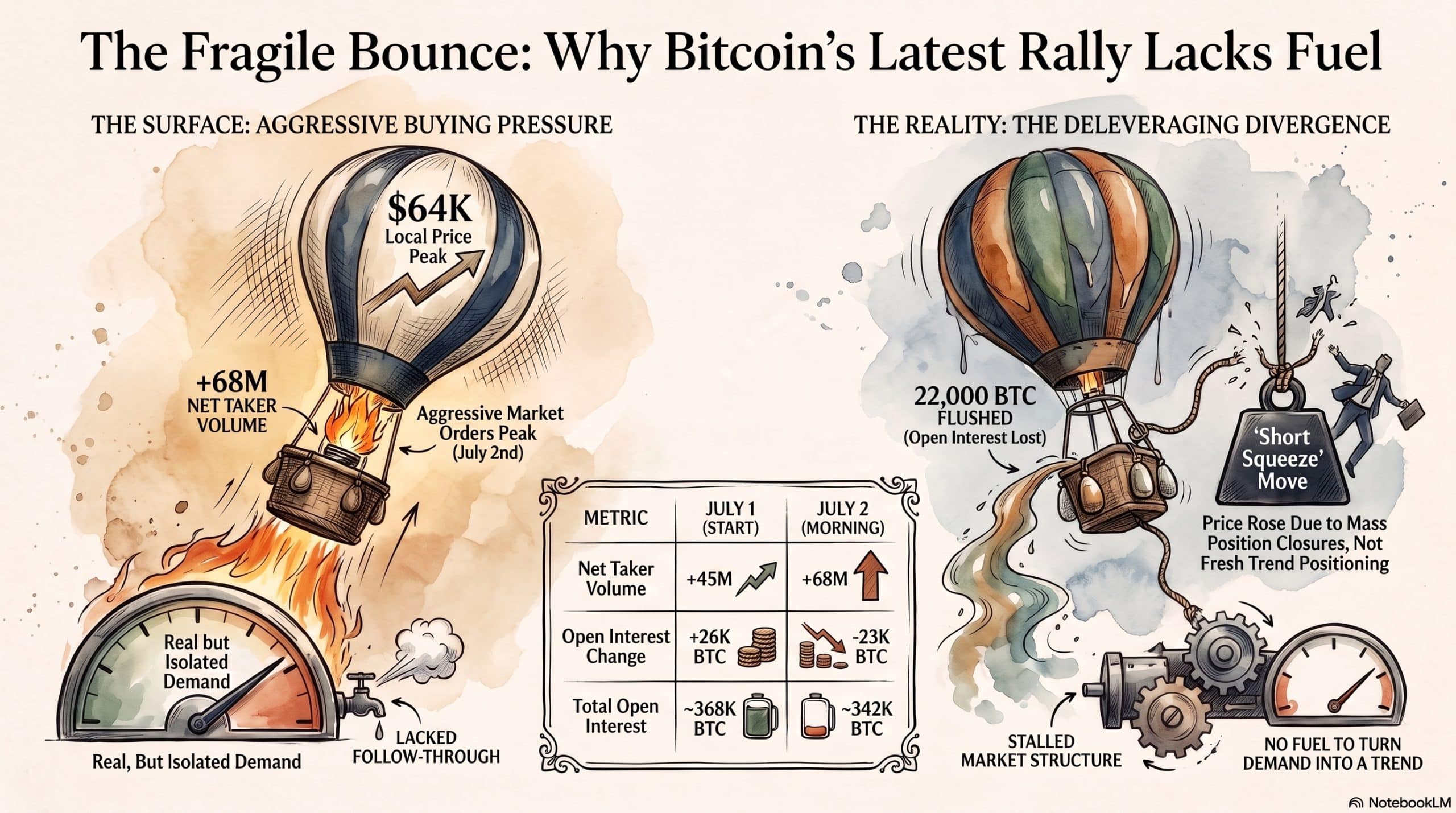
In a post on X, crypto analyst Axel Adler Jr. explained that the Bitcoin Open Interest fell by 23k BTC, though net taker buy volume was $68 million. The lack of growth in OI, despite aggressive buying in the perpetual markets, suggested a lack of fuel to sustain the upward move.

A lack of bullish follow-through can negatively impact altcoins, including ZCash [ZEC]. The token was up 5.28% in 24 hours, but its OI has grown by only 1.33%, indicative of a lack of speculative interest.

AMBCrypto reported that a ZEC whale had opened a $8.1 million long position, but that the price structure remained bearish. Here’s what ZEC bulls need to see before they can bet on a sustained uptrend.

The former range above $500 is pivotal for revival
Source: ZEC/USDT on TradingView

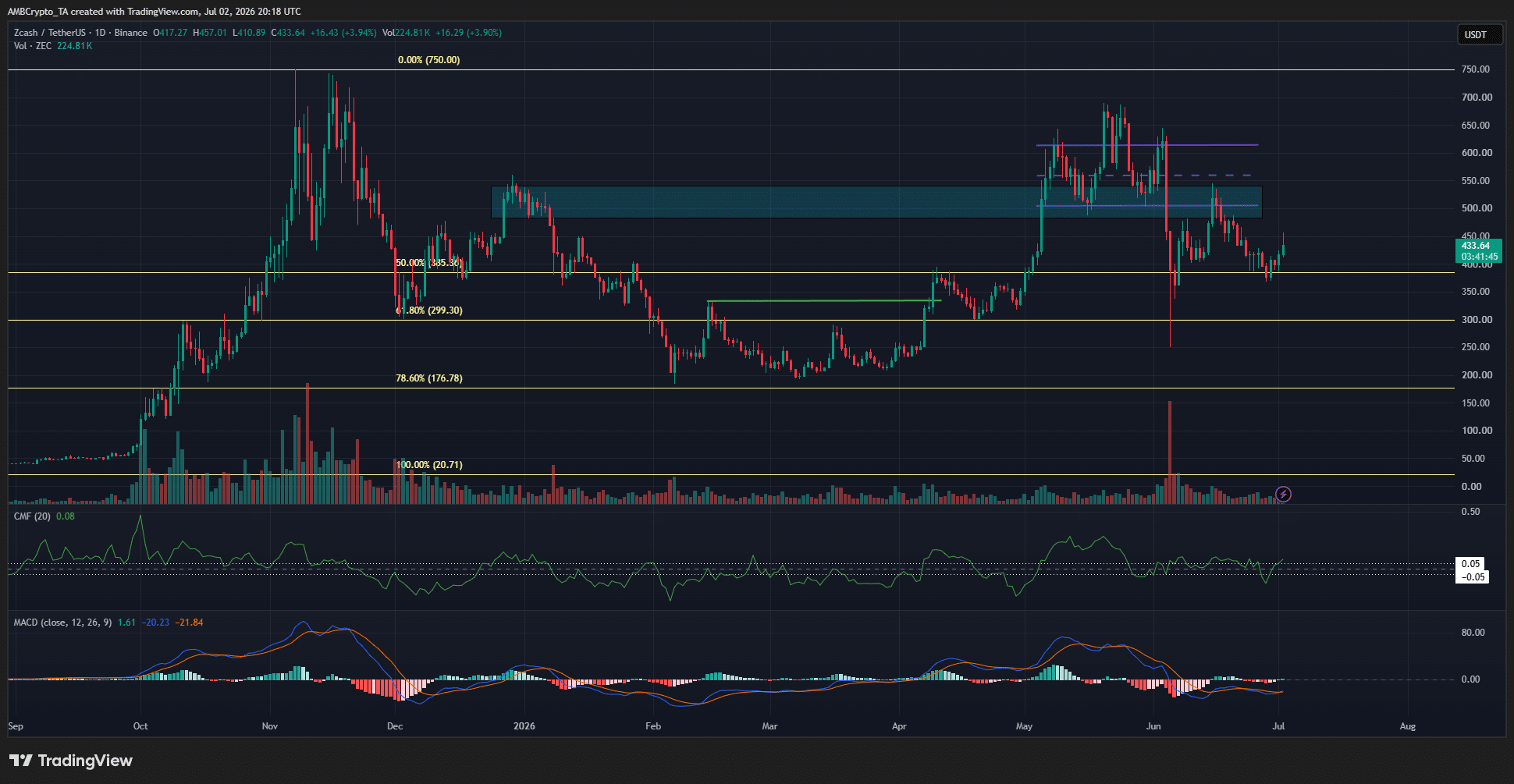
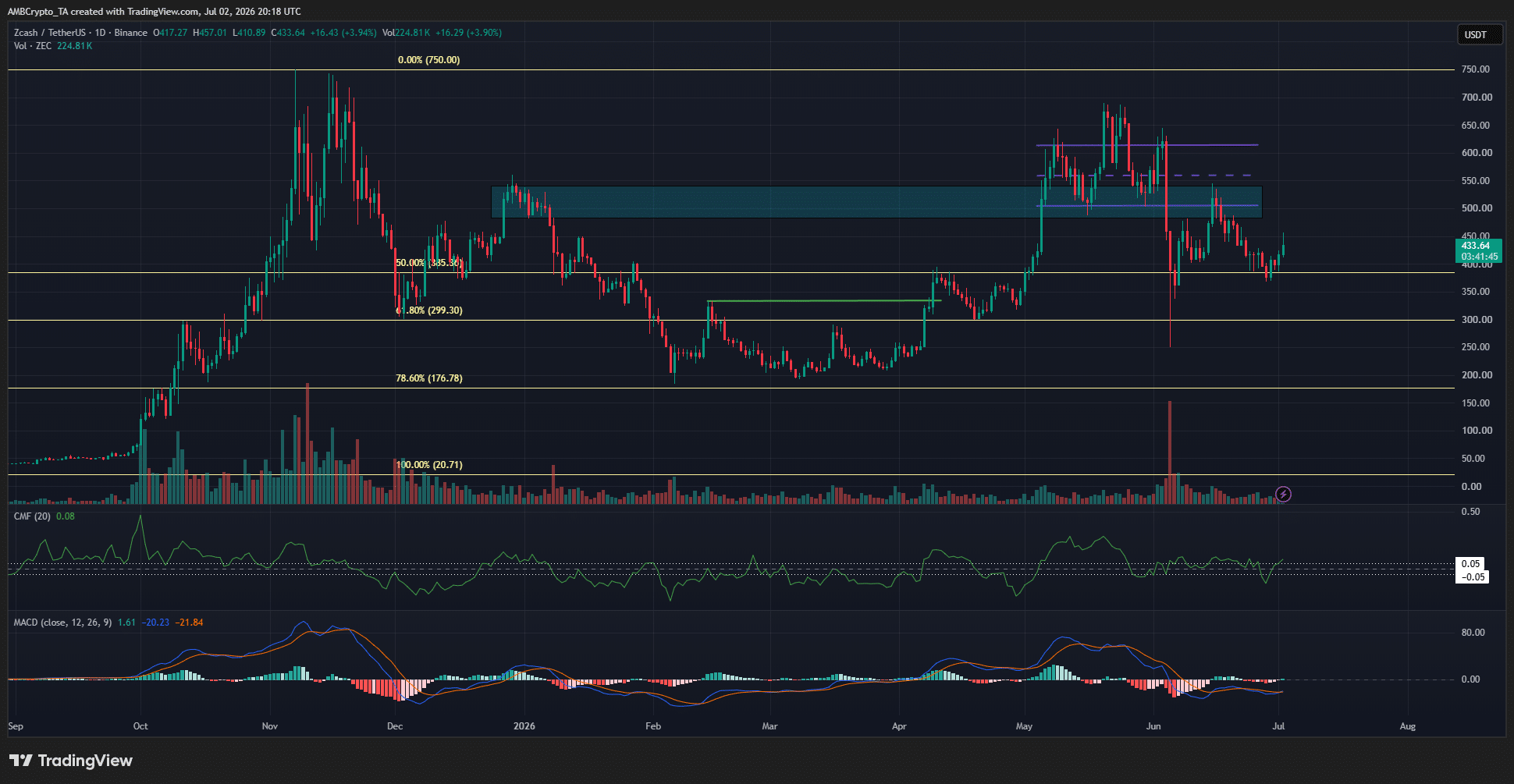
The 1-day chart showed a bearish internal market structure. The $486.61 low made in mid-May fell below the local range’s low, but the buyers were not able to defend this demand zone for long.

The subsequent waves of selling forced a price drop below $400 on two occasions in the weeks since this bearish breakdown.

At the time of writing, the CMF was at +0.08 to show significant buying pressure. The recovery from $176 earlier this year was part of a longer-term uptrend, but as things stand, the $480-$540 supply zone must be overcome to revive the idea of a bullish recovery.

If, instead, ZEC falls below the $360-$380 local support zone once again, swing traders and investors can expect the move to continue toward the next support level at $300.


Final Summary

  • The $360-$380 local support zone and $480-$540 resistance zone were the key battlegrounds ZEC swing traders must watch.
  • If the short-term Bitcoin bounce fails to gain traction, a momentum reversal could hurt ZEC and push it back below $400.


Preguntas relacionadas

QAccording to the article, why might ZCash's recovery be short-lived?

AThe recovery might be short-lived due to a lack of growth in Bitcoin's Open Interest (OI) despite buying, suggesting insufficient fuel for a sustained upward move, and ZCash's own OI growth of only 1.33%, indicating a lack of speculative interest.

QWhat are the key price zones for ZEC (ZCash) according to the technical analysis in the article?

AThe key zones are the local support zone at $360-$380 and the crucial supply/resistance zone at $480-$540. The price must overcome the $480-$540 zone to revive a bullish recovery idea.

QWhat potential downside target is mentioned if ZEC breaks below its $360-$380 support?

AIf ZEC falls below the $360-$380 local support zone, the move could continue toward the next support level at $300.

QWhat did the article report about a ZEC whale's activity?

AThe article reported that a ZEC whale had opened an $8.1 million long position.

QWhat broader market condition could negatively impact ZEC and other altcoins?

AA lack of bullish follow-through in Bitcoin's price movement could negatively impact altcoins like ZEC. If Bitcoin's short-term bounce fails to gain traction, a momentum reversal could hurt ZEC.

Lecturas Relacionadas

A New 'Ghost Story' in Storage: Is the US Going to Grab Money?

The article discusses a potential new phase in US-Korea semiconductor relations, shifting from pressure to build factories in the US to demands for profit-sharing. Citing the *Korea Times*, it reports that a US trade official allegedly claimed the US has a right to share in the massive profits of South Korean chipmakers Samsung and SK Hynix, arguing that purchases by American companies directly drive their earnings. While unconfirmed by US authorities, the claim has caused concern in Korea. The context is Korea's surging semiconductor exports to the US and the dominant profitability of its memory chipmakers in the global AI supply chain. Analysis from CITIC Securities draws historical parallels, noting that sustained high profits or market share by foreign firms in key industries have often triggered US political intervention to redistribute global industrial benefits, as seen with Japanese semiconductors in the 1980s and Taiwanese panels in the 2000s. Currently, the primary US focus remains securing AI-related memory supply and encouraging Korean investment in US manufacturing. Systemic political pressure to curb Korean profits is not yet evident. However, the report warns the risk could materialize if continued price increases start squeezing the profits and competitiveness of American companies. Key signals to watch would be if US tech giants publicly oppose price hikes or if US policymakers reframe the issue around anti-competitive practices. The official's reported remarks are seen as an early sign that the battleground in US-Korea chip rivalry may be extending to the division of profits.

marsbitHace 4 min(s)

A New 'Ghost Story' in Storage: Is the US Going to Grab Money?

marsbitHace 4 min(s)

Trading

Spot
活动图片