XRP Open Interest Climbs As Traders Build Fresh Bearish Positions

bitcoinistPublicado a 2026-04-06Actualizado a 2026-04-06

Resumen

XRP open interest has surged to $952 million, indicating a significant increase in speculative activity within the derivatives market. This rise was accompanied by negative funding rates, suggesting traders are opening new short positions and bearish on the asset. The high open interest levels increase the risk of market volatility and potential short squeezes. Although XRP experienced a rebound alongside the broader cryptocurrency market, with Bitcoin rising over 4%, the analyst notes that such leverage-driven rallies are often fragile and prone to retracement. Currently, XRP is trading around $1.35, unchanged from the previous week.

Data shows the XRP Open Interest rose alongside Funding Rates turning red, a sign that traders opened new short positions related to the coin.

XRP Has Witnessed A Surge In Open Interest Recently

As pointed out by CryptoQuant community analyst Maartunn in a Sunday X post, the XRP Open Interest witnessed a sharp surge. The “Open Interest” here refers to an indicator that measures the total amount of positions related to the cryptocurrency that are currently open on all centralized exchanges. The metric includes both short and long positions.

As the chart shared by Maartunn shows, the XRP Open Interest climbed to $943 million during the weekend.
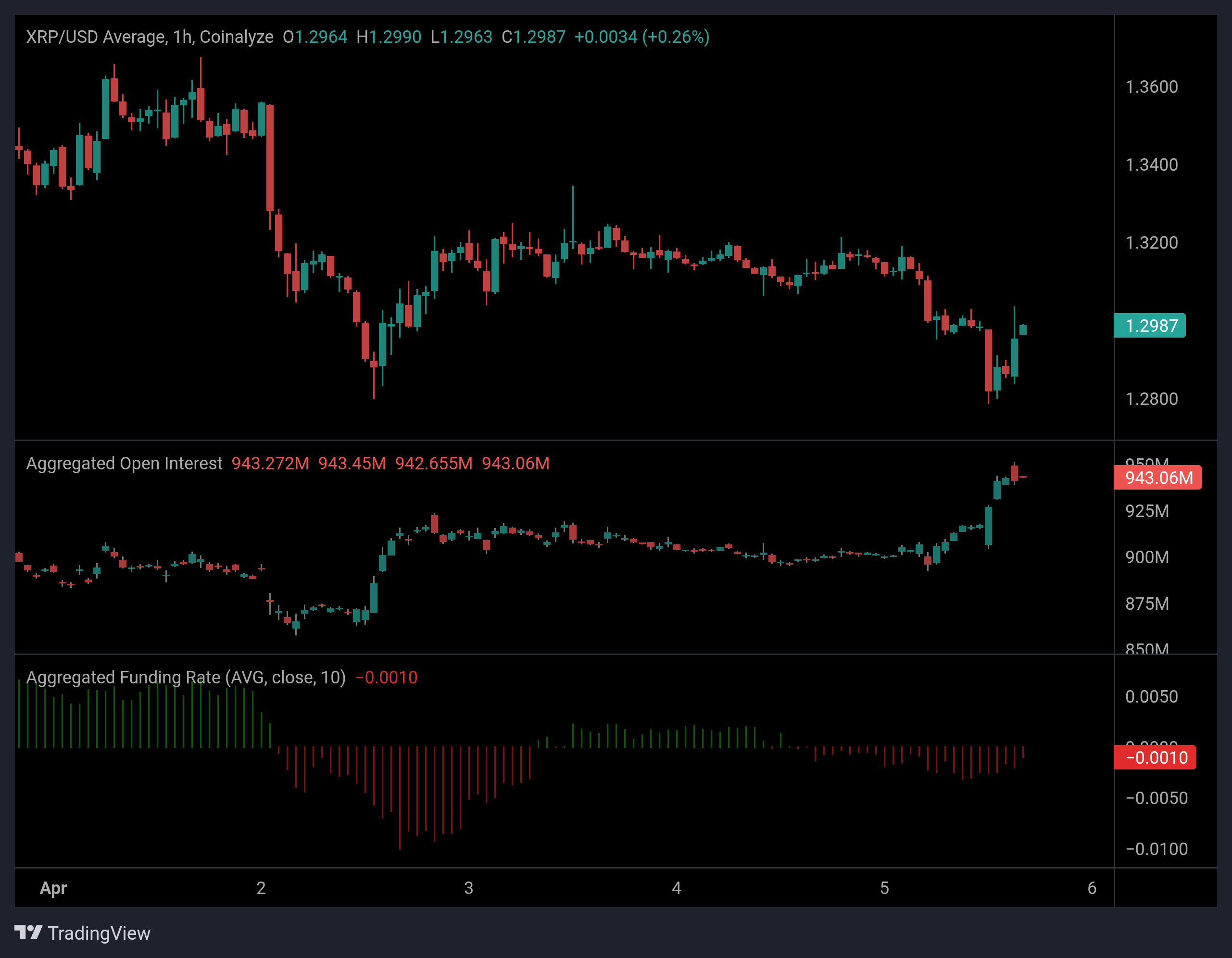
The Funding Rates were red alongside this Open Interest jump | Source: @JA_Maartun on X

The increase in the indicator naturally implies a jump in speculative activity among derivatives market traders tok place. Now, what kind of bets were traders opening? The answer to that can be inferred from the Funding Rate, which tracks the amount of periodic fees that derivatives contract holders are paying each other.

From the chart, it’s visible that the Funding Rate remained negative during the Open Interest surge, suggesting short investors were paying a premium to the long ones. In other words, the new positions that appeared leaned in the bearish direction.

Generally, a sharp rise in the Open Interest can lead into market volatility, as the risk of mass liquidations occurring can go up. The side that’s more likely to be caught up in such a squeeze tends to be the one that’s more dominant. Since the new Open Interest increase came alongside a red Funding Rate, a short squeeze became more probable to happen.

XRP has observed a bounce over the past day, so it’s possible that short liquidations had a role in it. As the analyst has highlighted in a new post, however, the Open Interest has still remained at high levels even after the rebound.
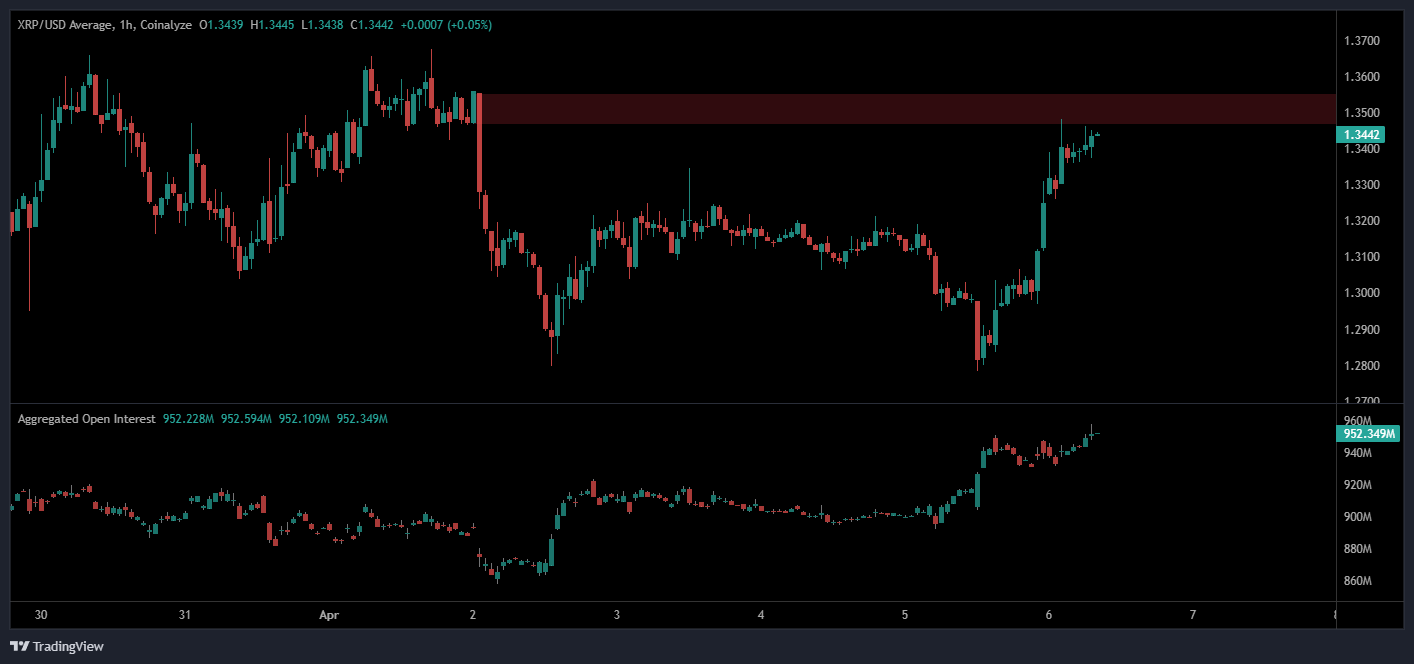
The latest data for the XRP Open Interest | Source: @JA_Maartun on X

Currently, the XRP Open Interest is sitting at $952 million, higher than it was on Sunday. Thus, it would appear that a further influx of speculative activity has occurred in the market. “Open Interest didn’t fully reset, and price is now tapping resistance,” noted Maartunn. “Not the kind of structure I want to overstay.”

XRP isn’t alone in finding a rebound in the past day; the rest of the cryptocurrency sector has also surged. Bitcoin, for example, has gone up by more than 4% over the last 24 hours.

Like with XRP, the rally has been accompanied by a spike in the Open Interest, a potential sign that leverage is driving the market right now. “These rallies are usually fragile. Around 75% tend to return to their origin,” explained the analyst.
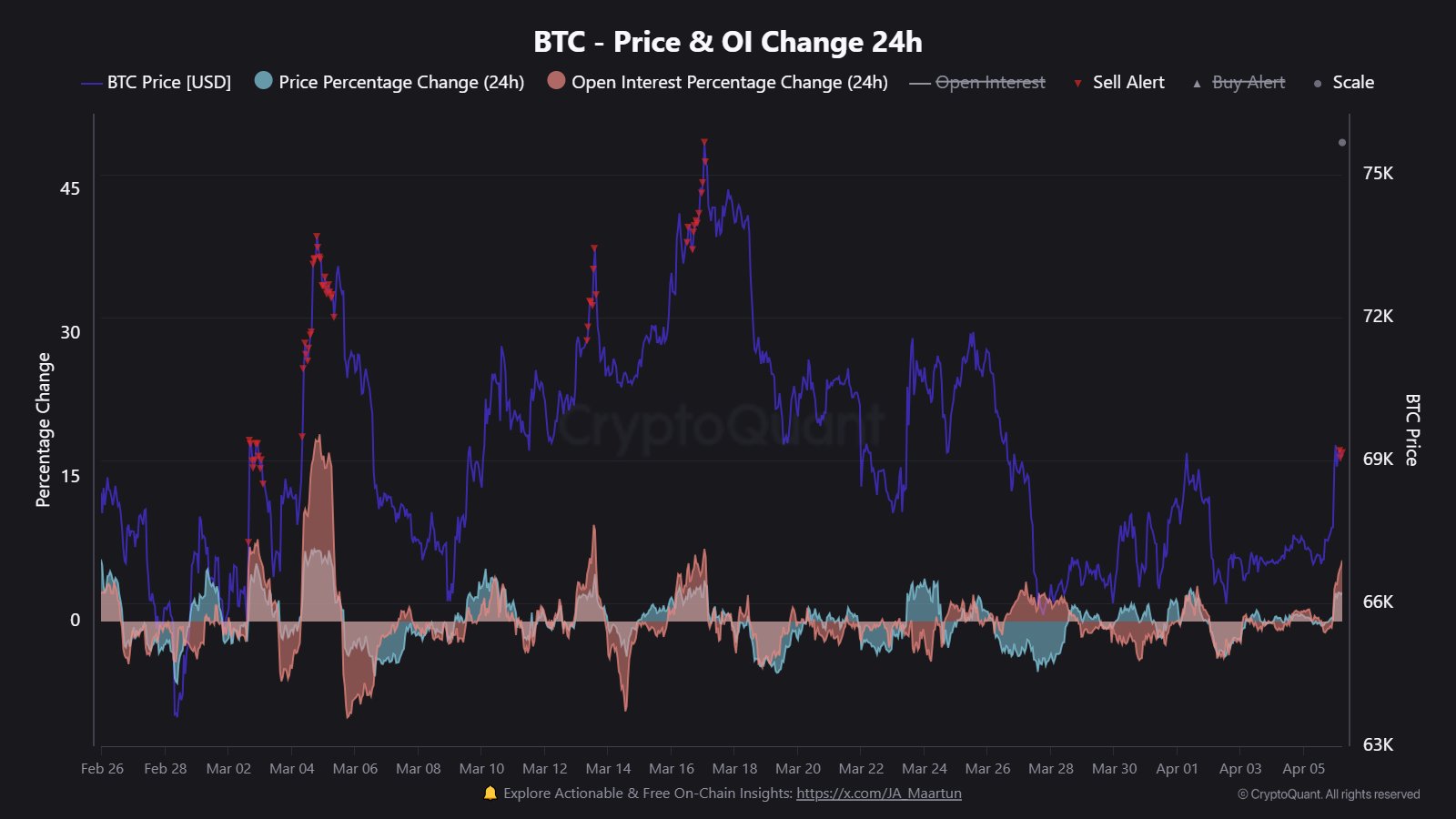
How the 24-hour percentage change in the metric has fluctuated for Bitcoin | Source: @JA_Maartun on X

XRP Price

At the time of writing, XRP is floating around $1.35, unchanged from one week ago.

Looks like the price of the coin has climbed during the past day | Source: XRPUSDT on TradingView

Preguntas relacionadas

QWhat does the increase in XRP Open Interest indicate about trader activity?

AThe increase in XRP Open Interest indicates a jump in speculative activity among derivatives market traders, as it measures the total amount of open positions on centralized exchanges.

QHow did the Funding Rate behave during the Open Interest surge, and what does this suggest?

AThe Funding Rate remained negative during the Open Interest surge, suggesting that short investors were paying a premium to long investors, indicating that the new positions were predominantly bearish.

QWhat is the potential market risk associated with a sharp rise in Open Interest?

AA sharp rise in Open Interest can lead to increased market volatility and a higher risk of mass liquidations, with the dominant side (in this case, shorts) being more likely to be caught in a squeeze.

QWhat was the value of the XRP Open Interest after the recent rebound, according to the analyst?

AAfter the recent rebound, the XRP Open Interest was sitting at $952 million, which is higher than it was on Sunday, indicating a further influx of speculative activity.

QHow does the analyst describe the nature of the current market rallies driven by leverage?

AThe analyst describes these leverage-driven rallies as 'fragile,' noting that around 75% of them tend to return to their origin.

Lecturas Relacionadas

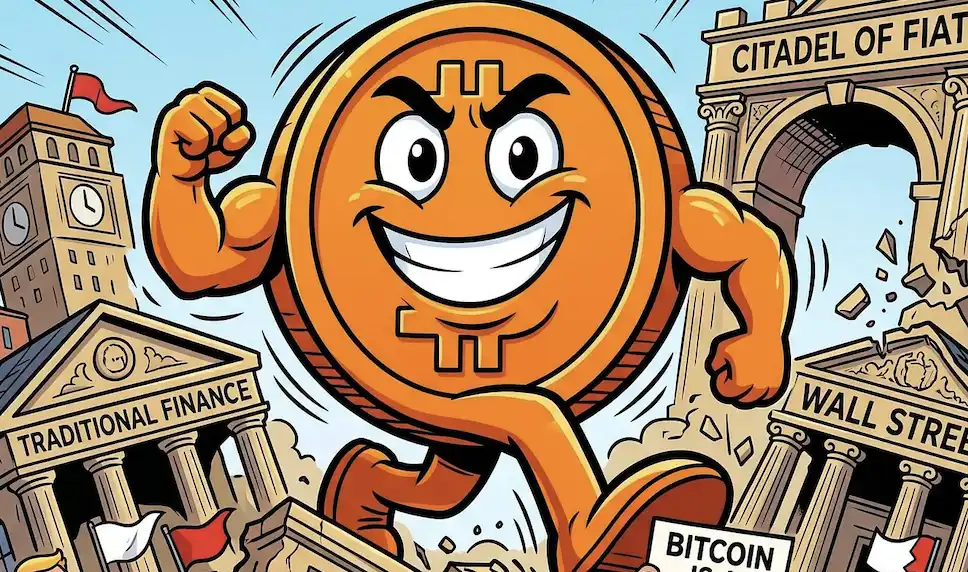
Goldman Sachs Bows Down, Bitcoin Finally Breaks Through the Gates of Wall Street

Wall Street giants, including Goldman Sachs, Morgan Stanley, Charles Schwab, and the New York Stock Exchange, have reversed their long-standing opposition to Bitcoin and are now actively embracing it. After years of dismissing Bitcoin as a scam, a bubble, or a tool for illicit activities, these institutions are launching Bitcoin ETFs, enabling spot trading, and building dedicated crypto infrastructure. Goldman Sachs, which once called Bitcoin a "fraud tool," is now offering Bitcoin ETFs. Morgan Stanley, which internally banned the term "cryptocurrency," has launched its largest-ever ETF backed by Bitcoin. Charles Schwab has opened spot crypto trading for its retail clients, integrating Bitcoin alongside traditional assets. The NYSE is building robust infrastructure to support digital assets, signaling a long-term commitment. This dramatic shift is driven not by a change in ideology but by economic necessity. As Bitcoin repeatedly survived market crashes and grew into a multi-trillion-dollar asset class, ignoring it became too costly. Wall Street’s business model relies on capturing fees, and Bitcoin’s rise represented a massive wealth transfer occurring outside their ecosystem. The fear of missing out (FOMO) and client demand forced these institutions to capitulate. The article frames this as a historic surrender to Bitcoin’s mathematical inevitability. Unlike the trust-based traditional financial system, Bitcoin operates on decentralized, transparent, and unchangeable rules. Its scarcity and resilience make it a hedge against fiat currency devaluation and systemic risk. The narrative has flipped: not holding Bitcoin is now seen as the greater risk. The author concludes that Bitcoin has not been co-opted by Wall Street; instead, it has co-opted Wall Street, marking a fundamental shift in the global financial architecture.

marsbitHace 47 min(s)

Goldman Sachs Bows Down, Bitcoin Finally Breaks Through the Gates of Wall Street

marsbitHace 47 min(s)

Trading

Spot
Futuros
活动图片