XRP Dips 15% as Stablecoin Supply on XRPL Surges

TheNewsCryptoPublicado a 2026-01-10Actualizado a 2026-01-10

Resumen

XRP's price declined by approximately 15% to $2.09 on January 9, retreating from its yearly high. Meanwhile, the supply of stablecoins on the XRP Ledger has surged significantly, rising 33% in the past week to over $406 million—a substantial increase from $93 million during the same period last year. This growth is largely driven by Ripple USD (RLUSD), which saw a 42% monthly increase, reaching $332 million in supply. RLUSD, launched in December 2024, has become one of the largest stablecoins with a total supply of $1.4 billion, primarily on Ethereum. Despite XRP's recent price dip, its 50-day exponential moving average remains bullish. Additionally, U.S. investor demand is growing, with XRP ETFs witnessing net inflows boosting total assets to $1.49 billion.

XRP saw a significant slip to $2.09 on January 9, marking around a 15% low from its highest point of this year. The data from DeFi Llama reveals that the supply of stablecoins in XRP Ledger has continuously risen this year.

It has witnessed a 33% jump in the past week to more than $406 million, which stood at $93 million in the same period of the last year. The growth can be heavily attributed to the Ripple USD coin, whose supply surged by 42% in the past month and stood at $332 million.

The other prominent stablecoins in the industry are OpenEden, Tbill, USD Coin and EURQ. Stablecoins, majorly supported by fiat currencies, have become prominent players in the payment industry.

Data reveals that there are more than $308 billion worth of stablecoins in circulation in the current scenario, which will grow further.

The Positioning of the Biggest Stablecoin

Ripple USD was introduced in December 2024, and it has now positioned itself to be one of the biggest stablecoins, having an overall supply of $1.4 billion. A large portion of the supply contains Ethereum (ETH), which is the most used chain for stablecoin transactions.

The supply has high chances of surging as Ripple goes beyond the layer-2 networks like Base and Optimism. XRP is also witnessing an increased demand from American investors, who accumulated ETFs estimated at more than $8.7 million on January 8 after removing $40 million in assets a day before.

The overall inflow in XRP ETFs has surged to $1.21 billion, and the net assets have shifted to $1.49 billion. The daily timeframe chart reveals that the price of XRP has retreated in the last few days, shifting from a high of $2.4153 on January 6 to $2.09 on January 9.

Its 50-day exponential average remains on the positive side, revealing a bullish sign, and it was also above the Supertrend indicator.

Highlighted Crypto News Today:

U.S. Spot Bitcoin and Ethereum ETFs See Sharp Outflows Over $1B After Early January Bounce

TagsRippleStablecoinxrp

Preguntas relacionadas

QWhat was the percentage drop in XRP's price on January 9th, and what was the new price?

AXRP dropped approximately 15% to $2.09 on January 9th.

QHow much has the stablecoin supply on the XRP Ledger grown in the past week, and what is the total value?

AThe stablecoin supply on the XRP Ledger grew by 33% in the past week to more than $406 million.

QWhich stablecoin is heavily attributed to the growth on the XRPL, and by how much did its supply surge in the past month?

AThe Ripple USD (RLUSD) stablecoin is heavily attributed to the growth, with its supply surging by 42% in the past month to $332 million.

QWhat is the total supply of Ripple USD (RLUSD) and on which blockchain is a large portion of its supply held?

ARipple USD has an overall supply of $1.4 billion, with a large portion of its supply held on the Ethereum (ETH) blockchain.

QWhat does the 50-day exponential moving average indicate for XRP's price action?

AThe 50-day exponential moving average remains on the positive side, revealing a bullish sign for XRP.

Lecturas Relacionadas

KOL's Perspective: Why Is SOL Set to Rise from This Point?

**Summary: Why SOL is Positioned for Growth at This Level** The article argues that SOL is poised for an upward move from its current price point, citing several key factors. Primarily, SOL has just broken out of a 4-month consolidation phase. This breakout signals a return of risk appetite to the broader crypto market, as SOL is seen as a key indicator of overall crypto health. The token's ownership has reportedly shifted from short-term traders and tourists to long-term accumulators, leading to low volume. Any meaningful increase in trading activity could thus trigger significant upward momentum. Fundamental strengths include strong institutional adoption, integration with DeFi and RWAs (Real-World Assets), and the potential benefits from the Clarity Act. Despite its high volatility—having dropped 70% from its all-time high but still up 12x from its bear market low—SOL is highlighted as one of the few tokens from the last cycle to reach new highs. It boasts a robust ecosystem of applications, users, and protocols. Future catalysts include the expected influx of AI developers following the Miami Accelerate conference, which focused on AI on Solana. Furthermore, Solana is positioned as the premier chain for memecoin activity, a trend expected to continue and drive network usage and fees. The article concludes that recent price action reflects a healthy transfer to long-term holders, setting the stage for growth.

marsbitHace 32 min(s)

KOL's Perspective: Why Is SOL Set to Rise from This Point?

marsbitHace 32 min(s)

Those Pre-Bitcoin PoW Protocols Have Recently Been Reimplemented

This article details a recent surge in replicating pre-Bitcoin Proof-of-Work (PoW) protocols, specifically focusing on Hal Finney's 2004 RPOW (Reusable Proofs of Work). Within five days in May 2026, multiple independent builders in the Bitcoin/cypherpunk community launched projects inspired by this early electronic cash proposal. The initiative began with Fred Krueger's `rpow2.com`, a centralized but auditable system that replaced RPOW's original IBM 4758 hardware with Ed25519 signatures. Initially a faithful replica, it later adopted Bitcoin-like features (21M supply cap, difficulty adjustment) and a controversial 5.24% founder allocation. This sparked rapid forks, including `rpow4.com` which incorporated full Bitcoin parameters, a prediction market (`rpowmarket.com`), and a DEX (`rpow2swap.com`). Concurrently, Mike In Space created a prototype of Wei Dai's 1998 b-money proposal (`b-money.replit.app`), pushing the historical exploration even further back. The article contrasts these centralized, server-dependent experiments with Bitcoin's core innovation of decentralized, trustless consensus. It also highlights a parallel development: the `HASH` project on Ethereum, which uses smart contract hooks to enable a purely fair-launch, browser-mineable PoW token with 0% allocations to team or VCs. The collective activity is framed as a meme-driven, educational exploration of cypherpunk history rather than a serious financial movement, with all projects heavily disclaiming any investment value.

marsbitHace 37 min(s)

Those Pre-Bitcoin PoW Protocols Have Recently Been Reimplemented

marsbitHace 37 min(s)

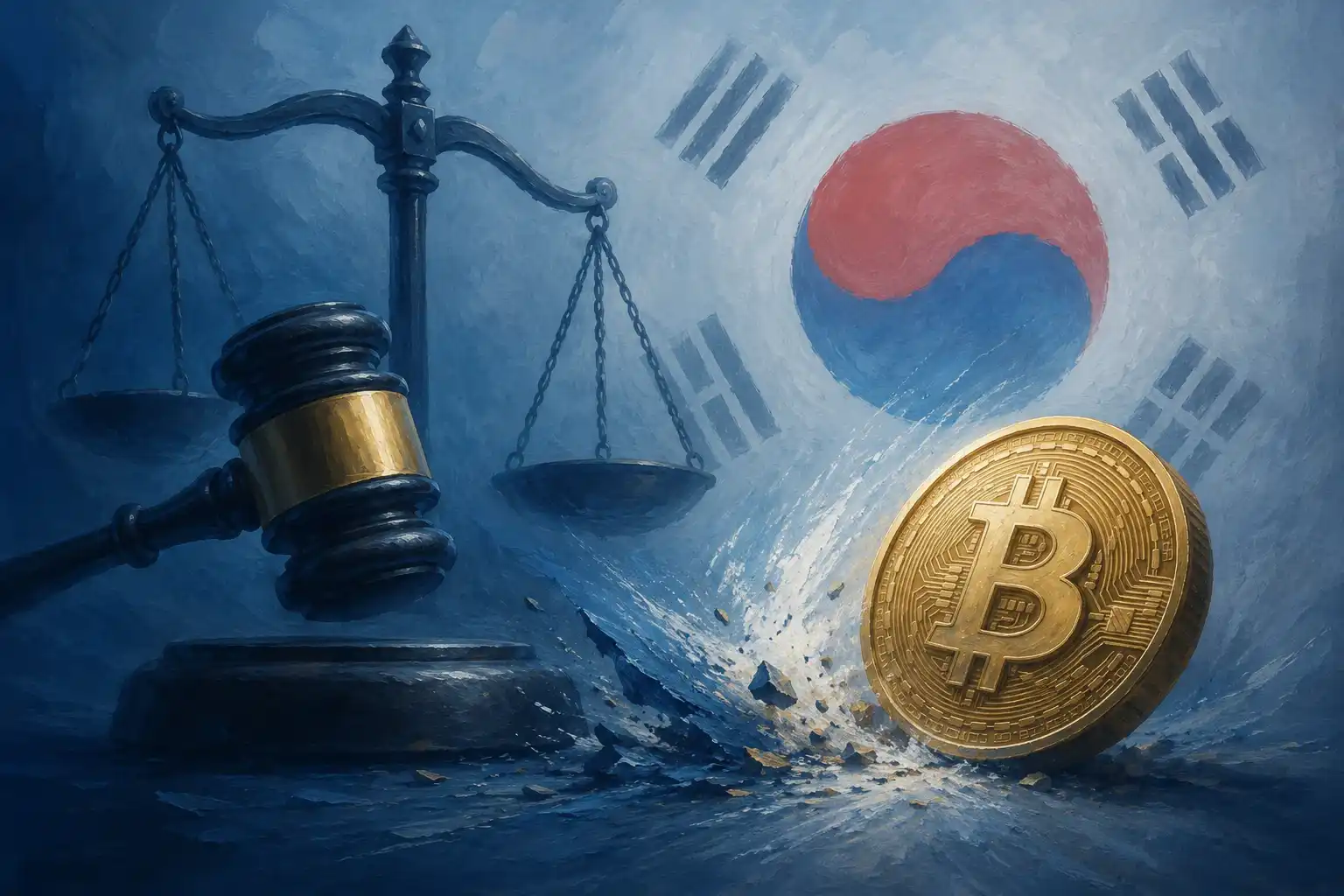
South Korean Exchanges 'Battle' Regulators, Challenging the Boundaries of Enforcement and Legislation

South Korea's cryptocurrency industry is engaged in a rare, direct confrontation with regulators. The Financial Intelligence Unit (FIU), the primary anti-money laundering (AML) watchdog, has recently imposed heavy penalties on major exchanges like Upbit and Bithumb for alleged violations involving unregistered overseas VASPs and AML procedures. However, exchanges are now actively challenging these actions in court and through industry associations. In a significant shift, the Seoul Administrative Court ruled in favor of Upbit's operator, Dunamu, overturning part of an FIU-ordered business suspension. The court found the FIU's penalty criteria and justification insufficiently clear. Similarly, the court suspended the enforcement of a six-month business suspension against Bithumb pending a final ruling, citing potential irreversible harm to the exchange. Beyond legal battles, the industry is contesting proposed legislative amendments. The Digital Asset eXchange Alliance (DAXA) strongly opposes a draft rule that would mandate Suspicious Transaction Reports (STRs) for all crypto transfers over 10 million KRW (~$6,800). DAXA argues this "poison pill" clause violates legal principles and would overwhelm the STR system, increasing reports from 63,000 to an estimated 5.45 million annually for major exchanges, thereby crippling effective AML monitoring. This conflict highlights a structural tension in South Korea's crypto governance: comprehensive digital asset laws are still developing, while regulators rely heavily on AML enforcement. The industry's move from passive compliance to active legal and legislative challenges signifies a new phase, pressing for clearer rules and more proportionate enforcement. While short-term disputes may intensify, this clash could ultimately lead to a more mature and sustainable regulatory framework for South Korea's vibrant crypto market.

marsbitHace 1 hora(s)

South Korean Exchanges 'Battle' Regulators, Challenging the Boundaries of Enforcement and Legislation

marsbitHace 1 hora(s)

After 50x Storage Surge, Justin Sun Always Looks to the Next Decade

Sun Yuchen, known for his controversial stunts like a $30 million lunch with Warren Buffett (canceled due to a kidney stone) and eating a $6.2 million duct-taped banana, is often overshadowed by a significant fact: his decade-long track record of spotting major investment trends. In 2016, he famously advised young people to invest in Bitcoin, Nvidia, Tesla, and Tencent instead of buying property. A hypothetical $20,000 investment in Nvidia and Tesla from that list would now be worth over 50 million RMB. His latest major call was on November 6, 2025, predicting a "50x storage opportunity" tied to the AI boom, which materialized with Sandisk's stock surging nearly 50-fold by 2026. Looking ahead, Sun now focuses on the next frontier: Physical AI. He identifies four key areas: 1. **Embodied AI/Robotics**: He sees this reaching its "iPhone moment," with companies like UBTech and Galaxy General leading in commercialization. 2. **Drones**: Viewed as the first commercially viable form of Physical AI, revolutionizing sectors from warfare (e.g., AeroVironment's Switchblade) to logistics. 3. **Spatial Computing**: Beyond VR, it's about AI understanding physical space, a foundational technology for robotics and autonomous systems, exemplified by Apple's Vision Pro. 4. **Space Exploration**: After a 2025 suborbital flight with Blue Origin, Sun advocates for space as the ultimate frontier, discussing blockchain's potential role in space asset management and data transactions. His investment philosophy involves betting on entire, inevitable trends rather than single companies. For robotics, he sees Tesla (the body/manufacturer) and Nvidia (the brain/AI platform) as complementary plays. In defense drones, he highlights companies making tanks obsolete (AeroVironment) and those augmenting fighter jets (Kratos). For space, he participated in Blue Origin's flight and anticipates SpaceX's potential IPO to redefine the sector's valuation. Sun Yuchen's vision frames the next two decades not as a revolution in information flow (like the internet), but in the fundamental operation of the physical world through AI-powered robots, autonomous systems, and spatial intelligence, ultimately extending human and AI activity into space. While many still focus on conventional assets, he continues to look toward the next technological horizon.

marsbitHace 2 hora(s)

After 50x Storage Surge, Justin Sun Always Looks to the Next Decade

marsbitHace 2 hora(s)

Trading

Spot
Futuros

Artículos destacados

Qué es XRP 2.0

XRP 2.0: Una Nueva Frontera en el Panorama de las Criptomonedas Introducción a XRP 2.0 En el siempre cambiante ámbito de las criptomonedas, nuevos proyectos surgen continuamente, compitiendo por atención y adopción. Una de estas iniciativas prometedoras es XRP 2.0, un nuevo proyecto de criptomoneda diseñado para aprovechar la tecnología blockchain avanzada y metodologías de encriptación robustas. Aunque el nombre establece paralelismos con el XRP de Ripple, es crucial señalar que XRP 2.0 opera de manera independiente, enfocándose en mejorar la seguridad de las transacciones, la privacidad y la escalabilidad. A medida que el panorama financiero digital abraza cada vez más soluciones descentralizadas, XRP 2.0 busca contribuir de manera significativa a web3 y a la expansión general de los proyectos de criptomonedas. ¿Qué es XRP 2.0? En esencia, XRP 2.0 es un proyecto de criptomoneda que busca crear un ecosistema de moneda digital seguro y descentralizado. Su tecnología fundamental integra principios avanzados de blockchain con técnicas de encriptación de vanguardia. El objetivo principal de XRP 2.0 es establecerse como una plataforma confiable y eficiente que permita la ejecución rápida de transacciones mientras prioriza la protección de la privacidad de sus usuarios. El proyecto se promociona como una solución a muchas limitaciones enfrentadas por las criptomonedas existentes, proponiendo un sistema que puede manejar un mayor volumen de transacciones con mejor velocidad y privacidad. Esta versatilidad posiciona a XRP 2.0 como un competidor significativo en un mercado plagado de diversas monedas digitales. ¿Quién es el Creador de XRP 2.0? La identidad del creador detrás de XRP 2.0 ha sido señalada como 'Wilbur.' Sin embargo, los detalles completos sobre Wilbur o su entidad asociada siguen siendo elusivos. La anonimidad de muchos creadores de criptomonedas no es un fenómeno poco común en la industria, a menudo diseñado para mantener un grado de privacidad y seguridad. ¿Quiénes son los Inversores de XRP 2.0? Hasta ahora, la información específica relacionada con las fundaciones o organizaciones de inversión que apoyan a XRP 2.0 no está disponible públicamente. En el sector de las criptomonedas, el respaldo de inversores respetables puede influir significativamente en la credibilidad y el éxito de un proyecto, sin embargo, la transparencia sobre los patrocinadores financieros de XRP 2.0 no se ha establecido. ¿Cómo Funciona XRP 2.0? XRP 2.0 se destaca al emplear una combinación de tecnología blockchain y algoritmos de encriptación avanzados que aseguran transacciones seguras y descentralizadas. Su estructura innovadora incluye características únicas diseñadas para fomentar el compromiso del usuario y ampliar las funcionalidades más allá de las transacciones convencionales de criptomonedas. Entre estas características, XRP 2.0 incorpora capacidades impulsadas por IA, como funcionalidades de texto a imagen y de texto a voz. Estas adiciones están diseñadas para mejorar la experiencia interactiva de los usuarios, promoviendo una mayor aplicabilidad en diversos sectores. Al unir avances tecnológicos con un diseño centrado en el usuario, XRP 2.0 busca captar la atención de una amplia gama de individuos y empresas que buscan integrar soluciones de criptomonedas en sus marcos operativos. Cronología de XRP 2.0 Entender XRP 2.0 requiere examinar los hitos que han definido su viaje hasta ahora: 23 de julio de 2023: Se presenta XRP 2.0 como un nuevo proyecto de criptomonedas, con el objetivo de revolucionar las capacidades de transacciones seguras y descentralizadas en el ámbito de blockchain. 8 de septiembre de 2023: Se lanza otro proyecto, XRP20, marcando la aparición de un token ERC-20 en la blockchain de Ethereum que no guarda relación con XRP 2.0. 13 de noviembre de 2023: El Libro Mayor de XRP experimenta una actualización significativa con el lanzamiento de la versión 2.0.0 del software del servidor rippled. Es esencial señalar que este desarrollo está desconectado del proyecto de criptomonedas XRP 2.0. Puntos Clave sobre XRP 2.0 Para destilar la esencia de XRP 2.0, surgen varios factores críticos: Características Únicas: La inclusión de características como texto a imagen y texto a voz impulsadas por IA diversifica aún más las aplicaciones potenciales de XRP 2.0. Tecnología Blockchain: El marco utiliza mecanismos avanzados de blockchain y protocolos de encriptación, asegurando un entorno seguro y descentralizado para las transacciones. Escalabilidad y Privacidad: XRP 2.0 prioriza la protección mejorada de la privacidad en los procesos de transacción y la escalabilidad necesaria para acomodar una base de usuarios creciente. No Afiliación con Ripple: Es importante destacar que, a pesar de su nombre, XRP 2.0 no tiene ninguna lealtad ni colaboración con el XRP de Ripple, diferenciando su marco operativo y objetivos dentro del ecosistema de criptomonedas. Conclusión XRP 2.0 representa una ambiciosa aventura en la esfera de las criptomonedas, buscando ofrecer una combinación de seguridad, privacidad y eficiencia en las transacciones digitales. Al integrar tecnologías sofisticadas y características amigables para el usuario, el proyecto se propone ampliar los horizontes de lo que la criptomoneda puede lograr en la economía digital de hoy. Si bien la anonimidad de su creador y la falta de inversores revelados pueden generar cuestionamientos para algunos, el enfoque de XRP 2.0 en funcionalidades avanzadas y descentralización realza su atractivo en un mercado de criptomonedas cada vez más abarrotado. A medida que el paisaje de las criptomonedas sigue evolucionando, XRP 2.0 podría emerger como un jugador crucial en la expansión de soluciones blockchain seguras y escalables.

174 Vistas totalesPublicado en 2024.04.05Actualizado en 2024.12.03

Qué es XRP 2.0

Cómo comprar XRP

¡Bienvenido a HTX.com! Hemos hecho que comprar XRP (XRP) sea simple y conveniente. Sigue nuestra guía paso a paso para iniciar tu viaje de criptos.Paso 1: crea tu cuenta HTXUtiliza tu correo electrónico o número de teléfono para registrarte y obtener una cuenta gratuita en HTX. Experimenta un proceso de registro sin complicaciones y desbloquea todas las funciones.Obtener mi cuentaPaso 2: ve a Comprar cripto y elige tu método de pagoTarjeta de crédito/débito: usa tu Visa o Mastercard para comprar XRP (XRP) al instante.Saldo: utiliza fondos del saldo de tu cuenta HTX para tradear sin problemas.Terceros: hemos agregado métodos de pago populares como Google Pay y Apple Pay para mejorar la comodidad.P2P: tradear directamente con otros usuarios en HTX.Over-the-Counter (OTC): ofrecemos servicios personalizados y tipos de cambio competitivos para los traders.Paso 3: guarda tu XRP (XRP)Después de comprar tu XRP (XRP), guárdalo en tu cuenta HTX. Alternativamente, puedes enviarlo a otro lugar mediante transferencia blockchain o utilizarlo para tradear otras criptomonedas.Paso 4: tradear XRP (XRP)Tradear fácilmente con XRP (XRP) en HTX's mercado spot. Simplemente accede a tu cuenta, selecciona tu par de trading, ejecuta tus trades y monitorea en tiempo real. Ofrecemos una experiencia fácil de usar tanto para principiantes como para traders experimentados.

1.3k Vistas totalesPublicado en 2024.12.10Actualizado en 2025.03.21

Cómo comprar XRP

Discusiones

Bienvenido a la comunidad de HTX. Aquí puedes mantenerte informado sobre los últimos desarrollos de la plataforma y acceder a análisis profesionales del mercado. A continuación se presentan las opiniones de los usuarios sobre el precio de XRP (XRP).

活动图片