WisdomTree Makes Crypto a Core Business as Tokenized Assets Near Profitability

TheNewsCryptoPublicado a 2026-02-04Actualizado a 2026-02-04

Resumen

WisdomTree, a global asset manager with $150 billion in assets, has declared crypto and blockchain technology a core part of its business strategy. CEO Jonathan Steinberg announced at the Ondo Summit that the company's crypto operations are built for long-term growth and are nearing profitability. The firm’s tokenized assets under management surged from $30 million to $770 million in a year, representing a 25x increase since 2024, and expanded from Ethereum to Solana. Steinberg emphasized that crypto is no longer an experiment but a conviction-driven business. WisdomTree focuses on regulated tokenization, offering tokenized funds for faster, cheaper settlements and a platform called WisdomTree Connect for moving assets across wallets and institutions. The acquisition of Securrency enabled the creation of compliance-aware tokens with built-in regulatory rules. Steinberg views blockchain as a way to rebuild outdated financial infrastructure from scratch, signaling a shift toward institutional, regulated crypto adoption.

WidomTree, a global asset management firm with $150 billion in assets, says that crypto and blockchain technology have become the core part of its business strategy. Jonathan Steinberg, CEO of WisdomTree, says in the speaking at the Ondo Summit that the company’s crypto business is built for long-term growth and is very close to becoming profitable.

WisdonTree’s growth in Digital Assets

WisdomTree’s crypto business has grown rapidly in the past few years. Tokenized assets increased from $30 million to about $750 million in one year, and now these tokenized assets under management are $770 million, with a 25x increase when compared to 2024. The firm has expanded from Ethereum to the Solana blockchain. Even though the crypto business is not yet profitable, Steinberg said that the company is now within reach of profitability.

Steinbergs clearly says that the company is no longer seeing crypto as a trial project. He says, “ It’s still early days, but it’s not an experiment now, and we have conviction. So we believe eventually everything will go on the chain.”

WisdomTree is building a regulated blockchain finance

WisdomTree’s crypto strategy focuses on regulated tokenization, not speculation. It has launched the Tokenized funds, which allow faster settlements at a lower cost in digital tokens. It also launched WisdomTree Connect, which is a platform that allows tokenized assets to move across self-custodial wallets and integrate with institutional platforms. The firm has previous acquire Securrency, a company focused on making token compliant with regulations. This helped to create the compliance-aware tokens, where the tokens know who can own or trade them with the rules built directly into the assets.

Steinberg explained that banks and financial systems are hundreds of years old, and many still rely on outdated processes. So blockchain allows finance to be rebuilt from scratch, and crypto is all about rebuilding the financial infrastructure.

Firms like WisomTree says that crypto is the core business, which shows that crypto is becoming institutional and regulated, with the tokenization moving to real revenue models.

Highlighted Crypto News:

Kraken Parent Payward Sees Revenue Surge on Trading Boom

TagsCryptodigital token

Criptos en tendencia

Preguntas relacionadas

QWhat is the core part of WisdomTree's business strategy according to its CEO?

ACrypto and blockchain technology have become the core part of WisdomTree's business strategy.

QHow much have WisdomTree's tokenized assets under management grown in one year?

AWisdomTree's tokenized assets under management grew from $30 million to about $750 million in one year, representing a 25x increase compared to 2024.

QWhat is the name of the platform WisdomTree launched to allow tokenized assets to move across self-custodial wallets?

AWisdomTree launched a platform called WisdomTree Connect that allows tokenized assets to move across self-custodial wallets and integrate with institutional platforms.

QHow does Jonathan Steinberg describe the company's view on crypto now?

AJonathan Steinberg stated that the company is no longer seeing crypto as a trial project, saying 'It’s still early days, but it’s not an experiment now, and we have conviction.'

QWhat did the acquisition of Securrency help WisdomTree create?

AThe acquisition of Securrency helped WisdomTree create compliance-aware tokens, where the tokens have rules built directly into them that determine who can own or trade them.

Lecturas Relacionadas

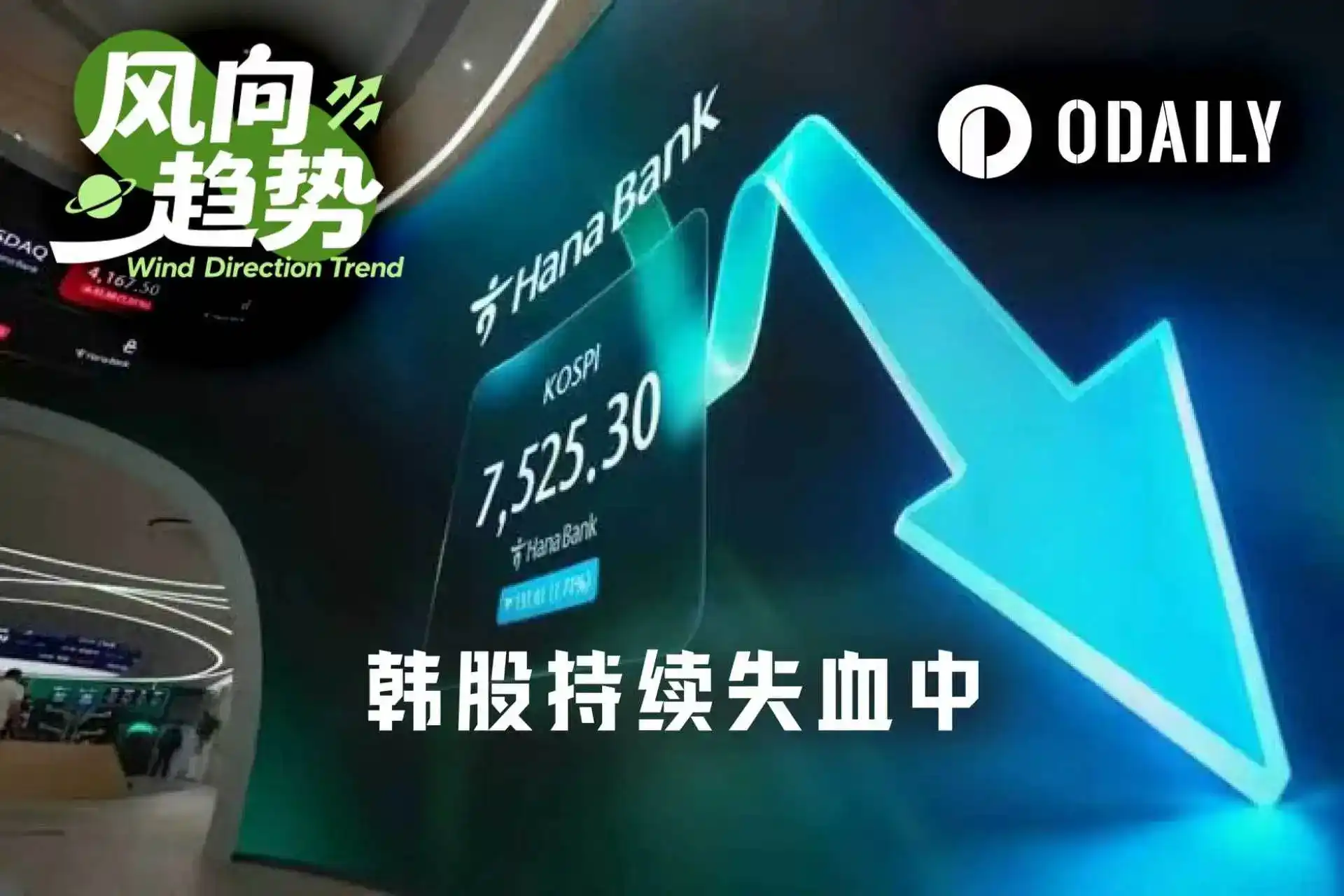
Soaring 20% Then Dropping 5%: When Will the Bottom of the Korean Stock Market Be?

"South Korean stocks face a turbulent period as the KOSPI index, after a 20% surge, fell 5% to 6257 points. The market is grappling with severe issues: over 500,000 leveraged retail accounts have been liquidated, and more than 24 trillion won has flowed from stocks into bank deposits for safety. This reflects a significant loss of market liquidity and shaken investor confidence. In response, Korean financial regulators are taking action. They have tripled the minimum保证金 (margin) requirement for single-stock leveraged ETF trades to 30 million won and are considering granting themselves "emergency intervention" powers. These could include capping leverage ratios and setting investment limits on these ETFs, seen by many as amplifying market volatility. Initial results show a 75% drop in these products' trading volume post-regulation. The market downturn has political repercussions, pushing President Yoon Suk-yeol's approval rating to a new low. Meanwhile, foreign investors made a record net purchase of 7.18 trillion won during a recent rebound, while domestic retail investors sold off massively. Morgan Stanley has upgraded South Korean stocks to "overweight," citing the ongoing "leverage unwinding" and potential for a 36% upside, with giants like Samsung Electronics and SK Hynix providing valuation support. However, analysts caution that the market's structure remains vulnerable to foreign capital flows, and the current low may not be the bottom."

marsbitHace 8 min(s)

Soaring 20% Then Dropping 5%: When Will the Bottom of the Korean Stock Market Be?

marsbitHace 8 min(s)

Goldman Sachs Stakes a Clear Position: This Is the Largest Capital Demand Cycle in Human History, and the Fed Is Just an Observer

Goldman Sachs argues that the world is entering the most capital-intensive investment cycle in history, driven by concurrent massive demands from AI infrastructure, reindustrialization, defense reinvestment, power grid rebuilding, supply chain realignment, and sovereign debt financing. This structural competition for capital is pushing its cost higher, fundamentally altering investment paradigms. Goldman's Mark Wilson states that the Federal Reserve is merely a "passenger, not the driver" in this shift, with rising yields rooted in these real economy demands rather than just monetary policy. While major indices appeared calm in July, underlying market movements were historic, featuring extreme stock dispersion and a severe momentum factor crash, leading to significant de-risking by fund managers. Wilson cautions against expecting a quick reversal in August, citing ongoing digestion of higher rates, disrupted risk models, and typically muted market performance ahead of US midterm elections. Corporate fundamentals remain robust with strong earnings, though growth rates are peaking in the US while accelerating in Europe. Notably, hyperscale cloud companies like Amazon and Microsoft are announcing staggering capital expenditure projections for 2027-2028, justified by explosive AI-related revenue growth and high returns. Amazon revealed its AI revenue run-rate exceeds $25 billion, growing triple-digits annually, and expressed confidence that AWS could become a trillion-dollar revenue business. The report concludes that a transitional period is underway, marked by a growing tension between aggressively investing private tech giants and increasingly capital-constrained sovereign governments. The AI super-cycle continues, with August likely being a consolidation phase.

marsbitHace 13 min(s)

Goldman Sachs Stakes a Clear Position: This Is the Largest Capital Demand Cycle in Human History, and the Fed Is Just an Observer

marsbitHace 13 min(s)

Outflow of Stablecoins from South Korea Continues for 18 Consecutive Months, Exceeding $360 Million in June

In June 2026, South Korea experienced a net outflow of stablecoins to overseas crypto exchanges, amounting to 560.3 billion won ($367 million). This represents approximately 78% of the net value of foreign stocks purchased by Korean investors in the same period. According to the Financial Supervisory Service (FSS), this marks the 18th consecutive month of net outflows, a trend ongoing since January 2025. The FSS reported that 2.76 trillion won ($1.8+ billion) in stablecoins were withdrawn from the country's five major exchanges to foreign platforms in June, while 2.2 trillion won ($1.4 billion) flowed back in. The second quarter of 2026 saw a significant net outflow of 1.69 trillion won (~$1.1 billion), surpassing net sales of foreign stocks in the same period. Analysts cite access to unavailable domestic financial instruments as a primary driver. Foreign platforms offer crypto derivatives, spot and futures products tied to major Korean stocks like Samsung and Hyundai, along with RWA tokenization, DeFi, staking, and leveraged products. Lawmaker Lee Jong-wook warned that the stablecoin outflows constitute capital flight, exposing investors to risks on unregulated foreign platforms. He called for accelerated regulatory reform and enhanced investor protection measures. The government is reportedly working on a digital assets law to foster the blockchain sector.

cryptonews.ruHace 18 min(s)

Outflow of Stablecoins from South Korea Continues for 18 Consecutive Months, Exceeding $360 Million in June

cryptonews.ruHace 18 min(s)

Trading

Spot

Artículos destacados

Cómo comprar CORE

¡Bienvenido a HTX.com! Hemos hecho que comprar CORE (CORE) sea simple y conveniente. Sigue nuestra guía paso a paso para iniciar tu viaje de criptos.Paso 1: crea tu cuenta HTXUtiliza tu correo electrónico o número de teléfono para registrarte y obtener una cuenta gratuita en HTX. Experimenta un proceso de registro sin complicaciones y desbloquea todas las funciones.Obtener mi cuentaPaso 2: ve a Comprar cripto y elige tu método de pagoTarjeta de crédito/débito: usa tu Visa o Mastercard para comprar CORE (CORE) al instante.Saldo: utiliza fondos del saldo de tu cuenta HTX para tradear sin problemas.Terceros: hemos agregado métodos de pago populares como Google Pay y Apple Pay para mejorar la comodidad.P2P: tradear directamente con otros usuarios en HTX.Over-the-Counter (OTC): ofrecemos servicios personalizados y tipos de cambio competitivos para los traders.Paso 3: guarda tu CORE (CORE)Después de comprar tu CORE (CORE), guárdalo en tu cuenta HTX. Alternativamente, puedes enviarlo a otro lugar mediante transferencia blockchain o utilizarlo para tradear otras criptomonedas.Paso 4: tradear CORE (CORE)Tradear fácilmente con CORE (CORE) en HTX's mercado spot. Simplemente accede a tu cuenta, selecciona tu par de trading, ejecuta tus trades y monitorea en tiempo real. Ofrecemos una experiencia fácil de usar tanto para principiantes como para traders experimentados.

299 Vistas totalesPublicado en 2024.12.13Actualizado en 2026.06.02

Cómo comprar CORE

Discusiones

Bienvenido a la comunidad de HTX. Aquí puedes mantenerte informado sobre los últimos desarrollos de la plataforma y acceder a análisis profesionales del mercado. A continuación se presentan las opiniones de los usuarios sobre el precio de CORE (CORE).

活动图片