Winter for Crypto IPOs: Consensys and Ledger Withdraw Applications

marsbitPublicado a 2026-05-16Actualizado a 2026-05-16

Resumen

The crypto IPO window is tightening significantly in 2026, marked by prominent companies delaying or pausing their public listing plans. Following a successful 2025 "harvest year" that saw Circle, Bullish, and Gemini go public amidst a bull market, the tide has turned. Consensys, developer of MetaMask, recently postponed its IPO until at least fall 2026. Hardware wallet leader Ledger also suspended its planned US listing due to unfavorable market conditions, with Kraken having previously delayed its own plans. This shift is driven by a cooling market in 2026, characterized by a significant Bitcoin price correction, declining trading volumes, and reduced investor risk appetite for crypto stocks. The poor post-IPO performance of 2025 listings like Circle and Bullish, which saw major share price declines, has heightened investor caution. This contrasts sharply with the current AI sector, where companies like SpaceX, OpenAI, and Anthropic are commanding massive valuations and investor enthusiasm based on narratives of stable, exponential growth. Crypto companies now face pressure to transition from hype-driven models to demonstrating reliable cash flows and robust compliance. While the paused IPO plans may lead to valuation resets and affect ecosystem liquidity, they also accelerate industry consolidation toward stronger, more compliant infrastructure players. A potential recovery in Bitcoin's price and clearer regulations could reopen the IPO window in the latter half of 2026.

Author: Ma Ke, Foresight News

On May 14th, Consensys, the developer of MetaMask wallet, temporarily postponed its IPO to at least the Fall of this year. Meanwhile, crypto hardware wallet giant Ledger also suspended its US IPO plan on May 13th. Previously, the exchange Kraken had repeatedly delayed its listing plans. This series of IPO postponements and suspensions signals a significant narrowing of the 2026 IPO window following the 2025 boom in crypto company listings.

2025 was considered a "bumper year for IPOs" in the industry: stablecoin issuer Circle successfully listed on the NYSE, and several companies including Bullish and Gemini completed their listings, initially opening an exit channel for crypto VCs. Crypto-related IPOs in 2025 raised approximately $14.6 billion, and VC deal volume soared to $19.7 billion. BTC price once surged to a record high of $126,000, institutional capital flowed in, the regulatory environment was relatively friendly, and multiple crypto stocks saw strong first-day performance.

Entering 2026, Bitcoin's price corrected significantly, trading volume declined, and investor risk appetite for crypto stocks cooled rapidly. BitGo, as the first crypto IPO of 2026, priced at $18 in January for its listing. Although it briefly rose on its debut, it subsequently fell back, once dropping to $7, and has now recovered to $11.9.

Specifically, the listing pace of several leading companies has clearly slowed. Payward, the parent company of Kraken, confidentially filed an S-1 form in November 2025, originally planning to proceed in Q1 2026 with a valuation target once aiming for $20 billion. On March 18th this year, the company paused its plans due to "difficult market conditions." Co-CEO Arjun Sethi stated that although the valuation dropped to $13.3 billion in a recent funding round, the IPO filing remains valid, awaiting the optimal window.

Arjun Sethi

Ledger's suspension was more abrupt. Known for its hardware wallets and enterprise-grade infrastructure, reports in January 2026 indicated it had hired investment banks to prepare for a US listing targeting a $4 billion valuation. Citing sources familiar with the matter, unfavorable market conditions led Ledger to decide to pause, without initiating the formal filing process. A company spokesperson declined to comment but suggested the possibility of turning to private financing to sustain growth.

Notably, just in March, Ledger appointed former Circle executive John Andrews as CFO and opened a New York office to strengthen its US business layout. This expansion shows its business strategy remains unchanged; the IPO pause is more due to external factors.

Meanwhile, MetaMask parent company Consensys also joined the wait-and-see ranks. The company had hired JPMorgan and Goldman Sachs as underwriters, originally planning to submit an S-1 form around the end of February with a target to list in 2026. However, due to market weakness, Consensys has postponed its IPO to at least this Fall.

Behind these crypto companies' IPO suspensions are, of course, the combined result of multiple factors.

The stock performance of the first wave of crypto IPOs in 2025 has intensified market caution toward the 2026 listing window.

This year, Circle's stock price has fallen from a high of $300 to below $50, Bullish dropped from $118 to below $25. Even BitGo, the first crypto IPO of 2026 opening the year, couldn't escape—after pricing at $18 and listing in January, it briefly rebounded but then fell all the way to near $7 at its lowest.

This year's performance collectively confirms that crypto-related stocks are prone to capital chasing at the tail end of a bull market but struggle to withstand valuation resets during cyclical downturns. Traditional institutional investors' required risk premium for "cycle-bound" assets has significantly increased.

In stark contrast to the "cooling-off period" for crypto IPOs, the AI sector in 2026 is in the midst of a dual boom in IPOs and fundraising.

SpaceX has begun IPO preparations, targeting a staggering valuation of $1.75 to $2 trillion, becoming one of the world's most anticipated tech listing projects.
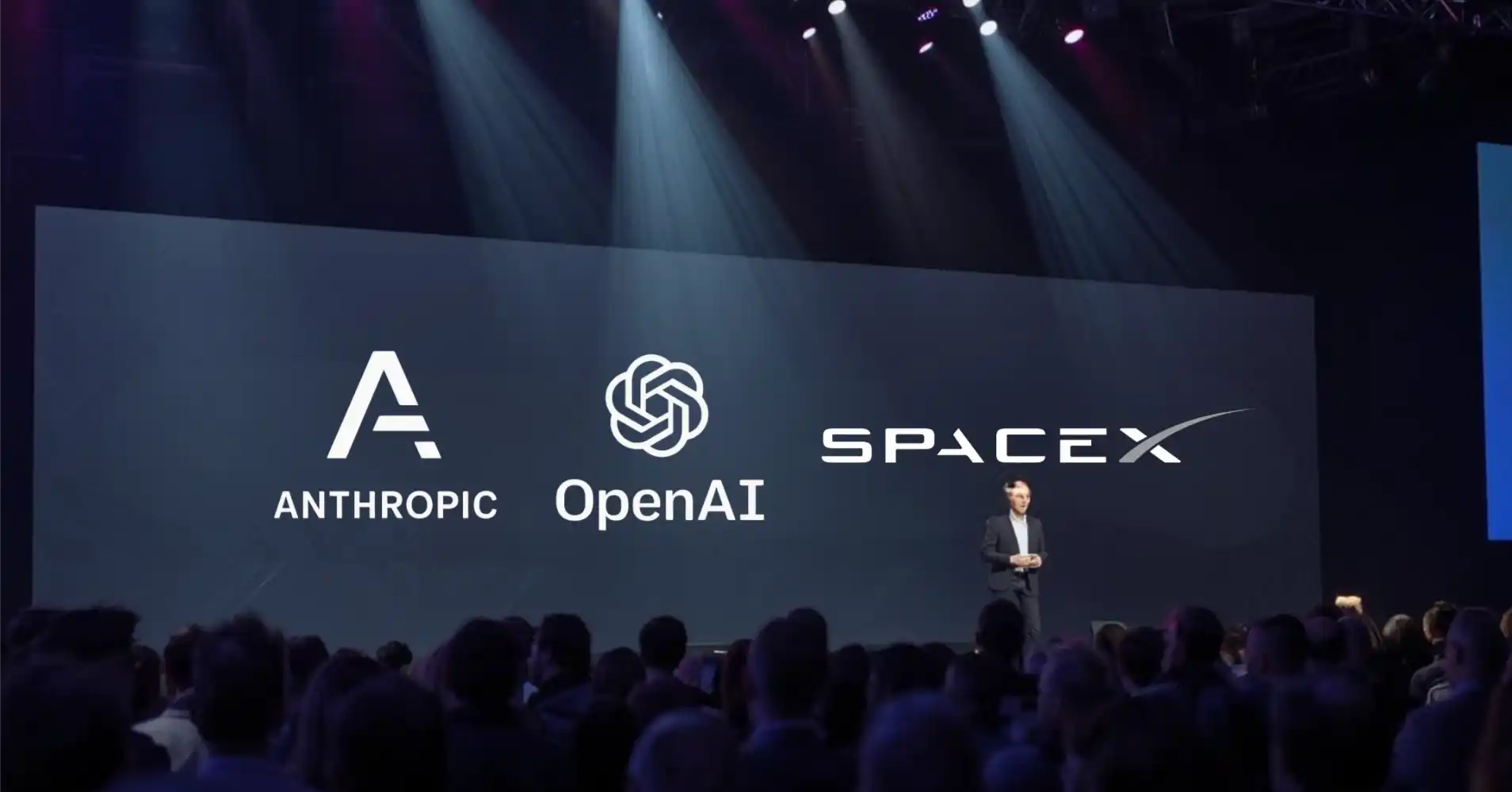
OpenAI's valuation is approaching $1 trillion and is in close communication with several investment banks regarding its listing path; Anthropic's valuation has neared $900 billion and is also actively preparing IPO materials. The AI narrative, with its promise of a "productivity revolution," has attracted a massive influx of long-term capital. Even in an environment of macro uncertainty, AI-related IPOs can garner a much higher risk appetite than crypto assets.

In comparison, crypto companies are highly dependent on Bitcoin prices and trading volumes, with stronger revenue volatility, making it difficult to offer the "exponential growth" certainty promised by AI companies. This cross-sectoral divergence between hot and cold further amplifies investor wait-and-see sentiment towards crypto IPOs, also forcing crypto companies to accelerate their transition from "storytelling" to "telling cash flow stories, telling compliance stories."

Furthermore, crypto companies are shifting towards more pragmatic strategies: although private financing has shrunk in scale, it can still provide a buffer; some companies choose to first optimize product lines, expand into stablecoins or institutional services, and wait for Bitcoin to stabilize at a higher range and for market conditions to improve before proceeding with a listing.

The implications of this phenomenon for the industry warrant deeper thought.

On one hand, it accelerates survival of the fittest. Weaker projects face increased fundraising difficulty, and resources concentrate towards companies with strong compliance and solid infrastructure, such as Ledger's institutional-grade platform and Kraken's custody business. On the other hand, it highlights the crypto industry's transition from narrative-driven to performance-driven. Companies truly capable of weathering cycles are building anti-volatility cash flows and enhancing transparency to win long-term trust. However, in the short term, the narrowing IPO window may lead to valuation resets and affect confidence and liquidity across the entire ecosystem.

Looking ahead, if Bitcoin returns to $90,000 or higher, and regulatory bills are further enacted, the second half of 2026 may usher in a second wave of IPO windows.


Preguntas relacionadas

QWhich two major crypto companies have recently postponed or paused their IPO plans, and what is the timeline for one of them?

AConsensys, the developer of MetaMask, and Ledger, the hardware wallet giant, have both postponed or paused their IPO plans. Consensys has temporarily delayed its IPO until the earliest this fall.

QWhat was the total amount raised by crypto-related IPOs and the total VC deal volume in the year 2025, as mentioned in the article?

AIn 2025, crypto-related IPOs raised approximately $14.6 billion, and the total VC deal volume surged to $19.7 billion.

QWhat key factor is cited as contrasting with the crypto IPO 'cooling-off period' in 2026, and name one prominent example company in that sector?

AIn contrast to the crypto IPO 'cooling-off period', the AI sector is experiencing a dual climax of IPOs and financing in 2026. A prominent example is SpaceX, which has initiated IPO preparations with a target valuation of $1.75 to $2 trillion.

QAccording to the article, why are investors showing more caution towards crypto IPOs in 2026 compared to AI companies?

AInvestors are more cautious towards crypto IPOs because crypto companies are highly dependent on Bitcoin price and trading volume, resulting in stronger revenue volatility and an inability to provide the 'exponential growth' certainty promised by AI companies. AI's 'productivity revolution' narrative attracts long-term capital.

QWhat potential future developments could lead to a second wave of IPO opportunities in the second half of 2026, as per the article's outlook?

AAccording to the article's outlook, if Bitcoin returns to $90,000 or higher and regulatory legislation further materializes, the second half of 2026 could see a second wave of IPO opportunities.

Lecturas Relacionadas

Google TPU Shipments Revised Up by 50%

Recent industry research indicates a significant upward revision in the shipments of Google's TPU (Tensor Processing Unit) chips. Previous expectations for 2027 were set at around 10 million units, but new estimates now point to 15 million units, a 50% increase. This substantial boost directly translates to higher demand across the entire supporting supply chain. Google's TPU clusters utilize a standardized all-optical interconnect architecture. Consequently, key hardware components are deeply integrated and scaled in fixed ratios with the chips. The 15 million TPU target will drive corresponding demand increases for NPO optical engines (roughly a 1:1 match), 1.6T optical modules, OCS optical switches, high-end server power supplies, fiber optics & MPO connectors, and liquid cooling solutions. Among these, liquid cooling is highlighted as the sector experiencing the most significant transformation and offering the most stable potential for excess returns. As next-generation TPU chips reach power levels where traditional air cooling is insufficient, liquid cooling becomes essential. 2026 is forecasted as the first year of substantial adoption for Google's liquid cooling solutions. This shift, coupled with delivery and capacity bottlenecks faced by incumbent overseas manufacturers, is creating a prime window for domestic Chinese suppliers to enter and secure Google's core supply chain. The market size for Google-specific liquid cooling is projected to potentially triple from a baseline of hundreds of billions to around 300 billion units by 2028. The logic for the fiber optic sector is also being rewritten. Once considered a cyclical commodity tied to telecom operator procurement, fiber is now a strategic and scarce resource for AI Data Centers (AIDC). A severe supply-demand imbalance, driven by the long lead time for preform production (18-24 months) and surging demand from cloud giants, is supporting strong performance. Chinese fiber manufacturers are well-positioned to capture a significant share of global AIDC demand, with exports potentially reaching 200-300 million core kilometers in 2026. Overall, the investment focus within the AI computing industry is shifting from pure "chip performance speculation" towards the more certain incremental growth in computing infrastructure and its supporting ecosystem. The upward revision in Google TPU shipments, along with the potential for further doubling by 2028, is seen as solidifying performance visibility for the entire supporting supply chain over the next two years.

marsbitHace 16 min(s)

Google TPU Shipments Revised Up by 50%

marsbitHace 16 min(s)

What Wall Street Really Wants After the Crypto Story Recedes

The tide of speculative crypto narratives has receded, revealing Wall Street's true objective: building a controlled, yield-generating, and compliant financial pipeline on distributed ledgers. They are migrating core functions onto blockchains, not for decentralization, but for efficiency and new revenue streams. Key developments include BlackRock's BUIDL fund, a tokenized treasury fund acting as a foundational reserve asset, and the rise of Securitize, which is going public and partnering with the NYSE to build a 24/7 digital securities trading and settlement system. This signals a major shift of securities clearing to blockchain technology. To make volatile assets like Bitcoin palatable for institutional investors, firms like BlackRock and Goldman Sachs are creating "covered call" ETFs (e.g., BITA). These products systematically sell options on Bitcoin holdings, transforming price volatility into stable monthly income, effectively repackaging crypto as a yield-bearing asset. Stablecoins are being positioned not as speculative tools but as efficient payment rails. Companies like Stripe and Mastercard are integrating them for instant, low-cost merchant settlements and cross-border card payments, respectively. Critically, new legislation like the GENIUS Act shapes them as non-interest-bearing, heavily regulated extensions of the US dollar system. In summary, Wall Street is quietly constructing a parallel, blockchain-based financial infrastructure featuring tokenized traditional assets, structured crypto yields, and programmable dollar pipelines—all under its control and fully integrated with existing regulatory and credit frameworks.

marsbitHace 32 min(s)

What Wall Street Really Wants After the Crypto Story Recedes

marsbitHace 32 min(s)

Tying Itself to SpaceX: Cursor's $60 Billion Rise

This article recounts the rapid rise of AI-powered coding startup Cursor and its 25-year-old MIT graduate CEO, Michael Truell. Launched in 2023, Cursor achieved explosive growth, reaching over 10 billion USD in revenue by late 2025. However, its journey highlights a central dilemma for AI application companies: dependence on foundational model providers. Cursor initially relied heavily on Anthropic's models but faced an existential threat when Anthropic launched its own competing coding tool, Claude Code. In response, Cursor declared an internal emergency in early 2026 and accelerated development of its own model, Composer. To secure the immense computing power needed, Truell struck a pivotal deal with Elon Musk's SpaceX in April 2026. The collaboration grants Cursor access to SpaceX's supercomputing resources for Composer, while SpaceX's Grok model benefits from Cursor's programming data. The agreement includes a potential 600 billion USD acquisition of Cursor by SpaceX later in the year, though a substantial termination fee is in place if the deal falls through. The story explores Cursor's intense, sometimes controversial hiring practices involving lengthy unpaid "work trials," its complex partnership-turned-rivalry with Anthropic, and its high-stakes gamble to ensure independence through the SpaceX alliance. The core question remains: will Cursor evolve into a defining, independent "generational" software company, or become a key piece in a tech giant's AI arsenal?

marsbitHace 37 min(s)

Tying Itself to SpaceX: Cursor's $60 Billion Rise

marsbitHace 37 min(s)

Warsh's Debut: Will the FED Chair Who Knows Crypto Best Bring Surprises or Shocks to the Market?

Kevin Warsh, the new Federal Reserve Chairman, prepares for his inaugural press conference amidst a challenging macroeconomic landscape: resurgent inflation, a bond market sell-off, and political pressure from President Trump for rate cuts. Uniquely, Warsh holds indirect investments in over 20 crypto and Web3 entities (e.g., Solana, dYdX), making him the first Fed Chair with disclosed crypto exposure. His stance may combine a hawkish, inflation-focused monetary policy with a crypto-friendly regulatory philosophy that shifts from Powell’s “same risk, same rule” approach toward a framework acknowledging blockchain’s productivity value. Warsh’s leadership could impact crypto markets across three dimensions: a paradigm shift in regulation (potentially accelerating pro-innovation legislation and stable币 rules), a re-pricing of risk premiums based on clearer communication and his view of AI as a structural disinflationary force, and a long-term reallocation of global institutional capital driven by increased legitimacy. Two potential scenarios for the press conference are outlined. A “positive surprise” would involve a dovish-leaning tone on rates coupled with signals of regulatory openness, potentially boosting crypto asset valuations. Conversely, a “negative shock” would see a more hawkish-than-expected stance on inflation and rates, triggering a broad risk-asset selloff that crypto markets would not escape. While ethics rules required Warsh to divest his crypto holdings upon confirmation, his deep understanding of the technology may fundamentally lower policy uncertainty and build a more receptive long-term foundation for digital assets’ integration into the mainstream financial system.

marsbitHace 11 hora(s)

Warsh's Debut: Will the FED Chair Who Knows Crypto Best Bring Surprises or Shocks to the Market?

marsbitHace 11 hora(s)

Trading

Spot
Futuros
活动图片