Winner Takes All: First Bitcoin Spot ETF Liquidated, Survival of Smaller Players in Jeopardy

marsbitPublicado a 2026-08-05Actualizado a 2026-08-05

Resumen

**Summary:** On August 3rd, asset manager Hashdex announced the closure and liquidation of its Hashdex Bitcoin ETF (DEFI), the first U.S. spot Bitcoin ETF to be wound down. With assets of only $14.7 million, DEFI's annual fee revenue (~$36,700) was insufficient to cover operational costs estimated at $500k-$1M+. Its exit highlights the "winner-takes-most" dynamic in the competitive U.S. spot Bitcoin ETF market, where giants like BlackRock's IBIT ($47.25B) dominate. Despite a cumulative return of ~166% since inception, DEFI's small size, combined with Hashdex's relative lack of brand recognition and established U.S. distribution channels compared to Wall Street incumbents, made the fund unsustainable. Other smaller ETFs like WisdomTree's BTCW ($143M) also operate near the profitability threshold. The market remains highly concentrated, with the top five funds holding nearly all assets, putting pressure on smaller players to achieve scale or risk a similar fate.

Original author: Nicky, Foresight News

On August 3rd, asset management company Hashdex announced the closure and liquidation of its Hashdex Bitcoin ETF (NYSE Arca: DEFI), marking the first spot Bitcoin ETF to officially announce liquidation in the US market. As of July 30th, the fund's assets under management were approximately $14.7 million, holding about 225.58 Bitcoins. Hashdex stated that the closure decision was based on a comprehensive assessment of factors including assets under management, trading liquidity, operational costs, and investor interest.

According to the official announcement, the last trading day for DEFI shares will be August 17th. After this date, it will stop accepting creation orders from authorized participants and be delisted from NYSE Arca. Shareholders who still hold shares by the last trading day will receive a cash liquidation distribution, expected to be paid around August 28th.

DEFI was initially launched for trading in September 2022 as a Bitcoin futures ETF. It was the first Bitcoin futures ETF in the US registered solely under the Securities Act of 1933, launched by Hashdex in collaboration with Teucrium Trading and Victory Capital. In January 2024, the US Securities and Exchange Commission approved 11 spot Bitcoin ETF applications, including Hashdex's. In March of the same year, DEFI completed its transition from a futures strategy to a spot strategy, officially rebranded as the Hashdex Bitcoin ETF, with a fee rate set at 0.25%. Since its inception, the fund has delivered a cumulative performance of approximately 166%, but its asset size has remained chronically low, with a historical peak of only about $17.54 million before declining again.
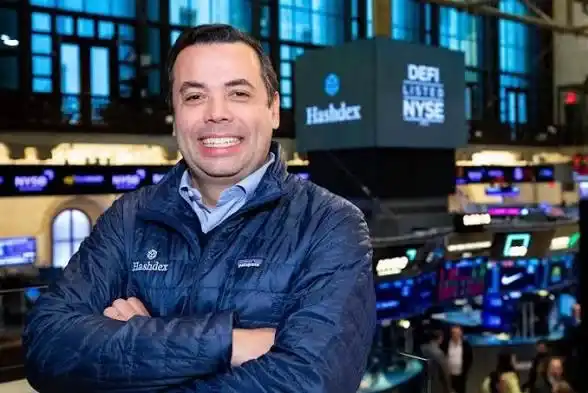
Marcelo Sampaio, Hashdex CEO (Image source: NYSE)

Hashdex is a global asset management company focused on crypto asset index investments, founded in 2018 in Rio de Janeiro, Brazil, by Marcelo Sampaio, Bruno Caratori, and others. In 2020, it partnered with Nasdaq to develop the Nasdaq CME Crypto Index. In 2021, it launched products like HASH11 in Brazil and later expanded to European and US markets. In February 2025, Hashdex launched the multi-asset crypto ETF NCIQ in the US, currently tracking seven crypto assets. As of July 28, 2026, Hashdex's global crypto index product assets under management exceeded $888 million, covering eight countries.

While closing DEFI, Hashdex continues to advance other product innovations. On July 24th, the company filed documents with the SEC announcing that its NCIQ has been approved to conduct staking activities with the crypto assets held by the fund, with Coinbase Cloud as the initial staking service provider. According to the distribution plan, staking net income equivalent to up to 25 basis points annualized of the net asset value per common share goes to the sponsor; any amount exceeding that is split 40% to the sponsor and 60% to the holders.
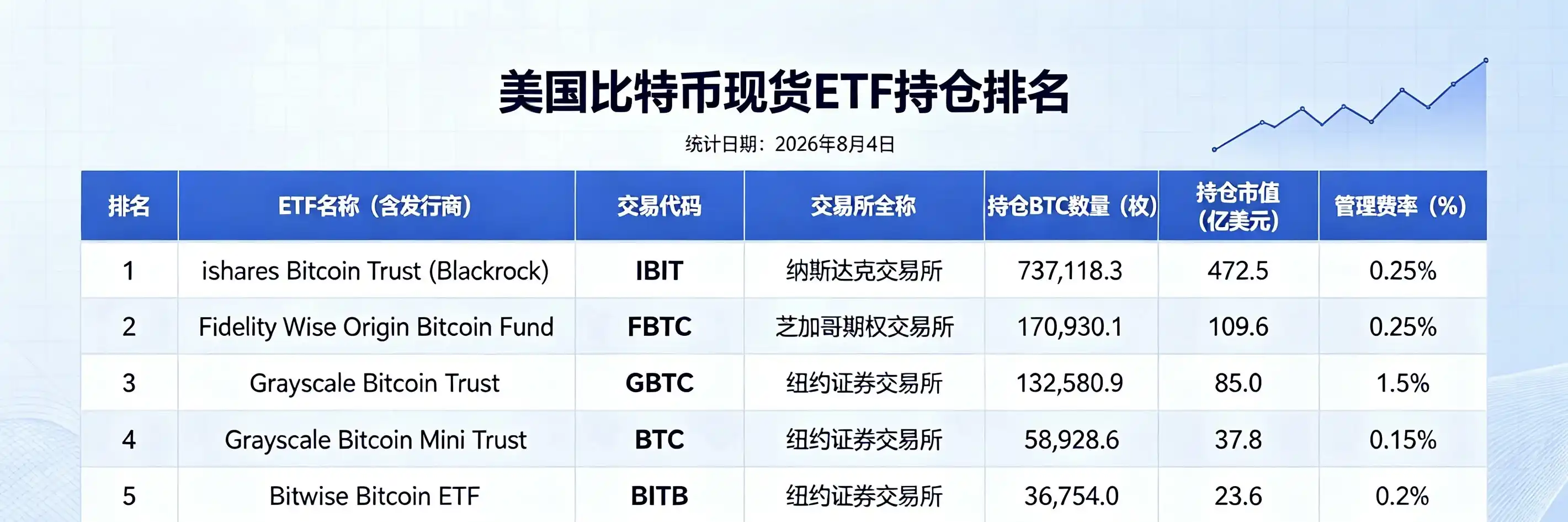
According to BitBo data, as of August 4th, there are 13 spot Bitcoin ETFs in the US market, collectively holding approximately 1.212 million Bitcoins, accounting for about 5.773% of the total Bitcoin supply, with a total size of about $77.7 billion. However, the fund distribution is extremely uneven. The top five products hold about $72.85 billion, occupying almost the entire market share.

BlackRock's iShares Bitcoin Trust (IBIT) holds about 737,000 Bitcoins, with a size of approximately $47.25 billion, accounting for over 60% of the total market size, with a fee rate of 0.25%. Fidelity Wise Origin Bitcoin Fund (FBTC) holds about 171,000 Bitcoins, with a size of about $10.96 billion, also with a 0.25% fee. Grayscale Bitcoin Trust (GBTC) holds about 133,000 Bitcoins, with a size of about $8.5 billion. Despite its high fee rate of 1.5% and persistent net outflows, it maintains its position as the third largest due to first-mover advantage and existing holdings. Grayscale's mini trust BTC holds about 59,000 Bitcoins, with a size of about $3.78 billion and a fee rate of only 0.15%, attracting significant funds transferred from GBTC.

Bitwise's BITB (0.2%), ARK 21Shares' ARKB (0.21%), and VanEck's HODL (0.25%) have sizes ranging from $1 billion to $2.4 billion, forming the middle tier. Morgan Stanley's MSBT holds about 6,231 Bitcoins, with a size of about $399 million, marking the first Bitcoin ETP directly held by a Wall Street investment bank. Valkyrie's BRRR, Franklin's EZBC, and Invesco's BTCO have sizes between $340 million and $380 million. WisdomTree's BTCW is about $143 million. In contrast, Hashdex's DEFI holds only about 225.6 Bitcoins, with a size of about $14.46 million, ranking at the bottom.

Management Fee Ledger: Annual Revenue Hardly Covers Operating Costs

The core revenue for ETF issuers comes from management fees, accrued daily as a percentage of the fund's assets under management. Taking DEFI as an example, with a fee rate of 0.25% and assets of $14.7 million, the annual management fee revenue is only about $36,700. Even at its peak size of $17.54 million, the annual revenue was less than $44,000. The fixed operating costs for a Bitcoin spot ETF include custody fees (Bitcoin custody requires qualified custodians like Coinbase, typically charging several basis points of assets plus a fixed fee), legal compliance and auditing (SEC periodic reporting, AML reviews, annual audits, etc., with annual expenditures in the hundreds of thousands of dollars range), market making and liquidity management (small ETFs need to pay higher incentives to maintain reasonable spreads), exchange listing annual fees, as well as director & officer liability insurance and administration. Industry estimates put the minimum annual operating cost for an ETF at $500,000 to over $1 million.

Even for ETFs with assets over $300 million like Valkyrie BRRR and Franklin EZBC, annual management fee revenue at the same fee rate is around $9 million, leaving profit room after subtracting operating costs. For WisdomTree BTCW below $150 million, annual management fee revenue is about $357,000, already at the breakeven edge. DEFI's annual revenue is only one-tenth of that, showing a clear operational deficit. With shares continuously shrinking and no new fund inflows, it is not commercially sustainable for the issuer to continue subsidizing operating expenses, making liquidation a rational choice.

Hashdex DEFI's exit is not just about size numbers; deeper reasons lie in the structural disadvantages of the issuer's origin and client acquisition capabilities in the US market. Hashdex originated in Rio de Janeiro, Brazil, and built strong brand recognition in Latin American and European markets. Its HASH11 once became Brazil's largest crypto index ETF. However, the US ETF market is dominated by Wall Street giants. Institutional investors place high importance on brand trust, capital strength, and trading depth when choosing products. When established institutions like BlackRock, Fidelity, and Morgan Stanley simultaneously launched similar products, fund managers tend to favor these long-term partners rather than issuers from emerging markets lacking a traditional asset management foundation in the US.

This gap is even more pronounced in customer acquisition costs. Leading issuers have vast existing client bases. BlackRock and Fidelity cross-sell to existing clients through their own platforms and channels like pensions, endowments, and family offices, with marginal customer acquisition costs being extremely low, almost zero. Grayscale has accumulated years of crypto-native investors. In contrast, Hashdex needed to build its brand from scratch in the US. Every step—participating in industry conferences, maintaining data terminal displays, sustaining market maker relationships—means high investment. At the same 0.25% fee level, a revenue gap tens of times larger means Hashdex cannot invest equivalent resources in marketing and investor education.

If Bitcoin prices continue to rise, DEFI's asset size could improve with market appreciation and new inflows, but structural challenges might not be fundamentally resolved. Assuming Bitcoin's rise pushes the size back to $50 million, annual management fee revenue could increase to $125,000, but the operational deficit would still exist. The true breakeven point requires assets exceeding $200 million, demanding a combined force of net investor inflows and price appreciation. However, in a highly concentrated competitive landscape, new funds continuously converge towards the top. BlackRock's IBIT has attracted tens of billions of dollars since listing. Small ETFs often only receive limited spillover even in a bull market. The fact that DEFI's size remained only $17.54 million during Bitcoin's peak in 2025 is proof; the bull market tailwind was insufficient to compensate for the shortcomings in client acquisition.

Besides Hashdex, Which Small ETFs Are in Danger?

As of August 4th, WisdomTree BTCW ($143 million), Invesco BTCO ($348 million), Franklin EZBC ($370 million), and Valkyrie BRRR ($377 million) are the four smallest funds. Among them, BTCW is closest to the safety margin. At a 0.25% fee rate, its annual management fee revenue is about $357,000. If the size continues to shrink, it might enter a loss-making zone. However, as an established ETF issuer, WisdomTree might continue its operation for strategic reasons like maintaining product line completeness. Invesco, Franklin, and Valkyrie have sizes around $350 million, with annual management fee revenue of about $870,000, facing little short-term survival pressure.

Prior to DEFI, there have been precedents of Bitcoin-related ETF closures in the US market, but they were all futures or other types. In January 2024, VanEck closed its Bitcoin futures ETF XBTF, which had a size of about $50 million at closure, as the company decided to concentrate resources after spot ETF approval. Earlier, in October 2022, Valkyrie's VBB was liquidated due to its small size of only about $570,000.


Criptos en tendencia

Preguntas relacionadas

QWhich ETF is reported as the first spot Bitcoin ETF to be liquidated in the U.S. market, and what were the main reasons cited for its closure?

AThe first spot Bitcoin ETF to announce liquidation is the Hashdex Bitcoin ETF (DEFI). The closure decision was based on a comprehensive evaluation of factors including assets under management size, trading liquidity, operational costs, and investor interest.

QAccording to the article, what was the asset size of the Hashdex Bitcoin ETF (DEFI) before its liquidation and how does it rank among the U.S. spot Bitcoin ETFs?

AThe Hashdex Bitcoin ETF (DEFI) had assets under management of approximately $14.7 million as of July 30. With this size, it ranked last among all U.S. spot Bitcoin ETFs at the time.

QWhat are the key structural disadvantages, as outlined in the article, that made it difficult for Hashdex's DEFI ETF to compete in the U.S. market?

AKey structural disadvantages for Hashdex's DEFI included its origin as a non-U.S. firm (based in Brazil), which led to lower brand recognition and trust among U.S. institutional investors compared to established Wall Street giants like BlackRock and Fidelity. It also faced much higher customer acquisition costs from a near-zero base, unlike incumbents with vast existing client networks for low-cost cross-selling.

QWhat is the estimated annual operational cost for a Bitcoin spot ETF mentioned in the article, and why does this create a challenge for smaller funds?

AThe article states that the estimated minimum annual operational cost for a Bitcoin spot ETF is between $500,000 to over $1 million. This creates a major challenge for smaller funds because their management fee income, calculated as a percentage of their assets, often falls far short of covering these fixed costs, leading to unsustainable losses for the issuer.

QName at least two other small U.S. spot Bitcoin ETFs identified in the article as being in potentially precarious positions following DEFI's liquidation.

AFollowing DEFI's liquidation, the article identifies WisdomTree BTCW ($143 million), Invesco BTCO ($348 million), Franklin EZBC ($370 million), and Valkyrie BRRR ($377 million) as the smallest funds. Among these, WisdomTree's BTCW is noted as being closest to the profitability threshold due to its relatively lower asset size.

Lecturas Relacionadas

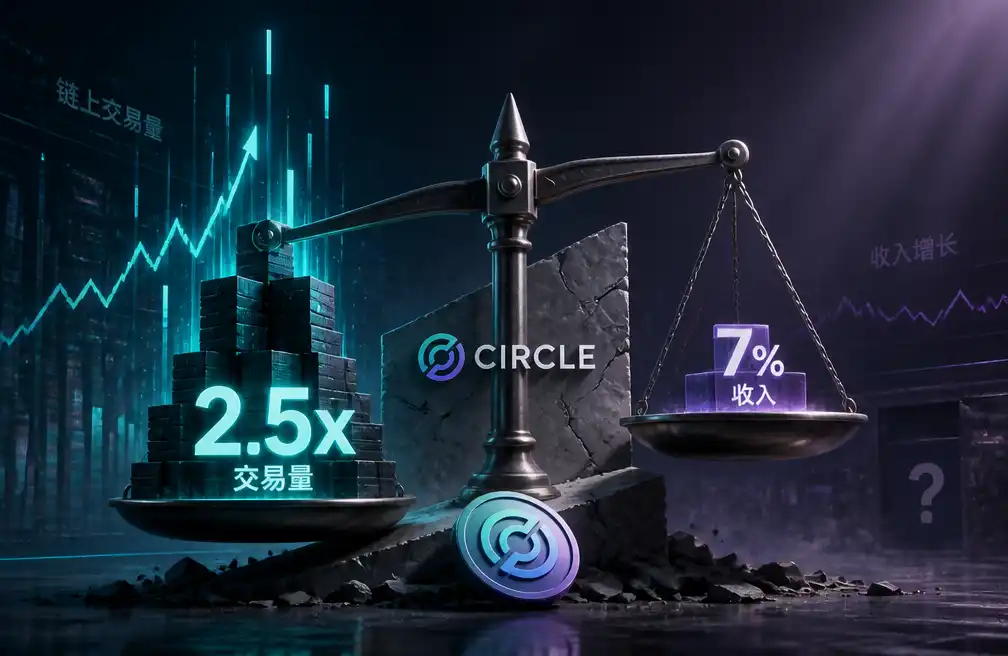
Trading Volume Increased by 2.5x, Why Did Circle's Revenue Only Grow by 7%?

Circle's Q2 performance presents a seemingly contradictory picture: the transaction volume of its stablecoin USDC surged 151% year-over-year to $14.8 trillion, while its "Total Revenue & Reserve Revenue" grew by only 7% to $701 million. This discrepancy highlights the core of Circle's business model. Revenue is primarily driven not by transaction volume, but by the average amount of USDC in circulation and the yield generated from its reserves. Key points: 1. **Revenue Drivers:** Over 90% of revenue comes from "reserve income," which is a function of average USDC circulation (up 25% YoY) and the reserve yield (which fell by 66 basis points). The net effect was a mere ~5% increase in reserve income. 2. **Transaction vs. Revenue:** High transaction volume indicates robust usage of USDC for payments and settlements, but does not translate directly to revenue. It must first convert into a sustained, average circulating balance. 3. **Cost Structure:** After accounting for distribution and other costs, the metric "Revenue Less Direct Costs" (RLDC) grew faster than total revenue, with its margin improving. However, rising operating expenses (up 23% YoY) meant that Adjusted EBITDA growth was limited to 8%. 4. **New Initiatives:** Circle reported progress on new networks like the Circle Payments Network and upcoming products (Arc, Agent Stack), but these are currently measured by adoption metrics (e.g., transaction run-rate, number of services) rather than material revenue contribution this quarter. In summary, the financial results are determined by the interplay of USDC circulation, reserve yields, and cost structures, while high transaction volume signals underlying network strength that has not yet fully flowed through to the income statement.

marsbitHace 9 min(s)

Trading Volume Increased by 2.5x, Why Did Circle's Revenue Only Grow by 7%?

marsbitHace 9 min(s)

Samsung China, Another Step Back

Samsung China Takes Another Step Back Samsung Electronics is further retreating from the Chinese consumer market. Following the exit of its home appliance business in May, its mobile phone division is now reportedly scaling down. Stores with monthly sales below 300,000 RMB are being closed in several cities. Data shows Samsung's smartphone market share in China has plummeted to 0.1% in Q2 2026, a stark contrast to its 22% global leadership. The decline is attributed to intense competition from domestic brands offering better value, higher specs (like faster charging), and superior localization in software and services. Samsung's premium pricing and less adapted One UI system have struggled against rivals like Huawei, Xiaomi, and Honor. This consumer electronics retreat coincides with Samsung's record-breaking semiconductor profits, driven by the AI boom. In Q2 2026, the chip division contributed nearly all operating profit, while the mobile and home appliance unit posted its first-ever operating loss. Internal dynamics, like the chip division charging market prices to the mobile unit, have increased cost pressures. Samsung's strategy now appears to be a focused retreat towards the ultra-premium segment in China, similar to its global push in high-end foldables like the Galaxy Z Fold8. The company is likely to retain only key stores in major cities to serve a niche, high-end clientele. While its deep semiconductor reserves offer a cushion, this shift away from mass-market consumer electronics reduces business diversification. The move is pragmatic but signifies a fundamental transformation; Samsung is ceding mass-market influence and betting heavily on its semiconductor strength and a narrowed premium product focus.

marsbitHace 13 min(s)

Samsung China, Another Step Back

marsbitHace 13 min(s)

Helium, Naphtha, and Photoresist: The Three Critical Vulnerabilities of Semiconductor Fabs

The article "Helium, Naphtha, Photoresist: The Three Achilles' Heels of Semiconductor Fabs" analyzes a hypothetical 2026 supply crisis triggered by geopolitical conflict in the Middle East, focusing on three critical materials for semiconductor manufacturing: helium, naphtha, and photoresist. A key attack on a Qatari LNG facility and the blockade of the Strait of Hormuz threaten the global supply of helium (a byproduct of LNG) and naphtha (a petroleum product). This creates a triple threat of shortages that could halt chip production. Helium is essential, particularly for precise wafer temperature control in dry etching processes; a shortage would cause an immediate "instant failure" in these steps. Naphtha is the foundational raw material for numerous equipment consumables and, crucially, for photoresist chemicals. Japan dominates the photoresist market, relying on a single key supplier for intermediates. The analysis shows the impacts would differ. The tiny fraction of global naphtha used for semiconductors (under 0.1%) makes securing supply for photoresist relatively easier. Helium is the greater vulnerability. Qatar supplies about one-third of the world's helium, exceeding the total annual consumption of the semiconductor industry (21-24% of global supply). While short-term buffers like corporate reserves, recycling, and prioritization (e.g., cutting balloon use first) can delay the crisis, helium cannot be stored long-term due to boil-off. Fabs typically hold only days to weeks of inventory. The consequences would be severe and tiered. Advanced logic nodes (e.g., 2nm, 3nm) using complex processes like GAA would be hit hardest, potentially stopping within three months. Mature nodes for automotive and power semiconductors would also eventually halt (within 6-12 months), which could be catastrophic for the auto industry due to stringent certification requirements. The crisis would unfold not as a sudden global stop, but through a sequence of allocation, severe price spikes, reduced output of low-margin products, and partial fab shutdowns by region and company if the shortage persists beyond a year.

marsbitHace 15 min(s)

Helium, Naphtha, and Photoresist: The Three Critical Vulnerabilities of Semiconductor Fabs

marsbitHace 15 min(s)

Post-World Cup, HIP-4 Awaits Its ‘Election Day’

Following its significant success driven by World Cup trading, Hyperliquid's HIP-4 prediction market is now looking toward the upcoming US midterm elections as its next major opportunity. Initially viewed as an extension for hedging crypto positions, HIP-4 unexpectedly saw nearly 48% of its total volume come from sports markets, primarily the World Cup. However, activity plummeted over 90% after the tournament, highlighting the platform's heavy reliance on major real-world events. To address this dependency and enable continuous market creation, Hyperliquid launched a permissionless deployment feature for HIP-4 on its testnet on July 31. This new system allows approved third-party deployers to create markets using pre-approved templates, requiring a 500,000 HYPE stake and offering up to 50% of trading fees. The goal is to decentralize the sourcing of timely, high-interest markets. The imminent US midterm elections present a critical test case. While competitors like Polymarket and Kalshi already offer extensive political markets, HIP-4 currently has none. If the permissionless system launches on mainnet in time, deployers could build a comprehensive election trading suite. Missing this window would mean relying on manual validator creation again, forfeiting a chance to prove that external deployers can sustainably supply popular markets. The coming weeks will be crucial for HIP-4's evolution beyond sporadic event-driven spikes.

marsbitHace 17 min(s)

Post-World Cup, HIP-4 Awaits Its ‘Election Day’

marsbitHace 17 min(s)

Crypto finance company BIT predicts gold and bitcoin will rise together! Here are the details

Crypto finance company BIT (formerly Matrixport) forecasts that potential US dollar weakness and expectations of interest rate cuts could simultaneously support the prices of both Bitcoin and gold. Their analysis suggests that current macroeconomic conditions may positively impact both risk assets and the safe-haven gold. Technical indicators hint that gold may be forming a significant low and could be poised for a new upward trend, with Bitcoin likely to benefit from similar macro factors. BIT highlights that while markets expect the US Federal Reserve to hike rates twice this year, this scenario is not certain. If economic data differs, the Fed might not raise rates at all in 2023. Such a development could weaken the US dollar and strengthen market expectations for rate cuts. A weaker dollar is a traditional key support for gold prices, and Bitcoin has shown sensitivity to similar macro dynamics in recent years. Increased global liquidity and rate cut expectations could drive investors toward alternative assets. Market experts believe low interest rates enhance the appeal of both gold and Bitcoin, as they lower the opportunity cost of holding non-yielding assets and encourage their use as inflation hedges. However, analysts caution that monetary policy expectations can shift rapidly based on incoming economic data, particularly inflation, employment, and growth figures, which will remain crucial in determining the Fed's future actions. *This is not investment advice.

cryptonews.ruHace 17 min(s)

Crypto finance company BIT predicts gold and bitcoin will rise together! Here are the details

cryptonews.ruHace 17 min(s)

Trading

Spot

Artículos destacados

Qué es BITCOIN

Entendiendo HarryPotterObamaSonic10Inu (ERC-20) y Su Posición en el Espacio Cripto En los últimos años, el mercado de criptomonedas ha sido testigo de un aumento en la popularidad de las monedas meme, capturando el interés no solo de los comerciantes, sino también de aquellos que buscan compromiso comunitario y valor de entretenimiento. Entre estos tokens únicos se encuentra HarryPotterObamaSonic10Inu (ERC-20), un proyecto intrigante que mezcla referencias culturales en el tejido de las criptomonedas. Este artículo profundiza en los aspectos clave de HarryPotterObamaSonic10Inu, explorando sus mecanismos, ethos impulsado por la comunidad y su relación con el paisaje cripto más amplio. ¿Qué es HarryPotterObamaSonic10Inu (ERC-20)? Como su nombre sugiere, HarryPotterObamaSonic10Inu es una moneda meme construida sobre la blockchain de Ethereum, clasificada bajo el estándar ERC-20. A diferencia de las criptomonedas tradicionales que pueden enfatizar la utilidad práctica o el potencial de inversión, este token prospera en el valor de entretenimiento y la fuerza de su comunidad. El proyecto tiene como objetivo fomentar un entorno donde los usuarios comprometidos puedan reunirse, compartir ideas y participar en actividades inspiradas por diversos fenómenos culturales. Una característica notable de HarryPotterObamaSonic10Inu es su cero impuestos en las transacciones. Este atractivo elemento tiene como objetivo incentivar el comercio y la participación comunitaria, sin cargos adicionales que puedan disuadir a los comerciantes de pequeña escala. El suministro total de la moneda está establecido en mil millones de tokens, una cifra que marca su intención de mantener una circulación sustancial dentro de la comunidad. Creador de HarryPotterObamaSonic10Inu (ERC-20) Los orígenes de HarryPotterObamaSonic10Inu están algo envueltos en misterio; los detalles sobre el creador siguen siendo desconocidos. El desarrollo de este token carece de un equipo identificable o de un plan explícito, lo cual no es inusual dentro del sector de monedas meme. En cambio, el proyecto ha surgido de manera orgánica, con su progreso muy dependiente del entusiasmo y la participación de su comunidad. Inversores de HarryPotterObamaSonic10Inu (ERC-20) En cuanto a inversiones externas y respaldo, HarryPotterObamaSonic10Inu también sigue siendo ambiguo. El token no lista ninguna fundación de inversión conocida o apoyo organizacional significativo. En cambio, la savia del proyecto es su comunidad de base, que informa su crecimiento y sostenibilidad a través de la acción colectiva y el compromiso en el espacio cripto. ¿Cómo Funciona HarryPotterObamaSonic10Inu (ERC-20)? Como una moneda meme, HarryPotterObamaSonic10Inu opera principalmente fuera de los marcos tradicionales que a menudo rigen el valor de los activos. Hay varios aspectos distintivos que definen cómo funciona el proyecto: Transacciones Sin Impuestos: Sin tarifas impositivas en las transacciones, los usuarios pueden comprar y vender el token libremente sin preocuparse por costos ocultos. Compromiso Comunitario: El proyecto prospera en la interacción comunitaria, aprovechando plataformas de redes sociales para crear entusiasmo y facilitar la participación. Las discusiones, el intercambio de contenido y el compromiso son elementos cruciales que ayudan a expandir su alcance y fomentar la lealtad entre los seguidores. Sin Utilidad Práctica: Cabe señalar que HarryPotterObamaSonic10Inu no ofrece utilidad concreta dentro del ecosistema financiero. Más bien, se clasifica como un token principalmente para actividades de entretenimiento y comunitarias. Referencia Cultural: El token incorpora astutamente elementos de la cultura popular para atraer interés, conectando con entusiastas de los memes y seguidores de las criptomonedas por igual. HarryPotterObamaSonic10Inu ejemplifica cómo las monedas meme operan de manera diferente a los proyectos de criptomonedas más tradicionales, ingresando al mercado como construcciones sociales innovadoras en lugar de activos utilitarios. Cronología de HarryPotterObamaSonic10Inu (ERC-20) La historia de HarryPotterObamaSonic10Inu está marcada por varios hitos notables: Creación: El token surgió de un meme viral, capturando la imaginación de muchos entusiastas de las criptomonedas. Las fechas específicas de creación no están disponibles, subrayando su ascenso orgánico. Listado en Exchanges: HarryPotterObamaSonic10Inu ha llegado a varios exchanges, permitiendo un acceso y comercio más fácil por parte de la comunidad. Iniciativas de Compromiso Comunitario: Actividades continuas destinadas a mejorar la interacción comunitaria, incluyendo concursos, campañas en redes sociales y generación de contenido por parte de fanáticos y defensores. Planes de Expansión Futuros: La hoja de ruta del proyecto incluye el lanzamiento de una colección de NFT, mercancía y un sitio de comercio electrónico relacionado con sus temas culturales, involucrando aún más a la comunidad e intentando añadir más dimensiones a su ecosistema. Puntos Clave Sobre HarryPotterObamaSonic10Inu (ERC-20) Naturaleza Impulsada por la Comunidad: El proyecto prioriza la participación colectiva y la creatividad, asegurando que la involucración de los usuarios esté a la vanguardia de su desarrollo. Clasificación como Moneda Meme: Representa la epítome de las criptomonedas basadas en el entretenimiento, diferenciándose de los vehículos de inversión tradicionales. Sin Afiliación Directa con Bitcoin: A pesar de la similitud en el nombre del ticker, HarryPotterObamaSonic10Inu es distinto y no tiene relación con Bitcoin u otras criptomonedas establecidas. Enfoque en la Colaboración: HarryPotterObamaSonic10Inu está diseñado para crear un espacio para la colaboración y el intercambio de historias entre sus poseedores, proporcionando una vía para la creatividad y el vínculo comunitario. Perspectivas Futuras: La ambición de expandirse más allá de su premisa inicial hacia NFTs y mercancías describe un camino para que el proyecto potencialmente ingrese a avenidas más tradicionales dentro de la cultura digital. A medida que las monedas meme continúan capturando la imaginación de la comunidad de criptomonedas, HarryPotterObamaSonic10Inu (ERC-20) se destaca debido a sus lazos culturales y su enfoque centrado en la comunidad. Si bien puede no encajar en el molde típico de un token impulsado por la utilidad, su esencia radica en la alegría y la camaradería fomentadas entre sus seguidores, destacando la naturaleza en evolución de las criptomonedas en una era cada vez más digital. A medida que el proyecto continúa desarrollándose, será importante observar cómo las dinámicas comunitarias influyen en su trayectoria en el cambiante paisaje de la tecnología blockchain.

2.5k Vistas totalesPublicado en 2024.04.01Actualizado en 2024.12.03

Qué es BITCOIN

Cómo comprar BTC

¡Bienvenido a HTX.com! Hemos hecho que comprar Bitcoin (BTC) sea simple y conveniente. Sigue nuestra guía paso a paso para iniciar tu viaje de criptos.Paso 1: crea tu cuenta HTXUtiliza tu correo electrónico o número de teléfono para registrarte y obtener una cuenta gratuita en HTX. Experimenta un proceso de registro sin complicaciones y desbloquea todas las funciones.Obtener mi cuentaPaso 2: ve a Comprar cripto y elige tu método de pagoTarjeta de crédito/débito: usa tu Visa o Mastercard para comprar Bitcoin (BTC) al instante.Saldo: utiliza fondos del saldo de tu cuenta HTX para tradear sin problemas.Terceros: hemos agregado métodos de pago populares como Google Pay y Apple Pay para mejorar la comodidad.P2P: tradear directamente con otros usuarios en HTX.Over-the-Counter (OTC): ofrecemos servicios personalizados y tipos de cambio competitivos para los traders.Paso 3: guarda tu Bitcoin (BTC)Después de comprar tu Bitcoin (BTC), guárdalo en tu cuenta HTX. Alternativamente, puedes enviarlo a otro lugar mediante transferencia blockchain o utilizarlo para tradear otras criptomonedas.Paso 4: tradear Bitcoin (BTC)Tradear fácilmente con Bitcoin (BTC) en HTX's mercado spot. Simplemente accede a tu cuenta, selecciona tu par de trading, ejecuta tus trades y monitorea en tiempo real. Ofrecemos una experiencia fácil de usar tanto para principiantes como para traders experimentados.

5.8k Vistas totalesPublicado en 2024.12.12Actualizado en 2026.06.02

Cómo comprar BTC

Qué es $BITCOIN

ORO DIGITAL ($BITCOIN): Un Análisis Integral Introducción al ORO DIGITAL ($BITCOIN) ORO DIGITAL ($BITCOIN) es un proyecto basado en blockchain que opera en la red Solana, cuyo objetivo es combinar las características de los metales preciosos tradicionales con la innovación de las tecnologías descentralizadas. Aunque comparte un nombre con Bitcoin, a menudo referido como “oro digital” debido a su percepción como un refugio de valor, ORO DIGITAL es un token separado diseñado para crear un ecosistema único dentro del paisaje Web3. Su meta es posicionarse como un activo digital alternativo viable, aunque los detalles sobre sus aplicaciones y funcionalidades aún están en desarrollo. ¿Qué es ORO DIGITAL ($BITCOIN)? ORO DIGITAL ($BITCOIN) es un token de criptomoneda diseñado explícitamente para su uso en la blockchain de Solana. A diferencia de Bitcoin, que proporciona un papel de almacenamiento de valor ampliamente reconocido, este token parece centrarse en aplicaciones y características más amplias. Aspectos notables incluyen: Infraestructura Blockchain: El token está construido sobre la blockchain de Solana, conocida por su capacidad para manejar transacciones de alta velocidad y bajo costo. Dinámicas de Suministro: ORO DIGITAL tiene un suministro máximo limitado a 100 cuatrillones de tokens (100P $BITCOIN), aunque los detalles sobre su suministro circulante no se han divulgado actualmente. Utilidad: Si bien las funcionalidades precisas no están delineadas explícitamente, hay indicios de que el token podría ser utilizado para diversas aplicaciones, potencialmente involucrando aplicaciones descentralizadas (dApps) o estrategias de tokenización de activos. ¿Quién es el Creador de ORO DIGITAL ($BITCOIN)? En la actualidad, la identidad de los creadores y el equipo de desarrollo detrás de ORO DIGITAL ($BITCOIN) sigue siendo desconocida. Esta situación es típica entre muchos proyectos innovadores dentro del espacio blockchain, particularmente aquellos alineados con las finanzas descentralizadas y fenómenos de monedas meme. Si bien tal anonimato puede fomentar una cultura impulsada por la comunidad, intensifica las preocupaciones sobre la gobernanza y la responsabilidad. ¿Quiénes son los Inversores de ORO DIGITAL ($BITCOIN)? La información disponible indica que ORO DIGITAL ($BITCOIN) no tiene patrocinadores institucionales conocidos ni inversiones destacadas de capital de riesgo. El proyecto parece operar en un modelo de peer-to-peer centrado en el apoyo y la adopción de la comunidad en lugar de rutas de financiamiento tradicionales. Su actividad y liquidez se sitúan principalmente en intercambios descentralizados (DEX), como PumpSwap, en lugar de plataformas de trading centralizadas establecidas, lo que resalta aún más su enfoque de base. Cómo Funciona ORO DIGITAL ($BITCOIN) Los mecanismos operativos de ORO DIGITAL ($BITCOIN) pueden elaborarse en función de su diseño blockchain y atributos de red: Mecanismo de Consenso: Al aprovechar el único proof-of-history (PoH) de Solana combinado con un modelo de proof-of-stake (PoS), el proyecto asegura una validación de transacciones eficiente que contribuye al alto rendimiento de la red. Tokenómica: Si bien los mecanismos deflacionarios específicos no se han detallado extensamente, el vasto suministro máximo de tokens implica que podría atender microtransacciones o casos de uso nicho que aún están por definirse. Interoperabilidad: Existe el potencial de integración con el ecosistema más amplio de Solana, incluyendo varias plataformas de finanzas descentralizadas (DeFi). Sin embargo, los detalles sobre integraciones específicas permanecen no especificados. Cronología de Eventos Clave Aquí hay una cronología que destaca hitos significativos relacionados con ORO DIGITAL ($BITCOIN): 2023: El despliegue inicial del token ocurre en la blockchain de Solana, marcado por su dirección de contrato. 2024: ORO DIGITAL gana visibilidad al estar disponible para trading en intercambios descentralizados como PumpSwap, permitiendo a los usuarios comerciar contra SOL. 2025: El proyecto presencia actividad de trading esporádica y potencial interés en compromisos liderados por la comunidad, aunque no se han documentado asociaciones notables o avances técnicos hasta el momento. Análisis Crítico Fortalezas Escalabilidad: La infraestructura subyacente de Solana soporta altos volúmenes de transacciones, lo que podría mejorar la utilidad de $BITCOIN en varios escenarios de transacción. Accesibilidad: El potencial bajo precio de trading por token podría atraer a inversores minoristas, facilitando una participación más amplia debido a oportunidades de propiedad fraccionada. Riesgos Falta de Transparencia: La ausencia de patrocinadores, desarrolladores o un proceso de auditoría conocidos públicamente puede generar escepticismo sobre la sostenibilidad y confiabilidad del proyecto. Volatilidad del Mercado: La actividad de trading depende en gran medida del comportamiento especulativo, lo que puede resultar en una volatilidad de precios significativa y en incertidumbre para los inversores. Conclusión ORO DIGITAL ($BITCOIN) surge como un proyecto intrigante pero ambiguo dentro del ecosistema de Solana en rápida evolución. Si bien intenta aprovechar la narrativa del “oro digital”, su alejamiento del papel establecido de Bitcoin como refugio de valor subraya la necesidad de una diferenciación más clara de su utilidad y estructura de gobernanza previstas. La aceptación y adopción futura dependerán probablemente de abordar la actual opacidad y de definir sus estrategias operativas y económicas de manera más explícita. Nota: Este informe abarca información sintetizada disponible hasta octubre de 2023, y pueden haber ocurrido desarrollos más allá del período de investigación.

406 Vistas totalesPublicado en 2025.05.13Actualizado en 2025.05.13

Qué es $BITCOIN

Discusiones

Bienvenido a la comunidad de HTX. Aquí puedes mantenerte informado sobre los últimos desarrollos de la plataforma y acceder a análisis profesionales del mercado. A continuación se presentan las opiniones de los usuarios sobre el precio de BTC (BTC).

活动图片