Will the Fed’s $8B liquidity injection create a turning point for crypto?

ambcryptoPublicado a 2026-03-27Actualizado a 2026-03-27

Resumen

Given the current macro environment marked by geopolitical tensions and rising oil prices, investors are closely monitoring Federal Reserve signals. The Fed's recent $8 billion liquidity injection is drawing significant attention, as shifts in liquidity often directly impact crypto markets. Technically, crypto showed early resilience but momentum is fading, with the total market cap dropping 3.4% in a day, erasing nearly $100 billion. Rising Treasury yields and a risk-off shift are pulling capital into safe havens, reminiscent of the 2022 cycle that triggered a major crypto bear market. The Fed's intervention may provide short-term support and slow the flight to safety, potentially acting as a key catalyst in the current cycle.

Given the current macro setup, investors are closely tracking every signal coming from the Federal Reserve.

The logic is simple: the ongoing West Asia crisis shows no signs of de-escalation. Instead, geopolitical tensions continue to spill into energy markets, pushing oil prices back above the $100/barrel mark. Consequently, countries are being forced to consider targeted fiscal responses to stabilize their economies.

Within this environment, liquidity has become the central narrative. That’s why the Federal Reserve’s recent decision to inject $8 billion into the financial system is drawing increased attention from investors, particularly for crypto traders, where shifts in liquidity often translate directly into price action.
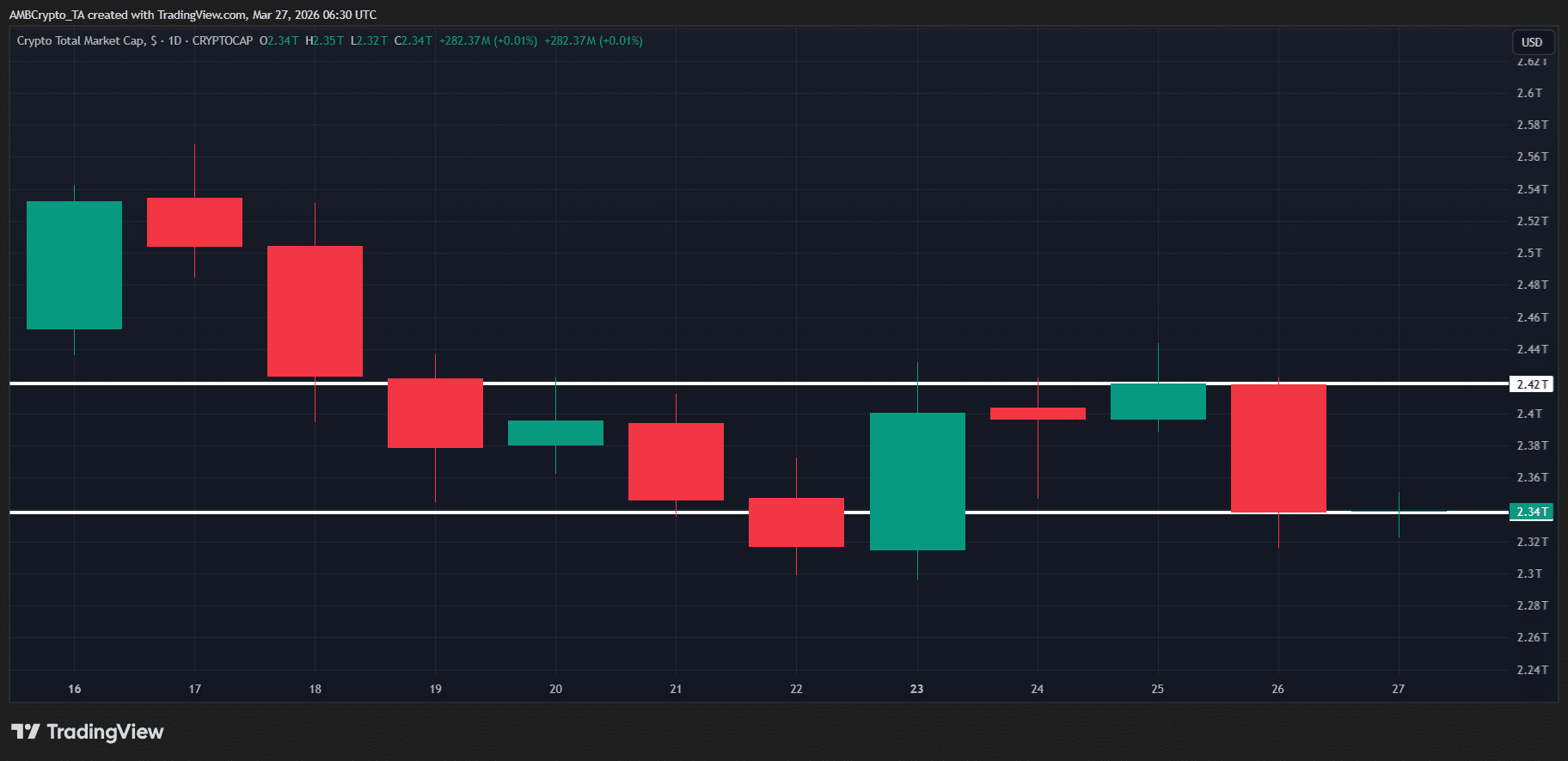
Source: TradingView (TOTAL/USDT)

From a technical perspective, the timing looks increasingly relevant.

While the crypto market initially showed resilience when the conflict first escalated, momentum now appears to be fading. Patience seems to be thinning, with the TOTAL crypto market cap closing 3.4% lower on the 26th of March, marking one of the sharper weekly pullbacks and wiping out nearly $100 billion in value.

Against this backdrop, the Federal Reserve’s liquidity injection could provide short-term support. The bigger question, however, is whether it will be enough to stabilize market sentiment if the conflict continues to drag on, especially as geopolitical uncertainty pushes investors toward safer assets.

If it does, this intervention could evolve into a key catalyst shaping the current crypto cycle.

Crypto markets fear a 2022 repeat as investors rotate into safety

In the current macro setup, risk management has naturally become the dominant trading priority.

From a technical angle, this shift reflects investors rotating back into cash and low-risk positions instead of actively deploying capital into risk assets, as they wait for clearer macro signals before increasing exposure.

Notably, this caution is most visible in the bond market. Real yields on 10-year Treasuries have climbed to their highest levels in nearly a year, signaling tightening financial conditions. At the same time, renewed geopolitical tensions with Iran have pushed the 10-year Treasury yield up to around 4.43%, reinforcing the broader risk-off tone across markets.
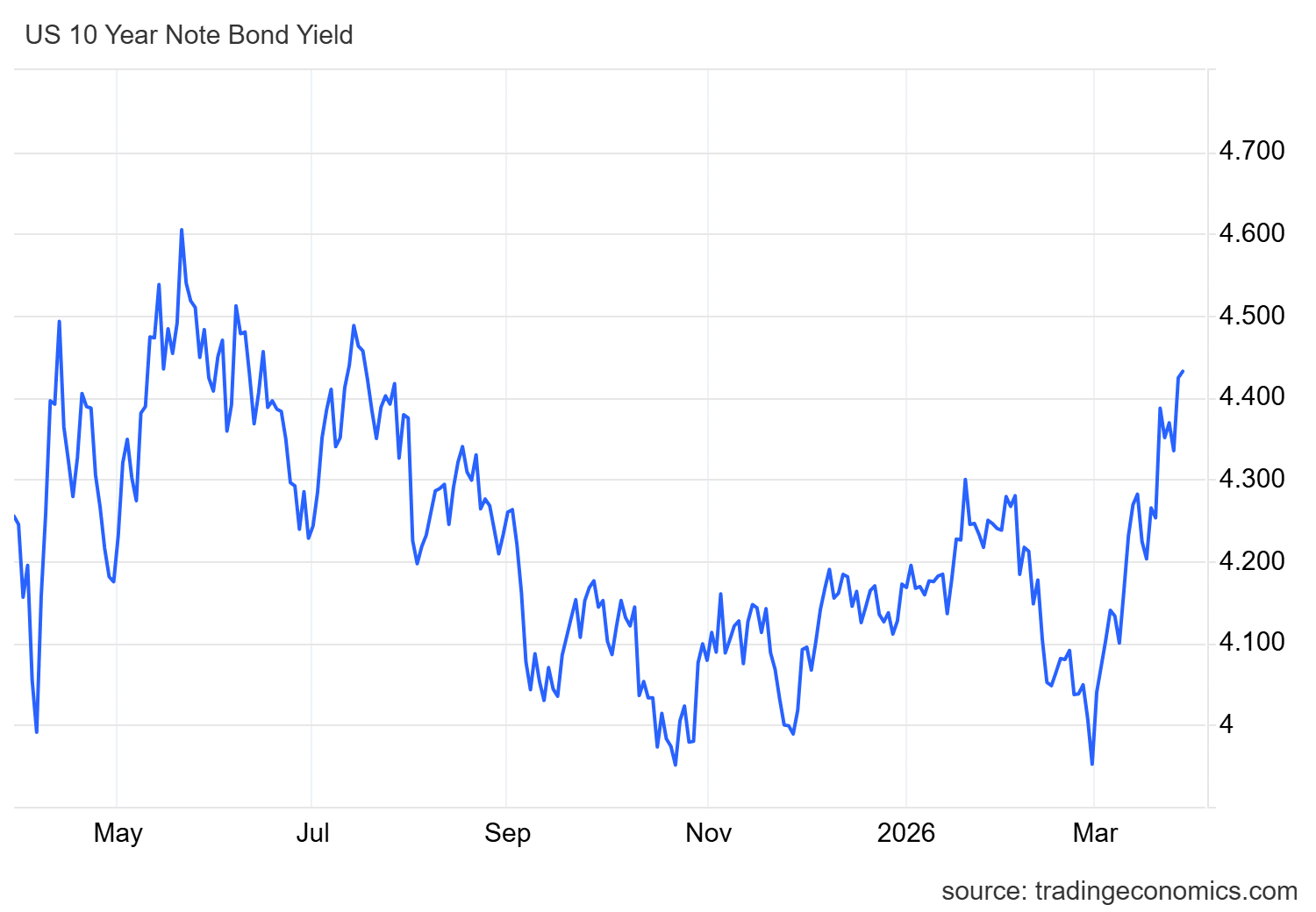
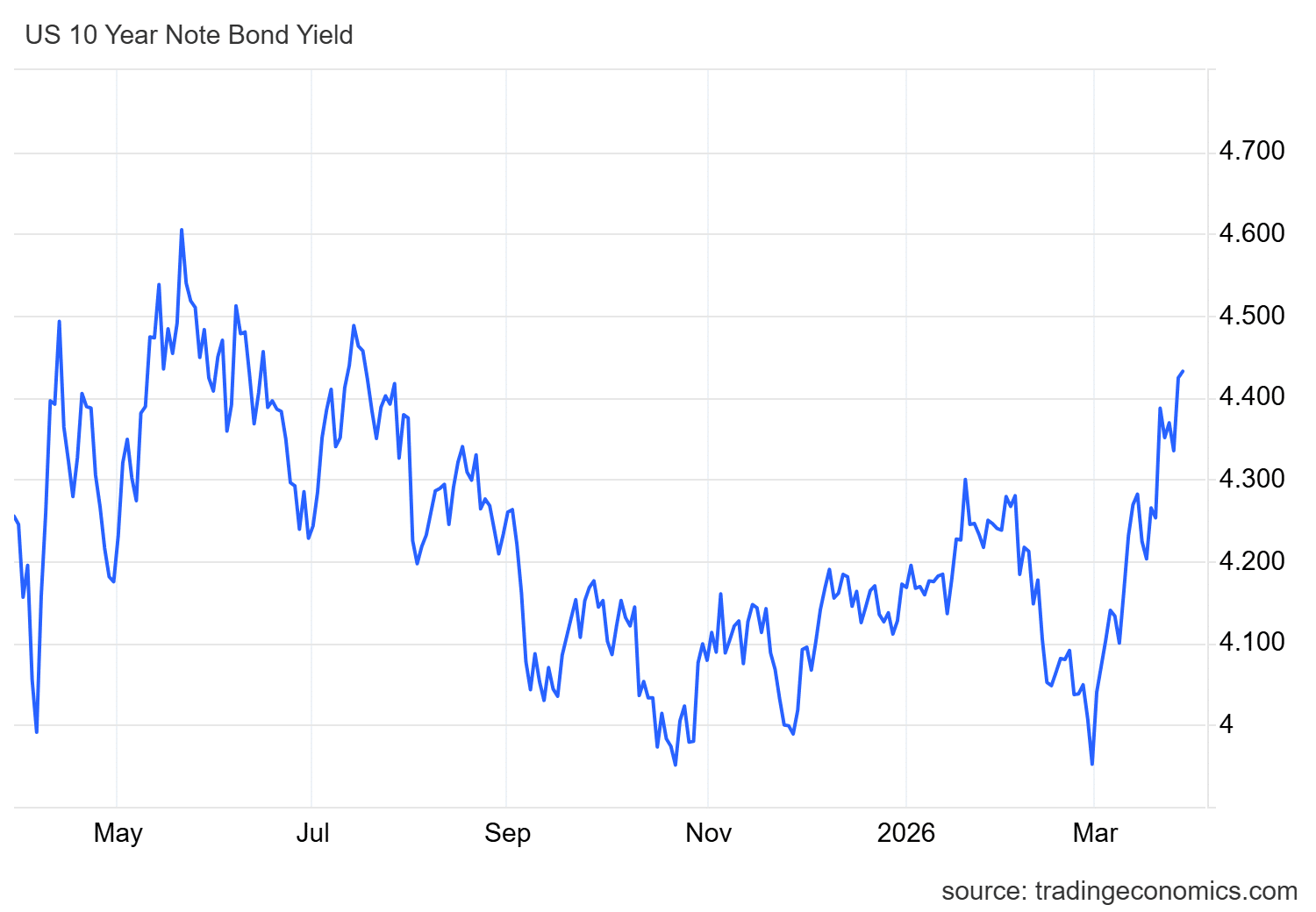
Source: TradingEconomics

In essence, higher yields are pulling liquidity away from risk assets.

And it doesn’t stop there. JPMorgan has pointed out that the ongoing rotation of capital into safe havens like cash is starting to resemble the 2022 setup. Back then, the shift toward safety triggered crypto’s first major bear market, sending the total crypto market cap down 65%+ and wiping out roughly $1.4 trillion in value.

In this context, the Federal Reserve’s $8 billion liquidity injection doesn’t just fit the technical picture. Instead, it also aligns with the broader “fundamental” backdrop too. As investors grow more risk-averse, this liquidity could help relieve pressure on risk assets and slow the flow into safe havens, making it a key signal for the current crypto cycle.


Final Summary

  • Rising yields and geopolitical tensions are driving capital toward safe havens, mirroring the 2022 cycle that triggered crypto’s first major bear market.
  • The Fed’s $8 billion injection provides support, easing pressure on risk assets and acting as a key signal in the current macro cycle.


Preguntas relacionadas

QWhat is the main reason investors are closely watching the Federal Reserve's actions according to the article?

AInvestors are closely tracking every signal from the Federal Reserve because liquidity has become the central narrative, and shifts in liquidity often translate directly into price action in the crypto markets.

QHow did the crypto market perform on March 26th, as mentioned in the article?

AThe TOTAL crypto market cap closed 3.4% lower on March 26th, marking one of the sharper weekly pullbacks and wiping out nearly $100 billion in value.

QWhat specific action did the Federal Reserve take that is drawing attention from crypto traders?

AThe Federal Reserve decided to inject $8 billion into the financial system, which is drawing increased attention as it could provide short-term support to risk assets.

QWhy are rising yields on 10-year Treasuries significant for the crypto market?

ARising real yields on 10-year Treasuries signal tightening financial conditions and a risk-off tone, which pulls liquidity away from risk assets like crypto, mirroring the setup that triggered the 2022 bear market.

QWhat broader macroeconomic factor is contributing to the current risk-averse sentiment among investors?

ARenewed geopolitical tensions, particularly the ongoing West Asia crisis with no signs of de-escalation, are spilling into energy markets and pushing investors toward safer assets, contributing to the risk-averse sentiment.

Lecturas Relacionadas

Coldcard Hardware Wallet Hacked: 594 Bitcoin Withdrawn in 25 Minutes

The Coldcard hardware wallet has been compromised, with hackers stealing approximately 594.5 Bitcoin (~$40 million) from 500 addresses in just 25 minutes. The root cause was a critical software bug, undetected for five years, which disabled the device's secure chip for generating true random numbers. This led to the creation of private keys based on predictable data like the processor's serial number, drastically reducing cryptographic security. The attackers exploited this offline by brute-forcing possible seed phrases, finding active addresses on the public ledger, and signing transactions. Initially, Coinkite (Coldcard's maker) claimed only older models were at risk but later admitted all devices running the compromised firmware were vulnerable. CEO Rodolphe Novak (NVK) apologized but ruled out financial compensation for affected users. To secure funds, owners must urgently update their firmware to specific safe versions, generate a completely new seed phrase on the updated device, and transfer all assets to new addresses created with that new seed. While a BIP-39 passphrase can help, it does not replace this migration process. Other Coinkite products like TAPSIGNER were not affected. This incident underscores that even specialized hardware requires rigorous, independent code audits, especially for cryptographic functions. It parallels past failures, like a 2006 OpenSSL bug in Debian, and raises questions about whether automated code analysis can ever fully replace human scrutiny in critical security areas.

cryptonews.ruHace 7 min(s)

Coldcard Hardware Wallet Hacked: 594 Bitcoin Withdrawn in 25 Minutes

cryptonews.ruHace 7 min(s)

Trading

Spot
活动图片