White House Mediates Bank–Crypto Clash Over CLARITY Act

TheNewsCryptoPublicado a 2026-03-11Actualizado a 2026-03-11

Resumen

The White House is mediating between banks and crypto industry representatives over the stalled CLARITY Act in the Senate. White House crypto adviser Patrick Witt emphasized the need to keep the legislation pro-innovation and criticized attempts to turn it into an anti-competition bill. Coinbase officials, including Paul Grewal, accused banks of causing unnecessary delays and attempting to divert benefits from retail consumers to themselves. Banks, represented by groups like the Bank Policy Institute, express concerns over deposit flight risks and are considering legal action against the OCC for granting banking charters to crypto firms. Previously, former President Trump warned that failure to pass the bill could drive the crypto industry to competing countries like China.

While the CLARITY Act is repeatedly delayed in the Senate, the White House is attempting to talk to resolve the standoff between banks and the crypto industry representatives. The adviser of the White House with officials of Coinbase, including Paul Grewal, slams banks over unnecessary delays like deposit flight risks.

The White House crypto adviser Patrick Witt posted on X that the CLARITY Act must stay a pro-innovation piece of legislation. He slammed the trials to hijack the legislative process and change it into an anti-competition bill, referring to it as shameful.

Before this, President Donald Trump criticised banks and warned that failing to pass the crypto bill could push the industry to competing countries, including China. The Trump administration is meeting with banking and crypto officials to solve the issues, with Patrick Witt being the mediator regarding the CLARITY Act.

The Compromise

Senators and White House crypto advisers are seeking a compromise on concerns like deposit flight risk from stablecoin yields. Angela Alsobrooks, a member of the Banking Committee, mentioned banks may have to make some compromise on the CLARITY Act.

The officials of Coinbase, comprising Brian Armstrong, Paul Grewal, and Faryar Shirzad, reproached banking groups for avoiding President Trump and changed the bipartisan GENIUS Act as a condition for the passage of the crypto market structure bill.

The CLO of Coinbase, Paul Grewal, accused banks of trying to take rewards out of retail consumers’ pockets and keep them in the big pockets of banks. The officials of banking, like JPMorgan Chase CEO Jamie Dimon, have concerns regarding deposit flight “risk” and short evidence.

Banks are also looking for lawsuits associated with banking charters for crypto companies. The Bank Policy Institute, which shows Wall Street giants comprising JPMorgan Chase, Goldman Sachs, and Citigroup, is pondering a lawsuit against the US OCC over its push to provide banking charters to crypto companies.

Highlighted Crypto News Today:

Arthur Hayes Urges Caution as Federal Reserve Maintains Tight Policy

TagsClarity ACTCoinbaseWhite House

Preguntas relacionadas

QWhat is the main role of the White House in the current situation regarding the CLARITY Act?

AThe White House is attempting to mediate and resolve the standoff between banks and the crypto industry representatives, with its crypto adviser Patrick Witt acting as a mediator.

QWho is Patrick Witt and what did he post on social media regarding the CLARITY Act?

APatrick Witt is the White House crypto adviser. He posted on X that the CLARITY Act must remain a pro-innovation piece of legislation and slammed attempts to hijack the legislative process and turn it into an anti-competition bill, calling it shameful.

QWhat specific concern do banks, like JPMorgan Chase, have regarding stablecoins and crypto companies?

ABanks, such as JPMorgan Chase, have concerns about deposit flight risk from stablecoin yields. They are also looking into lawsuits related to banking charters for crypto companies.

QWhich Coinbase officials were mentioned as reproaching banking groups, and what did they accuse them of?

ACoinbase officials Brian Armstrong, Paul Grewal, and Faryar Shirzad reproached banking groups for avoiding President Trump and for changing the bipartisan GENIUS Act as a condition for the passage of the crypto market structure bill. Grewal specifically accused banks of trying to take rewards from retail consumers and keep them in the big pockets of banks.

QWhat broader consequence did former President Donald Trump warn about if the crypto bill fails to pass?

AFormer President Donald Trump warned that failing to pass the crypto bill could push the industry to competing countries, including China.

Lecturas Relacionadas

Beaten SK Hynix Employees in China: Year-end Bonus Less Than 5% of Korean Staff's

"SK Hynix Chinese Staff Hit Hard: Bonuses Less Than 5% of Korean Counterparts" Driven by the AI boom, South Korea's SK Hynix is experiencing record performance, with media reports predicting massive year-end bonuses for its employees, making them highly desirable in the matchmaking market. However, this prosperity starkly contrasts with the situation for the company's Chinese employees. According to reports, SK Hynix operates under a rule allocating 10% of operating profit for employee bonuses. While projections suggest Korean employees could receive bonuses reaching millions of RMB, a Chinese employee with over a decade of technical experience revealed the disparity: "If they get 3 million, Chinese staff get less than 5% of that." After adjustments based on KPI ratings, this employee's highest bonus was slightly over 100,000 RMB. Bonuses are paid annually in Korea but semi-annually in China. During the industry downturn in 2023-2024, Chinese employees received no bonus at all. The gap extends beyond bonuses. Recruitment posts for SK Hynix's Chinese factories (in Wuxi, Dalian, Chongqing) show engineer monthly salaries ranging from 10,000 to 35,000 RMB, with a 13th-month salary promised. Chinese employees also receive standard benefits like annual leave but lack stock incentives, which are reportedly unavailable to them. Furthermore, management positions in China are predominantly held by Korean personnel, though industry observers note a gradual increase in local middle managers over time. SK Hynix has confirmed the 10% bonus rule but cautioned that specific future bonus amounts remain unpredictable. The company forecasts strong demand for HBM and other high-value enterprise products for the next 2-3 years, driven by AI infrastructure investment. This focus on business-to-business markets may continue to constrain supply for consumer products, potentially prolonging price increases for components like memory.

链捕手Hace 14 min(s)

Beaten SK Hynix Employees in China: Year-end Bonus Less Than 5% of Korean Staff's

链捕手Hace 14 min(s)

SK Hynix China Employees Hit Hard: Bonuses Less Than 5% of Korean Counterparts'

"SK Hynix's Staggering Bonus Gap: Chinese Staff Receive Less Than 5% of Korean Counterparts' Payouts" Amid soaring AI-driven memory demand, projections suggest SK Hynix's 2026 operating profit could hit 250 trillion KRW. Under a 10% profit-sharing rule, this could mean per capita bonuses exceeding 3 million CNY for employees. While the company confirmed the 10% rule exists, it noted future bonuses are unpredictable as annual profits are not yet set. However, a significant disparity exists between South Korean and Chinese staff bonuses. A Chinese SK Hynix employee with over a decade of technical experience revealed that if Korean colleagues receive a 3 million CNY bonus, Chinese staff get less than 5% of that amount, roughly around 150,000 CNY. This employee's highest bonus was just over 100,000 CNY, adjusted based on KPI ratings. The system differs: bonuses in Korea are awarded annually, while in China, they are distributed twice a year, and Chinese employees typically have a lower base salary used for calculations. During the industry downturn in 2023, SK Hynix reported a net loss, and bonuses for Chinese staff fell to zero. Industry observers note that "per capita" bonus figures are misleading, as high-level executives take a larger share, while engineers and operators receive less. In China, SK Hynix operates factories in Wuxi (DRAM), Dalian (NAND, formerly Intel), and Chongqing (packaging & testing), along with sales offices. Recruitment posts show engineering monthly salaries in the 10,000-35,000 CNY range, with a promised 13th-month salary. Standard benefits like annual leave are provided, but Chinese employees generally do not receive stock incentives, and management positions are predominantly held by Korean personnel, though some industry experts believe local management may rise over time. Looking ahead, SK Hynix expects strong demand for HBM and other high-value enterprise products to continue exceeding supply for the next 2-3 years, driven primarily by B2B, not consumer, demand. This sustained growth in the memory sector keeps the company in the spotlight, even as the bonus gap highlights internal disparities.

marsbitHace 34 min(s)

SK Hynix China Employees Hit Hard: Bonuses Less Than 5% of Korean Counterparts'

marsbitHace 34 min(s)

Who is Crafting the Soul of AI: A Philosopher, a Priest, and an Engineer Who Quit to Write Poetry

Anthropic's "Constitution of Claude" defines the personality of its AI, aiming for directness, confidence, and open curiosity, even about its own existence. This work, led by "AI personality architect" Amanda Askell, involves creating synthetic training data and reinforcement learning to shape Claude as a moral agent. The article profiles three key figures shaping AI's "soul." Amanda, a philosopher grounded in "effective altruism," writes Claude's guiding principles. Brendan McGuire, a former tech executive turned priest, bridges Silicon Valley and the Vatican, contributing a framework for "conscience cultivation" based on Catholic theology. Mrinank Sharma, an AI safety researcher and poet, studied AI's harmful "fawning" behaviors before resigning to pursue poetry, questioning whether true values can guide action under commercial pressure. Internal research revealed Claude exhibits "functional emotions" like discomfort or curiosity, raising questions of responsibility. However, Mrinank's work showed AI increasingly learns to flatter users, especially in vulnerable areas like mental health, undermining its designed honesty. Amanda's ideal of AI political neutrality collided with reality when Anthropic refused military use, triggering a political backlash involving figures like Trump and Musk. Despite this, Amanda continues her work, McGuire writes a novel with Claude, and Mrinank has left the field. Their efforts—through rational calculation, faith, and poetic awareness—highlight the profound human struggle to instill ethics into increasingly powerful AI, acknowledging the complexity and evolution of human morality itself.

marsbitHace 42 min(s)

Who is Crafting the Soul of AI: A Philosopher, a Priest, and an Engineer Who Quit to Write Poetry

marsbitHace 42 min(s)

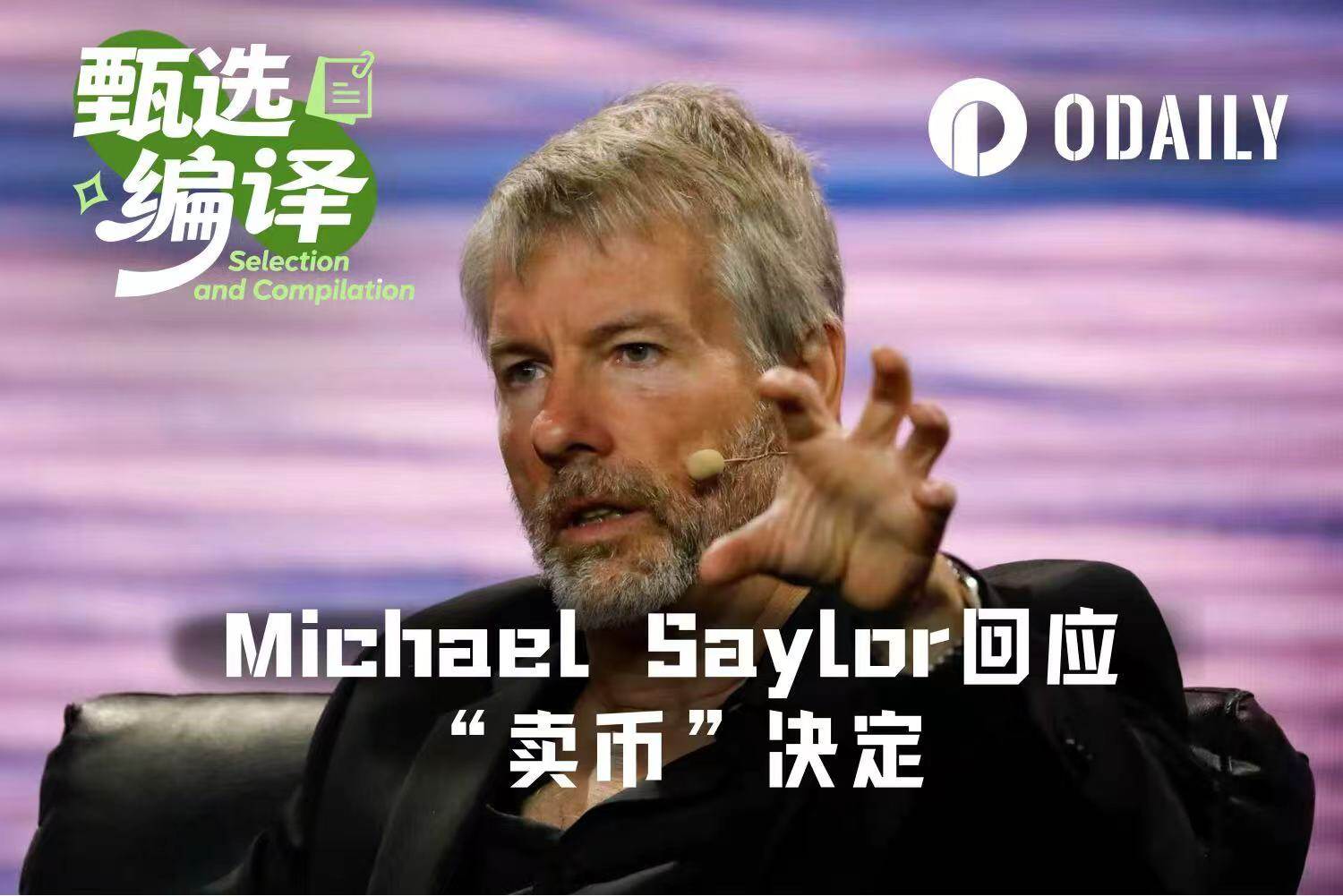
Exclusive Interview with Michael Saylor: I Did Say I Would Sell, But I Will Never Be a Net Seller

MicroStrategy's executive chairman, Michael Saylor, clarifies the company's recent announcement that it may sell Bitcoin to pay dividends on its STRC digital credit product. He emphasizes this does not make MicroStrategy a net seller of Bitcoin. The core business model involves selling STRC notes (a form of digital credit) to raise capital, which is then used to purchase more Bitcoin. Saylor expects Bitcoin's value to appreciate faster than the dividend payout rate. Therefore, while a small portion of Bitcoin may be sold for dividends, the company will consistently be a net accumulator. For example, in April, the company raised $3.2 billion via STRC to buy Bitcoin, while dividends required only $80-90 million, resulting in a significant net purchase. Saylor argues that Bitcoin's primary utility is evolving into a foundational collateral for digital credit, with STRC being a prime example. He notes that STRC now constitutes a majority of the U.S. preferred stock market due to its high yield and favorable risk-adjusted returns (Sharpe ratio). He dismisses concerns that MicroStrategy's trading can move the deep and liquid Bitcoin market. Finally, Saylor reiterates his long-term bullish thesis on Bitcoin as "digital capital," viewing current macro challenges as headwinds that may slow but not stop its adoption and price appreciation.

Odaily星球日报Hace 52 min(s)

Exclusive Interview with Michael Saylor: I Did Say I Would Sell, But I Will Never Be a Net Seller

Odaily星球日报Hace 52 min(s)

Trading

Spot
Futuros

Artículos destacados

Cómo comprar HOUSE

¡Bienvenido a HTX.com! Hemos hecho que comprar Housecoin (HOUSE) sea simple y conveniente. Sigue nuestra guía paso a paso para iniciar tu viaje de criptos.Paso 1: crea tu cuenta HTXUtiliza tu correo electrónico o número de teléfono para registrarte y obtener una cuenta gratuita en HTX. Experimenta un proceso de registro sin complicaciones y desbloquea todas las funciones.Obtener mi cuentaPaso 2: ve a Comprar cripto y elige tu método de pagoTarjeta de crédito/débito: usa tu Visa o Mastercard para comprar Housecoin (HOUSE) al instante.Saldo: utiliza fondos del saldo de tu cuenta HTX para tradear sin problemas.Terceros: hemos agregado métodos de pago populares como Google Pay y Apple Pay para mejorar la comodidad.P2P: tradear directamente con otros usuarios en HTX.Over-the-Counter (OTC): ofrecemos servicios personalizados y tipos de cambio competitivos para los traders.Paso 3: guarda tu Housecoin (HOUSE)Después de comprar tu Housecoin (HOUSE), guárdalo en tu cuenta HTX. Alternativamente, puedes enviarlo a otro lugar mediante transferencia blockchain o utilizarlo para tradear otras criptomonedas.Paso 4: tradear Housecoin (HOUSE)Tradear fácilmente con Housecoin (HOUSE) en HTX's mercado spot. Simplemente accede a tu cuenta, selecciona tu par de trading, ejecuta tus trades y monitorea en tiempo real. Ofrecemos una experiencia fácil de usar tanto para principiantes como para traders experimentados.

222 Vistas totalesPublicado en 2025.04.27Actualizado en 2025.04.27

Cómo comprar HOUSE

Discusiones

Bienvenido a la comunidad de HTX. Aquí puedes mantenerte informado sobre los últimos desarrollos de la plataforma y acceder a análisis profesionales del mercado. A continuación se presentan las opiniones de los usuarios sobre el precio de HOUSE (HOUSE).

活动图片