White House is ‘super constructive’ – Coinbase CEO denies CLARITY Act clash

ambcryptoPublicado a 2026-01-19Actualizado a 2026-01-19

Resumen

Coinbase CEO Brian Armstrong denies clashing with the White House over the CLARITY Act, calling the administration "super constructive." However, a major disagreement over stablecoin yield has stalled the bill. The proposed legislation would ban crypto platforms from offering interest on dollar-backed stablecoins, a measure banks argue prevents deposit flight and protects lending capabilities. Coinbase contends the rule unfairly protects traditional bank profits and limits competition. Despite pulling support, Armstrong remains optimistic about the Act’s prospects. The White House has warned that without consensus, it may abandon the bill altogether. Prediction markets currently give the legislation a 52% chance of passing by 2026.

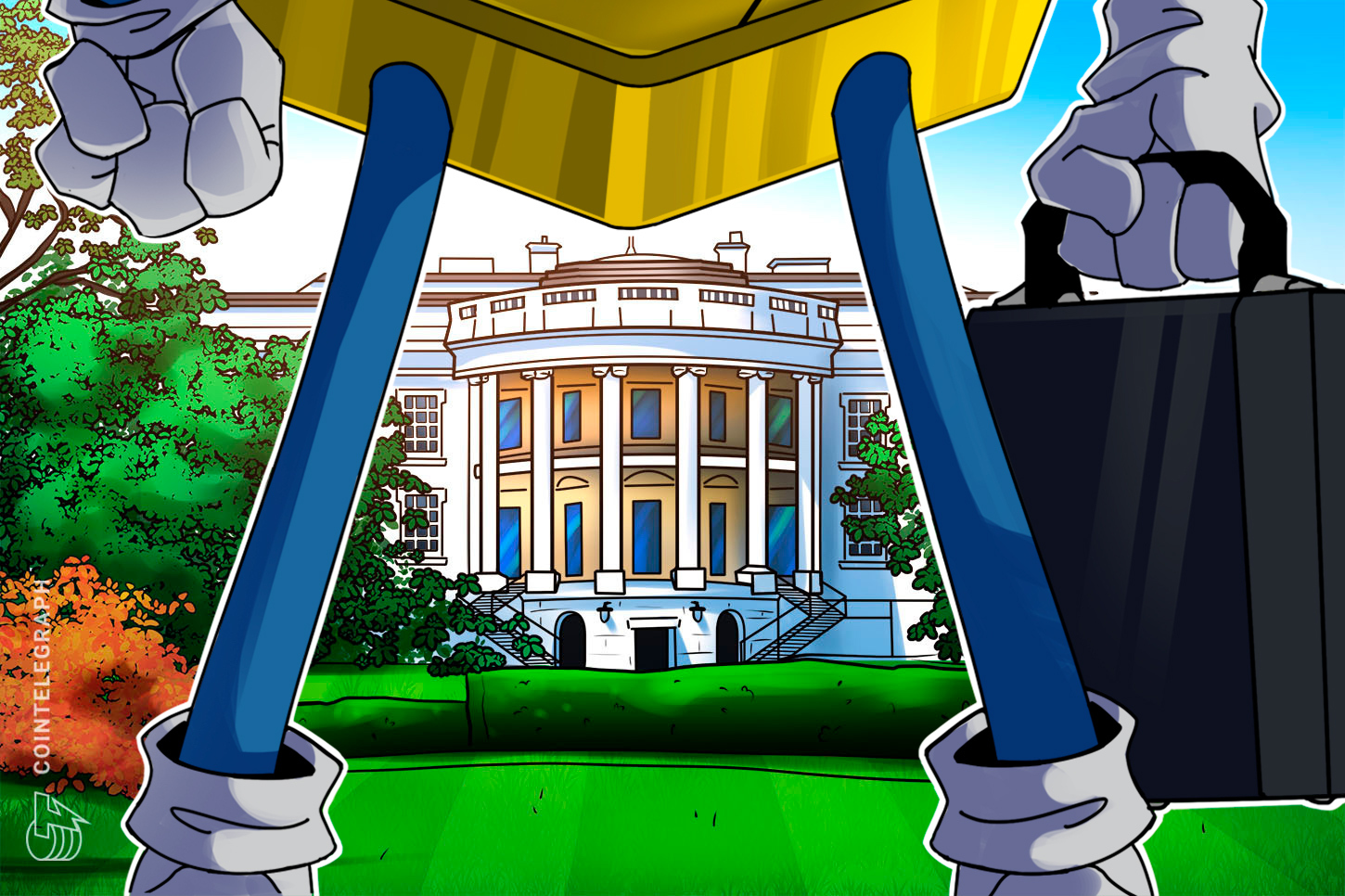
U.S. crypto regulation has long been a complex issue, and the latest developments surrounding the Digital Asset Market Clarity Act (CLARITY Act) indicate that the fight is far from over.

After days of speculation that Coinbase had angered the White House by pulling support for the bill, CEO Brian Armstrong tried to calm the situation.

He dismissed claims that the administration plans to back away from the legislation, saying the White House has been “super constructive,” not hostile.

But behind the positive tone, a major problem remains.

What’s the blocker?

While companies like Ripple and Kraken continue to support the CLARITY Act, Coinbase has taken a hard stance, arguing that passing a flawed law would be worse than passing none at all. That position has slowed the bill’s progress.

At the heart of the deadlock is a fundamental dispute over stablecoin yield.

Under the latest version of the CLARITY Act, crypto platforms would no longer be allowed to share interest or rewards with users who hold dollar-backed stablecoins.

Banking groups, especially those representing small community banks, say this rule is necessary to stop what they call “deposit flight.”

Their concern is simple

If users can earn around 5% rewards on stablecoins through platforms like Coinbase, they may pull money out of traditional savings accounts.

Banks argue that losing these deposits would reduce the money they rely on to offer home loans and small business loans in local communities.

However, Coinbase disagrees with this notion.

The company believes this is less about protecting the financial system and more about protecting bank profits. From its point of view, the rule limits competition by favoring traditional banks over new crypto-based alternatives.

By stepping back from the bill, Brian Armstrong is betting that delaying the law is better than passing one that blocks fair competition.

However, he is still positive about the fact that the Act is still on track.

How did this debate start in the first place?

Journalist Eleanor Terrett reported that someone close to the Trump administration called Coinbase’s move a “unilateral rug pull.”

According to the source, the White House was not warned before Armstrong made his position public, which reportedly angered officials.

The administration has now issued a clear warning: Coinbase must return to talks and agree on a stablecoin rewards plan that works for banks, or the White House could walk away from the CLARITY Act altogether.

This leaves Coinbase in a tough spot, risking the loss of the regulatory clarity it has spent years pushing for.

Crypto community reacts

Responding to this ongoing conflict, an X user- WendyO noted,

“I hope it doesn’t include removing YEILD from Stablecoins.”

Echoing similar sentiments, another user added,

“I just want to say I appreciate so much that you’re standing up for the people and making sure that the banks don’t continue their legacy of skimming let that go to people.”

Needless to say, amidst all these noises, the immediate future of the CLARITY Act also hangs in the balance.

On the prediction market Polymarket, traders give the bill a 52% chance of passing in 2026, as of press time.

However, the market is not waiting for Washington to find its footing.

In less than a year, the tokenized stock market has surged from a niche experiment to a nearly $1 billion powerhouse. Proponents argue this is just the tip of the iceberg.

Armstrong, for instance, believes that if regulatory hurdles like those found in the current CLARITY draft are cleared, the sector is positioned for an exponential explosion.


Final thoughts

  • Stablecoin yield has emerged as the real fault line, revealing how deeply threatened banks are by on-chain alternatives to savings accounts.
  • Armstrong’s outreach to community banks is a strategic move to split banking opposition without giving up crypto’s core principles.


Criptos en tendencia

Preguntas relacionadas

QWhat is the main point of contention between Coinbase and the CLARITY Act according to the article?

AThe main point of contention is a provision in the CLARITY Act that would prohibit crypto platforms from sharing interest or rewards with users who hold dollar-backed stablecoins. Coinbase argues this rule unfairly protects traditional bank profits and limits competition.

QHow did Brian Armstrong, Coinbase's CEO, describe the White House's stance on the legislation?

ABrian Armstrong described the White House as being 'super constructive' and dismissed claims that the administration was hostile or planning to back away from the legislation.

QWhy do banking groups support the rule against stablecoin rewards in the CLARITY Act?

ABanking groups, especially those representing small community banks, support the rule to prevent 'deposit flight.' They are concerned that if users can earn high yields on stablecoins, they will withdraw money from traditional savings accounts, reducing the funds banks rely on to offer loans.

QWhat was the reported reaction from the White House to Coinbase's change in position on the bill?

AAccording to a report, the White House was angered as it was not warned before Coinbase's CEO made his position public. The administration issued a warning that Coinbase must return to talks and agree on a stablecoin plan, or the White House could walk away from the CLARITY Act altogether.

QWhat is the predicted chance of the CLARITY Act passing in 2026, as per the prediction market Polymarket?

AAs of press time, traders on the prediction market Polymarket gave the CLARITY Act a 52% chance of passing in 2026.

Lecturas Relacionadas

Pi Network Price Forecast for August 2026: Will the August 11th Deadline Become a Catalyst for PI's Recovery?

Pi Network Price Forecast for August 2026: Will the August 11 Deadline Catalyze a Recovery? Pi Network (PI) traded at $0.0830 on July 30, up 1.13%, attempting to stabilize above its all-time low. The price is rebounding from the lower Bollinger Band around $0.07172. All key EMAs (20, 50, 100, 200-day) remain in a downtrend above the current price, with the 20-day EMA at $0.08810 acting as the first significant resistance level to confirm a recovery. August presents two key narratives. First, the Pi Core Team launched Protocol 26 with a hard deadline of August 11 for all node operators to upgrade; failure to do so results in disconnection. This is the final precursor to Protocol 27, a major technical upgrade planned for 2026. Second, a community debate challenges the widespread "GCV" (Global Consensus Value) concept, with a member stating there is no official GCV mechanism and that Mainnet apps price services independently. This could pressure price if holders selling on disillusionment. The 10-day price forecast table suggests a range of $0.072-$0.095 for early August amid Protocol 26 deadline pressure, $0.080-$0.110 in mid-August post-deadline clarity, and $0.085-$0.125 in late August, pending broader crypto market direction. The bullish case requires smooth Protocol 26 migration, clear Protocol 27 announcement, resolution of the GCV debate without major holder exits, and a close above the 20-day EMA. The bearish scenario involves node upgrade difficulties, GCV-related selling pressure, continued supply pressure from 775.8 million PI scheduled to unlock by December, and a fall back to or below the $0.07172 support zone.

cryptonews.ruHace 6 min(s)

Pi Network Price Forecast for August 2026: Will the August 11th Deadline Become a Catalyst for PI's Recovery?

cryptonews.ruHace 6 min(s)

Brale Claims New Protocol Can Eliminate a Major Obstacle to Scaling Custom Tokens

Stablecoin infrastructure firm Brale is launching a compatibility protocol, called ION, designed to solve a key bottleneck in the industry: moving the rapidly growing number of custom-branded stablecoins across different blockchains. The protocol allows participating stablecoins to move between blockchains by burning tokens on one network and minting an equivalent amount on another. Unlike most blockchain bridges, this model does not require pre-funded liquidity pools in each supported chain. While the $300 billion stablecoin market is dominated by Tether (USDT) and Circle’s USDC, a wave of new entrants—including banks, fintechs, crypto firms, and asset managers—are issuing their own tokens for payments, settlements, and tokenized assets. Over 350 such asset-pegged coins are already tracked, highlighting the need for infrastructure to connect this increasingly fragmented ecosystem. Brale, which supports over 100 stablecoin programs across more than 30 blockchains, argues that current interoperability models relying on liquidity pools or wrapped tokens are not scalable. These models require locking up capital in every supported network, creating an unsustainable capital requirement as the number of stablecoins and blockchains grows. Brale's founder and CEO, Ben Miln, stated that "liquidity between stablecoin programs is the No. 1 barrier to scaling individual stablecoins," noting there isn't enough capital in the world to solve the problem via liquidity pools. ION's burn-and-mint approach, similar to Circle's Cross-Chain Transfer Protocol (CCTP) but extended to any participating issuer, aims to provide a scalable alternative. The protocol will debut initially on testnet with partners including Monad, Rain, Coinflow, Turnkey, Etherfuse, Spark, and Canton.

cryptonews.ruHace 16 min(s)

Brale Claims New Protocol Can Eliminate a Major Obstacle to Scaling Custom Tokens

cryptonews.ruHace 16 min(s)

Trading

Spot

Artículos destacados

Cómo comprar HOUSE

¡Bienvenido a HTX.com! Hemos hecho que comprar Housecoin (HOUSE) sea simple y conveniente. Sigue nuestra guía paso a paso para iniciar tu viaje de criptos.Paso 1: crea tu cuenta HTXUtiliza tu correo electrónico o número de teléfono para registrarte y obtener una cuenta gratuita en HTX. Experimenta un proceso de registro sin complicaciones y desbloquea todas las funciones.Obtener mi cuentaPaso 2: ve a Comprar cripto y elige tu método de pagoTarjeta de crédito/débito: usa tu Visa o Mastercard para comprar Housecoin (HOUSE) al instante.Saldo: utiliza fondos del saldo de tu cuenta HTX para tradear sin problemas.Terceros: hemos agregado métodos de pago populares como Google Pay y Apple Pay para mejorar la comodidad.P2P: tradear directamente con otros usuarios en HTX.Over-the-Counter (OTC): ofrecemos servicios personalizados y tipos de cambio competitivos para los traders.Paso 3: guarda tu Housecoin (HOUSE)Después de comprar tu Housecoin (HOUSE), guárdalo en tu cuenta HTX. Alternativamente, puedes enviarlo a otro lugar mediante transferencia blockchain o utilizarlo para tradear otras criptomonedas.Paso 4: tradear Housecoin (HOUSE)Tradear fácilmente con Housecoin (HOUSE) en HTX's mercado spot. Simplemente accede a tu cuenta, selecciona tu par de trading, ejecuta tus trades y monitorea en tiempo real. Ofrecemos una experiencia fácil de usar tanto para principiantes como para traders experimentados.

283 Vistas totalesPublicado en 2025.04.27Actualizado en 2026.06.02

Cómo comprar HOUSE

Discusiones

Bienvenido a la comunidad de HTX. Aquí puedes mantenerte informado sobre los últimos desarrollos de la plataforma y acceder a análisis profesionales del mercado. A continuación se presentan las opiniones de los usuarios sobre el precio de HOUSE (HOUSE).

活动图片