When 'Odysseus' Encounters the Algorithm

marsbitPublicado a 2026-08-10Actualizado a 2026-08-10

Resumen

Christopher Nolan's "Odyssey," a $250 million IMAX epic, premiered in July 2026, quickly grossing over $1 billion and setting box office and critical records. The film's production was defined by its physical scale: shooting across six countries with practical effects, custom-built IMAX cameras, and extensive use of film. Concurrently, the AI-generated film "Odysseus: The Fall," created by the independent studio Fountain0 for just $50,000, demonstrated the technical feasibility of AI in long-form filmmaking. This stark 5,000x cost difference highlights a broader industry conflict between traditional, experience-driven production and algorithmic efficiency. While the AI film achieved technical success, it revealed current limitations, such as unstable long shots, inconsistent characters, and a lack of nuanced emotional performance. More importantly, its infinite, low-cost nature lacks the scarcity and immersive "event" status that fuels the theatrical premium for films like Nolan's. The market strongly favored the traditional model's brand security, physical assets, and premium theatrical experience. The analysis suggests AI will not replace auteurs like Nolan but will significantly disrupt mid-tier productions and technical, labor-intensive roles (e.g., pre-visualization, VFX). This could erode the career pathways for future directors. Paradoxically, as AI content proliferates, the perceived value of "handcrafted," physically-shot cinema may rise, akin to artisanal goods. ...

By | Wan Dian Research

Athena's owl takes flight at dusk, while Nolan's camera roars at noon.

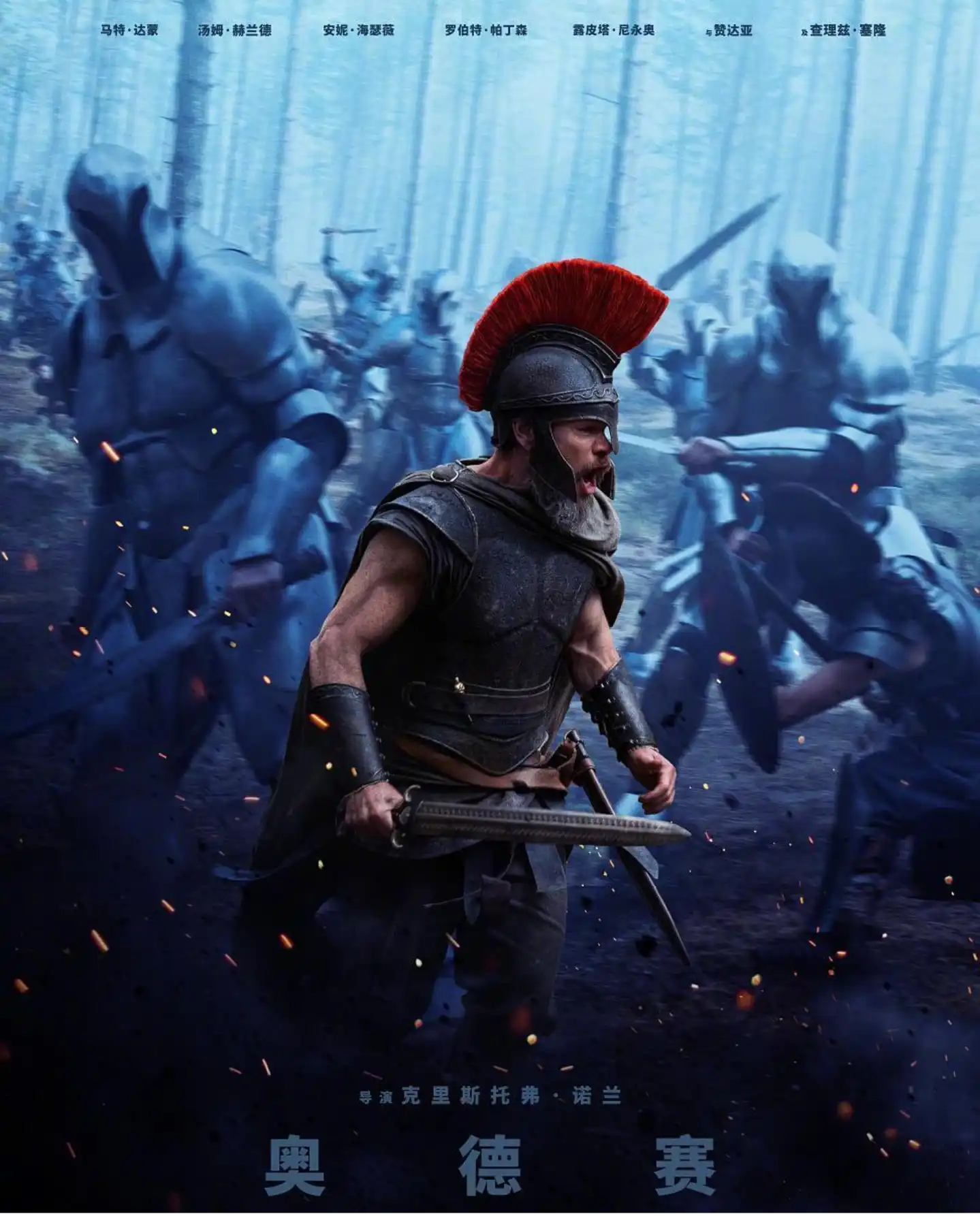
On July 17, 2026, Christopher Nolan's "Odyssey" was released in cinemas worldwide. As of August 9, this epic film with a budget of $250 million and a runtime of 172 minutes has grossed over $1.008 billion globally, becoming the director's second-highest-grossing work, second only to "The Dark Knight Rises." It opened with a global weekend box office of $264 million, setting a new personal record for Nolan. It holds a 98% fresh rating on Rotten Tomatoes and a 99% audience score, both Nolan's highest career scores. In mainland China, the film had not yet officially premiered (scheduled for August 14), but advance screenings and pre-sales had already generated over 60 million yuan. Showings with only 0.4% of the screenings accounted for over 17% of the box office, with IMAX screenings in first-tier cities reaching a 94% occupancy rate. Industry insiders predict the final box office will land between $1.2 and $1.5 billion.
Meanwhile, another version of Odysseus was quietly setting sail in the digital world. Independent studio Fountain0 released a 135-minute feature film titled "Odysseus: The Fall," with a total cost of only $50,000, generated 100% by artificial intelligence. A team of 12 people completed it in three months, with zero live-action filming, zero studio use, and zero large crew. Almost simultaneously, Elon Musk announced on the X platform that his AI platform Grok Imagine would produce an AI-generated "Odyssey" feature film "faithful to Homer's original" by the end of the year.

A 5000-fold cost difference, same subject matter, same release window. This is not just a clash of artistic genres, but a divergence in industrial philosophy. However, delving deeper into Hollywood's balance sheets reveals that Christopher Nolan's $250 million is not a consumptive "expense," but a "leveraged investment" that moves the entire industry—securing exclusive IMAX agreements, long-tail home video rights, and copyright library value for the next half-century.

In contrast, while AI's $50,000 is cheap, its training datasets exist in legal gray areas, and the generated footage cannot claim strong copyright protection. "Low cost" without property barriers is, in the eyes of capital markets, precisely a liability lacking a moat.

Nolan's filming method is almost a deliberate provocation to efficiency-first proponents.

A 91-day shoot spanned six countries: Morocco, Greece, Italy, Iceland, Scotland, and the United States. The film used over 640 kilometers (over 2.1 million feet) of IMAX film—enough to stretch from Toronto to New York—and produced 5,300 costumes. For this film, IMAX spent two years developing its first new film camera in 25 years, named "Kelly" in honor of the late Chief Quality Officer David Kelly and his wife. The camera uses carbon fiber components (sourced from Formula 1 racing) and for the first time enables IMAX film to capture dialogue and close-up shots—previously, the immense operating noise of IMAX cameras made any dialogue scene impossible.

The Cyclops scene was not CGI. The crew built a 60-foot-tall practical animatronic puppet in Greece's Psychro Cave, combining mechanical effects and string-puppet techniques. The six-headed sea monster and massive whirlpool were also filmed practically—manned speedboats circled to create a physical water vortex, providing real-time dynamic references for the visual effects team. Actors wore bronze armor while submerged in 9°C seawater. As Matt Damon put it, "This is absolutely the biggest movie I've ever made in my career. It feels like it was made the way they would have 100 years ago, just with IMAX this time."

Independent studio Fountain0's working method belongs to another civilization.

They used large language models to generate the script and video diffusion models to render the visuals. Algorithms replaced the director, cinematographer, art director, lighting technicians, and even the entire post-production team. No morning meetings, no weather delays, no actor scheduling conflicts, no workers' compensation insurance. The total cost of $50,000 is roughly equivalent to a single day's catering expenses on Nolan's set. The film rents for $9.99 per view. It proves for the first time that generating a full-length narrative film with AI is technically feasible.

The capital markets have already cast their preliminary vote.

Nolan's "Odyssey" has grossed $257 million from IMAX screenings, accounting for nearly a quarter of its global total. IMAX's stock price surged 6.61% on August 3, breaking the $50 barrier for the first time to hit a record high; it's up 37.99% year-to-date and has doubled over the past 12 months. Thanks to this film, Universal Pictures became the first film studio in 2026 to surpass $4 billion in global box office. With a $20 million advance plus 20% of the box office gross, Nolan stands to earn between $75 million and $100 million personally.

Meanwhile, Fountain0's AI feature film garnered about 1.2 million views in its first week on streaming platforms. Converted to a subscription model, this translates to direct revenue of less than $1 million. Musk's Grok Imagine version has yet to materialize, and the capital markets have reacted tepidly—Tesla's stock price showed no significant movement, and xAI's valuation hasn't been repriced as a result.

The market favors a certain narrative.

Nolan spent two decades, over ten films, and a cumulative global box office exceeding $6 billion to build a predictable brand for investors. Securing a top-tier Hollywood deal of a "$20 million advance plus 20% of the box office" as a director is extremely rare in industry history. AI filmmaking, however, has yet to establish any sustainable business model. There is no director brand premium, no theatrical window, no IMAX exclusive revenue share, no peripheral merchandise chain. It remains in the ambiguous zone between "tech demo" and "complete product." More crucially, Nolan's seemingly "inefficient" practical filming method is, in essence, a "physical performance bond" delivered to investors. In an industry with an extremely high failure rate, footage shot on film is a definite physical asset. In contrast, AI's generation of a perfect shot depends on a probability-based lottery; this black-box unpredictability would be seen as a potential budget black hole and delay bomb in production audits.

The most honest answer to whether AI can replace traditional filmmaking currently is: it depends on how you define "replace."

First, look at AI's limitations. A frame-by-frame analysis of Fountain0's final product reveals no single shot lasting longer than three seconds. The high-frequency cuts are not an avant-garde editing style but a passive compromise of the technology—current mainstream AI video models cannot support long, stable single-shot generation; the longer a shot lingers, the more obvious the loss of detail becomes. Character consistency across scenes cannot be guaranteed; the same character may appear with different facial contours in different shots. Physical simulation remains superficial, with stiff, jerky body movements lacking force logic and natural texture. The deeper constraint lies in "visual entropy": the human brain is extremely sensitive to instantaneous changes in micro-expressions, and great performances often involve actors' extreme deviations from biological randomness. However, current diffusion models are essentially about "averaging probabilities"; algorithms, for stability, automatically avoid those low-probability moments of brilliance—this condemns AI to long-term mediocrity above the mean in the core domain of emotional close-ups. These are structural issues that might be resolved through iteration in the next three to five years.

But the deeper challenge lies in the consumption experience. All 70mm film screenings at London's BFI IMAX until September 10 are sold out. Some flew halfway across the world from Atlanta, others drove 12 hours to watch a midnight screening before catching an early flight back. IMAX CEO Richard Gelfond said, "In New York, you have to wait until September to get a ticket for a 70mm showing; it's almost become a luxury brand." People are paying not just the ticket price but also their time, travel, and attention. These investments themselves become part of the experience—scarcity creates a sense of ritual, and ritual creates a premium. It's more than just ritual. In the era of infinite supply on streaming platforms, "the physical expenditure of being present" is evolving into a new marker of class distinction. This "embodied cognition" generated by physical presence creates physiological memories that no digital algorithm can encode—the social sharing value it generates has long surpassed the price of the movie ticket itself.

AI-generated content is inherently an infinite supply. As long as the servers are on, it can generate Odysseus forever, the Cyclops forever, any shot forever. But infinite supply destroys scarcity, and scarcity is precisely the foundation of the entertainment industry's premium pricing. When algorithms make images as free and limitless as air, people are instead willing to pay more for a real silver screen.

This is not to say AI will be without impact. On the contrary, its efficiency advantages will profoundly transform the middle and later stages of the film and television industry chain.

Pre-visualization (Previs) already uses AI to generate storyboards and dynamic previews; background filling, scene extensions, and dynamic fixes in post-production VFX are increasingly handled by algorithms; virtual production technology combining game engines with AI, as seen in series like "The Mandalorian," has significantly reduced location costs. These applications don't compete for the "director" title but are eroding the profit margins of repetitive, labor-intensive segments in the traditional film industry.

Oxford University economist Carl Benedikt Frey offers a noteworthy observation: technological replacement is never all or nothing; it tends to replace "tasks that can be codified," not entire professions.

AI can replace background artists, but it's difficult to replace the person who decides "why shoot this shot." It can optimize production cost structures, but it struggles to create a new narrative paradigm. Nolan's choice to shoot dialogue scenes on IMAX film—seemingly absurd from an efficiency standpoint—is precisely this "irrational" choice that creates unique value distinct from streaming content. In a content market dominated by algorithm recommendations and short-video formats, this distinction itself becomes a scarce resource.

But a colder point must be added: AI may not replace Nolan at the finish line, but it will block Nolan's apprentices at the starting line. When producers can use AI to generate "good enough" previews for medium-budget genre films, young directors who traditionally gained experience through $50-$100 million practical shooting projects will find it extremely difficult to secure budgets for green-screen shoots. AI isn't replacing masters at the endpoint; it's draining the soil for new masters to grow at the source. When the future holds only Nolan's "handcrafted luxury goods" and AI's "infinite fast-fashion products," the middle ground of cinema as a popular art will severely erode.

Interestingly, AI might reinforce the value of figures like Nolan in another dimension.

When AI-generated feature films become cheap and common, "live-action filming" itself may gain a premium label akin to "handmade." Just as after the Industrial Revolution, handmade goods didn't disappear but instead found a new market position as "artisan." Those elements irreplicable by algorithms—an actor's gaze, the light on a real set, the serendipity created by a group of people in the same physical space—might become even more precious as AI imagery proliferates.

Odysseus wandered the sea for ten years before returning home. Today's film and television industry is also adrift.

One path leads toward the infinite convenience of algorithm generation, the other toward the finite scarcity of film and giant screens. Nolan chose the latter, and the market affirmed it with $1 billion. But this is not the final verdict. AI video models are iterating monthly—perhaps in three years, an AI-generated Odysseus will have consistent facial features, realistic physics, and single-shot narratives lasting two hours. When that happens, will Nolan-style film epics become even more expensive due to increased scarcity, or will they become expensive nostalgia?

If we are honest enough, we must admit the essence of this confrontation is the incommensurability between the "logic of efficiency" and the "logic of experience." Algorithms pursue the "optimal solution"—producing the visual stimuli most aligned with audience expectations within the shortest computational power. Nolan pursues the "unique solution"—that soul-stirring moment possible only on that screen, at that instant, with that specific film grain.

While industrial capital frantically chases the certainty of algorithms, they overlook a brutal truth: humans are willing to pay a premium for "unexpected surprises" but will only pay cheap subscription fees for "precise conformity to expectations." Odysseus rejected the immortality and ease offered by Calypso, choosing instead the thorns and risks of the journey home. This is perhaps the oldest metaphor for the current predicament of film and television: what we ultimately choose are always the difficult voyages that make us truly feel "alive," not the smooth algorithmic path to nothingness.


Criptos en tendencia

Preguntas relacionadas

QWhat are the key differences in cost, production methods, and market performance between Christopher Nolan's 'Odyssey' and the AI-generated 'Odysseus: The Fall'?

AChristopher Nolan's 'Odyssey' had a budget of $250 million, involved a 91-day live-action shoot across six countries, used 640 km of IMAX film, and utilized elaborate practical effects like a 60-foot animatronic cyclops. As of August 9th, 2026, its global box office exceeded $1.008 billion. In contrast, 'Odysseus: The Fall' by Fountain0 cost only $50,000, was produced in three months by a 12-person team using AI models for the script and visuals with zero live-action filming. It earned an estimated less than $1 million in its first week through streaming rentals.

QAccording to the article, what are the main technological and artistic limitations of current AI-generated feature-length films?

ACurrent AI films face several key limitations: 1) No single shot can last longer than three seconds due to model instability; 2) Inconsistent character appearance across different scenes; 3) Stiff and illogical physical movements and animations; 4) An inability to capture nuanced, low-probability emotional expressions (like great acting moments), as diffusion models inherently average towards probabilistic stability, leading to visual mediocrity. These are considered structural issues that may take 3-5 years to potentially resolve.

QHow does the article contrast the 'efficiency logic' of AI with the 'experience logic' of traditional filmmaking like Nolan's?

AThe article contrasts 'efficiency logic'—where AI aims to produce the most expected visual stimuli with minimal computational power—with 'experience logic'—exemplified by Nolan's pursuit of a 'unique solution' that creates soul-stirring moments achievable only through specific mediums (like IMAX film), locations, and moments. It argues that while capital chases algorithmic certainty, humans are willing to pay a premium for the 'unexpected surprise' and embodied experience (scarce, ritualistic, physically demanding) that traditional filmmaking can offer, as opposed to the cheap subscription fee for algorithmically precise, infinitely reproducible content.

QWhat is the article's argument about how AI might impact the future ecosystem for filmmakers, particularly newcomers?

AThe article argues that AI may not replace master filmmakers like Nolan at the peak of their careers, but it risks 'draining the soil' for the growth of new masters. If studios can use AI to generate 'good enough' previews for mid-budget genre films, it will become extremely difficult for young directors to secure the $50-100 million budgets needed for live-action projects to gain crucial experience. This could lead to a polarized ecosystem with only Nolan-like 'handcrafted luxury' at one end and AI's 'infinite fast-fashion' at the other, causing the middle ground of film as a popular art form to severely erode.

QIn what ways does the article suggest AI could paradoxically strengthen the value of traditional, live-action filmmaking?

AThe article suggests that as AI-generated content becomes cheap and ubiquitous, 'live-action filmmaking' itself could gain a premium label, similar to 'artisan' or 'handcrafted' goods after the Industrial Revolution. Elements that algorithms cannot replicate—such as an actor's gaze, natural lighting on location, and the spontaneous creativity of a group of people sharing a physical space—may become more珍贵 and valued precisely because of the flood of AI imagery, creating a new market distinction based on authenticity and human craft.

Lecturas Relacionadas

From $1.6 Billion to a 30-Story Fall: The Final Fate of an Algorithmic Stablecoin Operator

From $1.6 Billion to a 30-Story Fall: The Final Outcome of a Stablecoin "Whale" On August 7, 2026, Chinese-Canadian crypto investor Harry Yeh (founder of Quantum Fintech Group) was found dead outside a luxury apartment in Asunción, Paraguay, having reportedly fallen from the 30th floor. The scene, where he was found naked and covered in a black plastic bag with his apartment in disarray, prompted an investigation exploring accident, suicide, and homicide. Yeh was a notable early investor in the crypto space, entering in 2013. His major moment came in late 2021 when he took over the troubled algorithmic stablecoin project Tomb Finance on Fantom. Through leveraged tactics and promotion, he drove its Total Value Locked (TVL) to a peak of $1.6 billion in January 2022, though the project's tokens later collapsed. He subsequently promoted LIF3, positioning it as an improved successor. Publicly, Yeh maintained a high-profile image, showcasing a lavish lifestyle on social media. His death adds to a series of non-normal deaths among high-net-worth crypto participants in recent years, including the founders of failed exchange Thodex and other investors. The incident underscores the extreme volatility and potential personal risks within the cryptocurrency industry, highlighting the need for greater emphasis on off-chain security and mental health. The investigation into his death remains ongoing.

marsbitHace 4 min(s)

From $1.6 Billion to a 30-Story Fall: The Final Fate of an Algorithmic Stablecoin Operator

marsbitHace 4 min(s)

Understanding Crypto Payment Cards in 5 Charts: Stablecoins Move from On-Chain to Real-World Spending

5 Charts to Understand Crypto Payment Cards: Stablecoins Move from On-Chain to Real-World Spending Stablecoins are increasingly used for everyday purchases through crypto payment cards, a sector now processing over $750 million monthly. These cards allow users to spend cryptocurrencies at any merchant accepting traditional card networks, with the crypto (primarily stablecoins) instantly converted to fiat currency at checkout. Merchants receive standard payments. Users don't necessarily need a bank account. Some products require holding stablecoins with the issuer, while others work directly with self-custody wallets. These cards provide global access to USD-denominated services. Data shows monthly transaction volume reached $759 million in July 2026, a 2.5x increase from $306 million a year prior, with nearly 9 million transactions that month. The average transaction value is about $86. Initially concentrated on Gnosis Chain (home to Gnosis Pay, the first Visa card linked to a self-custody wallet), transaction volume has diversified across blockchains. As of July, Optimism leads with 29%, followed by Solana and Base at 19% each, while Gnosis Chain has fallen to 2%. Euro-pegged stablecoins, once dominant (88% in early 2024), now represent only 2% of volume. Dollar-pegged stablecoins USDC and USDT now lead, accounting for 58% and 26% of transactions respectively. While still small compared to traditional card networks, the sector is growing rapidly. It leverages existing infrastructure, with nearly all covered products operating on the Visa network. Regulatory developments like the GENIUS Act have contributed to this acceleration.

marsbitHace 5 min(s)

Understanding Crypto Payment Cards in 5 Charts: Stablecoins Move from On-Chain to Real-World Spending

marsbitHace 5 min(s)

Wall Street 'Conspiracy Theory': Did Powell Deliberately Push Up Long-Term U.S. Treasury Yields?

Bank of America refutes market speculation that Federal Reserve Chair Warsh deliberately pushed up long-term U.S. Treasury yields via press conferences to tighten financial conditions. Their report argues such action contradicts the Fed's established policy framework and would lack FOMC support. According to the report, some market participants interpreted the post-July FOMC meeting rise in long-end yields and inflation breakevens as a deliberate strategy by Warsh to combat inflation by tightening financial conditions. Analysts Mark Cabana and Aditya Bhave directly reject this, stating the FOMC's core policy tool remains the federal funds rate, as outlined in its long-term strategy statements. They emphasize Warsh cannot unilaterally alter the Fed's operational approach, which would require full FOMC consensus—a high bar. The analysis highlights the Fed's precise control over overnight rates versus its limited, indirect influence on long-term yields, which operate through policy expectations and the hard-to-manage term premium channel. The recent sharp move in long-end rates serves as a reminder of the risks of operating outside the Fed's direct control. The report concludes the FOMC is unlikely to abandon its proven, controllable tools for unverified methods, dismissing the "four-dimensional chess" theory of long-rate manipulation as market overinterpretation.

marsbitHace 55 min(s)

Wall Street 'Conspiracy Theory': Did Powell Deliberately Push Up Long-Term U.S. Treasury Yields?

marsbitHace 55 min(s)

Trading

Spot

Artículos destacados

Qué es $S$

Entendiendo SPERO: Una Visión General Completa Introducción a SPERO A medida que el panorama de la innovación continúa evolucionando, la aparición de tecnologías web3 y proyectos de criptomonedas juega un papel fundamental en la configuración del futuro digital. Un proyecto que ha atraído la atención en este campo dinámico es SPERO, denotado como SPERO,$$s$. Este artículo tiene como objetivo reunir y presentar información detallada sobre SPERO, para ayudar a entusiastas e inversores a comprender sus fundamentos, objetivos e innovaciones dentro de los dominios web3 y cripto. ¿Qué es SPERO,$$s$? SPERO,$$s$ es un proyecto único dentro del espacio cripto que busca aprovechar los principios de descentralización y tecnología blockchain para crear un ecosistema que promueva la participación, la utilidad y la inclusión financiera. El proyecto está diseñado para facilitar interacciones de igual a igual de nuevas maneras, proporcionando a los usuarios soluciones y servicios financieros innovadores. En su esencia, SPERO,$$s$ tiene como objetivo empoderar a los individuos al proporcionar herramientas y plataformas que mejoren la experiencia del usuario en el espacio de las criptomonedas. Esto incluye habilitar métodos de transacción más flexibles, fomentar iniciativas impulsadas por la comunidad y crear caminos para oportunidades financieras a través de aplicaciones descentralizadas (dApps). La visión subyacente de SPERO,$$s$ gira en torno a la inclusividad, buscando cerrar brechas dentro de las finanzas tradicionales mientras aprovecha los beneficios de la tecnología blockchain. ¿Quién es el Creador de SPERO,$$s$? La identidad del creador de SPERO,$$s$ sigue siendo algo oscura, ya que hay recursos públicos limitados que proporcionan información de fondo detallada sobre su(s) fundador(es). Esta falta de transparencia puede derivarse del compromiso del proyecto con la descentralización, una ética que muchos proyectos web3 comparten, priorizando las contribuciones colectivas sobre el reconocimiento individual. Al centrar las discusiones en torno a la comunidad y sus objetivos colectivos, SPERO,$$s$ encarna la esencia del empoderamiento sin señalar a individuos específicos. Como tal, comprender la ética y la misión de SPERO sigue siendo más importante que identificar a un creador singular. ¿Quiénes son los Inversores de SPERO,$$s$? SPERO,$$s$ cuenta con el apoyo de una diversa gama de inversores que van desde capitalistas de riesgo hasta inversores ángeles dedicados a fomentar la innovación en el sector cripto. El enfoque de estos inversores generalmente se alinea con la misión de SPERO, priorizando proyectos que prometen avances tecnológicos sociales, inclusión financiera y gobernanza descentralizada. Estas fundaciones de inversores suelen estar interesadas en proyectos que no solo ofrecen productos innovadores, sino que también contribuyen positivamente a la comunidad blockchain y sus ecosistemas. El respaldo de estos inversores refuerza a SPERO,$$s$ como un contendiente notable en el dominio de proyectos cripto que evoluciona rápidamente. ¿Cómo Funciona SPERO,$$s$? SPERO,$$s$ emplea un marco multifacético que lo distingue de los proyectos de criptomonedas convencionales. Aquí hay algunas de las características clave que subrayan su singularidad e innovación: Gobernanza Descentralizada: SPERO,$$s$ integra modelos de gobernanza descentralizada, empoderando a los usuarios para participar activamente en los procesos de toma de decisiones sobre el futuro del proyecto. Este enfoque fomenta un sentido de propiedad y responsabilidad entre los miembros de la comunidad. Utilidad del Token: SPERO,$$s$ utiliza su propio token de criptomoneda, diseñado para servir diversas funciones dentro del ecosistema. Estos tokens permiten transacciones, recompensas y la facilitación de servicios ofrecidos en la plataforma, mejorando la participación y la utilidad general. Arquitectura en Capas: La arquitectura técnica de SPERO,$$s$ apoya la modularidad y escalabilidad, permitiendo la integración fluida de características y aplicaciones adicionales a medida que el proyecto evoluciona. Esta adaptabilidad es fundamental para mantener la relevancia en el cambiante paisaje cripto. Participación de la Comunidad: El proyecto enfatiza iniciativas impulsadas por la comunidad, empleando mecanismos que incentivan la colaboración y la retroalimentación. Al nutrir una comunidad sólida, SPERO,$$s$ puede abordar mejor las necesidades de los usuarios y adaptarse a las tendencias del mercado. Enfoque en la Inclusión: Al ofrecer tarifas de transacción bajas e interfaces amigables para el usuario, SPERO,$$s$ busca atraer a una base de usuarios diversa, incluyendo a individuos que anteriormente pueden no haber participado en el espacio cripto. Este compromiso con la inclusión se alinea con su misión general de empoderamiento a través de la accesibilidad. Cronología de SPERO,$$s$ Entender la historia de un proyecto proporciona información crucial sobre su trayectoria de desarrollo y hitos. A continuación se presenta una cronología sugerida que mapea eventos significativos en la evolución de SPERO,$$s$: Fase de Conceptualización e Ideación: Las ideas iniciales que forman la base de SPERO,$$s$ fueron concebidas, alineándose estrechamente con los principios de descentralización y enfoque comunitario dentro de la industria blockchain. Lanzamiento del Whitepaper del Proyecto: Tras la fase conceptual, se lanzó un whitepaper completo que detalla la visión, los objetivos y la infraestructura tecnológica de SPERO,$$s$ para generar interés y retroalimentación de la comunidad. Construcción de Comunidad y Primeras Interacciones: Se realizaron esfuerzos de divulgación activa para construir una comunidad de primeros adoptantes y posibles inversores, facilitando discusiones en torno a los objetivos del proyecto y obteniendo apoyo. Evento de Generación de Tokens: SPERO,$$s$ llevó a cabo un evento de generación de tokens (TGE) para distribuir sus tokens nativos a los primeros seguidores y establecer liquidez inicial dentro del ecosistema. Lanzamiento de la dApp Inicial: La primera aplicación descentralizada (dApp) asociada con SPERO,$$s$ se puso en marcha, permitiendo a los usuarios interactuar con las funcionalidades centrales de la plataforma. Desarrollo Continuo y Alianzas: Actualizaciones y mejoras continuas a las ofertas del proyecto, incluyendo alianzas estratégicas con otros actores en el espacio blockchain, han moldeado a SPERO,$$s$ en un jugador competitivo y en evolución en el mercado cripto. Conclusión SPERO,$$s$ se erige como un testimonio del potencial de web3 y las criptomonedas para revolucionar los sistemas financieros y empoderar a los individuos. Con un compromiso con la gobernanza descentralizada, la participación comunitaria y funcionalidades diseñadas de manera innovadora, allana el camino hacia un paisaje financiero más inclusivo. Como con cualquier inversión en el espacio cripto que evoluciona rápidamente, se anima a los posibles inversores y usuarios a investigar a fondo y participar de manera reflexiva con los desarrollos en curso dentro de SPERO,$$s$. El proyecto muestra el espíritu innovador de la industria cripto, invitando a una mayor exploración de sus innumerables posibilidades. Mientras el viaje de SPERO,$$s$ aún se desarrolla, sus principios fundamentales pueden, de hecho, influir en el futuro de cómo interactuamos con la tecnología, las finanzas y entre nosotros en ecosistemas digitales interconectados.

312 Vistas totalesPublicado en 2024.12.17Actualizado en 2024.12.17

Qué es $S$

Qué es AGENT S

Agent S: El Futuro de la Interacción Autónoma en Web3 Introducción En el paisaje en constante evolución de Web3 y las criptomonedas, las innovaciones están redefiniendo constantemente cómo los individuos interactúan con las plataformas digitales. Uno de estos proyectos pioneros, Agent S, promete revolucionar la interacción humano-computadora a través de su marco agente abierto. Al allanar el camino para interacciones autónomas, Agent S busca simplificar tareas complejas, ofreciendo aplicaciones transformadoras en inteligencia artificial (IA). Esta exploración detallada profundizará en las complejidades del proyecto, sus características únicas y las implicaciones para el dominio de las criptomonedas. ¿Qué es Agent S? Agent S se presenta como un marco agente abierto innovador, diseñado específicamente para abordar tres desafíos fundamentales en la automatización de tareas informáticas: Adquisición de Conocimiento Específico del Dominio: El marco aprende inteligentemente de diversas fuentes de conocimiento externas y experiencias internas. Este enfoque dual le permite construir un rico repositorio de conocimiento específico del dominio, mejorando su rendimiento en la ejecución de tareas. Planificación a Largo Plazo de Tareas: Agent S emplea planificación jerárquica aumentada por la experiencia, un enfoque estratégico que facilita la descomposición y ejecución eficiente de tareas complejas. Esta característica mejora significativamente su capacidad para gestionar múltiples subtareas de manera eficiente y efectiva. Manejo de Interfaces Dinámicas y No Uniformes: El proyecto introduce la Interfaz Agente-Computadora (ACI), una solución innovadora que mejora la interacción entre agentes y usuarios. Utilizando Modelos de Lenguaje Multimodal de Gran Escala (MLLMs), Agent S puede navegar y manipular diversas interfaces gráficas de usuario sin problemas. A través de estas características pioneras, Agent S proporciona un marco robusto que aborda las complejidades involucradas en la automatización de la interacción humana con las máquinas, preparando el terreno para una multitud de aplicaciones en IA y más allá. ¿Quién es el Creador de Agent S? Si bien el concepto de Agent S es fundamentalmente innovador, la información específica sobre su creador sigue siendo elusiva. El creador es actualmente desconocido, lo que resalta ya sea la etapa incipiente del proyecto o la elección estratégica de mantener a los miembros fundadores en el anonimato. Independientemente de la anonimidad, el enfoque sigue siendo en las capacidades y el potencial del marco. ¿Quiénes son los Inversores de Agent S? Dado que Agent S es relativamente nuevo en el ecosistema criptográfico, la información detallada sobre sus inversores y patrocinadores financieros no está documentada explícitamente. La falta de información disponible públicamente sobre las bases de inversión u organizaciones que apoyan el proyecto plantea preguntas sobre su estructura de financiamiento y hoja de ruta de desarrollo. Comprender el respaldo es crucial para evaluar la sostenibilidad del proyecto y su posible impacto en el mercado. ¿Cómo Funciona Agent S? En el núcleo de Agent S se encuentra una tecnología de vanguardia que le permite funcionar de manera efectiva en diversos entornos. Su modelo operativo se basa en varias características clave: Interacción Humano-Computadora Similar a la Humana: El marco ofrece planificación avanzada de IA, esforzándose por hacer que las interacciones con las computadoras sean más intuitivas. Al imitar el comportamiento humano en la ejecución de tareas, promete elevar las experiencias de los usuarios. Memoria Narrativa: Empleada para aprovechar experiencias de alto nivel, Agent S utiliza memoria narrativa para hacer un seguimiento de las historias de tareas, mejorando así sus procesos de toma de decisiones. Memoria Episódica: Esta característica proporciona a los usuarios una guía paso a paso, permitiendo que el marco ofrezca apoyo contextual a medida que se desarrollan las tareas. Soporte para OpenACI: Con la capacidad de ejecutarse localmente, Agent S permite a los usuarios mantener el control sobre sus interacciones y flujos de trabajo, alineándose con la ética descentralizada de Web3. Fácil Integración con APIs Externas: Su versatilidad y compatibilidad con varias plataformas de IA aseguran que Agent S pueda encajar sin problemas en ecosistemas tecnológicos existentes, convirtiéndolo en una opción atractiva para desarrolladores y organizaciones. Estas funcionalidades contribuyen colectivamente a la posición única de Agent S dentro del espacio cripto, ya que automatiza tareas complejas y de múltiples pasos con una intervención humana mínima. A medida que el proyecto evoluciona, sus posibles aplicaciones en Web3 podrían redefinir cómo se desarrollan las interacciones digitales. Cronología de Agent S El desarrollo y los hitos de Agent S pueden encapsularse en una cronología que resalta sus eventos significativos: 27 de septiembre de 2024: El concepto de Agent S fue lanzado en un documento de investigación integral titulado “Un Marco Agente Abierto que Usa Computadoras Como un Humano”, mostrando las bases del proyecto. 10 de octubre de 2024: El documento de investigación fue puesto a disposición del público en arXiv, ofreciendo una exploración profunda del marco y su evaluación de rendimiento basada en el benchmark OSWorld. 12 de octubre de 2024: Se lanzó una presentación en video, proporcionando una visión visual de las capacidades y características de Agent S, involucrando aún más a posibles usuarios e inversores. Estos marcadores en la cronología no solo ilustran el progreso de Agent S, sino que también indican su compromiso con la transparencia y la participación comunitaria. Puntos Clave Sobre Agent S A medida que el marco Agent S continúa evolucionando, varios atributos clave destacan, subrayando su naturaleza innovadora y potencial: Marco Innovador: Diseñado para proporcionar un uso intuitivo de las computadoras similar a la interacción humana, Agent S aporta un enfoque novedoso a la automatización de tareas. Interacción Autónoma: La capacidad de interactuar de manera autónoma con las computadoras a través de GUI significa un salto hacia soluciones informáticas más inteligentes y eficientes. Automatización de Tareas Complejas: Con su metodología robusta, puede automatizar tareas complejas y de múltiples pasos, haciendo que los procesos sean más rápidos y menos propensos a errores. Mejora Continua: Los mecanismos de aprendizaje permiten a Agent S mejorar a partir de experiencias pasadas, mejorando continuamente su rendimiento y eficacia. Versatilidad: Su adaptabilidad en diferentes entornos operativos como OSWorld y WindowsAgentArena asegura que pueda servir a una amplia gama de aplicaciones. A medida que Agent S se posiciona en el paisaje de Web3 y criptomonedas, su potencial para mejorar las capacidades de interacción y automatizar procesos significa un avance significativo en las tecnologías de IA. A través de su marco innovador, Agent S ejemplifica el futuro de las interacciones digitales, prometiendo una experiencia más fluida y eficiente para los usuarios en diversas industrias. Conclusión Agent S representa un audaz avance en la unión de la IA y Web3, con la capacidad de redefinir cómo interactuamos con la tecnología. Aunque aún se encuentra en sus primeras etapas, las posibilidades para su aplicación son vastas y atractivas. A través de su marco integral que aborda desafíos críticos, Agent S busca llevar las interacciones autónomas al primer plano de la experiencia digital. A medida que nos adentramos más en los reinos de las criptomonedas y la descentralización, proyectos como Agent S sin duda desempeñarán un papel crucial en la configuración del futuro de la tecnología y la colaboración humano-computadora.

703 Vistas totalesPublicado en 2025.01.14Actualizado en 2025.01.14

Qué es AGENT S

Cómo comprar S

¡Bienvenido a HTX.com! Hemos hecho que comprar Sonic (S) sea simple y conveniente. Sigue nuestra guía paso a paso para iniciar tu viaje de criptos.Paso 1: crea tu cuenta HTXUtiliza tu correo electrónico o número de teléfono para registrarte y obtener una cuenta gratuita en HTX. Experimenta un proceso de registro sin complicaciones y desbloquea todas las funciones.Obtener mi cuentaPaso 2: ve a Comprar cripto y elige tu método de pagoTarjeta de crédito/débito: usa tu Visa o Mastercard para comprar Sonic (S) al instante.Saldo: utiliza fondos del saldo de tu cuenta HTX para tradear sin problemas.Terceros: hemos agregado métodos de pago populares como Google Pay y Apple Pay para mejorar la comodidad.P2P: tradear directamente con otros usuarios en HTX.Over-the-Counter (OTC): ofrecemos servicios personalizados y tipos de cambio competitivos para los traders.Paso 3: guarda tu Sonic (S)Después de comprar tu Sonic (S), guárdalo en tu cuenta HTX. Alternativamente, puedes enviarlo a otro lugar mediante transferencia blockchain o utilizarlo para tradear otras criptomonedas.Paso 4: tradear Sonic (S)Tradear fácilmente con Sonic (S) en HTX's mercado spot. Simplemente accede a tu cuenta, selecciona tu par de trading, ejecuta tus trades y monitorea en tiempo real. Ofrecemos una experiencia fácil de usar tanto para principiantes como para traders experimentados.

1.4k Vistas totalesPublicado en 2025.01.15Actualizado en 2026.06.02

Cómo comprar S

Discusiones

Bienvenido a la comunidad de HTX. Aquí puedes mantenerte informado sobre los últimos desarrollos de la plataforma y acceder a análisis profesionales del mercado. A continuación se presentan las opiniones de los usuarios sobre el precio de S (S).

活动图片