When Crypto Assets Generate Yields and Stocks Become Collectibles: A Great Migration in Valuation Logic

marsbitPublicado a 2025-12-27Actualizado a 2025-12-27

Resumen

The article explores the evolving valuation logic of markets, distinguishing between "cash flow markets" (driven by discounted future earnings) and "sentiment markets" (driven by collective belief and speculation). It observes a convergence: traditional assets like stocks are becoming more narrative-driven (e.g., meme stocks), while crypto assets, once purely speculative, are increasingly generating measurable cash flows (e.g., staking yields). This shift is facilitated by changes in the three layers of any market: the underlying asset, the ownership token, and the trading infrastructure. The author argues that liquidity acts as a double-edged sword—beneficial in cash flow markets but potentially destabilizing in sentiment-driven ones. Ultimately, markets are blending into a spectrum from pure cash flow to pure sentiment, driven by technology and new financial instruments, requiring systems that balance measurable value and narrative-driven appeal.

Author: Matt Harris

Compiled by: Tim, PANews

At a dinner party last summer, someone mistakenly thought I worked in finance and asked me a question about the art market. Although I am not an expert, I answered from the perspective of a venture capitalist. In the end, I barely managed to explain how the art market operates differently from the markets I have studied all my life.

However, these questions lingered in my mind. Why could I be so familiar with one market yet feel so alienated by another? Can assets cross between these two markets, or are they forever confined to their predetermined valuation models?

Two Types of Markets

Every market answers the same question: "What should this be worth?" But the underlying logic differs.

Cash Flow Markets are essentially a math problem. Whether it's a share of stock or a bond, the value equals the present value of discounted future cash flows. These markets are vast, highly liquid, and mostly self-correcting. Mispricing is eventually arbitraged away, though sometimes the process is slow enough to test investors' patience—or even make them stop taking your calls.

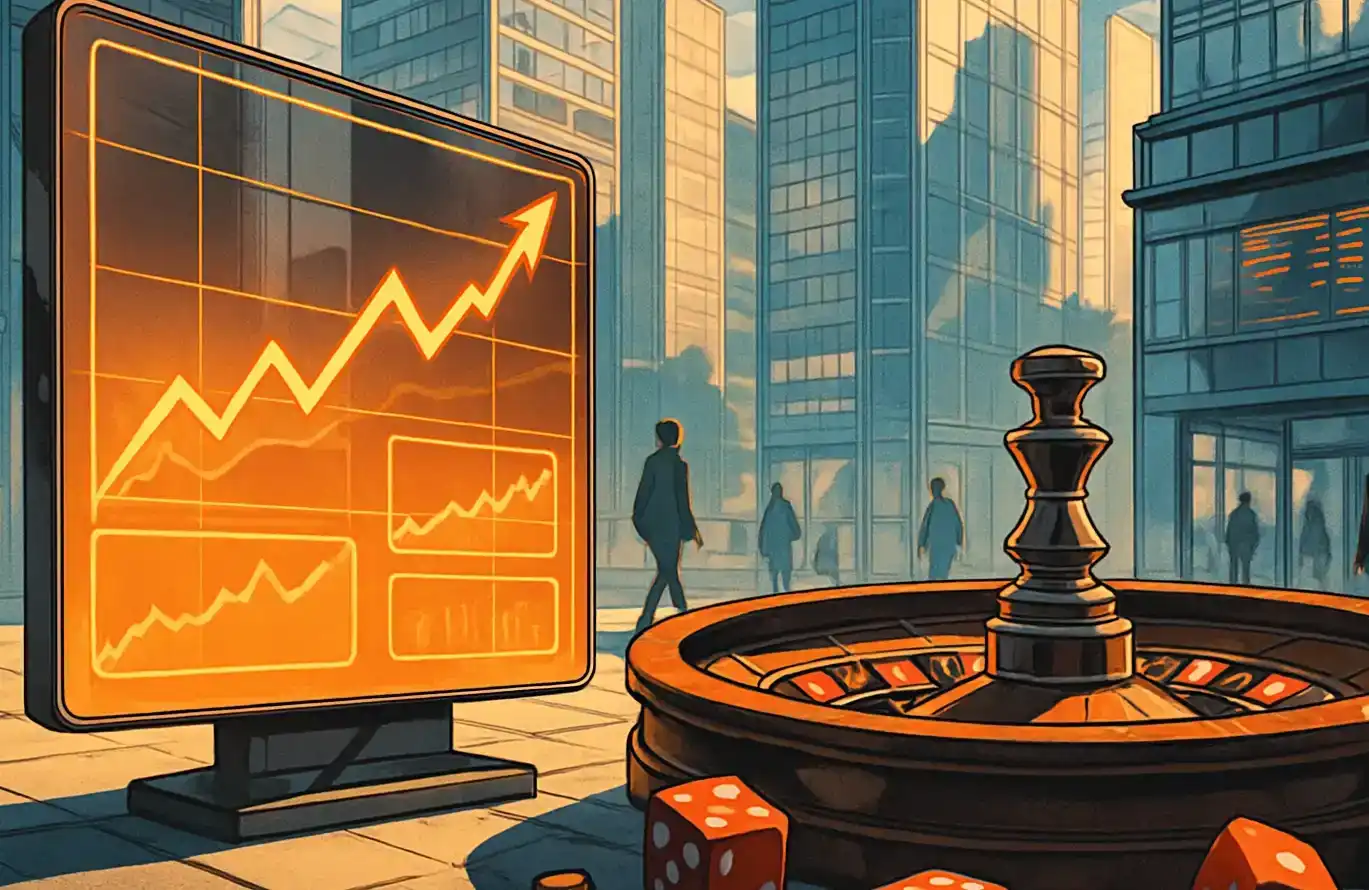
Sentiment Markets, on the other hand, are a game of chasing market sentiment. Pricing isn't based on future earnings but on what the next buyer is willing to pay, which in turn depends on their guess about the next buyer's psychological expectations. It's like being in a hall of mirrors: art, luxury watches, fine wine, NFTs, meme stocks, and (depending on your beliefs) Bitcoin all fall into this category.

These two types of markets each have their own internal logic: one measures future cash flows, the other measures collective belief. Most of the time, we assume they are distinct, but reality is blurring the lines between them.

When Cash Flow Transforms into Narrative

Traditional finance has always prided itself on being driven by rational analysis rather than emotion, but over the past two decades, this line has gradually blurred. In public equity markets, the meme stock phenomenon has turned stocks into collectibles—GameStop, for example, derives its value from something between a baseball card and a Basquiat painting.

Public equity markets are increasingly giving way to private equity markets, where pricing power often lies with a single enthusiastic buyer rather than collective pricing. A similar trend is emerging in credit, with capital shifting from public to private markets: more negotiation, less transparency, and increasingly divergent investment outcomes. This results in lower liquidity but also reduced volatility—and paradoxically, final transaction prices are often higher.

Moreover, private markets have slowly evolved into narrative fields, where each funding round is like another revision of the same story. As investors, we glorify this as "long-termism," but it actually moves toward uniqueness and subjectivity. Private market participants still base their offers on future cash flow analysis, but (with the proliferation of AI) soon everyone will have access to homogenized AI-generated models. The only difference will be the story you tell GPT before hitting enter. The beauty of private market investing lies in what happens after the investment takes effect: unlike public market investors, private equity and venture capital firms can actively participate in making the story come true through hands-on management.

When Narrative Transforms into Cash Flow

Meanwhile, some historically sentiment-driven areas (such as cryptocurrency) are evolving in a completely different direction.

Bitcoin started as a purely sentiment-driven digital collectible, independent of future earnings expectations. But Ethereum, DeFi tokens, and real-world asset (RWA) projects are gradually moving toward the other end: they are beginning to generate cash flows, offering staking yields and collateral returns. Today, more and more crypto assets have observable cash flows.

The composability of on-chain financial instruments turns ownership, trading, and settlement into software-native functions, making cash flow markets potentially more efficient than public stock markets. They offer 24/7 liquidity, instant settlement, and fully transparent ledgers.

In other words, cryptocurrency is evolving from speculative narrative into a new form of programmable finance. At the same time, traditional assets are drifting in the opposite direction, moving away from liquidity and transparency toward scarcity and narrative-driven value.

The rise of prediction markets is bringing another highly specialized type of market into the mainstream. When insights into future trends shift from handing cash to bookies in back alleys to real-time digital markets, new possibilities emerge. "Betting" on election outcomes is a popularity contest until results are announced, but when combined with "investing" in regulation-sensitive stocks, it can become a hedging tool to optimize the risk-return ratio of portfolio trades.

Three Layers of Markets

Every market, regardless of its operating logic, is built on three layers:

1. The underlying asset (the object being owned)

2. The ownership instrument (token or financial instrument)

3. The trading medium (the infrastructure and rules for conducting transactions)

When assets transition between categories—for example, from private to public, or from physical to digital—it is often because one of these layers has changed. Taking a company private alters the trading layer; tokenizing a painting via an NFT changes the ownership instrument layer; running RWAs on-chain alters all three layers. These changes in layers often redefine who can participate in the relevant markets, which in turn significantly impacts valuation.

This layered structure helps explain why we are currently seeing such rapid experimentation with market structures. Technology enables us to deconstruct and reassemble "markets" through software—sometimes with higher liquidity, sometimes with less, but always with new combinations of narrative logic and analytical paradigms. This programmability expands the boundaries of traditional trading and redefines the possibilities of market participation, creating an evolving landscape where traditional market forms intertwine with new market mechanisms.

The Double-Edged Sword of Liquidity

Liquidity has become a cultural value in finance, even a sacred cow. But more isn't always better; like a double-edged sword, excessive liquidity also hides invisible undercurrents.

In sentiment markets, high liquidity often means high volatility: prices are constantly revalued without a stable anchor for valuation. In cash flow markets, liquidity promotes efficient capital allocation and transparent risk transfer. We must carefully distinguish the essential differences between these two.

We can establish this correlation: the more a market's value depends on modelable cash flows, the safer it is to increase its liquidity; the more it relies on narrative and scarcity, the more moderate illiquidity can act as a stabilizer. This illiquidity can prevent "pricing populism," where the least knowledgeable participants in the market determine asset prices.

Convergence, Not Conflict

The theme of the twentieth century was standardization—turning unique assets into tradable securities, making more things investable through methods like assigning CUSIP codes. The twenty-first century may pivot toward re-personalization—building deeper, broader, and more diverse markets that can be synthesized and combined to achieve more precise, targeted investment exposure with greater efficiency.

Today, we can create financial instruments with personalized economic attributes while maintaining liquidity at the execution level. Whether it's tokenized credit, online prediction markets, or programmable securities, they all point toward a more continuous, transparent, and flexible market architecture that far surpasses any previous form.

Traditional binary classifications—public vs. private, fungible vs. unique, speculative vs. productive—are dissolving. What we face is a continuous spectrum from purely sentiment-driven to purely cash flow-driven, with most assets distributed along it and trading across a liquidity spectrum from absolute liquidity to agreed-upon transactions.

Market Revelations

Ultimately, markets reflect motivations. Some markets reward productivity, while others reward collective belief.

Throughout history, we have mostly kept the two separate: finance归于理性(rationality), art归于浪漫(romance). But technology is forcing them to merge, revealing in the process a spectrum between rationality and narrative—the fundamental underpinning of all value creation.

Our task as investors, entrepreneurs, and regulators is not necessarily to defend one logic and negate the other, but to design systems that can accommodate both the measurable and the unknowable, without letting either dominate the scale.

Because in the end, every market is a contest of asset appeal. It's just that some contests eventually cash out.


Preguntas relacionadas

QWhat are the two main types of markets described in the article, and how do they differ in their valuation logic?

AThe two main types are cash flow markets and sentiment markets. Cash flow markets value assets based on the present value of future cash flows (a mathematical approach), while sentiment markets value assets based on what the next buyer is willing to pay, which is a game of collective belief and narrative.

QHow is the traditional financial market, specifically public equities market, evolving according to the author's perspective?

AThe public equities market is blurring the lines with sentiment markets, as seen with meme stocks like GameStop, where stocks are treated more like collectibles. There is also a shift of pricing power from public markets to private markets, where deals are more negotiated, less transparent, and driven more by narrative.

QIn what way is the cryptocurrency market moving in the opposite direction to traditional assets?

ACryptocurrency is evolving from being purely speculative assets driven by sentiment to assets that generate observable cash flows, such as through staking yields and collateral returns. This shift is turning them into a new form of programmable finance, moving towards the cash flow end of the spectrum, while traditional assets are moving towards more narrative-driven, less liquid models.

QWhat are the three layers that every market is built upon, as outlined in the article?

AThe three layers are: 1. The underlying asset (the thing being owned), 2. The ownership token (the financial instrument or token representing ownership), and 3. The trading medium (the infrastructure and rules for transacting). Changes to any of these layers can alter who can participate in a market and significantly impact valuation.

QWhat is the 'double-edged sword' of liquidity, as discussed in the context of different market types?

AFor cash flow markets, high liquidity promotes efficient capital allocation and transparent risk transfer. However, for sentiment markets, high liquidity often leads to high volatility because prices are constantly revalued without a stable anchor. In these narrative-driven markets, some illiquidity can act as a stabilizer by preventing 'pricing populism,' where the least informed participants set prices.

Lecturas Relacionadas

TechFlow Intelligence Bureau: KelpDAO Attack Causes Nearly $300 Million Loss, Triggers Aave Withdrawal Wave, RAVE Crashes 95% in a Single Day

China's AI firm DeepSeek is seeking external funding for the first time, with a valuation exceeding $10 billion, signaling intensifying competition and high R&D costs in the domestic large model sector. Meanwhile, OpenAI CEO Sam Altman faces scrutiny over potential conflicts of interest between his personal investments and OpenAI’s business ahead of a possible IPO. In Web3, KelpDAO suffered a $294 million attack due to forged cross-chain messages on LayerZero, leading to massive withdrawals from Aave and a resulting 18% drop in AAVE tokens. Separately, RAVE cryptocurrency collapsed by 95% in a single day amid suspected insider manipulation. Geopolitically, Iran is now demanding Bitcoin payments for transit through the Strait of Hormuz, reflecting both internal governmental discord and the growing adoption of crypto in tense regions. In semiconductors, Nvidia CEO Jensen Huang showed rare public frustration over questions regarding chip sales to China, while the industry faces renewed price hikes. Tesla continues expanding its Robotaxi service, and a Chinese humanoid robot outperformed humans in a half-marathon, marking a milestone in robotics. Despite Middle East tensions and market uncertainties, U.S. stocks continue to rise, prompting discussions about market optimism versus risk blindness. Overall, today’s developments highlight systemic vulnerabilities—in tech, finance, and geopolitics—while also showcasing innovation in crises.

marsbitHace 5 hora(s)

TechFlow Intelligence Bureau: KelpDAO Attack Causes Nearly $300 Million Loss, Triggers Aave Withdrawal Wave, RAVE Crashes 95% in a Single Day

marsbitHace 5 hora(s)

Trading

Spot
Futuros

Artículos destacados

Cómo comprar FRAX

¡Bienvenido a HTX.com! Hemos hecho que comprar FRAX (FRAX) sea simple y conveniente. Sigue nuestra guía paso a paso para iniciar tu viaje de criptos.Paso 1: crea tu cuenta HTXUtiliza tu correo electrónico o número de teléfono para registrarte y obtener una cuenta gratuita en HTX. Experimenta un proceso de registro sin complicaciones y desbloquea todas las funciones.Obtener mi cuentaPaso 2: ve a Comprar cripto y elige tu método de pagoTarjeta de crédito/débito: usa tu Visa o Mastercard para comprar FRAX (FRAX) al instante.Saldo: utiliza fondos del saldo de tu cuenta HTX para tradear sin problemas.Terceros: hemos agregado métodos de pago populares como Google Pay y Apple Pay para mejorar la comodidad.P2P: tradear directamente con otros usuarios en HTX.Over-the-Counter (OTC): ofrecemos servicios personalizados y tipos de cambio competitivos para los traders.Paso 3: guarda tu FRAX (FRAX)Después de comprar tu FRAX (FRAX), guárdalo en tu cuenta HTX. Alternativamente, puedes enviarlo a otro lugar mediante transferencia blockchain o utilizarlo para tradear otras criptomonedas.Paso 4: tradear FRAX (FRAX)Tradear fácilmente con FRAX (FRAX) en HTX's mercado spot. Simplemente accede a tu cuenta, selecciona tu par de trading, ejecuta tus trades y monitorea en tiempo real. Ofrecemos una experiencia fácil de usar tanto para principiantes como para traders experimentados.

597 Vistas totalesPublicado en 2026.03.03Actualizado en 2026.03.03

Cómo comprar FRAX

Qué es MANTRA

I. Introducción al ProyectoMANTRA es una Blockchain de Capa 1 centrada en la Seguridad, capaz de adherirse y hacer cumplir los requisitos regulatorios del mundo real. Construida para Instituciones y Desarrolladores, MANTRA ofrece una Blockchain sin permisos para aplicaciones con permisos.Características Clave: * Construida utilizando Cosmos SDK, compatible con IBC, con soporte para CosmWasm * Asegurada a través de un conjunto de validadores PoS soberanos * Escalable hasta 10k TPS * Módulos, SDKs y APIs integrados para crear, comerciar y gestionar RWAs que cumplan con la regulación * Experiencia de Usuario Mejorada para integrar a usuarios e instituciones no nativas en Web3.1) Información BásicaNombre: MANTRA (OM)III. Enlaces RelacionadosDocumento Técnico:https://docs.mantrachain.io/Sitio web oficial:https://www.mantrachain.io/Exploradores:https://mintscan.io/mantraRedes Sociales:https://x.com/MANTRA_ChainNota: La introducción al proyecto proviene de los materiales publicados o proporcionados por el equipo oficial del proyecto, que es solo para referencia y no constituye asesoramiento de inversión. HTX no se hace responsable de ninguna pérdida directa o indirecta resultante.

502 Vistas totalesPublicado en 2026.03.04Actualizado en 2026.03.04

Qué es MANTRA

Cómo comprar MANTRA

¡Bienvenido a HTX.com! Hemos hecho que comprar Mantra (MANTRA) sea simple y conveniente. Sigue nuestra guía paso a paso para iniciar tu viaje de criptos.Paso 1: crea tu cuenta HTXUtiliza tu correo electrónico o número de teléfono para registrarte y obtener una cuenta gratuita en HTX. Experimenta un proceso de registro sin complicaciones y desbloquea todas las funciones.Obtener mi cuentaPaso 2: ve a Comprar cripto y elige tu método de pagoTarjeta de crédito/débito: usa tu Visa o Mastercard para comprar Mantra (MANTRA) al instante.Saldo: utiliza fondos del saldo de tu cuenta HTX para tradear sin problemas.Terceros: hemos agregado métodos de pago populares como Google Pay y Apple Pay para mejorar la comodidad.P2P: tradear directamente con otros usuarios en HTX.Over-the-Counter (OTC): ofrecemos servicios personalizados y tipos de cambio competitivos para los traders.Paso 3: guarda tu Mantra (MANTRA)Después de comprar tu Mantra (MANTRA), guárdalo en tu cuenta HTX. Alternativamente, puedes enviarlo a otro lugar mediante transferencia blockchain o utilizarlo para tradear otras criptomonedas.Paso 4: tradear Mantra (MANTRA)Tradear fácilmente con Mantra (MANTRA) en HTX's mercado spot. Simplemente accede a tu cuenta, selecciona tu par de trading, ejecuta tus trades y monitorea en tiempo real. Ofrecemos una experiencia fácil de usar tanto para principiantes como para traders experimentados.

230 Vistas totalesPublicado en 2026.03.04Actualizado en 2026.03.04

Cómo comprar MANTRA

Discusiones

Bienvenido a la comunidad de HTX. Aquí puedes mantenerte informado sobre los últimos desarrollos de la plataforma y acceder a análisis profesionales del mercado. A continuación se presentan las opiniones de los usuarios sobre el precio de A (A).

活动图片