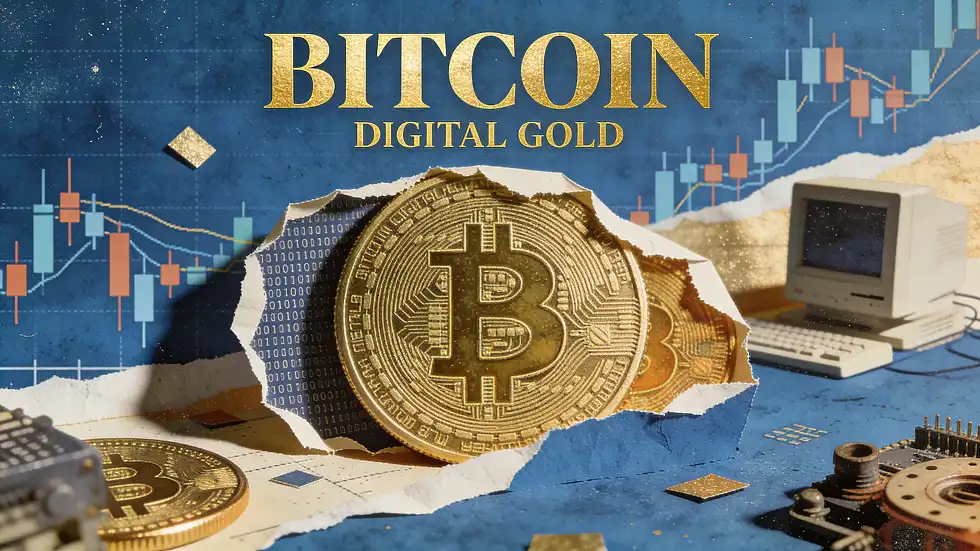
When Asia-Pacific Stock Markets Plunge Below Circuit Breaker, Why Does Bitcoin Stand Out?

marsbitPublicado a 2026-03-05Actualizado a 2026-03-05

Resumen

Amid escalating Middle East tensions that triggered a historic sell-off in Asia-Pacific equities on March 4, Bitcoin demonstrated unexpected resilience. While South Korea’s KOSPI plummeted 12%, its worst drop in history, and Japan’s Nikkei 225 fell 3.7%, Bitcoin rebounded after a brief dip, surging past $74,000 to a two-week high. The divergence stems from structural and fundamental differences between traditional equities and crypto. Asia-Pacific markets, heavily reliant on energy imports, faced direct economic risks from soaring oil prices due to disruptions in the Strait of Hormuz. In contrast, Bitcoin’s fixed supply and decentralized nature positioned it as a hedge against inflation and currency devaluation. Crypto markets, operating 24/7, priced in geopolitical risks ahead of traditional markets, reflecting higher pricing efficiency. Additionally, equities entered the crisis with high valuations and leverage, whereas crypto had undergone prior corrections, reducing speculative excess. Institutional participation via Bitcoin ETFs also provided stability, dampening volatility. This episode underscores a shift in asset perception: crypto is increasingly seen as a global, non-sovereign store of value amid geopolitical turmoil, while regionally tethered assets face heightened vulnerability.

Author: Jae, PANews

On March 4, as the Middle East situation suddenly deteriorated, global financial markets instantly entered a "wartime state." For global investors, this was a trading day that would go down in history.

The obstruction of shipping in the global energy choke point, the Strait of Hormuz, triggered a sharp surge in international oil prices. Panic quickly swept through traditional capital markets, and Asia-Pacific stock markets faced an epic wave of selling.

South Korea's KOSPI plummeted 12% in a single day, marking its largest drop in history; Japan's Nikkei 225 fell sharply by 3.7%, its worst performance in five months; Middle Eastern stock markets plunged nearly 5% in a catch-up decline; major European and U.S. stock indices closed lower across the board.

However, an unusual phenomenon quietly emerged amid this selling wave.

The crypto market, typically seen as "high-risk, high-volatility," the asset class that would be the first to collapse in any geopolitical crisis, actually held steady this time.

After a brief panic sell-off, Bitcoin quickly rebounded, briefly breaking through $74,000 to hit a two-week high. On the same day, investors in Seoul watched as the KOSPI fell below the circuit breaker line.

This is no longer a simple dichotomy of "safe haven" versus "risk," but a deep reassessment of asset nature, pricing logic, and market structure.

Asia-Pacific Stock Markets Become the Epicenter, South Korea's KOSPI Plunges 12%

After the outbreak of war, global stock markets entered a "race to the bottom." Due to their high dependence on external energy, Asia-Pacific markets became the hardest hit.

South Korean stocks fell the most.

The Korea Composite Stock Price Index (KOSPI) closed down more than 12%, its largest single-day drop in history. The day before (March 3), it had already fallen 7%. Over two trading days, the cumulative decline was nearly 20%, with a total market capitalization evaporation of approximately $430 billion, marking the worst two-day decline since the 2008 global financial crisis.

South Korea's Kosdaq index fared even worse, plunging 14%, triggering multiple circuit breakers during the day.

Why South Korea?

South Korea is the world's eighth-largest crude oil consumer, with about 70% of its oil imports coming from the Middle East. Net oil imports account for 2.7% of its GDP. Its economy is manufacturing-oriented and highly sensitive to energy prices.

The blockade of the Strait of Hormuz and the resulting surge in oil prices mean soaring corporate costs, declining profit expectations, and intensified inflationary pressures. For this export-oriented economy, missiles in the Middle East war are not distant news but numbers directly impacting financial reports.

Even more critical is the market structure. Foreign investors hold over 30% of South Korean stocks, and retail margin trading accounts for nearly 80%. When panic strikes, foreign capital withdrawal, leveraged positions blowing up, and quantitative stop-losses occur simultaneously, leading to a stampede-like sell-off.

Japan followed closely.

The Nikkei 225 index closed down 3.7%, its largest single-day drop in nearly five months; the Topix index fell even more sharply, closing down 4%.

Japan is also a major energy importer. Trump's statement that "larger military action against Iran may be taken" was enough to make traders in Tokyo nervous.

The Middle East itself was at the eye of the storm.

After a two-day closure, UAE markets reopened, with the Dubai Financial Market General Index falling 4.7% in early trading, a rare drop in recent years. Saudi Arabia's benchmark index fell nearly 5% in the early stages of the conflict. The Kuwait Stock Exchange simply suspended trading to avoid a collapse-like sell-off.

For Gulf countries, war means uncertainty in oil revenues, stagnation in tourism and aviation, and accelerated capital flight.

The ripple effects of the Middle East conflict quickly spread to global financial markets, with European and U.S. stocks also weakening. Although the declines were somewhat moderated, major indices still closed lower.

Global Stocks Keep Falling, Crypto Market Rebounds "Ahead"

While global stock markets were in turmoil, the performance of the crypto market surprised many.

After the initial panic sell-off, Bitcoin quickly stabilized and rebounded, rising above $74,000 on March 5 to hit a two-week high.

This divergence is not accidental. It is the result of multiple factors, including pricing efficiency, valuation misalignment, inflation risks, anchoring mechanisms, and participant structure.

When the war broke out over the weekend, the crypto market was the only market that could trade.

No market closures, no circuit breakers, no delays. From the first explosion in Tehran, global investors could express their judgments in the crypto market.

This means that when Asia-Pacific stock markets opened on Monday morning, the crypto market had already completed several rounds of price discovery, digesting and pricing in most of the risks in advance. Bitcoin's "first decline, then rise" price movement is a reflection of this pricing efficiency.

At certain moments, the highly sensitive crypto market may be becoming the leading indicator for all assets.

Additionally, before this "black swan" event, stock and crypto markets were in different valuation cycles.

Global major stock markets had been rising steadily since the beginning of the year, with the Nikkei 225 repeatedly hitting new historical highs, the South Korean KOSPI near a five-year high, and the three major U.S. stock indices oscillating near all-time highs. Global major stock markets had accumulated significant profits, and valuation bubbles were building.

Once a "black swan" event occurred, profit-taking concentrated, combined with stop-loss selling, leading to a暴跌行情 (plunge).

In contrast, the crypto market had experienced multiple deep corrections since October 2025. The valuation and leverage levels of mainstream assets had fallen back to reasonable ranges, with profits fully realized and risks released in advance.

When panic strikes, the reactions of a market with泡沫高杠杆 (bubbles and high leverage) and a market that has been squeezed dry and is undervalued are naturally different.

The macro risk variable brought by the Middle East war is inflation.

Soaring energy prices will increase inflation stickiness, forcing global central banks to delay interest rate cut cycles or even maintain high rates. For stocks, this is a "valuation + earnings" double whammy. Interest rates suppress valuations, and costs squeeze profits.

For Bitcoin, the logic of inflation is恰恰相反 (exactly the opposite). Its fixed supply of 21 million coins makes it seen as "digital gold" in an environment of fiat money over-issuance and high inflation.

Against the backdrop of geopolitical conflicts加剧 (intensifying) fiat currency credit fluctuations, more and more investors are using it as a tool to hedge against inflation and fiat depreciation.

Simultaneously, local capital in the Middle East faces a triple困境 (dilemma) of fiat depreciation, stock market crashes, and intensified geopolitical risks. They need to find borderless, jurisdiction-agnostic safe-haven assets, and cryptocurrencies have become one of the main destinations. This influx of incremental capital also offset some of the safe-haven selling pressure.

Stock market pricing is anchored to the real economy and corporate profits, while crypto market pricing is anchored to global liquidity and decentralized attributes.

For export-oriented, energy-import-dependent economies like Japan and South Korea, the Middle East war directly impacts their economic fundamentals. Soaring crude oil prices push up production costs, and against the backdrop of weak global demand, companies find it difficult to fully pass on cost pressures, significantly compressing profit margins.

Conversely, the fiat depreciation and cross-border capital controls triggered by the Middle East situation反而突出 (instead highlight) the decentralized attributes of crypto assets, making them an optional target for global capital to hedge geopolitical risks.

This is the fundamental reason for the截然不同 (starkly different) reactions of stock and crypto markets to the same geopolitical risk.

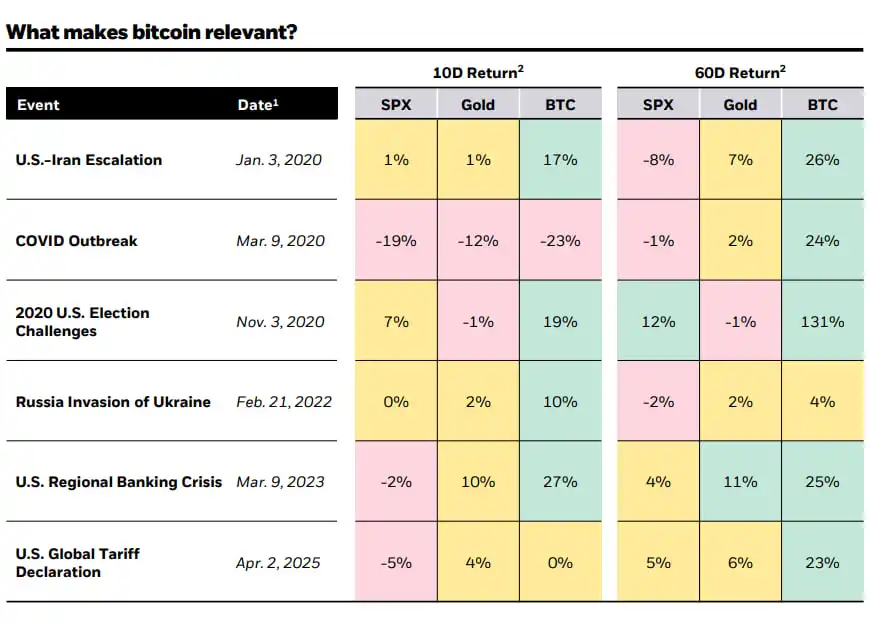
BlackRock's research has pointed out that Bitcoin's performance in the face of geopolitical shocks is better than that of gold and stocks. So far, this conclusion still holds.
Market participant structure determines volatility.

The sharp fall in the South Korean stock market exposed the fragility of its market structure: high foreign ownership, crowded leveraged trading, and program trading dominance.

When panic strikes, these three factors resonate, directly triggering stampede and circuit breakers.

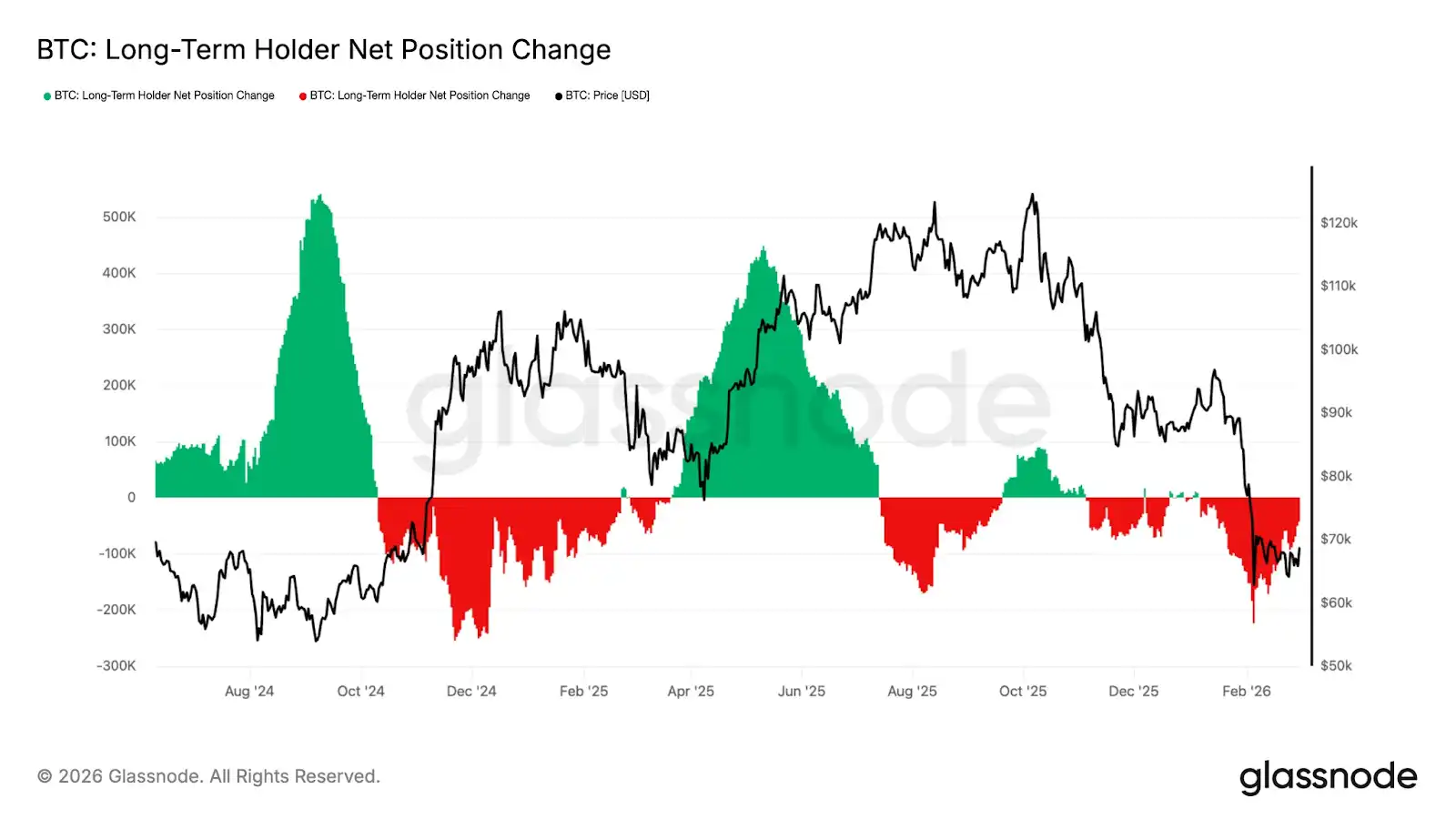
The participant structure of the crypto market has fundamentally changed. Glassnode data shows that the net position changes of Bitcoin long-term holders have趋于缓和 (tended to moderate), indicating that selling intensity is weakening.
U.S. spot Bitcoin ETFs have also brought stable institutional funds. Part of the pricing power has been transferred to institutions, which typically have more professional risk control capabilities and longer-term investment perspectives, forming a underlying liquidity support.

More importantly, the crypto market had completed multiple rounds of deleveraging before this "black swan" event爆发 (erupted). The derivatives market did not see large-scale cascading liquidations, further reducing volatility.

War is a human tragedy and a touchstone for market resilience.

Yesterday's global selling wave taught all investors a lesson.

What is "high-risk" may not truly be high risk. While the crypto market held its ground amid volatility, the traditionally "relatively stable" stock market was experiencing暴跌与熔断 (plunges and circuit breakers).

Whether this is a temporary misalignment or a change in deep logic and a rewriting of asset labels仍需时间验证 (still requires time to verify).

But in an era of normalized geopolitical risks, the pricing anchors of assets are shifting. Assets tied to a single economy will become increasingly fragile, while assets anchored to global liquidity will become increasingly resilient.

The divergence between stock and crypto markets during this U.S.-Iran war once again proves that crypto assets are gradually becoming an alternative medium that cannot be ignored in global geopolitical games.

For many countries, the Middle East war is an unavoidable economic shock. For the crypto market, the same war is a confirmation of its value logic.

When the storm comes, what matters is not where you stand, but what your anchor is tied to.

Criptos en tendencia

Preguntas relacionadas

QWhy did the Asia-Pacific stock markets, particularly South Korea's KOSPI, experience a significant decline on March 4th?

AThe Asia-Pacific stock markets, especially South Korea's KOSPI, plummeted due to heightened geopolitical tensions in the Middle East, which caused a sharp surge in international oil prices. South Korea, being highly dependent on Middle Eastern oil imports and having an export-oriented economy, faced increased production costs and inflation pressures. Additionally, its market structure, with high foreign ownership and leveraged retail trading, led to a cascade of selling, including foreign capital flight, leveraged position liquidations, and quantitative stop-loss triggers.

QHow did Bitcoin perform amidst the global stock market sell-off, and what was its key price movement?

ABitcoin initially experienced a brief panic sell-off but quickly stabilized and rebounded, surging past $74,000 at one point and hitting a two-week high. This contrasted sharply with the sharp declines in traditional stock markets.

QWhat factors contributed to Bitcoin's resilience and ability to rebound during the market turmoil?

ASeveral factors contributed to Bitcoin's resilience: its market operates 24/7, allowing for immediate price discovery and risk digestion before traditional markets opened; it had undergone multiple deep corrections previously, reducing valuation bubbles and leverage; it is seen as a hedge against inflation and fiat devaluation due to its fixed supply; it benefits from its decentralized, borderless nature appealing to capital seeking refuge from geopolitical risks; and its participant structure has shifted with more institutional investors through ETFs providing stable liquidity and better risk control.

QHow does the pricing anchor differ between traditional stock markets and the cryptocurrency market according to the article?

ATraditional stock markets are anchored to实体经济 and corporate earnings, meaning their value is tied to the economic fundamentals and profitability of companies within specific economies. In contrast, the cryptocurrency market, particularly Bitcoin, is anchored to global liquidity and its decentralized attributes, making it less dependent on any single economy's performance and more responsive to broader monetary policies and geopolitical shifts that affect fiat currencies.

QWhat did the market reaction during this event suggest about the changing role of crypto assets in global finance?

AThe event suggested that crypto assets are increasingly being recognized as an alternative hedge and a resilient asset class during geopolitical crises. Their performance, which contrasted with traditional markets, indicates a potential shift in asset pricing logic, where decentralized, globally anchored assets may offer more stability in times of regional economic shocks, challenging the conventional risk perceptions of cryptocurrencies.

Lecturas Relacionadas

Must-Watch Events Next Week|CLARITY Act Could Face Senate Vote; SpaceX, Circle to Report Earnings (8.3-8.9)

**Summary: Key Events and Developments to Watch (August 3-9)** The upcoming week is marked by significant financial disclosures, key legislative deadlines, and notable product updates. **Major Financial Events:** Several companies are scheduled to release their Q2 2026 earnings. American Bitcoin (ABTC) will report on August 3, followed by SpaceX and Hut 8 Mining Corp. on August 4, and Circle on August 5. Notably, a significant portion of SpaceX shares (up to 12% of total shares) will be unlocked on August 6 following their earnings release. **Key Legislative Deadline:** The U.S. Senate faces an August 7 deadline to secure 60 votes for the CLARITY Act, a bipartisan bill aiming to establish a federal regulatory framework for cryptocurrencies. The Senate may hold a full vote on the bill during the week. **Economic Data:** The U.S. July Non-Farm Payrolls report will be released on August 7, providing crucial labor market data. **Technology & Product Updates:** * **Shutdowns:** DeFi portfolio tracker Zapper and wallet app Ctrl Wallet will cease operations on August 3. * **Upgrades:** LayerZero will deprecate its v1 relayers on August 3. XRP Ledger's new version 3.3.0, featuring five new functions, is expected next week. * **AI:** Elon Musk announced that the advanced Grok 4.6 AI model is set for release around August 7. * **Bitcoin:** The BIP-110 forced signaling for a potential Bitcoin network change is scheduled to begin around August 8. **Other Notable Events:** Chinese robotics firm Unitree Tech has set its preliminary price inquiry for its IPO for August 5. South Korean exchange Upbit will delist AQT and AERGO tokens on August 3.

marsbitHace 1 hora(s)

Must-Watch Events Next Week|CLARITY Act Could Face Senate Vote; SpaceX, Circle to Report Earnings (8.3-8.9)

marsbitHace 1 hora(s)

Stocks Are Plummeting More Sharply Than Cryptocurrencies. Where Has the Money Gone?

Stock Markets Plunge Deeper Than Cryptocurrencies: Where Did the Money Go? In late July, Seoul's Kospi index triggered circuit breakers for two consecutive days, plummeting over 40% from its June high. The collapse was led by heavyweight stocks like SK Hynix, whose record profits still disappointed investors, and devastating leveraged ETFs, with one major product losing over 83% of its value. This signaled a global, forced deleveraging targeting the most crowded trades. Interestingly, while stocks exhibited extreme volatility akin to crypto markets, Bitcoin rose nearly 15% in July after a prior steep drop. Analysis shows the money fleeing equities did not flow into Bitcoin. Instead, Bitcoin had already absorbed its sell-off in May-June, when U.S. spot Bitcoin ETFs saw historic outflows. The true safe-haven beneficiary was gold, whose price rose over 20% year-on-year, highlighting a decoupling between Bitcoin and gold as "digital gold." The sell-off was a targeted unwinding of leveraged positions in tech and semiconductors, accelerated by broker-dealer risk management and shifts in the AI narrative, including new competition from Chinese memory chipmakers. The retreat path was clear: from high-valuation tech stocks to cash and U.S. Treasuries, then to gold. For Bitcoin to attract sustained institutional inflows, conditions like eased global liquidity pressure, a "soft-landing" Fed rate cut, and U.S. regulatory clarity via legislation like the stalled CLARITY Act are needed. Currently, Bitcoin is not a safe haven but an already-cleared asset. Its low correlation with tech stocks, however, makes it a potential diversification play for institutional portfolios once the storm passes. The money isn't here yet, but the positioning is underway.

marsbitHace 1 hora(s)

Stocks Are Plummeting More Sharply Than Cryptocurrencies. Where Has the Money Gone?

marsbitHace 1 hora(s)

In Conversation with Ray Dalio: We Are Currently in an AI Bubble, with 1% of My Portfolio in Bitcoin

Ray Dalio, founder of Bridgewater Associates, warns in an interview that the current AI boom shows classic bubble characteristics, which could lead to significant economic downturns as seen in past cycles like 1929 or 2000. He explains that speculative enthusiasm, fueled by debt and overvaluation, often precedes a crash when rising rates or taxation force asset sales, causing widespread losses and recession. Dalio also outlines his "Big Cycle" theory, describing an approximate 80-year pattern where widening wealth gaps, massive government deficits, and shifting geopolitical power (like China's rise) create internal conflict and global instability. He emphasizes that we are in a late-cycle, transitional phase where traditional powers like the US and UK face decline. For personal wealth protection, Dalio advises diversification beyond cash into assets like stocks, bonds, real estate, and particularly gold, which he prefers over Bitcoin. While he holds about 1% of his portfolio in Bitcoin as a non-printable hard asset, he views gold as more secure from technological or governmental threats. Regarding AI's impact, Dalio believes it will disproportionately benefit capital owners, worsening inequality by replacing both physical and cognitive labor. He suggests that human intuition and emotional intelligence, combined with AI, will be key for future workers. On taxation, Dalio argues that wealth taxes are impractical and risk triggering asset sell-offs, reducing productive investment. He points to the UK as a cautionary example of debt, low productivity, and political strife. Geopolitically, Dalio foresees a more regionalized world, with the US showing weakness in prolonged conflicts like with Iran, akin to past imperial declines. The ideal outcome, he suggests, is coexisting powerful blocs (e.g., Americas, China-Asia Pacific) without major war.

marsbitHace 5 hora(s)

In Conversation with Ray Dalio: We Are Currently in an AI Bubble, with 1% of My Portfolio in Bitcoin

marsbitHace 5 hora(s)

Trading

Spot

Artículos destacados

Cómo comprar 4

¡Bienvenido a HTX.com! Hemos hecho que comprar 4 (4) sea simple y conveniente. Sigue nuestra guía paso a paso para iniciar tu viaje de criptos.Paso 1: crea tu cuenta HTXUtiliza tu correo electrónico o número de teléfono para registrarte y obtener una cuenta gratuita en HTX. Experimenta un proceso de registro sin complicaciones y desbloquea todas las funciones.Obtener mi cuentaPaso 2: ve a Comprar cripto y elige tu método de pagoTarjeta de crédito/débito: usa tu Visa o Mastercard para comprar 4 (4) al instante.Saldo: utiliza fondos del saldo de tu cuenta HTX para tradear sin problemas.Terceros: hemos agregado métodos de pago populares como Google Pay y Apple Pay para mejorar la comodidad.P2P: tradear directamente con otros usuarios en HTX.Over-the-Counter (OTC): ofrecemos servicios personalizados y tipos de cambio competitivos para los traders.Paso 3: guarda tu 4 (4)Después de comprar tu 4 (4), guárdalo en tu cuenta HTX. Alternativamente, puedes enviarlo a otro lugar mediante transferencia blockchain o utilizarlo para tradear otras criptomonedas.Paso 4: tradear 4 (4)Tradear fácilmente con 4 (4) en HTX's mercado spot. Simplemente accede a tu cuenta, selecciona tu par de trading, ejecuta tus trades y monitorea en tiempo real. Ofrecemos una experiencia fácil de usar tanto para principiantes como para traders experimentados.

848 Vistas totalesPublicado en 2025.10.20Actualizado en 2026.06.02

Cómo comprar 4

Discusiones

Bienvenido a la comunidad de HTX. Aquí puedes mantenerte informado sobre los últimos desarrollos de la plataforma y acceder a análisis profesionales del mercado. A continuación se presentan las opiniones de los usuarios sobre el precio de 4 (4).

活动图片