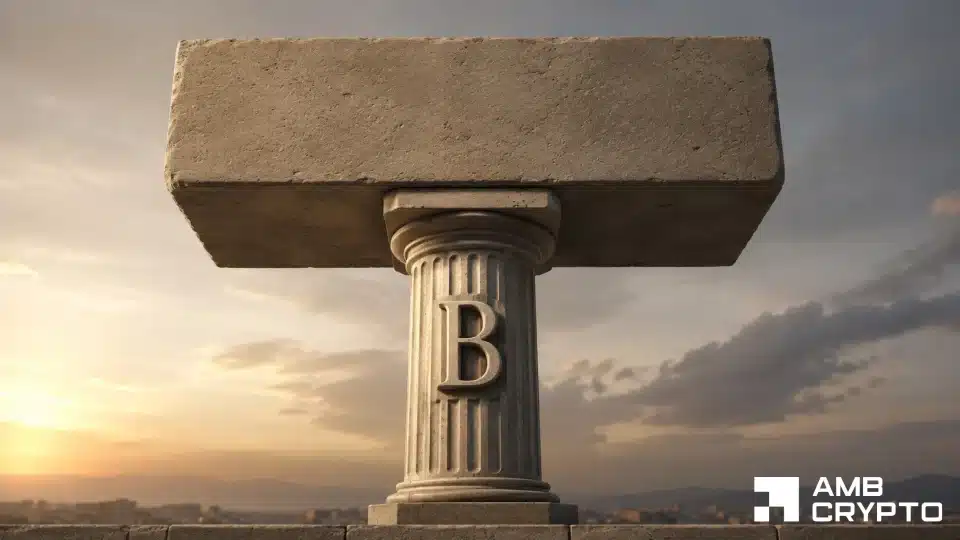
What Is the American Reserve Monetary Assets (ARMA) Act and How Could It Affect the Market?

Foresight NewsPublicado a 2026-06-15Actualizado a 2026-06-15

Resumen

**Summary of the ARMA Act and Its Potential Market Impact** The American Retirement and Monetary Advancement (ARMA) Act, a legislative evolution from earlier proposals like the BITCOIN Act, represents a significant political compromise regarding a US strategic Bitcoin reserve. Initially, proposals in 2024-2025 called for the mandatory purchase of 1 million BTC over five years. However, facing opposition due to fiscal cost, concerns over dollar supremacy, and executive branch resistance, these ambitious acquisition plans were scaled back. ARMA, introduced in 2026, removes all mandatory purchase requirements. Its core provisions are twofold: it consolidates federally held Bitcoin (approx. 320,000 BTC from criminal and civil seizures) into a single Treasury-managed reserve and legally prohibits its sale for at least 20 years, with an exception only for debt repayment. This essentially codifies into law the holding policy established by a 2025 Trump executive order. Consequently, the bill's short-term market impact is expected to be limited. While it would eliminate the overhang of potential government selling, it creates no new direct demand from the Treasury. Its primary significance is strategic and long-term. By establishing a legal framework that formally recognizes Bitcoin as a national reserve asset, ARMA could pave the way for future, more substantive debates on mandatory acquisitions. The act is seen as a foundational step, increasing the political viability of eventu...


Written by: Tiger Research(@tiger_research_)

Compiled by: AididiaoJP, Foresight News


The topic of a U.S. strategic bitcoin reserve has circulated for nearly two years. The core of the original BITCOIN Act (introduced in 2024) was proactive government purchases, whereas the ARMA bill contains no such provisions. Whether the market should view this as positive remains an open question.


Key Takeaways


An executive order signed by Trump in March 2025 pledged not to sell federally held bitcoin but did not mandate new purchases. Market expectations were higher, and when the order's content became clear, the bitcoin price immediately fell by 5.7%.


Legislative efforts since 2024 have significantly softened over the past two years: from a bill requiring the purchase of 1 million BTC to a bill that merely contains custody obligations with no purchase requirements whatsoever.


The most likely to pass currently, the American Reserve Monetary Assets (ARMA) Act, is not a purchase bill. Instead, it prohibits the government from selling any of its currently held bitcoin for at least 20 years.


ARMA's short-term impact on the bitcoin market is limited. In the long run, however, legally establishing bitcoin's status as a national reserve asset could reopen the discussion on mandatory purchases, which would be positive for the market.


Background: What the U.S. Has and Hasn't Done


During the 2024 presidential campaign, Trump repeatedly promised to establish a bitcoin strategic reserve, which the market interpreted as the federal government becoming a direct buyer.


Post-election, on March 6, 2025, Trump signed an executive order designating bitcoin obtained through criminal investigations and civil forfeiture as a strategic reserve and directing its permanent retention. The order did not direct the acquisition of new bitcoin; it only promised not to sell what the government already owned. Once the order's content was clear, the bitcoin price dropped from around $92,000 to below $85,000.


At the time of signing, the federal government held approximately 190,000 BTC, about 0.9% of the total 21 million supply. All this bitcoin came from criminal and civil proceedings, not a single coin was purchased.


The situation remains unchanged. Beyond the executive order, nothing has been enacted into law.


Legislative History


Discussions beginning in 2021 produced the first concrete bill in 2024, which was reintroduced in 2025 and restructured into ARMA in 2026. The main theme of this evolution has been constant compromise with political reality: the mandated purchase amount has diminished from something to nothing. Each revision made passage more feasible but simultaneously reduced market impact.


2024: The Original Bill


Senator Lummis has publicly advocated for including bitcoin in the federal reserves since entering the Senate in 2021. There was no consensus in Congress at the time, and the crypto winter of 2022-2023, compounded by the FTX collapse, made the environment even less favorable.


The situation changed in 2024 as bitcoin broke $100,000 and spot ETFs received regulatory approval. In July of that year, Lummis introduced the first specific legislation: requiring the purchase of 1 million bitcoins within five years, to be held for at least 20 years, funded by a Federal Reserve surplus account.


One million BTC represents 4.76% of the total supply, surpassing MicroStrategy's reported holdings of about 840,000. The bill automatically expired at the end of that Congress.


2025: Reintroduction and Stalled Progress


In March 2025, the same month as the executive order, Lummis reintroduced the BITCOIN Act as Senate Bill S.954. The core structure remained unchanged: annual purchases of 200,000 BTC, totaling 1 million over five years, held for 20 years. The revised version removed certain exemptions from disposal bans, tightened holding obligations, and added four cosponsors.


Market reaction was generally positive, but the bill faced substantial resistance on three fronts:


  • Fiscal Cost: At the time, 1 million bitcoins were valued at trillions of won. Fiscal conservatives within the Republican Party viewed gold as a stable store of value and bitcoin as a speculative asset, opposing any mandatory purchase structure.
  • Dollar Primacy: Democratic critics led by Representative Maxine Waters argued that treating bitcoin as a reserve asset would weaken the U.S. dollar's status as the global reserve currency.
  • Treasury Secretary's Position: In August 2025, Treasury Secretary Bessent publicly stated the government would not pursue additional bitcoin purchases. As the official responsible for enforcing the law, he had already expressed opposition.


The bill has remained in the Senate Banking Committee ever since.


2026: ARMA as Legislative Compromise


In May 2026, Representative Nick Begich introduced the American Reserve Monetary Assets (ARMA) Act, with Democratic Representative Jared Golden joining as a cosponsor. The name change itself was strategic: aimed at distancing the bill from the associations that made previous legislation difficult to advance and broadening its coalition of supporters.


ARMA does two things: it consolidates all bitcoin currently held or forfeited by the federal government into a single reserve managed by the Treasury Department, and it prohibits the sale of this bitcoin for at least 20 years. The only exception to the disposal ban is its use for repaying the national debt.


The decisive difference from its predecessor is what ARMA does not contain. The BITCOIN Act mandated annual purchases of 200,000 BTC, while ARMA completely eliminates this obligation. Instead, it directs the Treasury and Commerce Departments to study and report within 180 days whether additional purchases can be achieved in a budget-neutral manner. The study is a task, not a purchase mandate.


ARMA is essentially a custody and hold bill, not an acquisition bill. Its structure is adjusted to achieve passage.


Short-Term Outlook: Limited Market Impact


Currently, two bills are moving through Congress in parallel. The BITCOIN Act (S.954) is in the Senate Banking Committee; ARMA is in the House. Their objectives differ: the BITCOIN Act is an acquisition bill, ARMA is a custody bill.


ARMA has a higher probability of passing. The BITCOIN Act has been stalled in committee for over a year, burdened by fiscal cost and exclusively Republican support. ARMA has Democratic support and imposes no purchase obligations, removing the most common objections.


Even so, ARMA's passage itself would not constitute a short-term positive for the bitcoin market. If ARMA were to take effect, the approximately 320,000 BTC currently held by the federal government would be legally barred from entering the market for at least 20 years. The pressure of potential government selling would disappear. But the issue is: with no purchase mandate, there is no new demand. The market wants direct government purchases of bitcoin, which ARMA does not provide. Its actual effect is closer to codifying the March 2025 executive order into statute.


The key lies in what might follow ARMA. Nick Begich, a bitcoin holder since 2013, was a House cosponsor of the BITCOIN Act in March 2025. He publicly supports bitcoin as a strategic asset. ARMA's structure suggests a phased approach rather than a one-step solution: first establish the legal framework, then build acquisition mandates upon it.


If ARMA passes, formally establishing bitcoin's legal status as a national reserve asset, the debate on mandatory purchases will likely reopen on a firmer foundation. The path to this outcome is longer than the market initially priced following Trump's campaign promises, but the direction has not changed.


In short, the impact of ARMA's passage on price is limited in the short term. In the long term, it remains a constructive factor for the market. If ARMA passes, the probability of eventual purchase legislation becomes more visible.


Preguntas relacionadas

QWhat is the American Retirement and Monetary Advancement (ARMA) Act, and how does it differ from the initial BITCOIN Act?

AThe American Retirement and Monetary Advancement (ARMA) Act is a legislative proposal from 2026. Its key provisions are to consolidate all federally held or forfeited Bitcoin into a single reserve managed by the Treasury and to prohibit the sale of those holdings for at least 20 years. The decisive difference from the initial BITCOIN Act (proposed in 2024 and 2025) is that ARMA contains no mandate for the government to purchase new Bitcoin. The BITCOIN Act required the acquisition of 1 million BTC over five years. ARMA is therefore a custody and holding bill, not an acquisition bill.

QWhat was the immediate market reaction to Trump's March 2025 executive order on Bitcoin, and why did it occur?

AThe immediate market reaction was negative, with the Bitcoin price dropping approximately 5.7% from around $92,000 to under $85,000. This occurred because the executive order only designated Bitcoin obtained through criminal and civil forfeiture as a strategic reserve and ordered its permanent holding. It did not instruct the government to acquire new Bitcoin. The market had previously interpreted campaign promises as implying federal purchases, so the lack of a buying mandate in the order led to disappointment and a sell-off.

QWhat are the main political and practical obstacles that prevented the original BITCOIN Act from advancing in Congress?

AThe main obstacles were: 1) Fiscal Cost: The cost of purchasing 1 million Bitcoin was seen as prohibitively high, drawing opposition from fiscal conservatives. 2) Dollar Hegemony: Critics, especially Democrats, argued that recognizing Bitcoin as a reserve asset could undermine the US dollar's status as the global reserve currency. 3) Treasury Secretary's Stance: In August 2025, Treasury Secretary Bessent publicly stated the government would not pursue additional Bitcoin purchases, creating an executive branch roadblock for a law mandating purchases.

QWhat is the primary short-term market impact expected if the ARMA Act is passed?

AThe primary short-term market impact of ARMA's passage is expected to be limited. While it would legally lock up the government's existing ~320,000 BTC holdings for at least 20 years, removing potential future selling pressure, it creates no new direct demand because it imposes no purchase obligations. Its effect would be largely to codify the status quo established by the 2025 executive order into law, without the new buyer the market was hoping for.

QHow does the article frame the potential long-term significance of the ARMA Act for the Bitcoin market?

AThe article frames ARMA's long-term significance as a constructive, foundational step. If passed, it would formally establish Bitcoin's legal status as a national reserve asset. This foundation could then reopen and reframe the debate about mandatory government purchases on a more solid legal and political basis. The path to eventual acquisition legislation would become longer but more visible, representing a phased approach rather than an immediate, politically infeasible mandate.

Lecturas Relacionadas

MSTR Discloses Sale of 3,588 Bitcoins, Stock Price Drops Over 5% at One Point During Trading

MicroStrategy, the world's largest corporate holder of Bitcoin, has significantly shifted its business model. Between June 29 and July 5, the company sold 3,588 bitcoins for approximately $216 million to fund quarterly dividends for its preferred stock. This marks its largest-ever Bitcoin sale and signals a strategic pivot: Bitcoin is transitioning from a "buy-and-hold" reserve asset to a liquidity management tool for the company. This move follows a recent authorization allowing Bitcoin sales when equity fundraising is less attractive. The announcement contributed to a more than 5% intraday drop in MicroStrategy's stock price, while Bitcoin fell to around $61,800—below the company's average holding cost of roughly $75,700. The sale represents a major departure from MicroStrategy's long-standing "never sell" commitment, which saw its first minor breach in May with a $2.5 million sale. The latest, hundred-times-larger transaction underscores growing financial pressures. Analysts note the company faces about $1.5 billion in annual preferred dividend obligations, far exceeding cash flow from its software business. As of July 5, MicroStrategy holds 843,775 bitcoins. Its current operational logic involves buying Bitcoin during favorable financing conditions and selling portions to cover dividends when needed, creating a flexible capital management cycle amidst a challenging market environment.

华尔街日报Hace 3 hora(s)

MSTR Discloses Sale of 3,588 Bitcoins, Stock Price Drops Over 5% at One Point During Trading

华尔街日报Hace 3 hora(s)

Q-Day Countdown: Will Quantum Computing End Cryptocurrencies?

Quantum Computing's Threat to Cryptocurrency: A Countdown to Q-Day Quantum computing, specifically Shor's algorithm, poses a fundamental threat to the public-key cryptography (e.g., ECDSA, RSA) that secures blockchain networks like Bitcoin and Ethereum. This critical juncture, known as Q-Day, is estimated to occur potentially within the next 5-15 years. The core vulnerability stems from the public and immutable nature of blockchains. Assets in addresses where the public key is already exposed on-chain (e.g., spent outputs) are at direct risk, as a sufficiently powerful quantum computer could derive the private key. This threatens the very trust model of cryptocurrencies. The response lies in Post-Quantum Cryptography (PQC)—algorithms like lattice-based ML-DSA and hash-based SLH-DSA, which are resistant to quantum attacks. NIST has standardized key PQC algorithms (FIPS 203, 204, 205), providing a migration path. However, the primary challenge is not technical but socio-economic and involves complex governance: * **Bitcoin's** path is constrained by its conservative ethos. Migrating requires a soft-fork to new address types, facing hurdles like significantly larger signature sizes and, most critically, the divisive governance question of how to handle at-risk legacy UTXOs without violating core principles. * **Ethereum** is pursuing a "cryptographic agility" strategy, with a multi-layered roadmap. It leverages account abstraction for user accounts and is developing compressed hash-based signatures (e.g., leanXMSS) for its consensus layer, aiming for a full-stack upgrade over time. In conclusion, quantum computing does not spell an instant end for cryptocurrency but initiates a critical countdown. The industry has a limited "engineering comfort window" to orchestrate a coordinated, ecosystem-wide migration to PQC. The ultimate bottlenecks are the immense coordination efforts and governance decisions required for this foundational transition.

marsbitHace 4 hora(s)

Q-Day Countdown: Will Quantum Computing End Cryptocurrencies?

marsbitHace 4 hora(s)

Trump, the President Who Knows Best How to 'Trade Stocks'

Former US President Donald Trump reported a record-breaking $2.2 billion in personal income for 2025, the highest annual income ever disclosed by a sitting president. This figure, from a 927-page government ethics filing, represented a 3.5-fold increase from his $600 million income in 2024 and boosted his net worth to $6.5 billion. The primary drivers were cryptocurrency (64% of income, approximately $1.4 billion) and real estate (26%, approximately $575 million). His crypto earnings stemmed largely from the launch of his personal meme coin, $TRUMP, generating over $600 million in licensing fees, and substantial profits from the WLFI token and its parent company. Despite a sluggish property market, his Mar-a-Lago resort and associated golf clubs saw revenue surges of 50% and 27%, respectively, attributed to their use as venues for presidential events. Trump's financial disclosure also revealed an unprecedented level of stock market activity, with over 22,000 trades executed in 2025, averaging 87 trades per market day. Media analyses noted several instances where significant trading coincided with major policy announcements, such as proposed tariffs, raising questions about potential conflicts of interest. While the White House stated these trades were handled by a family-managed trust fund and not Trump directly, critics highlighted this as a departure from the blind trusts traditionally used by presidents post-Watergate. The report has intensified debate over the commercialization of the presidency. Supporters view it as a success story of a businessman-president, while critics argue it demonstrates an unprecedented conversion of public influence into private wealth, with policy decisions potentially linked to personal financial gains. The controversy centers on whether Trump's earnings represent innovative entrepreneurship or a fundamental conflict of interest, sparking renewed calls for stricter ethics reforms in US governance.

marsbitHace 5 hora(s)

Trump, the President Who Knows Best How to 'Trade Stocks'

marsbitHace 5 hora(s)

Countdown to Q-Day: Will Quantum Computing End Cryptocurrencies?

The article explores the existential threat quantum computing poses to cryptocurrencies and the urgent need for "post-quantum" migration. It outlines that quantum computers, through Shor's algorithm, could break the elliptic-curve cryptography (ECC) underlying blockchain security, potentially allowing private keys to be derived from public keys. The core challenge is not a lack of post-quantum cryptography (PQC) standards—like NIST's ML-KEM and ML-DSA—but the immense complexity of upgrading entire ecosystems before "Q-Day" (when quantum computers become capable of such attacks, estimated around 2035-2045). Key points include: * **Bitcoin's** risk is concentrated in legacy UTXOs with exposed public keys (e.g., early P2PK outputs). Migration faces massive hurdles: PQC signatures are much larger, increasing transaction size and cost, and the governance dilemma of handling un-migrated assets threatens its "code is law" ethos. * **Ethereum's** strategy focuses on "cryptographic agility," using Account Abstraction for user accounts and developing compressed hash-based signatures (like leanXMSS with SNARK aggregation) for consensus. Its migration is a complex, full-stack overhaul of execution, consensus, and data layers. * The "security debt" is enormous. The comfortable engineering window for a coordinated, ecosystem-wide upgrade is only 5-8 years. High-value infrastructure (exchanges, bridges) may face pressure before mainnet protocols. In conclusion, quantum computing is not an instant "doomsday" event but a forcing function for systemic change. Bitcoin's ultimate test is social consensus and property rights governance, while Ethereum's is technical complexity. Failure to migrate in time could lead to a fundamental re-pricing of crypto assets.

链捕手Hace 5 hora(s)

Countdown to Q-Day: Will Quantum Computing End Cryptocurrencies?

链捕手Hace 5 hora(s)

Trading

Spot
活动图片