What BlackRock, JPMorgan, and 12 Other Giants Say About the Crypto Industry in 2026...

比推Publicado a 2026-01-02Actualizado a 2026-01-02

Resumen

Wall Street giants and major crypto institutions, managing approximately $22 trillion in assets, have released their 2026 outlook for the crypto industry. Key themes include regulation, stablecoins, AI integration, and privacy. BlackRock highlights that stablecoins may challenge government monetary control, especially in emerging markets. Coinbase sees AI and crypto convergence as a fundamental shift, driving demand for privacy tokens like Zcash and Monero. Fidelity predicts more nations will adopt Bitcoin as reserve assets, following countries like Brazil. JPMorgan expects significant industry growth despite a market cap decline, aided by favorable U.S. regulations. a16z foresees AI agents revolutionizing payments and banking, with privacy becoming a major competitive advantage. DefiLlama and partners note that regulatory clarity, including the U.S. Genius Act and E.U.’s MiCA, will boost stablecoin adoption. Galaxy Digital is bullish on Bitcoin, predicting it could reach $250,000 by 2027, and expects privacy token market cap to exceed $100 billion. VanEck anticipates consolidation rather than a boom or crash, while Pantera Capital sees U.S. crypto policy moving from uncertainty to enforcement. OKX Ventures expects more real-world assets, like gold and stocks, to be tokenized. Silicon Valley Bank predicts increased VC funding in institutional crypto products and more mergers between fintech and crypto firms. 21Shares forecasts crypto ETF assets surpassing $400 billion, an...

Source: DLNews

Original title: What BlackRock, Coinbase and 11 other industry giants predict for crypto in 2026

Compiled and organized by: BitpushNews


Wall Street giants and major institutions in the crypto industry have recently released their outlooks for the crypto space in 2026, focusing on regulatory trends, stablecoins, artificial intelligence, and privacy. These institutions manage approximately $22 trillion in assets (close to the GDP of the entire Eurozone) and play a systemically important role in global markets.

Here are their core insights for the new year:

BlackRock (BlackRock)

BlackRock stated in its "2026 Global Markets Annual Outlook" that stablecoins will challenge governments' control over their national currencies. As the adoption of stablecoins surges, the usage of currencies in emerging markets faces the risk of decline.

  • Samara Cohen, Head of Market Development at BlackRock, said: "Stablecoins are no longer niche products; they are becoming a bridge between traditional finance and digital liquidity."

  • The report also mentioned that US banks are threatened by the "Genius Act." This landmark law, signed in July 2025, grants crypto companies yield incentives that traditional banks are not allowed to provide.

Coinbase

David Duong, Head of Investment Research at Coinbase, believes that the deployment of artificial intelligence (AI) will催生 an economic boom not yet captured by statistics.

  • He emphasized that the integration of AI and crypto technology is not a short-term trend but a fundamental shift towards the next stage of technological progress.

  • At the same time, due to global vigilance against digital surveillance and data utilization, the demand for privacy tokens will surge. Coinbase specifically mentioned Ethereum's privacy initiatives and tokens like Zcash and Monero.

Fidelity (Fidelity)

This giant managing $6 trillion in assets predicts that more countries will purchase Bitcoin as national reserves in 2026.

  • Fidelity mentioned that Brazil and Kyrgyzstan have already passed relevant legislation. Vice President Chris Kuiper pointed out that once more countries adopt Bitcoin, competitive pressure will force others to follow suit.

  • This view is supported by Phong Le, CEO of Strategy, who also foresees a wave of sovereign nations purchasing Bitcoin.

JPMorgan Chase

JPMorgan believes that although the market capitalization has shrunk by about $1 trillion from its $4 trillion peak in 2025, the crypto industry will still make significant progress in 2026, benefiting from a more lenient regulatory environment in the US.

  • The bank noted that digital assets are gradually becoming an alternative to the US dollar, and stablecoins have developed into a force to be reckoned with.

Andreessen Horowitz (a16z)

a16z predicts that AI Agents will revolutionize internet payment and banking models in 2026.

  • AI Agents will enable instant, permissionless payments between themselves (for purchasing data, computing power, etc.), eliminating the need for traditional invoices and batch settlements.

  • Additionally, they believe "privacy" will become the most important moat in the crypto space and generate powerful network effects.

DefiLlama / DL Research / DL News

In a jointly released "State of DeFi" report, they pointed out that regulatory clarity pushed stablecoins into the mainstream in 2025.

  • With the implementation of the US "Genius Act" and the EU's MiCA regulation, other regions will follow suit in 2026. This global regulatory alignment will accelerate the emergence of non-dollar stablecoins and attract a wave of new institutional issuers.

Galaxy Digital

Galaxy is extremely optimistic about Bitcoin's long-term trajectory, predicting it will reach $250,000 by the end of 2027.

  • The institution also预言 that stablecoin transaction volume will surpass that of the existing banking transaction system ACH.

  • By the end of 2026, the total market capitalization of privacy-related tokens is expected to exceed $100 billion.

VanEck

Matthew Sigel, Head of Digital Asset Research, predicts that 2026 will be a period of consolidation for digital assets, rather than爆发 or collapse.

  • He believes Bitcoin's historical four-year cycle remains solid.

  • Although not an immediate urgency, quantum security is becoming a key topic within the Bitcoin community. VanEck advises clients to allocate 1% to 3% of their portfolio to mainstream cryptocurrencies.

Pantera Capital

Chief Legal Officer Katrina Paglia believes that US crypto policy will shift from "uncertainty" to an "enforcement phase."

  • The regulatory reset under the Trump administration has clarified the direction for 2026. The "Genius Act" established a licensing and regulatory regime for payment stablecoins, setting the crucial stage.

  • The company noted that during their 12 years of management, crypto assets have doubled on average every year.

OKX Ventures

Founder Jeff Ren stated that next year will be the year when more assets go on-chain.

  • He expects gold, stocks, intellectual property, and even GPU computing power to be blockchainized. The goal is to package familiar risks (such as interest rates, oil prices, credit spreads) into formats that are easy for ordinary users to operate.

Silicon Valley Bank

Silicon Valley Bank analysts Anthony Vassallo and Josh Pherigo stated that by 2026, venture capitalists will invest more capital into institutional-grade crypto products from mature companies.

"The era of suits has arrived," the two said. "Enterprise acceptance of cryptocurrency is accelerating, boosting confidence on both sides of the market."

They stated that cryptocurrency and AI will have a significant impact on key areas such as payments, market infrastructure, and global commerce. Mergers and acquisitions between fintech companies and crypto companies will also "set new records."

21Shares

This ETF issuer predicts that the assets under management (AUM) of cryptocurrency exchange-traded funds (ETFs) will exceed $400 billion in 2026. ETFs have become strategic allocation tools, representing the rise of "patient capital" in the market.

TRM Labs

Blockchain intelligence company TRM Labs believes that cryptocurrency will enter a more mature and heavily regulated phase. Regulators are no longer debating "whether to regulate" but "how to regulate." Sanctions evasion, illicit finance, and state-linked activities are prompting governments to treat blockchain networks as national security issues, not just financial innovation. This will lead to further fragmentation between the compliant institutional market and the边缘 offshore market.


Twitter:https://twitter.com/BitpushNewsCN

Bitpush TG Discussion Group:https://t.me/B极itPushCommunity

Bitpush TG Subscription: https://t.me/bitpush

Original link:https://www.bitpush.news/articles/7599753

Preguntas relacionadas

QAccording to BlackRock, what major challenge do stablecoins pose to governments in 2026?

ABlackRock states that stablecoins will challenge governments' control over their national currencies, with the risk of declining usage of emerging market currencies as stablecoin adoption surges.

QWhat does Coinbase's Head of Investment Research predict about the convergence of AI and crypto technology?

ADavid Duong from Coinbase believes the convergence of AI and crypto is not a short-term trend but a fundamental shift towards the next stage of technological progress, and that privacy token demand will surge due to global digital surveillance concerns.

QWhich asset management giant predicts more countries will add Bitcoin to their national reserves in 2026, and what is their reasoning?

AFidelity, which manages $6 trillion in assets, predicts more countries will purchase Bitcoin as a national reserve. They cite that competitive pressure will force countries to follow suit once others adopt it, with Brazil and Kyrgyzstan already passing relevant legislation.

QWhat key legislative act does the report mention as a milestone for crypto regulation in the US, and what does it enable?

AThe report mentions the 'Genius Act', signed in July 2025, as a milestone law that grants crypto companies yield incentives not allowed for traditional banks, establishing a licensing and regulatory regime for payment stablecoins.

QWhat does Galaxy Digital forecast for Bitcoin's price by the end of 2027, and what other significant prediction do they make about stablecoins?

AGalaxy Digital is extremely optimistic about Bitcoin's long-term trend, predicting it will reach $250,000 by the end of 2027. They also predict that stablecoin transaction volume will surpass the existing bank transaction system ACH.

Lecturas Relacionadas

Why Pricing Social Interactions is Doomed to Fail?

Titled "Why Putting a Price on Social Interaction Is Doomed to Fail," this article critiques attempts to monetize social networks directly through SocialFi models, arguing their inevitable failure stems from a fundamental misunderstanding of media dynamics. Using Marshall McLuhan's theory of "hot" and "cold" media, the author posits that social networks are inherently "cold" media. Their value isn't contained in individual posts but is co-created through user participation, interpretation, and fragmented, ongoing interaction (e.g., replies, shares). This ambiguity and need for user involvement are core to their function. The article asserts that SocialFi projects like Friend.tech failed because introducing real-time, tradable financial pricing (a definitive "hot" signal) into this "cold" environment doesn't add a layer—it replaces the medium's essence. The unambiguous price signal overshadows and nullifies the nuanced, participatory social signal. Users become traders, not participants, and when speculative profits vanish, the underlying social ecosystem—never genuinely cultivated—collapses entirely. This principle extends beyond crypto. The author argues platforms like Twitter have gradually "heated up" through metrics (likes, retweets counts, algorithmically defined value), shifting users from participants to performers and eroding organic engagement. The solution isn't to abandon capital but to manage its entry point. Successful models like Substack, Patreon, or Bandcamp allow capital to "condense" at specific, isolated nodes (e.g., subscriptions, one-time payments) without permeating and "heating" every social interaction. They preserve the core "cold," participatory medium while enabling monetization at designated boundaries. The NFT boom and bust serves as a stark parallel: the ancient "cold" medium of collecting (valued for story, community, gradual accumulation) was rapidly destroyed by platforms that introduced real-time floor prices, rarity scores, and trading dashboards, transforming collectors into speculators and vaporizing cultural value when prices fell. The core lesson: "Liquidity equals heat." Injecting high liquidity and definitive pricing into a "cold" participatory medium doesn't optimize it; it fundamentally alters and destroys its value-creating mechanism. The future lies not in pricing every social gesture but in finding precise, non-invasive points for capital to condense without overheating the entire ecosystem.

marsbitHace 8 min(s)

Why Pricing Social Interactions is Doomed to Fail?

marsbitHace 8 min(s)

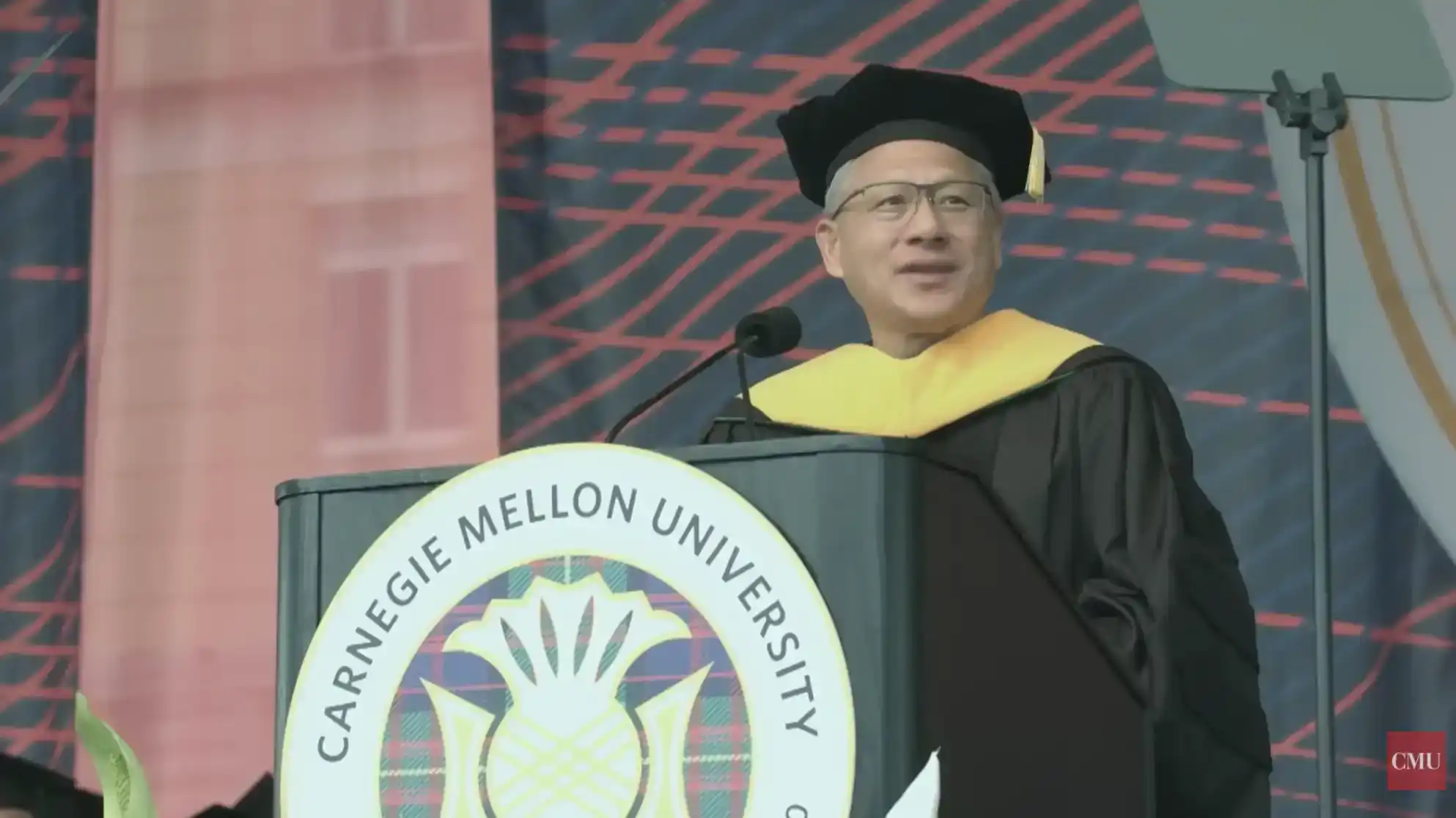
Jensen Huang's CMU Speech: In the AI Era, Don't Just Watch, Build

Jensen Huang, CEO of NVIDIA and a first-generation immigrant, delivered the commencement address to Carnegie Mellon University's class of 2026. He shared his personal journey from a humble background to founding NVIDIA, emphasizing resilience, learning from failure, and the responsibility that comes with leadership. Huang framed the present moment as the dawn of the AI revolution, a shift he believes is more profound than previous computing waves. He described AI as fundamentally resetting computing—moving from human-written software to machines that understand, reason, and use tools. This will create a new industry for generating intelligence and transform every sector. While acknowledging AI's potential to automate tasks and displace some jobs, Huang distinguished between the *tasks* of a job and its core *purpose*. He argued AI will augment human capability, not replace humans. The real risk, he stated, is not AI itself, but people being left behind by those who effectively use AI. He presented AI as a generational opportunity for massive infrastructure investment—in chip factories, data centers, energy grids, and advanced manufacturing—that could re-industrialize nations like the U.S. and bridge the digital divide by making computing and intelligent tools accessible to all. Huang called for a balanced approach: advancing AI safely and responsibly, establishing prudent policies, ensuring broad access, and encouraging universal participation. He urged the graduates not to fear the future but to engage with optimism and ambition, reminding them of CMU's motto, "My heart is in the work." His core message was clear: this is their moment to actively build and shape the AI-powered future, not merely observe it.

marsbitHace 1 hora(s)

Jensen Huang's CMU Speech: In the AI Era, Don't Just Watch, Build

marsbitHace 1 hora(s)

The Era Has Arrived Where Human Writers Must Prove They Are Not Machines

The article describes an era where AI-generated content is flooding the market, forcing human authors to prove they are not machines. It begins with the example of dozens of AI-written, error-ridden biographies of Henry Kissinger appearing on Amazon within hours of his death, a pattern repeated for other deceased celebrities and even living experts who find fraudulent books under their names. This spam content has exploded, with monthly new book releases on platforms like Amazon reaching 300,000 by late 2025. The issue spans genres, from suspiciously high proportions of AI-written teen romance and self-help books to dangerous, AI-generated foraging guides containing lethal advice. The platforms' automated review systems, designed to catch plagiarism and banned words, are ill-equipped to detect AI-generated text that avoids these pitfalls while being nonsensical or fraudulent. The problem has infiltrated traditional publishing. A major publisher, Hachette, had to recall a bestselling horror novel after AI detection tools suggested 78% of its content was machine-generated. An acclaimed European philosophy book was later revealed to be entirely written by AI under a fake author persona. In response, authors are fighting back. At the 2026 London Book Fair, 10,000 writers published a blank book titled "Don't Steal This Book" containing only their signatures—using emptiness as a protest weapon in an age of AI overproduction. Initiatives like the "Human Author Certification" program have emerged, ironically placing the burden on humans to prove their work is not machine-made. The article warns of a vicious cycle: AI-generated low-quality books pollute the data used to train future AI models, leading to "model collapse" and an ever-worsening flood of digital waste, eroding trust in publishing and devaluing human creativity.

marsbitHace 1 hora(s)

The Era Has Arrived Where Human Writers Must Prove They Are Not Machines

marsbitHace 1 hora(s)

Trading

Spot
Futuros
活动图片