Weekly Selection丨Meme Coins Lead the First Wave of the New Year's Market, Venezuela's Bitcoin Holdings Remain a Mystery

marsbitPublicado a 2026-01-10Actualizado a 2026-01-10

Resumen

PANews Weekly Digest: Meme coins like DOGE, SHIB, and PEPE led the first market rally of 2026, signaling a return of risk appetite. Major themes include 2025 reviews and 2026 forecasts, with institutions like Fidelity predicting a crypto "super cycle" and firms like a16z highlighting trends like privacy chains and AI integration. Venezuela’s alleged secret Bitcoin reserves (estimated at 660k BTC) drew attention amid geopolitical shifts. AI dominated CES 2026, while DeFi and NFT markets showed volatile but recovering traction. Regulatory developments, including China’s reinforced crypto oversight and Walmart’s new BTC/ETH trading service, were also highlighted. The week’s content covers macro trends, investment strategies, and emerging opportunities in Web3.

PANews Editor's Note: PANews has selected a week's worth of high-quality content to help everyone catch up over the weekend. Click on the title to read.

2025 Review and 2026 Outlook

Waterdrip Capital: BTC in the Left Hand, AI Computing Power in the Right Hand—The Gold and Oil of the Digital Intelligence Era

Waterdrip Capital predicts that 2026 will be a turning point similar to the eve of the oil industrial revolution. Companies mastering either "productivity" (AI computing power) or "assets" (BTC) will define the wealth landscape of the new era, with cloud service providers at the intersection of these two major consensuses. The era of "computing power as currency" is accelerating.

Blockworks Co-founder's 27 Predictions for 2026: Ethereum Rises, Bitcoin Fades, Solana "Disappears," Crypto Industry Faces Major Reshuffle

Blockworks co-founder Mike Ippolito and Bankless host David Hoffman discussed the current state and future trends of the crypto industry based on Mike's 27 predictions for 2026.

Trend Research: Tech and AI Companies to Accelerate Stablecoin Deployment in 2026, WLFI and USD1 to Become Biggest Beneficiaries

Trend Research predicts that 2026 will be a key year for large-scale institutional adoption of blockchain, with stablecoins as underlying infrastructure experiencing "explosive growth." The report specifically notes that WLFI (World Liberty Financial) and its USD1 stablecoin will be the biggest beneficiaries of this wave.

2025 Blockchain Financing Overview: Where Did Over $20 Billion Flow?

PANews statistics show 839 disclosed financing events in 2025, totaling over $23.7 billion. Although the number of transactions decreased by about 33.6% compared to 2024, the funding amount doubled, indicating a clear market recovery.

Fidelity's 2026 Crypto Market Outlook: We May Be Entering a Super Cycle, Bull Market to Last for Years

Fidelity Investments' 2026 crypto market outlook states that cryptocurrencies are gaining mainstream recognition, and the market may enter a "super cycle" with reduced volatility, potentially lasting for years. Fidelity advises long-term investors to focus on Bitcoin's anti-inflation value but to cautiously observe market cycle patterns in the short term.

Dalio's 2025 Ultimate Reflection: "Monetary Purchasing Power" to Become Top Political Issue in 2026, AI in Early Bubble Stage

Bridgewater founder Ray Dalio systematically reflected on the 2025 market, noting that the core story of the past year was not the seemingly strong U.S. stock market but the drastic changes in monetary value and the global reallocation of assets.

From $270 Billion Peak to Flash Crash, DeFi Enters Deep Waters of Financial Infrastructure

PANews statistics indicate that the DeFi market experienced severe volatility in 2025, with TVL rising from $182.3 billion at the beginning of the year to a historical high of $277.6 billion mid-year. However, affected by the October/November flash crash, it fell back to $189.3 billion by year-end, with only a 3.86% growth for the year. Sectors like staking, lending, and RWA evolved deeply, with Lido's dominance loosening, Aave's internal governance conflict, and Hyperliquid facing challenges from new competitors.

Trillion-Dollar IPO Myth to Unfold in 2026, but "Small Unicorns" Have Already Crashed

The 2025 tech IPO market presented a "split" scenario, with over two-thirds of the 23 listed tech companies falling below their IPO price, a median drop of 9%. For instance, Gemini's stock price plummeted 58%, while Klarna and Figma saw significant market cap shrinkage. In contrast, giants like SpaceX and OpenAI are preparing for trillion-dollar IPOs, attracting capital追捧.

Macro Perspective

Different Judgments for the Same Crime Involving Virtual Currency? This Shanghai No.2 Intermediate Court Seminar Summary Provides the Answer

The Shanghai No.2 Intermediate Court recently held a seminar, forming倾向性 opinions on legal application difficulties in criminal cases involving virtual currency, aiming to unify judgment standards. Among them, "merely holding or trading coins personally is generally not considered illegal business operation."

"Even a Penny Falling from the Sky is His"—Exposing the Crimes and Downfall of Cambodia's "Crown Prince" Chen Zhi

Cambodia's Prince Group boss Chen Zhi was recently arrested and extradited to China for investigation. The article details his background and rise. With Chen Zhi's arrest, his criminal group has finally collapsed.

Trading Moments: Copper and Nickel Soar, Gold Pulls Back, Bitcoin Blocked at $95K May Pull Back Before Rising

On January 7th, gold retreated after returning to $4,500. Nvidia's AI model boosted storage semiconductors, and LME copper futures hit a record high. Citigroup has raised its Q1 target price to $14,000. Bridgewater warned that geopolitical risks are driving capital to non-U.S. markets and physical assets like gold.

A Century of U.S. Stock Market Revelations: Why We Should Chase Beta, Forget Alpha

The article argues that for ordinary investors, overall market performance (Beta) is more important than pursuing excess returns (Alpha). Even with superb investment skills, it is difficult to achieve good returns if the market environment is poor. The article suggests shifting energy to optimizing personal careers, savings rates, health, and family relationships—areas that are more controllable and have higher long-term value—rather than excessively pursuing a few percentage points of excess returns in investment portfolios.

Venezuela's On-Chain Phantom: USDT Becomes Hard Currency, Possibly Secretly Building a Hundred-Billion Dollar Bitcoin "Shadow Reserve"

With Venezuela's sudden regime change, global attention is focused on the country. Besides oil resources, rumors suggest the government has accumulated crypto assets worth $56 to $67 billion, with Bitcoin holdings possibly exceeding 660,000 BTC. However, there is a lack of direct on-chain evidence, and public data only shows holdings of 240 BTC.

A 2026 Survival Guide for "Crypto U.S. Stock Market Players"

Through Q&A with nine researchers, the article reviews the integration trends of U.S. stocks and tokenized/Web3 sectors in 2025 and looks ahead to investment opportunities and strategies for 2026. The core consensus is that the market is shifting from "narrative-driven" to "value return" and "substantive implementation."

AI and Meme

The 25 Craziest Ideas at CES 2026: Barbers, Veterinarians, Masseurs... AI is Taking Their Jobs

At CES 2026, artificial intelligence (AI) is moving massively from the virtual world into physical reality, reshaping daily life, work, and entertainment through various hardware terminals. The exhibition clearly showed four core trends of deep AI and hardware integration: robots and embodied intelligence moving towards practicality, AI hardware "disappearing" into everything, intelligent transportation deepening and landscape reshuffling, and brain-opening products expanding technological boundaries.

He Yi Riding a Horse, Community Creating Coins, Alpha Listing: There's Also "Shandong Studies" in the Crypto Circle

After Binance co-founder He Yi posted a New Year's tweet saying "I'm on a horse coming" while riding a horse, the community quickly issued a同名 Meme coin based on this theme, which was soon listed on Binance Alpha. This event was compared by netizens to "Shandong Studies in the crypto circle."

Dialogue with Gonka AI: Five Giants Monopolize 80% of Computing Power, How Can AI Belong to Everyone?

In an interview with PANews, two co-founders of Gonka AI stated that AI computing power is highly concentrated among giants like AWS and Google Cloud, with 80% of global cloud computing power monopolized by a few companies, which may limit AI innovation. Gonka AI plans to build a decentralized AI computing power network, drawing on Bitcoin's open financial incentive framework to attract more participants to contribute computing resources. Its model has already received $50 million in funding support from Bitcoin mining giant Bitfury.

Behind the 114514 Surge: The Collision of Japanese Meme Culture and the Digital First Year

The Japanese Meme coin narrative experienced a surge and plunge this week. The author believes this surge is closely related to the macro narrative of Japan's 2026 "Digital First Year."

Jensen Huang Announced 8 New Products in 1.5 Hours, Nvidia Bets Heavily on AI Reasoning and Physical AI

At CES 2026, Nvidia CEO Jensen Huang released the new AI supercomputing platform Vera Rubin, including 6 self-developed chips and innovations like NVIDIA DGX SuperPOD.

Unveiling Why the First Wave of the 2026 Market is Meme Coins: The Underlying Logic from Extreme FUD to Risk Return

After the downturn in Q4 2025, the cryptocurrency market showed signs of recovery at the beginning of 2026. Unexpectedly, this round of market movement was not led by Bitcoin or Ethereum but by Meme coins (like DOGE, SHIB, PEPE) leading a strong rebound, driving market risk appetite back.

Focus on Privacy and Prediction Markets

From Zcash to Arcium, 7 High-Potential Privacy Projects

Privacy is transforming from an optional feature to a default system infrastructure. The article introduces seven high-potential privacy projects, including Zcash, Aztec, Railgun, etc.

Digging into 290,000 Market Data Points: Revealing 6 Truths About Polymarket Liquidity

By analyzing historical data from 295,000 prediction markets on Polymarket, PANews revealed six key truths about its liquidity distribution: short-term markets lack liquidity, long-term markets attract large funds, sports markets are polarized, new categories face cold start difficulties, markets are明显分化, and the geopolitical sector is rising.

Explaining Polymarket in One Article: Why MUST YES + NO Equal 1?

The article aims to clarify common misunderstandings about Polymarket's mechanism, emphasize its core design logic, and point out that the "YES+NO<1" strategy promoted by some KOLs is impossible under a shared order book.

a16z's 8 Major Trend Predictions for the Crypto Industry in 2026: Rise of Privacy Chains, Exchange Transformation, etc.

Prominent venture capital firm a16z released eight major trend predictions for the crypto industry in 2026, with core views covering key areas such as exchange transformation, stablecoin innovation, AI agents, and privacy moats.

In-Depth Analysis of 27,000 Operations by Polymarket's Top Ten Whales: The Illusion of "Smart Money" Win Rates and Real Survival Rules

PANews conducted an in-depth analysis of the top ten profitable "whale" accounts on the prediction platform Polymarket in December last year. Many whales displayed misleading historical win rates (e.g., 73%). The article also introduced various profit models.

Seizing Opportunities

It's 2026, Who's Still Playing NFT in the "Good Start" Market?

PANews found that entering 2026, the long-silent NFT market unexpectedly showed short-term recovery signs, with the overall market cap increasing by over $220 million in a week, and some project prices rebounding significantly. The article details the current state of NFT and the types of NFTs receiving attention.

Crypto KOL Dayu's 2026 Investment List: Has Revenue, Coin Has Utility, No Bullshit

Well-known crypto KOL Dayu released his 2026 investment list, with the core view that investors should refuse to buy "shitcoins" without fundamentals or real revenue, promoting healthy industry development through value investment. The article details the coin selection logic and provides the specific sectors and targets he chooses.

After Lighter, These 23 High-Volume Perp DEXs Could Be 2026's Potential "Big Airdrop" Stocks

With Lighter completing its Token Generation Event (TGE) at the end of 2025, market focus shifts to the next batch of potential token issuance projects in the perpetual合约 decentralized exchange (Perp DEX)领域. Based on the past 30 days of trading volume data, the article筛选出 23 Perp DEXs that have not yet issued tokens but have high trading volume and user participation.

Listing 9 Perp DEX Projects Potentially Airdropping in 2026

A list of 9 perpetual合约 decentralized exchange (Perp DEX) projects that may conduct token airdrops in 2026. These projects are all in early stages and have not issued tokens yet.

69 Potential Airdrop Projects for 2026 (Including Ratings, Sectors, Interaction Methods)

This article selects 69 high-potential projects, summarizing them according to five dimensions: project name, website, sector, airdrop method, and rating, covering热门 sectors like DeFi, AI, prediction markets, infrastructure, RWA, SocialFi, etc.

Web3 Things

Sui on the Offensive: Wrestling with Wall Street via ETFs, Ecological Expansion Still Tests Resilience

In early 2026, the SUI token surged 30% in a week. Grayscale and Bitwise have submitted applications for a Spot SUI ETF to the U.S. SEC, marking SUI's entry into the mainstream institutional视野 and potential access to broader compliant funds.

Telegram's "Crypto Accounting": Net Loss Behind Soaring Revenue, and the $450 Million Coin Sale Controversy

According to PANews observation, Telegram recently came under the spotlight again due to financial information流向 investors: the revenue curve is rising, but net profit is turning downward. The key variable is not slowing user growth but TON's price decline穿透 into the income statement through asset-side fluctuations.

The Three Strongest People in Crypto VC History, Making Dragonfly Partners Feel Ashamed

Dragonfly partner Haseeb selected the top three in crypto venture capital history: Paradigm's Dan Robinson ranked third for deeply participating in projects like Uniswap V3; a16z crypto's Chris Dixon ranked second for leading Coinbase and Uniswap financing; Multicoin's Kyle Samani topped the list for investing in L1 project Solana.

Arthur Hayes' Latest Article: After Trump "Colonizes" Venezuela, the Money Printer Will Go Brrr, Last Year's Biggest Loss Was PUMP

Arthur Hayes believes the Trump administration may control Venezuela's oil resources to压低 oil prices, combined with printing money to stimulate the economy, to gain electoral support. He is bullish on the privacy track (e.g., ZEC) and plans to use部分 BTC and ETH to布局 potential tokens for excess returns.

Key News

  • "Strategy Counterparty" Turns Bullish, New Positions Total About $120 Million

  • Changpeng Zhao: Might Name the Chinese Version of His Memoir "Binance Life," Unrelated to Meme Coins

  • Polymarket Denies U.S. Military Invasion of Venezuela, Sparking Strong User Dissatisfaction

  • People's Bank of China: 2026 Will Strengthen Virtual Currency Trading Supervision, Steadily Develop Digital Yuan

  • Walmart Launches Bitcoin and Ethereum Trading Services Through Its OnePay App

  • Tom Lee: Predicts Ethereum's Future Price Will Reach $250,000

  • Ethereum PoS Network Exit Queue ETH Quantity Nearly Zero, Entry Waiting Period Extends to Over 20 Days

  • James Wynn Increases BTC and PEPE Long Positions Again, Floating Profit Over $340,000

  • U.S. Capture of Venezuelan President Did Not Affect Bitcoin Price, but Experts Warn Market May Be Volatile Monday

  • Financial Times: PwC Actively Expanding into Cryptocurrency领域

  • Venezuela Holds 240 Bitcoins, Analysts Estimate Its Bitcoin "Shadow Reserve" May Exceed 600,000

  • Goldman Sachs Report: Recommends Overweighting Chinese Stocks, Predicts 15% to 20% Annual Rise in Chinese Stock Market for 2026 and 2027

  • SpaceX, OpenAI, and Anthropic Plan to Launch IPOs in 2026, Potentially One of the Most Significant Listing Waves in History

Preguntas relacionadas

QWhat is the main driver of the first market rally in 2026 according to the article?

AMeme coins, such as DOGE, SHIB, and PEPE, led the first market rally of 2026, driving a return of risk appetite.

QWhat is the mysterious speculation about Venezuela's cryptocurrency holdings mentioned in the title?

AThere is speculation that the Venezuelan government has secretly accumulated a massive 'shadow reserve' of 660,000 to 670,000 Bitcoins, worth an estimated $56 to $67 billion, though public on-chain data only shows holdings of 240 BTC.

QWhich investment firm predicted that 2026 is a critical year for large-scale institutional adoption of blockchain and a surge in stablecoins?

ATrend Research predicted that 2026 will be a critical year for large-scale institutional adoption of blockchain, with stablecoins experiencing 'explosive growth' as underlying infrastructure.

QWhat major trend did the CES 2026 exhibition showcase regarding Artificial Intelligence (AI)?

ACES 2026 showcased that artificial intelligence is moving from the virtual world into physical reality on a large scale, reshaping daily life, work, and entertainment through various terminals, with trends including practical robotics, AI hardware integration into everything, smart transportation, and boundary-pushing products.

QWhat significant legal development regarding virtual currency in China is reported in the 'Key Information' section?

AThe People's Bank of China announced that it will strengthen the supervision of virtual currency transactions and steadily develop the digital yuan (e-CNY) in 2026.

Lecturas Relacionadas

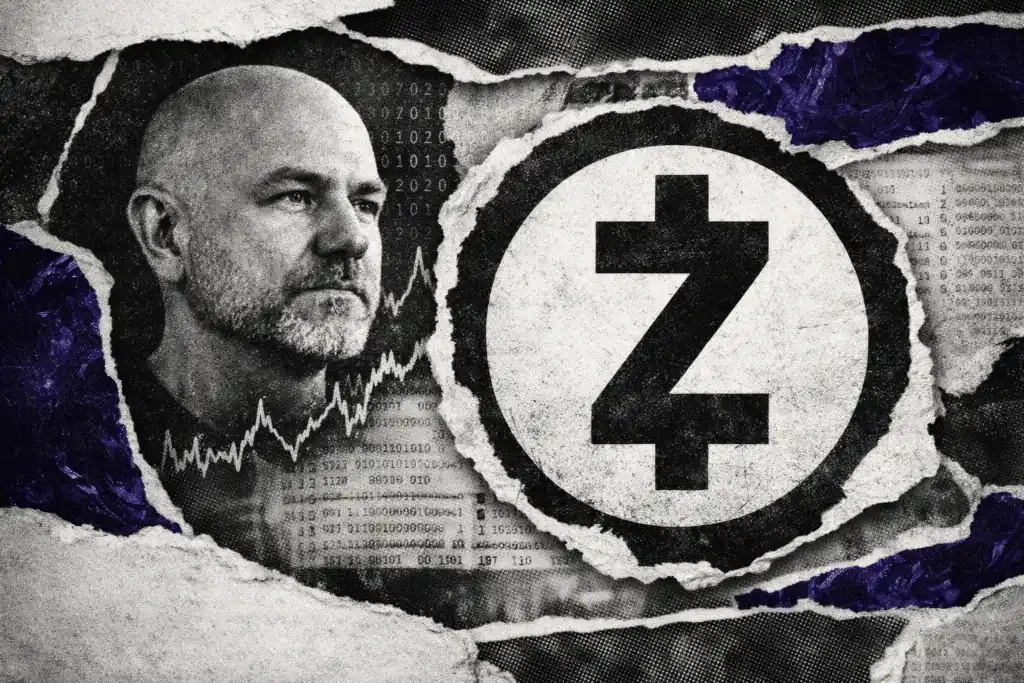
From Survival to Accelerated Growth: The Journey of Zcash's Three-Year Rise as Told by the Founder of ZODL

**From Survival to Accelerated Growth: Zcash Founder Details the 3-Year Rise** Three years ago, Zcash (ZEC) was a struggling pioneer in privacy technology, with a price near $30, low shielded supply (11%), and a community mired in governance disputes. Today, ZEC trades around $600, with over 31% of its supply (~$3B) in user-controlled shielded pools. This transformation resulted from breaking key constraints. First, **governance shackles were removed**. The old model guaranteed funding to two entities (ECC and ZF) regardless of performance, creating a monopoly. In 2024, ECC rejected further direct funding, forcing a change. The NU6 upgrade ended direct funding, allocating 8% to community grants and 12% to a protocol-controlled treasury for retroactive rewards, expiring in 2028 unless renewed by overwhelming consensus. The entities also relinquished their trademark-based veto power, freeing community governance. Second, the **product focus shifted** from pure cryptography to user growth. Previously, engineering excelled at privacy tech but failed to attract users. In early 2024, the team (later ZODL) pivoted to building products users wanted, like the Zodl wallet (default privacy, hardware support, cross-asset swaps). This drove shielded supply to grow over 400% in ZEC terms, with 86.5% of recent transactions being shielded, representing real user adoption. Third, the **narrative evolved** from the limiting "privacy coin" label to "unstoppable private money." This clarified Zcash's value proposition: a Bitcoin-like monetary policy with verifiable private payments via advanced cryptography. This structural narrative—protocol (Zcash), asset (ZEC), gateway (Zodl)—enabled broader exchange listings, institutional interest, and ETF filings. Finally, **organizational constraints were broken**. In early 2026, the ECC team left its non-profit structure after disputes over control, forming Zcash Open Development Lab (ZODL). ZODL raised $25M from top VCs (Paradigm, a16z, etc.), gaining the capital and agility of a startup to scale consumer products. Current metrics show strong momentum: social discussion volume for ZEC surged 15,245% in a year, with 81% positive sentiment. The focus is now on enhancing user experience (Zodl wallet), scalability (Tachyon project targeting Visa-level throughput with 25-second blocks), and post-quantum security (quantum-recoverable wallets coming soon). Zcash is positioned to become faster, more usable, scalable, and quantum-resistant.

marsbitHace 9 min(s)

From Survival to Accelerated Growth: The Journey of Zcash's Three-Year Rise as Told by the Founder of ZODL

marsbitHace 9 min(s)

Five Counterparty Risk Architectures: A Settlement-Layer Methodology for Classifying TradFi Models in Crypto Exchanges

**Summary:** This companion piece reframes the five TradFi-on-crypto exchange architectures, previously classified by "architectural fingerprint," through the lens of counterparty risk. The core question is: whose balance sheet bears the loss first in a stress scenario, and has it historically done so? Each of the five models corresponds to a distinct risk holder with its own documented failure modes. * **Model 1 (Stablecoin-Settled CEX Perpetuals):** Risk is held by the stablecoin issuer (e.g., reserve composition, bank connectivity) and the CEX's own book. History includes Tether's banking disconnections (2017) and reserve misrepresentations (CFTC 2021 Order). * **Model 2 (CFD Brokers):** Risk resides on the broker's balance sheet (B-book model). Regulatory differences (e.g., ESMA's mandatory negative balance protection vs. Mauritius FSC's lack thereof) define loss allocation rules, as seen in the 2015 SNB event (Alpari UK insolvency). * **Model 3 (Off-Chain Custody & Transfer Agent Chain):** Risk lies with the off-chain custodian/platform. User asset recovery depends on Terms of Use and corporate structure, exemplified by the Celsius bankruptcy ruling (2023) where Earn Account assets were deemed property of the estate. * **Model 4 (DEX Perpetual Protocols):** No single balance sheet bears risk. Loss absorption relies on a protocol's insurance fund and Auto-Deleveraging (ADL) mechanism, as demonstrated in the GMX V1 (2022) and dYdX v3 YFI (2023) incidents. * **Model 5 (Regulated CCP - DCM-DCO-FCM):** The most institutionalized model concentrates risk in the Central Counterparty (CCP). However, history shows CCPs can employ non-standard tools under extreme stress, such as mass trade cancellation (LME Nickel, 2022) or enabling negative price settlements (CME WTI, 2020). The report argues that regulatory choices and counterparty risk structures are co-extensive, not in an upstream-downstream relationship. It concludes with five separate observation checklists (not predictions) for monitoring the structural vulnerabilities of each risk model.

marsbitHace 26 min(s)

Five Counterparty Risk Architectures: A Settlement-Layer Methodology for Classifying TradFi Models in Crypto Exchanges

marsbitHace 26 min(s)

Trading

Spot
Futuros

Artículos destacados

Qué es $S$

Entendiendo SPERO: Una Visión General Completa Introducción a SPERO A medida que el panorama de la innovación continúa evolucionando, la aparición de tecnologías web3 y proyectos de criptomonedas juega un papel fundamental en la configuración del futuro digital. Un proyecto que ha atraído la atención en este campo dinámico es SPERO, denotado como SPERO,$$s$. Este artículo tiene como objetivo reunir y presentar información detallada sobre SPERO, para ayudar a entusiastas e inversores a comprender sus fundamentos, objetivos e innovaciones dentro de los dominios web3 y cripto. ¿Qué es SPERO,$$s$? SPERO,$$s$ es un proyecto único dentro del espacio cripto que busca aprovechar los principios de descentralización y tecnología blockchain para crear un ecosistema que promueva la participación, la utilidad y la inclusión financiera. El proyecto está diseñado para facilitar interacciones de igual a igual de nuevas maneras, proporcionando a los usuarios soluciones y servicios financieros innovadores. En su esencia, SPERO,$$s$ tiene como objetivo empoderar a los individuos al proporcionar herramientas y plataformas que mejoren la experiencia del usuario en el espacio de las criptomonedas. Esto incluye habilitar métodos de transacción más flexibles, fomentar iniciativas impulsadas por la comunidad y crear caminos para oportunidades financieras a través de aplicaciones descentralizadas (dApps). La visión subyacente de SPERO,$$s$ gira en torno a la inclusividad, buscando cerrar brechas dentro de las finanzas tradicionales mientras aprovecha los beneficios de la tecnología blockchain. ¿Quién es el Creador de SPERO,$$s$? La identidad del creador de SPERO,$$s$ sigue siendo algo oscura, ya que hay recursos públicos limitados que proporcionan información de fondo detallada sobre su(s) fundador(es). Esta falta de transparencia puede derivarse del compromiso del proyecto con la descentralización, una ética que muchos proyectos web3 comparten, priorizando las contribuciones colectivas sobre el reconocimiento individual. Al centrar las discusiones en torno a la comunidad y sus objetivos colectivos, SPERO,$$s$ encarna la esencia del empoderamiento sin señalar a individuos específicos. Como tal, comprender la ética y la misión de SPERO sigue siendo más importante que identificar a un creador singular. ¿Quiénes son los Inversores de SPERO,$$s$? SPERO,$$s$ cuenta con el apoyo de una diversa gama de inversores que van desde capitalistas de riesgo hasta inversores ángeles dedicados a fomentar la innovación en el sector cripto. El enfoque de estos inversores generalmente se alinea con la misión de SPERO, priorizando proyectos que prometen avances tecnológicos sociales, inclusión financiera y gobernanza descentralizada. Estas fundaciones de inversores suelen estar interesadas en proyectos que no solo ofrecen productos innovadores, sino que también contribuyen positivamente a la comunidad blockchain y sus ecosistemas. El respaldo de estos inversores refuerza a SPERO,$$s$ como un contendiente notable en el dominio de proyectos cripto que evoluciona rápidamente. ¿Cómo Funciona SPERO,$$s$? SPERO,$$s$ emplea un marco multifacético que lo distingue de los proyectos de criptomonedas convencionales. Aquí hay algunas de las características clave que subrayan su singularidad e innovación: Gobernanza Descentralizada: SPERO,$$s$ integra modelos de gobernanza descentralizada, empoderando a los usuarios para participar activamente en los procesos de toma de decisiones sobre el futuro del proyecto. Este enfoque fomenta un sentido de propiedad y responsabilidad entre los miembros de la comunidad. Utilidad del Token: SPERO,$$s$ utiliza su propio token de criptomoneda, diseñado para servir diversas funciones dentro del ecosistema. Estos tokens permiten transacciones, recompensas y la facilitación de servicios ofrecidos en la plataforma, mejorando la participación y la utilidad general. Arquitectura en Capas: La arquitectura técnica de SPERO,$$s$ apoya la modularidad y escalabilidad, permitiendo la integración fluida de características y aplicaciones adicionales a medida que el proyecto evoluciona. Esta adaptabilidad es fundamental para mantener la relevancia en el cambiante paisaje cripto. Participación de la Comunidad: El proyecto enfatiza iniciativas impulsadas por la comunidad, empleando mecanismos que incentivan la colaboración y la retroalimentación. Al nutrir una comunidad sólida, SPERO,$$s$ puede abordar mejor las necesidades de los usuarios y adaptarse a las tendencias del mercado. Enfoque en la Inclusión: Al ofrecer tarifas de transacción bajas e interfaces amigables para el usuario, SPERO,$$s$ busca atraer a una base de usuarios diversa, incluyendo a individuos que anteriormente pueden no haber participado en el espacio cripto. Este compromiso con la inclusión se alinea con su misión general de empoderamiento a través de la accesibilidad. Cronología de SPERO,$$s$ Entender la historia de un proyecto proporciona información crucial sobre su trayectoria de desarrollo y hitos. A continuación se presenta una cronología sugerida que mapea eventos significativos en la evolución de SPERO,$$s$: Fase de Conceptualización e Ideación: Las ideas iniciales que forman la base de SPERO,$$s$ fueron concebidas, alineándose estrechamente con los principios de descentralización y enfoque comunitario dentro de la industria blockchain. Lanzamiento del Whitepaper del Proyecto: Tras la fase conceptual, se lanzó un whitepaper completo que detalla la visión, los objetivos y la infraestructura tecnológica de SPERO,$$s$ para generar interés y retroalimentación de la comunidad. Construcción de Comunidad y Primeras Interacciones: Se realizaron esfuerzos de divulgación activa para construir una comunidad de primeros adoptantes y posibles inversores, facilitando discusiones en torno a los objetivos del proyecto y obteniendo apoyo. Evento de Generación de Tokens: SPERO,$$s$ llevó a cabo un evento de generación de tokens (TGE) para distribuir sus tokens nativos a los primeros seguidores y establecer liquidez inicial dentro del ecosistema. Lanzamiento de la dApp Inicial: La primera aplicación descentralizada (dApp) asociada con SPERO,$$s$ se puso en marcha, permitiendo a los usuarios interactuar con las funcionalidades centrales de la plataforma. Desarrollo Continuo y Alianzas: Actualizaciones y mejoras continuas a las ofertas del proyecto, incluyendo alianzas estratégicas con otros actores en el espacio blockchain, han moldeado a SPERO,$$s$ en un jugador competitivo y en evolución en el mercado cripto. Conclusión SPERO,$$s$ se erige como un testimonio del potencial de web3 y las criptomonedas para revolucionar los sistemas financieros y empoderar a los individuos. Con un compromiso con la gobernanza descentralizada, la participación comunitaria y funcionalidades diseñadas de manera innovadora, allana el camino hacia un paisaje financiero más inclusivo. Como con cualquier inversión en el espacio cripto que evoluciona rápidamente, se anima a los posibles inversores y usuarios a investigar a fondo y participar de manera reflexiva con los desarrollos en curso dentro de SPERO,$$s$. El proyecto muestra el espíritu innovador de la industria cripto, invitando a una mayor exploración de sus innumerables posibilidades. Mientras el viaje de SPERO,$$s$ aún se desarrolla, sus principios fundamentales pueden, de hecho, influir en el futuro de cómo interactuamos con la tecnología, las finanzas y entre nosotros en ecosistemas digitales interconectados.

72 Vistas totalesPublicado en 2024.12.17Actualizado en 2024.12.17

Qué es $S$

Qué es AGENT S

Agent S: El Futuro de la Interacción Autónoma en Web3 Introducción En el paisaje en constante evolución de Web3 y las criptomonedas, las innovaciones están redefiniendo constantemente cómo los individuos interactúan con las plataformas digitales. Uno de estos proyectos pioneros, Agent S, promete revolucionar la interacción humano-computadora a través de su marco agente abierto. Al allanar el camino para interacciones autónomas, Agent S busca simplificar tareas complejas, ofreciendo aplicaciones transformadoras en inteligencia artificial (IA). Esta exploración detallada profundizará en las complejidades del proyecto, sus características únicas y las implicaciones para el dominio de las criptomonedas. ¿Qué es Agent S? Agent S se presenta como un marco agente abierto innovador, diseñado específicamente para abordar tres desafíos fundamentales en la automatización de tareas informáticas: Adquisición de Conocimiento Específico del Dominio: El marco aprende inteligentemente de diversas fuentes de conocimiento externas y experiencias internas. Este enfoque dual le permite construir un rico repositorio de conocimiento específico del dominio, mejorando su rendimiento en la ejecución de tareas. Planificación a Largo Plazo de Tareas: Agent S emplea planificación jerárquica aumentada por la experiencia, un enfoque estratégico que facilita la descomposición y ejecución eficiente de tareas complejas. Esta característica mejora significativamente su capacidad para gestionar múltiples subtareas de manera eficiente y efectiva. Manejo de Interfaces Dinámicas y No Uniformes: El proyecto introduce la Interfaz Agente-Computadora (ACI), una solución innovadora que mejora la interacción entre agentes y usuarios. Utilizando Modelos de Lenguaje Multimodal de Gran Escala (MLLMs), Agent S puede navegar y manipular diversas interfaces gráficas de usuario sin problemas. A través de estas características pioneras, Agent S proporciona un marco robusto que aborda las complejidades involucradas en la automatización de la interacción humana con las máquinas, preparando el terreno para una multitud de aplicaciones en IA y más allá. ¿Quién es el Creador de Agent S? Si bien el concepto de Agent S es fundamentalmente innovador, la información específica sobre su creador sigue siendo elusiva. El creador es actualmente desconocido, lo que resalta ya sea la etapa incipiente del proyecto o la elección estratégica de mantener a los miembros fundadores en el anonimato. Independientemente de la anonimidad, el enfoque sigue siendo en las capacidades y el potencial del marco. ¿Quiénes son los Inversores de Agent S? Dado que Agent S es relativamente nuevo en el ecosistema criptográfico, la información detallada sobre sus inversores y patrocinadores financieros no está documentada explícitamente. La falta de información disponible públicamente sobre las bases de inversión u organizaciones que apoyan el proyecto plantea preguntas sobre su estructura de financiamiento y hoja de ruta de desarrollo. Comprender el respaldo es crucial para evaluar la sostenibilidad del proyecto y su posible impacto en el mercado. ¿Cómo Funciona Agent S? En el núcleo de Agent S se encuentra una tecnología de vanguardia que le permite funcionar de manera efectiva en diversos entornos. Su modelo operativo se basa en varias características clave: Interacción Humano-Computadora Similar a la Humana: El marco ofrece planificación avanzada de IA, esforzándose por hacer que las interacciones con las computadoras sean más intuitivas. Al imitar el comportamiento humano en la ejecución de tareas, promete elevar las experiencias de los usuarios. Memoria Narrativa: Empleada para aprovechar experiencias de alto nivel, Agent S utiliza memoria narrativa para hacer un seguimiento de las historias de tareas, mejorando así sus procesos de toma de decisiones. Memoria Episódica: Esta característica proporciona a los usuarios una guía paso a paso, permitiendo que el marco ofrezca apoyo contextual a medida que se desarrollan las tareas. Soporte para OpenACI: Con la capacidad de ejecutarse localmente, Agent S permite a los usuarios mantener el control sobre sus interacciones y flujos de trabajo, alineándose con la ética descentralizada de Web3. Fácil Integración con APIs Externas: Su versatilidad y compatibilidad con varias plataformas de IA aseguran que Agent S pueda encajar sin problemas en ecosistemas tecnológicos existentes, convirtiéndolo en una opción atractiva para desarrolladores y organizaciones. Estas funcionalidades contribuyen colectivamente a la posición única de Agent S dentro del espacio cripto, ya que automatiza tareas complejas y de múltiples pasos con una intervención humana mínima. A medida que el proyecto evoluciona, sus posibles aplicaciones en Web3 podrían redefinir cómo se desarrollan las interacciones digitales. Cronología de Agent S El desarrollo y los hitos de Agent S pueden encapsularse en una cronología que resalta sus eventos significativos: 27 de septiembre de 2024: El concepto de Agent S fue lanzado en un documento de investigación integral titulado “Un Marco Agente Abierto que Usa Computadoras Como un Humano”, mostrando las bases del proyecto. 10 de octubre de 2024: El documento de investigación fue puesto a disposición del público en arXiv, ofreciendo una exploración profunda del marco y su evaluación de rendimiento basada en el benchmark OSWorld. 12 de octubre de 2024: Se lanzó una presentación en video, proporcionando una visión visual de las capacidades y características de Agent S, involucrando aún más a posibles usuarios e inversores. Estos marcadores en la cronología no solo ilustran el progreso de Agent S, sino que también indican su compromiso con la transparencia y la participación comunitaria. Puntos Clave Sobre Agent S A medida que el marco Agent S continúa evolucionando, varios atributos clave destacan, subrayando su naturaleza innovadora y potencial: Marco Innovador: Diseñado para proporcionar un uso intuitivo de las computadoras similar a la interacción humana, Agent S aporta un enfoque novedoso a la automatización de tareas. Interacción Autónoma: La capacidad de interactuar de manera autónoma con las computadoras a través de GUI significa un salto hacia soluciones informáticas más inteligentes y eficientes. Automatización de Tareas Complejas: Con su metodología robusta, puede automatizar tareas complejas y de múltiples pasos, haciendo que los procesos sean más rápidos y menos propensos a errores. Mejora Continua: Los mecanismos de aprendizaje permiten a Agent S mejorar a partir de experiencias pasadas, mejorando continuamente su rendimiento y eficacia. Versatilidad: Su adaptabilidad en diferentes entornos operativos como OSWorld y WindowsAgentArena asegura que pueda servir a una amplia gama de aplicaciones. A medida que Agent S se posiciona en el paisaje de Web3 y criptomonedas, su potencial para mejorar las capacidades de interacción y automatizar procesos significa un avance significativo en las tecnologías de IA. A través de su marco innovador, Agent S ejemplifica el futuro de las interacciones digitales, prometiendo una experiencia más fluida y eficiente para los usuarios en diversas industrias. Conclusión Agent S representa un audaz avance en la unión de la IA y Web3, con la capacidad de redefinir cómo interactuamos con la tecnología. Aunque aún se encuentra en sus primeras etapas, las posibilidades para su aplicación son vastas y atractivas. A través de su marco integral que aborda desafíos críticos, Agent S busca llevar las interacciones autónomas al primer plano de la experiencia digital. A medida que nos adentramos más en los reinos de las criptomonedas y la descentralización, proyectos como Agent S sin duda desempeñarán un papel crucial en la configuración del futuro de la tecnología y la colaboración humano-computadora.

432 Vistas totalesPublicado en 2025.01.14Actualizado en 2025.01.14

Qué es AGENT S

Cómo comprar S

¡Bienvenido a HTX.com! Hemos hecho que comprar Sonic (S) sea simple y conveniente. Sigue nuestra guía paso a paso para iniciar tu viaje de criptos.Paso 1: crea tu cuenta HTXUtiliza tu correo electrónico o número de teléfono para registrarte y obtener una cuenta gratuita en HTX. Experimenta un proceso de registro sin complicaciones y desbloquea todas las funciones.Obtener mi cuentaPaso 2: ve a Comprar cripto y elige tu método de pagoTarjeta de crédito/débito: usa tu Visa o Mastercard para comprar Sonic (S) al instante.Saldo: utiliza fondos del saldo de tu cuenta HTX para tradear sin problemas.Terceros: hemos agregado métodos de pago populares como Google Pay y Apple Pay para mejorar la comodidad.P2P: tradear directamente con otros usuarios en HTX.Over-the-Counter (OTC): ofrecemos servicios personalizados y tipos de cambio competitivos para los traders.Paso 3: guarda tu Sonic (S)Después de comprar tu Sonic (S), guárdalo en tu cuenta HTX. Alternativamente, puedes enviarlo a otro lugar mediante transferencia blockchain o utilizarlo para tradear otras criptomonedas.Paso 4: tradear Sonic (S)Tradear fácilmente con Sonic (S) en HTX's mercado spot. Simplemente accede a tu cuenta, selecciona tu par de trading, ejecuta tus trades y monitorea en tiempo real. Ofrecemos una experiencia fácil de usar tanto para principiantes como para traders experimentados.

849 Vistas totalesPublicado en 2025.01.15Actualizado en 2025.03.21

Cómo comprar S

Discusiones

Bienvenido a la comunidad de HTX. Aquí puedes mantenerte informado sobre los últimos desarrollos de la plataforma y acceder a análisis profesionales del mercado. A continuación se presentan las opiniones de los usuarios sobre el precio de S (S).

活动图片