Weekly Editor's Picks (0328-0403)

marsbitPublicado a 2026-04-04Actualizado a 2026-04-04

Resumen

Weekly Editor's Picks (0328-0403) provides a curated selection of in-depth analysis across macroeconomics, investment, Web3, AI, and crypto. Key topics include: the global economic recession redefined as a strategic state; Buffett’s cautious outlook and warning on nuclear risk; AI infrastructure investments driving inflation; Bitcoin reaching "escape velocity" as fiat weakens. In Web3 and AI, discussions cover AI agent engineering barriers, practical adoption challenges, and crypto-AI service trends. Prediction markets like Polymarket see low win rates, with AI tools identifying arbitrage. CeFi/DeFi analyses highlight Stripe’s AI payment strategy vs. PayPal’s struggles, and Hyperliquid’s innovative approach to derivatives. Bitcoin mining faces profitability crises, pushing firms toward AI infrastructure. Google’s quantum computing advances urge urgent crypto security upgrades. Also included: regional investor analyses, security incidents, and policy updates.

The information flow is too fast, and in-depth analysis articles are easily drowned out by hot topics. The 'Weekly Editor's Picks' column rescues this judgment-worthy content from the vast sea of information, filtering out the noise for you, leaving behind insights, and bringing inspiration.
Macro Situation

Has a Global Economic Recession Quietly Begun?

The author redefines recession from an 'economic outcome' to a 'strategic state.' It not only compresses growth and employment but also weakens a country's negotiating power, capital attractiveness, and external credibility, thereby losing the initiative in global games. Precisely because of this, governments are using fiscal, diplomatic, and even geopolitical means to replace monetary tools, essentially buying time for the growth slowdown and avoiding being forced to negotiate during a recession.

Under this framework, the market's core is no longer the interest rate path itself, but 'who can break free from constraints, and who remains trapped.'

This difference is first reflected in the foreign exchange and interest rate markets and further transmitted to asset prices and capital flows. When valuations continue to rise amid slowing growth, it may not be due to improved fundamentals but rather policy expectations that 'a recession will not be allowed to happen.'

Buffett's First Interview After Stepping Down: Now is Not the Time to Buy the Dip, Nuclear Weapons Will Be Used Sooner or Later

Sold Apple too early, but not buying now either.

Will not buy the dip in US stocks at this time.

The most dangerous situation is when the person with the nuclear button is about to die or is facing immense disgrace. In such a predicament, no one can predict what decision a person will make. Within the next hundred, maybe two hundred years, nuclear weapons will be used.

$700 Billion Poured into AI, Americans Taste the Bitter Fruit of Inflation First

The more AI investment, the higher the inflation, the further away rate cuts are, the higher the financing costs—but investment is still accelerating.

The arms race among big tech companies can no longer stop. One data center consumes as much electricity as an entire state.

$700 billion is pouring into AI infrastructure. Whether this money is the cause of inflation or the prelude to a productivity revolution depends on a question no one can yet answer: Will the models running in these data centers actually make the economy more efficient?

Conversation with Pantera Founder: Bitcoin Has Reached Escape Velocity, Traditional Assets Are Being Left Behind

It's not that gold hit a new high; it's that fiat currency is hitting a historic low.

The average age of first-time homebuyers in the US has already been delayed from 28 to 40.

We are facing a generational inflection point of monetary and state separation. Stablecoins are highly likely to take half of bank deposits within a decade. Bitcoin has reached escape velocity.

Investment & Entrepreneurship

Interviewing 10 Dubai Workers: Some Were Asked to Sign a "Life and Death Waiver"

On a practical level, Dubai is already in the midst of a battlefield.

Some Web3 workers are fleeing, some are holding fast, and others are signing waivers (company disclaimer) to return to Dubai, hoping to bet on high career returns amidst high risks.

The 've' Token Model 'Ebb Tide': Why Are Three Major Protocols Voluntarily Abandoning Their Former Trump Card?

The reason is not a theoretical error, but a failure in execution: low participation rates, captured governance rights, emissions flowing into unprofitable pools, token prices plummeting while usage grows.

Meanwhile, Curve's veCRV and Aerodrome's ve(3,3) are still healthy. But this model only works where the guided emissions can create real economic demand for liquidity.

Other protocols are choosing revenue-supported buybacks, deflationary supply mechanisms, or liquid governance tokens as alternatives to the ve token model.

Tiger Research: Analysis of the Current Situation of Retail Investors in Nine Major Asian Markets

Tiger Research covers 9 Asian markets with the largest user bases, analyzing barriers to entry for retail investors and exchange coping strategies. Core finding: Structural entry barrier differences exist in markets like South Korea, Japan, and Vietnam, and exchange localization strategy is a key variable for success. Valuable reference for projects looking at Southeast Asia expansion.

Also recommended: Odaily Interview with SharpLink: Ethereum's 'Productive Capitalist'.

Web3 & AI

What Exactly Are AI Agents Doing? Full Analysis of the 500k Line Claude Code Leak

The competitive moat for AI products may not be at the model layer, but at the engineering layer.
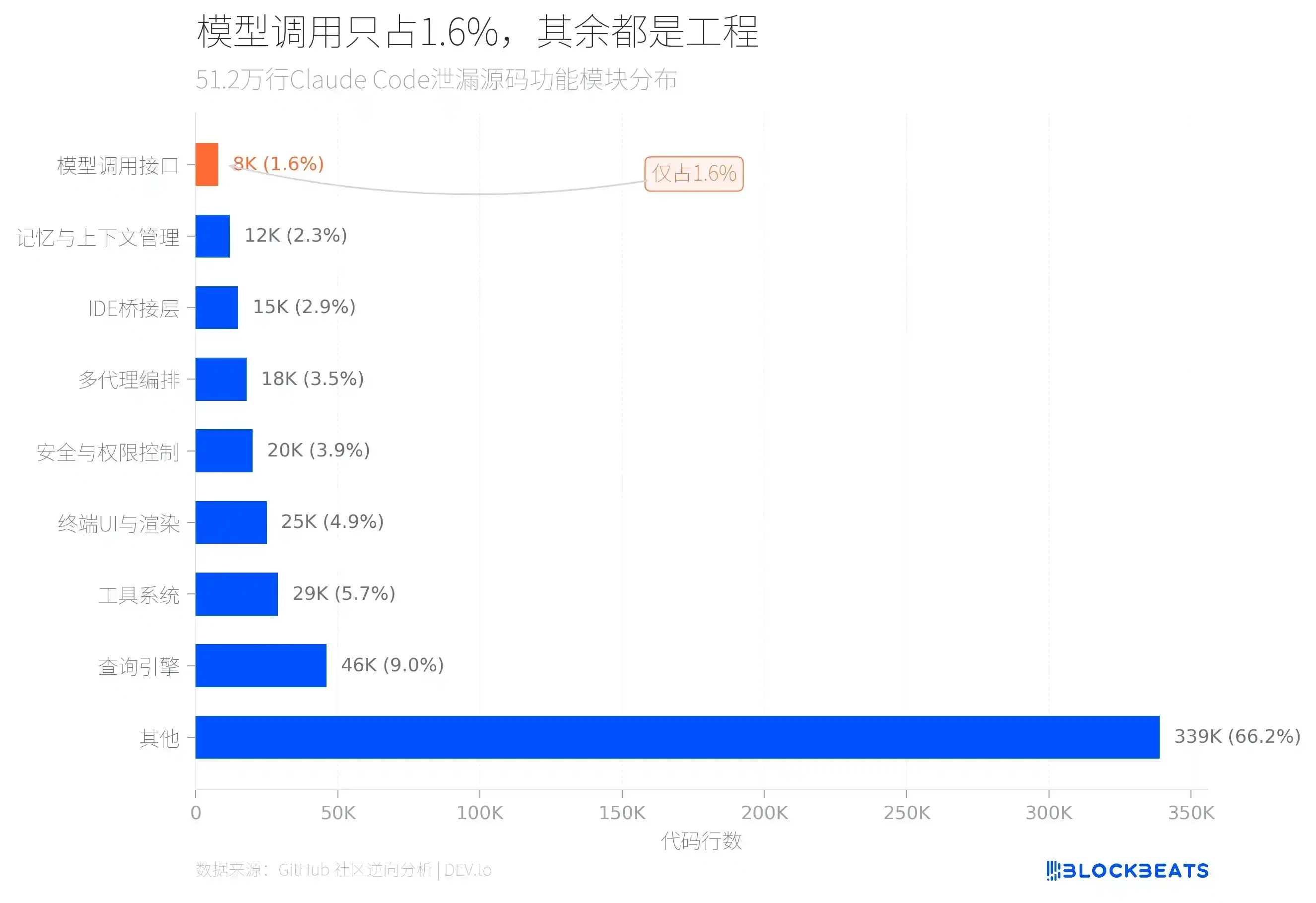
For AI products, model inference costs might not be the most expensive layer; failed cache management is.

Chased AI Tools for a Year, Zero Output: Reflections of a Serial Entrepreneur

Don't mistake 'trying new tools' for 'building something real.' When everyone can use the same models, the only moat is taste and depth, and taste can only be earned through real consequences and sustained focus.

Tiger Research: What AI Services Do Crypto Companies Offer?

Adoption motives vary by细分行业 (sub-sector): exchanges aim to prevent user churn; security companies aim to fill audit blind spots; payment infrastructure targets the emerging agent economy.

The "FOMO" and competitive pressure in the AI field are accelerating its application, far exceeding actual demand. Both real demand and competitive anxiety are at play.

Distinguishing between value-creating adoption and mere label-sticking adoption is the key question.

Prediction Markets

Only 43% Return on $1, Why Are 87% of Polymarket Players Losing Money?

"Longshot bias" is one of the most expensive mistakes in prediction markets. Traders often systematically overestimate low-probability events, paying too high a price for seemingly cheap contracts.

The traders who truly outperform prediction markets in the long run are not necessarily those with the "most accurate judgment," but those who can adjust their judgment the fastest and most reasonably when new evidence appears.

The Bayesian method essentially provides a scale for this "adjustment speed."

Stop Betting on Gut Feeling: AI is 'Picking Up Money' on Polymarket

The article introduces a method to identify arbitrage opportunities on Polymarket and execute them systematically: use Perplexity to complete research, locate the偏差 (deviation) between data and market pricing; use Claude to build trading logic, control risk, and execute automatically; finally, complete the trade and realize profits on Polymarket.

For ordinary participants, a more realistic path is to first find certainty through research, and then use systems to amplify gains.

Also recommended: Polymarket Smart Money Panorama: 26 Long-Term Trackable Addresses (Broken Down by Sector).

CeFi & DeFi

Stripe Up, PayPal Down: The New King of Payments Ascends

Stripe's judgment is straightforward: when AI Agents start making purchasing decisions for humans, whoever masters the payment channel抢先 (seizes first) masters the core lifeline of the AI economy. Stripe's超前 (forward-looking) vision puts it ahead of the entire payments industry.

PayPal, however, is步履蹒跚 (stumbling). PayPal's business model relies on "fund flow handling fees," while the stablecoin business model relies on "earning treasury interest on settled assets." There is a natural conflict between these two logics—every time PayPal promotes a PYUSD stablecoin payment, it is, to some extent, cannibalizing its own traditional fee income. This is a difficult problem to solve within PayPal's existing business framework.

BTC is Dying, Why Did HYPE Defy the Trend and Surge 20%?

The RWA trading market enabled by HIP-3 for Hyperliquid provides new value support.

Detailed Explanation of Hyperliquid HIP-4: Using Prediction Markets and Options Trading to Encroach on Traditional Finance

The market overall is in a downward trend, yet HYPE has shown极强的 (extremely strong) stability. The important reason is undoubtedly Hyperliquid's robust fundamentals, focus on generating revenue, and continuous use of profits to buy back HYPE.

HIP-3 (the perpetual contract market deployed by builders) has already shown a clear pattern: when the infrastructure is permissionless and already market-validated, liquidity tends to aggregate towards stronger teams, regardless of whether they receive additional ecosystem support.

The same logic will apply to HIP-4. HIP-4 focuses on "outcome trading," which will introduce prediction markets and certain types of options to Hyperliquid—these products can provide non-linear income outcomes without liquidation risk.

No protocol in the past was good enough to truly bring sustainable options trading into the crypto world. Hyperliquid has done it, and its approach is different from every other platform. This platform has no investors, is free from any external pressure, and Jeff can freely decide what the company wants to do. In this regard, Hyperliquid is very much like Telegram—it doesn't need to spend much money on marketing; the key is the belief itself. If the product is good enough, people will eventually come to use it.

Hyperliquid has a chance to capture the entire cryptocurrency options market.

Winners will build products truly面向 (oriented towards) the real world, embedding cryptocurrency as an underlying implementation detail; losers will continue to cling to the old narrative of "crypto for crypto's sake" and expect the world to adapt to them instead.

Airdrop Opportunities and Interaction Guides

Popular Interaction Collection | New Abstract Badge Task; Noise Beta Version Launched (April 2nd)

Meme

Post-00s Earning A7 Monthly, Trapped Between Three Screens

Odaily interviewed Meme P youngsters who still achieved great results in 2026, and former Meme diamond hands, to understand their ways of making money and their work lives.

Bitcoin

Losing $19K per Mined Coin, Bitcoin Miners Collectively Defect to AI

The latest mining report from CoinShares shows that the weighted average cost for listed mining companies to mine one Bitcoin has risen to about $80,000, while the current BTC price is $68K-70K—a loss of $19K per coin mined.

The Bitcoin mining industry is undergoing its most fundamental transformation since its inception. The clearest signal is not hash rate or difficulty adjustment, but the balance sheet, and the way out is a comprehensive shift towards AI infrastructure.

When Bitcoin Miners Fly into Space

For currently operating Bitcoin mining companies, space mining does not pose an immediate competitive threat in the short term, but a large number of startups continue to try. This also shows that the significant cost reduction space it represents still holds great attraction and imagination for the industry. This also侧面反映出 (reflects from the side) that the entire industry is under structural cost pressure.

The logic of space mining is an ultimate extrapolation of the above trend: if cheap electricity on the ground will eventually narrow due to demand competition, then go to the place with the most abundant energy, which is the universe.

Security

Major Google Quantum Computing Breakthrough, The Crypto World Needs to 'Change Locks' Early

The Google quantum research team (Google Quantum AI), led by world-renowned quantum circuit expert Craig Gidney and others, recently made two moves.

First, on March 25th, Google formally proposed its post-quantum cryptography (PQC) migration timeline, targeting 2029. Second, on March 31st, Google Quantum AI specifically released a research report aimed at the cryptocurrency industry,直言 (stating bluntly) that according to the latest research, the resources required for future quantum computers to crack the elliptic curve cryptography protecting cryptocurrencies are far less than previously thought.

The industry's past judgment about the timeline needs correction. Google has set its own migration target for 2029, and Google Quantum AI also mentioned in the article that it is working with institutions like Coinbase, the Stanford Blockchain Research Institute, and the Ethereum Foundation to responsibly advance according to the 2029 timeline plan.

For every crypto project, this意味着 (means) a new security watershed. Those who can admit the problem earlier, promote upgrades, and complete the "lock change" will have a better chance of preserving their security boundaries in the next era.

Also recommended: Odaily Interview with Yu Xian: How Does the Leak of Anthropic's Nuclear-Level New Model Affect Crypto Security Offense and Defense?.

Weekly Hotspot Recap

Policy & Macro Markets

US lawmakers' offices plan to release a stablecoin收益 (income/profit)条款 (clause) draft next week; industry preparing counter-proposal;

CFTC clarifies 5 key enforcement priorities: "Crack down" on prediction market insider trading and market manipulation;

Views & Voices

Trump: Negotiations have made significant progress; Trump threatens to attack Iranian energy facilities, oil prices continue to rise, US stock index futures fall; Iranian President: We are prepared to end the war, but want guarantees; Iran will impose tolls on ships passing through the Strait of Hormuz;

Trump: Bitcoin has an important status, the US needs to maintain leadership;

10x: Bitcoin's "safe-haven myth" fails under US-Iran conflict, ETF funds reshape pricing logic;

Trader Eugene: Has stopped loss and exited, plans to reduce trading frequency;

Institutions, Big Companies & Top Projects

SpaceX有望 (is expected to) list in June, IPO target valuation exceeds $2 trillion, plans to raise up to $75 billion; OpenAI completes $122 billion financing, valuation reaches $852 billion;

Bitfarms plans to liquidate all Bitcoin on its balance sheet, fully转向 (transition to) AI infrastructure;

Aster adjusts token economic structure, significantly reduces monthly unlock scale;

edgeX airdrop Waterloo (failure);

MagicEden: Wallet will be delisted tomorrow and enter export-only mode;

Dmail Network will gradually cease operations starting May 15th, users need to export emails before then;

Security

Drift Protocol attacked, losses至少 (at least) $200 million (Detailed explanation).

Attached is the portal to the "Weekly Editor's Picks" series. See you next issue~

Preguntas relacionadas

QAccording to the article, what is the new definition of a global economic recession and how does it affect a country's position in global negotiations?

AThe article redefines a recession from an 'economic outcome' to a 'strategic state' that not only compresses growth and employment but also weakens a country's negotiating power, capital attractiveness, and external credibility, causing it to lose initiative in global games.

QWhat is Warren Buffett's view on the current market and nuclear weapons as mentioned in the editor's picks?

AWarren Buffett stated it is not the time to buy the dip in the U.S. stock market. He also expressed that the most dangerous situation is when the person with the nuclear button is dying or facing immense disgrace, and he believes nuclear weapons will be used within the next one or two hundred years.

QWhat paradoxical relationship does the article highlight between AI investment and inflation in the U.S.?

AThe article points out a paradox where increased AI investment leads to higher inflation, which pushes interest rate cuts further away and increases financing costs, yet the investments continue to accelerate.

QWhat key security threat to the cryptocurrency world does Google Quantum AI's recent research highlight, and what is their proposed timeline for action?

AGoogle Quantum AI's research indicates that future quantum computers could crack the elliptic curve cryptography protecting cryptocurrencies with far fewer resources than previously thought. They have set a migration target of 2029 to post-quantum cryptography (PQC) and are collaborating with industry players to responsibly advance this timeline.

QAccording to the analysis of Polymarket, why are 87% of players losing money, and what is the key trait of successful traders?

AThe 'long-shot bias' is identified as the most expensive mistake, where traders systematically overestimate low-probability events and overpay for seemingly cheap contracts. Successful traders are not necessarily the most accurate in judgment but are those who can adjust their judgments the fastest and most rationally when new evidence appears, essentially employing a Bayesian method.

Lecturas Relacionadas

First Batch of Keynote Speakers and Partners Announced! Web2+3 Summit: Defining the Next Generation of Digital Economy

Web2+3 Summit: Defining the Next Generation of Digital Economy The 6th BEYOND International Technology Innovation Expo (BEYOND Expo 2026), Asia's largest tech and ecosystem exhibition, is launching a dedicated Web2+3 stage for the first time. Co-hosted by BEYOND Expo and ChainNeXT Group, the Web3 Summit will take place from May 28–30, 2026. Against the backdrop of accelerating global tech integration, the boundaries between Web2 and Web3 are rapidly blurring. With clearer global regulations for blockchain-driven internet (Web3) and the special issuance of a Hong Kong dollar stable币 license by the Hong Kong SAR government on April 10, 2026, Web3's decentralized principles are quickly merging with traditional industries (Web2) such as e-commerce, finance, and artificial intelligence. Focused on blockchain-driven digital economy elements, the summit will center on three core principles—implementability, commercial viability, and compliance. It will bring together top Web3 experts to discuss key integration areas like stablecoin payment finance (PayFi), real-world asset tokenization (RWA), and decentralized AI (DeAI), unveiling new opportunities for industrial innovation. The first wave of confirmed speakers includes Jack Kong (Director of Hong Kong Cyberport, Chairman of Nano Labs), Yat Siu (Chairman of Animoca Brands), Michael Wu (Co-founder & CEO of Amber Group), Michael Heinrich (Co-founder & CEO of 0G), and Art Abal (Co-founder of Vana). More Web3 ecosystem pioneers, AI, and fintech experts will be announced soon. Core forum topics include: - Web2+DeAI: New AI Paradigms Driven by Decentralized Infrastructure - Web2+RWA: Real-World Asset Tokenization and Global Liquidity - Web2+PayFi: Cross-Border Payments and Financial Innovation Powered by Crypto Infrastructure - Web2+3 AI: Autonomous Agents and the Crypto Economy - Web2+3 Wealth: On-Chain and Off-Chain Integrated Investment Ecosystems - Web2+3 Commerce: A New Landscape for Global Trade Driven by Stablecoins Additional agenda details will be released in the near future.

marsbitHace 1 hora(s)

First Batch of Keynote Speakers and Partners Announced! Web2+3 Summit: Defining the Next Generation of Digital Economy

marsbitHace 1 hora(s)

Trading

Spot
Futuros

Artículos destacados

Qué es $S$

Entendiendo SPERO: Una Visión General Completa Introducción a SPERO A medida que el panorama de la innovación continúa evolucionando, la aparición de tecnologías web3 y proyectos de criptomonedas juega un papel fundamental en la configuración del futuro digital. Un proyecto que ha atraído la atención en este campo dinámico es SPERO, denotado como SPERO,$$s$. Este artículo tiene como objetivo reunir y presentar información detallada sobre SPERO, para ayudar a entusiastas e inversores a comprender sus fundamentos, objetivos e innovaciones dentro de los dominios web3 y cripto. ¿Qué es SPERO,$$s$? SPERO,$$s$ es un proyecto único dentro del espacio cripto que busca aprovechar los principios de descentralización y tecnología blockchain para crear un ecosistema que promueva la participación, la utilidad y la inclusión financiera. El proyecto está diseñado para facilitar interacciones de igual a igual de nuevas maneras, proporcionando a los usuarios soluciones y servicios financieros innovadores. En su esencia, SPERO,$$s$ tiene como objetivo empoderar a los individuos al proporcionar herramientas y plataformas que mejoren la experiencia del usuario en el espacio de las criptomonedas. Esto incluye habilitar métodos de transacción más flexibles, fomentar iniciativas impulsadas por la comunidad y crear caminos para oportunidades financieras a través de aplicaciones descentralizadas (dApps). La visión subyacente de SPERO,$$s$ gira en torno a la inclusividad, buscando cerrar brechas dentro de las finanzas tradicionales mientras aprovecha los beneficios de la tecnología blockchain. ¿Quién es el Creador de SPERO,$$s$? La identidad del creador de SPERO,$$s$ sigue siendo algo oscura, ya que hay recursos públicos limitados que proporcionan información de fondo detallada sobre su(s) fundador(es). Esta falta de transparencia puede derivarse del compromiso del proyecto con la descentralización, una ética que muchos proyectos web3 comparten, priorizando las contribuciones colectivas sobre el reconocimiento individual. Al centrar las discusiones en torno a la comunidad y sus objetivos colectivos, SPERO,$$s$ encarna la esencia del empoderamiento sin señalar a individuos específicos. Como tal, comprender la ética y la misión de SPERO sigue siendo más importante que identificar a un creador singular. ¿Quiénes son los Inversores de SPERO,$$s$? SPERO,$$s$ cuenta con el apoyo de una diversa gama de inversores que van desde capitalistas de riesgo hasta inversores ángeles dedicados a fomentar la innovación en el sector cripto. El enfoque de estos inversores generalmente se alinea con la misión de SPERO, priorizando proyectos que prometen avances tecnológicos sociales, inclusión financiera y gobernanza descentralizada. Estas fundaciones de inversores suelen estar interesadas en proyectos que no solo ofrecen productos innovadores, sino que también contribuyen positivamente a la comunidad blockchain y sus ecosistemas. El respaldo de estos inversores refuerza a SPERO,$$s$ como un contendiente notable en el dominio de proyectos cripto que evoluciona rápidamente. ¿Cómo Funciona SPERO,$$s$? SPERO,$$s$ emplea un marco multifacético que lo distingue de los proyectos de criptomonedas convencionales. Aquí hay algunas de las características clave que subrayan su singularidad e innovación: Gobernanza Descentralizada: SPERO,$$s$ integra modelos de gobernanza descentralizada, empoderando a los usuarios para participar activamente en los procesos de toma de decisiones sobre el futuro del proyecto. Este enfoque fomenta un sentido de propiedad y responsabilidad entre los miembros de la comunidad. Utilidad del Token: SPERO,$$s$ utiliza su propio token de criptomoneda, diseñado para servir diversas funciones dentro del ecosistema. Estos tokens permiten transacciones, recompensas y la facilitación de servicios ofrecidos en la plataforma, mejorando la participación y la utilidad general. Arquitectura en Capas: La arquitectura técnica de SPERO,$$s$ apoya la modularidad y escalabilidad, permitiendo la integración fluida de características y aplicaciones adicionales a medida que el proyecto evoluciona. Esta adaptabilidad es fundamental para mantener la relevancia en el cambiante paisaje cripto. Participación de la Comunidad: El proyecto enfatiza iniciativas impulsadas por la comunidad, empleando mecanismos que incentivan la colaboración y la retroalimentación. Al nutrir una comunidad sólida, SPERO,$$s$ puede abordar mejor las necesidades de los usuarios y adaptarse a las tendencias del mercado. Enfoque en la Inclusión: Al ofrecer tarifas de transacción bajas e interfaces amigables para el usuario, SPERO,$$s$ busca atraer a una base de usuarios diversa, incluyendo a individuos que anteriormente pueden no haber participado en el espacio cripto. Este compromiso con la inclusión se alinea con su misión general de empoderamiento a través de la accesibilidad. Cronología de SPERO,$$s$ Entender la historia de un proyecto proporciona información crucial sobre su trayectoria de desarrollo y hitos. A continuación se presenta una cronología sugerida que mapea eventos significativos en la evolución de SPERO,$$s$: Fase de Conceptualización e Ideación: Las ideas iniciales que forman la base de SPERO,$$s$ fueron concebidas, alineándose estrechamente con los principios de descentralización y enfoque comunitario dentro de la industria blockchain. Lanzamiento del Whitepaper del Proyecto: Tras la fase conceptual, se lanzó un whitepaper completo que detalla la visión, los objetivos y la infraestructura tecnológica de SPERO,$$s$ para generar interés y retroalimentación de la comunidad. Construcción de Comunidad y Primeras Interacciones: Se realizaron esfuerzos de divulgación activa para construir una comunidad de primeros adoptantes y posibles inversores, facilitando discusiones en torno a los objetivos del proyecto y obteniendo apoyo. Evento de Generación de Tokens: SPERO,$$s$ llevó a cabo un evento de generación de tokens (TGE) para distribuir sus tokens nativos a los primeros seguidores y establecer liquidez inicial dentro del ecosistema. Lanzamiento de la dApp Inicial: La primera aplicación descentralizada (dApp) asociada con SPERO,$$s$ se puso en marcha, permitiendo a los usuarios interactuar con las funcionalidades centrales de la plataforma. Desarrollo Continuo y Alianzas: Actualizaciones y mejoras continuas a las ofertas del proyecto, incluyendo alianzas estratégicas con otros actores en el espacio blockchain, han moldeado a SPERO,$$s$ en un jugador competitivo y en evolución en el mercado cripto. Conclusión SPERO,$$s$ se erige como un testimonio del potencial de web3 y las criptomonedas para revolucionar los sistemas financieros y empoderar a los individuos. Con un compromiso con la gobernanza descentralizada, la participación comunitaria y funcionalidades diseñadas de manera innovadora, allana el camino hacia un paisaje financiero más inclusivo. Como con cualquier inversión en el espacio cripto que evoluciona rápidamente, se anima a los posibles inversores y usuarios a investigar a fondo y participar de manera reflexiva con los desarrollos en curso dentro de SPERO,$$s$. El proyecto muestra el espíritu innovador de la industria cripto, invitando a una mayor exploración de sus innumerables posibilidades. Mientras el viaje de SPERO,$$s$ aún se desarrolla, sus principios fundamentales pueden, de hecho, influir en el futuro de cómo interactuamos con la tecnología, las finanzas y entre nosotros en ecosistemas digitales interconectados.

72 Vistas totalesPublicado en 2024.12.17Actualizado en 2024.12.17

Qué es $S$

Qué es AGENT S

Agent S: El Futuro de la Interacción Autónoma en Web3 Introducción En el paisaje en constante evolución de Web3 y las criptomonedas, las innovaciones están redefiniendo constantemente cómo los individuos interactúan con las plataformas digitales. Uno de estos proyectos pioneros, Agent S, promete revolucionar la interacción humano-computadora a través de su marco agente abierto. Al allanar el camino para interacciones autónomas, Agent S busca simplificar tareas complejas, ofreciendo aplicaciones transformadoras en inteligencia artificial (IA). Esta exploración detallada profundizará en las complejidades del proyecto, sus características únicas y las implicaciones para el dominio de las criptomonedas. ¿Qué es Agent S? Agent S se presenta como un marco agente abierto innovador, diseñado específicamente para abordar tres desafíos fundamentales en la automatización de tareas informáticas: Adquisición de Conocimiento Específico del Dominio: El marco aprende inteligentemente de diversas fuentes de conocimiento externas y experiencias internas. Este enfoque dual le permite construir un rico repositorio de conocimiento específico del dominio, mejorando su rendimiento en la ejecución de tareas. Planificación a Largo Plazo de Tareas: Agent S emplea planificación jerárquica aumentada por la experiencia, un enfoque estratégico que facilita la descomposición y ejecución eficiente de tareas complejas. Esta característica mejora significativamente su capacidad para gestionar múltiples subtareas de manera eficiente y efectiva. Manejo de Interfaces Dinámicas y No Uniformes: El proyecto introduce la Interfaz Agente-Computadora (ACI), una solución innovadora que mejora la interacción entre agentes y usuarios. Utilizando Modelos de Lenguaje Multimodal de Gran Escala (MLLMs), Agent S puede navegar y manipular diversas interfaces gráficas de usuario sin problemas. A través de estas características pioneras, Agent S proporciona un marco robusto que aborda las complejidades involucradas en la automatización de la interacción humana con las máquinas, preparando el terreno para una multitud de aplicaciones en IA y más allá. ¿Quién es el Creador de Agent S? Si bien el concepto de Agent S es fundamentalmente innovador, la información específica sobre su creador sigue siendo elusiva. El creador es actualmente desconocido, lo que resalta ya sea la etapa incipiente del proyecto o la elección estratégica de mantener a los miembros fundadores en el anonimato. Independientemente de la anonimidad, el enfoque sigue siendo en las capacidades y el potencial del marco. ¿Quiénes son los Inversores de Agent S? Dado que Agent S es relativamente nuevo en el ecosistema criptográfico, la información detallada sobre sus inversores y patrocinadores financieros no está documentada explícitamente. La falta de información disponible públicamente sobre las bases de inversión u organizaciones que apoyan el proyecto plantea preguntas sobre su estructura de financiamiento y hoja de ruta de desarrollo. Comprender el respaldo es crucial para evaluar la sostenibilidad del proyecto y su posible impacto en el mercado. ¿Cómo Funciona Agent S? En el núcleo de Agent S se encuentra una tecnología de vanguardia que le permite funcionar de manera efectiva en diversos entornos. Su modelo operativo se basa en varias características clave: Interacción Humano-Computadora Similar a la Humana: El marco ofrece planificación avanzada de IA, esforzándose por hacer que las interacciones con las computadoras sean más intuitivas. Al imitar el comportamiento humano en la ejecución de tareas, promete elevar las experiencias de los usuarios. Memoria Narrativa: Empleada para aprovechar experiencias de alto nivel, Agent S utiliza memoria narrativa para hacer un seguimiento de las historias de tareas, mejorando así sus procesos de toma de decisiones. Memoria Episódica: Esta característica proporciona a los usuarios una guía paso a paso, permitiendo que el marco ofrezca apoyo contextual a medida que se desarrollan las tareas. Soporte para OpenACI: Con la capacidad de ejecutarse localmente, Agent S permite a los usuarios mantener el control sobre sus interacciones y flujos de trabajo, alineándose con la ética descentralizada de Web3. Fácil Integración con APIs Externas: Su versatilidad y compatibilidad con varias plataformas de IA aseguran que Agent S pueda encajar sin problemas en ecosistemas tecnológicos existentes, convirtiéndolo en una opción atractiva para desarrolladores y organizaciones. Estas funcionalidades contribuyen colectivamente a la posición única de Agent S dentro del espacio cripto, ya que automatiza tareas complejas y de múltiples pasos con una intervención humana mínima. A medida que el proyecto evoluciona, sus posibles aplicaciones en Web3 podrían redefinir cómo se desarrollan las interacciones digitales. Cronología de Agent S El desarrollo y los hitos de Agent S pueden encapsularse en una cronología que resalta sus eventos significativos: 27 de septiembre de 2024: El concepto de Agent S fue lanzado en un documento de investigación integral titulado “Un Marco Agente Abierto que Usa Computadoras Como un Humano”, mostrando las bases del proyecto. 10 de octubre de 2024: El documento de investigación fue puesto a disposición del público en arXiv, ofreciendo una exploración profunda del marco y su evaluación de rendimiento basada en el benchmark OSWorld. 12 de octubre de 2024: Se lanzó una presentación en video, proporcionando una visión visual de las capacidades y características de Agent S, involucrando aún más a posibles usuarios e inversores. Estos marcadores en la cronología no solo ilustran el progreso de Agent S, sino que también indican su compromiso con la transparencia y la participación comunitaria. Puntos Clave Sobre Agent S A medida que el marco Agent S continúa evolucionando, varios atributos clave destacan, subrayando su naturaleza innovadora y potencial: Marco Innovador: Diseñado para proporcionar un uso intuitivo de las computadoras similar a la interacción humana, Agent S aporta un enfoque novedoso a la automatización de tareas. Interacción Autónoma: La capacidad de interactuar de manera autónoma con las computadoras a través de GUI significa un salto hacia soluciones informáticas más inteligentes y eficientes. Automatización de Tareas Complejas: Con su metodología robusta, puede automatizar tareas complejas y de múltiples pasos, haciendo que los procesos sean más rápidos y menos propensos a errores. Mejora Continua: Los mecanismos de aprendizaje permiten a Agent S mejorar a partir de experiencias pasadas, mejorando continuamente su rendimiento y eficacia. Versatilidad: Su adaptabilidad en diferentes entornos operativos como OSWorld y WindowsAgentArena asegura que pueda servir a una amplia gama de aplicaciones. A medida que Agent S se posiciona en el paisaje de Web3 y criptomonedas, su potencial para mejorar las capacidades de interacción y automatizar procesos significa un avance significativo en las tecnologías de IA. A través de su marco innovador, Agent S ejemplifica el futuro de las interacciones digitales, prometiendo una experiencia más fluida y eficiente para los usuarios en diversas industrias. Conclusión Agent S representa un audaz avance en la unión de la IA y Web3, con la capacidad de redefinir cómo interactuamos con la tecnología. Aunque aún se encuentra en sus primeras etapas, las posibilidades para su aplicación son vastas y atractivas. A través de su marco integral que aborda desafíos críticos, Agent S busca llevar las interacciones autónomas al primer plano de la experiencia digital. A medida que nos adentramos más en los reinos de las criptomonedas y la descentralización, proyectos como Agent S sin duda desempeñarán un papel crucial en la configuración del futuro de la tecnología y la colaboración humano-computadora.

328 Vistas totalesPublicado en 2025.01.14Actualizado en 2025.01.14

Qué es AGENT S

Cómo comprar S

¡Bienvenido a HTX.com! Hemos hecho que comprar Sonic (S) sea simple y conveniente. Sigue nuestra guía paso a paso para iniciar tu viaje de criptos.Paso 1: crea tu cuenta HTXUtiliza tu correo electrónico o número de teléfono para registrarte y obtener una cuenta gratuita en HTX. Experimenta un proceso de registro sin complicaciones y desbloquea todas las funciones.Obtener mi cuentaPaso 2: ve a Comprar cripto y elige tu método de pagoTarjeta de crédito/débito: usa tu Visa o Mastercard para comprar Sonic (S) al instante.Saldo: utiliza fondos del saldo de tu cuenta HTX para tradear sin problemas.Terceros: hemos agregado métodos de pago populares como Google Pay y Apple Pay para mejorar la comodidad.P2P: tradear directamente con otros usuarios en HTX.Over-the-Counter (OTC): ofrecemos servicios personalizados y tipos de cambio competitivos para los traders.Paso 3: guarda tu Sonic (S)Después de comprar tu Sonic (S), guárdalo en tu cuenta HTX. Alternativamente, puedes enviarlo a otro lugar mediante transferencia blockchain o utilizarlo para tradear otras criptomonedas.Paso 4: tradear Sonic (S)Tradear fácilmente con Sonic (S) en HTX's mercado spot. Simplemente accede a tu cuenta, selecciona tu par de trading, ejecuta tus trades y monitorea en tiempo real. Ofrecemos una experiencia fácil de usar tanto para principiantes como para traders experimentados.

675 Vistas totalesPublicado en 2025.01.15Actualizado en 2025.03.21

Cómo comprar S

Discusiones

Bienvenido a la comunidad de HTX. Aquí puedes mantenerte informado sobre los últimos desarrollos de la plataforma y acceder a análisis profesionales del mercado. A continuación se presentan las opiniones de los usuarios sobre el precio de S (S).

活动图片














