Wearing Slippers, Drinking Hot Water, Practicing Baduanjin: This Generation of Foreigners Collectively 'Diagnosed' as Chinese

比推Publicado a 2026-03-20Actualizado a 2026-03-20

Resumen

An article from The New York Times Chinese website explores the viral TikTok trend where Western users humorously "diagnose" themselves as Chinese by adopting certain lifestyle habits. These include wearing slippers indoors, practicing the exercise Ba Duan Jin, using pillow covers, drinking hot water (often with apples, red dates, or goji berries), and embracing aunty-style floral cotton jackets. What began as a joke evolved into a popular meme, with users enthusiastically sharing their "very Chinese moments" and exploring details like whether to peel apples or switch to pears. While some Chinese-American influencers act as cultural arbiters, promoting practices like hotpot dinners or traditional medicine, others criticize the trend for oversimplifying and fetishizing Chinese culture. The phrase "diagnosed as Chinese" is particularly contentious, evoking racist stereotypes heightened during the COVID-19 pandemic. Despite this, the trend reflects a surprising shift towards admiration, with users praising China’s high-speed rail, electric vehicles, and affordable healthcare. The article notes that this fascination coexists with political tensions, such as the potential TikTok ban in the U.S., which drove users to Chinese app Xiaohongshu. Ultimately, the trend highlights both a romanticized vision of Chinese life and the complex dynamics of cultural exchange on social media.

Source: The New York Times Chinese Website

Original Title: TikTok Trend and Western Youth's Fantasy of 'Chinese-Style Life'


If you are reading this article, then you are Chinese. Or at least, that's what one type of online content claims, offering various guides for newcomers:

You should wear slippers at home, practice Baduanjin; have a pillow towel on your pillow when sleeping; drink only hot water, preferably with apples, red dates, and goji berries soaked in it. Since this idea became popular last year, many Westerners have declared that they are entering a "very Chinese moment" in their lives and have enthusiastically shared their newfound Chinese enthusiasm on social media. They are not only curious but have also started delving into various details: for example, should apples be peeled? Or even switched to pears?
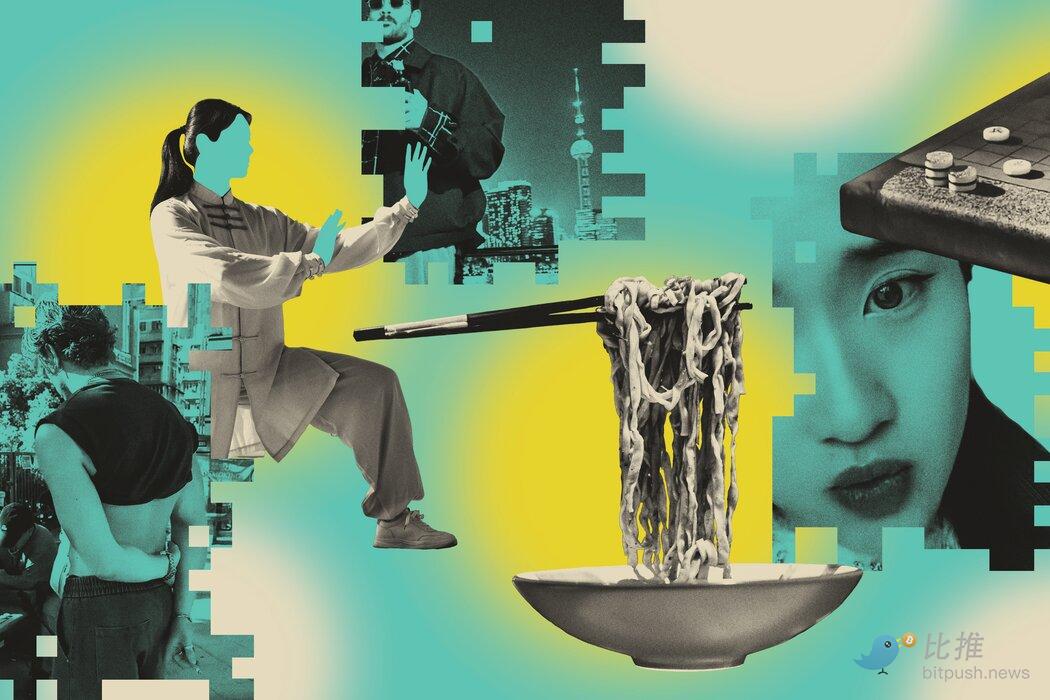
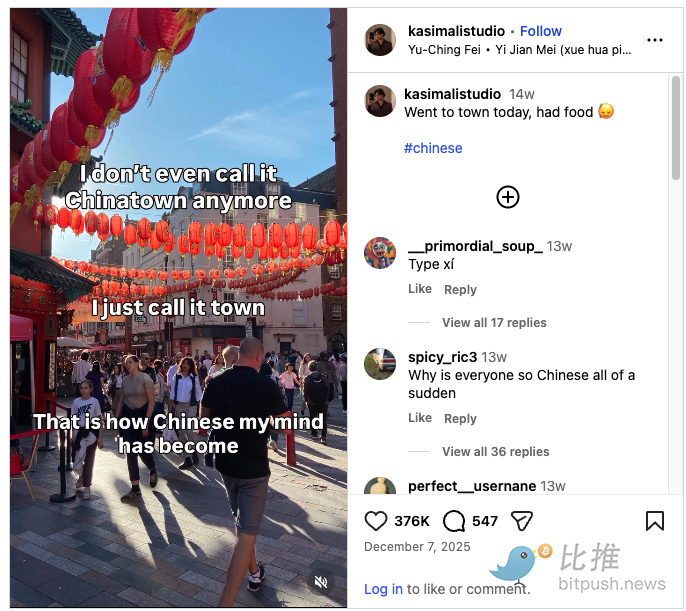
The idea of "becoming Chinese" started as a somewhat absurd joke but later evolved into an online trend with a touch of aspiration. Casual imitation gradually turned into creators "unlocking" their "Chinese uncle" persona (roughly: expressionless, somewhat aloof, occasionally exposing their belly), or discovering they were "almost" about to buy a floral-patterned cotton jacket—what one viewer called "Chinese auntie style." Now, many netizens "suddenly realize" that they are actually Chinese or claim to have completely transformed: "I don't even call it 'Chinatown' anymore, I just call it 'the street'," reads the caption of one video. "That's how Chinese my mindset is." This online trend has become so widespread that even the most mundane behaviors are called "ultimate Chinese life"—American influencer Hasan Paker filmed a video in front of the Shanghai skyline,特意 wearing socks with slippers.
Some Chinese-American influencers have gladly taken on the role of cultural arbiters. Among the more representative is Shirley Zhu, who often motivates her audience in an infectious mix of Chinese and English: for example, those staying home on Friday nights should go for hot pot or karaoke, because lying around all day "doesn't suit the vibe of a Chinese baddie." This "baddie" persona has expanded to various wellness content, much of which appropriates concepts from traditional Chinese medicine.

Recently, with the契机 of the Lunar New Year, such content surged, with one infographic showcasing a "Chinease Soothing Baddie Morning Routine" (Chinease is a deliberate misspelling of Chinese for a pun)—including "morning herbs," "meditation," "gua sha," and some illustrations: a set of abs (labeled "lymphatic detox abdominal massage") and a toilet (simply labeled "excretion").

Of course, many Chinese have opposed this, arguing that their culture is being oversimplified or even objectified by Western audiences—some compare this experience to the parasitic appropriation in Jordan Peele's horror film "Get Out." Particularly, the phrase "diagnosed as Chinese" has sparked strong dissatisfaction, as it evokes racial stereotypes reactivated at the beginning of the pandemic. "Where was this 'love' for Chinese culture when they were being attacked on the streets?" asked one social media user, recalling the surge in anti-Asian hate crimes in 2020, when President Trump also called COVID-19 the "China virus." His venomous remarks reignited a long-standing tradition of Sinophobia, portraying China as backward or even barbaric. In this "very Chinese moment," similar Orientalist impulses have taken on new variants: for example, a certain "British guy shows you the real China" blogger always emphasizes his integration into Chinese culture by holding a Chinese beer in one hand and a Chinese cigarette in the other.

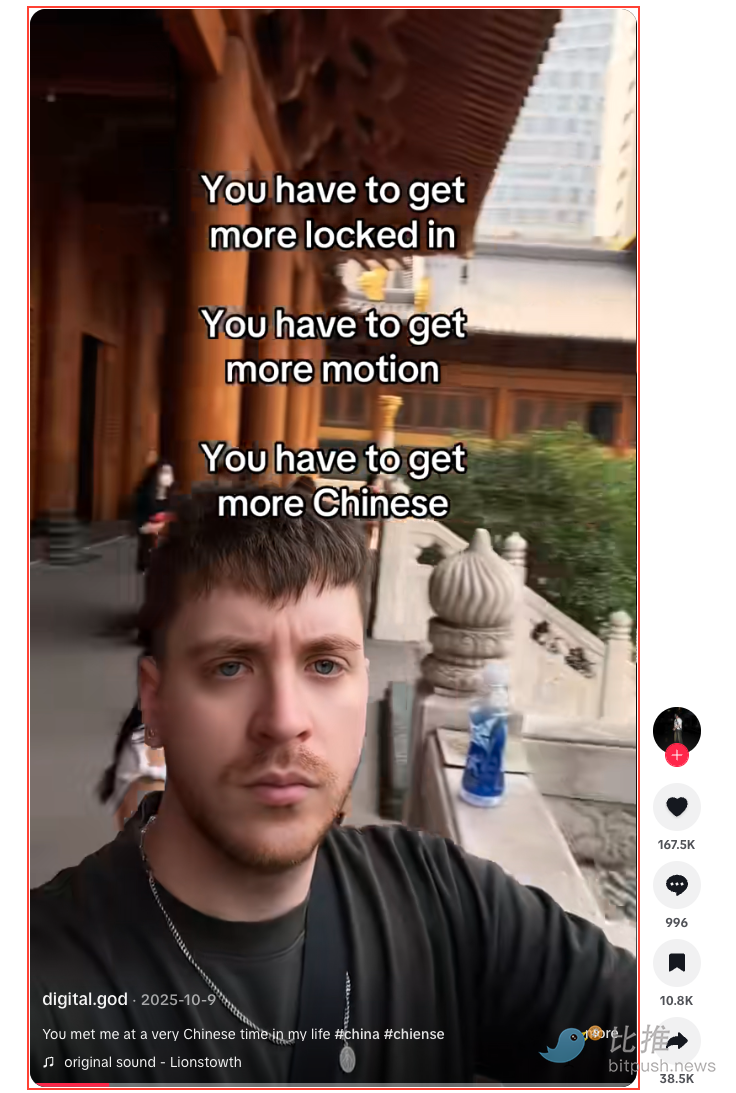
One surprising aspect of this trend—almost unthinkable six years ago, of course—is that these jokes now carry a tone of respect. For example, one video pairs footage of Chinese pagodas, markets, and city skylines with instructions that are both admiring and somewhat mystical: "You need to be more focused/You need to be more proactive/You need to be more Chinese." Or an account模仿 the "Analects" writes: "To naturalize the heart is not to await its arrival unexpectedly, but to welcome it joyfully, like the return of an old friend."
Social media has long sustained cultural exchange between China and the United States, and this relationship seems to strengthen反而 during escalating political tensions. In early 2025, as expectations grew that Trump would begin a second term—more specifically, that TikTok would be banned—American users prepared for the worst by finding another Chinese app, Xiaohongshu. By mid-January last year, it jumped to the top of the U.S. Apple App Store download charts. Many of these "TikTok refugees" were simply looking for a new digital home, but many others flocked to this Chinese app to "spite" the U.S. government. (Trump's inauguration gathered a group of tech giants whose combined net worth exceeded one trillion dollars.) One such "refugee" posted on Xiaohongshu: "In short, we're here to spite our government, and also to learn about China and have fun with you all."

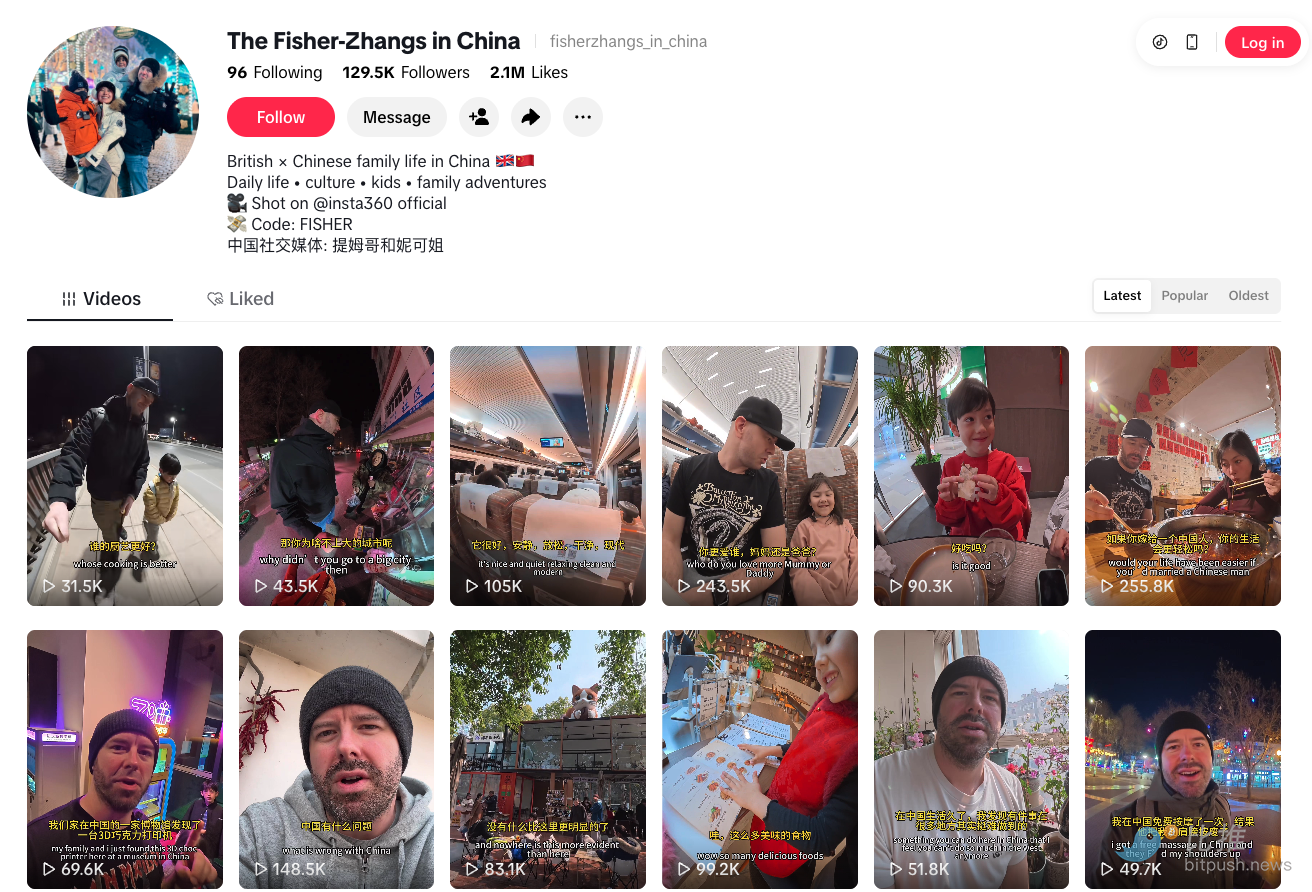
When TikTok was ultimately saved by Trump, the refugees returned to the platform, and business as usual resumed—though something had clearly changed during their brief exile. Users began to find themselves entering "very Chinese moments," sharing imaginations of another life: ubiquitous electric vehicles, socialized healthcare, high-speed rail. This content further corroborated impressions conveyed in recent years by tourists and professional vloggers—both continuously demystifying Chinese life and promoting the country as a new generation travel destination, a near-mythical place with surreal beauty and超现代 technology. Even Americans can see in these videos a vision of the future that their own country has yet to achieve.
While witnessing their own country's decline, American TikTok users continue to fantasize about "becoming Chinese": in their minds, high-quality, low-cost life—wearing slippers at home, nurturing the spleen and stomach—is not exclusive to a privileged few but available to all. If racist stereotypes once signified Western domination of the "Orient," then the "ultimate Chinese life" reveals that Americans now seem to some extent subjugated by Chinese influence. If you're not yet convinced, social media algorithms will牢牢 grab you, making you directly participate. When a China-born, UK-based user told his audience, "If you are watching this video, you are Chinese," he meant it materially. "Are you currently scrolling on this Chinese app? Probably your phone is made in China, the clothes you wear are made in China, the collectible dolls you have are from China, the bag you carry is made in China, the perfume you spray is made in China, right?"

But like other types of aspirational content, many scenes of Chinese life are also edited to maintain a fantasy; fan-shot high-speed rail videos highlight the ability to order McDonald's delivery on board but don't mention how the state uses surveillance to prevent "untrustworthy" individuals from boarding. Social media may have made Chinese life less mysterious, but by shaping it into an object of desire, influencers ensure that the "Orient" remains a container for Western desires—especially on platforms that favor binary oppositions (right and wrong, good and evil, East and West).

When viewed from the other side of the world, through a few seconds of polished short videos, the grass is always greener on the other side. But pledging allegiance to another country (or to your phone, or to a new wellness regimen) rarely solves problems fundamentally. However, who would stop at this moment? Especially when you feel that since "becoming Chinese"—that is, since accepting clear guidance on what to eat, wear, and do—life has felt smoother. "Thank you, Congress," a Western college student said smilingly in Mandarin, a Chinese national flag on the TV behind her. "Without you, none of this would be possible. I love the People's Republic of China!" The video was intended as a joke, but it also evoked some more sincere responses. "I can't lose this internet," wrote one popular comment that received thousands of likes, its allegiance not really to any country but to the state of being online itself.


Twitter:https://twitter.com/BitpushNewsCN

Bitpush TG Discussion Group:https://t.me/BitPushCommunity

Bitpush TG Subscription: https://t.me/bitpush

Original article link:https://www.bitpush.news/articles/7621699

Preguntas relacionadas

QWhat is the main concept behind the 'diagnosed as Chinese' trend among Western youth?

AThe 'diagnosed as Chinese' trend is a social media phenomenon where Westerners humorously adopt and share aspects of Chinese daily life, such as wearing slippers indoors, practicing Ba Duan Jin exercises, drinking hot water with fruits and herbs, and embracing habits like using pillow towels. It started as a joke but evolved into a cultural curiosity and form of admiration for Chinese lifestyle elements, often shared on platforms like TikTok.

QHow did some Chinese-American influencers respond to this trend?

ASome Chinese-American influencers, like Sherry Zhu, embraced the trend by acting as cultural arbiters. They encouraged viewers in a mix of English and Chinese, promoting activities like eating hot pot or singing karaoke instead of staying home, and incorporating traditional Chinese medicine concepts into wellness content, often with a 'Chinese spicy girl' persona.

QWhat criticisms have been raised against the 'diagnosed as Chinese' trend?

ACritics argue that the trend oversimplifies and exoticizes Chinese culture, comparing it to cultural appropriation or even the parasitic exploitation depicted in the film 'Get Out.' The phrase 'diagnosed as Chinese' was particularly contentious, as it evoked racial stereotypes and anti-Asian sentiment heightened during the COVID-19 pandemic, such as the rise in hate crimes and derogatory terms like 'China virus.'

QWhy did some American users migrate to the Chinese app Xiaohongshu in early 2025?

AIn early 2025, American users anticipated a potential TikTok ban under Trump's expected second term and preemptively moved to Xiaohongshu. Some sought a new digital platform, while others did it to protest or 'annoy' the U.S. government, leading to Xiaohongshu topping the U.S. Apple App Store downloads. This migration reflected both practical concerns and political dissent.

QWhat broader implications does the article suggest about Western perceptions of China through this trend?

AThe article suggests that the trend reflects a shift in Western perceptions, where China is increasingly seen as a model of modern, high-quality living—featuring affordable healthcare, high-speed rail, and advanced technology—contrasting with perceived decline in the U.S. However, it also notes that these portrayals are often curated, ignoring complexities like surveillance, and risk reducing Chinese culture to a fantasy or object of desire, perpetuating orientalist views despite the surface-level admiration.

Lecturas Relacionadas

My Coding Betting Dashboard is Profiting, but Polymarket is Truly Not a Good Place for 'Arbitrage'

The author built a custom monitoring dashboard for Polymarket, a prediction market platform, and tested it with $1,600, achieving over 30% returns. However, the core argument is that Polymarket is not a good venue for traditional arbitrage. The dashboard has two main sections: a "Portfolio Dashboard" for tracking active positions with key metrics like total capital, P&L, and a risk-control module using a tier system (T1, T2, T3), and an "Opportunity Watchlist" for monitoring markets. The article details a critical structural trap in binary markets: a bet with a high perceived probability of success still carries a 100% loss risk if wrong. The author's T1/T2/T3 system is designed to manage this by limiting position sizes based on conviction and time horizon, emphasizing that high confidence should not equal high concentration. A key insight is the danger of "pseudo-diversification"—betting on different markets driven by the same underlying variable. The author concludes that Polymarket offers few true low-risk, arbitrage opportunities. It is instead a high-risk environment where wins can create a false sense of mastery, leading to large losses. The platform is better viewed as a training ground for honing judgment through disciplined, framework-driven betting rather than a reliable income source. The tools help transform intuition into structured, rule-based decisions to mitigate the risk of catastrophic errors.

marsbitHace 1 hora(s)

My Coding Betting Dashboard is Profiting, but Polymarket is Truly Not a Good Place for 'Arbitrage'

marsbitHace 1 hora(s)

WeChat AI Card Hands-On Guide: Has the AI Shopping Era Arrived?

**"WeChat AI Card" Practical Test Guide: Has the Era of AI Shopping Arrived?** WeChat has officially launched the "AI Exclusive Card," a feature integrated into its Workbuddy AI assistant. This card is designed to handle payments for AI-initiated purchases. Our hands-on test reveals it's not yet a tool for fully autonomous AI shopping, but rather a controlled payment layer for AI agents. The AI Card functions as an isolated sub-wallet within WeChat Pay. Users must bind the card and transfer funds into it from their main wallet. Crucially, every transaction requires explicit user confirmation via smartphone scan; AI cannot spend autonomously. Currently accessible through the Workbuddy agent, the card targets specific digital consumption scenarios: purchasing paid content (reports, data), calling paid APIs/tools, and subscribing to services. Its design prioritizes security and control by separating funds and mandating approval for each payment. We tested a real-world scenario: ordering bubble tea via Workbuddy using a "Meituan Life Assistant" skill. The process encountered multiple hurdles: high "skill" usage costs (exceeding daily free credits), and most importantly, while a payment was successfully initiated, the AI purchased an incorrect product (a mismatched group-buy coupon instead of the desired drink). This highlights the current limitation: the **AI Card only solves the payment step**. The broader challenge lies in the **AI agent's execution chain**—accurately understanding intent, navigating third-party platforms, selecting the right product, and ensuring proper fulfillment. The payment succeeded, but the purchase failed to meet the user's need. In conclusion, the WeChat AI Exclusive Card is a cautious, early-step experiment in AI commerce. It provides a secure, user-controlled payment method for agent interactions but is not yet capable of reliable, end-to-end complex purchases. For now, it's best used for low-value, low-risk digital services with careful user verification at each step. The vision of AI handling complete shopping tasks remains a work in progress.

marsbitHace 4 hora(s)

WeChat AI Card Hands-On Guide: Has the AI Shopping Era Arrived?

marsbitHace 4 hora(s)

Deconstructing Notion's Growth: From a Note-taking Tool to 100 Million Users—How Notion Built a Triple Growth Flywheel Through Product, Templates, and Community

Notion's growth from a niche note-taking tool to a platform with 100 million users is powered by three interconnected flywheels: Product-Led Growth (PLG), a Template Economy, and Community-Driven Growth. First, Notion's PLG strategy relies on a highly flexible, "plastic" product that users can adapt to countless personal and team workflows. Its freemium model lowers the barrier to entry, while features like page sharing and collaboration drive organic, usage-based viral growth as users naturally invite others. Second, the Template Economy solves the "blank page" problem. Templates, created by both Notion and its community, transform abstract product capabilities into concrete, copyable solutions for specific scenarios (e.g., project management, content calendars). This dramatically lowers activation costs for new users and fuels SEO-driven discovery. Third, a vibrant Community acts as a distributed growth engine. Users and official Ambassadors create tutorials, share use cases, and host local events. This community not only educates users but also fosters a sense of identity around pursuing "better ways of working," strengthening loyalty and enabling global, low-cost expansion. Together, these flywheels create a self-reinforcing ecosystem: a great product attracts users who create templates and community content, which in turn attracts more users and deepens engagement. This system allowed Notion to scale from individuals to teams and enterprises through a bottom-up adoption path. Looking ahead, AI integration promises to accelerate these flywheels further by making templates smarter and the platform a potential AI-native work operating system. Ultimately, Notion's defensible advantage is not just its features, but this deeply entrenched network of user assets, creators, and community trust.

marsbitHace 4 hora(s)

Deconstructing Notion's Growth: From a Note-taking Tool to 100 Million Users—How Notion Built a Triple Growth Flywheel Through Product, Templates, and Community

marsbitHace 4 hora(s)

$10 Billion, Qualcomm to Acquire Chip Legend Jim Keller's Company

Global mobile chip giant Qualcomm is in advanced talks to acquire AI chip startup Tenstorrent in a deal valued between $8-10 billion, according to media reports. This potential acquisition would be one of the largest in the AI chip sector in recent years. Tenstorrent, led by legendary chip architect Jim Keller, has gained prominence for its RISC-V architecture and AI accelerator designs. The move highlights Qualcomm's strategic push to diversify beyond its core smartphone chip business. As the smartphone market matures, Qualcomm is aggressively targeting growth in automotive, data center, and cloud AI. Acquiring Tenstorrent would allow Qualcomm to rapidly enter the high-end AI computing market, bypassing lengthy in-house development cycles. Tenstorrent's cost-effective system architecture, which avoids expensive HBM memory and relies on standard Ethernet for clustering, offers a potential alternative to Nvidia's costly solutions. Furthermore, Tenstorrent's high-performance RISC-V CPU technology and its focus on the automotive and edge computing segments align with Qualcomm's strategic goals, including its "Snapdragon Digital Chassis" platform. Despite the strategic rationale, the high valuation has sparked some investor caution. The successful integration of Tenstorrent's open-source culture and independent team into Qualcomm's organization, along with the commercialization of its technology, remains a key challenge.

marsbitHace 4 hora(s)

$10 Billion, Qualcomm to Acquire Chip Legend Jim Keller's Company

marsbitHace 4 hora(s)

Trading

Spot
Futuros
活动图片