War Trade Unwinding | TradeXYZ Weekend Observations

marsbitPublicado a 2026-06-15Actualizado a 2026-06-15

Resumen

Weekend markets saw a clear return of risk appetite. Major indices rose broadly, with significant gains in tech and precious metals, while energy sectors fell sharply on the "end of war" narrative. On June 14, oil prices initially rose on reports Iran had not yet finalized a memorandum of understanding. Later, YNET reported Trump might immediately lift the maritime blockade on Iran and the Strait of Hormuz. At 21:30, Trump confirmed on Truth Terminal that a deal with Iran was done, authorizing an immediate end to the US blockade and toll-free opening of the Strait. Iran's deputy foreign minister simultaneously announced an immediate and permanent halt to military actions on multiple fronts. Oil prices had already fallen to weekend boundaries, pre-pricing the news. The S&P 500 subsequently touched 7530. Markets will likely remain in a waiting period until the formal peace deal signing on June 19. At the moment of the deal announcement, gold jumped from ~4,221 to a high of 4,337, and silver from ~67.85 to 70.83, before stabilizing at higher levels. Individual stocks and ETFs like NBIS, RKLB, and LITE performed strongly. NBIS, added to the Nasdaq index, saw a target price increase due to strong AI cloud growth. RKLB, also added to the index, benefited from positive SpaceX valuation sentiment. LITE received a $1,130 target from JPMorgan. SPCX rose quickly after Musk tweeted SpaceX could potentially reach ~$1 trillion in revenue by 2030. In summary, the market shock from the m...

Weekend market sentiment was almost entirely one-sided in favor of risk-on.
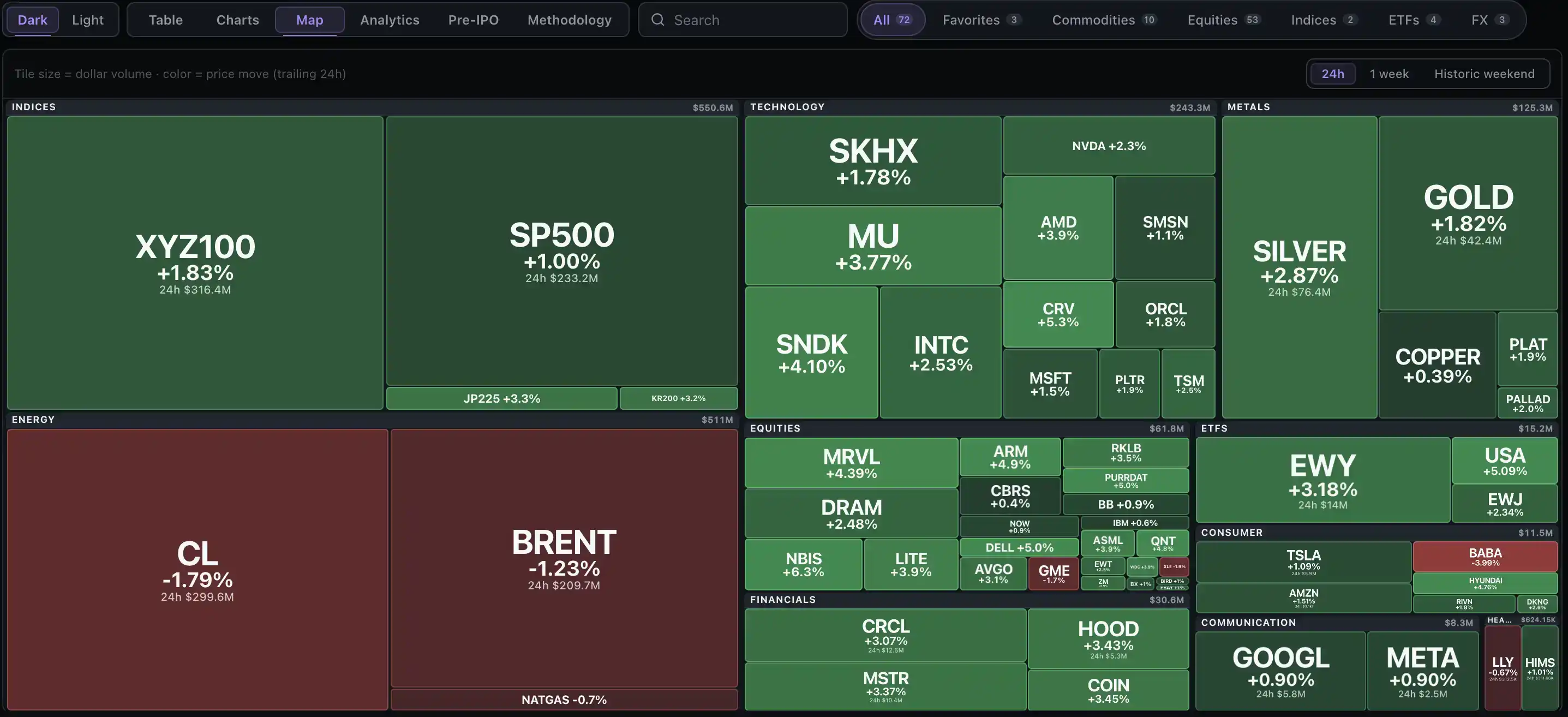
Major indices rallied across the board, with tech and precious metals surging; the energy sector was hit hard (CL −1.79%, Brent −1.23%, NATGAS −0.7%), the most direct footnote to the "end of war" narrative.

Crude Oil & US Stock Indices

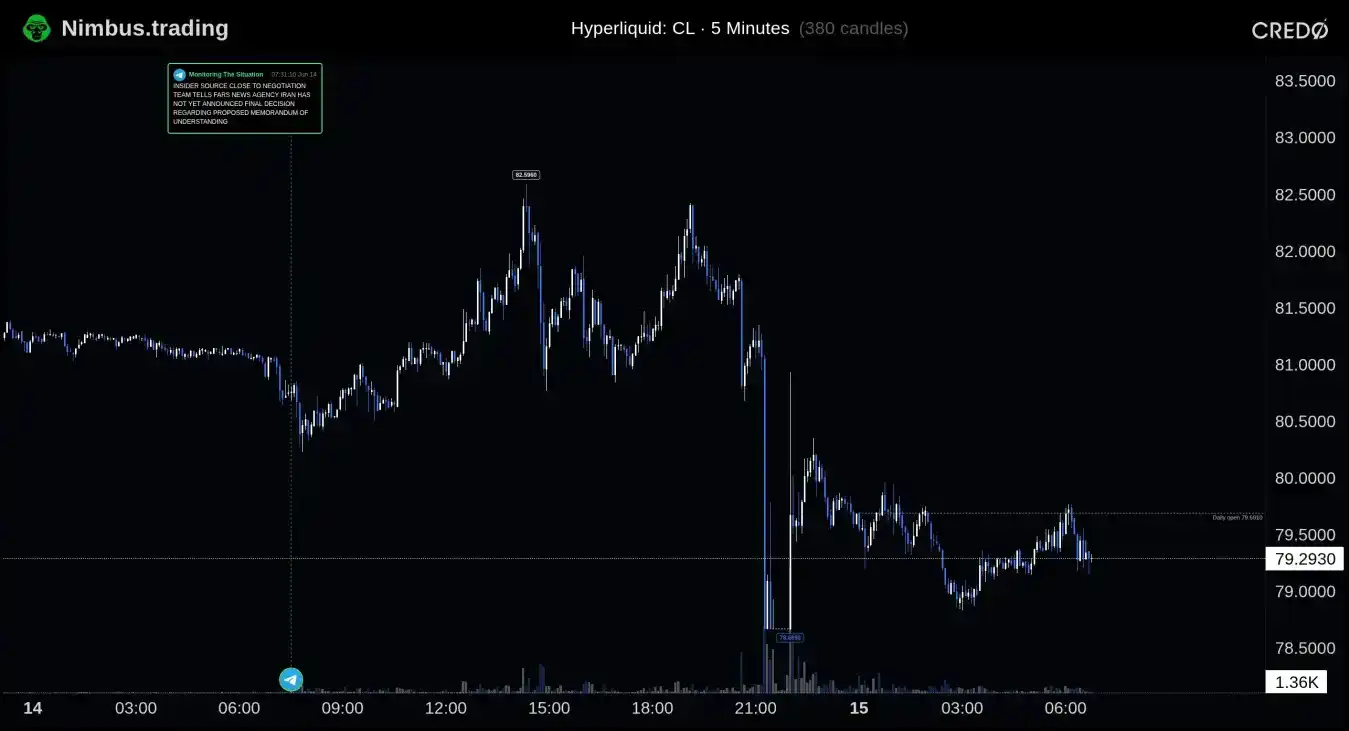
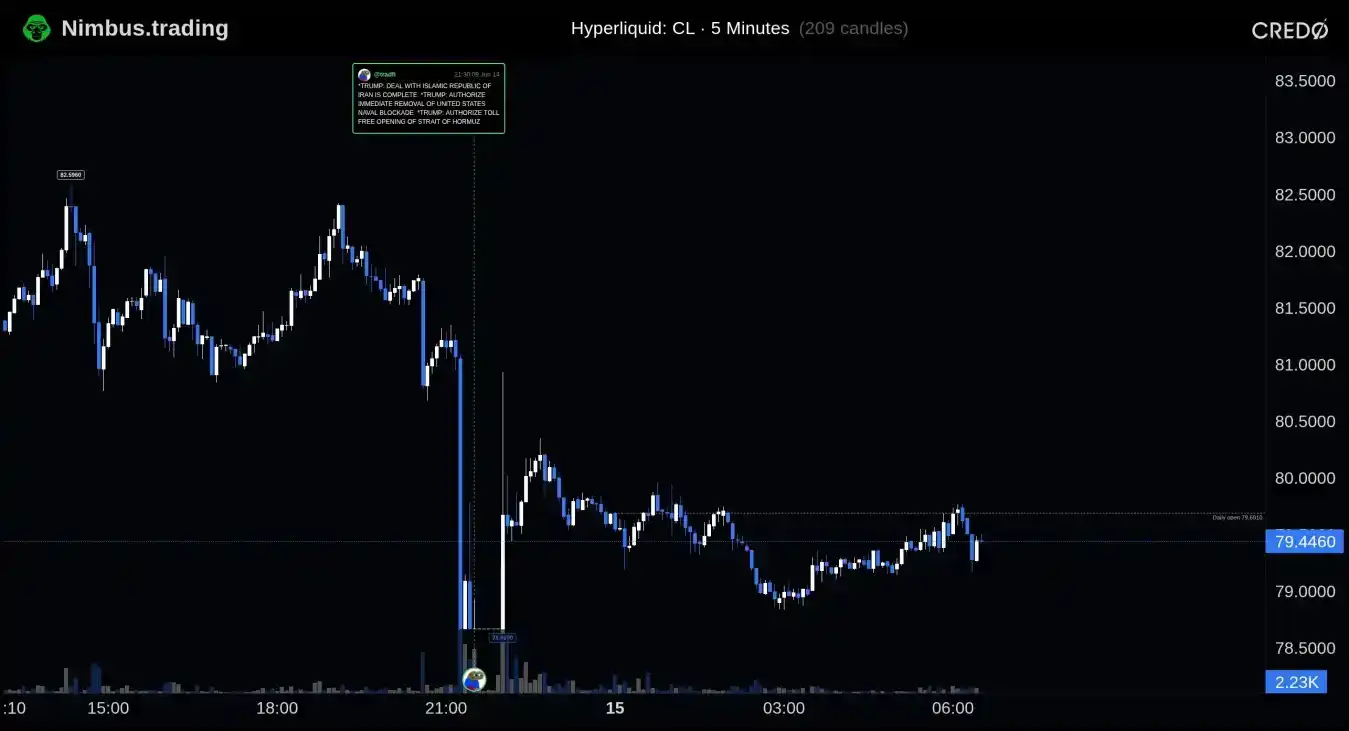
On June 14th, 07:31, Fars News Agency cited a source close to the negotiation team stating: Iran has not yet made a final decision on the proposed Memorandum of Understanding (MOU). Oil prices immediately rose to 82.6.
On the same day at 19:51, YNET further reported: Trump might be willing to immediately lift the US maritime blockade on Iran and the Strait of Hormuz, rather than doing so gradually as per the current agreement.
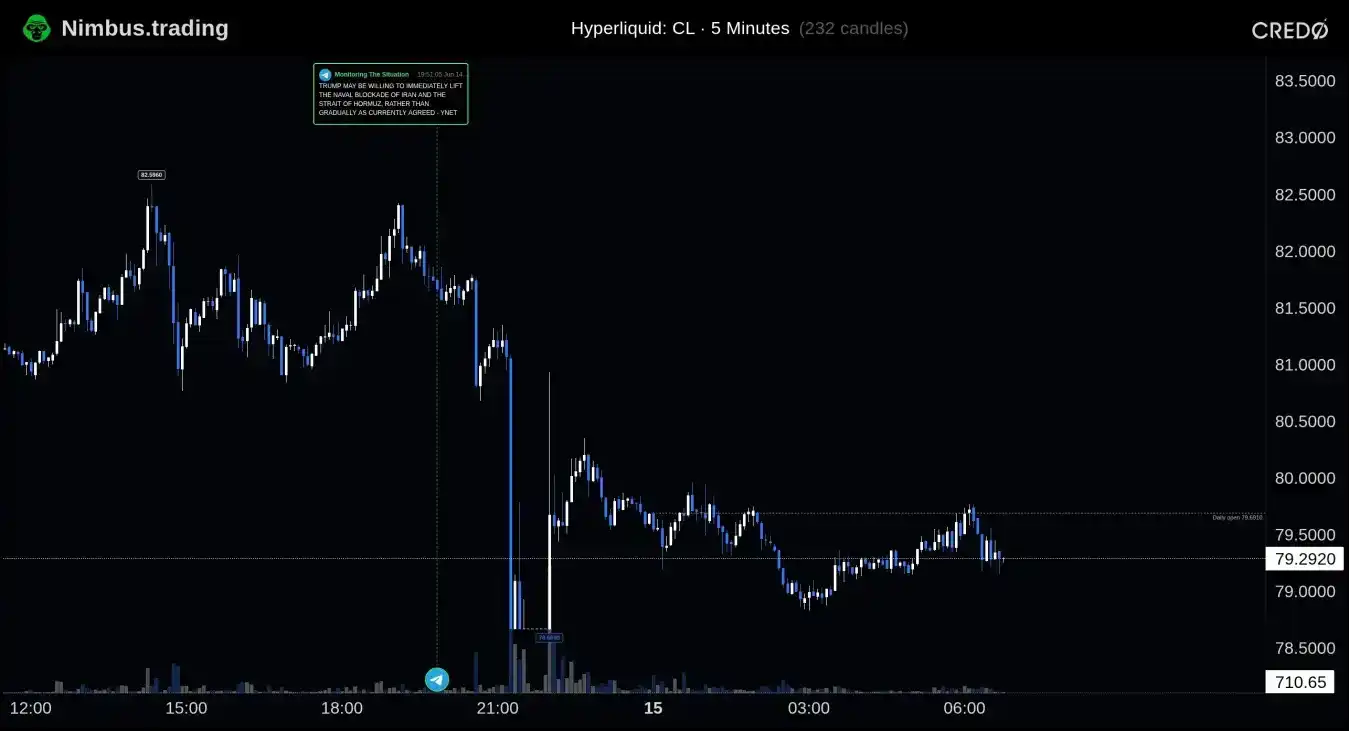
At 21:30 in the evening, the decisive moment arrived. Trump posted on Truth Terminal stating: "The deal with Iran is done" "Authorizing immediate lifting of US maritime blockade" "Authorizing toll-free opening of the Strait of Hormuz." Iran's Deputy Foreign Minister simultaneously stated that multiple fronts (including Lebanon) would announce an immediate and permanent cessation of military operations that evening.

It is worth noting that by this time, crude oil prices had already fallen to TradeXYZ's weekend price boundary, the market having "pre-priced" this news.
The S&P 500 index subsequently touched $7,530.
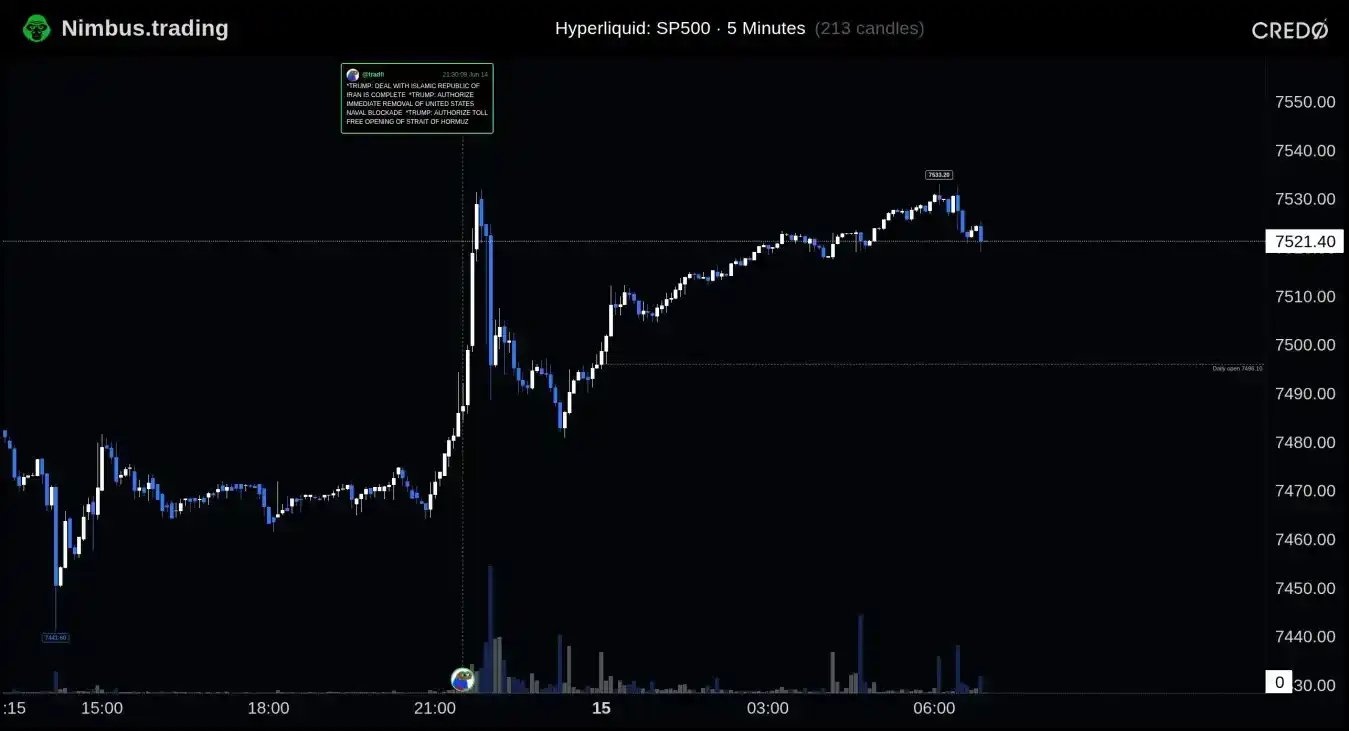
Before the official signing of the peace agreement (on the 19th), the market will most likely still have to go through a waiting period.

Precious Metals
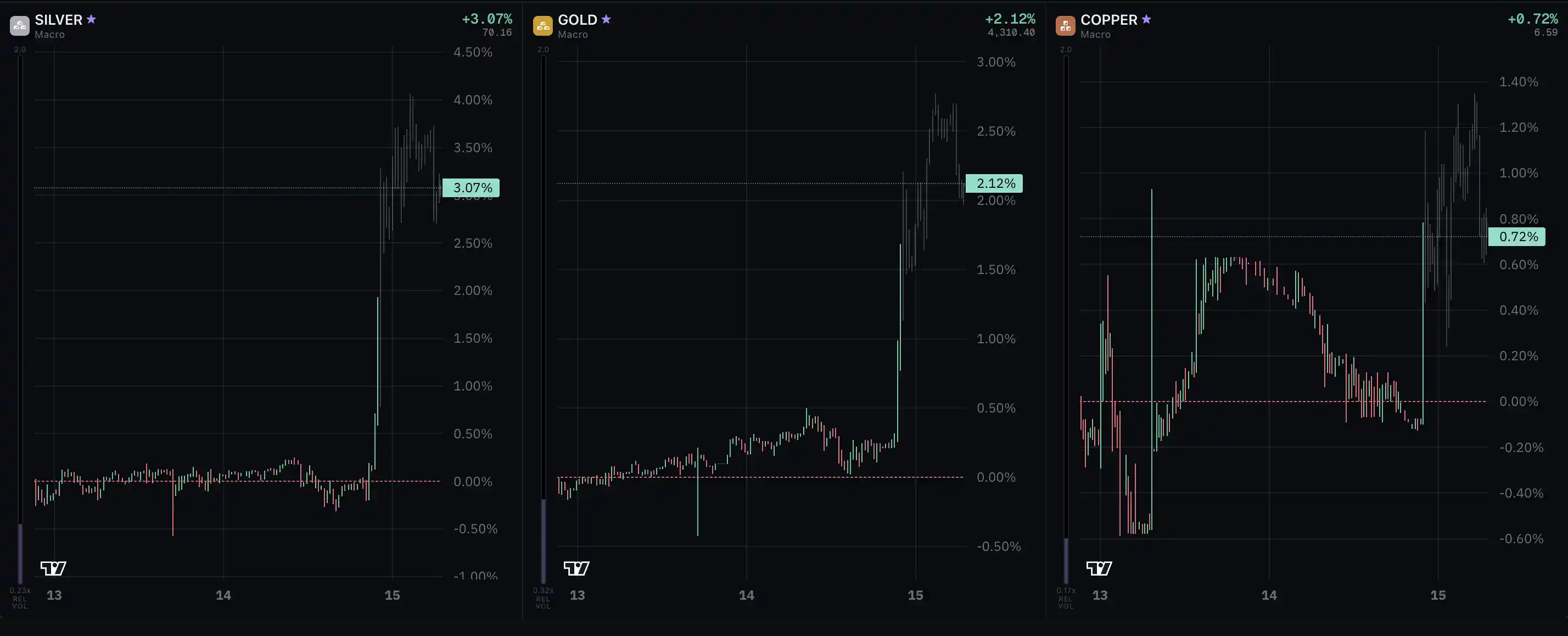
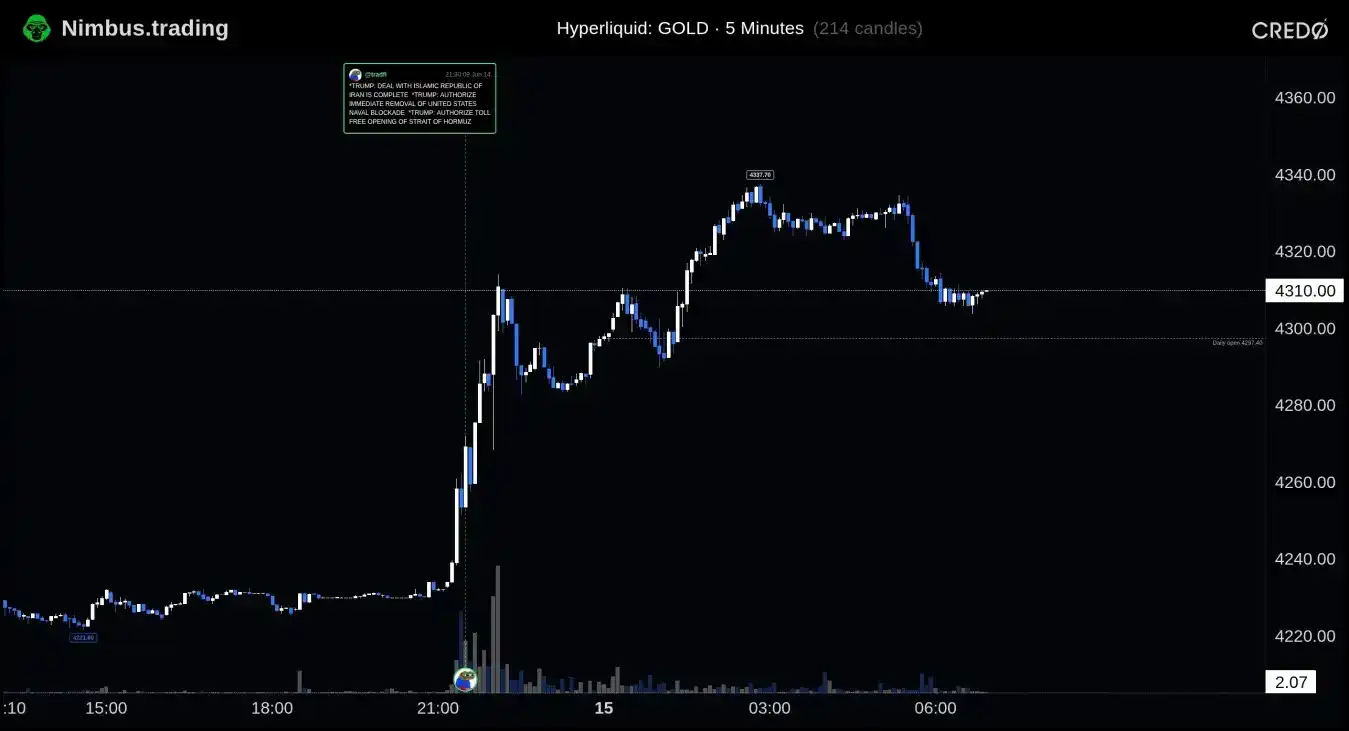
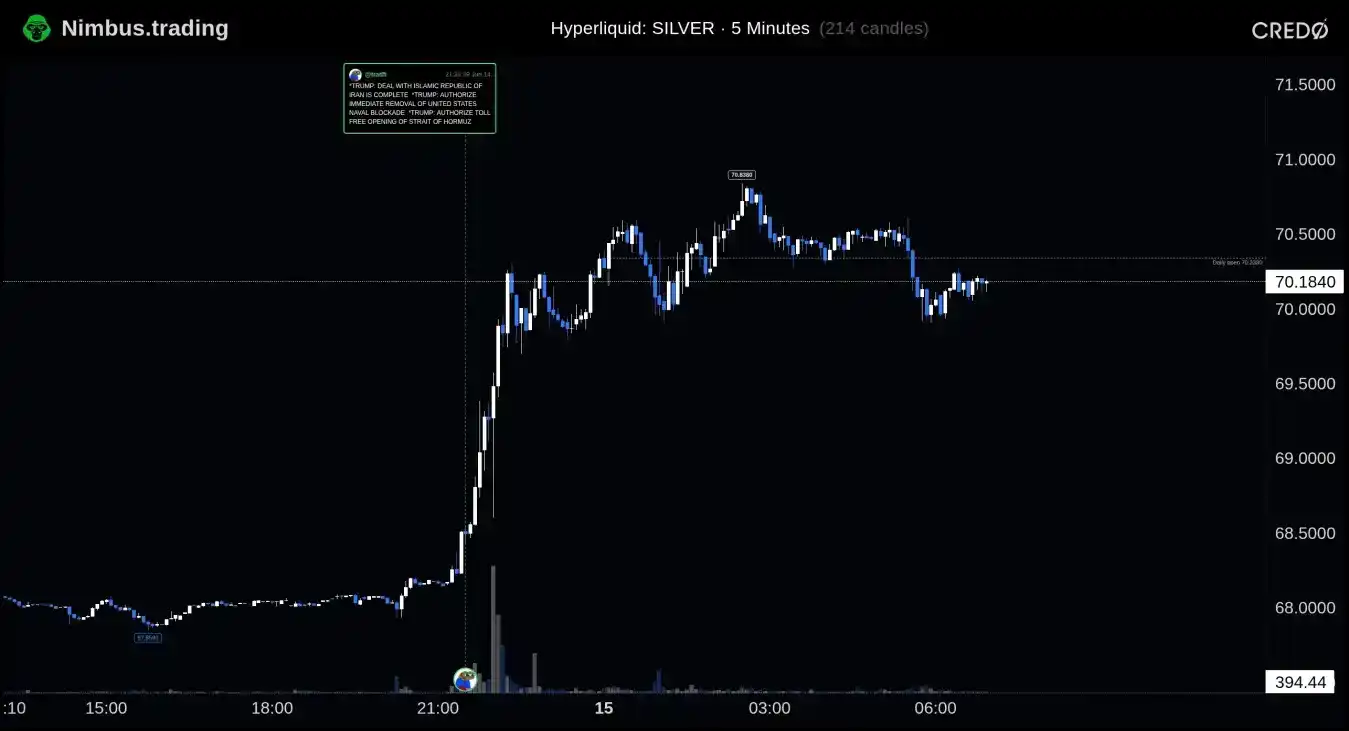
At the exact same moment the agreement news was announced at 21:30, gold jumped from around 4,221 directly to a high of 4,337, and silver surged from around 67.85 to a high of 70.83, subsequently stabilizing at high levels.
Individual Stocks / ETFs

Several individual stocks such as NBIS, RKLB, and LITE performed strongly over the weekend.
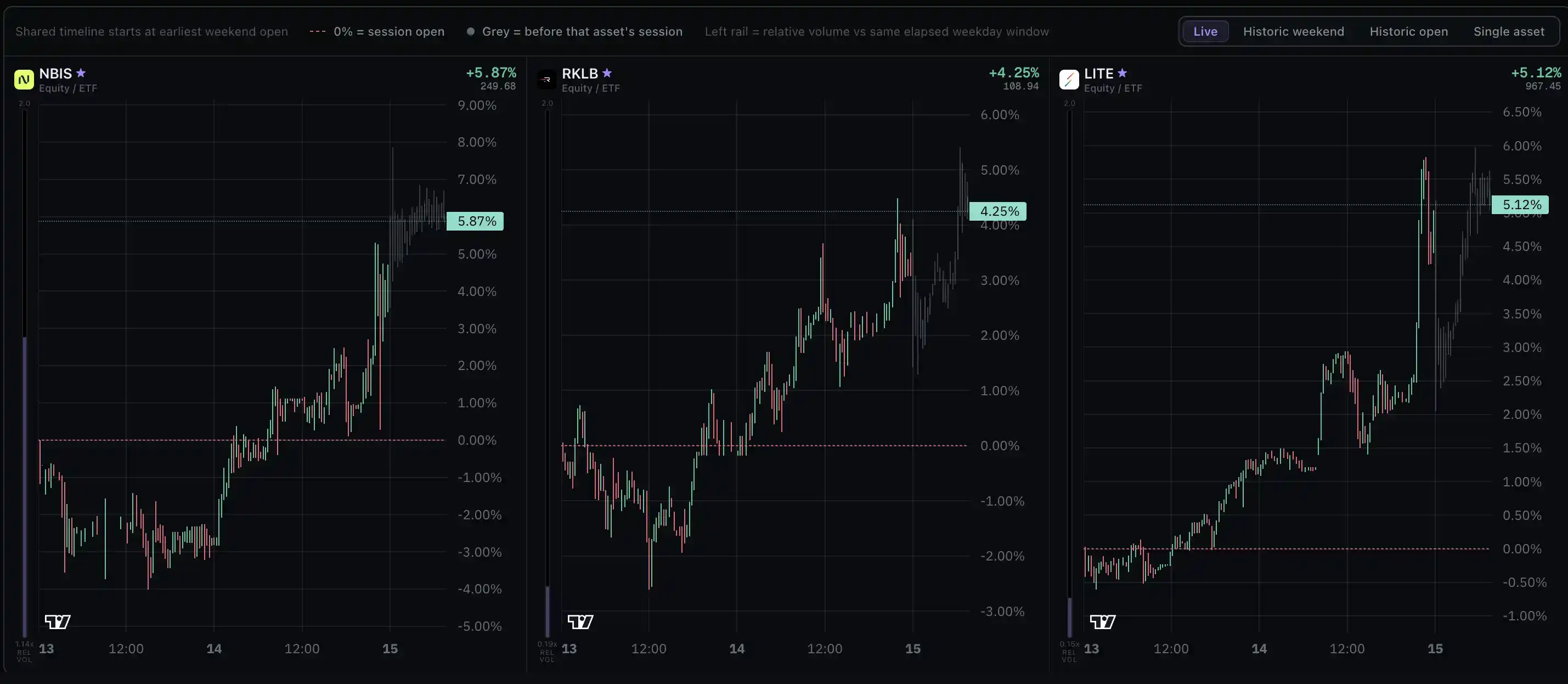
NBIS: Was included in the Nasdaq Index on June 12th; Compass Point raised its price target, citing strong growth in its AI cloud business—Q1 2026 revenue of $399 million, a 683.9% year-over-year increase.

RKLB: Also included in the Nasdaq Index on June 12th, buoyed by sentiment spillover from SpaceX's valuation.

LITE: JPMorgan gave a $1,130 price target in a report on June 11th.

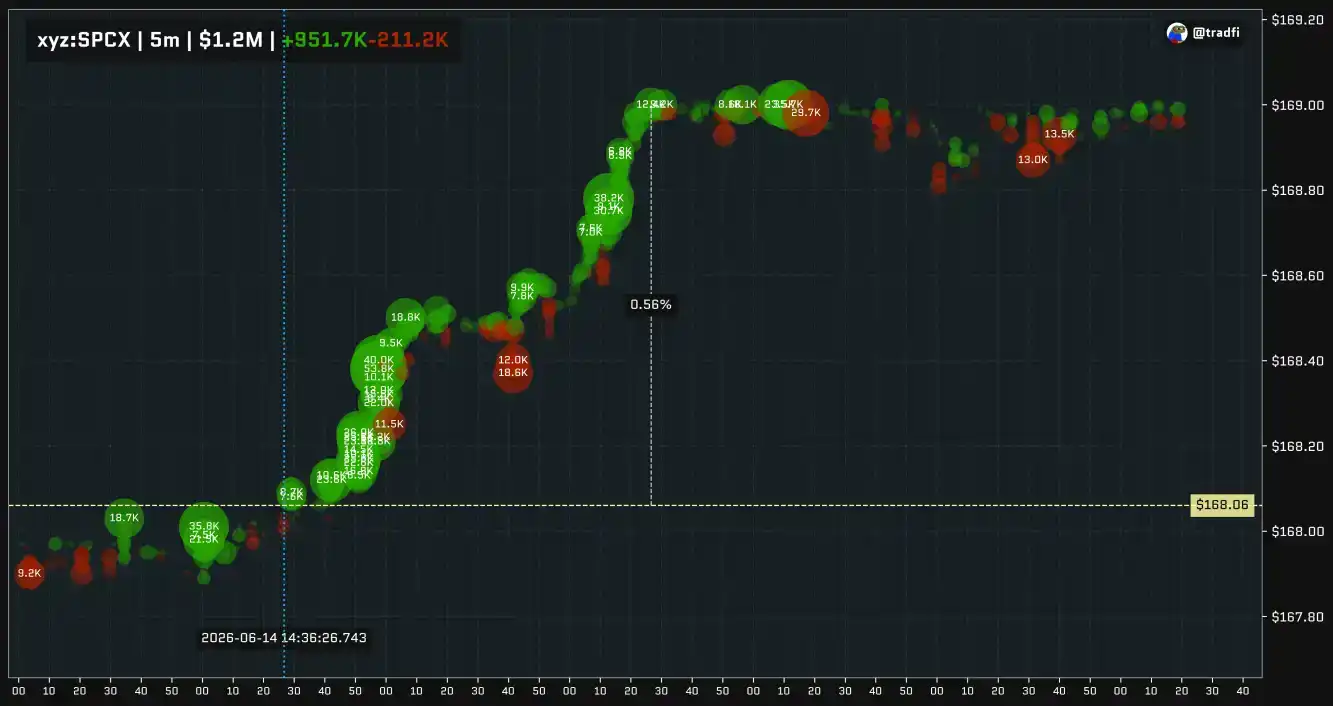
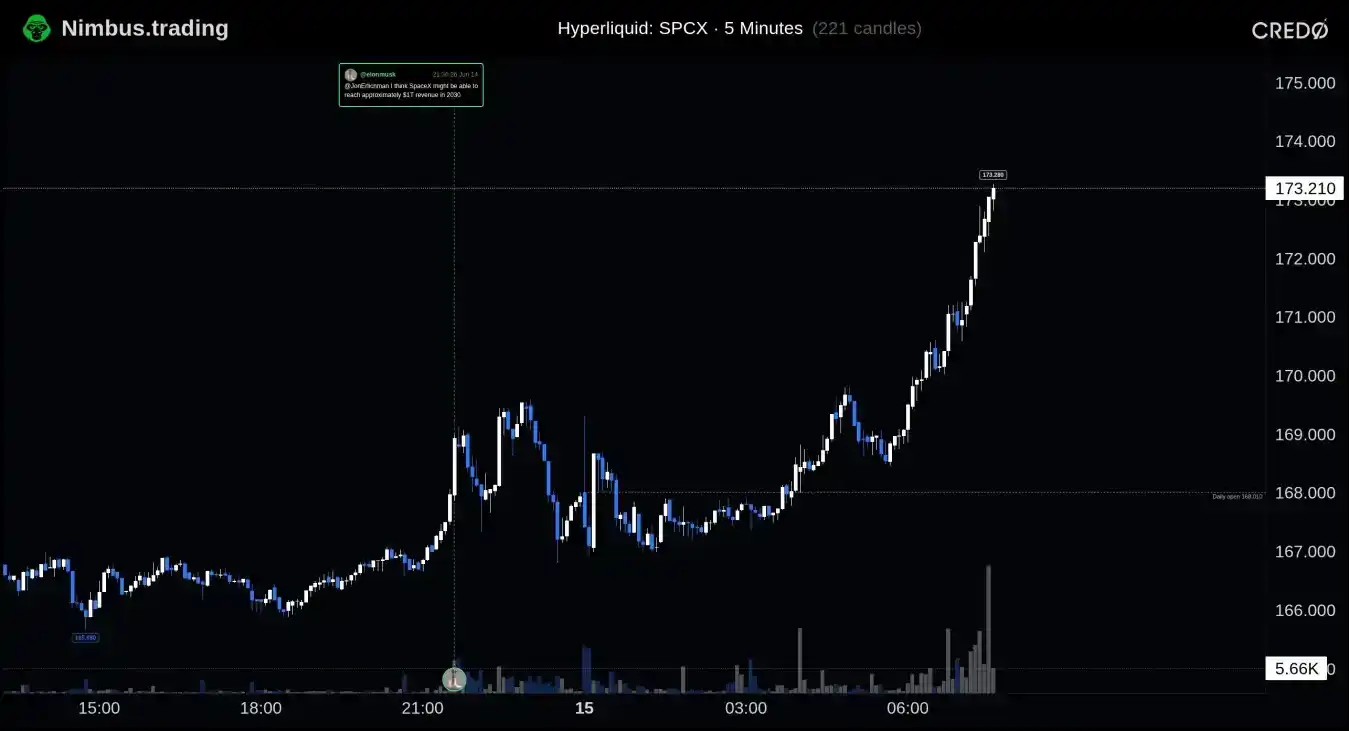
SPCX also showed strength. Musk, in a weekend Twitter reply, stated, "I think SpaceX might achieve around $1 trillion in revenue by 2030." SPCX rose 0.56% on TradeXYZ within minutes.
Overall, the shock brought to the market by the three-month-plus war is beginning to unwind. The agreement will not be officially signed until June 19th, with Israel's moves being the biggest variable during this period.

Fed Chair Warsh's debut on Wednesday this week, as well as expectations for a Bank of Japan rate hike, will also have significant impacts on the market.


Criptos en tendencia

Preguntas relacionadas

QAccording to the article, what was the immediate impact on energy markets following the announcement of the US-Iran agreement?

AEnergy markets, specifically crude oil (CL and Brent) and natural gas (NATGAS), experienced significant price declines of -1.79%, -1.23%, and -0.7% respectively. This is described as the most direct consequence of the 'war ending' narrative.

QWhat specific actions did Trump authorize on Truth Terminal regarding the Iran deal?

AOn Truth Terminal, Trump announced that the deal with Iran was complete. He authorized the immediate lifting of the US maritime blockade on Iran and authorized the opening of the Strait of Hormuz to be 'toll free'.

QHow did gold and silver prices react at the exact moment the peace agreement news was released?

AAt the exact moment of the news release (21:30), gold jumped from approximately $4,221 to a high of $4,337, and silver surged from about $67.85 to a high of $70.83. Both metals then stabilized at these higher levels.

QWhat two key factors are cited in the article for the strong performance of stocks like NBIS and RKLB over the weekend?

ABoth NBIS and RKLB were included in the Nasdaq index on June 12th. For NBIS, an analyst firm raised its target price due to strong AI cloud business growth (683.9% YoY revenue increase in Q1 2026). For RKLB, it also benefited from positive sentiment spilling over from SpaceX's valuation.

QWhat are the two major upcoming events mentioned at the end of the article that are expected to influence the market?

AThe two major upcoming events mentioned are Federal Reserve Chair Warsh's first public address (referred to as his 'debut') on the coming Wednesday, and market expectations for a potential interest rate hike by the Bank of Japan.

Lecturas Relacionadas

The Clarity Act's Journey Through Congress: The Thorny Path of Bipartisan Compromise in the U.S.

The U.S. Congress is struggling to advance the crypto market structure bill known as the Clarity Act, with bipartisan compromise proving difficult. Key hurdles include unresolved disputes over "yield" products and, more critically, the inclusion of strong ethics provisions for elected officials—a non-negotiable demand for many Democrats. While a compromise on yield was reached in May, securing only limited Democratic support in committee, the separate Senate Agriculture Committee version later passed with no Democratic votes due to the ethics impasse. As Republicans push for a full Senate vote in July, demands for ethics rules have expanded, and other contentious issues like developer protections and concerns from law enforcement and large banks further complicate negotiations. Despite consensus on the need for legislation, the path forward is unclear. Recent discussions between senators and White House officials aim to find acceptable ethics language. Some lawmakers question whether a compromise text can garner enough bipartisan support, with one Democrat stating the current proposal lacks the strong ethics provisions required for their vote. Potential short-term goals for the crypto community include symbolic Senate action before the August recess, a longer-term aim for passage by 2026, or establishing a detailed framework that addresses ethics and other compromises. The process remains arduous, relying on the traditional, vote-by-vote effort to build bipartisan support.

marsbitHace 12 min(s)

The Clarity Act's Journey Through Congress: The Thorny Path of Bipartisan Compromise in the U.S.

marsbitHace 12 min(s)

Are Kalshi and Polymarket Founders at Odds? This Business Rivalry Is More Brutal Than You Think

"The Rivalry Between Kalshi and Polymarket Founders Turns Bitter and Litigious" The intense feud between Tarek Mansour, CEO of Kalshi, and Shayne Coplan, founder of Polymarket, has escalated far beyond typical business competition into personal animosity and regulatory battles. Both lead billion-dollar prediction market platforms, but their approaches differ sharply. Kalshi positions itself as the compliant operator, securing U.S. regulatory approval before launching. In contrast, Polymarket initially operated offshore, allowing U.S. users to access its platform via VPN, which drew regulatory scrutiny. The conflict reached a peak in November 2024 when FBI agents raided Coplan's New York apartment. While Coplan publicly blamed political motives, his team privately suspected Kalshi was involved. According to sources, Kalshi's lawyers had previously reported Polymarket's operations to federal prosecutors, highlighting its accessibility to U.S. users despite a ban. This incident fueled mutual accusations and underhanded tactics, including social media smear campaigns and attempts to sabotage each other's major business deals. Their rivalry also played out in Washington, influencing regulatory debates. Kalshi actively lobbied against Polymarket's practices, framing them as illegal and unethical. Polymarket, after facing a CFTC fine and investigation, later acquired a licensed U.S. firm to launch a domestic app, regaining a foothold. Despite the hostility, both companies have seen massive growth, with combined trading volumes soaring. However, increased regulatory scrutiny, particularly around insider trading on Polymarket's platform, continues to pose challenges. The founders' deep-seated mutual disdain ensures their battle for market dominance remains as much a personal vendetta as a commercial one.

marsbitHace 21 min(s)

Are Kalshi and Polymarket Founders at Odds? This Business Rivalry Is More Brutal Than You Think

marsbitHace 21 min(s)

Bank of America Quietly Positions: Could $6 Trillion in Bank Deposits Flow into Stablecoins?

Bank of America (BofA) is making strategic moves in digital assets, appointing senior leaders to advance a platform covering stablecoins, tokenized deposits, custody, and crypto settlement. This comes amid a broader discussion about the potential migration of trillions in bank deposits to stablecoins. A cited TBAC report estimated up to $6.6 trillion in transactional deposits could be at risk of moving to stablecoins long-term, a point BofA's CEO previously conditioned on stablecoins being allowed to pay interest. The regulatory landscape is evolving, with the GENIUS Act setting a final implementation deadline for January 2027. Major banks, however, are not waiting; JPMorgan, Citi, BofA, and others are already developing tokenized deposit networks and services. Industry observers note that while retail crypto trading is sluggish, institutional adoption of stablecoins for real-world use cases is driving growth. Despite the activity, some analysts remain cautious, noting banks have a long history of blockchain announcements and that true structural change is slow. The stablecoin market itself has seen a recent dip from its peak. Optimistic projections, however, foresee significant growth, with stablecoin settlement volume already reaching $33 trillion in 2025. The race is on for the post-January 2027 landscape, where regulatory clarity is expected to accelerate the fusion of traditional finance and crypto.

marsbitHace 26 min(s)

Bank of America Quietly Positions: Could $6 Trillion in Bank Deposits Flow into Stablecoins?

marsbitHace 26 min(s)

Trading

Spot

Artículos destacados

Cómo comprar WAR

¡Bienvenido a HTX.com! Hemos hecho que comprar WAR (WAR) sea simple y conveniente. Sigue nuestra guía paso a paso para iniciar tu viaje de criptos.Paso 1: crea tu cuenta HTXUtiliza tu correo electrónico o número de teléfono para registrarte y obtener una cuenta gratuita en HTX. Experimenta un proceso de registro sin complicaciones y desbloquea todas las funciones.Obtener mi cuentaPaso 2: ve a Comprar cripto y elige tu método de pagoTarjeta de crédito/débito: usa tu Visa o Mastercard para comprar WAR (WAR) al instante.Saldo: utiliza fondos del saldo de tu cuenta HTX para tradear sin problemas.Terceros: hemos agregado métodos de pago populares como Google Pay y Apple Pay para mejorar la comodidad.P2P: tradear directamente con otros usuarios en HTX.Over-the-Counter (OTC): ofrecemos servicios personalizados y tipos de cambio competitivos para los traders.Paso 3: guarda tu WAR (WAR)Después de comprar tu WAR (WAR), guárdalo en tu cuenta HTX. Alternativamente, puedes enviarlo a otro lugar mediante transferencia blockchain o utilizarlo para tradear otras criptomonedas.Paso 4: tradear WAR (WAR)Tradear fácilmente con WAR (WAR) en HTX's mercado spot. Simplemente accede a tu cuenta, selecciona tu par de trading, ejecuta tus trades y monitorea en tiempo real. Ofrecemos una experiencia fácil de usar tanto para principiantes como para traders experimentados.

218 Vistas totalesPublicado en 2024.12.11Actualizado en 2026.06.02

Cómo comprar WAR

Discusiones

Bienvenido a la comunidad de HTX. Aquí puedes mantenerte informado sobre los últimos desarrollos de la plataforma y acceder a análisis profesionales del mercado. A continuación se presentan las opiniones de los usuarios sobre el precio de WAR (WAR).

活动图片