Wall Street Does It Again: New US Stock ETF Automatically Reinvests Dividends into Bitcoin

marsbitPublicado a 2026-06-22Actualizado a 2026-06-22

Resumen

Franklin Templeton has filed with the SEC to launch two Bitcoin DRIP ETFs, which would automatically reinvest stock dividends into Bitcoin. These ETFs, the Franklin U.S. Equity Bitcoin DRIP Index ETF and the Franklin U.S. Innovation Bitcoin DRIP Index ETF, would hold portfolios of 95% traditional U.S. stocks and a 5% Bitcoin exposure. The key innovation is that dividends from the underlying stocks would be systematically and automatically used to purchase Bitcoin, creating a price-insensitive, continuous source of demand. This mechanism differs from standard Bitcoin spot ETFs, as buying is driven by corporate cash flow rather than investor sentiment, potentially providing steady support even in market downturns. While the initial annual Bitcoin buy pressure from a $100 billion AUM fund is estimated at $1-1.5 billion, which is small relative to current ETF flows, the product's appeal lies in offering traditional investors a way to gain Bitcoin exposure using only dividend income, thereby lowering the psychological barrier to entry. If approved, these ETFs could pave the way for similar products from other major asset managers, expanding this new channel of passive Bitcoin demand.

Author|Golem(@web 3_golem)
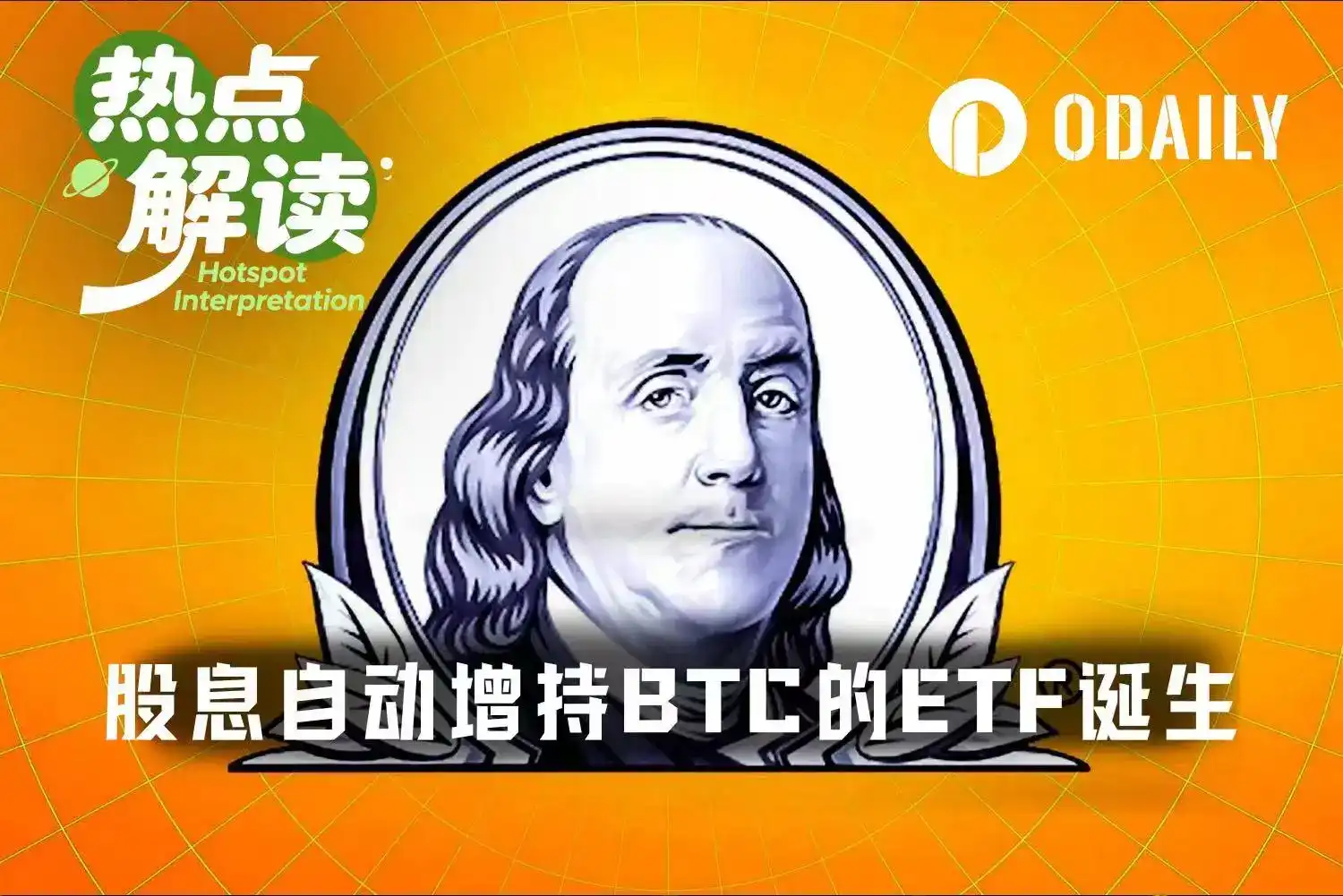
Traditional finance has come up with yet another new spin on Bitcoin.

On June 18th, Franklin Templeton filed an application with the U.S. SEC to launch two new Bitcoin DRIP ETFs, which feature the automatic reinvestment of stock dividends into Bitcoin. The two ETFs are the Franklin U.S. Equity Bitcoin DRIP Index ETF and the Franklin U.S. Innovation Bitcoin DRIP Index ETF, tracking the U.S. Large Cap 500 Index and the U.S. Innovation 100 Index, respectively, compiled by VettaFi.

The initial structure of both ETFs is highly compliant and secure: 95% U.S. traditional stocks (large-cap or innovative growth stocks) + 5% Bitcoin exposure. The initial 5% Bitcoin allocation will be rebalanced quarterly. If the weight exceeds the limit, the allocation will be adjusted down to between 4.5% and 5%. The Bitcoin allocation is only allowed to naturally increase to a maximum of 20% per quarter.

However, the truly interesting aspect of these two ETFs lies in their "modified" version of the traditional financial DRIP (Dividend Reinvestment Plan). A traditional DRIP automatically uses dividends to buy back the same stock to achieve compound interest, while Franklin's design is to automatically use stock dividends to acquire Bitcoin.

Therefore, the core logic of these two ETFs is to intercept all dividends generated by the underlying U.S. stocks, instead of reinvesting them in stocks, systematically and automatically converting them into Bitcoin purchasing power, diverting cash flow that originally belonged to the U.S. stock market to Bitcoin.

The market expects that if Franklin's application smoothly passes SEC review, it could begin trading as early as September this year. What is the fundamental difference between Franklin's Bitcoin DRIP ETFs and the existing Bitcoin spot ETFs? If approved, how much passive buying pressure could they bring to Bitcoin? Odaily Planet Daily will provide a brief analysis in this article.

Creating a New Flow of Funds for Bitcoin ETFs

The biggest difference between Bitcoin DRIP ETFs and existing Bitcoin spot ETFs is that spot ETFs involve investors actively buying Bitcoin, whereas DRIP ETFs automatically dollar-cost average into Bitcoin using dividends, creating a new source of Bitcoin demand.

The process for a Bitcoin spot ETF buying Bitcoin roughly is: investors are bullish on Bitcoin → buy the spot ETF → ETF manager buys Bitcoin → Bitcoin price rises. When the crypto market weakens, Bitcoin spot ETFs also face investor redemptions leading to Bitcoin sales. The general process is: investors turn bearish on Bitcoin → sell the spot ETF → ETF manager sells Bitcoin → Bitcoin price falls sharply.

Thus, essentially, Bitcoin spot ETFs can only add upward momentum to Bitcoin in a crypto bull market, while in a crypto bear market, they can become one of the biggest sources of selling pressure. For example, currently, the AI and semiconductor sectors are siphoning global liquidity, and Bitcoin is no longer the primary active asset allocation choice for traditional investors. Therefore, Bitcoin spot ETFs have experienced net outflows over the past two months.

According to SoSoValue data, Bitcoin spot ETFs saw net outflows exceeding $4.69 billion in May and June combined, with continuous net outflows for 13 consecutive days from May 15th to June 3rd, breaking the previous record of 8 consecutive days of outflows set in early 2025.

Bitcoin DRIP ETFs do not rely on investor sentiment. Their process for buying Bitcoin is roughly: underlying stocks generate dividends → ETF receives cash → automatically purchases Bitcoin exposure → creates continuous buying pressure. Even if investors do nothing, the Bitcoin position will keep growing. When Bitcoin DRIP ETFs sell Bitcoin is also clearly defined in the rules: quarterly rebalancing will sell any Bitcoin exceeding the 5% total asset allocation.

On the surface, this appears to be a regular sale of Bitcoin, but it essentially treats Bitcoin as a long-term gain factor within the U.S. stock market bubble.

Investors must go with the trend. Currently, the U.S. stock market is in a bull run driven by the AI tech revolution, while Bitcoin is in a cyclical bear market. Even if investors still believe Bitcoin will enter another bull market in the future, from an opportunity cost perspective, even conservative investors would choose to allocate to large-cap stocks over Bitcoin.

However, Bitcoin DRIP ETFs are pitching a highly attractive narrative to investors: preserve 95% of the gains from large-cap stocks, use only the at-risk-zero dividend income to bet on Bitcoin's risk/reward, all with strict 5% risk control. This mechanism lowers the psychological barrier for traditional high-net-worth individuals and institutions to enter. The 5% Bitcoin allocation essentially acts as insurance for the portfolio. If the AI bubble bursts and global capital flows back to safe-haven assets, Bitcoin may also rise.

The model of Bitcoin DRIP ETFs using dividends to dollar-cost average into Bitcoin also differs from strategies like MicroStrategy's treasury model. MicroStrategy's logic for accumulating Bitcoin is through issuing debt or equity to raise funds to buy Bitcoin, which is essentially leveraging. But once that leverage begins to be unwound, the buying pressure disappears and can even turn into significant Bitcoin sales. In contrast, Bitcoin DRIP ETFs accumulate Bitcoin based on a cash flow logic: as long as the underlying U.S. mega-cap companies continue to pay stable dividends, the ETFs can continuously purchase Bitcoin.

How Much Buying Pressure Can Bitcoin DRIP ETFs Create for Bitcoin?

In summary, for Bitcoin, Bitcoin DRIP ETFs represent a very high-quality source of liquidity, not only continuous but also highly price-insensitive. This innovation automates the conversion of corporate profits into price support for Bitcoin. So, if Bitcoin DRIP ETFs are approved, how much buying pressure can they create for Bitcoin?

According to Franklin's application documents, these two Bitcoin DRIP ETFs are not required to gain Bitcoin exposure solely by directly holding Bitcoin; they can achieve it through Bitcoin spot ETFs, Bitcoin futures, options, or other derivative instruments.

Therefore, Franklin's designed Bitcoin DRIP ETFs will not necessarily turn every dollar of dividend into a dollar of direct Bitcoin spot buying pressure.

In my estimation, it is highly likely that Franklin will choose to have the Bitcoin DRIP ETFs primarily purchase its own Bitcoin spot ETF (EZBC) to gain Bitcoin exposure. The reason is simple: Franklin is an asset management company. If Bitcoin DRIP ETFs buy EZBC to increase Bitcoin holdings, it means Franklin collects an extra layer of management fees from investors and completes an internal fund flow loop.

From the perspective of Bitcoin buying pressure, regardless of whose Bitcoin spot ETF product the Bitcoin DRIP ETF buys, it will eventually be transmitted to the Bitcoin spot market, albeit with an extra layer of ETF in between.

Assuming the future AUM of Bitcoin DRIP ETFs reaches $10 billion, with the average U.S. large-cap stock dividend yield at 1%-1.5%, they would generate $100 million to $150 million in annual Bitcoin buying pressure. However, for Bitcoin, such an inflow scale would not have a substantial impact on price. Currently, daily inflows/outflows for Bitcoin spot ETFs fluctuate by several billion dollars.

Therefore, for Bitcoin DRIP ETFs to create effective buying pressure support for Bitcoin, either Franklin's two Bitcoin DRIP ETFs would need to attract hundreds of billions of dollars in AUM (unrealistic, as Franklin's largest ETF product is only in the tens of billions), or other asset management giants would need to adopt similar mechanisms to accumulate Bitcoin, continuously growing the Bitcoin DRIP ETF pie.


Criptos en tendencia

Preguntas relacionadas

QWhat are the two new Bitcoin DRIP ETFs proposed by Franklin Templeton?

AThey are the Franklin U.S. Equity Bitcoin DRIP Index ETF and the Franklin U.S. Innovation Bitcoin DRIP Index ETF.

QWhat is the core mechanism of the proposed Bitcoin DRIP ETFs that differs from traditional DRIP plans?

AInstead of using stock dividends to reinvest in the same stocks, these ETFs automatically use the dividends from their underlying U.S. stocks to purchase Bitcoin exposure.

QAccording to the article, why are Bitcoin DRIP ETFs considered a more stable source of Bitcoin buying pressure compared to spot ETFs?

ABecause their Bitcoin purchases are driven by automatic dividend reinvestment, not by shifting investor sentiment. This creates a continuous, price-insensitive buy flow as long as the underlying stocks pay dividends.

QWhat is the initial asset allocation structure for the proposed Bitcoin DRIP ETFs?

AThe initial structure is 95% U.S. traditional stocks (either large-cap or innovative growth stocks) and 5% Bitcoin exposure.

QWhat potential limitation does the article mention regarding the impact of these ETFs on Bitcoin's price, based on a hypothetical size?

AIf the ETFs reach $100 billion in AUM, the annual Bitcoin buy flow from dividends (estimated at $1-1.5 billion) would likely be too small to have a material impact on Bitcoin's price, given the current scale of daily spot ETF flows.

Lecturas Relacionadas

27-Year Reign Ends: SK Hynix Market Cap Surpasses Samsung for First Time, an AI-Driven Reshuffle of Korean Chip Power

On June 22, 2026, SK Hynix made history by surpassing Samsung Electronics in market capitalization, ending Samsung's 27-year reign as South Korea's most valuable company. This dramatic reversal is powered by the AI boom and SK Hynix's dominant position in High Bandwidth Memory (HBM), a critical component for AI model training. Once a heavily indebted firm on the brink of bankruptcy, SK Hynix bet early on HBM, which has evolved from a niche product to essential AI infrastructure. It now commands a 59% share of the global HBM market. Its financial performance is staggering, with Q1 2026 net profit soaring nearly fourfold year-over-year to KRW 40.35 trillion, translating to over 2 billion RMB in daily net profit. HBM now drives roughly 40% of its revenue with exceptionally high margins. In contrast, Samsung, with its broad portfolio spanning memory chips, smartphones, and foundry services, has lagged in the HBM race while facing headwinds in other divisions. This shift signifies a deeper restructuring of South Korea's economy, moving from consumer electronics to AI-driven growth. However, the future remains competitive. With major capacity expansions planned industry-wide by 2028 and Samsung aiming to catch up in HBM technology, the new market leader cannot afford complacency. This event marks a pivotal moment in the global semiconductor industry's ongoing power realignment.

marsbitHace 6 min(s)

27-Year Reign Ends: SK Hynix Market Cap Surpasses Samsung for First Time, an AI-Driven Reshuffle of Korean Chip Power

marsbitHace 6 min(s)

Why Does 'AGI Godfather' Ben Goertzel Believe the Future of AI Relies on Blockchain?

Ben Goertzel, known as the "AGI Godfather," argues that the future of Artificial General Intelligence (AGI) must be built on blockchain to prevent its control by a few corporations or venture capital firms. He believes the core AGI code should be free and open-source, but that this alone is insufficient without a decentralized infrastructure to run it affordably. His blockchain project, SingularityNET, and the broader Artificial Superintelligence Alliance aim to create a user-owned, decentralized network for hosting and deploying AGI, contrasting with the closed models of companies like OpenAI and Anthropic. Goertzel criticizes the shift of other labs from open to closed development. He argues that while a closed path is simpler, an open, decentralized model—akin to Linux and the internet—is both possible and ultimately better for humanity. He envisions an "Agent economy" where individuals orchestrate teams of AI agents to perform tasks, including transactions, on an open network rather than corporate clouds. While his current model relies on cryptocurrency, plans include offering paid AI services to businesses with the decentralized blockchain as the backend. Goertzel predicts human-level AGI could arrive by 2029 and warns that a gap in understanding and access to AGI could drastically worsen inequality. The first test of his decentralized approach will be the upcoming release of the Agent Omega Claw.

Foresight NewsHace 36 min(s)

Why Does 'AGI Godfather' Ben Goertzel Believe the Future of AI Relies on Blockchain?

Foresight NewsHace 36 min(s)

Trading

Spot
Futuros

Artículos destacados

Qué es BITCOIN

Entendiendo HarryPotterObamaSonic10Inu (ERC-20) y Su Posición en el Espacio Cripto En los últimos años, el mercado de criptomonedas ha sido testigo de un aumento en la popularidad de las monedas meme, capturando el interés no solo de los comerciantes, sino también de aquellos que buscan compromiso comunitario y valor de entretenimiento. Entre estos tokens únicos se encuentra HarryPotterObamaSonic10Inu (ERC-20), un proyecto intrigante que mezcla referencias culturales en el tejido de las criptomonedas. Este artículo profundiza en los aspectos clave de HarryPotterObamaSonic10Inu, explorando sus mecanismos, ethos impulsado por la comunidad y su relación con el paisaje cripto más amplio. ¿Qué es HarryPotterObamaSonic10Inu (ERC-20)? Como su nombre sugiere, HarryPotterObamaSonic10Inu es una moneda meme construida sobre la blockchain de Ethereum, clasificada bajo el estándar ERC-20. A diferencia de las criptomonedas tradicionales que pueden enfatizar la utilidad práctica o el potencial de inversión, este token prospera en el valor de entretenimiento y la fuerza de su comunidad. El proyecto tiene como objetivo fomentar un entorno donde los usuarios comprometidos puedan reunirse, compartir ideas y participar en actividades inspiradas por diversos fenómenos culturales. Una característica notable de HarryPotterObamaSonic10Inu es su cero impuestos en las transacciones. Este atractivo elemento tiene como objetivo incentivar el comercio y la participación comunitaria, sin cargos adicionales que puedan disuadir a los comerciantes de pequeña escala. El suministro total de la moneda está establecido en mil millones de tokens, una cifra que marca su intención de mantener una circulación sustancial dentro de la comunidad. Creador de HarryPotterObamaSonic10Inu (ERC-20) Los orígenes de HarryPotterObamaSonic10Inu están algo envueltos en misterio; los detalles sobre el creador siguen siendo desconocidos. El desarrollo de este token carece de un equipo identificable o de un plan explícito, lo cual no es inusual dentro del sector de monedas meme. En cambio, el proyecto ha surgido de manera orgánica, con su progreso muy dependiente del entusiasmo y la participación de su comunidad. Inversores de HarryPotterObamaSonic10Inu (ERC-20) En cuanto a inversiones externas y respaldo, HarryPotterObamaSonic10Inu también sigue siendo ambiguo. El token no lista ninguna fundación de inversión conocida o apoyo organizacional significativo. En cambio, la savia del proyecto es su comunidad de base, que informa su crecimiento y sostenibilidad a través de la acción colectiva y el compromiso en el espacio cripto. ¿Cómo Funciona HarryPotterObamaSonic10Inu (ERC-20)? Como una moneda meme, HarryPotterObamaSonic10Inu opera principalmente fuera de los marcos tradicionales que a menudo rigen el valor de los activos. Hay varios aspectos distintivos que definen cómo funciona el proyecto: Transacciones Sin Impuestos: Sin tarifas impositivas en las transacciones, los usuarios pueden comprar y vender el token libremente sin preocuparse por costos ocultos. Compromiso Comunitario: El proyecto prospera en la interacción comunitaria, aprovechando plataformas de redes sociales para crear entusiasmo y facilitar la participación. Las discusiones, el intercambio de contenido y el compromiso son elementos cruciales que ayudan a expandir su alcance y fomentar la lealtad entre los seguidores. Sin Utilidad Práctica: Cabe señalar que HarryPotterObamaSonic10Inu no ofrece utilidad concreta dentro del ecosistema financiero. Más bien, se clasifica como un token principalmente para actividades de entretenimiento y comunitarias. Referencia Cultural: El token incorpora astutamente elementos de la cultura popular para atraer interés, conectando con entusiastas de los memes y seguidores de las criptomonedas por igual. HarryPotterObamaSonic10Inu ejemplifica cómo las monedas meme operan de manera diferente a los proyectos de criptomonedas más tradicionales, ingresando al mercado como construcciones sociales innovadoras en lugar de activos utilitarios. Cronología de HarryPotterObamaSonic10Inu (ERC-20) La historia de HarryPotterObamaSonic10Inu está marcada por varios hitos notables: Creación: El token surgió de un meme viral, capturando la imaginación de muchos entusiastas de las criptomonedas. Las fechas específicas de creación no están disponibles, subrayando su ascenso orgánico. Listado en Exchanges: HarryPotterObamaSonic10Inu ha llegado a varios exchanges, permitiendo un acceso y comercio más fácil por parte de la comunidad. Iniciativas de Compromiso Comunitario: Actividades continuas destinadas a mejorar la interacción comunitaria, incluyendo concursos, campañas en redes sociales y generación de contenido por parte de fanáticos y defensores. Planes de Expansión Futuros: La hoja de ruta del proyecto incluye el lanzamiento de una colección de NFT, mercancía y un sitio de comercio electrónico relacionado con sus temas culturales, involucrando aún más a la comunidad e intentando añadir más dimensiones a su ecosistema. Puntos Clave Sobre HarryPotterObamaSonic10Inu (ERC-20) Naturaleza Impulsada por la Comunidad: El proyecto prioriza la participación colectiva y la creatividad, asegurando que la involucración de los usuarios esté a la vanguardia de su desarrollo. Clasificación como Moneda Meme: Representa la epítome de las criptomonedas basadas en el entretenimiento, diferenciándose de los vehículos de inversión tradicionales. Sin Afiliación Directa con Bitcoin: A pesar de la similitud en el nombre del ticker, HarryPotterObamaSonic10Inu es distinto y no tiene relación con Bitcoin u otras criptomonedas establecidas. Enfoque en la Colaboración: HarryPotterObamaSonic10Inu está diseñado para crear un espacio para la colaboración y el intercambio de historias entre sus poseedores, proporcionando una vía para la creatividad y el vínculo comunitario. Perspectivas Futuras: La ambición de expandirse más allá de su premisa inicial hacia NFTs y mercancías describe un camino para que el proyecto potencialmente ingrese a avenidas más tradicionales dentro de la cultura digital. A medida que las monedas meme continúan capturando la imaginación de la comunidad de criptomonedas, HarryPotterObamaSonic10Inu (ERC-20) se destaca debido a sus lazos culturales y su enfoque centrado en la comunidad. Si bien puede no encajar en el molde típico de un token impulsado por la utilidad, su esencia radica en la alegría y la camaradería fomentadas entre sus seguidores, destacando la naturaleza en evolución de las criptomonedas en una era cada vez más digital. A medida que el proyecto continúa desarrollándose, será importante observar cómo las dinámicas comunitarias influyen en su trayectoria en el cambiante paisaje de la tecnología blockchain.

1.8k Vistas totalesPublicado en 2024.04.01Actualizado en 2024.12.03

Qué es BITCOIN

Cómo comprar BTC

¡Bienvenido a HTX.com! Hemos hecho que comprar Bitcoin (BTC) sea simple y conveniente. Sigue nuestra guía paso a paso para iniciar tu viaje de criptos.Paso 1: crea tu cuenta HTXUtiliza tu correo electrónico o número de teléfono para registrarte y obtener una cuenta gratuita en HTX. Experimenta un proceso de registro sin complicaciones y desbloquea todas las funciones.Obtener mi cuentaPaso 2: ve a Comprar cripto y elige tu método de pagoTarjeta de crédito/débito: usa tu Visa o Mastercard para comprar Bitcoin (BTC) al instante.Saldo: utiliza fondos del saldo de tu cuenta HTX para tradear sin problemas.Terceros: hemos agregado métodos de pago populares como Google Pay y Apple Pay para mejorar la comodidad.P2P: tradear directamente con otros usuarios en HTX.Over-the-Counter (OTC): ofrecemos servicios personalizados y tipos de cambio competitivos para los traders.Paso 3: guarda tu Bitcoin (BTC)Después de comprar tu Bitcoin (BTC), guárdalo en tu cuenta HTX. Alternativamente, puedes enviarlo a otro lugar mediante transferencia blockchain o utilizarlo para tradear otras criptomonedas.Paso 4: tradear Bitcoin (BTC)Tradear fácilmente con Bitcoin (BTC) en HTX's mercado spot. Simplemente accede a tu cuenta, selecciona tu par de trading, ejecuta tus trades y monitorea en tiempo real. Ofrecemos una experiencia fácil de usar tanto para principiantes como para traders experimentados.

5.2k Vistas totalesPublicado en 2024.12.12Actualizado en 2026.06.02

Cómo comprar BTC

Qué es $BITCOIN

ORO DIGITAL ($BITCOIN): Un Análisis Integral Introducción al ORO DIGITAL ($BITCOIN) ORO DIGITAL ($BITCOIN) es un proyecto basado en blockchain que opera en la red Solana, cuyo objetivo es combinar las características de los metales preciosos tradicionales con la innovación de las tecnologías descentralizadas. Aunque comparte un nombre con Bitcoin, a menudo referido como “oro digital” debido a su percepción como un refugio de valor, ORO DIGITAL es un token separado diseñado para crear un ecosistema único dentro del paisaje Web3. Su meta es posicionarse como un activo digital alternativo viable, aunque los detalles sobre sus aplicaciones y funcionalidades aún están en desarrollo. ¿Qué es ORO DIGITAL ($BITCOIN)? ORO DIGITAL ($BITCOIN) es un token de criptomoneda diseñado explícitamente para su uso en la blockchain de Solana. A diferencia de Bitcoin, que proporciona un papel de almacenamiento de valor ampliamente reconocido, este token parece centrarse en aplicaciones y características más amplias. Aspectos notables incluyen: Infraestructura Blockchain: El token está construido sobre la blockchain de Solana, conocida por su capacidad para manejar transacciones de alta velocidad y bajo costo. Dinámicas de Suministro: ORO DIGITAL tiene un suministro máximo limitado a 100 cuatrillones de tokens (100P $BITCOIN), aunque los detalles sobre su suministro circulante no se han divulgado actualmente. Utilidad: Si bien las funcionalidades precisas no están delineadas explícitamente, hay indicios de que el token podría ser utilizado para diversas aplicaciones, potencialmente involucrando aplicaciones descentralizadas (dApps) o estrategias de tokenización de activos. ¿Quién es el Creador de ORO DIGITAL ($BITCOIN)? En la actualidad, la identidad de los creadores y el equipo de desarrollo detrás de ORO DIGITAL ($BITCOIN) sigue siendo desconocida. Esta situación es típica entre muchos proyectos innovadores dentro del espacio blockchain, particularmente aquellos alineados con las finanzas descentralizadas y fenómenos de monedas meme. Si bien tal anonimato puede fomentar una cultura impulsada por la comunidad, intensifica las preocupaciones sobre la gobernanza y la responsabilidad. ¿Quiénes son los Inversores de ORO DIGITAL ($BITCOIN)? La información disponible indica que ORO DIGITAL ($BITCOIN) no tiene patrocinadores institucionales conocidos ni inversiones destacadas de capital de riesgo. El proyecto parece operar en un modelo de peer-to-peer centrado en el apoyo y la adopción de la comunidad en lugar de rutas de financiamiento tradicionales. Su actividad y liquidez se sitúan principalmente en intercambios descentralizados (DEX), como PumpSwap, en lugar de plataformas de trading centralizadas establecidas, lo que resalta aún más su enfoque de base. Cómo Funciona ORO DIGITAL ($BITCOIN) Los mecanismos operativos de ORO DIGITAL ($BITCOIN) pueden elaborarse en función de su diseño blockchain y atributos de red: Mecanismo de Consenso: Al aprovechar el único proof-of-history (PoH) de Solana combinado con un modelo de proof-of-stake (PoS), el proyecto asegura una validación de transacciones eficiente que contribuye al alto rendimiento de la red. Tokenómica: Si bien los mecanismos deflacionarios específicos no se han detallado extensamente, el vasto suministro máximo de tokens implica que podría atender microtransacciones o casos de uso nicho que aún están por definirse. Interoperabilidad: Existe el potencial de integración con el ecosistema más amplio de Solana, incluyendo varias plataformas de finanzas descentralizadas (DeFi). Sin embargo, los detalles sobre integraciones específicas permanecen no especificados. Cronología de Eventos Clave Aquí hay una cronología que destaca hitos significativos relacionados con ORO DIGITAL ($BITCOIN): 2023: El despliegue inicial del token ocurre en la blockchain de Solana, marcado por su dirección de contrato. 2024: ORO DIGITAL gana visibilidad al estar disponible para trading en intercambios descentralizados como PumpSwap, permitiendo a los usuarios comerciar contra SOL. 2025: El proyecto presencia actividad de trading esporádica y potencial interés en compromisos liderados por la comunidad, aunque no se han documentado asociaciones notables o avances técnicos hasta el momento. Análisis Crítico Fortalezas Escalabilidad: La infraestructura subyacente de Solana soporta altos volúmenes de transacciones, lo que podría mejorar la utilidad de $BITCOIN en varios escenarios de transacción. Accesibilidad: El potencial bajo precio de trading por token podría atraer a inversores minoristas, facilitando una participación más amplia debido a oportunidades de propiedad fraccionada. Riesgos Falta de Transparencia: La ausencia de patrocinadores, desarrolladores o un proceso de auditoría conocidos públicamente puede generar escepticismo sobre la sostenibilidad y confiabilidad del proyecto. Volatilidad del Mercado: La actividad de trading depende en gran medida del comportamiento especulativo, lo que puede resultar en una volatilidad de precios significativa y en incertidumbre para los inversores. Conclusión ORO DIGITAL ($BITCOIN) surge como un proyecto intrigante pero ambiguo dentro del ecosistema de Solana en rápida evolución. Si bien intenta aprovechar la narrativa del “oro digital”, su alejamiento del papel establecido de Bitcoin como refugio de valor subraya la necesidad de una diferenciación más clara de su utilidad y estructura de gobernanza previstas. La aceptación y adopción futura dependerán probablemente de abordar la actual opacidad y de definir sus estrategias operativas y económicas de manera más explícita. Nota: Este informe abarca información sintetizada disponible hasta octubre de 2023, y pueden haber ocurrido desarrollos más allá del período de investigación.

96 Vistas totalesPublicado en 2025.05.13Actualizado en 2025.05.13

Qué es $BITCOIN

Discusiones

Bienvenido a la comunidad de HTX. Aquí puedes mantenerte informado sobre los últimos desarrollos de la plataforma y acceder a análisis profesionales del mercado. A continuación se presentan las opiniones de los usuarios sobre el precio de BTC (BTC).

活动图片