Vietnam Begins 5-Year Crypto Licensing Pilot To Regulate Exchanges

bitcoinistPublicado a 2026-01-22Actualizado a 2026-01-22

Resumen

Vietnam has launched a five-year pilot program to license and regulate cryptocurrency exchanges, moving the sector from a legal "gray area" into a formal framework. The Ministry of Finance began accepting applications under new rules requiring exchanges to meet strict capital and operational criteria. These include a minimum charter capital of ~$380 million, with significant institutional ownership, and specific staffing and experience requirements for executives and technical personnel. Major financial and tech firms have already announced partnerships and preparations to enter the newly regulated market.

Vietnam has launched a pilot program to license cryptocurrency exchanges, aiming to bring the rapidly growing market into a formal legal framework after years of regulatory uncertainty.

Vietnam’s Crypto Licensing Pilot Begins

On Tuesday, Vietnam began its pilot licensing regime to officially regulate crypto trading platforms in the country for the first time, in an effort to gradually move the sector from the shadows into a properly supervised framework under the local financial authorities.

According to local reports, the Ministry of Finance issued Decision No. 96/QD-BTC on January 20, introducing procedures necessary for the implementation of Government Resolution No. 05/2025/NQ-CP.

The three new administrative procedures cover the issuance, modification, and revocation of licenses for entities operating crypto asset trading platforms. The Ministry announced that it began accepting applications from businesses seeking to offer crypto asset trading services.

For context, the country’s cryptocurrency market lacked a clear legal framework, existing in an unsupervised, “gray area.” Last year, the National Assembly passed the “Law on Digital Technology Industry,” which took effect on January 1, 2026, to create a foundation for authorities to develop suitable management policies.

In September, Vietnam’s Deputy Prime Minister Ho Duc Phoc signed Government Resolution No. 05/2025/NQ-CP, allowing a five-year pilot program for the issuance and trading of crypto assets.

As reported by Bitcoinist, under Resolution No. 05, organizations seeking to provide services for crypto trading markets must be registered with the financial authorities and fully comply with a strict set of rules, including a minimum contributed charter capital of VND10 trillion, worth around $380.66 million.

Notably, at least 65% of the charter capital must be held by institutional investors, with more than 35% contributed by at least two institutions such as commercial banks, securities companies, fund management companies, insurance companies, or technology enterprises.

The general director must have at least two years of experience in finance, while the CTO must have at least five years of experience in information technology. Moreover, firms must hire at least 10 technology staff with cybersecurity certificates and at least 10 staff with securities practice certificates working in other departments.

Financial Institutions Dive Into Digital Assets

Following the issuance of Resolution No. 05, major financial players, including securities companies and banking institutions, have announced their intention to participate in the pilot and enter the sector, noted the report.

In June, two SSI’s subsidiaries, SSI Digital Technology JSC and SSI Asset Management Company Limited, signed Memorandums of Understanding with Tether, U2U Network, and Amazon Web Services to develop a digital financial ecosystem in Vietnam based on blockchain and cloud computing platforms.

In addition, VIX Securities contributed capital to establish the VIX Crypto Asset Exchange and partnered with tech giant FPT Corp. to prepare its technology infrastructure.

Meanwhile, the banking sector saw MBBank enter a technical cooperation agreement with Dunamu, the operator of the Korean exchange Upbit, to establish a crypto exchange in Vietnam while jointly developing the legal framework and investor protection mechanisms.

Techcombank also established the Techcom Crypto Asset Exchange with a charter capital of several hundred billion VND. Similarly, VPBank stated it is fully prepared to begin operations as soon as it receives regulatory approval.
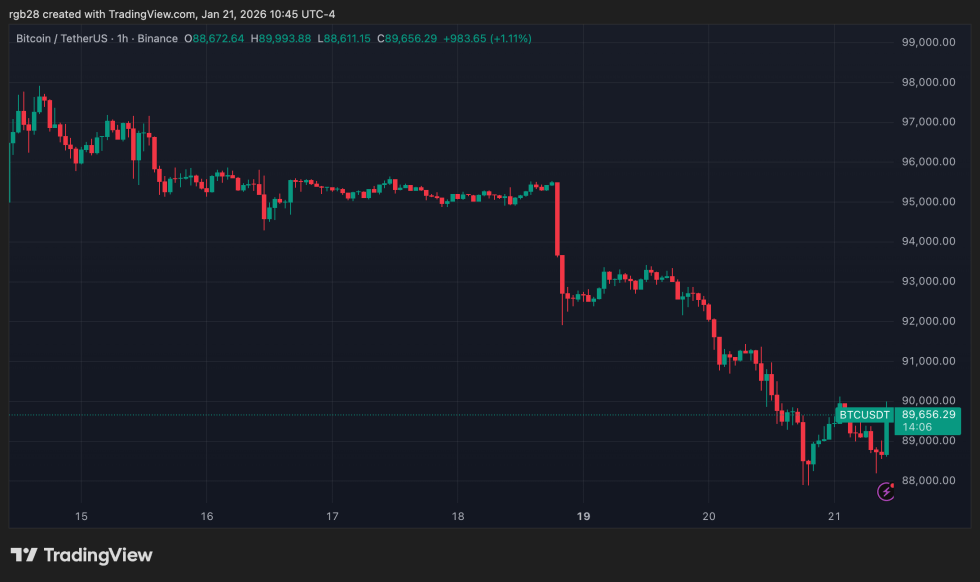
Bitcoin (BTC) trades at $89,656 in the one-week chart. Source: BTCCUSDT on TradingView


Preguntas relacionadas

QWhat is the main purpose of Vietnam's new pilot program for cryptocurrency exchanges?

AThe main purpose is to bring the rapidly growing cryptocurrency market into a formal legal framework and regulate crypto trading platforms under the supervision of local financial authorities, moving the sector out of its previous unregulated 'gray area'.

QWhat is the minimum charter capital requirement for an organization to provide crypto trading services under Resolution No. 05?

AThe minimum charter capital requirement is VND10 trillion, which is worth approximately $380.66 million.

QWhat are the key experience requirements for the leadership of a licensed crypto exchange in Vietnam?

AThe general director must have at least two years of experience in finance, and the Chief Technology Officer (CTO) must have at least five years of experience in information technology.

QWhich major financial institutions have announced plans to participate in Vietnam's crypto pilot program?

AMajor players include SSI's subsidiaries (SSI Digital Technology JSC and SSI Asset Management Company Limited), VIX Securities, MBBank, Techcombank, and VPBank, which have partnered with companies like Tether, U2U Network, Amazon Web Services, FPT Corp., and Dunamu.

QWhat law created the foundation for Vietnam to develop management policies for the digital technology industry, including cryptocurrencies?

AThe 'Law on Digital Technology Industry' was passed by the National Assembly last year and took effect on January 1, 2026, creating the foundation for authorities to develop suitable management policies.

Lecturas Relacionadas

Why Do You Always Lose Money on Polymarket? Because You're Betting on News, While the Pros Read the Rules

Why do you always lose money on Polymarket? Because you bet on news, while the pros study the rules. This article explains how top traders ("che tou") profit by meticulously analyzing market rules, not just predicting events. Polymarket, a prediction market platform, often sees disputes over event outcomes due to ambiguous rule wording. For instance, a market asking "Who will be the leader of Venezuela by the end of 2026?" was misinterpreted by many who bet on Delcy Rodríguez, assuming she held power. However, the rules specified "officially holds" as the formally appointed, sworn-in individual. Since Nicolás Maduro was still recognized as president officially, he won the market—even being in prison. To resolve such disputes, Polymarket uses a decentralized arbitration system via UMA protocol. The process involves: 1. Proposal: Anyone can propose a market outcome by staking 750 USDC, earning 5 USDC if unchallenged. 2. Dispute: A 2-hour window allows challenges with a 750 USDC stake; successful challengers earn 250 USDC. 3. Discussion: A 48-hour period on UMA Discord for evidence and debate. 4. Voting: UMA token holders vote in two 24-hour phases (blind then public). Outcomes require >65% consensus and 5M tokens voted; otherwise, four re-votes occur before Polymarket intervention. 5. Settlement: Results are final and automatic. Unlike traditional courts, Polymarket’s system lacks separation between arbitrators and stakeholders—voters often hold market positions, creating conflicts of interest. This leads to herd mentality in discussions and non-transparent outcomes without explanatory rulings, preventing precedent formation. Thus, success on Polymarket hinges on deep rule interpretation, not just event prediction, exploiting gaps between reality and contractual wording.

marsbitHace 1 hora(s)

Why Do You Always Lose Money on Polymarket? Because You're Betting on News, While the Pros Read the Rules

marsbitHace 1 hora(s)

DeepSeek Funding: Liang Wenfeng's 'Realist' Pivot

DeepSeek, a leading Chinese AI company, has initiated its first external funding round, aiming to raise at least $300 million at a valuation of no less than $10 billion. This move marks a significant shift from its founder Liang Wenfeng’s previous idealistic stance of rejecting external capital to maintain independence. Despite strong financial backing from its parent company, quantitative trading firm幻方量化 (Huanfang Quant), which provided an estimated $700 million in revenue in 2025 alone, DeepSeek faces mounting challenges. Key issues include a 15-month gap in major model updates, delays in its flagship V4 release, and the loss of several core researchers to competitors offering significantly higher compensation. The company is also undergoing a strategic pivot by migrating its infrastructure from NVIDIA’s CUDA to Huawei’s Ascend platform, a move aligned with China’s push for technological self-reliance amid U.S. export controls. However, DeepSeek lags behind rivals like智谱AI and MiniMax—both now publicly listed—in areas such as product ecosystem, multimodal capabilities, and commercialization. The funding round, though relatively small in scale, is seen as a way to establish a market-validated valuation anchor, making employee stock options more competitive and facilitating talent retention. It also signals DeepSeek’s transition from a pure research-oriented organization to a commercially-driven player in the global AI ecosystem.

marsbitHace 2 hora(s)

DeepSeek Funding: Liang Wenfeng's 'Realist' Pivot

marsbitHace 2 hora(s)

Trading

Spot
Futuros
活动图片