USDT Rating Controversy: S&P's 'Stability Scale', Tether's 'Market Debate', and the 'Shadow Central Bank' Transformation

marsbitPublicado a 2025-12-12Actualizado a 2025-12-12

Resumen

The recent S&P Global downgrade of USDT's stability rating from "constrained" to "weak" has ignited a significant debate between traditional finance (TradFi) and the crypto ecosystem. S&P's decision was primarily based on concerns over Tether's reserve composition—now comprising ~24% in higher-volatility assets like Bitcoin and gold—and a perceived lack of governance transparency, fearing these assets could not be liquidated quickly in a mass redemption scenario. Tether countered by emphasizing its proven market resilience, having maintained its peg through multiple past crises, and its real-time reserve reporting. The core of the article identifies a fundamental clash in risk assessment frameworks: TradFi prioritizes redeemability and capital adequacy in extreme stress, while the crypto market's stability is underpinned by 24/7 on-chain liquidity and automated清算 mechanisms. The report further analyzes Tether's strategic shift from a simple stablecoin issuer to a "shadow central bank," diversifying its reserves into assets like BTC and gold for inflation hedging, yield generation, and de-dollarization. This strategy, while profitable in a bull market (e.g., $10B profit in 2025), introduces cyclical risks if asset prices fall. Looking forward, the article suggests the need for a dual-rating system: a traditional stability rating for redeemability and a new investment risk rating for收益 sustainability and exposure management, reflecting the evolving and divergent needs of the...

Article Authors: May P, Janus R

Article Source: CoinFound

About CoinFound: CoinFound is a TradFi Crypto data technology company for institutional and professional investors, providing RWA asset data terminals, RWA asset ratings, Web3 risk relationship graphs, AI analysis tools, and customized data services. From data integration and risk identification to decision support, it helps institutions obtain critical intelligence and convert it into actionable insights at lower costs and higher efficiency, building the global RWA infrastructure.

Takeaway

  • USDT Rating Downgrade and Controversy: The proportion of non-pegged assets (BTC, gold, etc.) in USDT's reserves has reached about 24%, coupled with insufficient governance and transparency, making it perceived as higher risk under the traditional financial framework, leading to the rating downgrade. The downgrade of USDT's rating has sparked controversy.
  • Tether Significantly Increases Gold and Bitcoin Proportion: For purposes such as inflation hedging, asset diversification, reducing single exposure to the US dollar, and enhancing returns, Tether has been continuously increasing the proportion of gold and Bitcoin reserves in recent years.
  • The Essence of the S&P and Tether Disagreement: Traditional financial risk perception prioritizes 'solvency,' focusing on 'the ability to liquidate reserves under extreme redemption pressure'; whereas Tether focuses on 'market liquidity priority' and long-term value preservation and risk resistance (especially inflation risk). Their dimensions for measuring risk are completely different.
  • Strategic Intent Behind Tether's Reserve Transformation: Tether's reserve model is shifting from a '1:1' cash-equivalent reserve to a hybrid model of 'hard assets (gold) + digital assets (BTC) + low-risk assets (US Treasuries)'. Essentially, this is a transformation from a 'stablecoin issuer' to a 'global liquidity provider + digital asset reserve institution,' driven by core factors including inflation hedging needs, pro-cyclical yield enhancement (e.g., the predicted BTC/gold bull market in 2025), and de-dollarization strategy. In fact, Tether is becoming more like a 'shadow central bank' rather than a simple stablecoin issuer.
  • Limitations of the Current Rating System: S&P's 'stability rating' covers 'redemption risk' but cannot address investor demands for Tether's 'asset appreciation capability' and 'cyclical resilience.' The market may require more multi-dimensional risk rating information in the future. Additionally, a dual-framework model of 'Stability Rating (Regulatory + Solvency) + Investment Risk Rating (Return + Cycle)' might be needed to bridge the risk perceptions of traditional and crypto finance.
  • USDT's Short-Term Risks and Long-Term Trends: USDT's peg stability is still supported by on-chain liquidity. However, in the short term, the 24% high-volatility assets (BTC/gold/loans) in the reserves may expose risks during the 2026 interest rate cut cycle and a potential crypto bear market (Tether's books showed huge unrealized gains in 2025 from holding gold and Bitcoin reserves; however, the situation may change in 2026). In the long term, the 'central bank-ization' trend of stablecoins (anti-inflation assets + global network + energy) will drive the industry towards 'transparency + standardization'.

1. Event Recap: The Controversy and Essence of S&P Downgrading USDT's Rating

1.1 Event Timeline and Core Contradiction

In November 2025, S&P Global downgraded USDT's 'Asset/Stability Assessment' from 'constrained' to 'weak', with two core reasons:

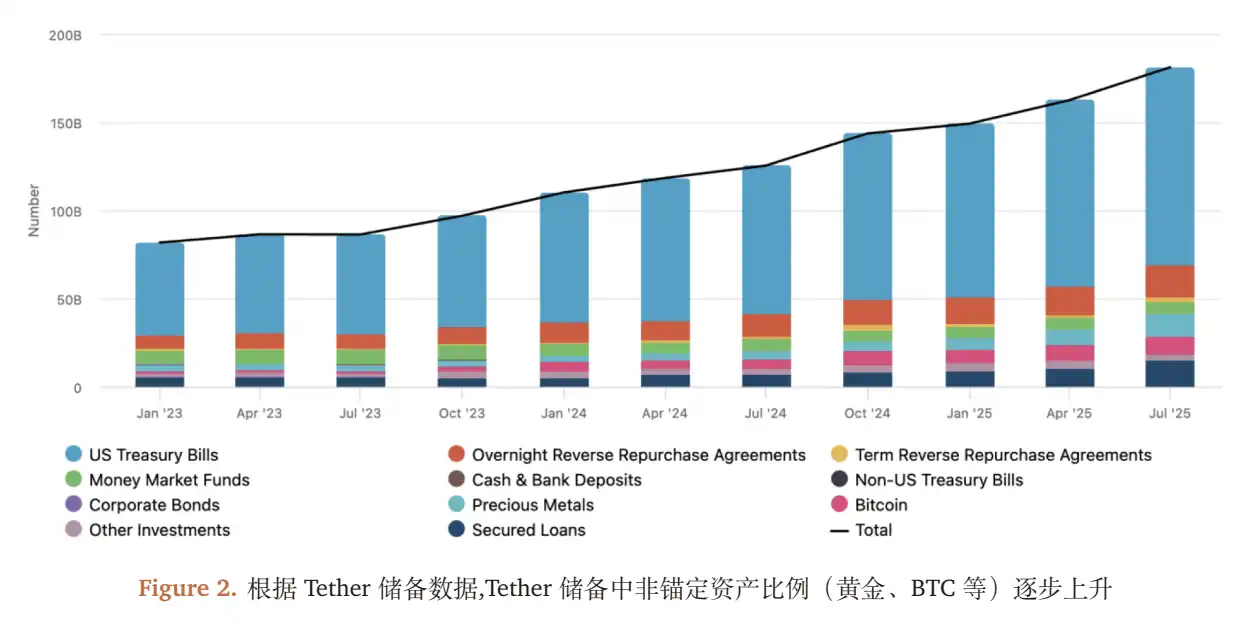
  • Reserve Structure Risk: High-volatility assets (BTC, gold, loans, etc.) in Tether's reserves have reached 24% (only 12% in 2023). Such assets cannot be liquidated quickly in a 'panic redemption' scenario.
  • Insufficient Governance Transparency: Failure to disclose major custodians, details of on-chain collateral segregation mechanisms, and providing only 'quarterly Assurance Reports' instead of full independent audits.

Tether's counterattack focused on 'actual market performance' and questioned the rating methodology from the traditional financial system:

  • Historical Resilience: USDT maintained its peg through 8 extreme events including the 2022 FTX collapse, the 2023 Silicon Valley Bank crisis, and the 2024 crypto regulatory tightening.
  • Leading Transparency: Since 2021, providing 'real-time reserve data' (verifiable via on-chain addresses), with Quarterly Assurance Reports covering over 95% of assets, superior to some traditional money market funds.
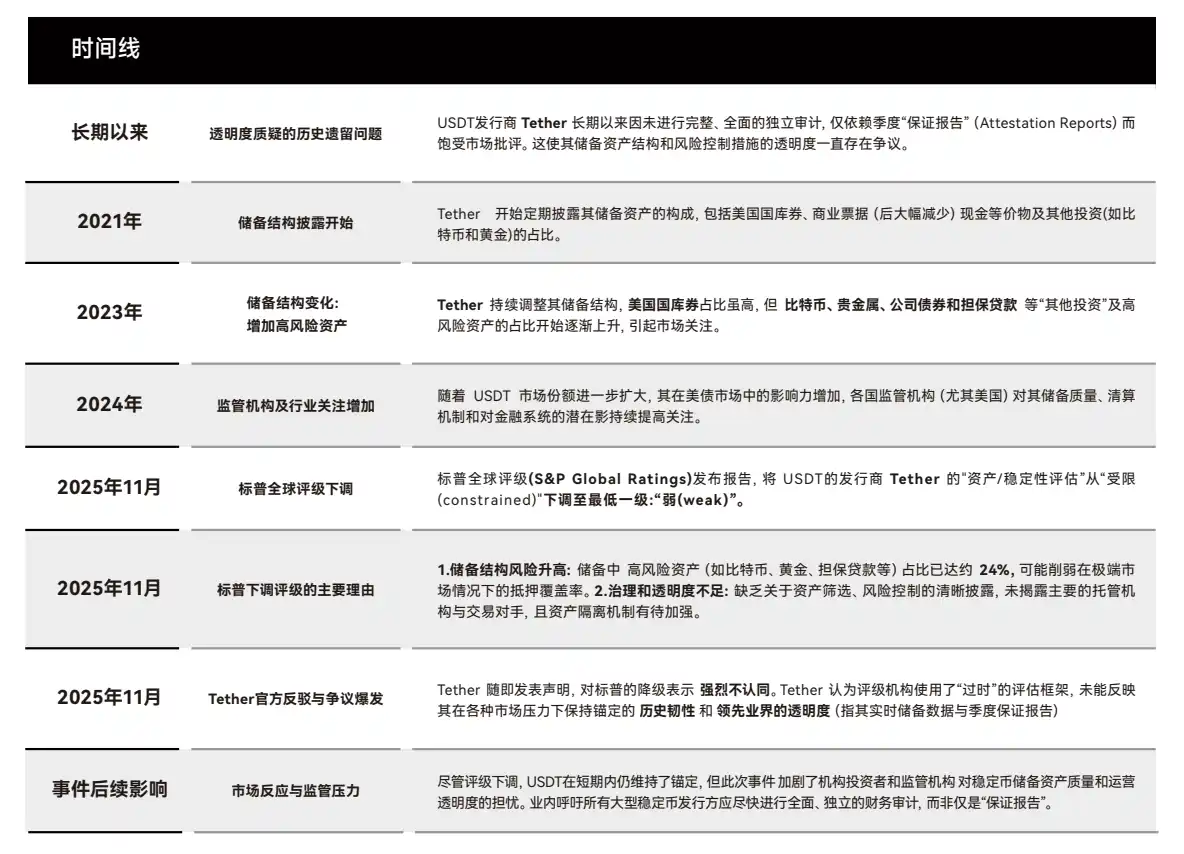
(Chart 1: USDT Rating Downgrade Event Recap)

1.2 The Essence of the Disagreement: Clash of Two Risk Measurement Systems

In November 2025, S&P Global Ratings downgraded USDT's stability assessment to the lowest level, 'weak'. Tether publicly countered, accusing S&P of 'using an old-world framework' and ignoring the multiple extreme stress tests USDT has withstood over the past decade. This debate is not just a rating controversy but a head-on collision of two financial civilizations.

  • S&P represents: The 'Regulation - Capital Adequacy - Solvency' system.
  • Tether represents: The 'Market Liquidity - Global Trading Demand - On-chain Instant Settlement' system.
  • These two measure risk in fundamentally different ways, thus destined to fail to reach consensus. The argument between S&P and Tether,表面上 is a war of words over a 'stability rating,' but本质上 reflects completely different understandings of risk from two different worlds.
  • S&P and Tether: one from 100 years of traditional finance, one from 10 years of on-chain high-frequency markets. S&P uses the logic of 'central bank — bank — money market fund'; Tether relies on the logic of 'on-chain liquidity — perpetual leverage — insurance fund — automatic liquidation.'

And the logic represented by Tether is currently unavailable to traditional financial markets.

1.3 What S&P Sees: The Redemption Logic of Traditional Finance

In the cognitive framework of traditional finance, all 'instruments promising 1:1 redemption' (money market funds, commercial banks, stablecoins) must meet two hard conditions:

1. Reserve assets must be highly safe and immediately liquidatable: S&P noted in its report: Tether's reserves in BTC, gold, and loan-type assets exceed 20%. These assets are volatile and have long liquidation cycles, potentially impossible to sell quickly at face value in a 'panic redemption' scenario.

2. Governance structure must be transparent, custody arrangements must be penetrable: S&P believes Tether's custodian information, on-chain collateral segregation, and risk disclosure are still insufficient.

That is, in S&P's world: The key risk of a 'stablecoin' lies in whether it can withstand the moment when everyone comes to redeem at once? This is the redeemability stability of the traditional system.

1.4 What Tether Insists On: The Liquidity Logic of the Crypto World

If TradFi's stability comes from 'are the reserves enough, fast enough, safe enough?', then Tether's stability comes from 'can I maintain huge liquidity on-chain, can perpetual market risks be absorbed, can the secondary market maintain the price peg?' In other words:

  • TradFi measures stability as redemption ability, while Crypto measures stability as market liquidity + settlement stability.
  • And Tether's ten-year record (including multiple panic markets) indeed shows: USDT's de-pegging is often not due to 'insufficient reserves,' but due to 'temporary imbalance in secondary market liquidity,' which has been quickly repaired each time.

Why does Tether strongly counterattack? Because it adheres to another 'market logic.' Tether's response emphasizes three points:

1. USDT has maintained a 1:1 peg under all extreme sentiments: Including multiple crypto exchange collapses, the Fed's rapid rate hike cycle, regulatory tightening, bank run events, etc. From Tether's perspective, 'I am not theoretically stable, but practically stable after ten years of operation without de-pegging. The real rating of a stablecoin is given by the market daily, not by models.'

2. Real-time reserve data + Quarterly attestation reports are sufficiently transparent: Tether believes it is already superior to some shadow banks or MMFs in TradFi. But S&P does not recognize the form of 'real-time web disclosure' because S&P's methodology distinguishes between 'unaudited transparency and credible transparency.'

3. BTC/Gold are 'anti-inflation assets + strategic reserves', not high-risk exposure: The surge in BTC and gold prices in 2025 gave Tether huge paper profits (over $10 billion). This has effectively made Tether adopt a hybrid central bank-style model of 'hard assets + US Treasuries + loans + digital assets.' Tether's worldview is 'I am like a national central bank's reserves, my structure is not the traditional dollar system, but a new global asset basket.' But S&P's worldview is 'You are not a central bank, you are just a token issuer promising 1:1 redemption.'

1.5 Why Do the Two Sides Have Completely Conflicting Understandings of 'Risk'?

It reveals a key fact: The logic of risk-bearing is completely different between the crypto market and TradFi.

  • Arthur Hayes published an article on perpetual contracts on November 27th. Perpetual contracts are a typical example that fully illustrates the current inability of traditional finance and crypto finance to merge. In traditional finance (TradFi), the risk of forward contracts comes from 'unlimited margin call liability.' In TradFi, untimely liquidation, position bankruptcy, investors losing more than their margin (negative equity) require additional funds (Margin Call), even potentially using all personal assets to repay debts. Therefore, TradFi must require reserves of 'extremely high-quality assets,' tolerating no volatility.
  • But in crypto finance (Crypto), risk is borne by 'insurance funds + automatic liquidation + ADL (Auto-Deleveraging).' This is because in crypto perpetual contracts, losses are not the trader's unlimited liability. In the crypto finance system, liquidation surpluses replenish the insurance fund, liquidation fees inject into the insurance fund, ADL acts as a backstop, and exchange自有 funds supplement. The final result is that crypto users at most lose their margin but do not owe debt. Therefore, the crypto market can accept high-volatility assets more easily because the market structure provides a backstop.

This is the essence of the S&P and Tether分歧: S&P measures TradFi risk, i.e., 'If everyone comes to redeem, can you pay out?' Tether deals with Crypto risk, i.e., in a 7x24 high-volatility market, can I guarantee trading, liquidity, and global high-frequency usage? They are not measuring the same dimension.

2. Tether's Reserve Transformation: The Strategic Logic from 'Stablecoin' to 'Shadow Central Bank'

2.1 Time Series Changes in Reserve Structure (2023-2025)
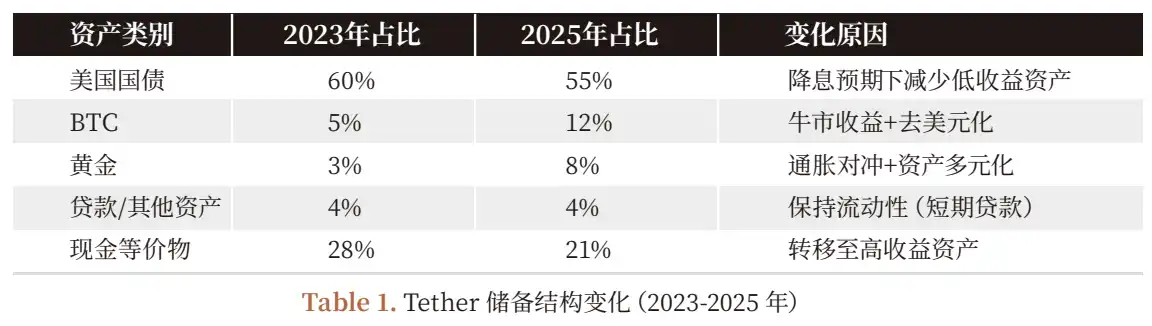
2.2 Why Increase BTC and Gold Proportion? Balancing Pro-Cyclical Returns and Long-Term Strategy

Tether's reserve structure transformation (2023-2025) is not random but a triple consideration of 'return - risk - strategy':

1. Inflation Hedging Demand: Fed rate hikes from 2022-2024 led to a decline in the US dollar's purchasing power (US CPI rose from 2% to 8%), making gold (traditional inflation hedge) and BTC (digital gold) core assets for hedging inflation;

2. Pro-Cyclical Yield Enhancement: In 2025, BTC price rose from $40k to $65k (up 62.5%), gold rose from $1900/oz to $2500/oz (up 31.6%). Tether'sunrealized gains accounted for 70% of the net profit in the first nine months of 2025 ($10 billion) (Treasury interest contributed only $3 billion);

3. De-Dollarization Strategy: The proportion of US dollar reserves in Tether dropped from 75% in 2023 to 55% in 2025. By increasing the proportion of gold and BTC, it reduces exposure to the single asset of the US dollar (responding to the US debt ceiling crisis, global de-dollarization trend).

2.3 The 'Sweetness and Hidden Danger' of the Profit Structure: Risks Under the Pro-Cyclical Trend

Tether's 2025 performance (net profit exceeding $10B in the first nine months) seems brilliant, but its profit structure highly depends on the 'bull market cycle':

  • Stable Income: Interest income from approximately $135 billion in US Treasuries (1-year Treasury yield about 2.2% in 2025), contributing about $3 billion;
  • Floating Income: Unrealized gains from BTC (approx. 100k coins) and gold (approx. 10 million ounces), contributing about $7 billion (corresponding to a BTC rise of $25k/coin, gold rise of $600/oz).

Risk Transmission Mechanism:

  • If the Fed cuts rates by 25bp in 2026 (market consensus), Tether's Treasury interest income willdecrease by $337.5 million per year ($135B * 0.25%);
  • If BTC price falls 20% (back to $52k), gold falls 10% (back to $2250/oz), Tether's unrealized gains willshrink by approximately $2.5 billion (BTC impairment ~$2.5B? Calculation based on provided numbers might differ: 100k BTC * $13k drop = $1.3B? 10M oz Gold * $250 drop = $2.5B. Total ~$3.8B? The original text says 25亿美元缩水. Assuming original numbers are estimates.);
  • If the crypto market enters a bear market (like 2022), stablecoin issuance contracts (USDT issuance dropped from $80B to $60B in 2022), Tether's Treasury holdings规模 will decrease, further compressing interest income.

2.4 The Ultimate Goal of Strategic Transformation: From 'Stablecoin' to 'Shadow Central Bank'

By tracking Tether's on-chain addresses and business布局, we find it has surpassed the定位 of a 'stablecoin issuer' and is building a 'shadow central bank' system of 'anti-inflation asset reserves + global stablecoin issuance + on-chain distribution network + energy':

  • Anti-Inflation Asset Reserves: BTC, gold占比 24%, corresponding to 'central bank's foreign exchange reserves';
  • Global Stablecoin Issuance: USDT's on-chain trading volume in 150 countries accounts for 70% of the total stablecoin trading volume, corresponding to 'central bank's currency issuance';
  • On-Chain Distribution Network: Cooperating with 200+ exchanges/DeFi protocols like Binance, Uniswap, enabling global instant transfers of USDT;
  • Energy Layout: Investing $1 billion in Bitcoin mining farms (accounting for 5% of global算力 in 2025), hedging the energy costs of BTC mining.
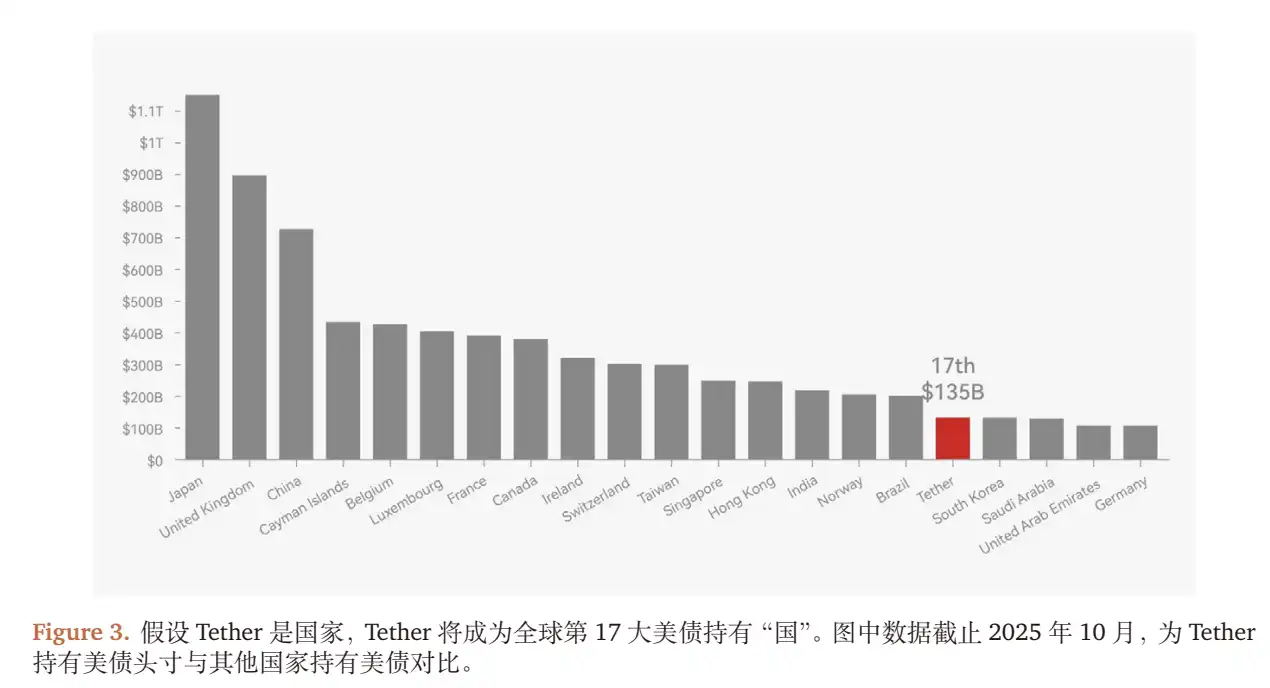
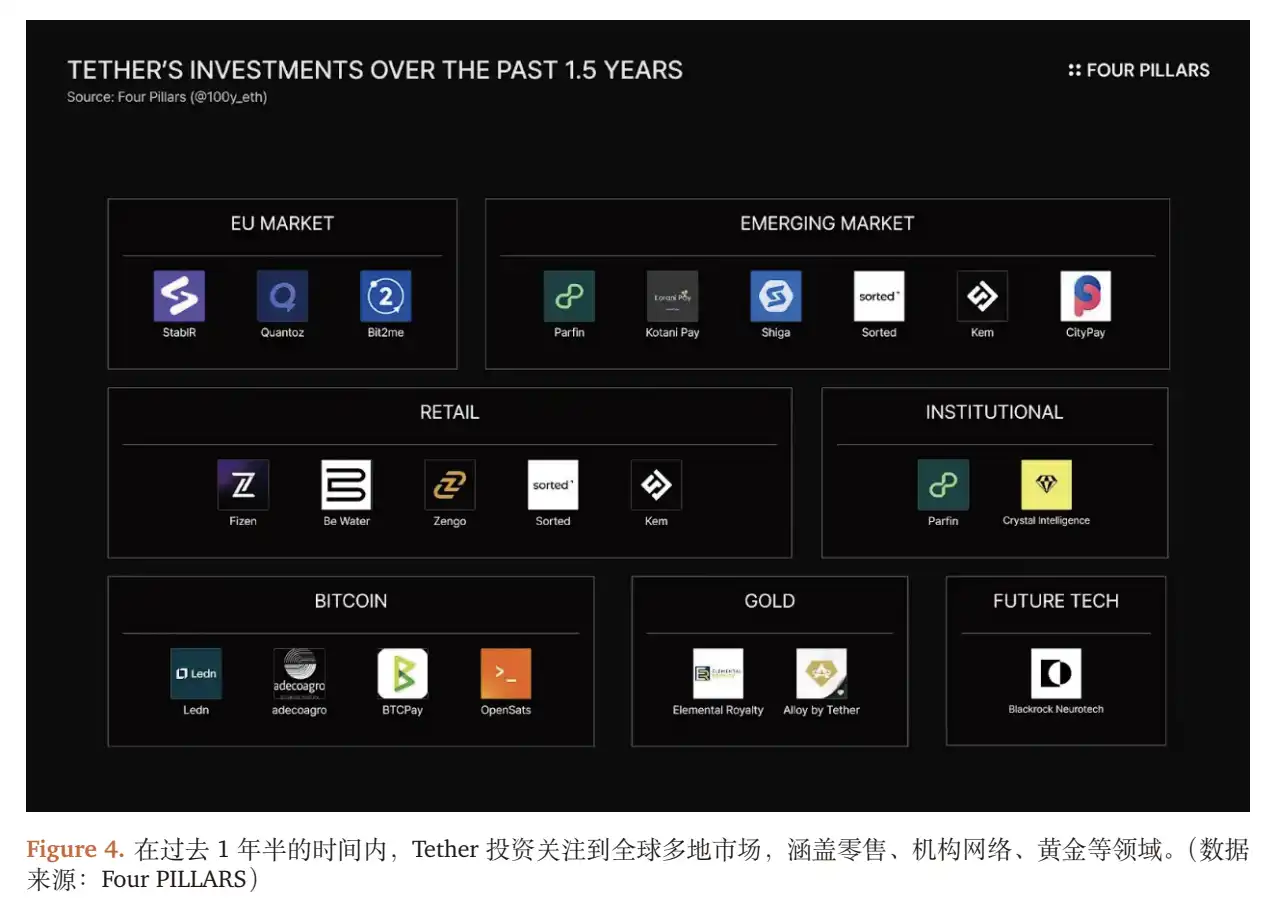
2.5 Market Performance: USDT's Peg Stability and Liquidity

  • Peg Deviation: From 2023-2025, USDT's price deviation (spread against the US dollar) averaged only 0.02%, far lower than USDC (0.05%) and DAI (0.1%);
  • On-Chain Liquidity: The liquidity pool size of USDT on Uniswap V3 reached $5 billion? (Original text says 50$ 亿美元, likely $5B or $50B? 2023 was only $1B), market maker quote spread (Spread) stabilized within 0.01%;
  • Institutional Holdings: The proportion of institutions holding USDT increased from 15% in 2023 to 30% in 2025, indicating that institutions already regard USDT as a 'portfolio tool combining liquidity and asset appreciation (rather than a pure stablecoin).

3. Future Outlook: The Evolution Direction of Stablecoin Rating Systems

3.1 Limitations of the Current Rating System: Only Covers Redemption Risk

S&P's stability rating addresses the question ofwhether the stablecoin can be redeemed, but cannot respond to the core needs of institutional investors:

  • Quality of Earnings: Is Tether's profit sustainable? (e.g., declining收益 after Treasury rate cuts)
  • Exposure Risk: Is the proportion of BTC and gold too high? (e.g., impact of a 20% drop in BTC on reserves)
  • Operational Risk: Is Tether's governance transparent? (e.g., security of custodied assets)
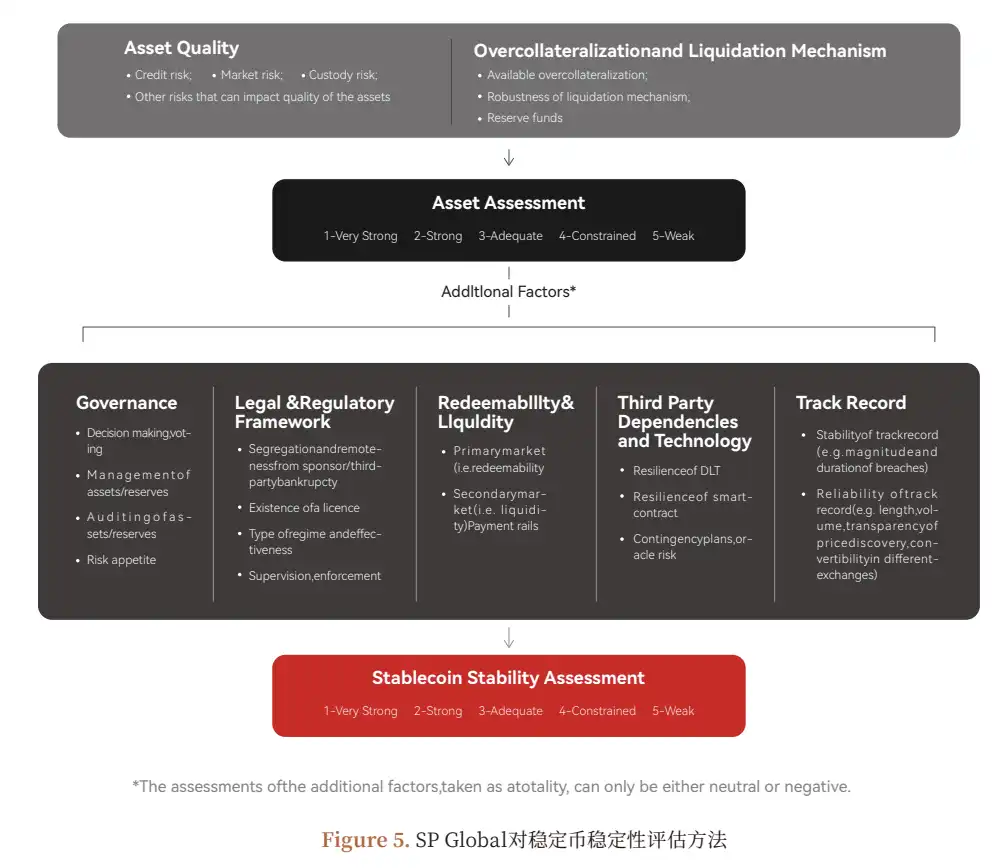
3.2 Beyond the Current Rating System

In the future, the crypto market may need a more comprehensive rating system, not just focusing on redemption and stability. The future rating design might be as follows:

Stability Rating (Upgrade of existing framework)

  • Core Metrics: Reserve assets' 'Safety Coefficient' (cash equivalent ratio), 'Liquidity Coefficient' (liquidation cycle of high-volatility assets), 'Transparency Coefficient' (independent audit coverage, custody information disclosure);
  • Goal: Answer the question 'Can the stablecoin maintain redemption under extreme挤兑?'

Investment Risk Rating (New framework)

Core Metrics:

  • Earnings Quality: Proportion of stable income (Treasury interest) (>=50% is 'low risk');
  • Exposure Management: Proportion of high-volatility assets (<=10% is 'low risk');
  • Operational Risk: Profit growth rate of the issuer (>=10% is 'stable'), regulatory compliance (e.g., US MSB license, EU MiCA certification);
  • Goal: Answer the question 'Can the stablecoin issuer operate sustainably, and can its reserve assets appreciate?'

3.3 Industry Trend: From 'Controversy' to 'Standard'

This controversy between S&P and Tether is essentially the 'rule export' from traditional finance to the crypto market. We judge:

  • Short Term: Regulation will promote 'mandatory transparency requirements' for stablecoins (e.g., the US Stablecoin Bill requiring 100% cash-equivalent reserves, EU MiCA requiring full audits);
  • Medium Term: The rating system will develop further, and ratings will not be limited to the 'regulation - capital adequacy - solvency' system. Institutional investors will choose stablecoins based on 'Stability Rating + Investment Risk Rating' for different scenarios;
  • Long Term: Stablecoins may further differentiate into 'pure stability tools' (e.g., USDC, 100% cash equivalents) and 'stability tools with appreciation' (e.g., USDT, hybrid reserves), meeting the needs of different investors.

Risk Warning

1. Reserve Asset Price Volatility Risk: A drop in BTC and gold prices will lead to impairment of Tether's reserves, affecting redemption confidence;

2. Regulatory Policy Risk: If the US and EU require stablecoins to hold 100% cash equivalents, Tether will need to sell BTC and gold, causing profits to plummet;

3. Market Liquidity Risk: In extreme market conditions (e.g., 2022 FTX collapse), on-chain liquidity drying up may cause USDT to de-peg;

4. Operational Management Risk: Tether's lack of governance transparency may trigger internal operational risks (e.g., custodied assets being stolen).

《USDT Rating Controversy》Research Report Download Link:https://app.coinfound.org/research/1

Analyst Statement: This report is based on public information and reasonable assumptions and does not constitute investment advice. The analyst does not hold positions in Tether or USDT.

Copyright Statement: The copyright of this report belongs to Coinfound.

Preguntas relacionadas

QWhat were the main reasons cited by S&P Global for downgrading USDT's stability rating in November 2025?

AS&P Global downgraded USDT's stability rating due to two main reasons: 1) Reserve structure risk, with high-volatility assets (BTC, gold, loans) making up 24% of Tether's reserves, which could not be quickly liquidated in a panic-driven bank run scenario. 2) Insufficient governance transparency, including a lack of disclosure on key custodians, details of on-chain collateral isolation mechanisms, and the provision of only quarterly assurance reports instead of full, independent audits.

QHow does the fundamental understanding of 'risk' differ between S&P's traditional finance (TradFi) framework and Tether's crypto market perspective?

AS&P's TradFi framework measures risk based on 'redeemability,' focusing on whether the stablecoin can withstand a mass redemption event by holding highly secure, immediately liquidatable assets. In contrast, Tether's crypto market perspective measures risk based on 'market liquidity and settlement stability,' emphasizing its ability to maintain massive on-chain liquidity, absorb perpetual market risks, and ensure price stability through a 24/7 high-frequency trading environment, as proven by its historical performance during extreme events.

QWhat are the three strategic reasons behind Tether's decision to significantly increase its BTC and gold reserves from 2023 to 2025?

ATether increased its BTC and gold reserves for three strategic reasons: 1) Inflation hedging needs, as rising U.S. CPI eroded dollar purchasing power, making gold and BTC core hedges. 2) Pro-cyclical yield enhancement, as the price surges in BTC (up 62.5%) and gold (up 31.6%) in 2025 generated massive unrealized gains, contributing 70% of Tether's $10 billion net profit. 3) De-dollarization strategy, reducing exposure to the U.S. dollar from 75% to 55% to mitigate risks from U.S. debt ceiling crises and global de-dollarization trends.

QWhat is Tether's strategic transformation goal, and what four key elements define its new 'shadow central bank' model?

ATether's strategic goal is to transform from a simple stablecoin issuer into a 'shadow central bank.' This new model is defined by four key elements: 1) Anti-inflation asset reserves (BTC, gold acting like a central bank's forex reserves). 2) Global stablecoin issuance (USDT's dominant 70% transaction share across 150 countries, akin to a central bank's currency issuance). 3) On-chain distribution network (partnerships with 200+ exchanges/DeFi protocols for instant global transfers). 4) Energy sector布局 (a $1 billion investment in Bitcoin mining, hedging BTC's energy costs and securing 5% of global hash rate).

QWhat are the proposed two frameworks for a more comprehensive stablecoin rating system that could bridge TradFi and Crypto risk perceptions?

AThe proposed two-framework system includes: 1) A Stability Rating (an upgraded existing framework) with core metrics like the 'safety coefficient' (cash-equivalent ratio), 'liquidity coefficient' (liquidation period of volatile assets), and 'transparency coefficient' (independent audit coverage, custodian disclosure), answering if a stablecoin can redeem during extreme runs. 2) An Investment Risk Rating (a new framework) with core metrics like 'yield quality' (ratio of stable income like treasury interest), 'exposure management' (ratio of high-volatility assets), and 'operational risk' (profit growth, regulatory compliance), answering if the issuer can sustain operations and grow its reserve assets.

Lecturas Relacionadas

$500 to Buy OpenAI Stock: Silicon Valley's Most Respectable Liquidity Invitation

Silicon Valley's largest venture capital platform, AngelList, has launched a new fund called USVC, allowing U.S. retail investors to buy into high-profile AI companies like OpenAI, Anthropic, and xAI with a minimum investment of $500—no accredited investor status required. Promoted by AngelList co-founder Naval Ravikant, the fund is framed as an opportunity for ordinary people to access high-growth private tech investments traditionally reserved for VCs. However, critics argue it functions more like an exit vehicle for early insiders. USVC acquires shares not through primary rounds but largely via secondary transactions—purchasing stakes from early investors, VC funds, and employees looking to cash out at peak valuations. With companies like xAI heavily weighted in the portfolio, the fund effectively channels retail money into providing liquidity for insiders who entered at much lower valuations. The fund’s structure raises concerns: shares are illiquid, with no secondary market, and buybacks are limited and discretionary. The actual annual fee reaches 3.61%, far above the advertised 1% management fee. This model parallels the "low float, high fully diluted valuation" strategy seen in crypto, where early investors profit by selling to latecomers at inflated prices. The timing—alongside similar moves by platforms like Robinhood—suggests that Silicon Valley’s sudden interest in retail inclusion may be less about democratizing access and more about securing exits for insiders.

marsbitHace 21 min(s)

$500 to Buy OpenAI Stock: Silicon Valley's Most Respectable Liquidity Invitation

marsbitHace 21 min(s)

Trading

Spot
Futuros

Artículos destacados

Qué es $S$

Entendiendo SPERO: Una Visión General Completa Introducción a SPERO A medida que el panorama de la innovación continúa evolucionando, la aparición de tecnologías web3 y proyectos de criptomonedas juega un papel fundamental en la configuración del futuro digital. Un proyecto que ha atraído la atención en este campo dinámico es SPERO, denotado como SPERO,$$s$. Este artículo tiene como objetivo reunir y presentar información detallada sobre SPERO, para ayudar a entusiastas e inversores a comprender sus fundamentos, objetivos e innovaciones dentro de los dominios web3 y cripto. ¿Qué es SPERO,$$s$? SPERO,$$s$ es un proyecto único dentro del espacio cripto que busca aprovechar los principios de descentralización y tecnología blockchain para crear un ecosistema que promueva la participación, la utilidad y la inclusión financiera. El proyecto está diseñado para facilitar interacciones de igual a igual de nuevas maneras, proporcionando a los usuarios soluciones y servicios financieros innovadores. En su esencia, SPERO,$$s$ tiene como objetivo empoderar a los individuos al proporcionar herramientas y plataformas que mejoren la experiencia del usuario en el espacio de las criptomonedas. Esto incluye habilitar métodos de transacción más flexibles, fomentar iniciativas impulsadas por la comunidad y crear caminos para oportunidades financieras a través de aplicaciones descentralizadas (dApps). La visión subyacente de SPERO,$$s$ gira en torno a la inclusividad, buscando cerrar brechas dentro de las finanzas tradicionales mientras aprovecha los beneficios de la tecnología blockchain. ¿Quién es el Creador de SPERO,$$s$? La identidad del creador de SPERO,$$s$ sigue siendo algo oscura, ya que hay recursos públicos limitados que proporcionan información de fondo detallada sobre su(s) fundador(es). Esta falta de transparencia puede derivarse del compromiso del proyecto con la descentralización, una ética que muchos proyectos web3 comparten, priorizando las contribuciones colectivas sobre el reconocimiento individual. Al centrar las discusiones en torno a la comunidad y sus objetivos colectivos, SPERO,$$s$ encarna la esencia del empoderamiento sin señalar a individuos específicos. Como tal, comprender la ética y la misión de SPERO sigue siendo más importante que identificar a un creador singular. ¿Quiénes son los Inversores de SPERO,$$s$? SPERO,$$s$ cuenta con el apoyo de una diversa gama de inversores que van desde capitalistas de riesgo hasta inversores ángeles dedicados a fomentar la innovación en el sector cripto. El enfoque de estos inversores generalmente se alinea con la misión de SPERO, priorizando proyectos que prometen avances tecnológicos sociales, inclusión financiera y gobernanza descentralizada. Estas fundaciones de inversores suelen estar interesadas en proyectos que no solo ofrecen productos innovadores, sino que también contribuyen positivamente a la comunidad blockchain y sus ecosistemas. El respaldo de estos inversores refuerza a SPERO,$$s$ como un contendiente notable en el dominio de proyectos cripto que evoluciona rápidamente. ¿Cómo Funciona SPERO,$$s$? SPERO,$$s$ emplea un marco multifacético que lo distingue de los proyectos de criptomonedas convencionales. Aquí hay algunas de las características clave que subrayan su singularidad e innovación: Gobernanza Descentralizada: SPERO,$$s$ integra modelos de gobernanza descentralizada, empoderando a los usuarios para participar activamente en los procesos de toma de decisiones sobre el futuro del proyecto. Este enfoque fomenta un sentido de propiedad y responsabilidad entre los miembros de la comunidad. Utilidad del Token: SPERO,$$s$ utiliza su propio token de criptomoneda, diseñado para servir diversas funciones dentro del ecosistema. Estos tokens permiten transacciones, recompensas y la facilitación de servicios ofrecidos en la plataforma, mejorando la participación y la utilidad general. Arquitectura en Capas: La arquitectura técnica de SPERO,$$s$ apoya la modularidad y escalabilidad, permitiendo la integración fluida de características y aplicaciones adicionales a medida que el proyecto evoluciona. Esta adaptabilidad es fundamental para mantener la relevancia en el cambiante paisaje cripto. Participación de la Comunidad: El proyecto enfatiza iniciativas impulsadas por la comunidad, empleando mecanismos que incentivan la colaboración y la retroalimentación. Al nutrir una comunidad sólida, SPERO,$$s$ puede abordar mejor las necesidades de los usuarios y adaptarse a las tendencias del mercado. Enfoque en la Inclusión: Al ofrecer tarifas de transacción bajas e interfaces amigables para el usuario, SPERO,$$s$ busca atraer a una base de usuarios diversa, incluyendo a individuos que anteriormente pueden no haber participado en el espacio cripto. Este compromiso con la inclusión se alinea con su misión general de empoderamiento a través de la accesibilidad. Cronología de SPERO,$$s$ Entender la historia de un proyecto proporciona información crucial sobre su trayectoria de desarrollo y hitos. A continuación se presenta una cronología sugerida que mapea eventos significativos en la evolución de SPERO,$$s$: Fase de Conceptualización e Ideación: Las ideas iniciales que forman la base de SPERO,$$s$ fueron concebidas, alineándose estrechamente con los principios de descentralización y enfoque comunitario dentro de la industria blockchain. Lanzamiento del Whitepaper del Proyecto: Tras la fase conceptual, se lanzó un whitepaper completo que detalla la visión, los objetivos y la infraestructura tecnológica de SPERO,$$s$ para generar interés y retroalimentación de la comunidad. Construcción de Comunidad y Primeras Interacciones: Se realizaron esfuerzos de divulgación activa para construir una comunidad de primeros adoptantes y posibles inversores, facilitando discusiones en torno a los objetivos del proyecto y obteniendo apoyo. Evento de Generación de Tokens: SPERO,$$s$ llevó a cabo un evento de generación de tokens (TGE) para distribuir sus tokens nativos a los primeros seguidores y establecer liquidez inicial dentro del ecosistema. Lanzamiento de la dApp Inicial: La primera aplicación descentralizada (dApp) asociada con SPERO,$$s$ se puso en marcha, permitiendo a los usuarios interactuar con las funcionalidades centrales de la plataforma. Desarrollo Continuo y Alianzas: Actualizaciones y mejoras continuas a las ofertas del proyecto, incluyendo alianzas estratégicas con otros actores en el espacio blockchain, han moldeado a SPERO,$$s$ en un jugador competitivo y en evolución en el mercado cripto. Conclusión SPERO,$$s$ se erige como un testimonio del potencial de web3 y las criptomonedas para revolucionar los sistemas financieros y empoderar a los individuos. Con un compromiso con la gobernanza descentralizada, la participación comunitaria y funcionalidades diseñadas de manera innovadora, allana el camino hacia un paisaje financiero más inclusivo. Como con cualquier inversión en el espacio cripto que evoluciona rápidamente, se anima a los posibles inversores y usuarios a investigar a fondo y participar de manera reflexiva con los desarrollos en curso dentro de SPERO,$$s$. El proyecto muestra el espíritu innovador de la industria cripto, invitando a una mayor exploración de sus innumerables posibilidades. Mientras el viaje de SPERO,$$s$ aún se desarrolla, sus principios fundamentales pueden, de hecho, influir en el futuro de cómo interactuamos con la tecnología, las finanzas y entre nosotros en ecosistemas digitales interconectados.

72 Vistas totalesPublicado en 2024.12.17Actualizado en 2024.12.17

Qué es $S$

Qué es AGENT S

Agent S: El Futuro de la Interacción Autónoma en Web3 Introducción En el paisaje en constante evolución de Web3 y las criptomonedas, las innovaciones están redefiniendo constantemente cómo los individuos interactúan con las plataformas digitales. Uno de estos proyectos pioneros, Agent S, promete revolucionar la interacción humano-computadora a través de su marco agente abierto. Al allanar el camino para interacciones autónomas, Agent S busca simplificar tareas complejas, ofreciendo aplicaciones transformadoras en inteligencia artificial (IA). Esta exploración detallada profundizará en las complejidades del proyecto, sus características únicas y las implicaciones para el dominio de las criptomonedas. ¿Qué es Agent S? Agent S se presenta como un marco agente abierto innovador, diseñado específicamente para abordar tres desafíos fundamentales en la automatización de tareas informáticas: Adquisición de Conocimiento Específico del Dominio: El marco aprende inteligentemente de diversas fuentes de conocimiento externas y experiencias internas. Este enfoque dual le permite construir un rico repositorio de conocimiento específico del dominio, mejorando su rendimiento en la ejecución de tareas. Planificación a Largo Plazo de Tareas: Agent S emplea planificación jerárquica aumentada por la experiencia, un enfoque estratégico que facilita la descomposición y ejecución eficiente de tareas complejas. Esta característica mejora significativamente su capacidad para gestionar múltiples subtareas de manera eficiente y efectiva. Manejo de Interfaces Dinámicas y No Uniformes: El proyecto introduce la Interfaz Agente-Computadora (ACI), una solución innovadora que mejora la interacción entre agentes y usuarios. Utilizando Modelos de Lenguaje Multimodal de Gran Escala (MLLMs), Agent S puede navegar y manipular diversas interfaces gráficas de usuario sin problemas. A través de estas características pioneras, Agent S proporciona un marco robusto que aborda las complejidades involucradas en la automatización de la interacción humana con las máquinas, preparando el terreno para una multitud de aplicaciones en IA y más allá. ¿Quién es el Creador de Agent S? Si bien el concepto de Agent S es fundamentalmente innovador, la información específica sobre su creador sigue siendo elusiva. El creador es actualmente desconocido, lo que resalta ya sea la etapa incipiente del proyecto o la elección estratégica de mantener a los miembros fundadores en el anonimato. Independientemente de la anonimidad, el enfoque sigue siendo en las capacidades y el potencial del marco. ¿Quiénes son los Inversores de Agent S? Dado que Agent S es relativamente nuevo en el ecosistema criptográfico, la información detallada sobre sus inversores y patrocinadores financieros no está documentada explícitamente. La falta de información disponible públicamente sobre las bases de inversión u organizaciones que apoyan el proyecto plantea preguntas sobre su estructura de financiamiento y hoja de ruta de desarrollo. Comprender el respaldo es crucial para evaluar la sostenibilidad del proyecto y su posible impacto en el mercado. ¿Cómo Funciona Agent S? En el núcleo de Agent S se encuentra una tecnología de vanguardia que le permite funcionar de manera efectiva en diversos entornos. Su modelo operativo se basa en varias características clave: Interacción Humano-Computadora Similar a la Humana: El marco ofrece planificación avanzada de IA, esforzándose por hacer que las interacciones con las computadoras sean más intuitivas. Al imitar el comportamiento humano en la ejecución de tareas, promete elevar las experiencias de los usuarios. Memoria Narrativa: Empleada para aprovechar experiencias de alto nivel, Agent S utiliza memoria narrativa para hacer un seguimiento de las historias de tareas, mejorando así sus procesos de toma de decisiones. Memoria Episódica: Esta característica proporciona a los usuarios una guía paso a paso, permitiendo que el marco ofrezca apoyo contextual a medida que se desarrollan las tareas. Soporte para OpenACI: Con la capacidad de ejecutarse localmente, Agent S permite a los usuarios mantener el control sobre sus interacciones y flujos de trabajo, alineándose con la ética descentralizada de Web3. Fácil Integración con APIs Externas: Su versatilidad y compatibilidad con varias plataformas de IA aseguran que Agent S pueda encajar sin problemas en ecosistemas tecnológicos existentes, convirtiéndolo en una opción atractiva para desarrolladores y organizaciones. Estas funcionalidades contribuyen colectivamente a la posición única de Agent S dentro del espacio cripto, ya que automatiza tareas complejas y de múltiples pasos con una intervención humana mínima. A medida que el proyecto evoluciona, sus posibles aplicaciones en Web3 podrían redefinir cómo se desarrollan las interacciones digitales. Cronología de Agent S El desarrollo y los hitos de Agent S pueden encapsularse en una cronología que resalta sus eventos significativos: 27 de septiembre de 2024: El concepto de Agent S fue lanzado en un documento de investigación integral titulado “Un Marco Agente Abierto que Usa Computadoras Como un Humano”, mostrando las bases del proyecto. 10 de octubre de 2024: El documento de investigación fue puesto a disposición del público en arXiv, ofreciendo una exploración profunda del marco y su evaluación de rendimiento basada en el benchmark OSWorld. 12 de octubre de 2024: Se lanzó una presentación en video, proporcionando una visión visual de las capacidades y características de Agent S, involucrando aún más a posibles usuarios e inversores. Estos marcadores en la cronología no solo ilustran el progreso de Agent S, sino que también indican su compromiso con la transparencia y la participación comunitaria. Puntos Clave Sobre Agent S A medida que el marco Agent S continúa evolucionando, varios atributos clave destacan, subrayando su naturaleza innovadora y potencial: Marco Innovador: Diseñado para proporcionar un uso intuitivo de las computadoras similar a la interacción humana, Agent S aporta un enfoque novedoso a la automatización de tareas. Interacción Autónoma: La capacidad de interactuar de manera autónoma con las computadoras a través de GUI significa un salto hacia soluciones informáticas más inteligentes y eficientes. Automatización de Tareas Complejas: Con su metodología robusta, puede automatizar tareas complejas y de múltiples pasos, haciendo que los procesos sean más rápidos y menos propensos a errores. Mejora Continua: Los mecanismos de aprendizaje permiten a Agent S mejorar a partir de experiencias pasadas, mejorando continuamente su rendimiento y eficacia. Versatilidad: Su adaptabilidad en diferentes entornos operativos como OSWorld y WindowsAgentArena asegura que pueda servir a una amplia gama de aplicaciones. A medida que Agent S se posiciona en el paisaje de Web3 y criptomonedas, su potencial para mejorar las capacidades de interacción y automatizar procesos significa un avance significativo en las tecnologías de IA. A través de su marco innovador, Agent S ejemplifica el futuro de las interacciones digitales, prometiendo una experiencia más fluida y eficiente para los usuarios en diversas industrias. Conclusión Agent S representa un audaz avance en la unión de la IA y Web3, con la capacidad de redefinir cómo interactuamos con la tecnología. Aunque aún se encuentra en sus primeras etapas, las posibilidades para su aplicación son vastas y atractivas. A través de su marco integral que aborda desafíos críticos, Agent S busca llevar las interacciones autónomas al primer plano de la experiencia digital. A medida que nos adentramos más en los reinos de las criptomonedas y la descentralización, proyectos como Agent S sin duda desempeñarán un papel crucial en la configuración del futuro de la tecnología y la colaboración humano-computadora.

337 Vistas totalesPublicado en 2025.01.14Actualizado en 2025.01.14

Qué es AGENT S

Cómo comprar S

¡Bienvenido a HTX.com! Hemos hecho que comprar Sonic (S) sea simple y conveniente. Sigue nuestra guía paso a paso para iniciar tu viaje de criptos.Paso 1: crea tu cuenta HTXUtiliza tu correo electrónico o número de teléfono para registrarte y obtener una cuenta gratuita en HTX. Experimenta un proceso de registro sin complicaciones y desbloquea todas las funciones.Obtener mi cuentaPaso 2: ve a Comprar cripto y elige tu método de pagoTarjeta de crédito/débito: usa tu Visa o Mastercard para comprar Sonic (S) al instante.Saldo: utiliza fondos del saldo de tu cuenta HTX para tradear sin problemas.Terceros: hemos agregado métodos de pago populares como Google Pay y Apple Pay para mejorar la comodidad.P2P: tradear directamente con otros usuarios en HTX.Over-the-Counter (OTC): ofrecemos servicios personalizados y tipos de cambio competitivos para los traders.Paso 3: guarda tu Sonic (S)Después de comprar tu Sonic (S), guárdalo en tu cuenta HTX. Alternativamente, puedes enviarlo a otro lugar mediante transferencia blockchain o utilizarlo para tradear otras criptomonedas.Paso 4: tradear Sonic (S)Tradear fácilmente con Sonic (S) en HTX's mercado spot. Simplemente accede a tu cuenta, selecciona tu par de trading, ejecuta tus trades y monitorea en tiempo real. Ofrecemos una experiencia fácil de usar tanto para principiantes como para traders experimentados.

712 Vistas totalesPublicado en 2025.01.15Actualizado en 2025.03.21

Cómo comprar S

Discusiones

Bienvenido a la comunidad de HTX. Aquí puedes mantenerte informado sobre los últimos desarrollos de la plataforma y acceder a análisis profesionales del mercado. A continuación se presentan las opiniones de los usuarios sobre el precio de S (S).

活动图片