Original | Odaily Planet Daily (@OdailyChina)
Author | DingDang (@XiaMiPP)
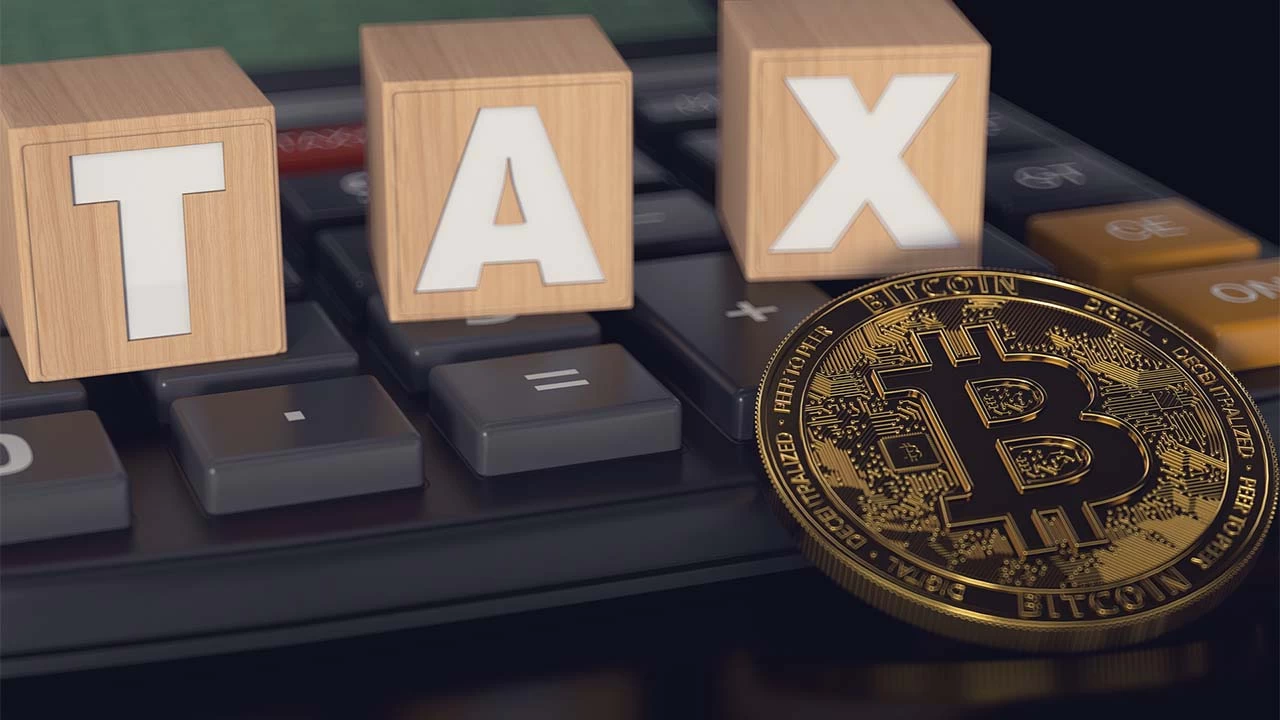
Recently, the U.S. Internal Revenue Service (IRS) has introduced a new investigation form in crypto tax audits.
The full name of this form is "List of Digital Asset Platforms, Wallets, Services, and Products Used (Individual Taxpayers)". It requires taxpayers to disclose item by item the crypto platforms and tools they have used. Taxpayers need to complete and sign the form within about four weeks after receiving the notice.
This form is divided into three parts: First, exchanges, which now lists over 100 large and small crypto exchanges and trading platforms, such as Coinbase, Binance, Kraken, Gemini, OKX. Even the bankrupt FTX is included. Taxpayers receiving the form must mark "Yes" or "No" for each platform and provide usage details, such as account ID, transaction history, etc. Second, it requires disclosure of all self-custody wallets and custodial wallets, including MetaMask, Ledger, Trezor, Trust Wallet, etc. If a taxpayer has used wallets like MetaMask to interact with DeFi protocols, such as Uniswap, Aave, Compound, for lending, liquidity provision, or cross-chain bridging, this also needs to be disclosed. Third, the taxpayer must sign a declaration confirming that the provided information is complete and accurate, under penalty of perjury. This means that if tax authorities later discover omissions or errors in the information, this document itself can become legal evidence.
Many people's first reaction upon seeing this questionnaire might be: Is the U.S. suddenly starting to crack down on crypto taxes?
But actually, no. If we look back at the timeline, we will find that this is not a sudden regulatory storm, but the result of the U.S. tax system's step-by-step progression over the past few years. Today's survey form is actually the tax department, having already gathered some information, asking taxpayers to complete the remaining pieces of the puzzle.
Starting with that Coinbase subpoena
In 2017, the IRS applied to a federal court for a调查令 known as a "John Doe subpoena", requesting that Coinbase, one of the largest U.S. crypto exchanges, provide user transaction data. A John Doe subpoena is a special tool in U.S. tax investigations. When the IRS suspects that a certain group of taxpayers has undeclared income, it can request relevant data from third-party institutions without knowing the specific identities of the individuals. In the initial application, the tax authorities wanted Coinbase to provide transaction data for approximately 500,000 users from 2013 to 2015, including account information, transaction history, and fund flow details. Coinbase subsequently legally challenged this request, arguing it was overly broad. After negotiations, what was eventually submitted to the IRS was information for about 13,000 user accounts, whose common characteristic was that their transaction volume during the调查 period exceeded $20,000.
Although the scale was far less than the initial 500,000 users, within the industry, this incident is still regarded as an important regulatory turning point. Because it sent a very clear signal: U.S. tax authorities have begun to view crypto exchanges as an important source of tax information.
In traditional financial markets, brokers already play a similar role. But in the crypto world at that time, many still considered exchanges to be merely technical platforms, not financial infrastructure.
In 2019, U.S. taxpayers, when filling out the 1040 individual income tax return form, saw a new question for the first time: During this year, did you receive, sell, exchange, or otherwise dispose of any digital assets......
2021: Crypto exchanges written into tax law
What truly changed the tax rules was the Infrastructure Investment and Jobs Act of 2021. In this act, Congress for the first time included digital asset trading platforms in the definition of "broker" in the tax code and required relevant platforms to report user transaction information to the IRS in the future.
What does this mean?
In traditional financial markets, stockbrokers need to report investor transaction information to the IRS using a tax form called 1099-B. Through this data, the tax system can automatically verify whether investors have declared corresponding capital gains. In the crypto market, this mechanism was long missing.
Many transactions occur on various global platforms, assets can be transferred from exchanges to wallets and then into on-chain protocols within minutes. Tax authorities often had to rely on self-reporting by taxpayers. After years of rule-making and industry博弈, this system eventually evolved into a new tax form—Form 1099-DA.
According to the rules, starting from 2025, qualified digital asset brokers need to record users' digital asset disposal activities and send transaction data to users and the IRS simultaneously during the 2026 tax filing season. The reported content includes: sale amount, transaction time, and digital asset type.
U.S. regulators began systematically collecting data from crypto exchanges for the first time. But a large amount of trading in the crypto world does not actually happen on exchanges.
How the IRS is piecing together the tax map of the crypto world step by step
From the perspective of an ordinary crypto investor, this system might look like this:
Suppose over the past few years, you bought Bitcoin on Coinbase, traded altcoins on several overseas exchanges, and also transferred some assets to MetaMask to participate in DeFi. One year when filing taxes, you checked "Yes" on the digital asset question in the 1040 form, but declared very little capital gains. Perhaps two years later, you receive an audit notice letter from the IRS. The letter asks you to provide transaction records within 30 days and includes a questionnaire listing the exchanges, wallets, and on-chain protocols you have used.
It seems like a sudden investigation, but in many cases, the auditors already have some data in hand. If we break down these information sources, the data the IRS uses to reconstruct the flow path of crypto assets can be roughly divided into four layers.
The first layer is exchange-reported data.
As the 1099-DA reporting system gradually takes effect, more and more centralized trading platforms are starting to report user transaction information to the IRS like traditional brokers. Whenever a user sells crypto assets on a platform, this transaction is recorded as a potential taxable event and enters the tax system.
The reason exchanges become key nodes in the regulatory system is simple: they hold the most important thing—user identity information. Under the KYC system, trading platforms not only know your wallet address but also your real name, address, and bank account.
The second layer is the financial records left by the traditional financial system.
When crypto assets interact with fiat currency, such as bank transfers into an exchange or withdrawals from an exchange back to a bank account, the fund flow often leaves clear traces in the banking system. Although these records cannot directly show the details of on-chain transactions, they can help regulatory agencies determine the timing and scale of funds entering and leaving the crypto market. The IRS has repeatedly used John Doe subpoenas in the past few years to obtain user data from trading platforms and financial institutions. These records often become clues for further investigation and can help the IRS judge the source and destination of funds.
The third layer is on-chain analysis. The IRS has long cooperated with blockchain analysis companies, such as Chainalysis and TRM Labs. Through address and transaction path analysis, these tools can gradually build a relational network of on-chain fund flows. If a wallet has ever had fund interactions with an exchange account, then this transaction can become a key node for identity binding. Once an address is linked to an exchange account, on-chain analysis tools can, through address associations, transaction patterns, and fund paths, gradually identify more address clusters controlled by the same user.
The fourth layer is the audit questionnaire we are discussing now. In actual audits, IRS personnel often ask more specific questions based on existing data, such as whether other exchanges have been used? Whether self-custody wallets are held? Whether participated in DeFi or overseas trading platforms? Its role is not to collect information from scratch, but to check for omissions and fill gaps. When exchange reports, bank records, and on-chain analysis have already pieced together part of the fund flow path, the questionnaire can compel taxpayers to complete the remaining pieces of the puzzle and confirm the authenticity of the information under the penalty of perjury clause.
When these four layers of data are gradually pieced together, a tax map of crypto asset flows begins to slowly emerge.
In this system, the most important data entry point is often centralized exchanges. Whether it's the 1099-DA transaction reporting system or the data obtained by the IRS through John Doe subpoenas in the past few years, they essentially revolve around the same node—those trading platforms that hold user identity information.
But the problem is that trading in the crypto world doesn't only happen on exchanges. In many cases, exchanges are just the entry point for assets into the crypto market. A fund might first be used to buy assets on an exchange, then transferred to a self-custody wallet within minutes, and further enter on-chain protocols to participate in lending, trading, or derivative operations. The trading behavior that occurs thereafter often no longer relies on the traditional account system but is completed through automated market makers, on-chain derivative protocols, or other decentralized applications.
Precisely because of this, as centralized exchanges gradually become an important source of tax information, a new question naturally arises: If the regulatory system increasingly depends on these platforms to provide transaction data, will users' trading paths change accordingly?
In real markets, trading paths are never fixed. Liquidity depth, transaction fees, regulatory environment, and even privacy needs can all influence users' choices of which platforms to use for trading. When the cost or transparency of a certain link changes, market participants often spontaneously seek new paths to rebalance these factors.
In this context, perhaps some fully on-chain trading protocols might be re-evaluated. For example,链上衍生品 platforms like Hyperliquid. They do not play the role of a traditional "broker"; they are a set of trading rules deployed on the blockchain, not a company that can directly report user transaction data to tax authorities.
In these protocols, transaction records are still public; anyone can view the process of every transaction on the chain. But unlike centralized trading platforms, on-chain addresses are not automatically bound to a specific identity entity. At least on a technical level, they do not naturally correspond to a node that can submit reports to regulatory agencies.
Also because of this, as the regulatory system increasingly relies on centralized platforms for data, the regulatory visibility between different infrastructures may show some differences: The trading behavior itself remains transparent, but identity information may not be equally transparent.
Whether this difference will change the future trading structure of the crypto market is perhaps still hard to determine. But one thing is certain: As tax rules gradually penetrate the crypto economy, market participants will also reassess the costs, risks, and transparency of different trading paths.
So, do Americans need to pay back taxes for crypto profits from many past years?
As the IRS obtains more and more data, some U.S. investors might start to worry: If tax authorities can see historical transactions, do I need to pay back taxes for crypto profits from many past years?
From a legal perspective, there's no need to worry excessively. Because the U.S. tax system usually follows a so-called statute of limitations. Under normal circumstances, the IRS can audit tax returns from the past three years; if substantial underreporting of income is identified, the追溯期 may be extended to six years; and only in extreme cases identified as tax fraud may the statute of limitations be lifted.
Moreover, in actual audits, the IRS does not randomly寻找 targets but prioritizes accounts with obvious statistical anomalies. Based on the experience of tax advisors, digital asset audits often focus on three types of people.
The first type is taxpayers who checked "Yes" on the digital asset question in the 1040 tax return but reported very little trading activity. This situation creates an obvious contradiction in the data because checking "Yes" means admitting participation in digital asset trading, but the tax return has almost no related income records.
The second type is accounts where the 1099-DA report does not match the tax return. If an exchange reports that a user sold a large amount of assets, but the capital gains declared in the tax return are significantly low, this discrepancy often becomes a key point flagged by the system.
The third type is high-frequency traders during the bull market from 2017 to 2021. During that period, the crypto market experienced several price surges, and many investors conducted a large number of trades but may not have fully declared all gains.
Therefore, tax professionals提醒 that extra caution is needed when filling out audit questionnaires. Failing to report historical platforms may trigger further review, while over-disclosing new on-chain activities may also open new investigation clues for auditors. Therefore, consulting a tax lawyer familiar with digital assets before signing the document is generally considered a more prudent approach.
When tax rules meet the crypto world
From a tax law perspective, the tax obligations of crypto assets are not actually new. The IRS defined digital assets as property as early as 2014, and related gains have always needed to be declared.
But as the tax system gradually improves, it may be quietly changing the structure of the crypto market. For large institutions, this change is more reflected in compliance costs. Funds, market makers, or listed companies usually have complete accounting and audit processes, so the new reporting system is more like an additional data reconciliation mechanism.
But for many individual investors, the situation is completely different. Especially for those users who frequently operate across multiple trading platforms, wallets, and on-chain protocols, they were accustomed to managing assets using a分散的 account structure in the past. Now, these seemingly分散的交易路径 are being gradually pieced together.
Today, not only the U.S. IRS, but also the UK's HMRC, Australia's ATO, and Canada's CRA are gradually strengthening the reporting requirements for crypto asset transactions, which has spawned an entire ecosystem of specialized crypto tax filing software.

Image source: XT Research Institute
Tax rules entering the crypto economy is itself a slow and ongoing change the regulatory system is undergoing.