U.S.-Iran Ceasefire: How Much of a Bitcoin Rally Can a Truce Agreement Support?

Foresight NewsPublicado a 2026-06-16Actualizado a 2026-06-16

Resumen

Headline: "U.S.-Iran Truce: How Much Can a Ceasefire Agreement Propel Bitcoin's Rebound?" On June 15th, Bitcoin rebounded to around $67,255, marking its first return to the $67,000 level since falling below $60,000 earlier in June. Ethereum and Solana also saw significant gains. The immediate driver for this market-wide recovery in crypto and global risk assets was the signing of a U.S.-Iran ceasefire memorandum, with a formal ceremony scheduled for June 19th. The agreement, which includes reopening the Strait of Hormuz, caused oil prices to plunge roughly 5%, easing inflation expectations and boosting prospects for Federal Reserve rate cuts. This macroeconomic shift fueled a rally in U.S. equities, with the Dow Jones hitting a record high. SpaceX's spectacular post-IPO performance further energized market sentiment. However, on-chain and derivatives data from Glassnode suggest this move is more indicative of a technical rebound from deeply oversold conditions rather than a confirmed trend reversal. The crypto market is undergoing noticeable capital rotation. While Bitcoin ETFs recently saw their worst outflows on record, the bleeding has slowed significantly. Meanwhile, new altcoin ETFs for assets like XRP and Solana are attracting substantial inflows, causing Bitcoin's market dominance to drop to 58%. Despite the rebound, the Crypto Fear & Greed Index remains in "Extreme Fear" territory at 22. The price quickly retreated after touching the $67,000 resistance level, indi...


Author: ChandlerZ, Foresight News


On the evening of June 15, Bitcoin rebounded to a high of $67,255, marking its first return near the $67,000 level since falling below the $60,000 threshold on June 6; Ethereum reached a high of $1,848, currently quoted at $1,791; Sol is currently at $73.95, rebounding over 23% from its previous low of around $60.


The current Fear & Greed Index is 22, indicating the market sentiment remains fearful.
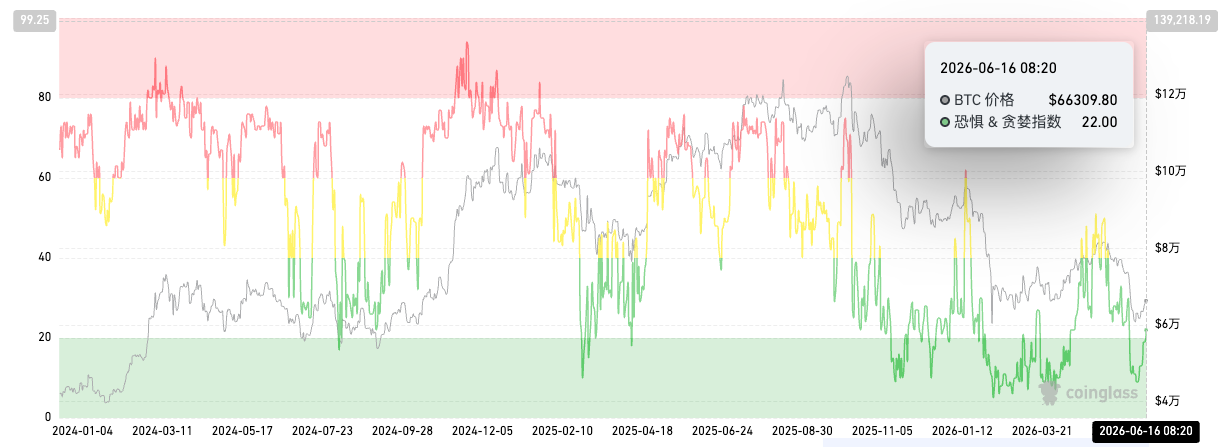

Coinglass data shows that over the past 24 hours, $488 million in open interest was liquidated across the entire network, with $366 million in short positions liquidated. Ethereum accounted for approximately $175 million in liquidations, while Bitcoin saw about $113 million.


The driving force behind this rebound almost entirely stems from the macro landscape. The electronic signing of the U.S.-Iran Memorandum of Understanding has been completed, with the official signing ceremony scheduled for June 19 in Switzerland. Oil prices plummeted by about 5% in a single day, and the Dow Jones Industrial Average hit a new record high. Additionally, SpaceX surged 20% in a day, with its stock price soaring for a second consecutive trading session, fueling continued trading enthusiasm in the U.S. stock market. Gold recorded three consecutive days of gains, breaking through $4,300. Against the backdrop of a broad-based rally in global risk assets, Bitcoin, as a high-beta asset, benefited concurrently.


Simultaneously, a report released by Glassnode indicates that on-chain and derivatives data point to the conclusion that the current situation resembles a technical correction after a deep oversold condition and does not yet constitute a trend reversal.


U.S.-Iran Agreement Lands, Plunging Oil Reshapes Inflation Expectations


On June 14, the United States and Iran, through mediation by Pakistan and Qatar, confirmed a ceasefire agreement, announcing an immediate cessation of all military actions. Key terms of the agreement include the reopening of free passage rights through the Strait of Hormuz and the lifting of the U.S. maritime blockade on Iranian ports. Former President Trump subsequently confirmed he had authorized the end of the blockade. The formal signing ceremony is set for June 19 in Geneva, Switzerland.


This marks the first substantive signal ending the nearly four-month conflict since the U.S.-Israel military action against Iran on February 28. The market reaction was swift and intense, with Brent crude falling below $83 per barrel during Monday's session, touching a two-month low, down over 20% from its 2026 high. WTI declined by approximately 5% in sync.


The Strait of Hormuz handles about 20% of global oil shipments. The blockade had kept global energy prices persistently elevated, exacerbating inflationary pressures. The reopening of the strait means the removal of the most significant bottleneck on the supply side, greatly improving oil supply expectations. For the crypto market, the logical chain supporting Bitcoin's breakthrough above $67,000 is: falling oil prices → cooling inflation expectations → increased room for Fed rate cuts → upward revision of risk asset valuations.


U.S. Stocks Rally Across the Board, SpaceX Continues Leading Gains


The Dow Jones Industrial Average gapped up on Monday, hitting a new all-time high intraday, led by tech stocks. The S&P 500 and Nasdaq Composite Index rose sharply in tandem. The turning point for market sentiment was precisely the landing of the U.S.-Iran agreement, as the subsiding geopolitical risks released pent-up risk appetite.


The most eye-catching stock remains SpaceX (SPCX). SpaceX went public on Nasdaq on June 12 at an IPO price of $135. With underwriters fully exercising the over-allotment option, the total funds raised reached $86.2 billion, setting a new global record for IPO size. It closed Monday at $192.46, up 42% from the IPO price, adding $412 billion in market value in a single day, pushing SpaceX's total valuation above $2.5 trillion and into the top six globally by market cap.


Vanda Research data shows that retail investors bought as many SpaceX shares in the two trading days post-listing as they did across the entire U.S. stock market in the prior week. The value of Musk's SpaceX holdings makes him the world's first trillionaire, with a personal net worth exceeding three times that of the world's second-richest person, Larry Page. However, the Class A shares issued in this IPO constitute only about 4.3% of the total market cap, resulting in an extremely scarce initial free float. Following the Q2 earnings call in late July, approximately 10% to 15% of early insider shareholders will see their lock-up periods expire.


The SpaceX U.S. stock spot token, rSPCX, rose to a high of 229.86 USDT in morning trading and is currently at 217.58 USDT, up 28.82% in 24 hours.


Rebound, Liquidations, and Capital Rotation


Looking at the price action, Bitcoin has been in a sustained downtrend since hitting a cycle high of $91,323 in early 2026. After breaking below the key support level of $82,733 in May, the decline accelerated, briefly dipping below the $60,000 threshold on June 6 to a low around $59,000. Subsequently, the price consolidated repeatedly between $59,000 and $64,000. On the evening of June 15, with the concentrated release of macro-positive news, it rapidly surged, rebounding about 14% from the low within a week. Technically, the $67,000 region is a short-term resistance level within the prior downtrend channel. The price's rapid retreat after touching it indicates that selling pressure above persists.


In terms of capital structure, the crypto market is undergoing a noticeable reconfiguration.


Over the past several weeks, Bitcoin spot ETFs have experienced their most severe outflows since their inception. Early June saw a single-week net outflow of $3.4 billion, the highest weekly figure since the ETFs launched in January 2024. Since mid-May, Bitcoin ETFs have seen cumulative outflows of about $3.75 billion, recording the longest consecutive redemption cycle in history. However, a turning signal emerged on June 12, with Bitcoin ETFs recording a single-day net inflow of $85.9 million.


Glassnode data shows that as of the week ending June 15, weekly ETF net outflows narrowed to $465 million from $1.3 billion the previous week, an improvement of 65.5%. The ETF MVRV has rebounded to 1.06, indicating institutional holdings have overall re-entered a marginally profitable zone. However, weekly trading volume concurrently shrank by 38.1% to $11.1 billion, reflecting that institutional participation enthusiasm has not yet rebounded in sync.
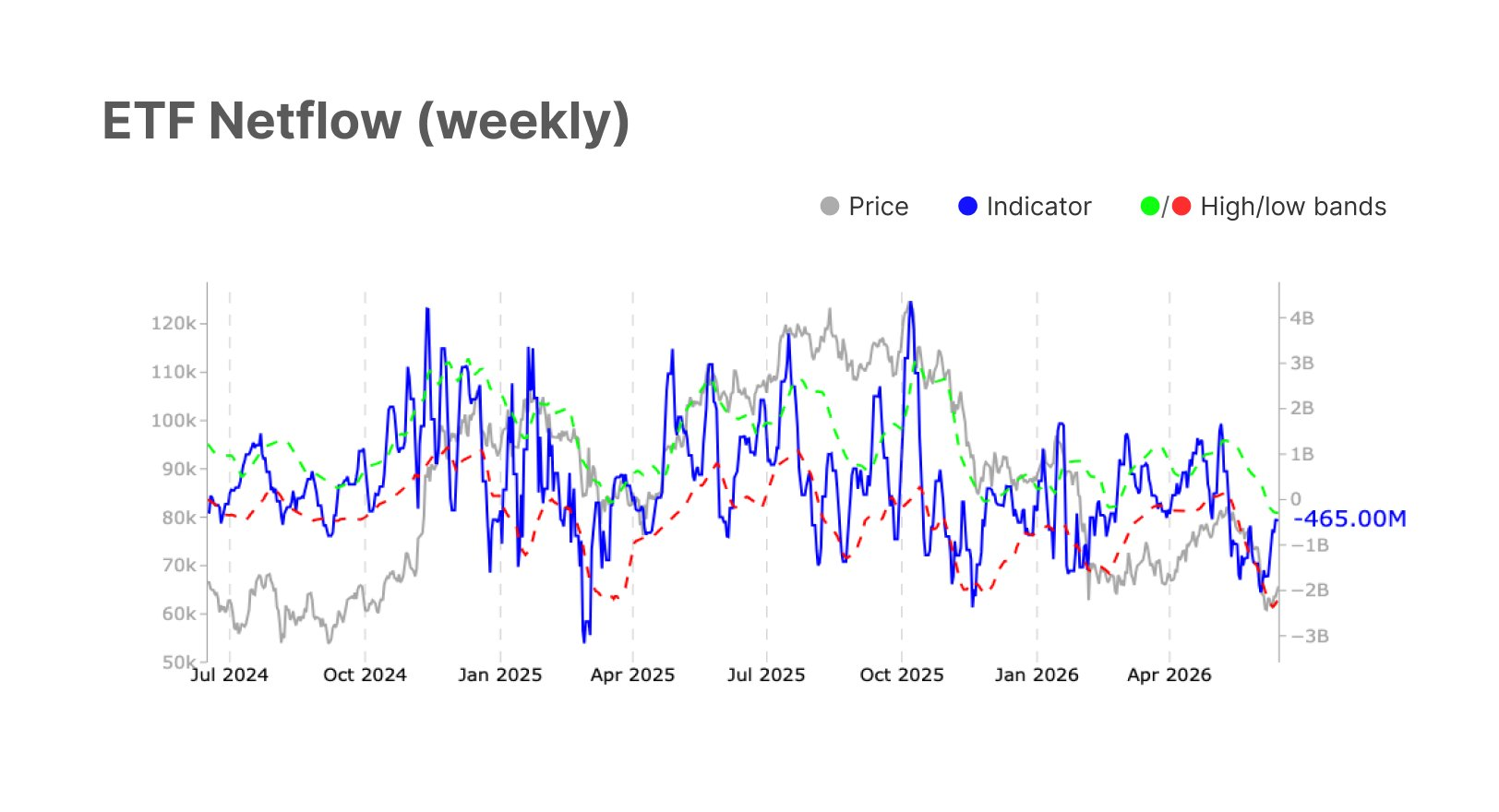
Simultaneously, the current supply ratio of short-term holders to long-term holders has fallen to 13.8%, below the statistical lower bound of 14.6%. This indicates that a significant amount of short-term speculative supply has been washed out, and the holder structure is shifting towards long-term orientation. The Hot Capital Share has decreased to 16.3%, with the proportion of capital that entered within the last three months continuously shrinking. Fear has begun to subside, but the market lacks sufficient new conviction and renewed institutional involvement to propel prices into a trending upward move.


Meanwhile, altcoin ETFs are taking the baton. The XRP ETF approved in March had accumulated net inflows of $1.37 billion by mid-May. The Solana ETF, which began trading on May 26, has been even stronger, amassing $1.118 billion in net inflows in less than three weeks.


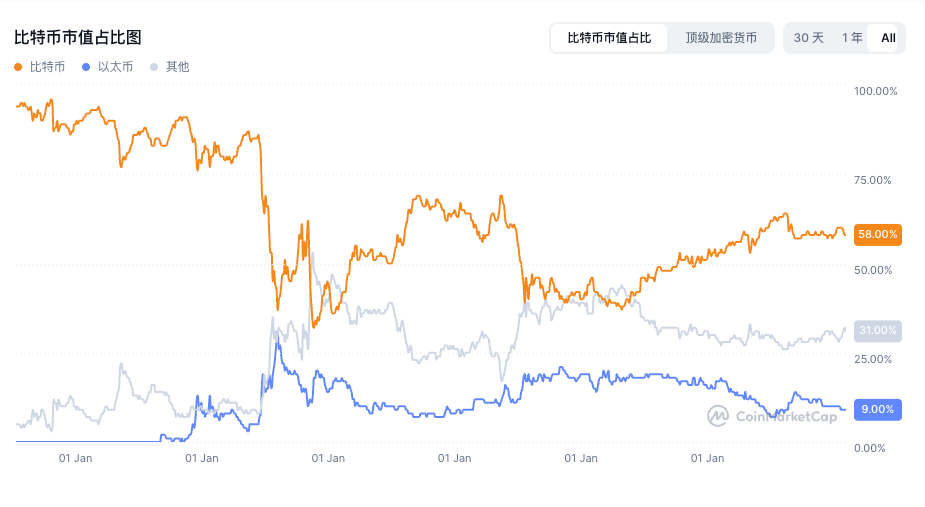
Bitcoin dominance has dropped to 58%, indicating capital is rotating from BTC and ETH towards emerging ETF categories.
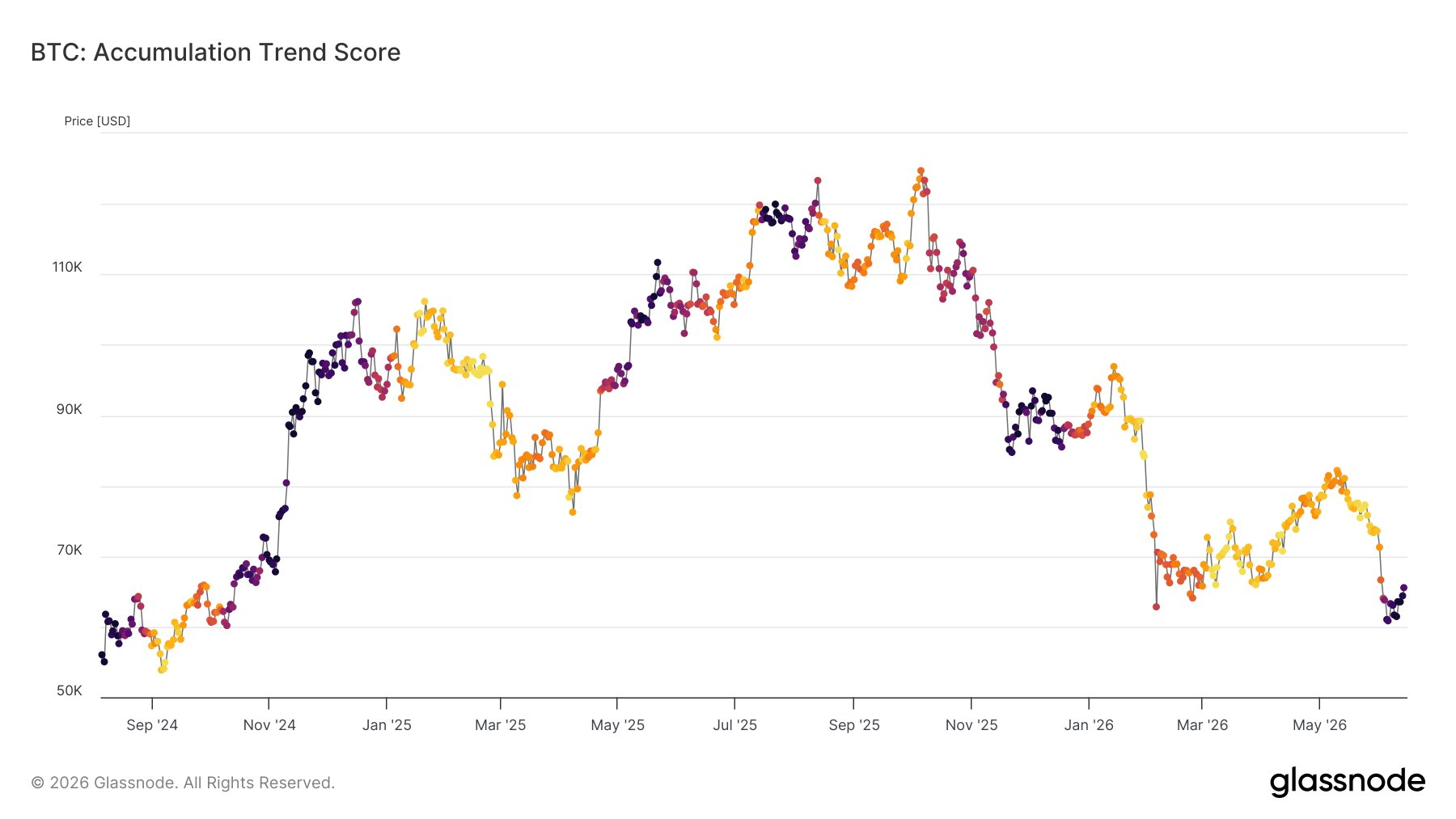
However, the analysis also points out that the Accumulation Trend Score measures the relative size of entities actively accumulating on-chain assets. A value close to 1 indicates widespread accumulation; a value close to 0 indicates distribution. After the price broke above the $60,000 mark in early June, the composite scores for various sectors began shifting towards accumulation. This structure aligns with the common trend of buying the dip, where on-chain demand increases as prices fall, rather than sustained selling.
Criptos en tendencia

Preguntas relacionadas

QWhat is the primary macroeconomic driver behind the recent rebound in Bitcoin's price, according to the article?

AThe primary macroeconomic driver is the de-escalation of geopolitical tensions following the US-Iran ceasefire agreement. The reopening of the Strait of Hormuz led to a sharp drop in oil prices, which eased inflation expectations. This, in turn, increased the likelihood of Federal Reserve interest rate cuts, leading to a revaluation of risk assets like Bitcoin.

QWhat key technical resistance level did Bitcoin briefly reach during its rebound on June 15th?

ABitcoin briefly reached the $67,000 level, which is described as a short-term resistance area within the previous downward price channel. The price quickly pulled back after touching this level, indicating persistent selling pressure.

QWhat does the article state about the nature of the current Bitcoin price recovery based on Glassnode data?

ABased on Glassnode data, the article states that the current recovery is closer to a technical rebound following a deep oversold condition. It is not yet considered a trend reversal, as the market lacks sufficient new conviction and institutional re-engagement for sustained upward momentum.

QHow has the capital flow within the cryptocurrency market shifted recently, as indicated by ETF data?

ACapital is rotating from Bitcoin and Ethereum towards newer ETF categories. While Bitcoin ETFs experienced significant outflows, emerging ETFs like the Solana ETF have seen strong inflows of $1.118 billion in less than three weeks, causing Bitcoin's market dominance to drop to 58%.

QWhat was a notable consequence of SpaceX's highly successful IPO, as mentioned in the article?

AA notable consequence mentioned is that Elon Musk, due to his holdings in SpaceX, became the world's first trillionaire. His personal net worth now exceeds three times that of the world's second-wealthiest person, Larry Page.

Lecturas Relacionadas

MSTR Discloses Sale of 3,588 Bitcoins, Stock Price Drops Over 5% at One Point During Trading

MicroStrategy, the world's largest corporate holder of Bitcoin, has significantly shifted its business model. Between June 29 and July 5, the company sold 3,588 bitcoins for approximately $216 million to fund quarterly dividends for its preferred stock. This marks its largest-ever Bitcoin sale and signals a strategic pivot: Bitcoin is transitioning from a "buy-and-hold" reserve asset to a liquidity management tool for the company. This move follows a recent authorization allowing Bitcoin sales when equity fundraising is less attractive. The announcement contributed to a more than 5% intraday drop in MicroStrategy's stock price, while Bitcoin fell to around $61,800—below the company's average holding cost of roughly $75,700. The sale represents a major departure from MicroStrategy's long-standing "never sell" commitment, which saw its first minor breach in May with a $2.5 million sale. The latest, hundred-times-larger transaction underscores growing financial pressures. Analysts note the company faces about $1.5 billion in annual preferred dividend obligations, far exceeding cash flow from its software business. As of July 5, MicroStrategy holds 843,775 bitcoins. Its current operational logic involves buying Bitcoin during favorable financing conditions and selling portions to cover dividends when needed, creating a flexible capital management cycle amidst a challenging market environment.

华尔街日报Hace 4 hora(s)

MSTR Discloses Sale of 3,588 Bitcoins, Stock Price Drops Over 5% at One Point During Trading

华尔街日报Hace 4 hora(s)

Q-Day Countdown: Will Quantum Computing End Cryptocurrencies?

Quantum Computing's Threat to Cryptocurrency: A Countdown to Q-Day Quantum computing, specifically Shor's algorithm, poses a fundamental threat to the public-key cryptography (e.g., ECDSA, RSA) that secures blockchain networks like Bitcoin and Ethereum. This critical juncture, known as Q-Day, is estimated to occur potentially within the next 5-15 years. The core vulnerability stems from the public and immutable nature of blockchains. Assets in addresses where the public key is already exposed on-chain (e.g., spent outputs) are at direct risk, as a sufficiently powerful quantum computer could derive the private key. This threatens the very trust model of cryptocurrencies. The response lies in Post-Quantum Cryptography (PQC)—algorithms like lattice-based ML-DSA and hash-based SLH-DSA, which are resistant to quantum attacks. NIST has standardized key PQC algorithms (FIPS 203, 204, 205), providing a migration path. However, the primary challenge is not technical but socio-economic and involves complex governance: * **Bitcoin's** path is constrained by its conservative ethos. Migrating requires a soft-fork to new address types, facing hurdles like significantly larger signature sizes and, most critically, the divisive governance question of how to handle at-risk legacy UTXOs without violating core principles. * **Ethereum** is pursuing a "cryptographic agility" strategy, with a multi-layered roadmap. It leverages account abstraction for user accounts and is developing compressed hash-based signatures (e.g., leanXMSS) for its consensus layer, aiming for a full-stack upgrade over time. In conclusion, quantum computing does not spell an instant end for cryptocurrency but initiates a critical countdown. The industry has a limited "engineering comfort window" to orchestrate a coordinated, ecosystem-wide migration to PQC. The ultimate bottlenecks are the immense coordination efforts and governance decisions required for this foundational transition.

marsbitHace 5 hora(s)

Q-Day Countdown: Will Quantum Computing End Cryptocurrencies?

marsbitHace 5 hora(s)

Trump, the President Who Knows Best How to 'Trade Stocks'

Former US President Donald Trump reported a record-breaking $2.2 billion in personal income for 2025, the highest annual income ever disclosed by a sitting president. This figure, from a 927-page government ethics filing, represented a 3.5-fold increase from his $600 million income in 2024 and boosted his net worth to $6.5 billion. The primary drivers were cryptocurrency (64% of income, approximately $1.4 billion) and real estate (26%, approximately $575 million). His crypto earnings stemmed largely from the launch of his personal meme coin, $TRUMP, generating over $600 million in licensing fees, and substantial profits from the WLFI token and its parent company. Despite a sluggish property market, his Mar-a-Lago resort and associated golf clubs saw revenue surges of 50% and 27%, respectively, attributed to their use as venues for presidential events. Trump's financial disclosure also revealed an unprecedented level of stock market activity, with over 22,000 trades executed in 2025, averaging 87 trades per market day. Media analyses noted several instances where significant trading coincided with major policy announcements, such as proposed tariffs, raising questions about potential conflicts of interest. While the White House stated these trades were handled by a family-managed trust fund and not Trump directly, critics highlighted this as a departure from the blind trusts traditionally used by presidents post-Watergate. The report has intensified debate over the commercialization of the presidency. Supporters view it as a success story of a businessman-president, while critics argue it demonstrates an unprecedented conversion of public influence into private wealth, with policy decisions potentially linked to personal financial gains. The controversy centers on whether Trump's earnings represent innovative entrepreneurship or a fundamental conflict of interest, sparking renewed calls for stricter ethics reforms in US governance.

marsbitHace 6 hora(s)

Trump, the President Who Knows Best How to 'Trade Stocks'

marsbitHace 6 hora(s)

Trading

Spot

Artículos destacados

Qué es BITCOIN

Entendiendo HarryPotterObamaSonic10Inu (ERC-20) y Su Posición en el Espacio Cripto En los últimos años, el mercado de criptomonedas ha sido testigo de un aumento en la popularidad de las monedas meme, capturando el interés no solo de los comerciantes, sino también de aquellos que buscan compromiso comunitario y valor de entretenimiento. Entre estos tokens únicos se encuentra HarryPotterObamaSonic10Inu (ERC-20), un proyecto intrigante que mezcla referencias culturales en el tejido de las criptomonedas. Este artículo profundiza en los aspectos clave de HarryPotterObamaSonic10Inu, explorando sus mecanismos, ethos impulsado por la comunidad y su relación con el paisaje cripto más amplio. ¿Qué es HarryPotterObamaSonic10Inu (ERC-20)? Como su nombre sugiere, HarryPotterObamaSonic10Inu es una moneda meme construida sobre la blockchain de Ethereum, clasificada bajo el estándar ERC-20. A diferencia de las criptomonedas tradicionales que pueden enfatizar la utilidad práctica o el potencial de inversión, este token prospera en el valor de entretenimiento y la fuerza de su comunidad. El proyecto tiene como objetivo fomentar un entorno donde los usuarios comprometidos puedan reunirse, compartir ideas y participar en actividades inspiradas por diversos fenómenos culturales. Una característica notable de HarryPotterObamaSonic10Inu es su cero impuestos en las transacciones. Este atractivo elemento tiene como objetivo incentivar el comercio y la participación comunitaria, sin cargos adicionales que puedan disuadir a los comerciantes de pequeña escala. El suministro total de la moneda está establecido en mil millones de tokens, una cifra que marca su intención de mantener una circulación sustancial dentro de la comunidad. Creador de HarryPotterObamaSonic10Inu (ERC-20) Los orígenes de HarryPotterObamaSonic10Inu están algo envueltos en misterio; los detalles sobre el creador siguen siendo desconocidos. El desarrollo de este token carece de un equipo identificable o de un plan explícito, lo cual no es inusual dentro del sector de monedas meme. En cambio, el proyecto ha surgido de manera orgánica, con su progreso muy dependiente del entusiasmo y la participación de su comunidad. Inversores de HarryPotterObamaSonic10Inu (ERC-20) En cuanto a inversiones externas y respaldo, HarryPotterObamaSonic10Inu también sigue siendo ambiguo. El token no lista ninguna fundación de inversión conocida o apoyo organizacional significativo. En cambio, la savia del proyecto es su comunidad de base, que informa su crecimiento y sostenibilidad a través de la acción colectiva y el compromiso en el espacio cripto. ¿Cómo Funciona HarryPotterObamaSonic10Inu (ERC-20)? Como una moneda meme, HarryPotterObamaSonic10Inu opera principalmente fuera de los marcos tradicionales que a menudo rigen el valor de los activos. Hay varios aspectos distintivos que definen cómo funciona el proyecto: Transacciones Sin Impuestos: Sin tarifas impositivas en las transacciones, los usuarios pueden comprar y vender el token libremente sin preocuparse por costos ocultos. Compromiso Comunitario: El proyecto prospera en la interacción comunitaria, aprovechando plataformas de redes sociales para crear entusiasmo y facilitar la participación. Las discusiones, el intercambio de contenido y el compromiso son elementos cruciales que ayudan a expandir su alcance y fomentar la lealtad entre los seguidores. Sin Utilidad Práctica: Cabe señalar que HarryPotterObamaSonic10Inu no ofrece utilidad concreta dentro del ecosistema financiero. Más bien, se clasifica como un token principalmente para actividades de entretenimiento y comunitarias. Referencia Cultural: El token incorpora astutamente elementos de la cultura popular para atraer interés, conectando con entusiastas de los memes y seguidores de las criptomonedas por igual. HarryPotterObamaSonic10Inu ejemplifica cómo las monedas meme operan de manera diferente a los proyectos de criptomonedas más tradicionales, ingresando al mercado como construcciones sociales innovadoras en lugar de activos utilitarios. Cronología de HarryPotterObamaSonic10Inu (ERC-20) La historia de HarryPotterObamaSonic10Inu está marcada por varios hitos notables: Creación: El token surgió de un meme viral, capturando la imaginación de muchos entusiastas de las criptomonedas. Las fechas específicas de creación no están disponibles, subrayando su ascenso orgánico. Listado en Exchanges: HarryPotterObamaSonic10Inu ha llegado a varios exchanges, permitiendo un acceso y comercio más fácil por parte de la comunidad. Iniciativas de Compromiso Comunitario: Actividades continuas destinadas a mejorar la interacción comunitaria, incluyendo concursos, campañas en redes sociales y generación de contenido por parte de fanáticos y defensores. Planes de Expansión Futuros: La hoja de ruta del proyecto incluye el lanzamiento de una colección de NFT, mercancía y un sitio de comercio electrónico relacionado con sus temas culturales, involucrando aún más a la comunidad e intentando añadir más dimensiones a su ecosistema. Puntos Clave Sobre HarryPotterObamaSonic10Inu (ERC-20) Naturaleza Impulsada por la Comunidad: El proyecto prioriza la participación colectiva y la creatividad, asegurando que la involucración de los usuarios esté a la vanguardia de su desarrollo. Clasificación como Moneda Meme: Representa la epítome de las criptomonedas basadas en el entretenimiento, diferenciándose de los vehículos de inversión tradicionales. Sin Afiliación Directa con Bitcoin: A pesar de la similitud en el nombre del ticker, HarryPotterObamaSonic10Inu es distinto y no tiene relación con Bitcoin u otras criptomonedas establecidas. Enfoque en la Colaboración: HarryPotterObamaSonic10Inu está diseñado para crear un espacio para la colaboración y el intercambio de historias entre sus poseedores, proporcionando una vía para la creatividad y el vínculo comunitario. Perspectivas Futuras: La ambición de expandirse más allá de su premisa inicial hacia NFTs y mercancías describe un camino para que el proyecto potencialmente ingrese a avenidas más tradicionales dentro de la cultura digital. A medida que las monedas meme continúan capturando la imaginación de la comunidad de criptomonedas, HarryPotterObamaSonic10Inu (ERC-20) se destaca debido a sus lazos culturales y su enfoque centrado en la comunidad. Si bien puede no encajar en el molde típico de un token impulsado por la utilidad, su esencia radica en la alegría y la camaradería fomentadas entre sus seguidores, destacando la naturaleza en evolución de las criptomonedas en una era cada vez más digital. A medida que el proyecto continúa desarrollándose, será importante observar cómo las dinámicas comunitarias influyen en su trayectoria en el cambiante paisaje de la tecnología blockchain.

1.9k Vistas totalesPublicado en 2024.04.01Actualizado en 2024.12.03

Qué es BITCOIN

Cómo comprar BTC

¡Bienvenido a HTX.com! Hemos hecho que comprar Bitcoin (BTC) sea simple y conveniente. Sigue nuestra guía paso a paso para iniciar tu viaje de criptos.Paso 1: crea tu cuenta HTXUtiliza tu correo electrónico o número de teléfono para registrarte y obtener una cuenta gratuita en HTX. Experimenta un proceso de registro sin complicaciones y desbloquea todas las funciones.Obtener mi cuentaPaso 2: ve a Comprar cripto y elige tu método de pagoTarjeta de crédito/débito: usa tu Visa o Mastercard para comprar Bitcoin (BTC) al instante.Saldo: utiliza fondos del saldo de tu cuenta HTX para tradear sin problemas.Terceros: hemos agregado métodos de pago populares como Google Pay y Apple Pay para mejorar la comodidad.P2P: tradear directamente con otros usuarios en HTX.Over-the-Counter (OTC): ofrecemos servicios personalizados y tipos de cambio competitivos para los traders.Paso 3: guarda tu Bitcoin (BTC)Después de comprar tu Bitcoin (BTC), guárdalo en tu cuenta HTX. Alternativamente, puedes enviarlo a otro lugar mediante transferencia blockchain o utilizarlo para tradear otras criptomonedas.Paso 4: tradear Bitcoin (BTC)Tradear fácilmente con Bitcoin (BTC) en HTX's mercado spot. Simplemente accede a tu cuenta, selecciona tu par de trading, ejecuta tus trades y monitorea en tiempo real. Ofrecemos una experiencia fácil de usar tanto para principiantes como para traders experimentados.

5.3k Vistas totalesPublicado en 2024.12.12Actualizado en 2026.06.02

Cómo comprar BTC

Qué es $BITCOIN

ORO DIGITAL ($BITCOIN): Un Análisis Integral Introducción al ORO DIGITAL ($BITCOIN) ORO DIGITAL ($BITCOIN) es un proyecto basado en blockchain que opera en la red Solana, cuyo objetivo es combinar las características de los metales preciosos tradicionales con la innovación de las tecnologías descentralizadas. Aunque comparte un nombre con Bitcoin, a menudo referido como “oro digital” debido a su percepción como un refugio de valor, ORO DIGITAL es un token separado diseñado para crear un ecosistema único dentro del paisaje Web3. Su meta es posicionarse como un activo digital alternativo viable, aunque los detalles sobre sus aplicaciones y funcionalidades aún están en desarrollo. ¿Qué es ORO DIGITAL ($BITCOIN)? ORO DIGITAL ($BITCOIN) es un token de criptomoneda diseñado explícitamente para su uso en la blockchain de Solana. A diferencia de Bitcoin, que proporciona un papel de almacenamiento de valor ampliamente reconocido, este token parece centrarse en aplicaciones y características más amplias. Aspectos notables incluyen: Infraestructura Blockchain: El token está construido sobre la blockchain de Solana, conocida por su capacidad para manejar transacciones de alta velocidad y bajo costo. Dinámicas de Suministro: ORO DIGITAL tiene un suministro máximo limitado a 100 cuatrillones de tokens (100P $BITCOIN), aunque los detalles sobre su suministro circulante no se han divulgado actualmente. Utilidad: Si bien las funcionalidades precisas no están delineadas explícitamente, hay indicios de que el token podría ser utilizado para diversas aplicaciones, potencialmente involucrando aplicaciones descentralizadas (dApps) o estrategias de tokenización de activos. ¿Quién es el Creador de ORO DIGITAL ($BITCOIN)? En la actualidad, la identidad de los creadores y el equipo de desarrollo detrás de ORO DIGITAL ($BITCOIN) sigue siendo desconocida. Esta situación es típica entre muchos proyectos innovadores dentro del espacio blockchain, particularmente aquellos alineados con las finanzas descentralizadas y fenómenos de monedas meme. Si bien tal anonimato puede fomentar una cultura impulsada por la comunidad, intensifica las preocupaciones sobre la gobernanza y la responsabilidad. ¿Quiénes son los Inversores de ORO DIGITAL ($BITCOIN)? La información disponible indica que ORO DIGITAL ($BITCOIN) no tiene patrocinadores institucionales conocidos ni inversiones destacadas de capital de riesgo. El proyecto parece operar en un modelo de peer-to-peer centrado en el apoyo y la adopción de la comunidad en lugar de rutas de financiamiento tradicionales. Su actividad y liquidez se sitúan principalmente en intercambios descentralizados (DEX), como PumpSwap, en lugar de plataformas de trading centralizadas establecidas, lo que resalta aún más su enfoque de base. Cómo Funciona ORO DIGITAL ($BITCOIN) Los mecanismos operativos de ORO DIGITAL ($BITCOIN) pueden elaborarse en función de su diseño blockchain y atributos de red: Mecanismo de Consenso: Al aprovechar el único proof-of-history (PoH) de Solana combinado con un modelo de proof-of-stake (PoS), el proyecto asegura una validación de transacciones eficiente que contribuye al alto rendimiento de la red. Tokenómica: Si bien los mecanismos deflacionarios específicos no se han detallado extensamente, el vasto suministro máximo de tokens implica que podría atender microtransacciones o casos de uso nicho que aún están por definirse. Interoperabilidad: Existe el potencial de integración con el ecosistema más amplio de Solana, incluyendo varias plataformas de finanzas descentralizadas (DeFi). Sin embargo, los detalles sobre integraciones específicas permanecen no especificados. Cronología de Eventos Clave Aquí hay una cronología que destaca hitos significativos relacionados con ORO DIGITAL ($BITCOIN): 2023: El despliegue inicial del token ocurre en la blockchain de Solana, marcado por su dirección de contrato. 2024: ORO DIGITAL gana visibilidad al estar disponible para trading en intercambios descentralizados como PumpSwap, permitiendo a los usuarios comerciar contra SOL. 2025: El proyecto presencia actividad de trading esporádica y potencial interés en compromisos liderados por la comunidad, aunque no se han documentado asociaciones notables o avances técnicos hasta el momento. Análisis Crítico Fortalezas Escalabilidad: La infraestructura subyacente de Solana soporta altos volúmenes de transacciones, lo que podría mejorar la utilidad de $BITCOIN en varios escenarios de transacción. Accesibilidad: El potencial bajo precio de trading por token podría atraer a inversores minoristas, facilitando una participación más amplia debido a oportunidades de propiedad fraccionada. Riesgos Falta de Transparencia: La ausencia de patrocinadores, desarrolladores o un proceso de auditoría conocidos públicamente puede generar escepticismo sobre la sostenibilidad y confiabilidad del proyecto. Volatilidad del Mercado: La actividad de trading depende en gran medida del comportamiento especulativo, lo que puede resultar en una volatilidad de precios significativa y en incertidumbre para los inversores. Conclusión ORO DIGITAL ($BITCOIN) surge como un proyecto intrigante pero ambiguo dentro del ecosistema de Solana en rápida evolución. Si bien intenta aprovechar la narrativa del “oro digital”, su alejamiento del papel establecido de Bitcoin como refugio de valor subraya la necesidad de una diferenciación más clara de su utilidad y estructura de gobernanza previstas. La aceptación y adopción futura dependerán probablemente de abordar la actual opacidad y de definir sus estrategias operativas y económicas de manera más explícita. Nota: Este informe abarca información sintetizada disponible hasta octubre de 2023, y pueden haber ocurrido desarrollos más allá del período de investigación.

110 Vistas totalesPublicado en 2025.05.13Actualizado en 2025.05.13

Qué es $BITCOIN

Discusiones

Bienvenido a la comunidad de HTX. Aquí puedes mantenerte informado sobre los últimos desarrollos de la plataforma y acceder a análisis profesionales del mercado. A continuación se presentan las opiniones de los usuarios sobre el precio de BTC (BTC).

活动图片