US government ‘tech force’ gets backup from Coinbase, Robinhood

cointelegraphPublicado a 2025-12-17Actualizado a 2025-12-17

Resumen

The US government has launched a "Tech Force" initiative to address critical skill shortages in AI, cybersecurity, and software engineering by recruiting private sector talent. Crypto exchange Coinbase and trading platform Robinhood are among nearly 30 initial partners, which also include major firms like Apple, Nvidia, and OpenAI. This signals a government need for crypto expertise as the technology integrates into finance. The program will place about 1,000 early-career and experienced workers in federal agencies for one- to two-year stints. Agencies will hire and fund the tech teams, while private companies provide training. The initiative aims to revitalize the government workforce, where only 7% are early-career professionals, compared to nearly a quarter in the private sector.

Crypto exchange Coinbase and trading platform Robinhood are among a group of tech companies lending a hand to the US government’s new “Tech Force.”

The launch of the Tech Force on Monday aims to tap the private sector’s talent to plug “critical skills gaps” in the government across artificial intelligence, cybersecurity and software engineering.

Big Tech firms will lend their workers to serve one- to two-year stints at federal agencies, with the government seeking 1,000 early-career candidates and “experienced managers.”

Coinbase and Robinhood were named among nearly 30 “initial private sector partners,” which included Apple, Amazon Web Services, Nvidia and OpenAI, a sign that the government needs crypto expertise as the technology has rapidly integrated into the financial system.

Tech Force to deploy across government

The Office of Personnel Management (OPM) said the new tech workers would be inserted across a vast range of agencies, from the Treasury, the Commerce Department and the IRS.

The tech teams would be hired and funded by the agencies and report to their heads, with the private sector providing training.

“As we have people retiring from government, we’re not doing a great job of bringing in the next generation of leaders in government,” OPM director Scott Kupor told CNBC.
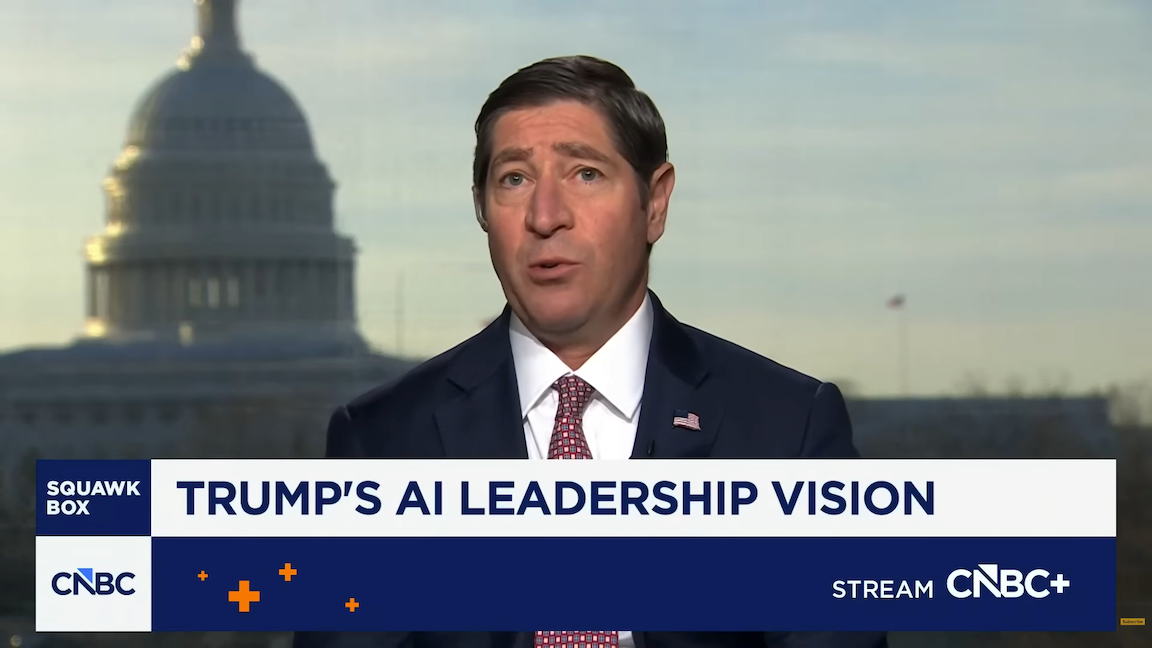
OPM director Scott Kupor speaking to CNBC’s “Squawk Box.” Source: YouTube

He said about 7% of the US government workforce are in their early career, those with five to seven years of work experience, compared to almost a quarter in the rest of the workforce.

Kupor added that the OPM and its private sector partners would put on a job fair for the workers after they completed their terms in the government.

“What we’re really trying to demonstrate is that the work that you can do in government is both challenging, complex, and that if you decide ultimately you want to go into the private sector, that’s great, that work is valued,” he said. “You’ll have the opportunity to take that as the next stage of your career.”

Related: Warren sounds alarm on DeFi, cites PancakeSwap amid market structure delay

Alongside Coinbase and Robinhood, the private sector partners also include Adobe, Amazon Web Services, AMD, Anduril, Apple, Box, C3.ai, Databricks, Dell Technologies, Docusign, Google Public Sector, IBM, Meta, Microsoft, Nvidia, OpenAI, Oracle, Palantir, Salesforce, SAP, ServiceNow, Snowflake, Synopsys, Uber, Workday, xAI, and Zoom.

Crypto companies, particularly blockchain analytics firms, have frequently assisted the US government with expertise in tracking and tracing cryptocurrency flows in criminal and regulatory investigations.

US market regulators under the Trump administration have also consulted with the crypto sector on how to develop their approaches as the policy environment toward the industry has warmed.

Magazine: Quitting Trump’s top crypto job wasn’t easy: Bo Hines

Criptos en tendencia

Lecturas Relacionadas

In Jinjiang, Fujian, a Storage Super Unicorn Lies Quiet

In Fujian's Jinjiang, a city known for sportswear, lies a quiet semiconductor giant: Fujian Jinhua Integrated Circuit Co. (JHICC). Once a promising domestic DRAM manufacturer alongside Yangtze Memory and ChangXin Memory Technologies (CXMT), its journey was derailed in 2018 when the U.S. placed it on an Entity List and filed criminal charges for alleged trade secret theft. This halted production for years. A turning point came in February 2024 when a U.S. federal court found JHICC not guilty. However, it had lost crucial time. While CXMT soared to become a top-valued A-share company in 2024, JHICC, with an estimated valuation of 80 billion RMB, was just restarting. Its current output is primarily customized DDR4 chips, not the advanced DDR5/HBM demanded for AI, but it still benefits from the broader memory chip upcycle. JHICC's story is tied to Chen Zhengkun, a veteran engineer who left Micron to lead the venture. Founded in 2016 with state-backed funding, JHICC partnered with Taiwan's UMC to develop DRAM technology. Rapid progress was cut short by the U.S. actions, which Micron initiated, partly due to its heavy reliance on the Chinese market. Post-sanctions, Chen's team worked to rebuild the production line with reduced reliance on U.S. technology. According to its records, JHICC achieved small-scale production and revenue growth under immense pressure. It now focuses on the stable "niche" DRAM market (e.g., TVs, routers) with a monthly capacity of ~40,000 wafers, aiming for 60,000 by 2026. It holds over 1,000 patents but remains on the Entity List. For Jinjiang, investing in JHICC was a bold industrial leap. The local government provided unwavering financial and logistical support during the crisis, helping the company survive. JHICC has become the anchor for a growing local semiconductor cluster. Though its scale lags behind domestic peers, JHICC's persistence symbolizes a hard-won foothold in a global market long dominated by Samsung, SK Hynix, and Micron. Having missed one boom, it seeks a place in the new AI-driven memory supercycle.

marsbitHace 53 min(s)

In Jinjiang, Fujian, a Storage Super Unicorn Lies Quiet

marsbitHace 53 min(s)

Trading

Spot

Artículos destacados

Cómo comprar US

¡Bienvenido a HTX.com! Hemos hecho que comprar Talus Network (US) sea simple y conveniente. Sigue nuestra guía paso a paso para iniciar tu viaje de criptos.Paso 1: crea tu cuenta HTXUtiliza tu correo electrónico o número de teléfono para registrarte y obtener una cuenta gratuita en HTX. Experimenta un proceso de registro sin complicaciones y desbloquea todas las funciones.Obtener mi cuentaPaso 2: ve a Comprar cripto y elige tu método de pagoTarjeta de crédito/débito: usa tu Visa o Mastercard para comprar Talus Network (US) al instante.Saldo: utiliza fondos del saldo de tu cuenta HTX para tradear sin problemas.Terceros: hemos agregado métodos de pago populares como Google Pay y Apple Pay para mejorar la comodidad.P2P: tradear directamente con otros usuarios en HTX.Over-the-Counter (OTC): ofrecemos servicios personalizados y tipos de cambio competitivos para los traders.Paso 3: guarda tu Talus Network (US)Después de comprar tu Talus Network (US), guárdalo en tu cuenta HTX. Alternativamente, puedes enviarlo a otro lugar mediante transferencia blockchain o utilizarlo para tradear otras criptomonedas.Paso 4: tradear Talus Network (US)Tradear fácilmente con Talus Network (US) en HTX's mercado spot. Simplemente accede a tu cuenta, selecciona tu par de trading, ejecuta tus trades y monitorea en tiempo real. Ofrecemos una experiencia fácil de usar tanto para principiantes como para traders experimentados.

608 Vistas totalesPublicado en 2025.12.11Actualizado en 2026.06.02

Cómo comprar US

Discusiones

Bienvenido a la comunidad de HTX. Aquí puedes mantenerte informado sobre los últimos desarrollos de la plataforma y acceder a análisis profesionales del mercado. A continuación se presentan las opiniones de los usuarios sobre el precio de US (US).

活动图片













