US-EU Tariff War Wipes Billions — Start of Crypto Winter 2026?

ccn.comPublicado a 2026-01-19Actualizado a 2026-01-19

Resumen

In mid-January 2026, U.S. President Donald Trump announced new tariffs on eight European nations, starting at 10% and potentially rising to 25% by June unless Denmark negotiates the sale of Greenland. This triggered a sharp crypto market sell-off, wiping billions in value. Bitcoin fell from near $97,000 to below $93,000, while altcoins saw deeper losses of 9–20%. Over $871 million in leveraged positions were liquidated. Analysts are divided on whether this marks the start of a prolonged "crypto winter" or is a temporary macro shock. Some point to historical post-halving weakness and fading institutional optimism, suggesting Bitcoin could drop to $67,000–$75,000. Others argue growing institutional adoption and Bitcoin’s "digital gold" role may cushion a deeper downturn. The event highlighted crypto’s sensitivity to geopolitical risk and leveraged market fragility. Recovery remains uncertain as trade tensions and regulatory delays persist.

Key Takeaways

  • U.S.–EU tariff threats tied to Greenland triggered a sharp risk-off move, wiping billions from crypto markets.
  • Bitcoin slid below $93,000 as leveraged positions unraveled and altcoins suffered deeper losses.
  • Analysts remain divided on whether this signals the start of a “crypto winter” or a temporary macro-driven shock.

The crypto market entered 2026 with optimism still lingering from late last year. That confidence didn’t last long.

Over the weekend, a sudden surge in geopolitical tension sent shockwaves through global markets, triggering the first major crypto flash crash of the year.

Billions of dollars were wiped out in a matter of hours as leveraged positions unraveled, with altcoins bearing the brunt of the damage.

At the center of the sell-off was a familiar catalyst: trade-war fears sparked by fresh tariff threats from United States President Donald Trump.

Try Our Recommended Crypto Exchanges
Sponsored
Disclosure
We sometimes use affiliate links in our content, when clicking on those we might receive a commission at no extra cost to you. By using this website you agree to our terms and conditions and privacy policy.
"}' data-trk="68df7fd8872238d510dfbf06" href="https://clicks.pipaffiliates.com/c?c=1104900&l=en&p=1" rel="nofollow" target="_blank">
XM.com"}' data-trk="68df7fd8872238d510dfbf06" href="https://clicks.pipaffiliates.com/c?c=1104900&l=en&p=1" rel="nofollow" target="_blank">

XM.com

promotions
Get 100% Bonus up to $100 on your first Deposit."}' data-trk="68df7fd8872238d510dfbf06" href="https://clicks.pipaffiliates.com/c?c=1104900&l=en&p=1" rel="nofollow" target="_blank"> Get 100% Bonus up to $100 on your first Deposit.
Coins
28
  • Bitcoin
  • Ethereum
  • Ripple
  • Solana
  • Dogecoin
  • Cardano
  • Litecoin
  • Stellar
  • Bitcoin Cash
  • Avalanche
  • Shiba Inu
  • Polkadot
  • Chainlink
  • Enjin Coin
  • Polygon Ecosystem Token
  • SushiSwap
  • Ethereum Classic
  • Uniswap
  • Filecoin
  • Axie Infinity
  • Aave
  • Algorand
  • Tezos
  • Synthetix
  • The Sandbox
  • The Graph
  • Internet Computer
  • Basic Attention Token
  • APEcoin
  • Arbitrum
  • NEAR Protocol
  • Storj
  • Cosmos
No result
Claim Offer
"}' data-trk="6899b9831836d97539c51aa6" href="https://www.bitunix.com/" rel="nofollow" target="_blank">
Bitunix"}' data-trk="6899b9831836d97539c51aa6" href="https://www.bitunix.com/" rel="nofollow" target="_blank">

Bitunix

promotions
Receive up to $100,000 worth of exclusive gifts for newcomers upon registration."}' data-trk="6899b9831836d97539c51aa6" href="https://www.bitunix.com/" rel="nofollow" target="_blank"> Receive up to $100,000 worth of exclusive gifts for newcomers upon registration.
Coins
151
  • Bitcoin
  • Ethereum
  • Tether
  • USD Coin
  • Solana
  • Ripple
  • Dogecoin
  • Cardano
  • Toncoin
  • Shiba Inu
  • Avalanche
  • TRON
  • Chainlink
  • Polygon Matic
  • Polkadot
  • Wrapped Bitcoin
  • Litecoin
  • Dai
  • NEAR Protocol
  • Bitcoin Cash
  • Stellar
  • Cosmos
  • Filecoin
  • Ethereum Classic
  • Aptos
  • Hedera Hashgraph
  • Immutable
  • Optimism
  • Arbitrum
  • VeChain
  • The Sandbox
  • Decentraland
  • Axie Infinity
  • Injective Protocol
  • Render
  • The Graph
  • Maker
  • Aave
  • Chiliz
  • Helium
  • PAX Gold
  • Compound
  • Lido DAO Token
  • Sui
  • Conflux Network
  • Lido Staked ETH
  • OKB
  • Uniswap
  • Pepe
  • Ondo
  • Mantle
  • First Digital USD
  • XDC Network
  • Artificial Superintelligence Alliance
  • Jupiter
  • Quant
  • Worldcoin
  • Bonk
  • Tether Gold
  • JITO
  • JasmyCoin
  • Core
  • Floki Inu
  • Ethereum Name Service
  • SushiSwap
  • 1inch Network
  • Tezos
  • Algorand
  • Flow
  • Trust Wallet Token
  • Curve DAO Token
  • MultiversX
  • Basic Attention Token
  • Enjin Coin
  • Ethena
  • Ethena Staked USDe
  • Audius
  • Alchemy Pay
  • Arkham
  • API3
  • Bounce Token
  • Altlayer
  • Aergo
  • Amp
  • Aevo
  • Ankr
  • Axelar
  • Alpaca Finance
  • Blur
  • Biconomy
  • Tranchess
  • Celer Network
  • Shentu
  • Civic
  • Convex Finance
  • Cartesi
  • Cyber
  • COTI
  • DIA
  • dYdX
  • ether.fi
  • FLUX
  • Ampleforth
  • Golem
  • Holo
  • Illuvium
  • JUST
  • Livepeer
  • Memecoin
  • Manta Network
  • Treasure
  • Mask Network
  • Origin Protocol
  • ORDI
  • Ontology
  • Phala Network
  • Pendle
  • Portal
  • Pyth Network
  • ConstitutionDAO
  • iExec RLC
  • Reserve Rights
  • Ravencoin
  • Storj
  • Status
  • Spell Token
  • Sun (New)
  • SuperVerse
  • Tellor
  • LayerZero
  • Scroll
  • Usual
  • Eigenlayer
  • Hamster Kombat
  • Catizen
  • Berachain
  • KAITO
  • Pudgy Penguins
  • Solayer
  • Bio Protocol
  • ChainGPT
  • Cookie DAO
  • Solv Protocol
  • Movement
  • DeXe
  • Nexo
  • Hyperliquid
  • STEPN
  • Synthetix
  • Neo
  • APEcoin
  • Gala
  • Internet Computer
  • Pi Network
  • IoTex
  • Build'N'Build
No result
Claim Offer
"}' data-trk="67adf8d4f12aaec7e4808bf5" href="https://bonus.bitget.com/CCN12" rel="nofollow" target="_blank">
Bitget"}' data-trk="67adf8d4f12aaec7e4808bf5" href="https://bonus.bitget.com/CCN12" rel="nofollow" target="_blank">

Bitget

promotions
New user rewards up to 6,200 USDT."}' data-trk="67adf8d4f12aaec7e4808bf5" href="https://bonus.bitget.com/CCN12" rel="nofollow" target="_blank"> New user rewards up to 6,200 USDT.
Coins
88
  • Bitcoin
  • Ethereum
  • Tether
  • Litecoin
  • Bitcoin Cash
  • TRON
  • Ripple
  • Cardano
  • Binance USD
  • USD Coin
  • Polkadot
  • Shiba Inu
  • Basic Attention Token
  • Qtum
  • Ethereum Classic
  • Chainlink
  • Solana
  • Polygon Matic
  • Cosmos
  • Wrapped Bitcoin
  • PancakeSwap
  • The Sandbox
  • Storj
  • iExec RLC
  • Bancor
  • Uniswap
  • Enjin Coin
  • 1inch Network
  • Chiliz
  • Aave
  • Synthetix
  • Maker
  • Compound
  • Theta Network
  • Celo
  • Curve DAO Token
  • Decentraland
  • JUST
  • Axie Infinity
  • Gala
  • Internet Computer
  • The Graph
  • Filecoin
  • dYdX
  • Mask Network
  • Lido DAO Token
  • Reserve Rights
  • Chromia
  • Ankr
  • Ocean Protocol
  • Adventure Gold
  • Origin Protocol
  • Celer Network
  • NKN
  • Bitget Token
  • Alchemix
  • Immutable
  • Ethereum Name Service
  • Avalanche
  • Zilliqa
  • JasmyCoin
  • Toncoin
  • Convex Finance
  • Spell Token
  • Holo
  • Render Token
  • SushiSwap
  • MetisDAO
  • Audius
  • Illuvium
  • ARPA Chain
  • Osmosis
  • Fantom
  • Neo
  • Arweave
  • Algorand
  • Kusama
  • XDC Network
  • APEcoin
  • MultiversX
  • THORChain
  • NEAR Protocol
  • Nexo
  • Amp
  • Livepeer
  • PAX Gold
  • TrueUSD
  • BitTorrent
  • Golem
  • FLUX
  • Helium
  • Dai
  • Build'N'Build
No result
Claim Offer
Explore All Offers

Tariff Threats Spark a Market Rout

In mid-January 2026, President Trump announced plans to impose a new round of tariffs on imports from eight European countries — Denmark, Norway, Sweden, France, Germany, the United Kingdom, the Netherlands, and Finland — beginning Feb. 1.

The proposed tariffs would start at 10% and rise to 25% by June 1, unless Denmark agrees to negotiate the potential U.S. purchase of Greenland.

Markets reacted swiftly. Between Jan. 18 and 19, crypto prices fell sharply as traders moved to de-risk.

Bitcoin (BTC) slid from recent highs near $97,000 to below $93,000, briefly erasing billions in market capitalization.

Altcoins fared even worse. Excluding Ethereum, many major tokens posted losses ranging from 9% to more than 20% over 24 hours, pushing several assets to new monthly lows.

The broader crypto market cap dropped toward $3.13 trillion as risk-off sentiment spread.

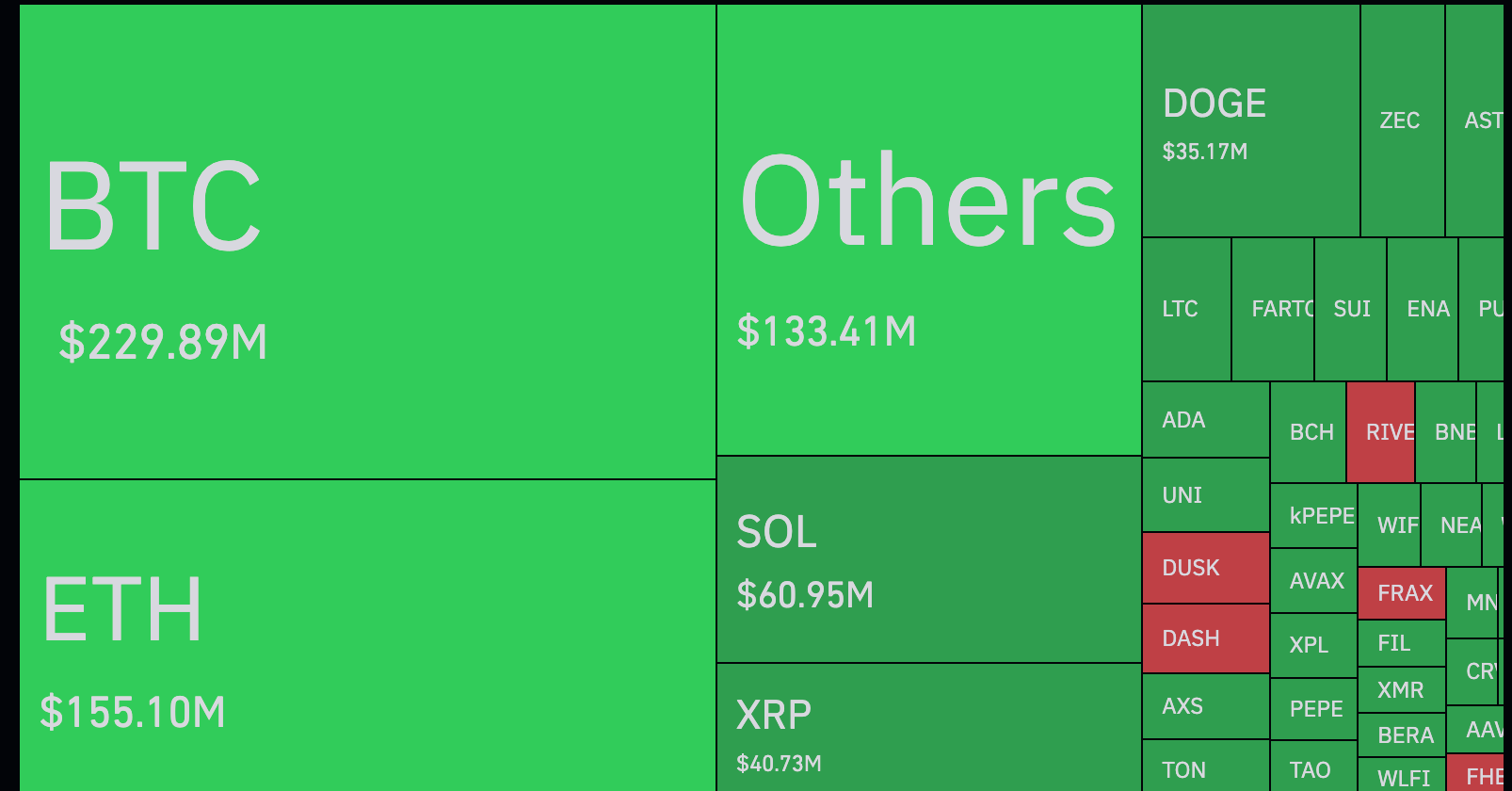
Data from CoinGlass shows more than $871 million in liquidations during the sell-off.

Bitcoin long positions accounted for roughly $229 million, while altcoin traders absorbed the bulk of the damage, with about $641 million wiped out as positions were forcibly closed.

Crypto liquidation heatmap. Source: Coinglass.

Analysts pointed to a mix of macro uncertainty and existing market fragility.

Trade tensions revived fears of a prolonged economic slowdown, while crypto’s tendency to correlate with equities during periods of stress amplified the sell-off.

Ongoing delays in U.S. crypto market structure legislation and cooling institutional inflows added further pressure.

By Monday morning, Bitcoin and Ethereum had clawed back nearly half of their losses. Altcoins, however, struggled to recover.

Temporary Shock or Start of Crypto Winter 2026?

The sharp pullback has revived a question that has hovered over the market since late 2025: Is crypto heading into another prolonged winter?

January has already delivered echoes of last year’s tariff-driven volatility, which culminated in the October crash that wiped trillions from global crypto valuations.

Now, with many assets still below their 2025 highs, renewed trade wars and rising geopolitical tensions have reignited fears of a “crypto winter” in 2026.

Bearish analysts point to familiar warning signs. Post-halving years have historically brought weaker performance, and several tailwinds from 2025.

Making matters worse, Trump-related optimism and expectations of looser financial conditions have begun to fade.

If macro pressure persists, some see Bitcoin revisiting the $67,000–$75,000 range in a slower, more institutionally driven downturn.

Others remain unconvinced that a prolonged winter is imminent.

Supporters of the bullish case argue that the traditional four-year cycle is losing relevance as institutional participation deepens.

They point to Bitcoin’s growing role as a form of “digital gold,” supported by ETF inflows and more resilient on-chain activity than in previous cycles.

For now, the U.S.–EU tariff dispute appears to have acted as a trigger rather than a root cause. ‘

The market’s reaction was sharp, but it was amplified by existing caution and leverage rather than a collapse in fundamentals.

Whether this flash crash marks the start of a longer downturn or simply another episode of macro-driven volatility may become clearer in the weeks ahead — especially as trade negotiations, monetary policy expectations, and regulatory developments continue to unfold.

Top Picks for Bitcoin
  • Best Exchanges for Bitcoin Get A Great Offer When You Join These Exchanges
  • Buy Bitcoin Fast & Easy How To Buy Bitcoin With a Credit Card Now
  • Best Online Casinos for Bitcoin See Our Picks for the Best Crypto Gambling Sites

Preguntas relacionadas

QWhat was the main geopolitical event that caused the crypto market crash in January 2026?

AThe main event was U.S. President Donald Trump's announcement of plans to impose new tariffs, starting at 10% and rising to 25% by June 1, on imports from eight European countries, contingent on Denmark's refusal to negotiate the potential U.S. purchase of Greenland.

QHow much value was liquidated from the crypto market during the sell-off, and which segment suffered the most?

AOver $871 million was liquidated during the sell-off. Altcoin traders absorbed the bulk of the damage, with about $641 million wiped out, while Bitcoin long positions accounted for roughly $229 million.

QWhat was Bitcoin's price movement during the crash, and what level did it briefly fall below?

ABitcoin slid from recent highs near $97,000 to below $93,000, briefly erasing billions in market capitalization.

QAccording to the article, what are the two opposing views among analysts regarding the market's future?

AAnalysts are divided. Some believe the crash could signal the start of a prolonged 'crypto winter,' citing historical post-halving weakness and fading macro tailwinds. Others argue the traditional cycle is less relevant due to deeper institutional participation, viewing Bitcoin as 'digital gold' supported by ETF inflows.

QWhich specific European countries were targeted by the proposed U.S. tariffs mentioned in the article?

AThe eight European countries targeted were Denmark, Norway, Sweden, France, Germany, the United Kingdom, the Netherlands, and Finland.

Lecturas Relacionadas

Can Japan Buy Growth with AI? Will the Bond Market Believe It?

Japan's cabinet has introduced the 2026 Basic Policy on Economic and Fiscal Management and Reform, shifting its primary fiscal target. The new framework moves away from the traditional annual primary balance goal and instead prioritizes a stable reduction of the debt-to-GDP ratio. This change is tied to a strategy of increased "responsible proactive fiscal" spending, aiming to boost long-term growth through investments in strategic sectors like AI, semiconductors, energy, and robotics. The government estimates total public and private investment in 62 key technologies could exceed 370 trillion yen by 2040. The market reaction has been mixed and cautious. While equity markets may respond to policy signals, bond markets are focused on fiscal credibility. Concerns center on whether the weakening of the clear primary balance anchor could lead to looser fiscal discipline. If investors doubt that these strategic investments will generate sufficient productivity gains, tax revenue, and nominal growth to outpace rising interest costs, they may demand higher yields on Japanese Government Bonds (JGBs). Recent volatility in the yen and JGB yields, with the 10-year yield briefly reaching 2.9%, reflects this skepticism. The success of this new framework hinges on two factors: whether Japan can achieve a nominal growth rate consistently higher than its long-term interest rates, and whether future budgets demonstrate disciplined control over bond issuance. The government's narrative is that strategic investment is essential to break Japan's cycle of low growth, aging, and labor shortages. However, the bond market will continuously assess the credibility of this plan, pricing the risk that it may represent fiscal expansion rather than a viable growth strategy.

marsbitHace 3 min(s)

Can Japan Buy Growth with AI? Will the Bond Market Believe It?

marsbitHace 3 min(s)

Misjudged A-Shares: Resilience, Expectations, and Confidence

China's A-share market recently faced selling pressure, especially in tech sectors, initially triggered by a global tech sell-off that began in South Korea. However, the article argues this is a case of "mistaken injury" and highlights the market's underlying resilience. This resilience stems from three main pillars: **1) Tech Sector Fundamentals:** Unlike Korea's market dominated by a few memory chip stocks, China's tech sector is diversified across computing, communications, electronics, and semiconductors, supported by dual narratives of global AI supply chains and domestic substitution. Core areas like optical modules and fiber optics continue to show strong earnings growth. **2) "National Team" Support:** State-backed institutions and large corporations have made significant market purchases and announced buybacks, providing liquidity and signaling confidence. This is seen as a stabilizing policy signal, often associated with market bottoms. **3) Broader Market Pillars:** Other major sectors are showing endogenous recovery momentum. Consumer stocks benefit from stabilizing CPI and signs of sector recovery (e.g., liquor price hikes). Cyclical sectors like aluminum have high earnings, potential price increases due to tight supply, and low valuations. The financial sector offers stable dividends and low valuations. The conclusion is that the sell-off was driven by external contagion, not a collapse in fundamentals. With strong policy support and recovering momentum across key sectors, the A-share market possesses the toughness to regain stability.

marsbitHace 34 min(s)

Misjudged A-Shares: Resilience, Expectations, and Confidence

marsbitHace 34 min(s)

The Clarity Act's Journey Through Congress: The Thorny Path of Bipartisan Compromise in the U.S.

The U.S. Congress is struggling to advance the crypto market structure bill known as the Clarity Act, with bipartisan compromise proving difficult. Key hurdles include unresolved disputes over "yield" products and, more critically, the inclusion of strong ethics provisions for elected officials—a non-negotiable demand for many Democrats. While a compromise on yield was reached in May, securing only limited Democratic support in committee, the separate Senate Agriculture Committee version later passed with no Democratic votes due to the ethics impasse. As Republicans push for a full Senate vote in July, demands for ethics rules have expanded, and other contentious issues like developer protections and concerns from law enforcement and large banks further complicate negotiations. Despite consensus on the need for legislation, the path forward is unclear. Recent discussions between senators and White House officials aim to find acceptable ethics language. Some lawmakers question whether a compromise text can garner enough bipartisan support, with one Democrat stating the current proposal lacks the strong ethics provisions required for their vote. Potential short-term goals for the crypto community include symbolic Senate action before the August recess, a longer-term aim for passage by 2026, or establishing a detailed framework that addresses ethics and other compromises. The process remains arduous, relying on the traditional, vote-by-vote effort to build bipartisan support.

marsbitHace 53 min(s)

The Clarity Act's Journey Through Congress: The Thorny Path of Bipartisan Compromise in the U.S.

marsbitHace 53 min(s)

Trading

Spot
活动图片