Uniswap Goes Live on OKX X Layer With Zero Interface Fee Swaps

TheNewsCryptoPublicado a 2026-01-16Actualizado a 2026-01-16

Resumen

Uniswap has launched on OKX's X Layer, an Ethereum-compatible Layer 2 network, enabling users to swap tokens, provide liquidity, and access DeFi services with low transaction costs. A key feature is the absence of interface fees for swaps, allowing seamless trading of major assets like USDG, xBTC, and USDT directly through Uniswap’s interface. This integration aligns with Uniswap’s strategy to expand across chains and reduce costs, while offering OKX’s global user base access to a trusted DeFi platform with deep liquidity. The move is part of Uniswap’s broader effort to enhance accessibility, following recent upgrades such as fee removals and multi-chain expansions.

Uniswap has marked its presence on the multi-chain universe by entering X Layer, which stands for OKX’s Ethereum Layer 2 ecosystem. This will enable a new low-cost platform for the trading community and retain the native Uniswap experience within the OKX ecosystem.

Uniswap made the deployment official through an announcement on January 16 through the X platform, where it explained the functionality, indicating that users can begin swapping, liquidity provision, and using the X Layer via the Uniswap web app, Uniswap Wallet, and Uniswap trading API. The deployment boosts the effort by Uniswap to cater to the demand for fast execution and lower DeFi transaction costs on the layer 2 scaling solution.

Zero interface fees and native liquidity markets

The initial launch of Uniswap sees it charging no interface fees for X Layer swaps, making it simpler for traders when using the Uniswap interface. This means that users get to interact with primary stablecoin markets, such as USDG, and other large stablecoins, in addition to xBTC and USDT native markets.

This is significant for two key reasons. First, there are no usual interface fees that some DeFi projects charge. Second, traders have seamless access to the OKX network assets directly through Uniswap’s interface. This is because, through the deployment, traders can easily swap and liquidate positions without necessarily using different interfaces.

OKX pointed out the cost-effectiveness, too. The exchange stated that the cost of swaps on X Layer may be in a few cents, some of them approaching $0.01, depending on the network.

Why X Layer fits Uniswap’s expansion strategy

X Layer is a zkEVM-based Layer 2 network that was established by the exchange giant OKX in 2024. As the network is equipped with Ethereum compatibility, developers can work with DeFi applications through established tools.

X Layer itself aligns itself close to the OKX ecosystem as well. This approach makes it easier for OKX users to have the functionality they want on the blockchain without having to bridge multiple times over different blockchains. They can simply trade, transfer, and perform other activities on a smoother process execution platform.

With the launch of X Layer, Uniswap is opening itself up to a large global user base on OKX, while providing those users with a recognizable DeFi venue supported by deep liquidity.

OKX blends CeFi reach with DeFi execution

For OKX, integration with Uniswap supports the bigger strategy of blending access to centralized exchanges with DEX trading infrastructure. CEX users are demanding more on-chain access with lower risks involved, while DeFi users are demanding quicker execution and better liquidity.

Uniswap’s launch translates to the existence of an anchor protocol on which traders are already familiar and trusting with regard to OKX. This is a prestigious destination for a DeFi such as X Layer.

Initial community response has been positive, with users appreciating easier access to DeFi services and smooth trading for the OKX community worldwide.

Part of a broader Uniswap product push

This Uniswap launch is also a follow-up on various enhancements that the platform underwent over the past few months. In late December 2025, there was a governance proposal on Uniswap regarding substantial changes, such as burning 100 million UNI governance tokens from the treasury and removing interface fees.

Uniswap has also been integrating new chains and distribution mechanisms, such as the Monad chain, hardware wallets such as Ledger, and fiat onramps such as Revolut.

With the addition of X Layer support, the main priority for Uniswap remains low-cost execution, chain expansion, and combined access via one interface, while OKX further enhances its Layer 2 solution with the addition of a premium DeFi protocol.

Highlighted Crypto News:

Myriad Integrates WLFI’s USD1 as Base Stablecoin for BNB Chain Prediction Markets

TagsDeFilayer2OKXUniswapUSDT

Criptos en tendencia

Preguntas relacionadas

QWhat is the significance of Uniswap's deployment on OKX X Layer?

AUniswap's deployment on OKX X Layer provides a low-cost trading platform with zero interface fees, enabling users to swap, provide liquidity, and access the network via Uniswap's web app, wallet, and API while retaining the native Uniswap experience.

QWhat are the key benefits of zero interface fees for users on X Layer?

AZero interface fees simplify trading by eliminating typical DeFi project charges and provide seamless access to OKX network assets, including primary stablecoin markets like USDG, xBTC, and USDT, directly through Uniswap's interface.

QHow does X Layer align with Uniswap's expansion strategy?

AX Layer, as a zkEVM-based Ethereum-compatible Layer 2 network, allows Uniswap to tap into OKX's large global user base, offering familiar DeFi tools with deep liquidity and smoother process execution without multiple blockchain transitions.

QHow does the integration blend CeFi and DeFi for OKX users?

AThe integration combines OKX's centralized exchange reach with Uniswap's DEX infrastructure, meeting CEX users' demand for on-chain access with lower risk and DeFi users' need for faster execution and better liquidity.

QWhat broader Uniswap enhancements accompany the X Layer launch?

AThe launch follows Uniswap's recent upgrades, including a governance proposal to burn 100 million UNI tokens and remove interface fees, plus integrations with new chains like Monad, hardware wallets like Ledger, and fiat onramps like Revolut.

Lecturas Relacionadas

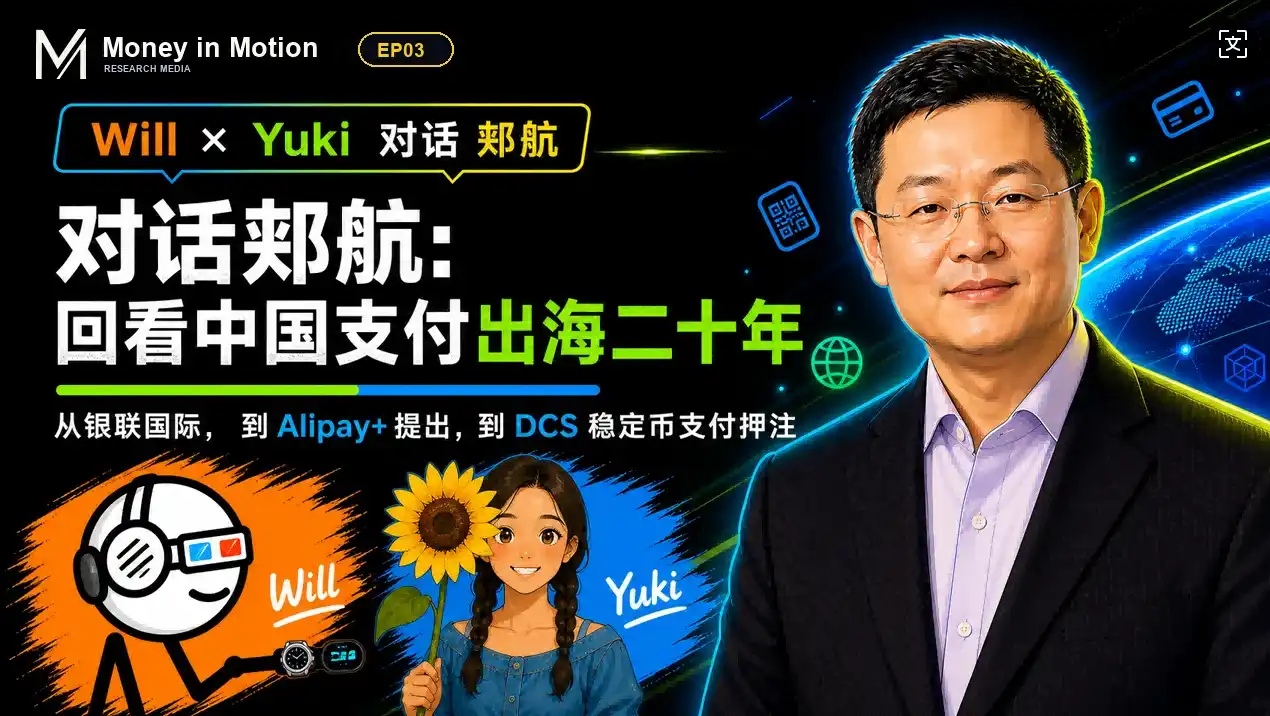
Dialogue with Jia Hang | Looking Back at Two Decades of Chinese Payment Going Global

**Summary: A Conversation with Jia Hang on Two Decades of China's Payment Globalization** Jia Hang, a veteran with over twenty years in payments, reflects on China's attempts to build a global payment network through three key phases: UnionPay (card networks), Alipay+ (digital wallets), and now, stablecoins. His journey began at UnionPay International, aiming to establish China's card network abroad. While successful in following Chinese tourists ("where Chinese go, UnionPay goes"), it struggled to achieve true global scale. The core lesson: card networks like Visa/Mastercard's unassailable advantage isn't just technical standards, but their deeply entrenched **governance and profit-sharing models** that create powerful network effects. Competing as the "same species" is nearly impossible. At Ant Group, he led Alipay+, a strategy to bypass card networks by interconnecting local e-wallets worldwide. While innovative, it faced a similar ceiling. Mobile QR payments and card swipes were essentially **the same species competing for the same pie**, lacking a disruptive value proposition for users or a sustainable new incentive model to replace the card networks' established flywheel. Today, at Singapore's DCS, Jia focuses on stablecoin-based payments. He argues stablecoins represent a fundamental shift. They are not competing with Visa for consumer payments but challenging the **traditional banking and account system for value movement**. Products like "U Cards" (stablecoin-linked payment cards) are transitional, leveraging existing card networks for acceptance while building new rails. The real potential lies in stablecoins enabling seamless, low-cost global value transfer, potentially reorganizing the financial infrastructure around **accounts rather than cards**. Jia believes stablecoin adoption for local retail payments, cross-border transactions, and as high-yield savings vehicles is becoming irreversible. This could gradually reduce reliance on traditional fiat channels, especially in regions with weak currencies or capital controls. The quest for the "next global payment network" continues, now centered on whether stablecoins can successfully bridge Web2 and Web3, establish new governance, and create compelling user value beyond mere cost reduction.

marsbitHace 21 min(s)

Dialogue with Jia Hang | Looking Back at Two Decades of Chinese Payment Going Global

marsbitHace 21 min(s)

Circle's Stock Price Plunges 76%, Hong Kong Dollar Stablecoin Set to Launch Within Two Weeks

Circle's stock price has plunged approximately 76% from its 2023 peak, reflecting a major market revaluation. Despite this, Circle President Heath Tarbert emphasized the company's focus on long-term execution and its dominant position with USDC's $73 billion circulation across 34 blockchains. The competitive landscape is intensifying. A new consortium-backed stablecoin, Open USD, is attempting to challenge incumbents by sharing reserve yields with partners. More significantly, Visa's new stablecoin platform, initially supporting Open USD while also being compatible with USDC, could erode Circle's network effects. In response, Circle is expanding into real-world payments through partnerships like the one with Japan's JCB. Separately, Tether (USDT) faces a two-year compliance window under new U.S. regulations, requiring it to adjust its reserve composition away from assets like Bitcoin and loans towards cash and U.S. Treasuries. Meanwhile, in Hong Kong, Standard Chartered-backed fintech firm Dian Dian is poised to launch a licensed HKD-pegged stablecoin (HKDAP), moving the industry into a phase where the real test is integrating licensed stablecoins into actual payment flows and corporate treasury systems. The sharp decline in Circle's stock underscores a broader shift: the stablecoin market is moving from a winner-takes-all dynamic to a multi-player competitive arena where execution, compliance, and real-world utility are becoming paramount.

marsbitHace 21 min(s)

Circle's Stock Price Plunges 76%, Hong Kong Dollar Stablecoin Set to Launch Within Two Weeks

marsbitHace 21 min(s)

Amidst Capital's Encirclement, Decentralization is the Sole Defense for Public Blockchains

In a landscape dominated by power and profit motives, the author argues that decentralization is not merely one desirable feature among many in blockchain design—it is the singular, non-negotiable defense against corporate and capital capture. The article adopts a Machiavellian, realist perspective on human institutions, positing that businesses will inevitably attempt to co-opt any valuable network to protect their profits and dominance. While external attacks like 51% forks are often discussed, the greater existential risk is internal capture—the gradual erosion of a protocol’s neutrality by vested interests, as seen historically with platforms like Visa and Google. The piece critiques permissioned chains, highly centralized “permissionless” layer-1s, and layer-2s without sufficient decentralization (e.g., single sequencers) as inherently vulnerable. These compromised systems, promoted by established financial players, are framed as delaying tactics to stifle truly open networks that threaten existing high-fee, inefficient business models. Real-world examples, such as closed enterprise consortiums that exclude competitors, illustrate how such systems cement oligopolies rather than foster innovation. The author concludes that while decentralized protocols like Ethereum are imperfect and costly to operate, they represent the only viable long-term equilibrium. In a market where value naturally flows to the most secure and neutral settlement layer, only maximally decentralized public blockchains can resist being subsumed by capital and powerful incumbents.

Foresight NewsHace 31 min(s)

Amidst Capital's Encirclement, Decentralization is the Sole Defense for Public Blockchains

Foresight NewsHace 31 min(s)

Trading

Spot

Artículos destacados

Cómo comprar LAYER

¡Bienvenido a HTX.com! Hemos hecho que comprar Solayer (LAYER) sea simple y conveniente. Sigue nuestra guía paso a paso para iniciar tu viaje de criptos.Paso 1: crea tu cuenta HTXUtiliza tu correo electrónico o número de teléfono para registrarte y obtener una cuenta gratuita en HTX. Experimenta un proceso de registro sin complicaciones y desbloquea todas las funciones.Obtener mi cuentaPaso 2: ve a Comprar cripto y elige tu método de pagoTarjeta de crédito/débito: usa tu Visa o Mastercard para comprar Solayer (LAYER) al instante.Saldo: utiliza fondos del saldo de tu cuenta HTX para tradear sin problemas.Terceros: hemos agregado métodos de pago populares como Google Pay y Apple Pay para mejorar la comodidad.P2P: tradear directamente con otros usuarios en HTX.Over-the-Counter (OTC): ofrecemos servicios personalizados y tipos de cambio competitivos para los traders.Paso 3: guarda tu Solayer (LAYER)Después de comprar tu Solayer (LAYER), guárdalo en tu cuenta HTX. Alternativamente, puedes enviarlo a otro lugar mediante transferencia blockchain o utilizarlo para tradear otras criptomonedas.Paso 4: tradear Solayer (LAYER)Tradear fácilmente con Solayer (LAYER) en HTX's mercado spot. Simplemente accede a tu cuenta, selecciona tu par de trading, ejecuta tus trades y monitorea en tiempo real. Ofrecemos una experiencia fácil de usar tanto para principiantes como para traders experimentados.

339 Vistas totalesPublicado en 2025.02.11Actualizado en 2026.06.02

Cómo comprar LAYER

Discusiones

Bienvenido a la comunidad de HTX. Aquí puedes mantenerte informado sobre los últimos desarrollos de la plataforma y acceder a análisis profesionales del mercado. A continuación se presentan las opiniones de los usuarios sobre el precio de LAYER (LAYER).

活动图片