UK, US, Canada launch Operation Atlantic to fight crypto scams: Report

ambcryptoPublicado a 2026-03-18Actualizado a 2026-03-18

Resumen

The US, UK, and Canada have launched Operation Atlantic, a joint initiative to combat crypto scams in real-time. Led by the US Secret Service, the UK's National Crime Agency, and Canadian authorities, the operation focuses on proactively detecting and preventing fraud, rather than just tracing stolen funds after the fact. The primary target is "approval phishing," where victims are tricked into signing malicious smart contracts that grant attackers access to their wallets. Authorities will collaborate with crypto exchanges and blockchain firms to monitor suspicious transactions and directly contact potential victims before funds are stolen. The operation also targets "pig butchering" scams, a long-term social engineering scheme. This initiative builds on previous efforts like Canada's Project Atlas. While Chainalysis reports scammers received around $14 billion in crypto in 2025, TRM Labs notes illicit activity still only represents about 1.2% of total market volume, indicating the legitimate crypto economy is growing faster. The operation highlights a shift toward cross-border, proactive law enforcement response to increasingly globalized crypto crime.

For years, crypto fraud was linked to hackers stealing funds that seemed to vanish on the blockchain. Now, that perception is changing. Three countries have joined forces to stop scams in real time.

Called Operation Atlantic, the initiative brings together the U.S. Secret Service, the UK’s National Crime Agency (NCA), and Canadian authorities.

Instead of only tracing stolen funds after a crime, the operation aims to detect and prevent scams before money is taken.

Main focus of Operation Atlantic

The main target is “approval phishing.” In this scam, victims are tricked into signing a transaction that quietly permits attackers to access their crypto wallets.

By working with private blockchain firms and analyzing real-time data, investigators are now trying to spot risky wallet activity. This marks a shift from reactive investigations to proactive prevention.

Stressing the seriousness of the situation, Brent Daniels, Deputy Assistant Director for the U.S. Secret Service’s Office of Field Operations, said,

Approval phishing and investment scams cost victims millions in financial loss each year.

In response to the rising threat of such crimes, Paul Foster, Deputy Director of Cyber at the UK’s National Crime Agency, added,

Criminals operate across borders, so our response must do the same.

What will the investigators do?

In this effort, authorities will work closely with crypto exchanges and Virtual Asset Service Providers (VASPs) to monitor suspicious transaction patterns.

When they identify a wallet at risk, investigators will contact the potential victim by phone or email before scammers complete the fraud.

Additionally, the other focus is “pig butchering” scams, a long-term social engineering scheme where criminals slowly build trust with victims.

After gaining confidence, scammers trick victims into signing transactions that grant access to their crypto wallets through malicious smart contracts.

To avoid confusion, while pig butchering refers to the broader manipulation strategy, approval phishing is the mechanism that allows scammers to actually drain funds once trust has been established.

Other such initiatives

That said, the initiative also builds on Project Atlas, a 2024 Canadian-led operation that targeted international crypto investment fraud networks.

Remarking on which, Detective Superintendent Jennifer Spurrell, Director of the Financial Crimes Services Bureau at the Ontario Provincial Police, noted,

Project Atlas demonstrated the power of coordinated disruption....As fraud becomes increasingly global, this level of collaboration is essential.

Concerning data sets on rising crypto frauds

Operation Atlantic shows that law enforcement is becoming faster and more coordinated, but crypto fraud still remains a major challenge.
Source: Chainalysis

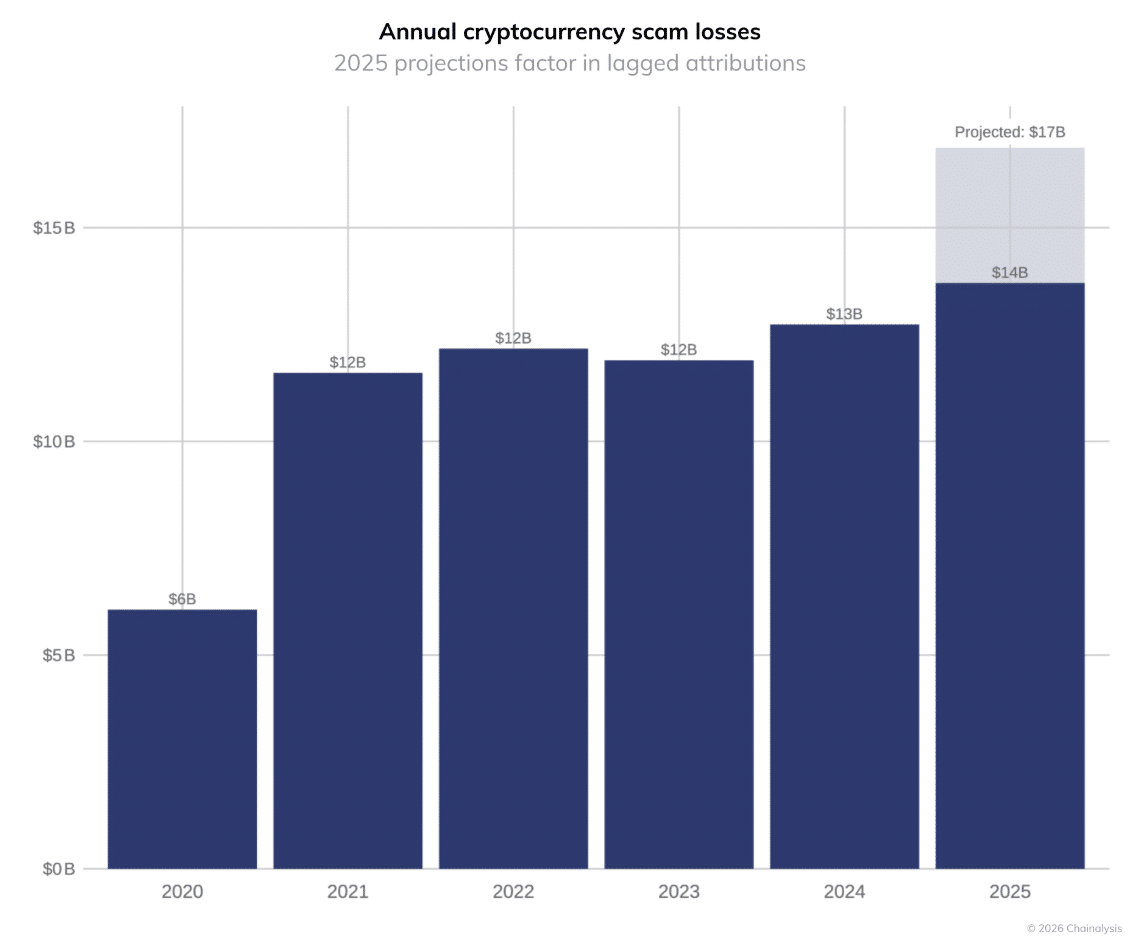
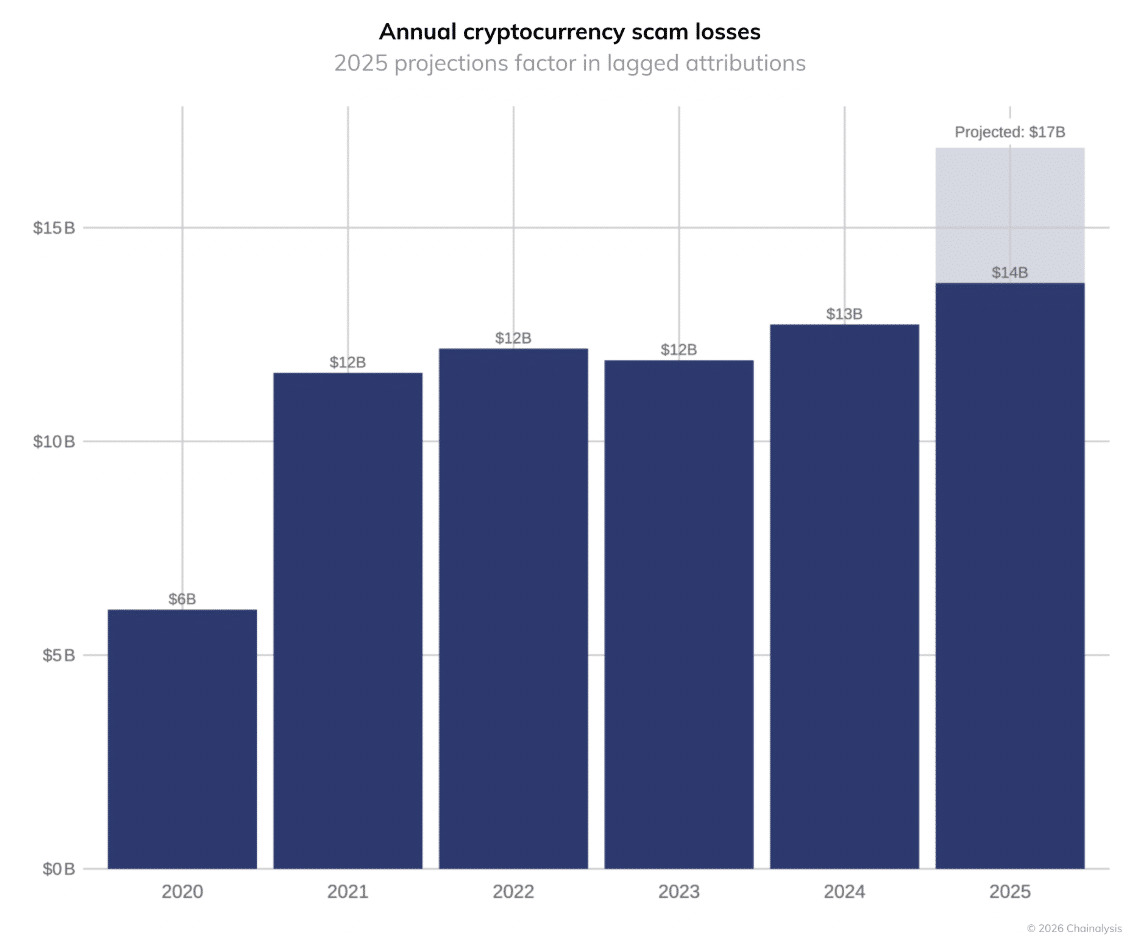
According to Chainalysis, scammers received around $14 billion in crypto in 2025, and investigators could identify over $17 billion as they uncover more illicit wallets.

However, TRM Labs reports a positive trend.
Source: TRM Labs

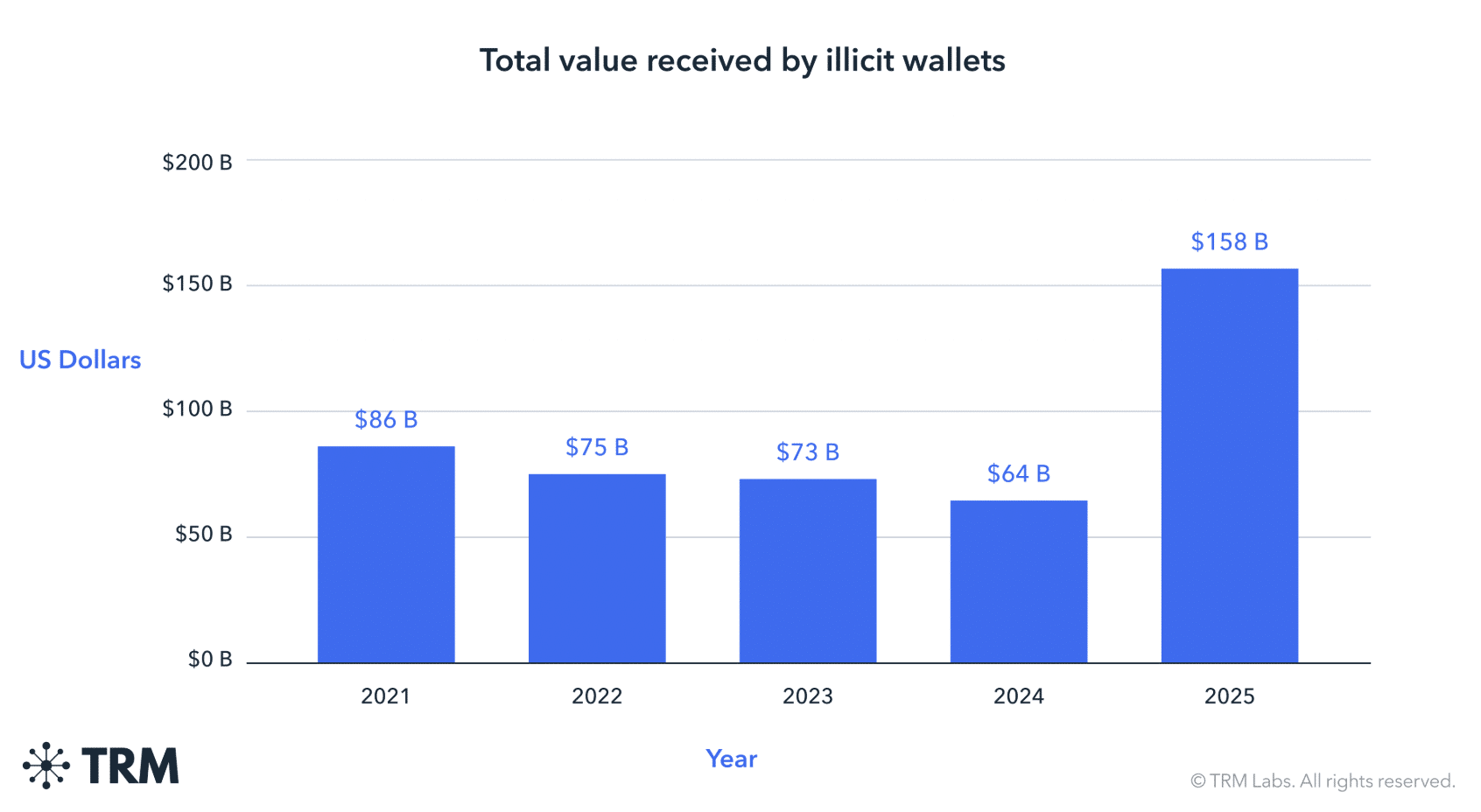
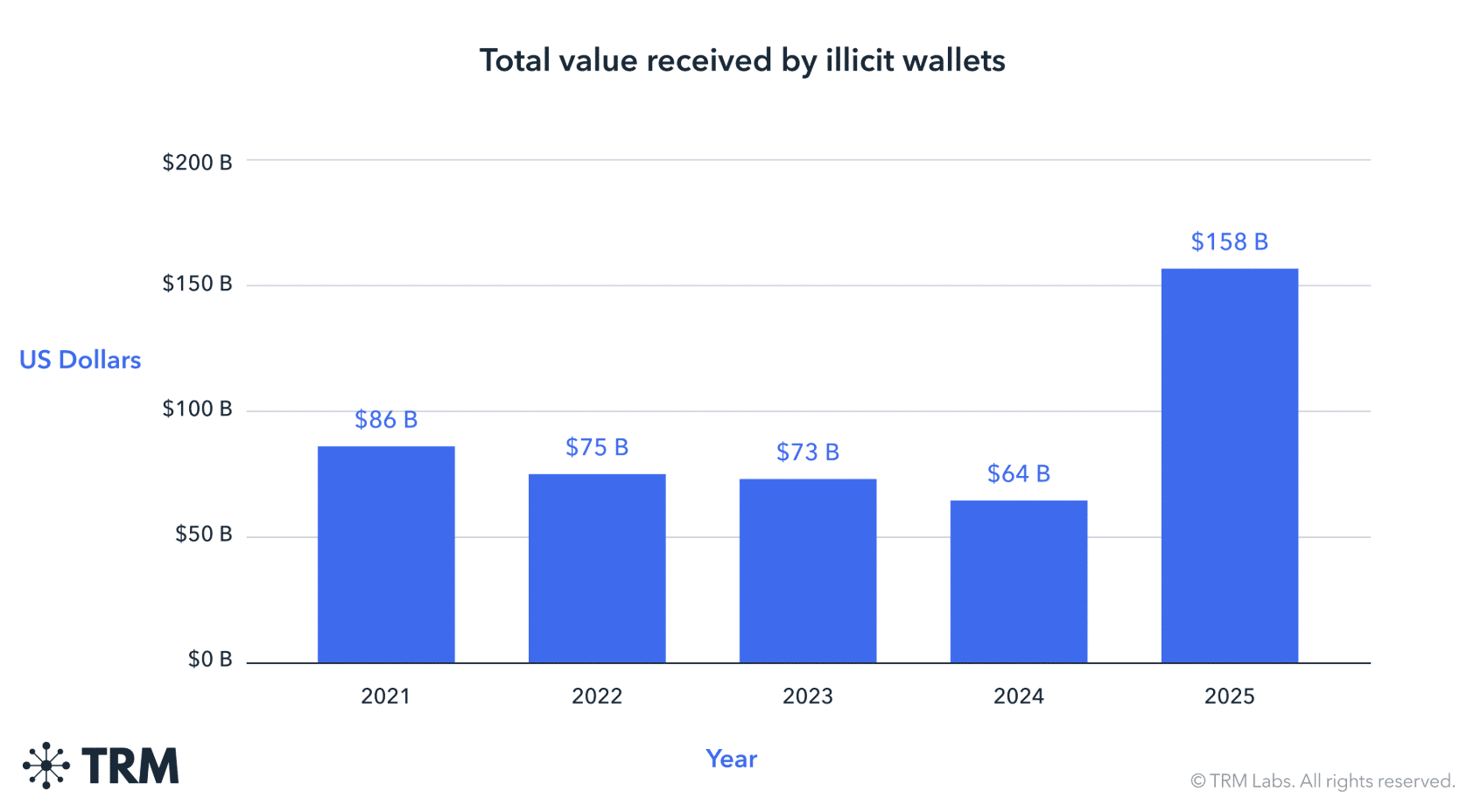
Illicit crypto activity reached $158 billion last year, but it accounted for only about 1.2% of total market activity. This suggests that despite rising fraud, the legitimate crypto economy is expanding at a much faster pace.


Final Summary

  • The rise of approval phishing scams exposes a key weakness in Web3 design, wherein many users do not fully understand the permissions they grant to smart contracts.
  • Billions lost to scams indicate that criminal networks are scaling just as quickly as the crypto industry itself.


Preguntas relacionadas

QWhat is the name of the joint operation launched by the UK, US, and Canada to combat crypto scams, and which agencies are involved?

AThe operation is called Operation Atlantic. It involves the U.S. Secret Service, the UK’s National Crime Agency (NCA), and Canadian authorities.

QWhat is the primary type of scam that Operation Atlantic is targeting, and how does it work?

AThe primary target is 'approval phishing.' In this scam, victims are tricked into signing a transaction that secretly grants attackers access to their crypto wallets, allowing the scammers to drain funds.

QHow does Operation Atlantic aim to prevent crypto fraud differently from previous methods?

AInstead of only tracing stolen funds after a crime has occurred (reactive), the operation aims to proactively detect and prevent scams by monitoring real-time data and suspicious wallet activity, then contacting potential victims before the fraud is completed.

QAccording to the report, what was the estimated value of crypto received by scammers in 2025, and what positive trend was noted by TRM Labs?

AAccording to Chainalysis, scammers received around $14 billion in crypto in 2025. TRM Labs reported that while illicit crypto activity reached $158 billion, it only accounted for about 1.2% of total market activity, indicating the legitimate crypto economy is expanding at a much faster pace.

QWhat is the name of the previous Canadian-led initiative that Operation Atlantic builds upon, and what did it target?

AOperation Atlantic builds on Project Atlas, a 2024 Canadian-led operation that targeted international crypto investment fraud networks.

Lecturas Relacionadas

How Many Tokens Away Is Yang Zhilin from the 'Moon Chasing the Light'?

The article explores the intense competition between two leading Chinese AI companies, DeepSeek and Kimi (Moon Dark Side), and the mounting pressure on Yang Zhilin, the founder of Kimi. While DeepSeek re-emerged after 15 months of silence with its powerful V4 model—boasting 1.6 trillion parameters and low-cost, long-context capabilities—Kimi has been focusing on long-context processing and multi-agent systems with its K2.6 model. Yang faces a threefold challenge: technological rivalry, commercialization pressure, and investor expectations. Despite Kimi’s high valuation (reaching $18 billion), its revenue heavily relies on a single product with low paid conversion rates, while DeepSeek’s strategic silence and open-source influence have strengthened its market position and valuation prospects, now targeting over $20 billion. Both companies reflect broader trends in China’s AI ecosystem: Kimi aims for global influence through open-source contributions and agent-based advancements, while DeepSeek prioritizes foundational innovation and hardware independence, notably shifting to Huawei’s chips. Their competition is seen as vital for China’s AI progress, with the gap between top Chinese and U.S. models narrowing to just 2.7% on the Elo rating scale. Ultimately, the article argues that this rivalry, though anxiety-inducing for leaders like Zhilin, is essential for driving innovation and solidifying China’s role in the global AI landscape.

marsbitHace 1 hora(s)

How Many Tokens Away Is Yang Zhilin from the 'Moon Chasing the Light'?

marsbitHace 1 hora(s)

TechFlow Intelligence Bureau: ChatGPT Helps Amateur Mathematician Crack 60-Year-Old Problem, CFTC Sues New York Regulator Over Coinbase and Gemini

An amateur mathematician, with the assistance of ChatGPT, has solved a combinatorial mathematics puzzle originally proposed by Hungarian mathematician Paul Erdős in the 1960s. This marks another milestone in AI-aided mathematical research, demonstrating the evolving capabilities of large language models in formal reasoning. In other AI developments, OpenAI introduced a new privacy filter tool for enterprise API usage, automatically screening sensitive data. Meanwhile, the Qwen3.6-27B model achieved 100 tokens per second on a single RTX 5090 GPU using quantization, significantly lowering the cost barrier for local AI deployment. In crypto and Web3, the U.S. CFTC sued New York’s financial regulator, challenging its oversight of Coinbase and Gemini—a first-of-its-kind federal-state regulatory clash. Following a vulnerability, KelpDAO and major DeFi protocols established a recovery fund. Tether froze $344 million in assets linked to Iran’s central bank upon U.S. Treasury request, highlighting the centralized control risks in stablecoins. Separately, Litecoin underwent a 3-hour chain reorganization to undo a privacy-layer exploit. In the U.S., former President Trump invoked the Defense Production Act to address power grid bottlenecks affecting AI data centers and dismissed the entire National Science Board, raising concerns over research independence. A retail trader gained 250% on a $600k Intel options bet amid AI-related speculation. Xiaomi announced its first performance electric vehicle, targeting rivals like Tesla. Meanwhile, iPhone users reported devices automatically reinstalling a hidden app daily, suspected to be MDM-related. A Chinese securities report noted that A-share institutional crowding has reached its second-longest streak since 2007, signaling high valuations and potential style rotation. The day’s developments reflect a dual narrative: AI is enabling unprecedented individual breakthroughs, while centralized power structures—whether governmental or corporate—are becoming more assertive, underscoring that decentralization is as much a political-economic challenge as a technical one.

marsbitHace 1 hora(s)

TechFlow Intelligence Bureau: ChatGPT Helps Amateur Mathematician Crack 60-Year-Old Problem, CFTC Sues New York Regulator Over Coinbase and Gemini

marsbitHace 1 hora(s)

Trading

Spot
Futuros
活动图片