Two Legends Lost in Three Days: Is Google's AI Talent Dam Cracking?

marsbitPublicado a 2026-06-20Actualizado a 2026-06-20

Resumen

In three days, Google lost two AI legends. On June 18, Noam Shazeer, co-author of the seminal "Attention is All You Need" paper and Gemini co-lead, left for OpenAI. Just 48 hours later, John Jumper, 2024 Nobel laureate and AlphaFold lead, departed DeepMind for Anthropic. This follows Andrej Karpathy joining Anthropic in May. These moves highlight a structural trend: top AI talent is concentrating at mission-driven, pre-IPO firms like OpenAI and Anthropic, while Google becomes a primary source. The exodus stems from a core mission mismatch. Google's ad-centric model often subordinates AI research to product and revenue goals, creating friction for pioneers like Shazeer, who returned in 2024 only to leave again. In contrast, OpenAI and Anthropic offer singular focus on pushing AI boundaries, whether towards AGI or safety-aligned models, which deeply appeals to top researchers like Jumper. Financial incentives amplify the pull. With both OpenAI and Anthropic nearing IPO, employees stand to gain immensely from equity, an upside Google's mature stock cannot match. Furthermore, the 2023 merger of Google Brain and DeepMind, intended to consolidate strength, has instead created cultural tension and slowed the path from research to product, as evidenced by Gemini's pace. This talent redistribution is reshaping the AI landscape. While Google retains vast data and compute resources, its true crisis is the quiet, continuous loss of the people who define the field's future. The real mo...

While the company that defined AI's past is losing the people who will define its future.

On June 18th, Noam Shazeer, core author of the Transformer paper and co-lead of Google Gemini, announced on X his departure from Google to join OpenAI, which had confidentially filed for an IPO with the SEC. He is one of the eight equal contributors to the 2017 paper "Attention is All You Need," which laid the technical foundation for modern large language models. Sam Altman immediately reposted and commented, "Noam has been one of the people I've most wanted to work with since day one of OpenAI. Only took a decade."

Forty-eight hours later, on June 19th, John Jumper, 2024 Nobel Laureate in Chemistry and core leader of AlphaFold, announced his departure from Google DeepMind after nearly nine years, joining Anthropic.

Two almost simultaneous departures of top-tier talent are enough to shock the AI community. Extending the timeline reveals an even clearer trend. On May 19th, former OpenAI founding member Andrej Karpathy announced he was joining Anthropic's pre-training team. Although he never worked at Google, his choice similarly illustrates one thing: top talent is concentrating at OpenAI and Anthropic, with Google becoming the primary source in this talent reshuffle.

Three Departures, Not Isolated Cases, But a Trend

Jumper is no ordinary researcher. In 2024, he, along with Demis Hassabis and David Baker, was awarded the Nobel Prize in Chemistry for leading the AlphaFold project, which used AI to predict protein 3D structures in an extremely short time, solving a problem that had perplexed the biology community for fifty years.

John Jumper (left) pictured with Demis Hassabis, echoing reports of his departure from Google DeepMind for Anthropic. Source: businessinsider.com (copyright review needed)

Shazeer is a key figure in modern AI development. He joined Google in 2000 and co-authored "Attention is All You Need" in 2017. The Transformer architecture proposed in that paper is the technical bedrock of all current large language models. In 2021, after Google refused to launch the AI chatbot product he co-developed with Daniel De Freitas, he left and founded Character.AI in 2022. Three years later, Google brought him back for approximately $2.7 billion, appointing him co-lead of Gemini. However, less than two years after his return, he has chosen to leave again, this time for OpenAI.
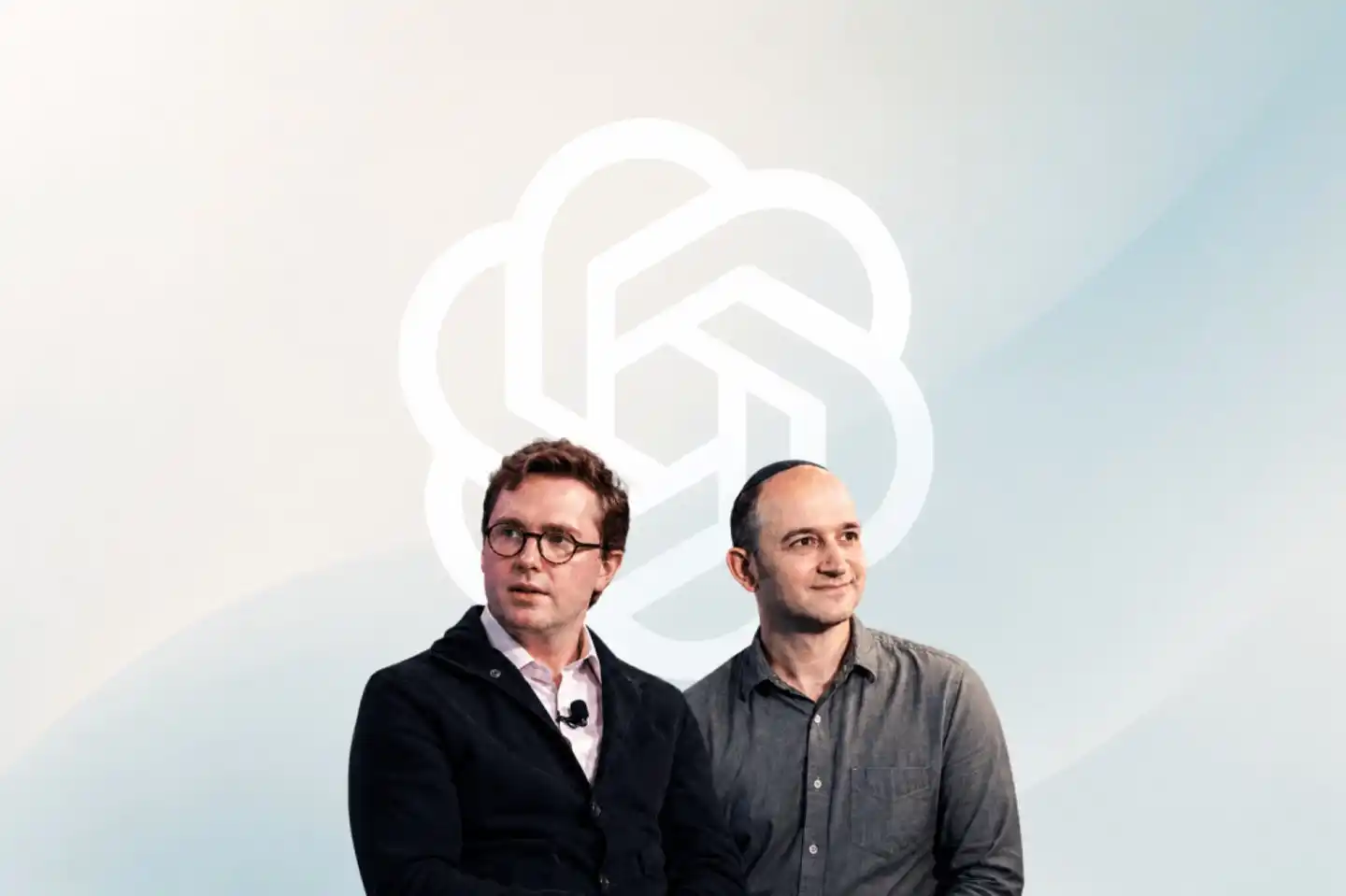
Noam Shazeer pictured with another AI executive, echoing reports of his departure from Google for OpenAI. Source: techcrunch.com (copyright review needed)

Karpathy's choice further confirms the larger trend. In May 2026, this OpenAI founding member, after concluding his educational startup Eureka Labs, announced he was joining Anthropic's pre-training team, responsible for "granting Claude core knowledge and capabilities through large-scale training runs." He never worked at Google, but his destination itself shows where top talent is concentrating.

Portrait of Andrej Karpathy, accompanying reports of his joining Anthropic's pre-training team. Source: bloomberg.com (copyright review needed)

Looking back further, this talent flow trend has been evident. Following the merger of Google Brain and DeepMind in April 2023, a significant number of mid-level and senior researchers flowed to OpenAI, Anthropic, and xAI. Tracking the author affiliations on cutting-edge AI papers on arXiv reveals that for more and more top researchers, the institution name on their profile has changed from "Google" to "OpenAI" or "Anthropic."

OpenAI and Anthropic are assembling the most influential talent rosters in the AI field. And Google is becoming the primary exporter in this talent migration.

Mission Misalignment

This is the most fundamental divergence, surpassing salary and compute power in importance.

Nearly 80% of Google parent Alphabet's revenue comes from advertising. This means all investments in the AI field must ultimately answer a product-oriented question: how will this serve the advertising business?

Shazeer quickly discovered after his return in 2024 that Google's core logic hadn't changed. The fundamental constraint he faced at Gemini—catching up to ChatGPT—remained a constrained task within an advertising-first architecture. The goal wasn't to redefine the boundaries of AI capability, but to defend advertising market share.

In contrast, OpenAI's charter clearly states its core mission is AGI (Artificial General Intelligence) for the benefit of all humanity. Anthropic has been built around AI safety since its inception, registered as a Public Benefit Corporation (PBC), legally obligated to balance shareholder interests with social benefits. At these two companies, top researchers don't need to answer questions like "how will this help the ads division increase revenue." They only need to focus on one goal: how to continuously push the boundaries of model capability.

Several researchers who moved from Google to these two organizations have repeatedly mentioned the same word in post-move interviews: "focus." At Google, key performance indicators are search click-through rates, ad conversion rates, and YouTube watch time. At Anthropic, key performance indicators are Claude's performance in pre-training and post-training. For a scientist like Jumper, who dedicated nine academic and professional years to the protein folding problem, this high degree of focus holds an irreplaceable appeal. At Anthropic, AI for Science is not a fringe project but a core research direction.

Mission is the push, while capital is the pull. In terms of compensation incentives, Google is at a structural disadvantage.

OpenAI confidentially filed for an IPO with the SEC in 2026, and Anthropic is also in the IPO preparation queue. Employees at both companies hold significant equity, poised for public market realization. The timing of Jumper's and Shazeer's decisions to join just before this window is no coincidence. In comparison, Google's market capitalization exceeds $2 trillion, with limited room for its stock price to double in the short term, making the explosive potential of its equity incentives at least an order of magnitude lower.

More noteworthy is the capital market's distinctly different pricing logic for these two types of companies. Leaked OpenAI audited financial reports show its 2025 GAAP net loss was approximately $38.5 to $39.0 billion (including about $30 billion in non-cash conversion expenses), with operating losses widening from $8.78 billion in 2024 to about $20.9 billion, yet the capital market reaction remained positive. During the same period, OpenAI's revenue soared from $3.7 billion to $13.07 billion, a 253% increase. In Q1 2026, the company's revenue was $5.7 billion with operating expenses of $3.7 billion. Investors are willing to pay for a "losses for growth" strategy.

At Google, AI investments of similar scale prompt questions from the capital market like, "What impact will this have on margins?" The same large-scale investment in AI is called strategic investment at OpenAI but is viewed as cost-center expansion at Google.

From the perspective of a top researcher, the logic behind this choice isn't complicated. On one side is a company nearing an IPO, where equity could realize nine-figure value within two years, with the entire team focused on optimizing model capability. On the other side is a mature behemoth with a $2 trillion market cap, where a researcher's work must continuously align with the quarterly goals of advertising and search teams.

The DeepMind Merger Creates New Centrifugal Forces

In April 2023, Google Brain and DeepMind merged into Google DeepMind, unified under the leadership of Demis Hassabis. The official narrative at the time was "consolidating strength." But looking back three years later, the merger's actual effects are debatable.

The merger failed to fundamentally resolve the realignment of influence in translating research into products.

DeepMind's foundational research needed to be implemented through product teams, which had their own independent timelines and priorities. Gemini is a典型案例. Shazeer was appointed co-lead, but the product release节奏 and commercialization path remained highly constrained by the search and cloud business units. This contrasts sharply with OpenAI's model where the entire organization revolves around the same core product goal.

The merger also created cultural identity tensions. Google Brain leaned more towards engineering and commercial落地, while DeepMind leaned more towards basic science and long-term exploration. Post-merger, the long-term research-oriented culture is seen as eroded under the pressure to "align with product roadmaps."

A former Google researcher wrote on X, "When we were asked to align our research direction with the product roadmap, I knew it was time to go."

Jumper's departure can be seen as a statement on the post-merger cultural direction. He worked at DeepMind for nearly nine years, experiencing the independent research era, the post-merger integration period, and the current phase of increasing productization pressure. When the research environment increasingly required alignment with search engine KPIs, leaving became a calculated but not difficult decision.

A deeper issue is that less than two years after Shazeer's return, the pace of AI product releases hasn't significantly accelerated. Gemini narrowed the capability gap with ChatGPT but never became the leader in细分领域. He hasn't publicly expressed dissatisfaction—his statement on X was standard professional措辞—but the action itself speaks volumes.

The Talent Map is Undergoing an Irreversible Reshuffle

This talent exodus is no longer just a matter of a few people changing jobs.

Google can bring back top researchers, but it cannot change the most fundamental thing: its core business model is advertising. AI is an enabling tool, not the ultimate mission. Money can bring back a person, but money cannot make Google not be Google. This means the outflow won't stop; it's a structural trend, not a few isolated departures.

On the other side, OpenAI and Anthropic are successfully carving their paths. OpenAI is securing the strongest force in LLM research, while Anthropic is combining AI safety with scientific applications. Both companies have clear boundaries and their own moats. Google is caught in the middle, lacking both OpenAI's product爆发力 and Anthropic's brand differentiation in safety.

What has irreversibly tilted the talent天平 is the IPO window. When top researchers can gain nine-figure or even ten-figure wealth through equity realization within a year or two, no mature giant's compensation system can compete on the same dimension. 2026 may well be remembered not for any particular AI capability breakthrough, but as the year the talent map underwent a structural reshuffle. In this round of competition, talent density determines model capability, model capability determines market share, and market share determines the winner's list.

Google is not without a chance for a comeback. It possesses one of the world's largest computing infrastructures, the most extensive user data reserves, and持续领先 in AI academic paper publications. But all these advantages rest on one premise: you must have足够优秀的人 to use them. And what Google is losing is precisely these people.

This might be the quietest crisis in Google's history—no major product失误, no heavy regulatory fines, no financial爆雷. It's just the smartest people, one after another, choosing to leave. In the AI field, the true moat has never been data, nor compute power, nor even the model architecture itself. It's the people willing to stay and push the technological boundaries day after day. And Google is discovering that retaining these people is far more difficult than training a trillion-parameter model. (This article was first published on Taimei APP, Author | AGI-Signal, Editor | Qin Conghui)


Criptos en tendencia

Preguntas relacionadas

QWhat are the two major AI talent departures from Google mentioned in the article that occurred within three days?

AThe two major departures were: 1) Noam Shazeer, co-author of the 'Attention Is All You Need' paper and co-head of Gemini, who left Google to join OpenAI. 2) John Jumper, 2024 Nobel laureate in Chemistry and core leader of AlphaFold, who left Google DeepMind to join Anthropic.

QAccording to the article, what is identified as the most fundamental reason for the talent exodus from Google?

AThe most fundamental reason is a 'mission misalignment.' Google's core business and revenue are centered on advertising, which imposes product-oriented constraints on AI research and development. In contrast, companies like OpenAI and Anthropic allow researchers to focus singularly on advancing AI capabilities or safety, without the need to justify their work in terms of ad revenue.

QWhat significant event in Google's AI organization in 2023 is cited as a catalyst for increased internal tension and talent outflow?

AThe merger of Google Brain and DeepMind into Google DeepMind in April 2023 is cited. While intended to consolidate strength, it reportedly created centrifugal forces by failing to solve the issue of research-to-product translation and introducing cultural clashes between commercial engineering (Google Brain) and long-term scientific exploration (DeepMind) under increased productization pressure.

QWhat financial factor is mentioned as a powerful 'pull' attracting top AI talent to companies like OpenAI and Anthropic?

AThe impending IPO window for OpenAI and Anthropic is a major financial pull. Employees at these pre-IPO companies hold significant equity that could become extremely valuable upon a public offering, offering potentially nine-figure or higher financial rewards that mature giants like Google, with its massive but slower-growing market cap, cannot easily match.

QWhat does the article conclude is the true 'moat' (defensive advantage) in the AI field, which Google is currently struggling to maintain?

AThe article concludes that the true moat in AI is not data, computing power, or even model architecture, but the people—the top talent who are willing to stay and push the boundaries of the technology day after day. Google's quiet crisis is that it is losing precisely these individuals.

Lecturas Relacionadas

Base Under Pressure

**Title: The Pressure Mounts for Base** Base, the Ethereum Layer 2 scaling solution backed by Coinbase, is facing significant pressure and public scrutiny from its leadership following the launch of Robinhood Chain. Base co-founder Jesse Pollak recently acknowledged strategic missteps, admitting that the chain's past focus on social and creator tokens (e.g., through Farcaster, Zora) failed to deliver sustainable adoption. He has refocused on core infrastructure, handing leadership of the Base App back to Coinbase's Cobie. While Base remains a top L2 contender alongside OP Mainnet and Arbitrum, and boasts the highest TVL (nearly $12B), its weaknesses are being highlighted by the new competitor. Key criticisms include its slow progress on decentralization. Base has faced issues with its single sequencer causing block production halts, and L2BEAT is reportedly considering downgrading its decentralization rating from Stage 1 to Stage 0. This contrasts sharply with the rapid initial success of Robinhood Chain, whose DEX quickly entered the top five by volume. The leadership styles of the parent companies are also being compared: Robinhood's CEO actively engages with new projects, while a recent incident where Coinbase's Brian Armstrong briefly changed his profile picture—sparking and then crashing a related meme token—drew community ire and mockery. Pollak stated Base is working with Coinbase on tokenized stocks backed 1:1 by real equity, differentiating it from Robinhood's derivatives model. However, the article argues that Base's most urgent task is to address its long-standing technical and trust issues. With more traditional finance players likely to emulate Robinhood's path, Base must use this competitive pressure to solidify its position as long-term financial infrastructure.

Foresight NewsHace 10 min(s)

Base Under Pressure

Foresight NewsHace 10 min(s)

White House Concession Removes Ethical Hurdle, Clarity Act Races Against Final Window Before Recess?

On July 21st, industry sources reported that the Trump administration has agreed to include an ethics provision in the "Clarity Act" (Digital Asset Market Clarity Act of 2025). This concession addresses the long-standing conflict-of-interest concerns regarding government officials and the crypto industry, potentially removing the final major obstacle to the bill's progress. Additionally, Patrick Witt, the executive director of the White House's Digital Asset Advisory Committee, confirmed he will remain in his role to help finalize the bill, alleviating previous concerns about his potential departure. The Clarity Act aims to establish a unified federal regulatory framework for the U.S. digital asset market. Its core objective is to resolve regulatory ambiguity by defining different types of digital assets (digital commodities, investment contract assets, and permitted payment stablecoins) and clarifying the respective oversight roles of the SEC and CFTC. This would end the long-running jurisdictional dispute between the two agencies and provide clearer compliance paths for the industry. With the ethics issue moving toward resolution, the most urgent challenge now is time. The U.S. Congress is set to begin its August recess in mid-August, leaving only a few working weeks to finalize the text and advance the bill through the Senate. Industry advocates, like the Blockchain Association's Kristin Smith, stress that this is a critical moment. If negotiations conclude successfully in the coming weeks, the Clarity Act could pass a key hurdle before the recess; otherwise, it may face significant delays. If enacted, the Clarity Act could mark a historic turning point in crypto regulation. By providing a clearer and more predictable legal framework, it aims to reduce uncertainty for businesses, developers, and traditional financial institutions looking to enter the digital asset space, potentially setting a global benchmark for market structure regulation.

Odaily星球日报Hace 16 min(s)

White House Concession Removes Ethical Hurdle, Clarity Act Races Against Final Window Before Recess?

Odaily星球日报Hace 16 min(s)

AI Era, Industrial Revolution, and Future Civilization Interview — Zhang Dingwen: The Future Does Not Belong to Chasers

"AI Era, Industrial Revolution and Future Civilization: An Interview with Zhang Dingwen – The Future Does Not Belong to Those Who Chase" In this interview, entrepreneur Zhang Dingwen reflects on his entrepreneurial journey and philosophy, moving beyond discussions of financing or success to emphasize understanding the "era" itself. He argues that true entrepreneurs should not chase short-term trends ("winds"), but position themselves in the direction of long-term technological and societal evolution. Zhang shares key lessons from his early days, including the realization that user value does not automatically translate to commercial value. For him, the core of entrepreneurship is not building a company but constantly upgrading one's own "cognition" – the ability to interpret information, ask the right questions, and understand the underlying "causes" behind business outcomes, not just the effects. His thinking has evolved from a focus on creating good products to a strategic focus on building "entrances" – platforms that naturally connect users to digital services. He sees smart wearables, like watches, not merely as hardware but as potential future gateways combining technological, financial, social, and even fashion attributes to create sustained user relationships and ecosystems. Ultimately, Zhang's vision transcends individual products or companies. He discusses business competition in three stages: product, platform, and finally, "civilization" – where the greatest companies influence how society operates by defining new rules and ways of life. He believes the mission of a truly great enterprise is to solve problems of its time, build enduring trust, and contribute lasting value, leaving behind not just wealth but a positive impact on how the world works. The future, he concludes, belongs not to the fastest, but to those with the correct long-term direction and a commitment to continuous learning and evolution.

marsbitHace 27 min(s)

AI Era, Industrial Revolution, and Future Civilization Interview — Zhang Dingwen: The Future Does Not Belong to Chasers

marsbitHace 27 min(s)

Cryptocurrency & Stock Market Barometer丨Strategy Cash Reserves Increase to $3.23 Billion, Halting BTC Purchases; Vanguard and Other Asset Managers Increase Holdings in Strategy Stock (July 21)

Market Overview & Warnings: The article warns of high volatility in South Korean stocks and continued dependence on U.S. stocks on geopolitics. Chinese A-shares remain under pressure. It advises against using leverage in current equity markets. For crypto-linked stocks, most have limited growth except Robinhood, with caution advised. U.S. Stock Market: Bearish bets on U.S. stocks, particularly targeting AI-related companies, have reached record highs since 2010, signaling deep skepticism about the sustainability of the AI-driven rally. Tech and chip stocks led a market decline, with the Philadelphia Semiconductor Index potentially entering a bear market. Increased expectations for Federal Reserve interest rate hikes and geopolitical tensions contributed to the negative sentiment. Bitcoin Treasury Company Updates: * Strategy: Increased its cash reserves to $3.23 billion and paused Bitcoin purchases. Several major asset managers, including Vanguard Group and Capital Group, increased their holdings of Strategy (MSTR) stock. * Global corporate Bitcoin buying slowed significantly to just $1.33 million last week. * Other notable activity: Strive purchased 21 BTC; ORANGE JUICE raised $40 million for Bitcoin acquisitions; Bitcoin Japan Corp. raised $60 million, allocating $4.08 million for its first BTC purchase. Other Crypto Treasury Holdings: * Ethereum: BitMine increased its ETH holdings to 5.78 million, nearing its 5% of supply goal. Its total crypto assets, cash, and securities are valued at $11.5 billion. * Solana: No significant corporate treasury activity reported. * Altcoins: HypeStrat made no adjustments to its treasury; its mNAV ratio fell to a long-term low. (Note: This summary is for informational purposes only and does not constitute investment advice.)

marsbitHace 27 min(s)

Cryptocurrency & Stock Market Barometer丨Strategy Cash Reserves Increase to $3.23 Billion, Halting BTC Purchases; Vanguard and Other Asset Managers Increase Holdings in Strategy Stock (July 21)

marsbitHace 27 min(s)

Trading

Spot

Artículos destacados

Qué es $S$

Entendiendo SPERO: Una Visión General Completa Introducción a SPERO A medida que el panorama de la innovación continúa evolucionando, la aparición de tecnologías web3 y proyectos de criptomonedas juega un papel fundamental en la configuración del futuro digital. Un proyecto que ha atraído la atención en este campo dinámico es SPERO, denotado como SPERO,$$s$. Este artículo tiene como objetivo reunir y presentar información detallada sobre SPERO, para ayudar a entusiastas e inversores a comprender sus fundamentos, objetivos e innovaciones dentro de los dominios web3 y cripto. ¿Qué es SPERO,$$s$? SPERO,$$s$ es un proyecto único dentro del espacio cripto que busca aprovechar los principios de descentralización y tecnología blockchain para crear un ecosistema que promueva la participación, la utilidad y la inclusión financiera. El proyecto está diseñado para facilitar interacciones de igual a igual de nuevas maneras, proporcionando a los usuarios soluciones y servicios financieros innovadores. En su esencia, SPERO,$$s$ tiene como objetivo empoderar a los individuos al proporcionar herramientas y plataformas que mejoren la experiencia del usuario en el espacio de las criptomonedas. Esto incluye habilitar métodos de transacción más flexibles, fomentar iniciativas impulsadas por la comunidad y crear caminos para oportunidades financieras a través de aplicaciones descentralizadas (dApps). La visión subyacente de SPERO,$$s$ gira en torno a la inclusividad, buscando cerrar brechas dentro de las finanzas tradicionales mientras aprovecha los beneficios de la tecnología blockchain. ¿Quién es el Creador de SPERO,$$s$? La identidad del creador de SPERO,$$s$ sigue siendo algo oscura, ya que hay recursos públicos limitados que proporcionan información de fondo detallada sobre su(s) fundador(es). Esta falta de transparencia puede derivarse del compromiso del proyecto con la descentralización, una ética que muchos proyectos web3 comparten, priorizando las contribuciones colectivas sobre el reconocimiento individual. Al centrar las discusiones en torno a la comunidad y sus objetivos colectivos, SPERO,$$s$ encarna la esencia del empoderamiento sin señalar a individuos específicos. Como tal, comprender la ética y la misión de SPERO sigue siendo más importante que identificar a un creador singular. ¿Quiénes son los Inversores de SPERO,$$s$? SPERO,$$s$ cuenta con el apoyo de una diversa gama de inversores que van desde capitalistas de riesgo hasta inversores ángeles dedicados a fomentar la innovación en el sector cripto. El enfoque de estos inversores generalmente se alinea con la misión de SPERO, priorizando proyectos que prometen avances tecnológicos sociales, inclusión financiera y gobernanza descentralizada. Estas fundaciones de inversores suelen estar interesadas en proyectos que no solo ofrecen productos innovadores, sino que también contribuyen positivamente a la comunidad blockchain y sus ecosistemas. El respaldo de estos inversores refuerza a SPERO,$$s$ como un contendiente notable en el dominio de proyectos cripto que evoluciona rápidamente. ¿Cómo Funciona SPERO,$$s$? SPERO,$$s$ emplea un marco multifacético que lo distingue de los proyectos de criptomonedas convencionales. Aquí hay algunas de las características clave que subrayan su singularidad e innovación: Gobernanza Descentralizada: SPERO,$$s$ integra modelos de gobernanza descentralizada, empoderando a los usuarios para participar activamente en los procesos de toma de decisiones sobre el futuro del proyecto. Este enfoque fomenta un sentido de propiedad y responsabilidad entre los miembros de la comunidad. Utilidad del Token: SPERO,$$s$ utiliza su propio token de criptomoneda, diseñado para servir diversas funciones dentro del ecosistema. Estos tokens permiten transacciones, recompensas y la facilitación de servicios ofrecidos en la plataforma, mejorando la participación y la utilidad general. Arquitectura en Capas: La arquitectura técnica de SPERO,$$s$ apoya la modularidad y escalabilidad, permitiendo la integración fluida de características y aplicaciones adicionales a medida que el proyecto evoluciona. Esta adaptabilidad es fundamental para mantener la relevancia en el cambiante paisaje cripto. Participación de la Comunidad: El proyecto enfatiza iniciativas impulsadas por la comunidad, empleando mecanismos que incentivan la colaboración y la retroalimentación. Al nutrir una comunidad sólida, SPERO,$$s$ puede abordar mejor las necesidades de los usuarios y adaptarse a las tendencias del mercado. Enfoque en la Inclusión: Al ofrecer tarifas de transacción bajas e interfaces amigables para el usuario, SPERO,$$s$ busca atraer a una base de usuarios diversa, incluyendo a individuos que anteriormente pueden no haber participado en el espacio cripto. Este compromiso con la inclusión se alinea con su misión general de empoderamiento a través de la accesibilidad. Cronología de SPERO,$$s$ Entender la historia de un proyecto proporciona información crucial sobre su trayectoria de desarrollo y hitos. A continuación se presenta una cronología sugerida que mapea eventos significativos en la evolución de SPERO,$$s$: Fase de Conceptualización e Ideación: Las ideas iniciales que forman la base de SPERO,$$s$ fueron concebidas, alineándose estrechamente con los principios de descentralización y enfoque comunitario dentro de la industria blockchain. Lanzamiento del Whitepaper del Proyecto: Tras la fase conceptual, se lanzó un whitepaper completo que detalla la visión, los objetivos y la infraestructura tecnológica de SPERO,$$s$ para generar interés y retroalimentación de la comunidad. Construcción de Comunidad y Primeras Interacciones: Se realizaron esfuerzos de divulgación activa para construir una comunidad de primeros adoptantes y posibles inversores, facilitando discusiones en torno a los objetivos del proyecto y obteniendo apoyo. Evento de Generación de Tokens: SPERO,$$s$ llevó a cabo un evento de generación de tokens (TGE) para distribuir sus tokens nativos a los primeros seguidores y establecer liquidez inicial dentro del ecosistema. Lanzamiento de la dApp Inicial: La primera aplicación descentralizada (dApp) asociada con SPERO,$$s$ se puso en marcha, permitiendo a los usuarios interactuar con las funcionalidades centrales de la plataforma. Desarrollo Continuo y Alianzas: Actualizaciones y mejoras continuas a las ofertas del proyecto, incluyendo alianzas estratégicas con otros actores en el espacio blockchain, han moldeado a SPERO,$$s$ en un jugador competitivo y en evolución en el mercado cripto. Conclusión SPERO,$$s$ se erige como un testimonio del potencial de web3 y las criptomonedas para revolucionar los sistemas financieros y empoderar a los individuos. Con un compromiso con la gobernanza descentralizada, la participación comunitaria y funcionalidades diseñadas de manera innovadora, allana el camino hacia un paisaje financiero más inclusivo. Como con cualquier inversión en el espacio cripto que evoluciona rápidamente, se anima a los posibles inversores y usuarios a investigar a fondo y participar de manera reflexiva con los desarrollos en curso dentro de SPERO,$$s$. El proyecto muestra el espíritu innovador de la industria cripto, invitando a una mayor exploración de sus innumerables posibilidades. Mientras el viaje de SPERO,$$s$ aún se desarrolla, sus principios fundamentales pueden, de hecho, influir en el futuro de cómo interactuamos con la tecnología, las finanzas y entre nosotros en ecosistemas digitales interconectados.

150 Vistas totalesPublicado en 2024.12.17Actualizado en 2024.12.17

Qué es $S$

Qué es AGENT S

Agent S: El Futuro de la Interacción Autónoma en Web3 Introducción En el paisaje en constante evolución de Web3 y las criptomonedas, las innovaciones están redefiniendo constantemente cómo los individuos interactúan con las plataformas digitales. Uno de estos proyectos pioneros, Agent S, promete revolucionar la interacción humano-computadora a través de su marco agente abierto. Al allanar el camino para interacciones autónomas, Agent S busca simplificar tareas complejas, ofreciendo aplicaciones transformadoras en inteligencia artificial (IA). Esta exploración detallada profundizará en las complejidades del proyecto, sus características únicas y las implicaciones para el dominio de las criptomonedas. ¿Qué es Agent S? Agent S se presenta como un marco agente abierto innovador, diseñado específicamente para abordar tres desafíos fundamentales en la automatización de tareas informáticas: Adquisición de Conocimiento Específico del Dominio: El marco aprende inteligentemente de diversas fuentes de conocimiento externas y experiencias internas. Este enfoque dual le permite construir un rico repositorio de conocimiento específico del dominio, mejorando su rendimiento en la ejecución de tareas. Planificación a Largo Plazo de Tareas: Agent S emplea planificación jerárquica aumentada por la experiencia, un enfoque estratégico que facilita la descomposición y ejecución eficiente de tareas complejas. Esta característica mejora significativamente su capacidad para gestionar múltiples subtareas de manera eficiente y efectiva. Manejo de Interfaces Dinámicas y No Uniformes: El proyecto introduce la Interfaz Agente-Computadora (ACI), una solución innovadora que mejora la interacción entre agentes y usuarios. Utilizando Modelos de Lenguaje Multimodal de Gran Escala (MLLMs), Agent S puede navegar y manipular diversas interfaces gráficas de usuario sin problemas. A través de estas características pioneras, Agent S proporciona un marco robusto que aborda las complejidades involucradas en la automatización de la interacción humana con las máquinas, preparando el terreno para una multitud de aplicaciones en IA y más allá. ¿Quién es el Creador de Agent S? Si bien el concepto de Agent S es fundamentalmente innovador, la información específica sobre su creador sigue siendo elusiva. El creador es actualmente desconocido, lo que resalta ya sea la etapa incipiente del proyecto o la elección estratégica de mantener a los miembros fundadores en el anonimato. Independientemente de la anonimidad, el enfoque sigue siendo en las capacidades y el potencial del marco. ¿Quiénes son los Inversores de Agent S? Dado que Agent S es relativamente nuevo en el ecosistema criptográfico, la información detallada sobre sus inversores y patrocinadores financieros no está documentada explícitamente. La falta de información disponible públicamente sobre las bases de inversión u organizaciones que apoyan el proyecto plantea preguntas sobre su estructura de financiamiento y hoja de ruta de desarrollo. Comprender el respaldo es crucial para evaluar la sostenibilidad del proyecto y su posible impacto en el mercado. ¿Cómo Funciona Agent S? En el núcleo de Agent S se encuentra una tecnología de vanguardia que le permite funcionar de manera efectiva en diversos entornos. Su modelo operativo se basa en varias características clave: Interacción Humano-Computadora Similar a la Humana: El marco ofrece planificación avanzada de IA, esforzándose por hacer que las interacciones con las computadoras sean más intuitivas. Al imitar el comportamiento humano en la ejecución de tareas, promete elevar las experiencias de los usuarios. Memoria Narrativa: Empleada para aprovechar experiencias de alto nivel, Agent S utiliza memoria narrativa para hacer un seguimiento de las historias de tareas, mejorando así sus procesos de toma de decisiones. Memoria Episódica: Esta característica proporciona a los usuarios una guía paso a paso, permitiendo que el marco ofrezca apoyo contextual a medida que se desarrollan las tareas. Soporte para OpenACI: Con la capacidad de ejecutarse localmente, Agent S permite a los usuarios mantener el control sobre sus interacciones y flujos de trabajo, alineándose con la ética descentralizada de Web3. Fácil Integración con APIs Externas: Su versatilidad y compatibilidad con varias plataformas de IA aseguran que Agent S pueda encajar sin problemas en ecosistemas tecnológicos existentes, convirtiéndolo en una opción atractiva para desarrolladores y organizaciones. Estas funcionalidades contribuyen colectivamente a la posición única de Agent S dentro del espacio cripto, ya que automatiza tareas complejas y de múltiples pasos con una intervención humana mínima. A medida que el proyecto evoluciona, sus posibles aplicaciones en Web3 podrían redefinir cómo se desarrollan las interacciones digitales. Cronología de Agent S El desarrollo y los hitos de Agent S pueden encapsularse en una cronología que resalta sus eventos significativos: 27 de septiembre de 2024: El concepto de Agent S fue lanzado en un documento de investigación integral titulado “Un Marco Agente Abierto que Usa Computadoras Como un Humano”, mostrando las bases del proyecto. 10 de octubre de 2024: El documento de investigación fue puesto a disposición del público en arXiv, ofreciendo una exploración profunda del marco y su evaluación de rendimiento basada en el benchmark OSWorld. 12 de octubre de 2024: Se lanzó una presentación en video, proporcionando una visión visual de las capacidades y características de Agent S, involucrando aún más a posibles usuarios e inversores. Estos marcadores en la cronología no solo ilustran el progreso de Agent S, sino que también indican su compromiso con la transparencia y la participación comunitaria. Puntos Clave Sobre Agent S A medida que el marco Agent S continúa evolucionando, varios atributos clave destacan, subrayando su naturaleza innovadora y potencial: Marco Innovador: Diseñado para proporcionar un uso intuitivo de las computadoras similar a la interacción humana, Agent S aporta un enfoque novedoso a la automatización de tareas. Interacción Autónoma: La capacidad de interactuar de manera autónoma con las computadoras a través de GUI significa un salto hacia soluciones informáticas más inteligentes y eficientes. Automatización de Tareas Complejas: Con su metodología robusta, puede automatizar tareas complejas y de múltiples pasos, haciendo que los procesos sean más rápidos y menos propensos a errores. Mejora Continua: Los mecanismos de aprendizaje permiten a Agent S mejorar a partir de experiencias pasadas, mejorando continuamente su rendimiento y eficacia. Versatilidad: Su adaptabilidad en diferentes entornos operativos como OSWorld y WindowsAgentArena asegura que pueda servir a una amplia gama de aplicaciones. A medida que Agent S se posiciona en el paisaje de Web3 y criptomonedas, su potencial para mejorar las capacidades de interacción y automatizar procesos significa un avance significativo en las tecnologías de IA. A través de su marco innovador, Agent S ejemplifica el futuro de las interacciones digitales, prometiendo una experiencia más fluida y eficiente para los usuarios en diversas industrias. Conclusión Agent S representa un audaz avance en la unión de la IA y Web3, con la capacidad de redefinir cómo interactuamos con la tecnología. Aunque aún se encuentra en sus primeras etapas, las posibilidades para su aplicación son vastas y atractivas. A través de su marco integral que aborda desafíos críticos, Agent S busca llevar las interacciones autónomas al primer plano de la experiencia digital. A medida que nos adentramos más en los reinos de las criptomonedas y la descentralización, proyectos como Agent S sin duda desempeñarán un papel crucial en la configuración del futuro de la tecnología y la colaboración humano-computadora.

561 Vistas totalesPublicado en 2025.01.14Actualizado en 2025.01.14

Qué es AGENT S

Cómo comprar S

¡Bienvenido a HTX.com! Hemos hecho que comprar Sonic (S) sea simple y conveniente. Sigue nuestra guía paso a paso para iniciar tu viaje de criptos.Paso 1: crea tu cuenta HTXUtiliza tu correo electrónico o número de teléfono para registrarte y obtener una cuenta gratuita en HTX. Experimenta un proceso de registro sin complicaciones y desbloquea todas las funciones.Obtener mi cuentaPaso 2: ve a Comprar cripto y elige tu método de pagoTarjeta de crédito/débito: usa tu Visa o Mastercard para comprar Sonic (S) al instante.Saldo: utiliza fondos del saldo de tu cuenta HTX para tradear sin problemas.Terceros: hemos agregado métodos de pago populares como Google Pay y Apple Pay para mejorar la comodidad.P2P: tradear directamente con otros usuarios en HTX.Over-the-Counter (OTC): ofrecemos servicios personalizados y tipos de cambio competitivos para los traders.Paso 3: guarda tu Sonic (S)Después de comprar tu Sonic (S), guárdalo en tu cuenta HTX. Alternativamente, puedes enviarlo a otro lugar mediante transferencia blockchain o utilizarlo para tradear otras criptomonedas.Paso 4: tradear Sonic (S)Tradear fácilmente con Sonic (S) en HTX's mercado spot. Simplemente accede a tu cuenta, selecciona tu par de trading, ejecuta tus trades y monitorea en tiempo real. Ofrecemos una experiencia fácil de usar tanto para principiantes como para traders experimentados.

1.1k Vistas totalesPublicado en 2025.01.15Actualizado en 2026.06.02

Cómo comprar S

Discusiones

Bienvenido a la comunidad de HTX. Aquí puedes mantenerte informado sobre los últimos desarrollos de la plataforma y acceder a análisis profesionales del mercado. A continuación se presentan las opiniones de los usuarios sobre el precio de S (S).

活动图片