Trusted Smart Chain Reports Over 1.86M Tokens Locked Ahead of One-Year Genesis Anniversary

TheNewsCryptoPublicado a 2026-03-28Actualizado a 2026-03-28

Resumen

Trusted Smart Chain (TSC) has locked over 1.86 million tokens in staking ahead of its one-year genesis anniversary on March 29. This reflects strong voluntary participation from validators and wallet holders, with much of the supply locked within seven months as validator activity expanded. Staking supports network security and reduces circulating supply, with some tokens committed for up to 24 months. Designed for capital markets and real-world asset tokenization, TSC focuses on regulated use cases like tokenized real estate and financial instruments. The staking growth mirrors early patterns in networks like Solana and Cosmos, indicating sustained validator engagement as TSC enters its second year.

Early staking participation reflects voluntary engagement from validators and wallet holders as the network approaches its first year of operation

Trusted Smart Chain (TSC) currently has more than 1.86 million tokens locked in staking less than one year since genesis, reflecting strong early participation from validators and wallet holders across the network.

According to network data, the majority of the locked supply accumulated within approximately seven months, following increased validator onboarding and voluntary long-term staking participation. This data is being observed just weeks before the network’s one-year anniversary on March 29, providing a snapshot of engagement during the first year of operation.

In validator-based blockchain networks, the amount of tokens that participants choose to stake or lock can provide insight into how the community is choosing to engage with the protocol, particularly during the early stages of development.

Staking Participation Increased as Validator Activity Expanded

During the first months after launch, staking participation grew gradually as infrastructure was deployed and validator nodes came online. More recently, the network saw a noticeable increase in tokens being committed to staking, bringing the total locked supply to more than 1.86 million TSC.

Each wallet holder has the ability to keep tokens liquid, stake them, or lock them for longer periods. The current staking levels reflect individual decisions made by participants across the network rather than tokens being assigned or required to be locked.

A portion of the locked tokens has been committed for extended periods, including lock durations of up to 24 months. In validator-based networks, longer lock periods are often associated with participants who intend to remain active in the ecosystem rather than move in and out of positions.

When tokens are locked, they are not available for transfer until the lock period ends. As a result, staking participation can influence the amount of supply that is actively circulating while also contributing to the stability of the validator set.

Similar patterns of increasing staking participation have been observed during the early growth phases of networks such as Solana, Avalanche, and Cosmos, where validator activity expanded over time as infrastructure and usage developed.

Built for Capital Markets and Real-World Asset Infrastructure

Trusted Smart Chain was designed to support applications that require additional structure around identity, compliance, and asset representation, particularly in areas related to real-world asset tokenization and capital markets infrastructure.

While many blockchain networks were originally built for general-purpose decentralized applications, the architecture of Trusted Smart Chain was created with the intention of supporting use cases such as tokenized real estate, funds, commodities, and other financial instruments that may operate within regulated environments.

Because of this focus, early participation in staking and validator operation has come largely from participants who are involved in the broader ecosystem rather than from short-term trading activity.

As validator participation expands, staking continues to play a role in maintaining network security while allowing wallet holders to choose how they want to participate in the protocol.

Staking Levels Observed Ahead of One-Year Anniversary

The current staking levels are being observed as the network approaches the one-year anniversary of its genesis block, which will take place on March 29. During its first year, the network has moved from initial launch to an active validator environment with increasing participation from node operators and community members.

The anniversary will be recognized during a community event in Las Vegas, where developers, validators, and early participants are expected to gather to mark the network’s first year of operation.

With more than 1.86 million tokens locked before the one-year mark, the data reflects the level of voluntary participation from the validator community and provides an indication of how the network has developed during its first year.

Early Participation as the Network Enters Its Second Year

In validator-based blockchain networks, staking participation often changes over time as infrastructure expands and new participants join. The amount of locked supply during the first year can provide an indication of how quickly a network is moving from launch into active use.

With a community choosing to lock more than 1.86 million tokens before the one-year mark, the current staking levels reflect early engagement from wallet holders who are participating in the network on a longer-term basis.

Trusted Smart Chain is entering its second year with an established validator base, ongoing staking participation, and continued development of the ecosystem, as the network moves forward with infrastructure intended to support tokenized assets and capital markets use cases.

About Trusted Smart Chain

Trusted Smart Chain is a next-generation blockchain designed specifically for the tokenization of securities and real-world assets. Built with a compliance-forward approach, Trusted Smart Chain delivers financial-grade, compliance-ready production environments for enterprises, developers, and institutions bringing real assets on-chain.

Disclosure & Disclaimer: This release is for informational purposes only and does not constitute investment, legal, or financial advice, nor an offer or solicitation of securities. Participation in the Trusted Smart Chain network, including staking or token locking, is voluntary and does not represent an investment or provide any ownership, profit, or financial rights. Digital rewards are generated through network participation, are not guaranteed, and carry no expectation of profit or financial return. Participants independently decide how to engage with the network. Tokens that are staked or locked may be illiquid for a period of time and are subject to technical, market, and regulatory risks. Any references to potential use cases, including tokenized assets, are subject to applicable laws and regulatory requirements.

  • Ivan Kan
  • Chief Marketing Officer
  • Trusted Smart Chain
  • Press@trustedsmartchain.com
  • www.trustedsmartchain.com

Disclaimer: TheNewsCrypto does not endorse any content on this page. The content depicted in this Press Release does not represent any investment advice. TheNewsCrypto recommends our readers to make decisions based on their own research. TheNewsCrypto is not accountable for any damage or loss related to content, products, or services stated in this Press Release.

TagsBlockchainCryptocurrencyTrusted Smart Chain

Criptos en tendencia

Preguntas relacionadas

QHow many tokens are currently locked in staking on Trusted Smart Chain as it approaches its one-year anniversary?

AMore than 1.86 million tokens are currently locked in staking on Trusted Smart Chain.

QWhat is the significance of the one-year anniversary date for the Trusted Smart Chain network?

AThe one-year anniversary of the network's genesis block is on March 29.

QWhat specific use cases and applications was the Trusted Smart Chain primarily designed to support?

ATrusted Smart Chain was designed to support applications related to real-world asset tokenization and capital markets infrastructure, such as tokenized real estate, funds, commodities, and other financial instruments that may operate within regulated environments.

QHow does the article characterize the nature of the staking participation (voluntary or mandatory)?

AThe staking participation is characterized as voluntary, reflecting individual decisions made by participants across the network rather than tokens being assigned or required to be locked.

QAccording to the article, what can longer lock periods for staked tokens often indicate about the participants?

ALonger lock periods are often associated with participants who intend to remain active in the ecosystem rather than move in and out of positions.

Lecturas Relacionadas

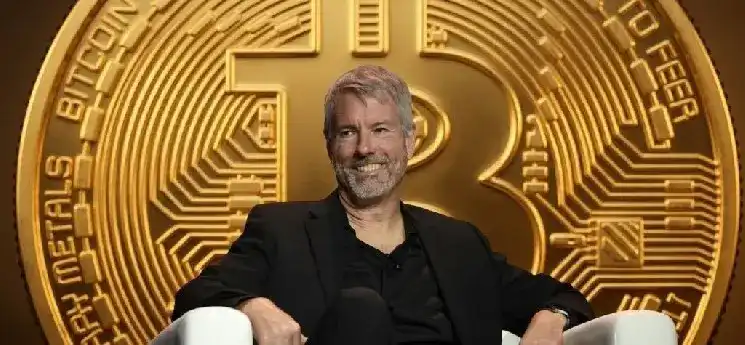
Michael Saylor: Bitcoin Halved, My Digital Credit is Making Money

Michael Saylor discusses Bitcoin, digital credit, and corporate treasury strategies in a recent roundtable. He explains that while Bitcoin remains "digital capital" with no counterparty risk, its ~40% annual volatility makes it unsuitable for most institutional and retail capital. To attract this capital, he advocates for Bitcoin-backed "digital credit" and "digital currency" products. These offer low volatility against fiat currencies, generate yield, and compete with traditional money market funds, stablecoins, and other yield-bearing crypto assets. Saylor clarifies that these products are not meant to replace direct Bitcoin ownership but to onboard capital that otherwise wouldn't enter the Bitcoin ecosystem. He provides examples: during a period when Bitcoin fell 50%, his company's digital credit products (STRC, SATA) delivered positive returns of 3-4%, demonstrating their ability to strip out ~90% of Bitcoin's volatility. He frames "digital currency" as a fiat-referenced, yield-bearing, stable-value asset backed by Bitcoin, designed to meet the needs of the global capital pool. This approach, he argues, can expand the Bitcoin network's reach by 10x to 100x more effectively than pure education. The discussion also covers corporate finance for Bitcoin treasury companies. Saylor argues that equity issuance is not inherently dilutive if done above net asset value per share and if the acquired asset (Bitcoin or cash) supports future value creation. He distinguishes between debt with maturity dates and hybrid capital like preferred shares (e.g., STRC), which offer issuer options and do not force liquidation. Evaluating these companies requires modeling based on future Bitcoin price and volatility assumptions, not relying on a single metric like mNAV (market-adjusted net asset value). The business models are still evolving, and investors must analyze full disclosures to form a complete view.

marsbitHace 40 min(s)

Michael Saylor: Bitcoin Halved, My Digital Credit is Making Money

marsbitHace 40 min(s)

Getting Ahead of the Tide and Drowning First: The Fall of 'Crypto x AI' Pioneer ai16z

"ai16z, an early pioneer of the 'crypto x AI' narrative, has officially shut down. In late 2024, its token launch sparked a massive speculative frenzy around AI Agent tokens, briefly propelling the project to a $2.6 billion valuation. However, by 2026, as functional AI agents from companies like Anthropic and OpenAI became mainstream reality, the crypto-native AI projects built largely on hype began to collapse. The founder of its underlying project, Eliza OS, announced the termination in a bitter post, citing legal threats from token holders and a depleted foundation. He expressed disillusionment with the crypto community, contrasting it with the 'optimistic' builders in pure AI. While the Eliza framework itself remains active as open-source software—ironically with contributions from AI like Claude—the token-dependent venture failed. The story highlights a core flaw: the crypto market often prices narratives far ahead of functional technology. When the promised AI future arrived, it was delivered by traditional tech companies with sustainable business models, not token projects. The episode suggests the initial path of 'tokenizing AI concepts' is broken. However, integration may still occur in reverse—with AI tools enhancing crypto analytics and trading—or in coordinating real resources like decentralized compute, as seen in projects like Bittensor and Render."

marsbitHace 1 hora(s)

Getting Ahead of the Tide and Drowning First: The Fall of 'Crypto x AI' Pioneer ai16z

marsbitHace 1 hora(s)

Changxin Rejects Apple's Price Pressure, Prices Not Lower Than Samsung and SK Hynix, Apple Loses Pricing Power

Apple recently attempted to negotiate lower-priced DRAM procurement deals with China's CXMT (ChangXin Memory Technologies) compared to its agreements with Samsung and SK Hynix but was rejected. CXMT stated its prices would not be lower, and could even be higher, than those of the South Korean suppliers. This refusal is attributed to CXMT's production capacity being largely secured by long-term contracts with major domestic clients like Huawei, Xiaomi, OPPO, Vivo, and Chinese internet giants. Consequently, CXMT feels no pressure to meet Apple's stringent terms. The backdrop is a significant surge in memory prices driven by the AI boom. As Samsung and SK Hynix shift more production capacity towards high-margin High Bandwidth Memory (HBM) for AI servers, the supply of conventional DRAM has tightened, causing prices to skyrocket. This has drastically increased the bill-of-materials cost for devices like iPhones, pressuring Apple's profits. Apple's traditional strategy of leveraging multiple suppliers for price competition has weakened, as memory makers prioritize more profitable AI-related orders. CXMT's confidence stems from achieving technological parity. Its DDR5 and LPDDR5X products have reached mass-production yields above 90%, closely matching Samsung's performance. With technical gaps closed, CXMT no longer competes solely on low prices. Furthermore, Chinese companies are wary of the risks associated with over-reliance on Apple's supply chain, citing cases like OFILM and Wingtech, which suffered severe losses after being removed from or impacted by US sanctions. This event signals a shift in the semiconductor industry's power dynamics. The AI-driven demand has transformed the market from buyer-centric to supplier-centric, where control over scarce, advanced production capacity grants pricing power. For Chinese semiconductor firms, the episode marks a transition from being low-cost alternatives to becoming equal suppliers with their own pricing authority, backed by domestic demand and technological advancement. Apple's loss of leverage with a mainland supplier underscores this changing era.

marsbitHace 1 hora(s)

Changxin Rejects Apple's Price Pressure, Prices Not Lower Than Samsung and SK Hynix, Apple Loses Pricing Power

marsbitHace 1 hora(s)

Trading

Spot

Artículos destacados

Cómo comprar ONE

¡Bienvenido a HTX.com! Hemos hecho que comprar Harmony (ONE) sea simple y conveniente. Sigue nuestra guía paso a paso para iniciar tu viaje de criptos.Paso 1: crea tu cuenta HTXUtiliza tu correo electrónico o número de teléfono para registrarte y obtener una cuenta gratuita en HTX. Experimenta un proceso de registro sin complicaciones y desbloquea todas las funciones.Obtener mi cuentaPaso 2: ve a Comprar cripto y elige tu método de pagoTarjeta de crédito/débito: usa tu Visa o Mastercard para comprar Harmony (ONE) al instante.Saldo: utiliza fondos del saldo de tu cuenta HTX para tradear sin problemas.Terceros: hemos agregado métodos de pago populares como Google Pay y Apple Pay para mejorar la comodidad.P2P: tradear directamente con otros usuarios en HTX.Over-the-Counter (OTC): ofrecemos servicios personalizados y tipos de cambio competitivos para los traders.Paso 3: guarda tu Harmony (ONE)Después de comprar tu Harmony (ONE), guárdalo en tu cuenta HTX. Alternativamente, puedes enviarlo a otro lugar mediante transferencia blockchain o utilizarlo para tradear otras criptomonedas.Paso 4: tradear Harmony (ONE)Tradear fácilmente con Harmony (ONE) en HTX's mercado spot. Simplemente accede a tu cuenta, selecciona tu par de trading, ejecuta tus trades y monitorea en tiempo real. Ofrecemos una experiencia fácil de usar tanto para principiantes como para traders experimentados.

428 Vistas totalesPublicado en 2024.12.12Actualizado en 2026.06.02

Cómo comprar ONE

Discusiones

Bienvenido a la comunidad de HTX. Aquí puedes mantenerte informado sobre los últimos desarrollos de la plataforma y acceder a análisis profesionales del mercado. A continuación se presentan las opiniones de los usuarios sobre el precio de ONE (ONE).

活动图片