Trump’s Dual Pressure: When the Iran Deal Meets the Midterm Elections

marsbitPublicado a 2026-05-25Actualizado a 2026-05-25

Resumen

U.S. President Donald Trump’s efforts to negotiate a deal with Iran are triggering a political backlash within his own Republican Party, as the approach of midterm elections intensifies internal divisions. Reports of a potential agreement—involving a temporary ceasefire, phased sanctions relief, and the unfreezing of Iranian assets in exchange for discussions on Tehran diluting or transferring its stockpile of highly enriched uranium—have drawn sharp criticism from GOP hawks. Key allies like Senators Lindsey Graham and Ted Cruz warned that such concessions could allow Iran to recuperate, undermine recent U.S. military gains, and ultimately strengthen a hostile regime. The dispute highlights a broader political struggle for Trump, who must reconcile his "America First" posture with diplomatic compromise while facing a tough electoral landscape. With Republicans fighting to maintain control of Congress and Trump’s approval ratings declining, the Iran deal has quickly become a test of party loyalty and perceived toughness. Public sparring between Trump aides and critics—including former Secretary of State Mike Pompeo—underscores the internal pressure. While Secretary of State Marco Rubio defended Trump’s historically hardline stance, skeptics like Senator Thom Tillis questioned the logic of any deal that leaves nuclear materials in Iran. The outcome now hinges on whether Trump can persuade his party’s hardliners to accept a negotiated exit.

Editor's Note: Trump is attempting to find an exit for the Iran conflict through negotiations, but it has first triggered a political backlash within the Republican Party.

Surrounding this yet-to-be-officially-announced deal, hawkish Republicans fear that a ceasefire, sanctions relief, and the unfreezing of assets would give Iran breathing room and even undermine the gains from previous U.S. military actions. For Trump, this is not only a diplomatic negotiation but also an intra-party struggle over policy direction: he must prove his toughness while avoiding further escalation of the war.

More notably, the divisions within the Republican Party over Iran are now intertwining with domestic U.S. electoral pressures. When war, energy, the economy, and Congressional election prospects all become political variables, any foreign agreement is no longer just a diplomatic decision. It is quickly transformed into a test of party loyalty, a show of strength, and voter sentiment. Whether Trump can persuade the hawks to accept diplomatic compromise under the 'America First' narrative will be key to whether this deal materializes.

The following is the original text:
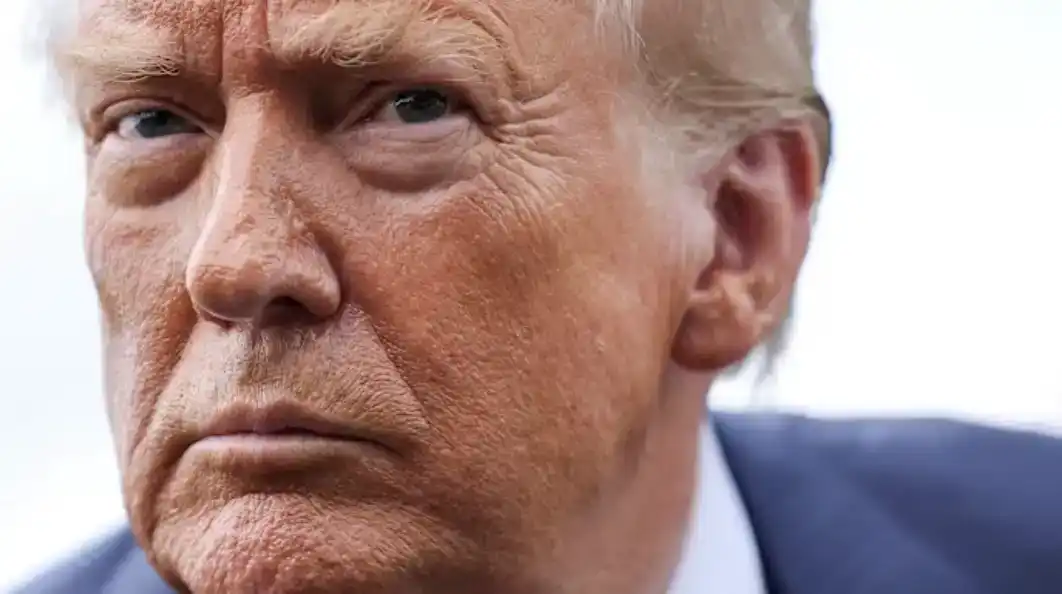
Donald Trump’s weekend attempt to push for a U.S.-Iran deal has sparked a backlash within the Republican Party. Several Republican lawmakers have warned that the president might concede too much in the negotiations.

U.S. negotiators are reportedly close to an agreement. The deal would offer Iran some concessions while extending the existing ceasefire, reopening the Strait of Hormuz, and paving the way for further negotiations on Iran’s nuclear program. Following the news, foreign policy hawks including Republican Senators Lindsey Graham and Ted Cruz have spoken out.

Over the past week, concerns have mounted that Trump might resume strikes against Iran, accelerating efforts to find a diplomatic solution.

According to people briefed on the proposals, the envisioned deal would include a commitment for Tehran to dilute or transfer its stockpile of highly enriched uranium. In exchange, the U.S. would relax sanctions in phases and unfreeze Iranian assets held abroad, depending on the progress of final agreement talks.

But even before the formal release of the deal’s details, several Republicans, including some of the president’s staunchest supporters, have begun questioning Trump’s negotiating strategy.

"If the region believes that a deal with Iran means allowing this regime to survive and become stronger over time, then we are pouring fuel on the conflicts in Lebanon and Iraq," Graham wrote on social media. Graham has long been a loyal Trump ally and frequently plays golf with the president.

He added: "I personally do not buy the argument that Iran cannot be denied the ability to threaten the Strait of Hormuz, or that the region cannot protect itself from Iranian military capabilities."

Another foreign policy hardliner, Cruz, said he was "deeply concerned" about the reported agreement. He called Trump’s earlier decision to strike Iran first the "most consequential decision" of his second term.

Cruz added: "If this ultimately results in an Iranian regime still controlled by Islamists chanting 'Death to America,' not only receiving billions of dollars but also continuing to enrich uranium, develop nuclear weapons, and effectively control the Strait of Hormuz, then it will be a disastrous mistake."

Senate Armed Services Committee Republican Chairman Roger Wicker posted on X on Saturday: "A rumored 60-day ceasefire deal — banking on Iran negotiating in good faith — would be a disaster. All the gains from Operation Epic Rage would be lost!"

Mike Pompeo, who served as Secretary of State during Trump’s first term, also criticized the plan, saying it is "anything but America First."

Pompeo wrote on X: "It's simple: Open the damn Strait. Cut off Iran's money. Destroy enough Iranian military capability that it can no longer threaten our allies in the region. This should have been done long ago. Get it done."

These criticisms quickly angered the White House.

White House Communications Director Steven Cheung responded sharply to Pompeo’s post, telling the former Secretary of State he "should shut his stupid mouth and leave the real work to the professionals."

Trump campaign adviser Alex Bruesewitz accused Cruz of "trying to sabotage the work of the president and his administration." Cruz later retorted that "young political opportunists pushing appeasement of Iran are not helping the president."

This public clash also exposes the political pressure Trump faces as he tries to unite the Republican Party. The current electoral environment is not easy, with Republicans trying to maintain control of both chambers of Congress while combating unfavorable polls. Multiple polls show Trump’s approval rating has fallen to historic lows, with public dissatisfaction over his handling of the war and the U.S. economy persisting.

North Carolina Republican Senator Thom Tillis has become one of the party's sharpest critics of Trump. On Sunday, he also questioned the deal's rationale in a CNN interview, saying the framework reported in the media "doesn’t make sense."

Tillis said: "About 11 weeks ago, Defense Secretary Hagseath and the Pentagon told us they had destroyed Iran’s defense system and it was just a matter of time before we secured the nuclear materials. Now we are discussing a plan that might accept leaving nuclear materials inside Iran? Where exactly does that make sense?"

U.S. Secretary of State Marco Rubio dismissed the criticism, insisting Trump has taken an unprecedentedly tough stance against Tehran.

Speaking at a joint press conference with India’s foreign minister in New Delhi, Rubio said: "On Iran’s nuclear ambitions, I don’t think anyone has been tougher than President Trump. No one has been more resolute on this issue than President Trump."

He added: "Given what this president has proven he is willing to do, it’s absurd that anyone thinks he would agree to a deal that ultimately leaves Iran in a better position on the nuclear issue."


Preguntas relacionadas

QWhat are the main points of the reported agreement between the U.S. and Iran as described in the article?

AThe reported agreement includes a commitment for Iran to dilute or transfer its stockpile of high-enriched uranium. In exchange, the U.S. would phase in sanctions relief and unfreeze Iranian assets held abroad, contingent on progress in final negotiations. It also aims to extend the existing ceasefire and reopen the Strait of Hormuz, paving the way for further talks on its nuclear program.

QWhy are some Republican lawmakers, like Senators Graham and Cruz, critical of the potential Iran deal?

ARepublican hawks like Senators Lindsey Graham and Ted Cruz fear the deal would allow the Iranian regime to survive, grow stronger over time, and continue its threatening activities. They argue it could undermine the gains from previous military actions ('Operation Epic Fury'), leave Iran with funds and nuclear capabilities, and potentially destabilize the region further by emboldening Iranian influence in places like Lebanon and Iraq.

QHow does the article connect the Iran negotiations to Donald Trump's domestic political challenges?

AThe article connects the Iran negotiations to Trump's domestic political challenges by highlighting that Republican dissent over the deal is intertwined with election pressures. With midterm elections approaching and Trump's poll numbers low, any foreign policy agreement is quickly tested as a measure of party loyalty, toughness, and voter sentiment. Trump must navigate convincing the hawkish wing of his party to accept a diplomatic compromise within his 'America First' narrative, which is crucial for the deal's success and his political standing.

QWhat was the reaction from former Secretary of State Mike Pompeo and the White House to the reported deal?

AFormer Secretary of State Mike Pompeo criticized the reported plan on social media, calling it 'anything but America First' and advocating for more aggressive actions like opening the Strait of Hormuz, cutting off Iran's funding, and destroying its military capabilities. In response, White House Communications Director Steven Cheung attacked Pompeo personally, telling him to 'shut the hell up' and leave the work to professionals.

QAccording to the article, what justification does Secretary of State Marco Rubio offer in defense of President Trump's approach to Iran?

ASecretary of State Marco Rubio defended President Trump by asserting that no one has been tougher or more determined than Trump on Iran's nuclear ambitions. He argued it was absurd to think Trump would agree to a deal that ultimately leaves Iran in a better position on nuclear issues, given the president's proven willingness to take decisive action.

Lecturas Relacionadas

Within Strategy's Framework, STRC's Dividend Yield Remains at 12% as Share Price Stays Below Par Value

Michael Saylor, Executive Chairman of Strategy (MSTR), confirmed that the dividend rate for its STRC perpetual preferred shares will remain at 12.00% through August 2026. The rate has increased from 9% at its July 2025 launch to the current high via a "ratchet" mechanism, which permanently raises the rate by 0.5% whenever the share price falls below $95. This mechanism is intended to push the price back toward its $100 par value and support Strategy's "at-the-market" (ATM) program for issuing new shares to fund Bitcoin purchases. However, the mechanism has not worked as intended. STRC shares closed at $89.46 on July 31, remaining about 10-11% below par value despite the record-high dividend. Competition from rival Strive's higher-yielding SATA securities has pressured demand. The persistent discount has forced Strategy to suspend new STRC issuances via its ATM program, limiting this funding channel for Bitcoin acquisitions. STRC's struggles reflect Bitcoin's own volatility, as the preferred shares historically move in tandem. Analysts have warned the ratchet structure carries long-term, one-way risk. A law firm is investigating Strategy's ability to maintain dividend payments if Bitcoin's price stays low. Retail investors own roughly 83% of outstanding STRC shares, a group seen as prone to panic selling during downturns. In response, Strategy has established financial reserves, including a liquidity cushion covering about 26 months of dividend/interest obligations, and a $2 billion share buyback program alongside a Bitcoin monetization framework, though the company emphasized it is not obligated to sell any Bitcoin.

cryptonews.ruHace 11 min(s)

Within Strategy's Framework, STRC's Dividend Yield Remains at 12% as Share Price Stays Below Par Value

cryptonews.ruHace 11 min(s)

Analyst: Bitcoin's Price Will Drop to $60k in August, Then Rebound to $70k

Financial analyst Andrey Poroshin has provided a new forecast for Bitcoin's price dynamics in August. Poroshin, an analyst at the Bitbanker exchange, expects the cryptocurrency market to experience a downturn this month, with prices retesting the $60,000 level due to a lack of supportive macroeconomic catalysts. He noted that the recent US Federal Reserve decision to hold interest rates did not significantly impact the market, while inflation remains above the 2% target. Poroshin stated that Bitcoin is ending July under pressure from moderate volatility and a lack of new macroeconomic stimuli, leading to continued market caution. According to his base scenario, Bitcoin will drop to a range of $60,000 to $62,000 before recovering to $70,000. He pointed out that even $70,000 remains below the cost of mining in the US, which has prompted some miners to shift towards AI data center operations. Poroshin cited the winding down of BitMEX's operations as a potential catalyst for a price rebound, suggesting the exit of weaker players often coincides with market reversals and reduced short-term selling pressure. He believes Bitcoin is currently less susceptible to geopolitical shocks, such as the Iran-US conflict, and does not expect significant market changes in August related to the pending CLARITY Act. Looking ahead, Poroshin forecasts that September will bring more active price fluctuations driven by potential Fed rate decisions and possible discussions or approval of the CLARITY Act.

cryptonews.ruHace 12 min(s)

Analyst: Bitcoin's Price Will Drop to $60k in August, Then Rebound to $70k

cryptonews.ruHace 12 min(s)

Trading

Spot
活动图片




