Trump Halts AI Executive Order, Regulatory Efforts Succumb to Competitive Anxiety

marsbitPublicado a 2026-05-22Actualizado a 2026-05-22

Resumen

In a last-minute reversal, former President Donald Trump halted the signing of a long-anticipated executive order on artificial intelligence. The order had sought to establish a voluntary, pre-release safety testing framework for advanced AI models developed by leading companies like OpenAI, Google, Anthropic, and xAI. Under the proposed plan, companies would have shared their most powerful models with the U.S. government 90 days before public release for national security and cybersecurity risk assessments. Trump refused to approve the order, stating he did not want anything to "slow down our leadership," emphasizing America's lead over China in AI and the technology's role in job creation. This decision highlights the core tension in U.S. AI policy: balancing the management of systemic risks posed by frontier models—such as exposing financial system vulnerabilities—against fears that any regulation could stifle innovation and undermine competitive advantage. The move came despite significant public support for AI safety testing and followed internal administration debates. Some officials, alarmed by the capabilities of models like Anthropic's Mythos in uncovering critical security flaws, had advocated for stronger oversight. However, the industry and many within Trump's circle opposed even this voluntary framework, arguing it would hamper American innovation. The incident underscores how AI policy is increasingly intersecting with national security, economic strategy, and...

Editor's Note: The Trump administration originally attempted to establish a pre-release safety testing mechanism for frontier AI models, but just hours before its signing, this executive order was abruptly halted.

According to the original plan, leading AI companies like OpenAI, Google, Anthropic, and xAI would voluntarily share their models with the U.S. government 90 days before public release for national security and cybersecurity risk assessments. Trump ultimately refused to approve it, stating that he "did not want anything to hinder American leadership in the field of AI."

Behind this last-minute shift lies a core contradiction facing U.S. AI policy: while the capabilities of frontier models are beginning to touch on public risks such as cybersecurity, financial system vulnerabilities, employment shocks, and data center expansion, in the context where U.S.-China AI competition is seen as a national strategy, any regulatory arrangement may be interpreted by the industry as slowing innovation and weakening U.S. competitiveness.

More subtly, this executive order was originally not a mandatory approval system, but rather a "collaborative, voluntary" model assessment framework. In other words, the White House was not attempting to directly control model releases but sought to add a government safety testing phase before models were made publicly available. Yet even this relatively moderate proposal has been temporarily shelved amid the tug-of-war between safety governance and technological leadership.

AI is transitioning from a purely technological industry issue into the intersecting domains of national security, macroeconomics, and political governance. The focal point of debate in U.S. AI policy is also shifting from "whether to support AI development" to "how to manage the systemic risks potentially posed by frontier models without sacrificing the lead."

Below is the original text:
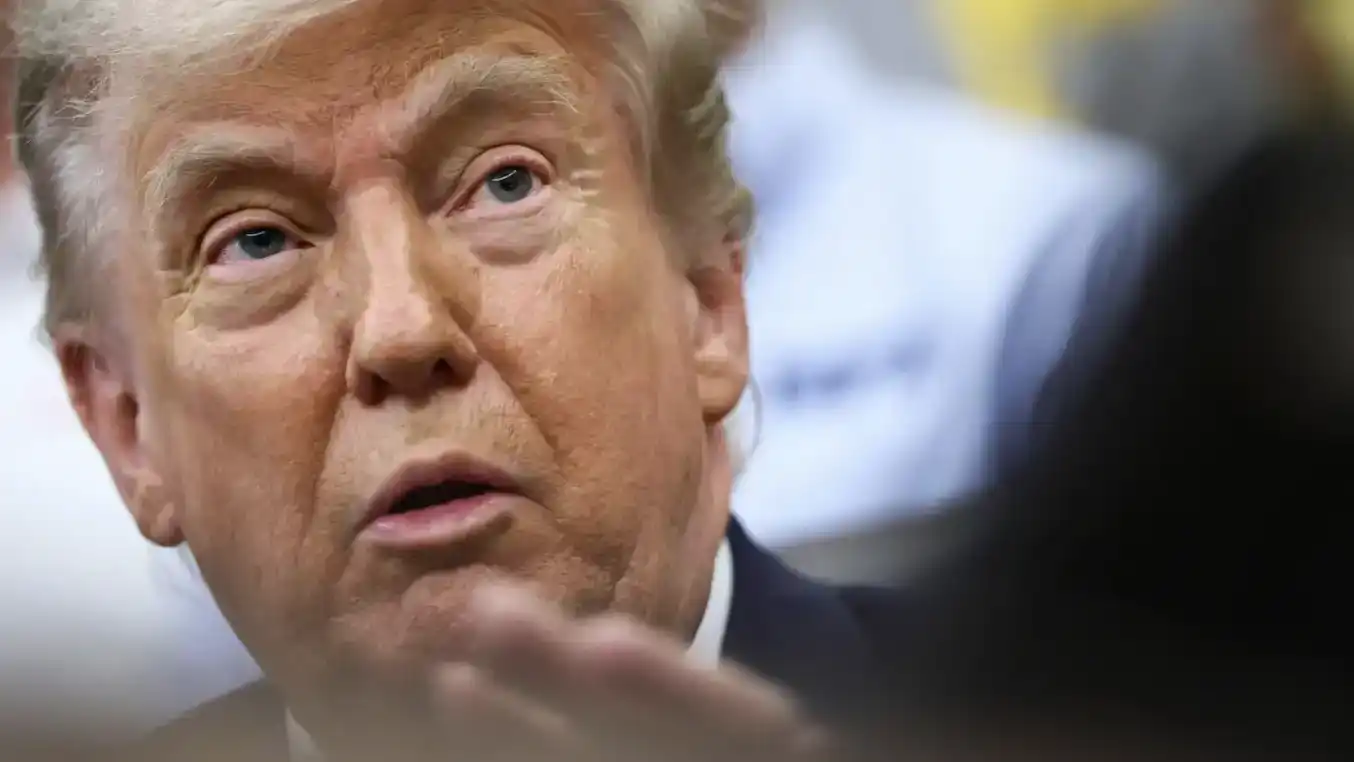
The White House unexpectedly delayed the signing of a long-anticipated executive order on artificial intelligence. Previously, Donald Trump had indicated that he "did not like" parts of the plan, especially the arrangement whereby the U.S. government proposed to conduct national security and cyber risk reviews of AI models.

The executive order was originally scheduled to be signed on Thursday afternoon. Under the plan, leading AI companies like OpenAI, Google, and Anthropic would have voluntarily committed to submitting their models for government review.

Trump's sudden reversal occurred after weeks of internal government debate over the boundaries of regulatory scrutiny.

Speaking about the executive order, Trump said: "I don't like certain aspects of it. We're ahead of China, and we're ahead of everyone, and I don't want anything to hold back our lead." He also stated that artificial intelligence "is also bringing in a lot of jobs."

Before the signing ceremony was abruptly postponed, several tech company CEOs had been scheduled to travel to Washington to attend the event with Trump.
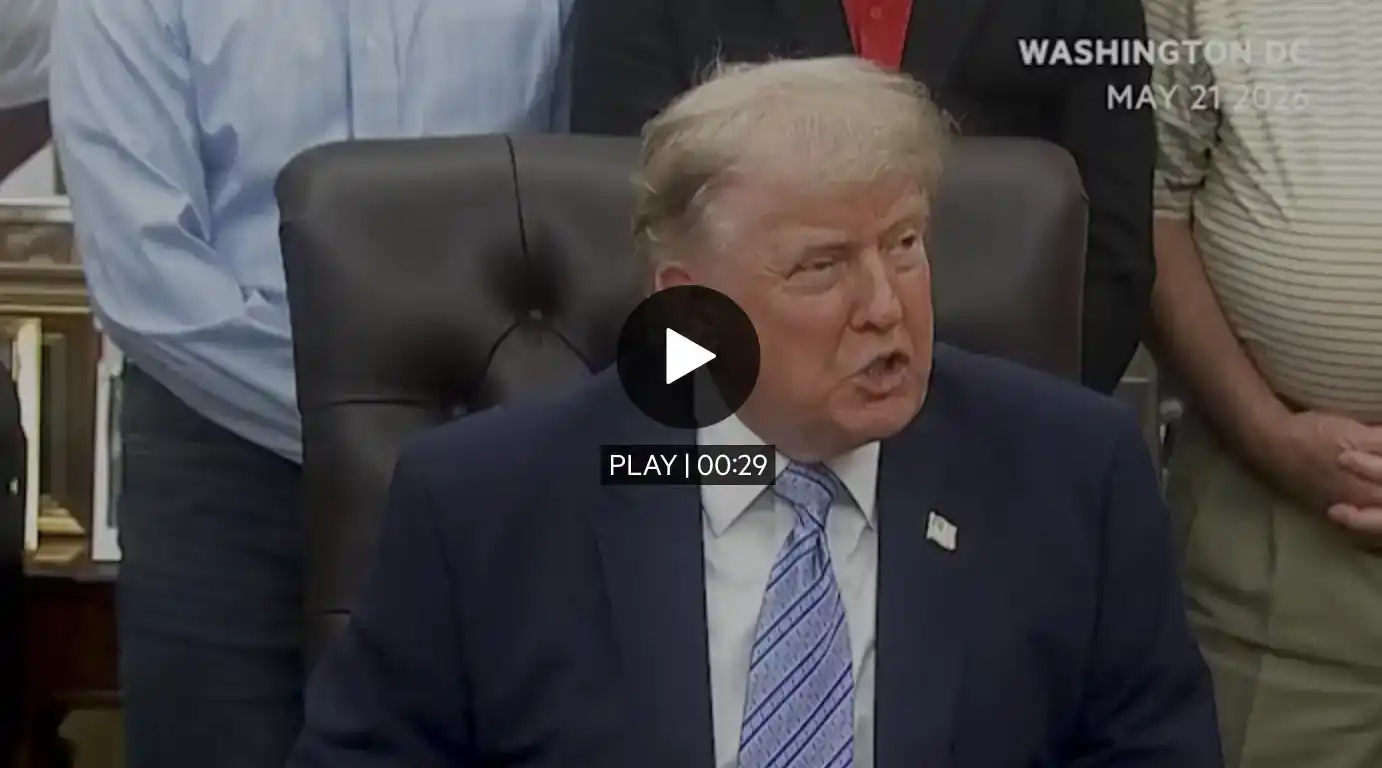
The delayed signing comes as multiple polls continue to show that American voters are concerned about the impact of artificial intelligence, with many supporting stricter regulation and safety guardrails for this emerging technology.

Public concerns are rising about the safety implications of releasing powerful AI models; simultaneously, the impact of AI on jobs and controversies surrounding large-scale data center construction have complicated the White House's political calculus. Not long ago, this administration's attitude towards the AI industry was still notably positive.

Some of Trump's allies had called for bringing leading AI models under U.S. government control; however, other MAGA camp figures warned that any measures restricting AI growth could hinder the U.S. economy.

A poll conducted this month for the Institute for Family Studies showed that 82% of Americans support the White House conducting safety testing on advanced AI models.

The development of this executive order stemmed from key White House officials having early access to Anthropic's latest Mythos model, which included Treasury Secretary Scott Bessent. The model possesses advanced capabilities for identifying cybersecurity vulnerabilities. Informed officials said they were alarmed by issues exposed by the model, such as vulnerabilities in the banking system.

So far, Anthropic has only granted limited access to the Mythos model to a select group of trusted institutions, including tech companies and some banks, allowing them to discover and fix cybersecurity issues before hackers gain access to the model.

Trump's National Economic Council Director, Kevin Hassett, had at one point proposed that frontier AI models undergo a process similar to drug approval, only being officially released after "being proven safe, just like the FDA approves drugs."

His remarks faced strong opposition from AI founders and investors, including some with close ties to the Trump administration, who argued that such a system would weaken America's innovative capabilities.

The executive order fell far short of such an approval system, instead moving towards establishing a "collaborative, voluntary model benchmark assessment framework." On Thursday morning, before the scheduled signing ceremony, White House officials had already briefed reporters on the contents of the order.

Under the proposed agreement, leading AI companies including OpenAI and xAI would voluntarily share their models with the government 90 days before public release. In other words, this mechanism would ultimately still largely rely on the willingness of AI company leaders to cooperate.


Preguntas relacionadas

QWhat was the original purpose of the AI executive order reportedly halted by the Trump administration?

AThe original purpose of the AI executive order was to establish a voluntary pre-release safety testing mechanism. Leading AI companies like OpenAI, Google, Anthropic, and xAI were expected to voluntarily share their advanced models with the U.S. government for national security and cybersecurity risk assessment 90 days before public release.

QAccording to the article, what was the primary reason Donald Trump gave for stopping the AI executive order?

ADonald Trump's primary reason for stopping the AI executive order was a desire to maintain U.S. leadership in AI. He stated, "We lead China, we lead everyone, and I don't want anything getting in the way of us leading," expressing concern that the proposed safety review could hinder American competitiveness.

QWhat key internal contradiction in U.S. AI policy is highlighted by the article's analysis of this event?

AThe article highlights the core contradiction between managing the public risks of frontier AI models (like cybersecurity threats, financial system vulnerabilities, and employment impacts) and the desire to avoid any regulatory measures that could slow innovation and weaken the U.S.'s competitive position, especially against China, in this strategically vital field.

QHow did the proposed executive order differ from a more stringent FDA-style approval process that was reportedly discussed internally?

AThe proposed executive order was far less stringent than an FDA-style approval process. It established a "collaborative, voluntary model benchmarking framework" where companies would voluntarily share models for review. This contrasted with the stricter concept of requiring models to be 'proven safe' before release, which was strongly opposed by the AI industry.

QWhat specific incident involving an AI model is mentioned as a catalyst for the development of the proposed safety review framework?

AThe development of the safety review framework was partly catalyzed when key White House officials, including Treasury Secretary Scott Bessent, were given early access to Anthropic's new 'Mythos' model. Its ability to identify serious vulnerabilities in systems like the banking sector reportedly alarmed the officials.

Lecturas Relacionadas

Three Years Later: Looking Back on My 2023 Predictions for ChatGPT

Looking Back After Three Years: Revisiting My 2023 Predictions on ChatGPT In March 2023, shortly after ChatGPT's debut and before GPT-4's release, I made over twenty predictions about AI's future based on limited information and intuition. Now, in May 2026, I revisited those forecasts using an AI-driven analysis with 41 Opus 4.8 agents to cross-reference them with the latest data. The assessment used symbols: ✅ Correct, 🟢 Mostly Correct, 🟡 Partially Correct, ❌ Incorrect. Overall, the directional judgments held up well, with only one major factual error regarding GPT-4's rumored parameter size (incorrectly cited as 100T). However, nuances and degrees of accuracy revealed more. **What Was Largely Correct:** Predictions about mechanisms and directions proved accurate. The rise of RAG (Retrieval-Augmented Generation) as the standard architecture for combating AI hallucination was confirmed, as was the transformative potential of LUI (Language User Interface) in creating a new industry layer atop GUIs. The emergence of "robot networks" (agent-to-agent communication protocols) and China's rapid catch-up in developing capable large models (closing the performance gap with top models to ~2.7%) were also on point. The analysis affirmed that LLMs lack consciousness and that the Turing Test merely measures perceived intelligence. **What Was Off Target:** Errors often involved specific numbers, over-optimistic timelines, or misjudged distributions. The prediction that value would primarily accrue to the application layer was half-right but missed NVIDIA's dominance as the profitable infrastructure layer. Forecasts about AI circumventing copyright issues and fostering a "global common ground" by averaging human viewpoints were incorrect; instead, major copyright settlements occurred and AI personalization is increasing. Estimates for model training costs ("$5-10 billion cap") were significantly off, underestimating frontier costs and overestimating replication costs. The notion that LLMs could never do complex math without tools was disproven by later models winning IMO gold. **Key Patterns from the Review:** 1. **Direction over precision:** Judgments about mechanisms and trends were more reliable than specific numbers or definitive statements. 2. **Timing bias:** There was a tendency to overestimate short-term speed but underestimate long-term magnitude and transformation. 3. **The distribution blind spot:** Aggregate-level correctness often masked uneven impacts (e.g., on young professionals' employment). 4. **The value of qualifiers:** Predictions framed with caution (e.g., "reportedly," "for now," "prototype in 2-3 years") aged better. 5. **Some debates continue:** Issues like the nature of "emergent abilities" or machine consciousness remain unresolved. This three-year review highlights that while seeing the big picture is crucial, humility regarding specifics, timelines, and disparate impacts is essential for future forecasting.

链捕手Hace 2 hora(s)

Three Years Later: Looking Back on My 2023 Predictions for ChatGPT

链捕手Hace 2 hora(s)

AI Bubble Warning: AI Investments Are Negative Returns for Most Tech Giants

The article issues a stark warning about a potential AI investment bubble. It notes that while the AI boom shares similarities with the TMT bubble of the late 1990s, its scale is vastly larger, currently driving 93% of U.S. GDP growth. Major hyperscale cloud providers like Microsoft, Alphabet, Amazon, Meta, and Oracle are planning to invest trillions in AI data centers over the coming years. However, calculations based on analyst projections for 2025-2030 reveal a concerning math problem: expected capital expenditure growth far outpaces projected revenue growth. Even under an extremely optimistic scenario of zero costs, the implied return on investment for most of these tech giants (except Amazon) is deeply negative. This suggests that the current trajectory could lead to one of history's largest shareholder value destruction events. The piece outlines two potential escapes: AI generating vastly more revenue than currently anticipated—a near-impossible task—or a significant cutback in the planned investment splurge. The latter scenario could trigger a domino effect, severely impacting the entire tech supply chain (from Nvidia to TSMC), potentially pushing the U.S. economy into recession, and causing a major stock market downturn. The author suggests upcoming high-profile IPOs by companies like OpenAI and Anthropic might represent a transfer of risk from early investors to public market participants. While the peak of the hype cycle might sustain investment through 2026, the fundamental financial dilemma remains unresolved, setting the stage for a potential market correction in 2027 or 2028, similar to the years following Alan Greenspan's "irrational exuberance" warning.

marsbitHace 2 hora(s)

AI Bubble Warning: AI Investments Are Negative Returns for Most Tech Giants

marsbitHace 2 hora(s)

From Tokens to Machine Labor: AI is Shifting from Tool to "Worker"

The article "From Token to Machine Labor: AI is Evolving from Tool to 'Worker'" argues that the business model for AI is shifting beyond simply selling computational resources (tokens, GPU hours) or model access. Instead, a new "machine labor market" is emerging, where the core economic transaction is the purchase of economically useful work directly performed by software. The central thesis is that AI pricing will evolve through four stages: 1) raw tokens, 2) standardized LLM capabilities (e.g., text generation), 3) industry-specific labor markets (e.g., legal review, radiology), and finally 4) a programmable results market where tasks like resolving a support ticket are bid on and priced based on outcome. In this future, buyers will care less about *which* model or GPU completes a task and more about whether the work meets specified standards for accuracy, latency, and cost. This transition reframes the impact of AI on human labor. Rather than simple replacement, it suggests a re-coordination where machines handle standardized, verifiable work, freeing humans for roles involving oversight, context management, responsibility, and final judgment. In some cases, this "last 1%" of human input becomes more valuable as it enables the other 99% to be automated. Furthermore, as AI reduces the cost of work, demand may expand, creating larger markets (e.g., 24/7 customer service) rather than just cheaper versions of existing ones. The article concludes that while infrastructure (GPUs, models, tokens) remains crucial upstream, the market is converging on a simpler, tradeable unit: machine labor that can be defined, measured, priced, and procured based on contractible specifications.

marsbitHace 3 hora(s)

From Tokens to Machine Labor: AI is Shifting from Tool to "Worker"

marsbitHace 3 hora(s)

Xiaomi MiMo's 99% Price Cut is Not Marketing! Luo Fuli Posts on X to Refute Critics

The price of Xiaomi's MiMo-V2.5 series API has been permanently reduced by up to 99%, specifically for the "Input (Cache Hit)" cost, which covers users re-reading historical context in long conversations. MiMo's head, Luo Fuli, published a detailed technical blog to clarify that this drastic price cut stems from genuine engineering breakthroughs, not a marketing stunt or a simple price war. The core of the achievement lies in six key engineering optimizations. First, the model architecture adopts a Hybrid Sliding Window Attention (SWA), reducing the memory footprint (KVCache) to 1/7th of a traditional model. Second, a dual-pool memory management system actually utilizes these savings, allowing a single GPU to handle over 5 times more concurrent users. Third, an upgraded prefix caching mechanism achieves a cache hit rate of 93-95% for repeated reads, meaning most such requests bypass GPU computation entirely. Fourth, a self-developed distributed cache (GCache) utilizes idle SSD space on existing GPU servers, eliminating additional storage costs. Fifth, an intelligent scheduling system (LLM-Router) efficiently routes requests to maximize cache reuse and performance. Sixth, Multi-Token Prediction (MTP) accelerates the model's text generation ("output") side. Together, these systemic optimizations dramatically lower the real computational cost per request, enabling the 99% price reduction for cached inputs while reportedly maintaining positive gross margins. Luo Fuli's disclosure aims to shift the narrative from "price war" to a demonstration of substantive AI engineering progress.

marsbitHace 4 hora(s)

Xiaomi MiMo's 99% Price Cut is Not Marketing! Luo Fuli Posts on X to Refute Critics

marsbitHace 4 hora(s)

$26 Billion: An 'All-Chinese Team' Backs the World's Highest-Valued AI Programming Company

Cognition AI, the company behind the AI programmer "Devin," has raised over $1 billion in new funding at a valuation of $26 billion, just eight months after reaching a $10.2 billion valuation. The round was led by Lux Capital, General Catalyst, and 8VC. Founded by three young Chinese entrepreneurs with strong competitive programming backgrounds, Cognition initially gained fame with Devin, marketed as the world's first AI software engineer capable of handling tasks from start to finish. While its early demos were impressive, real-world usage revealed reliability and cost-effectiveness issues, leading to a significant price cut for Devin in 2025. A pivotal moment came when Cognition acquired the assets of AI IDE company Windsurf after a failed acquisition by OpenAI. This move gave Cognition a crucial developer-facing tool, allowing it to pursue a two-pronged strategy: Devin for autonomous task execution and Windsurf for integrated, collaborative coding within an IDE. This shift helped the company move away from the controversial "AI replacement" narrative towards a model of augmenting human engineers, particularly for repetitive or maintenance tasks. This strategic pivot is backed by strong commercial metrics. The company reports a 10x increase in enterprise usage this year, with an annual revenue run-rate of $492 million and a 50% month-over-month growth in enterprise Devin usage over the past six months. Its client list now includes major corporations like Goldman Sachs and Mercedes-Benz, as well as government agencies like NASA and the U.S. Army. Investors are betting on Cognition becoming a foundational piece of next-generation software engineering infrastructure, positioning it at the center of a hybrid future where AI agents and human developers work in tandem.

marsbitHace 5 hora(s)

$26 Billion: An 'All-Chinese Team' Backs the World's Highest-Valued AI Programming Company

marsbitHace 5 hora(s)

Trading

Spot
Futuros

Artículos destacados

Cómo comprar ORDER

¡Bienvenido a HTX.com! Hemos hecho que comprar Orderly (ORDER) sea simple y conveniente. Sigue nuestra guía paso a paso para iniciar tu viaje de criptos.Paso 1: crea tu cuenta HTXUtiliza tu correo electrónico o número de teléfono para registrarte y obtener una cuenta gratuita en HTX. Experimenta un proceso de registro sin complicaciones y desbloquea todas las funciones.Obtener mi cuentaPaso 2: ve a Comprar cripto y elige tu método de pagoTarjeta de crédito/débito: usa tu Visa o Mastercard para comprar Orderly (ORDER) al instante.Saldo: utiliza fondos del saldo de tu cuenta HTX para tradear sin problemas.Terceros: hemos agregado métodos de pago populares como Google Pay y Apple Pay para mejorar la comodidad.P2P: tradear directamente con otros usuarios en HTX.Over-the-Counter (OTC): ofrecemos servicios personalizados y tipos de cambio competitivos para los traders.Paso 3: guarda tu Orderly (ORDER)Después de comprar tu Orderly (ORDER), guárdalo en tu cuenta HTX. Alternativamente, puedes enviarlo a otro lugar mediante transferencia blockchain o utilizarlo para tradear otras criptomonedas.Paso 4: tradear Orderly (ORDER)Tradear fácilmente con Orderly (ORDER) en HTX's mercado spot. Simplemente accede a tu cuenta, selecciona tu par de trading, ejecuta tus trades y monitorea en tiempo real. Ofrecemos una experiencia fácil de usar tanto para principiantes como para traders experimentados.

227 Vistas totalesPublicado en 2024.12.10Actualizado en 2025.03.21

Cómo comprar ORDER

Discusiones

Bienvenido a la comunidad de HTX. Aquí puedes mantenerte informado sobre los últimos desarrollos de la plataforma y acceder a análisis profesionales del mercado. A continuación se presentan las opiniones de los usuarios sobre el precio de ORDER (ORDER).

活动图片












