Trump Halts AI Executive Order, Regulatory Efforts Succumb to Competitive Anxiety

marsbitPublicado a 2026-05-22Actualizado a 2026-05-22

Resumen

In a last-minute reversal, former President Donald Trump halted the signing of a long-anticipated executive order on artificial intelligence. The order had sought to establish a voluntary, pre-release safety testing framework for advanced AI models developed by leading companies like OpenAI, Google, Anthropic, and xAI. Under the proposed plan, companies would have shared their most powerful models with the U.S. government 90 days before public release for national security and cybersecurity risk assessments. Trump refused to approve the order, stating he did not want anything to "slow down our leadership," emphasizing America's lead over China in AI and the technology's role in job creation. This decision highlights the core tension in U.S. AI policy: balancing the management of systemic risks posed by frontier models—such as exposing financial system vulnerabilities—against fears that any regulation could stifle innovation and undermine competitive advantage. The move came despite significant public support for AI safety testing and followed internal administration debates. Some officials, alarmed by the capabilities of models like Anthropic's Mythos in uncovering critical security flaws, had advocated for stronger oversight. However, the industry and many within Trump's circle opposed even this voluntary framework, arguing it would hamper American innovation. The incident underscores how AI policy is increasingly intersecting with national security, economic strategy, and...

Editor's Note: The Trump administration originally attempted to establish a pre-release safety testing mechanism for frontier AI models, but just hours before its signing, this executive order was abruptly halted.

According to the original plan, leading AI companies like OpenAI, Google, Anthropic, and xAI would voluntarily share their models with the U.S. government 90 days before public release for national security and cybersecurity risk assessments. Trump ultimately refused to approve it, stating that he "did not want anything to hinder American leadership in the field of AI."

Behind this last-minute shift lies a core contradiction facing U.S. AI policy: while the capabilities of frontier models are beginning to touch on public risks such as cybersecurity, financial system vulnerabilities, employment shocks, and data center expansion, in the context where U.S.-China AI competition is seen as a national strategy, any regulatory arrangement may be interpreted by the industry as slowing innovation and weakening U.S. competitiveness.

More subtly, this executive order was originally not a mandatory approval system, but rather a "collaborative, voluntary" model assessment framework. In other words, the White House was not attempting to directly control model releases but sought to add a government safety testing phase before models were made publicly available. Yet even this relatively moderate proposal has been temporarily shelved amid the tug-of-war between safety governance and technological leadership.

AI is transitioning from a purely technological industry issue into the intersecting domains of national security, macroeconomics, and political governance. The focal point of debate in U.S. AI policy is also shifting from "whether to support AI development" to "how to manage the systemic risks potentially posed by frontier models without sacrificing the lead."

Below is the original text:
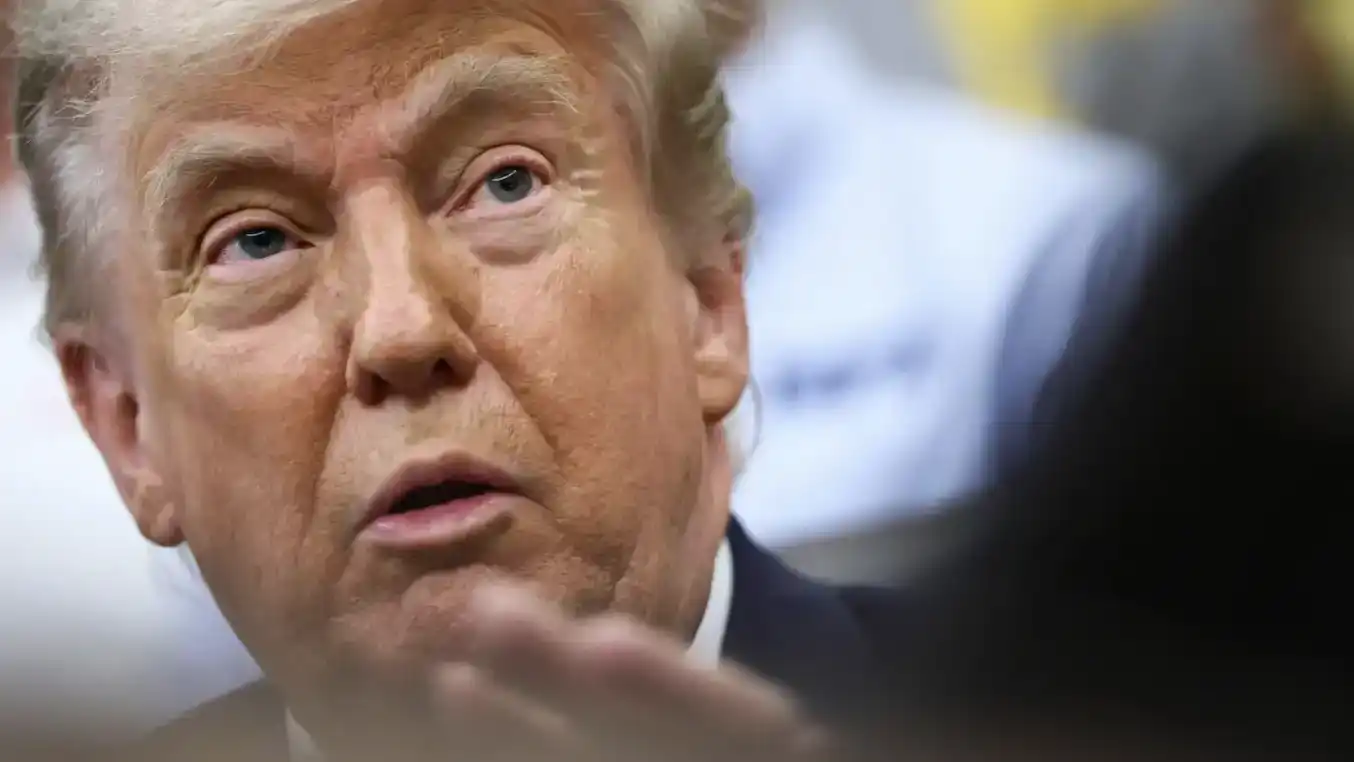
The White House unexpectedly delayed the signing of a long-anticipated executive order on artificial intelligence. Previously, Donald Trump had indicated that he "did not like" parts of the plan, especially the arrangement whereby the U.S. government proposed to conduct national security and cyber risk reviews of AI models.

The executive order was originally scheduled to be signed on Thursday afternoon. Under the plan, leading AI companies like OpenAI, Google, and Anthropic would have voluntarily committed to submitting their models for government review.

Trump's sudden reversal occurred after weeks of internal government debate over the boundaries of regulatory scrutiny.

Speaking about the executive order, Trump said: "I don't like certain aspects of it. We're ahead of China, and we're ahead of everyone, and I don't want anything to hold back our lead." He also stated that artificial intelligence "is also bringing in a lot of jobs."

Before the signing ceremony was abruptly postponed, several tech company CEOs had been scheduled to travel to Washington to attend the event with Trump.
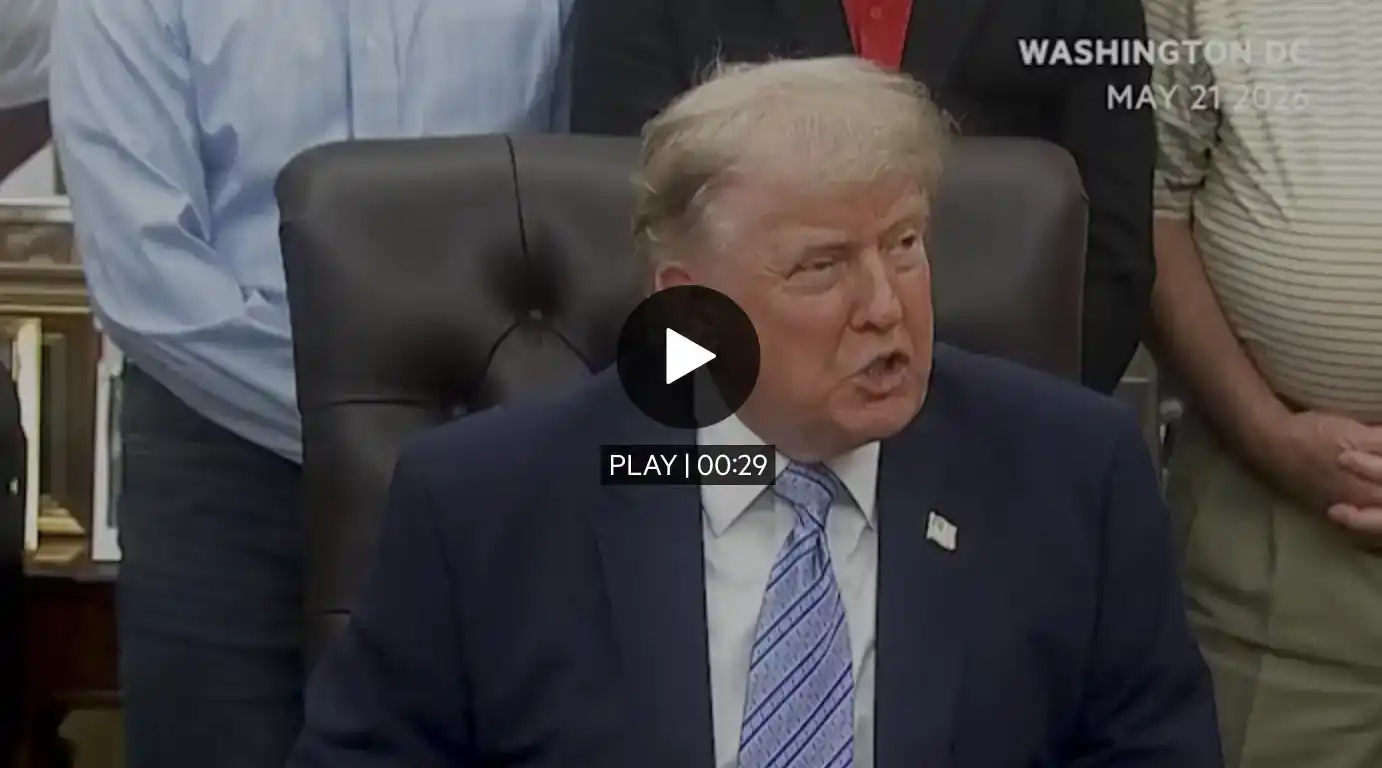
The delayed signing comes as multiple polls continue to show that American voters are concerned about the impact of artificial intelligence, with many supporting stricter regulation and safety guardrails for this emerging technology.

Public concerns are rising about the safety implications of releasing powerful AI models; simultaneously, the impact of AI on jobs and controversies surrounding large-scale data center construction have complicated the White House's political calculus. Not long ago, this administration's attitude towards the AI industry was still notably positive.

Some of Trump's allies had called for bringing leading AI models under U.S. government control; however, other MAGA camp figures warned that any measures restricting AI growth could hinder the U.S. economy.

A poll conducted this month for the Institute for Family Studies showed that 82% of Americans support the White House conducting safety testing on advanced AI models.

The development of this executive order stemmed from key White House officials having early access to Anthropic's latest Mythos model, which included Treasury Secretary Scott Bessent. The model possesses advanced capabilities for identifying cybersecurity vulnerabilities. Informed officials said they were alarmed by issues exposed by the model, such as vulnerabilities in the banking system.

So far, Anthropic has only granted limited access to the Mythos model to a select group of trusted institutions, including tech companies and some banks, allowing them to discover and fix cybersecurity issues before hackers gain access to the model.

Trump's National Economic Council Director, Kevin Hassett, had at one point proposed that frontier AI models undergo a process similar to drug approval, only being officially released after "being proven safe, just like the FDA approves drugs."

His remarks faced strong opposition from AI founders and investors, including some with close ties to the Trump administration, who argued that such a system would weaken America's innovative capabilities.

The executive order fell far short of such an approval system, instead moving towards establishing a "collaborative, voluntary model benchmark assessment framework." On Thursday morning, before the scheduled signing ceremony, White House officials had already briefed reporters on the contents of the order.

Under the proposed agreement, leading AI companies including OpenAI and xAI would voluntarily share their models with the government 90 days before public release. In other words, this mechanism would ultimately still largely rely on the willingness of AI company leaders to cooperate.


Preguntas relacionadas

QWhat was the original purpose of the AI executive order reportedly halted by the Trump administration?

AThe original purpose of the AI executive order was to establish a voluntary pre-release safety testing mechanism. Leading AI companies like OpenAI, Google, Anthropic, and xAI were expected to voluntarily share their advanced models with the U.S. government for national security and cybersecurity risk assessment 90 days before public release.

QAccording to the article, what was the primary reason Donald Trump gave for stopping the AI executive order?

ADonald Trump's primary reason for stopping the AI executive order was a desire to maintain U.S. leadership in AI. He stated, "We lead China, we lead everyone, and I don't want anything getting in the way of us leading," expressing concern that the proposed safety review could hinder American competitiveness.

QWhat key internal contradiction in U.S. AI policy is highlighted by the article's analysis of this event?

AThe article highlights the core contradiction between managing the public risks of frontier AI models (like cybersecurity threats, financial system vulnerabilities, and employment impacts) and the desire to avoid any regulatory measures that could slow innovation and weaken the U.S.'s competitive position, especially against China, in this strategically vital field.

QHow did the proposed executive order differ from a more stringent FDA-style approval process that was reportedly discussed internally?

AThe proposed executive order was far less stringent than an FDA-style approval process. It established a "collaborative, voluntary model benchmarking framework" where companies would voluntarily share models for review. This contrasted with the stricter concept of requiring models to be 'proven safe' before release, which was strongly opposed by the AI industry.

QWhat specific incident involving an AI model is mentioned as a catalyst for the development of the proposed safety review framework?

AThe development of the safety review framework was partly catalyzed when key White House officials, including Treasury Secretary Scott Bessent, were given early access to Anthropic's new 'Mythos' model. Its ability to identify serious vulnerabilities in systems like the banking sector reportedly alarmed the officials.

Lecturas Relacionadas

From 'Old Guys' to 'New Favorites': How AI Is Revaluing Old Infrastructure from Dell to Nokia?

From "Vintage Tech" to "New AI Darlings": How AI Revalues Old Infrastructure One year ago, tech giants like Dell, Nokia, Cisco, and Western Data were seen as slow-growth, low-valuation stories, far from the AI spotlight dominated by players like Nvidia. Now, these legacy tech stocks are gaining market attention, sparking debate on whether this is genuine industry revaluation or a temporary narrative. As AI moves from model parameters to real-world data centers, the market is recognizing companies with proven delivery and infrastructure capabilities. This shift marks a change in the AI investment thesis: from pure model and GPU focus to the complex systems engineering required for deployment. Companies like Dell, HPE, and Corning are being revalued not for being "sexy" AI innovators, but for their decades of accumulated expertise in supply chains, enterprise delivery, and infrastructure—assets that have become critical in the AI buildout phase. The revaluation is unfolding across three key infrastructure lines: 1. **Servers & System Integration:** Dell and HPE are emerging as crucial system integrators or "general contractors" for AI data centers, translating GPU orders into complete, deployable server racks integrated with power, cooling, and networking. 2. **Networking & Connectivity:** AI's scale demands robust high-speed connections. Corning (fiber optics), Nokia (AI-RAN, 6G), and Cisco (data center switches) are gaining importance for enabling efficient data transfer within and between AI clusters. 3. **Storage:** Beyond high-speed memory (HBM/DRAM), the AI data explosion is driving demand for high-capacity hard drives (HDDs) from companies like Western Digital and Seagate to handle training data, logs, and cold storage cost-effectively. For this revaluation to be substantive and not just a narrative, three criteria are key: 1) Concrete AI-related order and revenue growth (e.g., Dell's AI server sales), 2) Upward revisions to company financial guidance, and 3) Sustainable improvements in profit quality, not just top-line revenue spikes. In essence, AI's transition to a real construction phase is re-pricing "old assets" against "new demand." The opportunity, however, is selective. Only those legacy firms that are demonstrably integrated into the capital expenditure chains of data center and enterprise AI deployment are likely to experience a true "logic re-rating" rather than just a temporary valuation bounce.

marsbitHace 4 min(s)

From 'Old Guys' to 'New Favorites': How AI Is Revaluing Old Infrastructure from Dell to Nokia?

marsbitHace 4 min(s)

The Merger of Codex and ChatGPT Marks the Beginning of a Major Reshuffle in Programming Tools

OpenAI is shifting its strategic focus from ChatGPT to Codex, merging them along with the browser tool Atlas into a unified desktop super-app. This move signals an internal belief that Codex, originally a programming tool, represents the next evolution of AI more than conversational models like ChatGPT. Over the past year, Codex's weekly active users have surged past 5 million. The key distinction is that while ChatGPT answers questions, Codex executes tasks. Enterprises increasingly value this ability to get work done over simply receiving advice. Consequently, Codex is attracting professionals beyond developers, including analysts, bankers, marketers, and product managers. OpenAI's reorganization and increased investment in Codex stem from recognizing that the future of AI competition lies in execution capabilities, not just conversation. The company is launching role-specific plugins (e.g., for data analysis, sales, design) to transform Codex into a broad knowledge work platform that automates and redefines white-collar workflows. Beyond being a tool, Codex reflects OpenAI's ambition to redefine software. New features like "Sites"—which generates interactive websites from documents—and collaborative "Annotations" aim to create a paradigm where the AI understands the goal and handles the tools and steps, functioning more like a digital colleague than traditional software. The ultimate goal is a unified experience where the user cares only about the completed task.

marsbitHace 13 min(s)

The Merger of Codex and ChatGPT Marks the Beginning of a Major Reshuffle in Programming Tools

marsbitHace 13 min(s)

Interpreting Investment Opportunities in the Age of Great Navigation, Invesco Great Wall Fund Releases '2026 Report on Chinese Enterprises Going Global'

Invesco Great Wall Fund has released its "2026 China Corporate Globalization Report," titled "The 'Great Navigation Era' of Chinese Enterprises." The report analyzes the new trends and investment opportunities as Chinese companies expand globally, moving from simple product exports to comprehensive overseas operations involving services, branding, and local production. Driven by factors like trade friction, the pursuit of higher profit margins abroad, and policy support, globalization is becoming essential for Chinese companies. The report outlines an evolution: from early product export ("Globalization 1.0") to the current "Globalization 2.0," characterized by overseas capacity, capital goods investment, consumer brand expansion, and service exports. Chinese firms' competitive advantages are highlighted, including a vast engineer talent pool, low-cost and robust infrastructure, and complete industrial clusters. Specific sectors with significant出海 potential are identified: * **Capital Goods** (e.g., engineering machinery, power equipment): Benefiting from global demand, especially in Belt & Road markets and the AI-driven power grid upgrade cycle. * **Consumer Brands**: Transitioning from cost to brand advantage, leveraging供应链 efficiency. * **Technology & Innovation**: Including AI applications, optical modules within global tech supply chains, and new energy vehicles focusing on local production. * **Pharmaceuticals**: Chinese biotech firms are becoming preferred partners for global pharma, with potential for breakthrough drugs in areas like oncology and weight loss. The report concludes that corporate globalization represents a sustained, core theme for China's capital markets, though companies must navigate challenges like geopolitics and localization.

marsbitHace 26 min(s)

Interpreting Investment Opportunities in the Age of Great Navigation, Invesco Great Wall Fund Releases '2026 Report on Chinese Enterprises Going Global'

marsbitHace 26 min(s)

GitHub, Transfixed by AI

On the night of February 9th, GitHub suffered a major outage caused by a simple configuration change—reducing a cache refresh interval from 12 to 2 hours—that triggered a cascade of failures. This was not an isolated event, but part of a broader pattern. In early 2026, GitHub experienced at least 8 major incidents, failing to meet its promised 99.9% availability. These outages stemmed from structural issues: explosive growth in load, tight service coupling, and insufficient protection against abnormal traffic. This unprecedented load is driven by AI Agents. In 2025, GitHub handled ~1 billion commits. By 2026, weekly commits reached 275 million, projecting to ~14 billion for the year—a 14x increase. AI tools like Claude Code now contribute 4.5% of all public repository commits, with weekly submissions surging 25x in just three months. AI-generated pull requests jumped from 4 million to 17 million per month in half a year. Unlike human developers, AI Agents work continuously, generating commits at a scale that overwhelms infrastructure designed for human rhythms. The surge also shattered GitHub's business model. Copilot's flat-rate pricing, based on assisting human developers, became unsustainable as Agentic AI sessions consumed resources worth hundreds of dollars for a few dollars in fees. In response, GitHub imposed usage limits and, by June 1st, shifted to a pay-per-use "AI Credits" system. Facing this new reality, GitHub realized a 10x scaling plan was insufficient. It announced a need to *redesign* its architecture for 30x current scale—decoupling services, adding fault isolation, and improving change management to prevent cascading failures. Other platforms like Stripe and AWS are facing similar challenges with AI Agents. Fundamentally, GitHub is transitioning from a human collaboration platform to an "exhaust pipe" for automated AI workflows. Its detailed post-mortem reports aim to maintain trust during this turbulent rebuild. The February outage was not just a technical glitch, but a signal of the software industry's entry into a new, AI-driven era.

marsbitHace 1 hora(s)

GitHub, Transfixed by AI

marsbitHace 1 hora(s)

Trading

Spot
Futuros

Artículos destacados

Cómo comprar ORDER

¡Bienvenido a HTX.com! Hemos hecho que comprar Orderly (ORDER) sea simple y conveniente. Sigue nuestra guía paso a paso para iniciar tu viaje de criptos.Paso 1: crea tu cuenta HTXUtiliza tu correo electrónico o número de teléfono para registrarte y obtener una cuenta gratuita en HTX. Experimenta un proceso de registro sin complicaciones y desbloquea todas las funciones.Obtener mi cuentaPaso 2: ve a Comprar cripto y elige tu método de pagoTarjeta de crédito/débito: usa tu Visa o Mastercard para comprar Orderly (ORDER) al instante.Saldo: utiliza fondos del saldo de tu cuenta HTX para tradear sin problemas.Terceros: hemos agregado métodos de pago populares como Google Pay y Apple Pay para mejorar la comodidad.P2P: tradear directamente con otros usuarios en HTX.Over-the-Counter (OTC): ofrecemos servicios personalizados y tipos de cambio competitivos para los traders.Paso 3: guarda tu Orderly (ORDER)Después de comprar tu Orderly (ORDER), guárdalo en tu cuenta HTX. Alternativamente, puedes enviarlo a otro lugar mediante transferencia blockchain o utilizarlo para tradear otras criptomonedas.Paso 4: tradear Orderly (ORDER)Tradear fácilmente con Orderly (ORDER) en HTX's mercado spot. Simplemente accede a tu cuenta, selecciona tu par de trading, ejecuta tus trades y monitorea en tiempo real. Ofrecemos una experiencia fácil de usar tanto para principiantes como para traders experimentados.

228 Vistas totalesPublicado en 2024.12.10Actualizado en 2026.06.02

Cómo comprar ORDER

Discusiones

Bienvenido a la comunidad de HTX. Aquí puedes mantenerte informado sobre los últimos desarrollos de la plataforma y acceder a análisis profesionales del mercado. A continuación se presentan las opiniones de los usuarios sobre el precio de ORDER (ORDER).

活动图片












