Trillion-Dollar Pension Fund Entry? Franklin Bitcoin Dividend Reinvestment ETF Comes with a Built-in Selling Pressure Ceiling

marsbitPublicado a 2026-06-26Actualizado a 2026-06-26

Resumen

Franklin Templeton has filed to launch two ETFs that embed a "default configuration" logic into Bitcoin investment, aiming to tap into massive pension fund flows. These "Bitcoin Dividend Reinvestment Index ETFs" will initially hold 95% equities and 5% Bitcoin, automatically reinvesting stock dividends to buy Bitcoin. However, a quarterly rebalancing rule forces selling of Bitcoin if its allocation exceeds 5%, capping its maximum holding at 20%. While the product cleverly circumvents advisor reluctance and compliance hurdles by labeling itself as a U.S. equity product, its actual Bitcoin buying power is minimal. Given low dividend yields (e.g., ~1% for broad market indices), annual Bitcoin purchases from a fund the size of Franklin's existing Bitcoin ETF would be a mere $3.6 million—negligible against Bitcoin's daily trading volume. Crucially, during bull markets, the fund becomes a programmed, passive *seller* of Bitcoin, potentially creating sustained sell pressure if many similar funds emerge. The strategy leverages investor inertia and automatic enrollment, similar to the success of target-date funds in 401(k) plans. It also uses an offshore Cayman subsidiary for holding Bitcoin and raises a tax complication where investors must pay taxes on dividends they never receive as cash. Although recent U.S. regulatory changes allow crypto in retirement plans, widespread adoption as a default option faces legal hurdles. The core premise remains: the system doesn't need to convinc...

By: Thejaswini M A

Compiled by: Saoirse, Foresight News

The simplest way to control other people's money is to wait for them to let their guard down and pay less attention. A significant portion of financial institutions' profits is built purely on people's procrastination and inertia.

Years ago, two economists, Richard Thaler and Shlomo Benartzi, concluded that trying to persuade others through argument is futile. Rather than striving to win a debate, it's better to design rules that leverage the inertia of people's inaction to change their choices. Clearly, most people are too lazy to actively check an 'opt-out' box.

If signing up for a retirement savings plan required manually filling out forms, participation rates would be less than half. But once enrollment is set as the default, and opting out requires manual action, participation instantly surpasses 90%. The same logic applies to auto-renewing subscriptions: over half of paying users don't even use the service they're subscribed to. Last week, I subscribed to watch the FIFA World Cup, knowing full well I'd completely forget about the service after the tournament ended.

A key premise of this mechanism is that the fund holder and the person who designs the product allocation must be two different individuals. The employer selects the optional fund pool for the 401(k) pension, and the employee passively enters this allocation system.

On June 18th, Franklin Templeton filed an application to launch two ETFs, embedding this 'default allocation' logic into Bitcoin investment.

Looking at the broader capital landscape, the capital moat these products can create is actually minuscule.

Making the decision to buy Bitcoin itself is a major barrier hindering widespread adoption. Even though Trump's appearance at a Bitcoin industry conference briefly alleviated public concerns, this barrier still objectively exists.

Financial advisors need to actively allocate Bitcoin, explain the decision to clients and compliance departments, and bear all the loss risk if the price halves. Due to professional risk considerations, the vast majority of advisors deliberately avoid it and simply won't recommend Bitcoin to their clients.

Financial advisors build standardized portfolio models, independently select underlying funds, and clients passively hold the allocated assets. When clients review their holdings statements, they only see broad labels like 'US Large Cap Stocks, 40%' and don't delve into what assets are actually held. If the advisor uses this dividend reinvestment version of the fund, clients unknowingly hold Bitcoin.

This product is not designed to trick ordinary retail investors—institutions know retail investors actively check their holdings. This underlying architecture is actually tailor-made for financial advisors.

This is the core playbook of Wall Street. The massive $4 trillion target-date fund industry also grew using this logic: the default allocation itself is the product. As long as users choose inaction, they automatically hold the asset. Investors who manually enter codes to pick their own stocks are not covered by this logic, and Franklin isn't counting on these retail investors. The funds are truly targeting capital managed downstream by other professionals.

Dividend Reinvestment Plans (DRIPs) are the most effortless 'set-and-forget' tool in investing: when a stock pays a dividend, the money doesn't go into your account but automatically buys more of the same stock. You continuously add to what you already hold, with almost no effort required to manage it. That's what DRIP means.

Franklin has reversed this mechanism: its two funds—the Franklin U.S. Equity Bitcoin Dividend Reinvestment Index ETF and the Franklin U.S. Innovative Sectors Bitcoin Dividend Reinvestment Index ETF—will not use dividends to buy more stocks but will directly purchase Bitcoin.

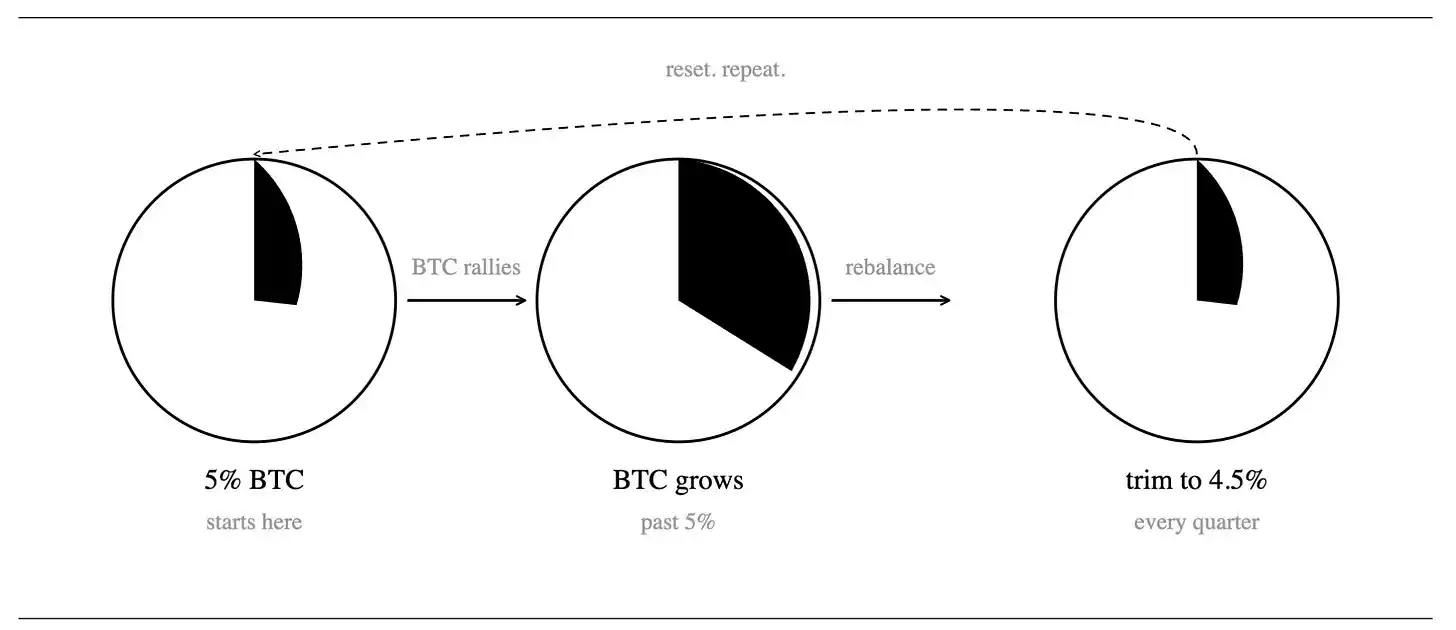
For the Bitcoin allocation, the funds plan to hold spot Bitcoin ETFs, Bitcoin futures, and options. The products feature asymmetric quarterly rebalancing rules: if Bitcoin rises significantly and its weight exceeds the 5% target line, it will be reduced to 4.5% during the next quarterly rebalance. A hard cap is also set, with Bitcoin holdings never exceeding 20% of the fund's total assets.

The initial allocation is 95% stocks and 5% Bitcoin. All dividends paid out quarterly will be used to increase the Bitcoin position. If the Bitcoin price rises and its allocation inflates, part of the Bitcoin will be sold during the quarterly rebalancing to bring the allocation back down to 4.5%, with the proceeds from the sale flowing back into stock assets.
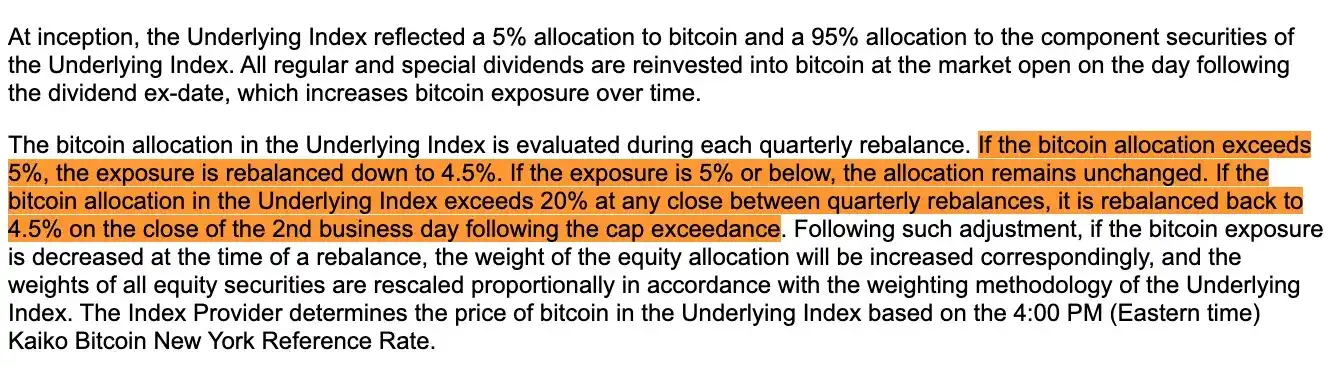
Even if Bitcoin's price surges between two rebalancing periods, its share in the fund will never break through the 20% red line.

To bypass numerous regulatory processes, all Bitcoin held by the fund will be custodied by a wholly-owned Franklin subsidiary in the Cayman Islands, with that subsidiary handling the configuration using spot cryptocurrencies, futures, and options.

Both funds track custom indices designed by VettaFi. Franklin plans to launch them officially on September 1st; the fee section in the filing is blank, and the management fee has not been announced yet.

Setting Aside Rosy Expectations, Facing Reality

While it seems to connect to the Wall Street system, adding stable Bitcoin buyers with bright prospects, calculating the real numbers reveals that the so-called incremental buying is merely a trickle.

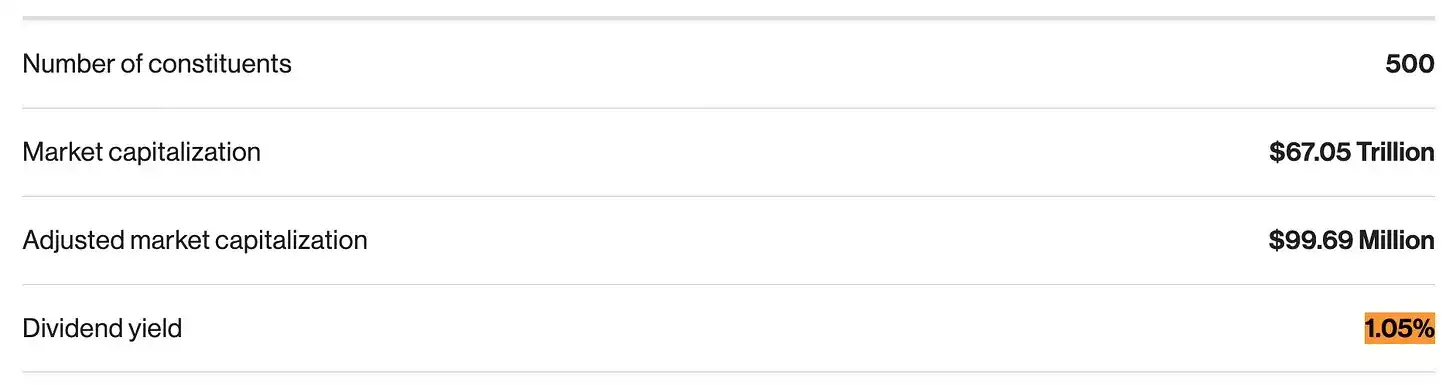
The annualized dividend yield for a broad US stock index is 1.05%, while for the innovative sectors index, it's only 0.52%. Both funds start with a 95% stock + 5% Bitcoin allocation, and only dividends from the stock portion are used to buy Bitcoin. In simple terms, the broad-based fund can only allocate about 1% of its total assets annually to buy Bitcoin, and the innovative fund only 0.5%.
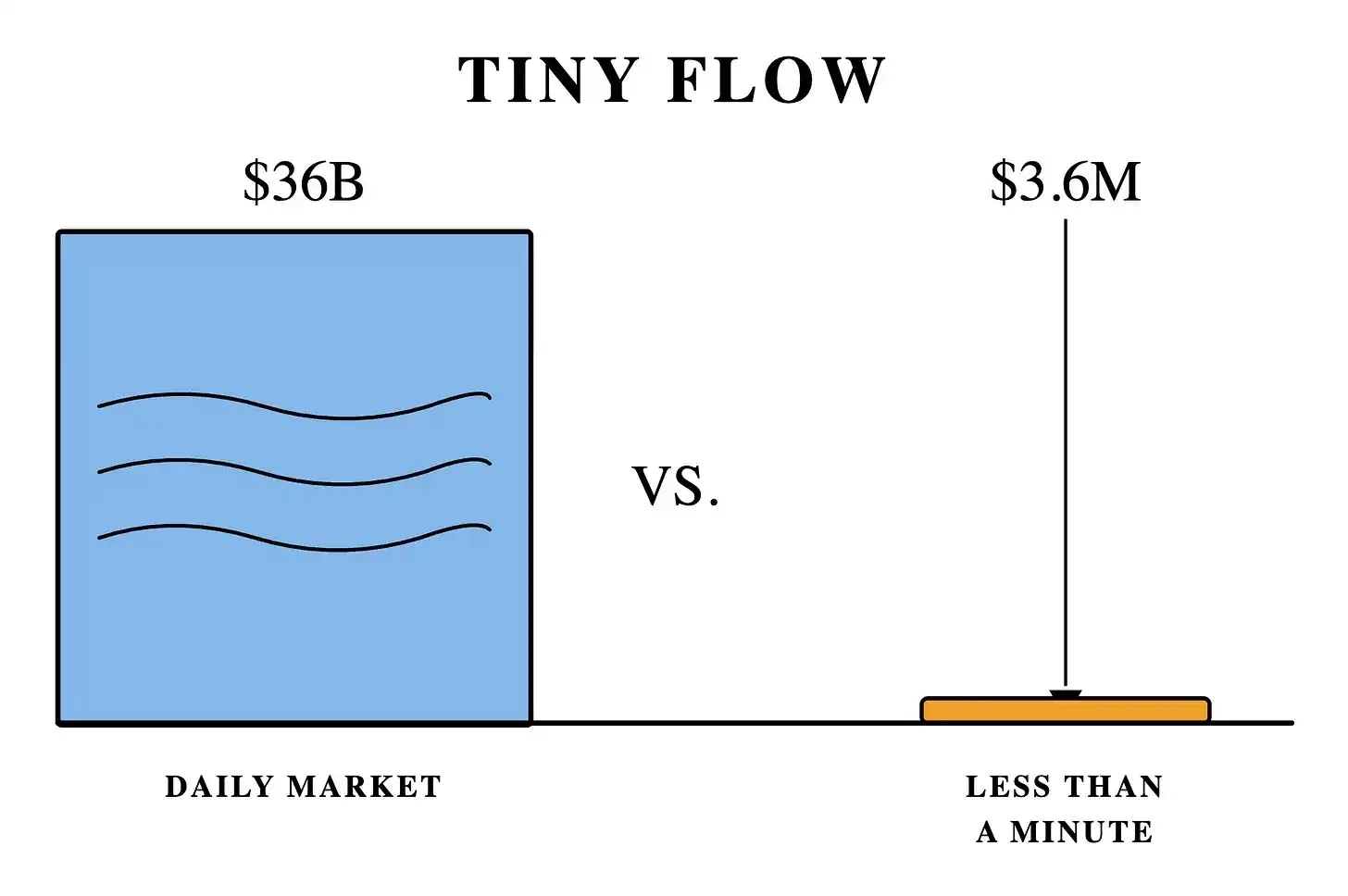
Based on Franklin's existing Bitcoin ETF (size $359 million), the corresponding annual incremental buying power for Bitcoin is only $3.6 million. With Bitcoin's average daily trading volume around $36 billion, the fund's entire year of buying can be absorbed by the market in less than a minute.
The design of the innovative sectors fund harbors deeper flaws: it holds heavy positions in stocks like Nvidia, Apple, and Microsoft, which pay very low or no dividends. The fund relies entirely on stock dividends to buy Bitcoin, meaning it lacks a steady cash flow for continuous accumulation. Coupled with the reverse mechanism of quarterly rebalancing, once Bitcoin's share exceeds 5%, it must be reduced to 4.5%. The higher Bitcoin rises, the harder the fund sells. In a bull market, the selling pressure from continuous sales would easily offset the tiny buying increment from meager dividends. This product, by its underlying design, is destined to struggle with holding an appreciating asset long-term.

On days when Bitcoin performs well, this fund becomes a passive seller instead.

Why? Index funds are forced into passive trading by the market. Traders know the fixed times and targets for index buying and selling, allowing them to front-run for profit. Franklin's two funds恰恰 create the opposite situation: they are programmed, passive, continuous selling tools. The funds are fixed to buy Bitcoin the day after dividends are received and sell uniformly each quarter during rebalancing. Short-term traders can accurately predict these operational nodes, harvesting profits from the fund on both the buy and sell sides.

The selling pressure from a single fund of similar size is minuscule, like a mosquito bite. But once a whole category of similar products forms, the cumulative selling pressure becomes significant. If a large amount of similar capital floods the market, every Bitcoin price rise would encounter continuous selling, creating a difficult-to-break price ceiling.
Beyond this core 'default allocation' playbook, the filing also cleverly hides three other design elements:

  1. Compliance avoidance. Many financial institutions' internal rules prohibit crypto allocation, but this fund is externally labeled merely as a 'US large-cap equity product.' Advisors can allocate it for clients compliantly, indirectly achieving Bitcoin exposure.
  2. Offshore structure compliance solution. Bitcoin is custodied by a wholly-owned Cayman Islands subsidiary, a common compliance method for public funds holding commodity-like assets. It doesn't breach the fund's original tax qualifications, is legal, and widely used in the industry.
  3. Tax legacy issue. Dividends are automatically converted into Bitcoin before they reach you, but those dividends are still taxable. The money is already locked into crypto assets, forcing you to use your own cash to pay taxes on dividends that never landed in your account.

For this model to truly take shape, such funds must become the default allocation for pensions or be positioned right next to the default asset pool. After the 2006 Pension Protection Act, employers gained legal support to auto-enroll employees with default allocations to corresponding funds.

Back then, only 5% of 401(k) plans offered target-date funds; now coverage is 96%, with total industry assets exploding from $100 billion to $4 trillion.

In August 2025, Trump signed an executive order officially lifting restrictions, allowing 401(k) pensions to allocate to cryptocurrencies. In March 2026, the U.S. Department of Labor released a draft rule stating that if plan fiduciaries include alternative assets like cryptocurrencies in the pension's optional list, they can enjoy liability protection.

The public comment period for the draft ended on June 1st. For a final rule to be enacted by the end of this year, the process must be completed before then. Compared to adding optional crypto products for investors, directly setting crypto assets as the pension default allocation faces higher implementation hurdles. Therefore, regardless of the final rule's text, corporate legal counsel generally believes most employers will choose to wait and see, acting only after court precedents confirm the safe harbor liability protection clause.

The core of this system was never to convince anyone to actively buy Bitcoin. Human attention is the world's scarcest resource. Any model that saves thinking and runs automatically on inertia will ultimately win.

The whole system just needs to leverage people's inertia.

Criptos en tendencia

Preguntas relacionadas

QWhat is the core strategy of Franklin Templeton's new Bitcoin ETF products according to the article?

AThe core strategy is to embed Bitcoin into investors' portfolios through a 'default configuration' logic, similar to automatic enrollment in 401(k) plans. The funds automatically use stock dividends to purchase Bitcoin, requiring no active choice from the investor or their financial advisor.

QWhy does the article suggest the funds' impact on Bitcoin buying pressure might be minimal?

AThe buying pressure is minimal because the funds primarily use stock dividends to buy Bitcoin. With dividend yields of ~1.05% and ~0.52% for the respective indices, and only 95% of the fund initially in stocks, the annual Bitcoin purchase amounts are a tiny fraction (e.g., ~$3.6M for a $359M fund) compared to Bitcoin's daily trading volume of ~$36B.

QHow do these ETFs potentially create a 'selling ceiling' or passive selling pressure for Bitcoin?

AThe funds have a quarterly rebalancing rule: if Bitcoin's weight exceeds the 5% target, it's reduced to 4.5%. If Bitcoin's price rises significantly, this forces the fund to sell Bitcoin to rebalance. In a bull market, this programmatic selling could counteract the small dividend-based buying, making the fund a net seller as Bitcoin appreciates.

QWhat are the three key design features mentioned in the article that benefit financial advisors?

A1. Compliance circumvention: The fund is labeled as a 'U.S. large-cap equity product,' allowing advisors to bypass internal rules against crypto. 2. Offshore compliance: Bitcoin is held by a Cayman Islands subsidiary, a standard legal structure for commodities. 3. A target audience of advisors, not active retail investors, as the 'set-and-forget' design fits into model portfolios advisors build for clients.

QWhat recent regulatory changes are mentioned as potentially enabling this type of product to scale?

AIn August 2025, an executive order allowed 401(k) plans to include cryptocurrencies. In March 2026, the U.S. Department of Labor proposed a rule granting fiduciary liability relief for including alternative assets like crypto in retirement plans. The article notes that for mass adoption, such funds would need to become a default or near-default option in retirement plans.

Lecturas Relacionadas

Domestic First Explosion-Proof Certification, World's First Fueling Brain Solution: How Did They Secure Two 'Firsts'?

China's embodied AI sector is booming, with over ¥37 billion in funding this year. The focus has shifted decisively to real-world application, particularly in hazardous, repetitive tasks humans should avoid. A key, often prohibitive, barrier to entry for robots in environments like gas stations and oil fields is obtaining explosion-proof certification, requiring meticulous hardware and circuit design from the ground up. The article explores three main application areas. At gas stations, the challenge lies in executing a long, precise sequence of actions (opening caps, handling the fuel nozzle) with millimeter accuracy across diverse car models. For facility inspections, robots need sustained autonomous patrols combined with real-time anomaly detection and response. Port scenarios introduce the complexity of multi-robot coordination. Addressing the core challenge of long-horizon tasks, the piece highlights a technical breakthrough: a "world model"-driven approach. This enables predictive planning, allowing the AI to visualize the desired end-state (e.g., nozzle returned, cap closed) and work backward to synthesize intermediate visual frames. This "imagination" of the task trajectory, as implemented in the H-GAR architecture, guides action generation, significantly reducing cumulative error in multi-step operations. The three-step H-GAR process involves generating a coarse action draft, synthesizing target-conditioned observation frames, and then refining actions based on visual context and a memory of past successful motions. The conclusion emphasizes that success in specialized, safety-critical fields requires long-term commitment and deep integration of the "embodied brain" (AI) with a purpose-built, certified physical "body." Mastering this brain-body-data闭环 (closed-loop) is positioned as a crucial competitive advantage for commercialization.

marsbitHace 34 min(s)

Domestic First Explosion-Proof Certification, World's First Fueling Brain Solution: How Did They Secure Two 'Firsts'?

marsbitHace 34 min(s)

Bitcoin Bear Market Triggers Crypto Layoffs, Yet Fuels Industry's Most Aggressive M&A Wave Ever

A prolonged Bitcoin downturn is forcing crypto companies to lay off employees and automate operations, but has simultaneously triggered the industry's most aggressive wave of mergers and acquisitions (M&A). In the first half of 2026, crypto M&A deal value reached $93.7 billion, 26 times higher than the same period last year. This activity is primarily driven by traditional financial institutions—banks, payment processors, and asset managers—who are acquiring compliant crypto infrastructure like custody solutions, payment rails, and regulatory licenses instead of building them internally. Examples include Mastercard's acquisition of stablecoin firm BVNK and Franklin Templeton's launch of a dedicated crypto division via acquisition. This consolidation contrasts sharply with a shrinking crypto labor market, where active job openings have plummeted. Companies like Coinbase are restructuring to become "AI-native," leading to a sharp increase in roles requiring AI skills, while engineering and compliance positions now dominate hiring. Financially pressured crypto firms, such as Messari which was acquired at a fraction of its prior valuation, are becoming prime targets. Capital remains available but is highly selective, flowing overwhelmingly into businesses that bridge digital assets with traditional finance, such as tokenization platforms and regulated trading venues. The trend indicates a market where capital is rewarding compliant, utility-focused infrastructure while weaker models consolidate or downsize.

marsbitHace 35 min(s)

Bitcoin Bear Market Triggers Crypto Layoffs, Yet Fuels Industry's Most Aggressive M&A Wave Ever

marsbitHace 35 min(s)

Bitcoin Hits 20-Month Low as Largest Bull Suffers $15 Billion Paper Loss

Bitcoin Hits 20-Month Low as Major Bull Loses $15 Billion On June 25th, Bitcoin fell below $60,000, hitting a low of $58,030—its lowest level since October 2024. The sell-off triggered over $1 billion in leveraged liquidations in 24 hours, with longs accounting for $788 million. This marks a more than 53% decline from the October 2025 all-time high of $126,198. A critical factor in the downturn is the weakening position of MicroStrategy, the largest corporate Bitcoin holder. With 847,363 BTC at an average cost of $75,651, the company now faces over $14.6 billion in unrealized losses. Its core financing flywheel—raising capital to buy Bitcoin—is stalling. Its variable-rate preferred shares (STRC), a key fundraising tool, have fallen 25% below their $100 target. This raises doubts about its ability to continue providing steady institutional demand for Bitcoin. Simultaneously, U.S. spot Bitcoin ETFs are experiencing significant outflows, with a single-day net outflow of $469 million on June 24th. This represents the most severe sustained capital flight since their launch. The macroeconomic backdrop remains restrictive, with persistent inflation delaying expected Fed rate cuts. Analysts note a shift in capital allocation, with institutional funds moving away from crypto towards AI infrastructure stocks. Immediate pressure comes from approximately $10 billion worth of Bitcoin options expiring on June 26th, which could increase market volatility. The combined effect of these factors—eroding core demand pillars, macro headwinds, and capital rotation—has decisively broken the $60,000 support level.

Foresight NewsHace 1 hora(s)

Bitcoin Hits 20-Month Low as Largest Bull Suffers $15 Billion Paper Loss

Foresight NewsHace 1 hora(s)

Trading

Spot
Futuros

Artículos destacados

Qué es BITCOIN

Entendiendo HarryPotterObamaSonic10Inu (ERC-20) y Su Posición en el Espacio Cripto En los últimos años, el mercado de criptomonedas ha sido testigo de un aumento en la popularidad de las monedas meme, capturando el interés no solo de los comerciantes, sino también de aquellos que buscan compromiso comunitario y valor de entretenimiento. Entre estos tokens únicos se encuentra HarryPotterObamaSonic10Inu (ERC-20), un proyecto intrigante que mezcla referencias culturales en el tejido de las criptomonedas. Este artículo profundiza en los aspectos clave de HarryPotterObamaSonic10Inu, explorando sus mecanismos, ethos impulsado por la comunidad y su relación con el paisaje cripto más amplio. ¿Qué es HarryPotterObamaSonic10Inu (ERC-20)? Como su nombre sugiere, HarryPotterObamaSonic10Inu es una moneda meme construida sobre la blockchain de Ethereum, clasificada bajo el estándar ERC-20. A diferencia de las criptomonedas tradicionales que pueden enfatizar la utilidad práctica o el potencial de inversión, este token prospera en el valor de entretenimiento y la fuerza de su comunidad. El proyecto tiene como objetivo fomentar un entorno donde los usuarios comprometidos puedan reunirse, compartir ideas y participar en actividades inspiradas por diversos fenómenos culturales. Una característica notable de HarryPotterObamaSonic10Inu es su cero impuestos en las transacciones. Este atractivo elemento tiene como objetivo incentivar el comercio y la participación comunitaria, sin cargos adicionales que puedan disuadir a los comerciantes de pequeña escala. El suministro total de la moneda está establecido en mil millones de tokens, una cifra que marca su intención de mantener una circulación sustancial dentro de la comunidad. Creador de HarryPotterObamaSonic10Inu (ERC-20) Los orígenes de HarryPotterObamaSonic10Inu están algo envueltos en misterio; los detalles sobre el creador siguen siendo desconocidos. El desarrollo de este token carece de un equipo identificable o de un plan explícito, lo cual no es inusual dentro del sector de monedas meme. En cambio, el proyecto ha surgido de manera orgánica, con su progreso muy dependiente del entusiasmo y la participación de su comunidad. Inversores de HarryPotterObamaSonic10Inu (ERC-20) En cuanto a inversiones externas y respaldo, HarryPotterObamaSonic10Inu también sigue siendo ambiguo. El token no lista ninguna fundación de inversión conocida o apoyo organizacional significativo. En cambio, la savia del proyecto es su comunidad de base, que informa su crecimiento y sostenibilidad a través de la acción colectiva y el compromiso en el espacio cripto. ¿Cómo Funciona HarryPotterObamaSonic10Inu (ERC-20)? Como una moneda meme, HarryPotterObamaSonic10Inu opera principalmente fuera de los marcos tradicionales que a menudo rigen el valor de los activos. Hay varios aspectos distintivos que definen cómo funciona el proyecto: Transacciones Sin Impuestos: Sin tarifas impositivas en las transacciones, los usuarios pueden comprar y vender el token libremente sin preocuparse por costos ocultos. Compromiso Comunitario: El proyecto prospera en la interacción comunitaria, aprovechando plataformas de redes sociales para crear entusiasmo y facilitar la participación. Las discusiones, el intercambio de contenido y el compromiso son elementos cruciales que ayudan a expandir su alcance y fomentar la lealtad entre los seguidores. Sin Utilidad Práctica: Cabe señalar que HarryPotterObamaSonic10Inu no ofrece utilidad concreta dentro del ecosistema financiero. Más bien, se clasifica como un token principalmente para actividades de entretenimiento y comunitarias. Referencia Cultural: El token incorpora astutamente elementos de la cultura popular para atraer interés, conectando con entusiastas de los memes y seguidores de las criptomonedas por igual. HarryPotterObamaSonic10Inu ejemplifica cómo las monedas meme operan de manera diferente a los proyectos de criptomonedas más tradicionales, ingresando al mercado como construcciones sociales innovadoras en lugar de activos utilitarios. Cronología de HarryPotterObamaSonic10Inu (ERC-20) La historia de HarryPotterObamaSonic10Inu está marcada por varios hitos notables: Creación: El token surgió de un meme viral, capturando la imaginación de muchos entusiastas de las criptomonedas. Las fechas específicas de creación no están disponibles, subrayando su ascenso orgánico. Listado en Exchanges: HarryPotterObamaSonic10Inu ha llegado a varios exchanges, permitiendo un acceso y comercio más fácil por parte de la comunidad. Iniciativas de Compromiso Comunitario: Actividades continuas destinadas a mejorar la interacción comunitaria, incluyendo concursos, campañas en redes sociales y generación de contenido por parte de fanáticos y defensores. Planes de Expansión Futuros: La hoja de ruta del proyecto incluye el lanzamiento de una colección de NFT, mercancía y un sitio de comercio electrónico relacionado con sus temas culturales, involucrando aún más a la comunidad e intentando añadir más dimensiones a su ecosistema. Puntos Clave Sobre HarryPotterObamaSonic10Inu (ERC-20) Naturaleza Impulsada por la Comunidad: El proyecto prioriza la participación colectiva y la creatividad, asegurando que la involucración de los usuarios esté a la vanguardia de su desarrollo. Clasificación como Moneda Meme: Representa la epítome de las criptomonedas basadas en el entretenimiento, diferenciándose de los vehículos de inversión tradicionales. Sin Afiliación Directa con Bitcoin: A pesar de la similitud en el nombre del ticker, HarryPotterObamaSonic10Inu es distinto y no tiene relación con Bitcoin u otras criptomonedas establecidas. Enfoque en la Colaboración: HarryPotterObamaSonic10Inu está diseñado para crear un espacio para la colaboración y el intercambio de historias entre sus poseedores, proporcionando una vía para la creatividad y el vínculo comunitario. Perspectivas Futuras: La ambición de expandirse más allá de su premisa inicial hacia NFTs y mercancías describe un camino para que el proyecto potencialmente ingrese a avenidas más tradicionales dentro de la cultura digital. A medida que las monedas meme continúan capturando la imaginación de la comunidad de criptomonedas, HarryPotterObamaSonic10Inu (ERC-20) se destaca debido a sus lazos culturales y su enfoque centrado en la comunidad. Si bien puede no encajar en el molde típico de un token impulsado por la utilidad, su esencia radica en la alegría y la camaradería fomentadas entre sus seguidores, destacando la naturaleza en evolución de las criptomonedas en una era cada vez más digital. A medida que el proyecto continúa desarrollándose, será importante observar cómo las dinámicas comunitarias influyen en su trayectoria en el cambiante paisaje de la tecnología blockchain.

1.8k Vistas totalesPublicado en 2024.04.01Actualizado en 2024.12.03

Qué es BITCOIN

Cómo comprar BTC

¡Bienvenido a HTX.com! Hemos hecho que comprar Bitcoin (BTC) sea simple y conveniente. Sigue nuestra guía paso a paso para iniciar tu viaje de criptos.Paso 1: crea tu cuenta HTXUtiliza tu correo electrónico o número de teléfono para registrarte y obtener una cuenta gratuita en HTX. Experimenta un proceso de registro sin complicaciones y desbloquea todas las funciones.Obtener mi cuentaPaso 2: ve a Comprar cripto y elige tu método de pagoTarjeta de crédito/débito: usa tu Visa o Mastercard para comprar Bitcoin (BTC) al instante.Saldo: utiliza fondos del saldo de tu cuenta HTX para tradear sin problemas.Terceros: hemos agregado métodos de pago populares como Google Pay y Apple Pay para mejorar la comodidad.P2P: tradear directamente con otros usuarios en HTX.Over-the-Counter (OTC): ofrecemos servicios personalizados y tipos de cambio competitivos para los traders.Paso 3: guarda tu Bitcoin (BTC)Después de comprar tu Bitcoin (BTC), guárdalo en tu cuenta HTX. Alternativamente, puedes enviarlo a otro lugar mediante transferencia blockchain o utilizarlo para tradear otras criptomonedas.Paso 4: tradear Bitcoin (BTC)Tradear fácilmente con Bitcoin (BTC) en HTX's mercado spot. Simplemente accede a tu cuenta, selecciona tu par de trading, ejecuta tus trades y monitorea en tiempo real. Ofrecemos una experiencia fácil de usar tanto para principiantes como para traders experimentados.

5.2k Vistas totalesPublicado en 2024.12.12Actualizado en 2026.06.02

Cómo comprar BTC

Qué es $BITCOIN

ORO DIGITAL ($BITCOIN): Un Análisis Integral Introducción al ORO DIGITAL ($BITCOIN) ORO DIGITAL ($BITCOIN) es un proyecto basado en blockchain que opera en la red Solana, cuyo objetivo es combinar las características de los metales preciosos tradicionales con la innovación de las tecnologías descentralizadas. Aunque comparte un nombre con Bitcoin, a menudo referido como “oro digital” debido a su percepción como un refugio de valor, ORO DIGITAL es un token separado diseñado para crear un ecosistema único dentro del paisaje Web3. Su meta es posicionarse como un activo digital alternativo viable, aunque los detalles sobre sus aplicaciones y funcionalidades aún están en desarrollo. ¿Qué es ORO DIGITAL ($BITCOIN)? ORO DIGITAL ($BITCOIN) es un token de criptomoneda diseñado explícitamente para su uso en la blockchain de Solana. A diferencia de Bitcoin, que proporciona un papel de almacenamiento de valor ampliamente reconocido, este token parece centrarse en aplicaciones y características más amplias. Aspectos notables incluyen: Infraestructura Blockchain: El token está construido sobre la blockchain de Solana, conocida por su capacidad para manejar transacciones de alta velocidad y bajo costo. Dinámicas de Suministro: ORO DIGITAL tiene un suministro máximo limitado a 100 cuatrillones de tokens (100P $BITCOIN), aunque los detalles sobre su suministro circulante no se han divulgado actualmente. Utilidad: Si bien las funcionalidades precisas no están delineadas explícitamente, hay indicios de que el token podría ser utilizado para diversas aplicaciones, potencialmente involucrando aplicaciones descentralizadas (dApps) o estrategias de tokenización de activos. ¿Quién es el Creador de ORO DIGITAL ($BITCOIN)? En la actualidad, la identidad de los creadores y el equipo de desarrollo detrás de ORO DIGITAL ($BITCOIN) sigue siendo desconocida. Esta situación es típica entre muchos proyectos innovadores dentro del espacio blockchain, particularmente aquellos alineados con las finanzas descentralizadas y fenómenos de monedas meme. Si bien tal anonimato puede fomentar una cultura impulsada por la comunidad, intensifica las preocupaciones sobre la gobernanza y la responsabilidad. ¿Quiénes son los Inversores de ORO DIGITAL ($BITCOIN)? La información disponible indica que ORO DIGITAL ($BITCOIN) no tiene patrocinadores institucionales conocidos ni inversiones destacadas de capital de riesgo. El proyecto parece operar en un modelo de peer-to-peer centrado en el apoyo y la adopción de la comunidad en lugar de rutas de financiamiento tradicionales. Su actividad y liquidez se sitúan principalmente en intercambios descentralizados (DEX), como PumpSwap, en lugar de plataformas de trading centralizadas establecidas, lo que resalta aún más su enfoque de base. Cómo Funciona ORO DIGITAL ($BITCOIN) Los mecanismos operativos de ORO DIGITAL ($BITCOIN) pueden elaborarse en función de su diseño blockchain y atributos de red: Mecanismo de Consenso: Al aprovechar el único proof-of-history (PoH) de Solana combinado con un modelo de proof-of-stake (PoS), el proyecto asegura una validación de transacciones eficiente que contribuye al alto rendimiento de la red. Tokenómica: Si bien los mecanismos deflacionarios específicos no se han detallado extensamente, el vasto suministro máximo de tokens implica que podría atender microtransacciones o casos de uso nicho que aún están por definirse. Interoperabilidad: Existe el potencial de integración con el ecosistema más amplio de Solana, incluyendo varias plataformas de finanzas descentralizadas (DeFi). Sin embargo, los detalles sobre integraciones específicas permanecen no especificados. Cronología de Eventos Clave Aquí hay una cronología que destaca hitos significativos relacionados con ORO DIGITAL ($BITCOIN): 2023: El despliegue inicial del token ocurre en la blockchain de Solana, marcado por su dirección de contrato. 2024: ORO DIGITAL gana visibilidad al estar disponible para trading en intercambios descentralizados como PumpSwap, permitiendo a los usuarios comerciar contra SOL. 2025: El proyecto presencia actividad de trading esporádica y potencial interés en compromisos liderados por la comunidad, aunque no se han documentado asociaciones notables o avances técnicos hasta el momento. Análisis Crítico Fortalezas Escalabilidad: La infraestructura subyacente de Solana soporta altos volúmenes de transacciones, lo que podría mejorar la utilidad de $BITCOIN en varios escenarios de transacción. Accesibilidad: El potencial bajo precio de trading por token podría atraer a inversores minoristas, facilitando una participación más amplia debido a oportunidades de propiedad fraccionada. Riesgos Falta de Transparencia: La ausencia de patrocinadores, desarrolladores o un proceso de auditoría conocidos públicamente puede generar escepticismo sobre la sostenibilidad y confiabilidad del proyecto. Volatilidad del Mercado: La actividad de trading depende en gran medida del comportamiento especulativo, lo que puede resultar en una volatilidad de precios significativa y en incertidumbre para los inversores. Conclusión ORO DIGITAL ($BITCOIN) surge como un proyecto intrigante pero ambiguo dentro del ecosistema de Solana en rápida evolución. Si bien intenta aprovechar la narrativa del “oro digital”, su alejamiento del papel establecido de Bitcoin como refugio de valor subraya la necesidad de una diferenciación más clara de su utilidad y estructura de gobernanza previstas. La aceptación y adopción futura dependerán probablemente de abordar la actual opacidad y de definir sus estrategias operativas y económicas de manera más explícita. Nota: Este informe abarca información sintetizada disponible hasta octubre de 2023, y pueden haber ocurrido desarrollos más allá del período de investigación.

97 Vistas totalesPublicado en 2025.05.13Actualizado en 2025.05.13

Qué es $BITCOIN

Discusiones

Bienvenido a la comunidad de HTX. Aquí puedes mantenerte informado sobre los últimos desarrollos de la plataforma y acceder a análisis profesionales del mercado. A continuación se presentan las opiniones de los usuarios sobre el precio de BTC (BTC).

活动图片