
Trading Moment: Nonfarm Payrolls Loom, Oil Soars, Gold, Silver, and Bitcoin Under Pressure, 80% of Analysts Bullish on BTC

marsbitPublicado a 2026-03-06Actualizado a 2026-03-06

Resumen

Amid heightened geopolitical tensions and anticipation for the U.S. February non-farm payroll data, oil prices surged with Brent nearing $90 and WTI exceeding $82, driven by supply disruptions in the Strait of Hormuz. Bitcoin fell 3% to around $71,000, testing key support at $69,420, while 80% of analysts remain bullish despite miner sell-offs. Ethereum hovered above $2,000 with mixed sentiment. Altcoins faced liquidity stress, though sectors like AI saw gains. Key events include U.S. employment data releases and options expiries. Market fear and greed index hit 18 (extreme fear), with $227M in liquidations. Notable moves include OKB surging 26.7% on ICE’s investment in OKX.

Daily key market data review and trend analysis, produced by PANews.

Macro Market
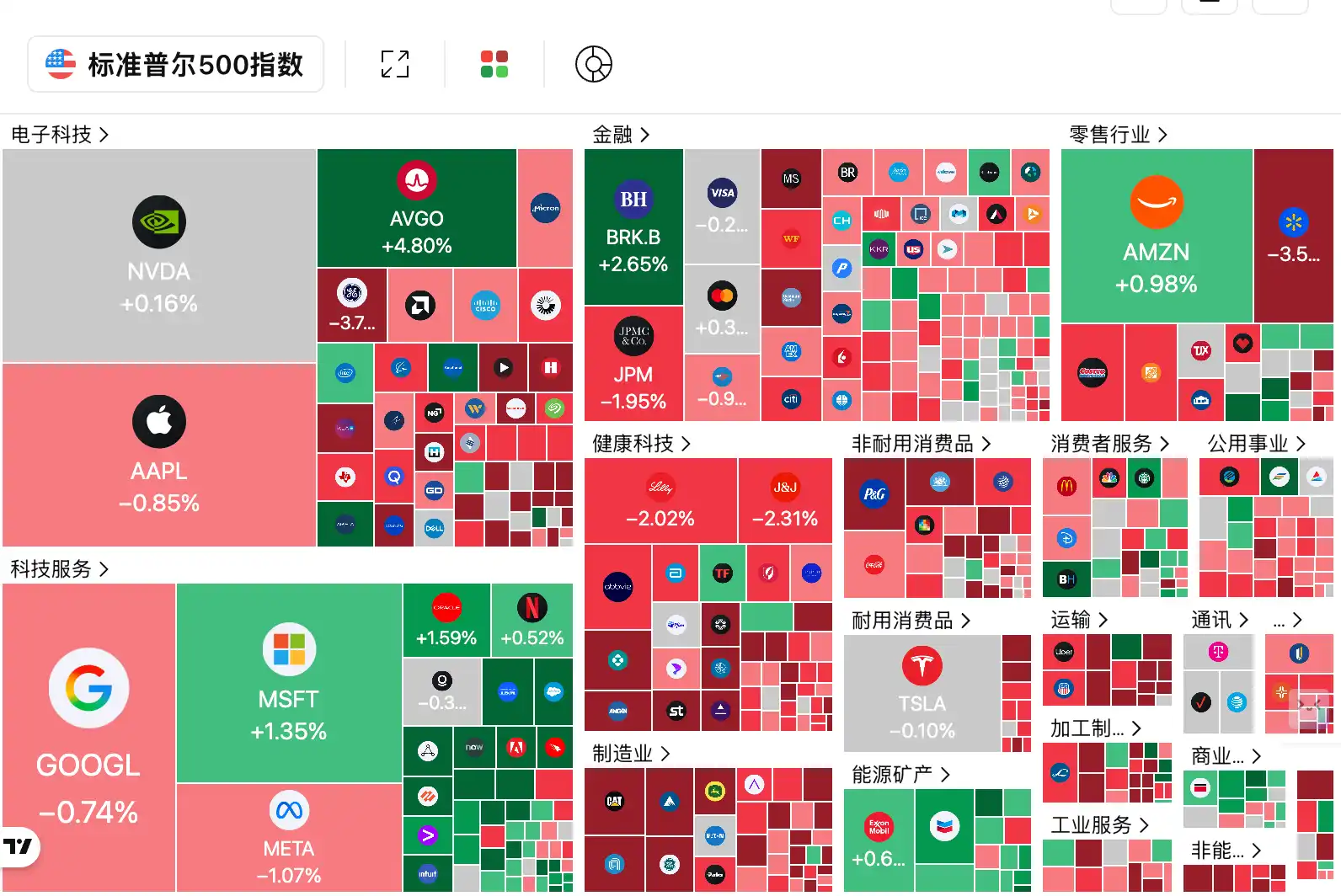
The U.S. will officially enter Daylight Saving Time on March 8th, with stock market trading starting one hour earlier, adjusted to Beijing Time 21:30-4:00. Additionally, global capital is closely watching tonight's February Nonfarm Payrolls report. With the data suspense of an expected 59,000 new jobs added, the market is holding its breath. PGIM and Amerivet Securities warn that if the data exceeds expectations, it could add fuel to the fire, further driving up U.S. Treasury yields.

The geopolitical powder keg in the Middle East has been completely ignited. An Iranian drone struck the U.S. aircraft carrier "Lincoln," and the humanitarian crisis has even affected innocents, forcing the emergency evacuation of up to 150 schoolchildren. The latest report from the United Maritime Information Centre points out that shipping traffic in the Strait of Hormuz has almost completely stalled, with the number of transiting vessels dropping to single digits. Only two confirmed transits of commercial vessels were observed in the past 24 hours, and both were cargo ships, not oil tankers.

Amid supply disruption panic, Brent crude is approaching $90, and WTI crude broke through $82 to hit a new high. JPMorgan Chase urgently warned that storage tank capacity is running critically low, and forced production shutdowns for Middle Eastern crude could reach 3.3 million barrels per day within the next three days; meanwhile, Saudi Aramco has significantly raised its official selling price for crude to Asia by $2.50 per barrel. Facing soaring oil prices, Trump seemed dismissive, stating bluntly "let it rise, military action is far more important," and threatened to "completely eliminate the Iranian leadership". However, the U.S. Treasury Department may unprecedentedly short oil futures to suppress prices, while the U.S. has issued a 30-day temporary waiver, easing restrictions on India's purchase of Russian crude to resolve a stalemate involving up to 9.5 million barrels of stranded Russian oil.

AI Sector Developments

The battle for computing power in the artificial intelligence field is evolving into a geopolitical game at the national level. The U.S. government plans to extend AI chip export controls globally, requiring all AI accelerator exports from giants like Nvidia and AMD to obtain licenses. The Trump administration intends to become the global AI "gatekeeper," tightly holding core technology.

The policy headwinds poured cold water on the sector, causing chip stocks to collectively fall sharply. Nvidia and AMD fell 1.9% and 2.3% intraday respectively. Although Nvidia managed a slight rally at the close to end up 0.16%, market panic was already evident.

The "money-burning game" of AI infrastructure is intensifying, with traditional giants and crypto miners jumping in. JPMorgan Chase is expected to invest a whopping $20 billion in AI this year, an unprecedented scale in banking history; while Oracle, dragged down by AI infrastructure costs turning its cash flow negative, is planning large-scale layoffs.

Bitcoin miners are also疯狂ly pivoting in the computing power wave. CleanSpark sold a staggering 97% of its Bitcoin production in February, cashing out over $36 million, solely to fully bet on the expansion of AI and high-performance computing data centers.

Bitcoin Market

Bitcoin fell 3% from its recent high of $74,000 to around $71,000, suppressed by risk-off sentiment and liquidity contraction, and is currently testing the support level at $69,420. Meanwhile, the Bitcoin-to-Gold ratio has been in a downtrend for 13 months since peaking in December 2024.

Amid the computing power war and AI frenzy, miners are疯狂ly selling. Listed mining companies have sold over 15,000 BTC since last October; among them, Cango sold 4,451 BTC in February (60% of its position), Bitdeer cleared its inventory in January, Core Scientific plans to sell 2,500 BTC in Q1, and CleanSpark sold 553 BTC (97% of February's production, retaining only 13,363 BTC). Affected by this, the hash price index, measuring miner revenue, has plummeted from $39 three months ago to a historical low of $30.

MicroStrategy's current holdings of 720,737 Bitcoin have an average cost of $76,000, a level that has become a psychological barrier difficult for bulls to overcome. According to Greeks.live data, $2.3 billion notional value of BTC options will expire on March 6th, with a max pain point of $69,000. Bitcoin is holding above the $70,000 mark and有望冲击 $75,000, but the options market shows selling call options dominates, indicating slowing upward momentum. However, according to unbias data, bullish analysts in the market have now significantly increased to 80%.
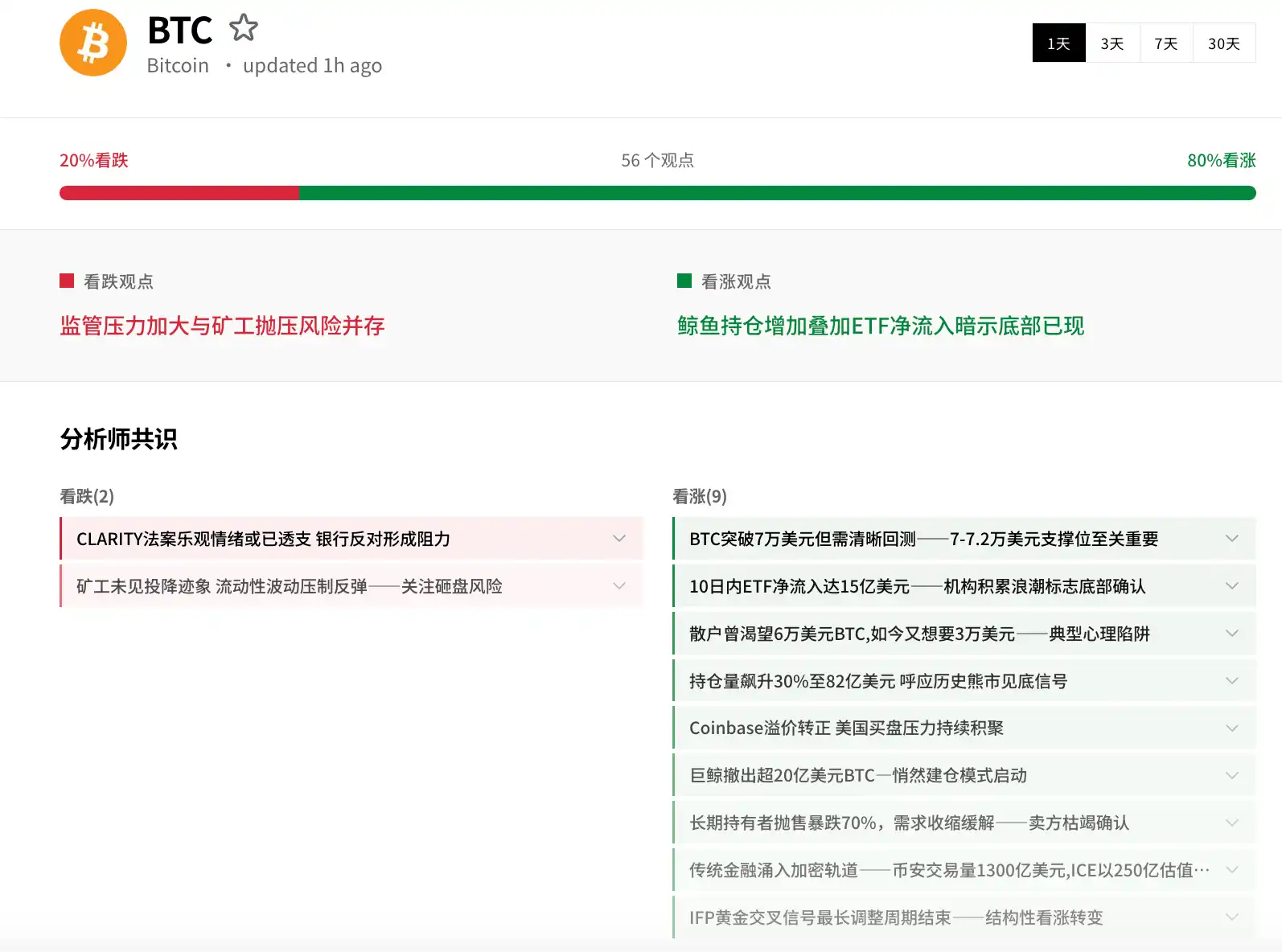
Bearish Views

The bear camp believes the current rebound is merely a short-term recovery after selling pressure eased, lacking sustained momentum for a squeeze, and a break below support will lead to a deeper correction.

  • CryptoQuant Head of Research Julio Moreno pointed out that on-chain data suggests the market is still in a bearish environment, and the recent rise is just a "relief rally."

  • Analyst Murphy emphasized that the MVRV extreme deviation indicator shows the rally is nearing the top range of $74,000 to $78,000 and could face resistance and fall back at any time.

  • Trader Roman stated that the daily chart lacks volume support, the current movement is a retest after breaking support, and it will inevitably move to lower points shortly.

  • Godot analysis suggested the market has not entered a FOMO stage, institutional funds are continuously raising the strike prices of sold call options to absorb long liquidity, maintaining the logic of harvesting time value through oscillation.

Bullish Views

The bull camp firmly believes that the short-term pullback is just healthy consolidation within a larger uptrend, with strong liquidity support below, and long-term dollar-cost averaging strategies still hold absolute advantage.

  • Analyst CryptoReviewing believes shorts have been completely wiped out. Once liquidity above $73,000 is swept, it will directly open the door to higher levels.

  • TurboBullCapital pointed out that $63,000 is an excellent demand zone. After washing out, the price will once again冲击 the resistance at $75,000.

  • Cyril-DeFi stated the current movement is more like a reset within a large-scale rising trend. As long as the $70,000 support holds, Bitcoin will continue to climb towards the upper band.

  • Ali Charts emphasized that $70,685 is an extremely critical support concentration zone. Once stabilized, the area up to $81,000 will be a畅通无阻的 "vacuum zone".

Ethereum Market

Ethereum, after touching $2,200, could not stay immune and is still hovering above $2,000. Undercurrents are surging in the derivatives market, with $380 million notional value of ETH options expiring today, max pain $1,950. Despite weak on-chain fundamental data and lack of bullish leverage demand in the derivatives market, continuous inflows of institutional funds have led to intense博弈 between bulls and bears at the key support level of $2,100, with overall market sentiment偏向 cautious观望.

Bearish Views

Bears point directly to the deterioration of Ethereum's fundamentals, believing network upgrades damaged tokenomics, and false on-chain prosperity masks the萎缩 of real demand.

  • Short-selling firm Culper Research高调 announced shorting Ethereum, accusing the Fusaka upgrade of increasing the Gas limit to 45-60 million, causing Gas fees to plummet 90%, and that 95% of new wallet activity and over 50% of transaction growth are illusions created by dust attacks and poisoning (accounting for 22.5% of total transactions).

  • Trader UB warned that Ethereum failed to break out of its range like other major coins. If it cannot quickly reclaim $2,150, it will be an excellent short target.

Bullish Views

Bulls still value Ethereum's decentralization premium and technical support levels, believing the return of institutional funds could ignite a new rally at any time.

  • CryptoQuant analyst team noted the Coinbase Premium Index hit a new high, indicating U.S. buying is returning, and seller dominance is fading.

  • Cyril-DeFi analysis stated Ethereum is perfectly retesting the support of the lower band of its long-term ascending channel. Historical experience shows this area极易 triggers strong bounces.

  • Trader Crypto Patel emphasized that as long as the macro bottom line of $1,750 holds, the bulls still control the overall situation, with targets directly pointing to $2,500 to $2,600.

  • Man of Bitcoin believes that once the price successfully retests the broken trendline, it will directly launch an assault towards the Fibonacci extension levels of $2,340 or even $3,400.

Market Dynamics

The altcoin market is experiencing a brutal liquidity drought, with up to 38% of altcoins hovering near historical lows, a severity even exceeding the post-FTX collapse period. Under the heavy pressure of macro uncertainty, the market Fear & Greed Index is dominated by极度放大的 risk-off sentiment, with high全网 liquidation amounts.

However, some projects still爆发惊人的生命力 amidst despair. With rising demand for on-chain trading of traditional assets like U.S. stocks, gold, and oil, trading volume on Hyperliquid's HIP-3 market continues to rise, breaking $2.2 billion. WTI crude contracts saw daily trading volume grow 140% recently against the backdrop of geopolitical risks.

Furthermore, the integration of traditional finance and the crypto world is accelerating. NYSE parent company ICE invested heavily in OKX, pushing its valuation to $25 billion,刺激 OKB token surge 58% short-term to $124. Kraken also followed suit, launching the xChange engine supporting 24/7 trading of tokenized stocks like Apple and Tesla.

Key Data (As of March 6, 13:00 HKT)

(Data source: CoinAnk, Upbit, SoSoValue, CryptoBubbles)

  • Bitcoin ETF: -$227.83 million

  • Ethereum ETF: -$90.94 million

  • SOL ETF: -$5.23 million

  • XRP ETF: -$6.16 million

  • Fear & Greed Index: 18 (Extreme Fear)

  • Upbit 24h Trading Volume Ranking: XRP, BTC, BARD, ETH, SIGN

  • Sector Performance: Crypto sectors mixed, AI sector up nearly 2%

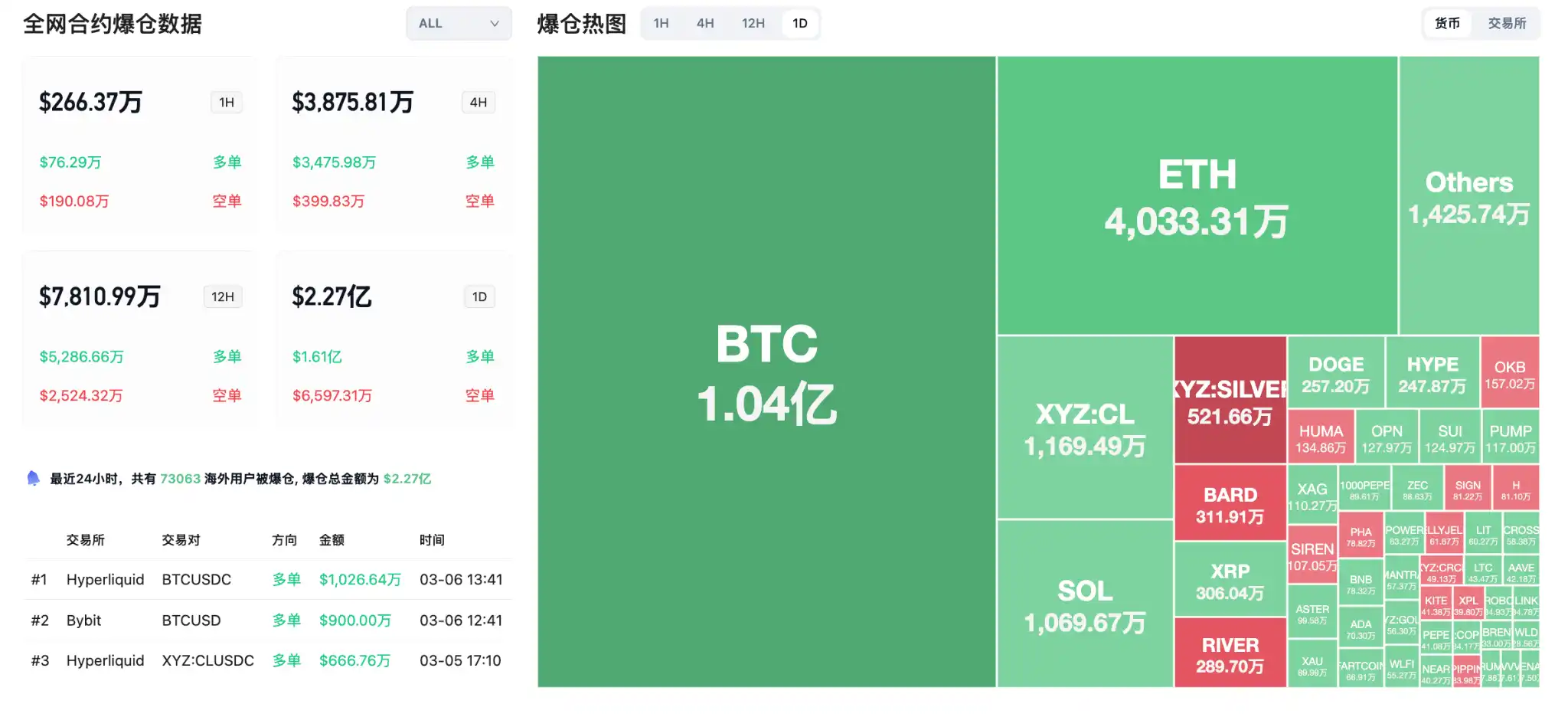
24-hour Liquidation Data: 93,063 people were liquidated globally, total liquidation amount $227 million,其中 BTC liquidation $104 million, ETH liquidation $40.33 million, SOL liquidation $10.69 million.
Today's Outlook

  • HyperLiquid Co-founder: 173,000 HYPE to be unstaked and distributed to team members on March 6th

  • Coinbase delays Limitless (LMTS) listing time to March 7th early morning

  • Binance lists COPPERUSDT perpetual contract (copper-backed asset)

  • U.S. February Unemployment Rate: Expected 4.3%, Previous 4.3% (March 6, 21:30)

  • U.S. February Nonfarm Payrolls Change (10k): Expected 5.5, Previous 13 (March 6, 21:30)

  • Daylight Saving Time begins in North America, U.S. stock trading starts one hour earlier (March 8, 15:00)

  • OP to unlock ~19.5 million tokens on March 7th, worth ~$2.4 million

  • RED to unlock ~40.85 million tokens on March 7th, worth ~$6.2 million

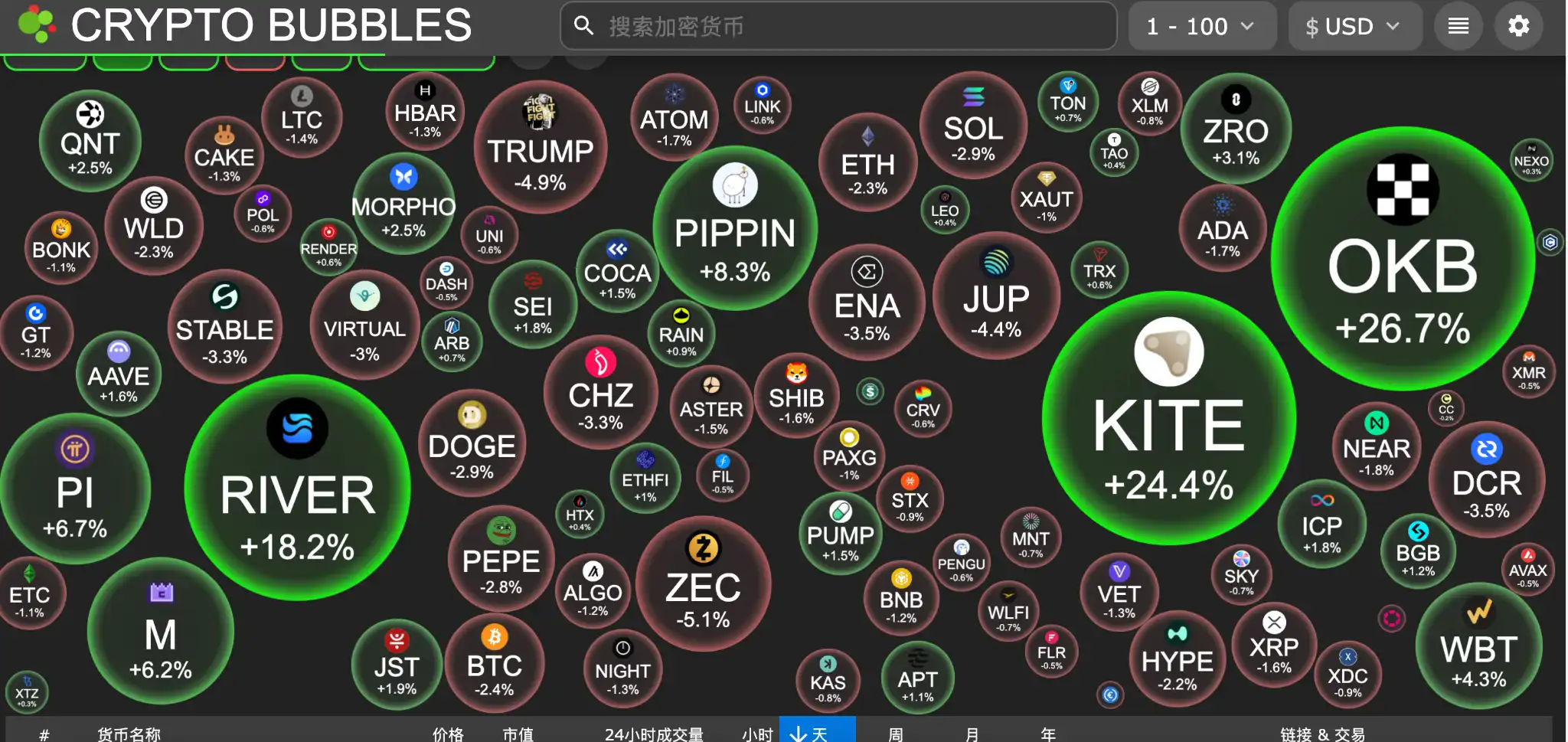
Today's Top 100 Coins by Market Cap - Max Gainers: OKB up 26.7%, Kite up 24.4%, River up 18.2%, pippin up 8.3%, Pi Network up 6.7%.
Hot News

  • Hyperliquid WTI crude trading volume surged 140% recently, HIP-3 market volume now accounts for 30% of total

  • Russian Central Bank proposes allowing banks and brokerages to obtain cryptocurrency trading licenses

  • Listed Bitcoin mining companies have cumulatively sold over 15,000 BTC since last October

  • Justin Sun: Still holds all purchased LIT, long-term bullish on Lighter

  • SEC Chair states: Look forward to working with CFTC Chair to advance the CLARITY Act

  • CleanSpark sells 97% of February's Bitcoin production to fund its AI transition

  • ParaFi Capital疑似 swapped over $5 million worth of AAVE for SKY in the past 3 days

  • Culper Research announces shorting ETH and related securities, claims Fusaka upgrade damaged token economic model

  • Kraken launches unified execution layer xChange for xStocks tokenized stock trading

  • Trump: Need to personally participate in Iran's succession arrangement, will not accept Khamenei's son as Supreme Leader

  • NYSE parent ICE invests in crypto exchange OKX,后者估值 ~$25 billion

Lecturas Relacionadas

If the AI Bubble Is Already Bursting, Who Will Truly Survive?

If the AI Bubble is Bursting, Who Will Remain? The debate over an AI bubble is intensifying, with figures like Ray Dalio warning of high levels and Jensen Huang seeing immense, early-stage opportunity. Both views hold truth: a speculative bubble in capital markets likely exists, mirroring the dot-com era, but the underlying technological shift is real and transformative. History shows that while bubbles burst—wiping out overvalued companies and speculative capital—they often leave behind critical physical and digital infrastructure. The dot-com bust, for instance, eliminated many firms but left the global fiber optic networks and data centers that enabled the rise of Amazon, Netflix, and cloud computing. Today's massive AI infrastructure investments (projected at trillions by 2030) in data centers, power, cooling, and GPUs may follow a similar path, creating the foundation for future applications. A key divergence from past bubbles is the "Jevons Paradox" effect in AI. As the cost of AI inference has plummeted by over 99.7% since 2023, enterprise spending on AI has skyrocketed. Cheap "tokens" have unlocked vast, previously uneconomical use cases, moving AI from simple chatbots into core business workflows—code generation, legal document review, scientific simulation, and financial analysis. The market is now in a phase of self-correction, weeding out superficial "API-wrapper" startups, but this cleansing process strengthens the ecosystem. The long-term trajectory is clear. The value is gradually shifting from capital expenditure (CapEx) on hardware to operational expenditure (OpEx) on transformative applications. As AI becomes a utility, the winners will be firms that deeply integrate it to solve vertical industry problems in law, healthcare, finance, and manufacturing. The泡沫 will recede, but the foundational shift towards an AI-powered era across all sectors is irreversible. The underlying productive force of AI contains no bubble.

marsbitHace 25 min(s)

If the AI Bubble Is Already Bursting, Who Will Truly Survive?

marsbitHace 25 min(s)

If the AI Bubble Is Already Bursting, Who Will Truly Remain?

**Summary: If the AI Bubble is Bursting, What Will Remain?** The debate around an AI bubble is intensifying, with figures like Ray Dalio warning of high valuations while Jensen Huang sees immense opportunity. This echoes the dot-com bubble, which saw massive wealth destruction but ultimately left behind critical infrastructure like undersea cables and broadband, enabling future giants like Amazon and Netflix. Similarly, today's AI boom involves trillions invested in data centers, power, cooling, and GPUs, while application-layer revenue remains comparatively modest. This investment-disparity signals a bubble. However, the core technological progress is real and accelerating. AI inference costs have plummeted by over 99.7% since 2023, making intelligence increasingly cheap and accessible. This cost collapse is unlocking vast new demand. Instead of reducing spending, enterprises are tripling their AI cloud expenditure. Cheap "tokens" enable AI to move beyond simple chatbots into complex workflows—automating code writing, legal document review, financial analysis, and scientific research. This follows "Jevons's paradox": improved efficiency leads to greater total consumption. The market is now undergoing a necessary purification, weeding out "API-wrapper" startups with no real moat. The deeper evolution involves a shift from capital expenditure (CapEx) on infrastructure to operational expenditure (OpEx) on value-creation in applications. While hardware vendors currently profit most, long-term value will migrate to AI-native firms solving vertical industry problems. Ultimately, a market correction will cleanse speculative excess but will not reverse the AI+ trend. The massive physical and algorithmic infrastructure being built will endure, becoming a cheap, utility-like foundation. Just as the internet became indispensable to all industries post-2000, AI is poised to empower and redefine every sector, moving society irreversibly toward an intelligence-augmented era. The bubble may burst, but the underlying productive momentum is solid.

链捕手Hace 32 min(s)

If the AI Bubble Is Already Bursting, Who Will Truly Remain?

链捕手Hace 32 min(s)

Microsoft CEO: In the AI Era, How Do You Define a Company's Moat?

Microsoft CEO Satya Nadella argues that in the AI era, a company's true competitive edge, or "moat," is not determined by choosing the single most powerful model, but by its ability to build a continuous "learning loop." This system integrates and evolves by connecting human workflows, domain expertise, organizational judgment, and employee experience. He posits that future companies will accumulate two types of capital: Human Capital (employee knowledge, judgment, creativity) and "Token Capital" (a firm's own built and owned AI capabilities). Importantly, AI amplifies rather than devalues human capital. Human direction is essential to guide progress, as computational power alone is aimless. The core opportunity lies in creating a closed-loop system where human and token capital reinforce each other in a compound, self-improving cycle. A company must be able to preserve its unique institutional knowledge—its "company veteran" expertise—even if it switches underlying general-purpose AI models. This requires private evaluation benchmarks, reinforcement learning environments based on internal data, and queryable knowledge bases. Nadella warns against a future where economic value is concentrated by a few dominant models that commoditize entire industries' knowledge. Instead, the priority should be building a broad "frontier ecosystem" where every company, industry, and nation can own its learning loop. This allows organizations to retain control of their intellectual property, amplify employee capabilities, and ensure the economic value created by AI is captured within their own businesses and communities. True corporate sovereignty in the AI age comes from turning organizational knowledge into a compounding system that creates enduring, defensible value.

marsbitHace 1 hora(s)

Microsoft CEO: In the AI Era, How Do You Define a Company's Moat?

marsbitHace 1 hora(s)

ETFs Are Just the Ticket: The True Institutionalization of Bitcoin Is Happening Where You Can't See It

Beyond the Bitcoin ETF spotlight, a deeper institutionalization is underway, leveraging Bitcoin as a foundational financial primitive. Institutions are using Bitcoin for purposes long reserved for assets like U.S. Treasuries and gold: as collateral for loans, insurance reserves, and the backbone of rated bonds. Examples include a Barbados-based insurer capitalizing with $40M in Bitcoin reserves and Ledn's $188M securitization of Bitcoin-backed loans, which received the first-ever investment-grade rating (BBB-) from S&P for a digital asset-backed security. This structure was stress-tested during a 27% price drop in early 2026, triggering automatic liquidations that functioned as designed but revealed the systemic risk of synchronized selling across leveraged positions. Infrastructure is evolving to support this, with platforms like Anchorage Digital's Atlas network enabling secure, institutional-grade settlement and collateral management. Strategies like basis trades and corporate treasuries (exemplified by companies like MicroStrategy issuing billions in equity and debt to fund Bitcoin acquisitions) further integrate Bitcoin into financial mechanics. While ETFs solved "how to own" Bitcoin, these developments answer "what to do with it," embedding the asset into the working machinery of finance—as collateral upon which loans, derivatives, and structured products are built. The real, enduring institutional shift is happening in these largely invisible plumbing and financing systems.

marsbitHace 1 hora(s)

ETFs Are Just the Ticket: The True Institutionalization of Bitcoin Is Happening Where You Can't See It

marsbitHace 1 hora(s)

ZEC Co-Founder Responds to Orchard Vulnerability: No Signs of Theft, Orchard Pool to Be Sealed

ZEC Co-Founder Addresses Orchard Vulnerability: No Signs of Theft, Plans to Sunset Orchard Pool A security vulnerability was recently discovered in Zcash's Orchard shielded pool, raising key concerns. The primary questions are whether the flaw was exploited, if user funds are safe, whether users can verify the total ZEC supply, and if other similar vulnerabilities exist. Analysis suggests the vulnerability was likely not exploited prior to its discovery. It was found proactively by a researcher using specialized tools, not due to an active breach. The development team and mining pools acted quickly to contain the issue. Typical financially-motivated attacks would likely have left visible on-chain evidence, which has not been observed. User funds in Orchard are considered safe and should be recoverable, assuming no prior exploitation. If the flaw was never used, all legitimate funds can be withdrawn. The article outlines risks associated with moving funds to transparent addresses or other pools, but concludes that leaving assets in place is a reasonable option. Currently, users cannot independently verify that the total ZEC supply hasn't been inflated due to this bug. However, the planned Ironwood network upgrade is designed to resolve this. It will permanently close the Orchard pool to new deposits and internal transfers, allowing only withdrawals. This mechanism will cap total withdrawals at the amount of legitimately deposited funds, enabling anyone to cryptographically verify the supply post-upgrade. Multiple teams, including Shielded Labs, have conducted extensive audits focused on counterfeiting vulnerabilities, assisted by advanced AI tools. No additional flaws of this type have been found so far, increasing confidence that no other similar undisclosed vulnerabilities exist. In summary, evidence indicates the Orchard bug was probably not used, user funds are secure, and no other counterfeiting flaws are currently known. The upcoming Ironwood upgrade will restore users' ability to independently verify the total ZEC supply, closing this chapter.

Foresight NewsHace 1 hora(s)

ZEC Co-Founder Responds to Orchard Vulnerability: No Signs of Theft, Orchard Pool to Be Sealed

Foresight NewsHace 1 hora(s)

Trading

Spot
Futuros

Artículos destacados

Qué es BITCOIN

Entendiendo HarryPotterObamaSonic10Inu (ERC-20) y Su Posición en el Espacio Cripto En los últimos años, el mercado de criptomonedas ha sido testigo de un aumento en la popularidad de las monedas meme, capturando el interés no solo de los comerciantes, sino también de aquellos que buscan compromiso comunitario y valor de entretenimiento. Entre estos tokens únicos se encuentra HarryPotterObamaSonic10Inu (ERC-20), un proyecto intrigante que mezcla referencias culturales en el tejido de las criptomonedas. Este artículo profundiza en los aspectos clave de HarryPotterObamaSonic10Inu, explorando sus mecanismos, ethos impulsado por la comunidad y su relación con el paisaje cripto más amplio. ¿Qué es HarryPotterObamaSonic10Inu (ERC-20)? Como su nombre sugiere, HarryPotterObamaSonic10Inu es una moneda meme construida sobre la blockchain de Ethereum, clasificada bajo el estándar ERC-20. A diferencia de las criptomonedas tradicionales que pueden enfatizar la utilidad práctica o el potencial de inversión, este token prospera en el valor de entretenimiento y la fuerza de su comunidad. El proyecto tiene como objetivo fomentar un entorno donde los usuarios comprometidos puedan reunirse, compartir ideas y participar en actividades inspiradas por diversos fenómenos culturales. Una característica notable de HarryPotterObamaSonic10Inu es su cero impuestos en las transacciones. Este atractivo elemento tiene como objetivo incentivar el comercio y la participación comunitaria, sin cargos adicionales que puedan disuadir a los comerciantes de pequeña escala. El suministro total de la moneda está establecido en mil millones de tokens, una cifra que marca su intención de mantener una circulación sustancial dentro de la comunidad. Creador de HarryPotterObamaSonic10Inu (ERC-20) Los orígenes de HarryPotterObamaSonic10Inu están algo envueltos en misterio; los detalles sobre el creador siguen siendo desconocidos. El desarrollo de este token carece de un equipo identificable o de un plan explícito, lo cual no es inusual dentro del sector de monedas meme. En cambio, el proyecto ha surgido de manera orgánica, con su progreso muy dependiente del entusiasmo y la participación de su comunidad. Inversores de HarryPotterObamaSonic10Inu (ERC-20) En cuanto a inversiones externas y respaldo, HarryPotterObamaSonic10Inu también sigue siendo ambiguo. El token no lista ninguna fundación de inversión conocida o apoyo organizacional significativo. En cambio, la savia del proyecto es su comunidad de base, que informa su crecimiento y sostenibilidad a través de la acción colectiva y el compromiso en el espacio cripto. ¿Cómo Funciona HarryPotterObamaSonic10Inu (ERC-20)? Como una moneda meme, HarryPotterObamaSonic10Inu opera principalmente fuera de los marcos tradicionales que a menudo rigen el valor de los activos. Hay varios aspectos distintivos que definen cómo funciona el proyecto: Transacciones Sin Impuestos: Sin tarifas impositivas en las transacciones, los usuarios pueden comprar y vender el token libremente sin preocuparse por costos ocultos. Compromiso Comunitario: El proyecto prospera en la interacción comunitaria, aprovechando plataformas de redes sociales para crear entusiasmo y facilitar la participación. Las discusiones, el intercambio de contenido y el compromiso son elementos cruciales que ayudan a expandir su alcance y fomentar la lealtad entre los seguidores. Sin Utilidad Práctica: Cabe señalar que HarryPotterObamaSonic10Inu no ofrece utilidad concreta dentro del ecosistema financiero. Más bien, se clasifica como un token principalmente para actividades de entretenimiento y comunitarias. Referencia Cultural: El token incorpora astutamente elementos de la cultura popular para atraer interés, conectando con entusiastas de los memes y seguidores de las criptomonedas por igual. HarryPotterObamaSonic10Inu ejemplifica cómo las monedas meme operan de manera diferente a los proyectos de criptomonedas más tradicionales, ingresando al mercado como construcciones sociales innovadoras en lugar de activos utilitarios. Cronología de HarryPotterObamaSonic10Inu (ERC-20) La historia de HarryPotterObamaSonic10Inu está marcada por varios hitos notables: Creación: El token surgió de un meme viral, capturando la imaginación de muchos entusiastas de las criptomonedas. Las fechas específicas de creación no están disponibles, subrayando su ascenso orgánico. Listado en Exchanges: HarryPotterObamaSonic10Inu ha llegado a varios exchanges, permitiendo un acceso y comercio más fácil por parte de la comunidad. Iniciativas de Compromiso Comunitario: Actividades continuas destinadas a mejorar la interacción comunitaria, incluyendo concursos, campañas en redes sociales y generación de contenido por parte de fanáticos y defensores. Planes de Expansión Futuros: La hoja de ruta del proyecto incluye el lanzamiento de una colección de NFT, mercancía y un sitio de comercio electrónico relacionado con sus temas culturales, involucrando aún más a la comunidad e intentando añadir más dimensiones a su ecosistema. Puntos Clave Sobre HarryPotterObamaSonic10Inu (ERC-20) Naturaleza Impulsada por la Comunidad: El proyecto prioriza la participación colectiva y la creatividad, asegurando que la involucración de los usuarios esté a la vanguardia de su desarrollo. Clasificación como Moneda Meme: Representa la epítome de las criptomonedas basadas en el entretenimiento, diferenciándose de los vehículos de inversión tradicionales. Sin Afiliación Directa con Bitcoin: A pesar de la similitud en el nombre del ticker, HarryPotterObamaSonic10Inu es distinto y no tiene relación con Bitcoin u otras criptomonedas establecidas. Enfoque en la Colaboración: HarryPotterObamaSonic10Inu está diseñado para crear un espacio para la colaboración y el intercambio de historias entre sus poseedores, proporcionando una vía para la creatividad y el vínculo comunitario. Perspectivas Futuras: La ambición de expandirse más allá de su premisa inicial hacia NFTs y mercancías describe un camino para que el proyecto potencialmente ingrese a avenidas más tradicionales dentro de la cultura digital. A medida que las monedas meme continúan capturando la imaginación de la comunidad de criptomonedas, HarryPotterObamaSonic10Inu (ERC-20) se destaca debido a sus lazos culturales y su enfoque centrado en la comunidad. Si bien puede no encajar en el molde típico de un token impulsado por la utilidad, su esencia radica en la alegría y la camaradería fomentadas entre sus seguidores, destacando la naturaleza en evolución de las criptomonedas en una era cada vez más digital. A medida que el proyecto continúa desarrollándose, será importante observar cómo las dinámicas comunitarias influyen en su trayectoria en el cambiante paisaje de la tecnología blockchain.

1.8k Vistas totalesPublicado en 2024.04.01Actualizado en 2024.12.03

Qué es BITCOIN

Cómo comprar BTC

¡Bienvenido a HTX.com! Hemos hecho que comprar Bitcoin (BTC) sea simple y conveniente. Sigue nuestra guía paso a paso para iniciar tu viaje de criptos.Paso 1: crea tu cuenta HTXUtiliza tu correo electrónico o número de teléfono para registrarte y obtener una cuenta gratuita en HTX. Experimenta un proceso de registro sin complicaciones y desbloquea todas las funciones.Obtener mi cuentaPaso 2: ve a Comprar cripto y elige tu método de pagoTarjeta de crédito/débito: usa tu Visa o Mastercard para comprar Bitcoin (BTC) al instante.Saldo: utiliza fondos del saldo de tu cuenta HTX para tradear sin problemas.Terceros: hemos agregado métodos de pago populares como Google Pay y Apple Pay para mejorar la comodidad.P2P: tradear directamente con otros usuarios en HTX.Over-the-Counter (OTC): ofrecemos servicios personalizados y tipos de cambio competitivos para los traders.Paso 3: guarda tu Bitcoin (BTC)Después de comprar tu Bitcoin (BTC), guárdalo en tu cuenta HTX. Alternativamente, puedes enviarlo a otro lugar mediante transferencia blockchain o utilizarlo para tradear otras criptomonedas.Paso 4: tradear Bitcoin (BTC)Tradear fácilmente con Bitcoin (BTC) en HTX's mercado spot. Simplemente accede a tu cuenta, selecciona tu par de trading, ejecuta tus trades y monitorea en tiempo real. Ofrecemos una experiencia fácil de usar tanto para principiantes como para traders experimentados.

5.2k Vistas totalesPublicado en 2024.12.12Actualizado en 2026.06.02

Cómo comprar BTC

Qué es $BITCOIN

ORO DIGITAL ($BITCOIN): Un Análisis Integral Introducción al ORO DIGITAL ($BITCOIN) ORO DIGITAL ($BITCOIN) es un proyecto basado en blockchain que opera en la red Solana, cuyo objetivo es combinar las características de los metales preciosos tradicionales con la innovación de las tecnologías descentralizadas. Aunque comparte un nombre con Bitcoin, a menudo referido como “oro digital” debido a su percepción como un refugio de valor, ORO DIGITAL es un token separado diseñado para crear un ecosistema único dentro del paisaje Web3. Su meta es posicionarse como un activo digital alternativo viable, aunque los detalles sobre sus aplicaciones y funcionalidades aún están en desarrollo. ¿Qué es ORO DIGITAL ($BITCOIN)? ORO DIGITAL ($BITCOIN) es un token de criptomoneda diseñado explícitamente para su uso en la blockchain de Solana. A diferencia de Bitcoin, que proporciona un papel de almacenamiento de valor ampliamente reconocido, este token parece centrarse en aplicaciones y características más amplias. Aspectos notables incluyen: Infraestructura Blockchain: El token está construido sobre la blockchain de Solana, conocida por su capacidad para manejar transacciones de alta velocidad y bajo costo. Dinámicas de Suministro: ORO DIGITAL tiene un suministro máximo limitado a 100 cuatrillones de tokens (100P $BITCOIN), aunque los detalles sobre su suministro circulante no se han divulgado actualmente. Utilidad: Si bien las funcionalidades precisas no están delineadas explícitamente, hay indicios de que el token podría ser utilizado para diversas aplicaciones, potencialmente involucrando aplicaciones descentralizadas (dApps) o estrategias de tokenización de activos. ¿Quién es el Creador de ORO DIGITAL ($BITCOIN)? En la actualidad, la identidad de los creadores y el equipo de desarrollo detrás de ORO DIGITAL ($BITCOIN) sigue siendo desconocida. Esta situación es típica entre muchos proyectos innovadores dentro del espacio blockchain, particularmente aquellos alineados con las finanzas descentralizadas y fenómenos de monedas meme. Si bien tal anonimato puede fomentar una cultura impulsada por la comunidad, intensifica las preocupaciones sobre la gobernanza y la responsabilidad. ¿Quiénes son los Inversores de ORO DIGITAL ($BITCOIN)? La información disponible indica que ORO DIGITAL ($BITCOIN) no tiene patrocinadores institucionales conocidos ni inversiones destacadas de capital de riesgo. El proyecto parece operar en un modelo de peer-to-peer centrado en el apoyo y la adopción de la comunidad en lugar de rutas de financiamiento tradicionales. Su actividad y liquidez se sitúan principalmente en intercambios descentralizados (DEX), como PumpSwap, en lugar de plataformas de trading centralizadas establecidas, lo que resalta aún más su enfoque de base. Cómo Funciona ORO DIGITAL ($BITCOIN) Los mecanismos operativos de ORO DIGITAL ($BITCOIN) pueden elaborarse en función de su diseño blockchain y atributos de red: Mecanismo de Consenso: Al aprovechar el único proof-of-history (PoH) de Solana combinado con un modelo de proof-of-stake (PoS), el proyecto asegura una validación de transacciones eficiente que contribuye al alto rendimiento de la red. Tokenómica: Si bien los mecanismos deflacionarios específicos no se han detallado extensamente, el vasto suministro máximo de tokens implica que podría atender microtransacciones o casos de uso nicho que aún están por definirse. Interoperabilidad: Existe el potencial de integración con el ecosistema más amplio de Solana, incluyendo varias plataformas de finanzas descentralizadas (DeFi). Sin embargo, los detalles sobre integraciones específicas permanecen no especificados. Cronología de Eventos Clave Aquí hay una cronología que destaca hitos significativos relacionados con ORO DIGITAL ($BITCOIN): 2023: El despliegue inicial del token ocurre en la blockchain de Solana, marcado por su dirección de contrato. 2024: ORO DIGITAL gana visibilidad al estar disponible para trading en intercambios descentralizados como PumpSwap, permitiendo a los usuarios comerciar contra SOL. 2025: El proyecto presencia actividad de trading esporádica y potencial interés en compromisos liderados por la comunidad, aunque no se han documentado asociaciones notables o avances técnicos hasta el momento. Análisis Crítico Fortalezas Escalabilidad: La infraestructura subyacente de Solana soporta altos volúmenes de transacciones, lo que podría mejorar la utilidad de $BITCOIN en varios escenarios de transacción. Accesibilidad: El potencial bajo precio de trading por token podría atraer a inversores minoristas, facilitando una participación más amplia debido a oportunidades de propiedad fraccionada. Riesgos Falta de Transparencia: La ausencia de patrocinadores, desarrolladores o un proceso de auditoría conocidos públicamente puede generar escepticismo sobre la sostenibilidad y confiabilidad del proyecto. Volatilidad del Mercado: La actividad de trading depende en gran medida del comportamiento especulativo, lo que puede resultar en una volatilidad de precios significativa y en incertidumbre para los inversores. Conclusión ORO DIGITAL ($BITCOIN) surge como un proyecto intrigante pero ambiguo dentro del ecosistema de Solana en rápida evolución. Si bien intenta aprovechar la narrativa del “oro digital”, su alejamiento del papel establecido de Bitcoin como refugio de valor subraya la necesidad de una diferenciación más clara de su utilidad y estructura de gobernanza previstas. La aceptación y adopción futura dependerán probablemente de abordar la actual opacidad y de definir sus estrategias operativas y económicas de manera más explícita. Nota: Este informe abarca información sintetizada disponible hasta octubre de 2023, y pueden haber ocurrido desarrollos más allá del período de investigación.

83 Vistas totalesPublicado en 2025.05.13Actualizado en 2025.05.13

Qué es $BITCOIN

Discusiones

Bienvenido a la comunidad de HTX. Aquí puedes mantenerte informado sobre los últimos desarrollos de la plataforma y acceder a análisis profesionales del mercado. A continuación se presentan las opiniones de los usuarios sobre el precio de BTC (BTC).

活动图片














