Tiger Research: Realism is the Only Answer in the Cryptocurrency Downturn

marsbitPublicado a 2026-02-09Actualizado a 2026-02-09

Resumen

Tiger Research argues that during the prolonged crypto market downturn, only projects grounded in realism and practical problems are demonstrating resilience. The report highlights three key examples: Hyperliquid, which addresses immediate trading friction by building a performant perp DEX; Canton Network, which provides a privacy-focused, compliant infrastructure for institutional finance and real-world assets (RWA); and Kite AI, which is building payment infrastructure for a future AI agent economy. The common thread is a focus on solving real, existing market problems with structurally sound solutions. To assess a project's practical viability, the analysis should focus on three core questions: what specific problem it solves, how the solution is structured, and whether the team has the execution capability. Ultimately, the ability to deliver practical utility is the most powerful fundamental in a bear market.

This report is written by Tiger Research. The cryptocurrency market continues to be in a prolonged downturn. In this environment, the projects that can survive are those that demonstrate pragmatism and a realistic vision.

Core Points

  • Projects that solve real, specific problems can maintain resilience even during market downturns.
  • Hyperliquid, Canton, and Kite target different problem areas, but they share a common trait: providing practical and realistic solutions, rather than abstract narratives.
  • To assess this realism, analysis should focus on three factors: the problem the project aims to solve, the structure of the solution, and the team's ability to execute in practice.

1. Conditions for Survival in a Bear Market: Does it Work in Practice?
Source: Tiger Research

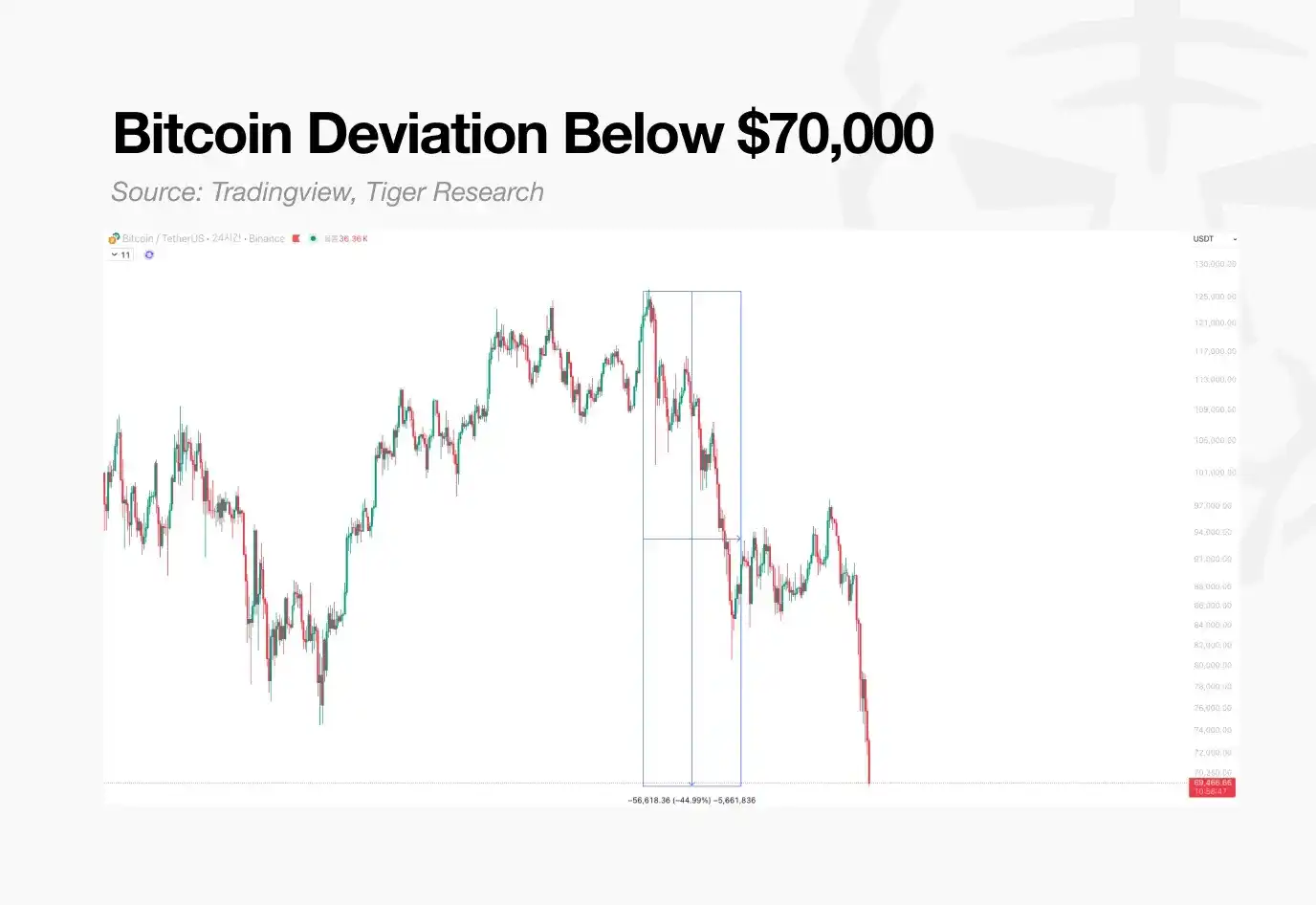
Bitcoin has fallen below $70,000. Among the top 100 cryptocurrencies by market cap, only 7 remain above their 200-day moving average. In contrast, 53 components of the Nasdaq 100 index are still trading above this threshold.

The market conditions are undeniable. Nevertheless, some crypto assets still manage to survive in the harshest environments.

Their resilience cannot be simply attributed to artificial market making or coincidental rebounds. A closer look at their development trajectory reveals a different explanation.

These projects no longer rely solely on vague visions or technical complexity. Instead, they share a common feature: solving core market problems with solutions rooted in practical reality. Their approach typically aligns with three directions:

  1. Do they solve a problem the market is currently facing?
  2. Are they ready for practical application in the near term?
  3. Are they building infrastructure that the industry will rely on long-term?

Ultimately, the ability to solve real problems in practice remains the most powerful fundamental.

2. Three Directions Chosen by the Market

Projects that can answer the above questions have successfully survived. Their approach is: 1) clearly identify a market problem; 2) propose a practical solution that matches a specific timing.

2.1. Hyperliquid: Solving Immediate Trading Friction

Centralized exchanges have traditionally been seen as responsible intermediaries. However, in practice, when problems arise, they often fail to align with investor interests. Decentralized exchanges emerged as an alternative, but poor user experience and performance have caused many investors to steer clear.
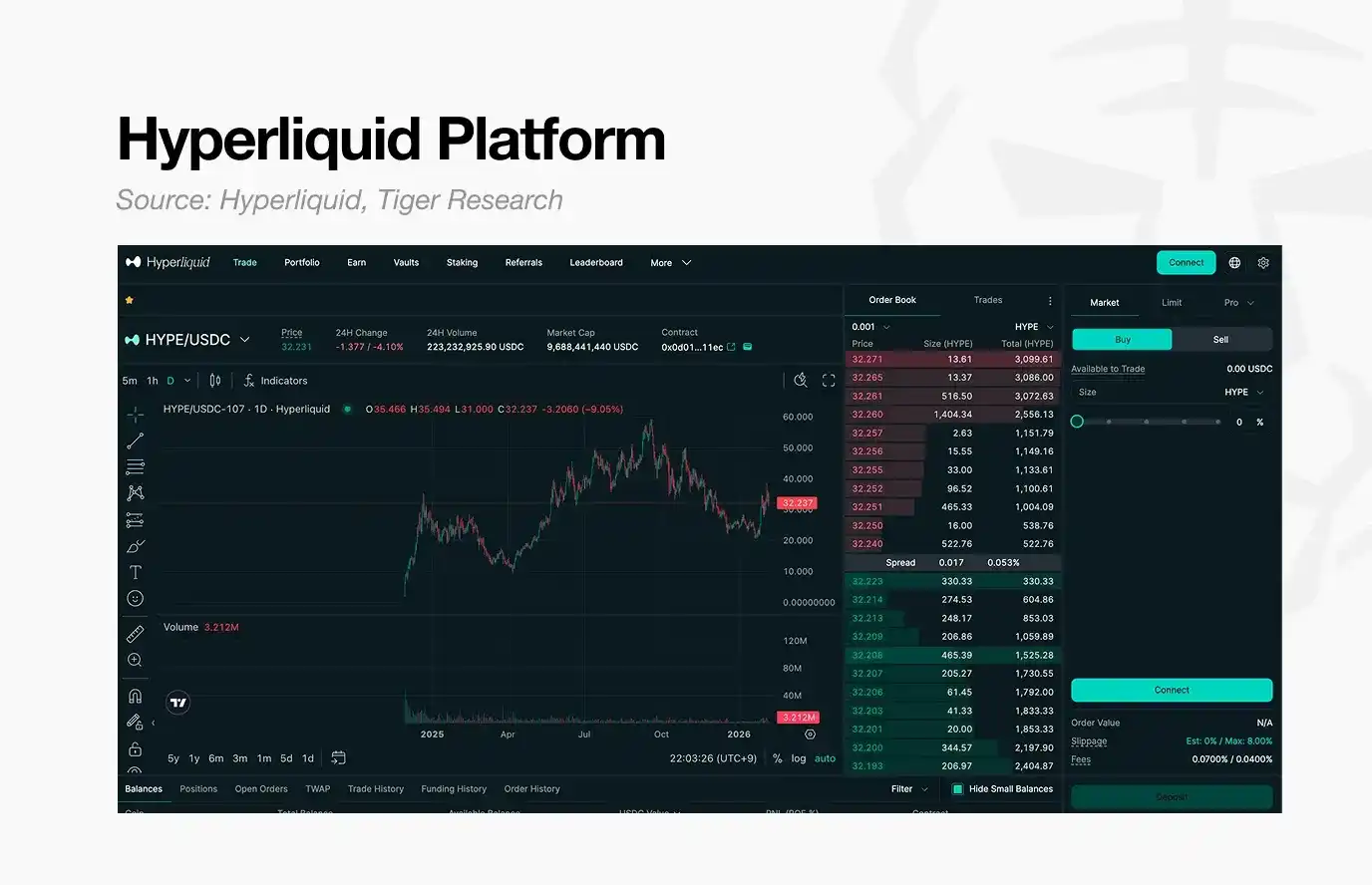
In this context, Hyperliquid introduced the concept of a perpetual contracts decentralized exchange (perp DEX). Through its HLP mechanism, it brings the features investors value in centralized exchanges—such as high leverage, fast execution, and stable liquidity—into an on-chain environment.

Early usage was partly driven by demand for the $HYPE token airdrop. However, continued engagement post-airdrop reflects user satisfaction with the platform's performance.

Ultimately, Hyperliquid's resilience stems from solving a persistent, real-world problem: dissatisfaction with centralized exchanges.

2.2. Canton Network: Preparing for the Era of Institutional Finance

Canton proposes a solution for the near future. As interest in real-world assets (RWA) continues to rise, institutions are beginning to see blockchain as financial infrastructure, not a public network. In this context, what institutions need is not complete data transparency, but a selective privacy model that supports regulatory compliance and confidentiality.

The Canton Network was born. Through DAML, Canton can provide configurable data disclosure for each participant.

This allows institutions to maintain transaction confidentiality while sharing information only to the necessary extent. Instead of imposing a provider-driven design, Canton builds infrastructure that aligns with institutional needs.
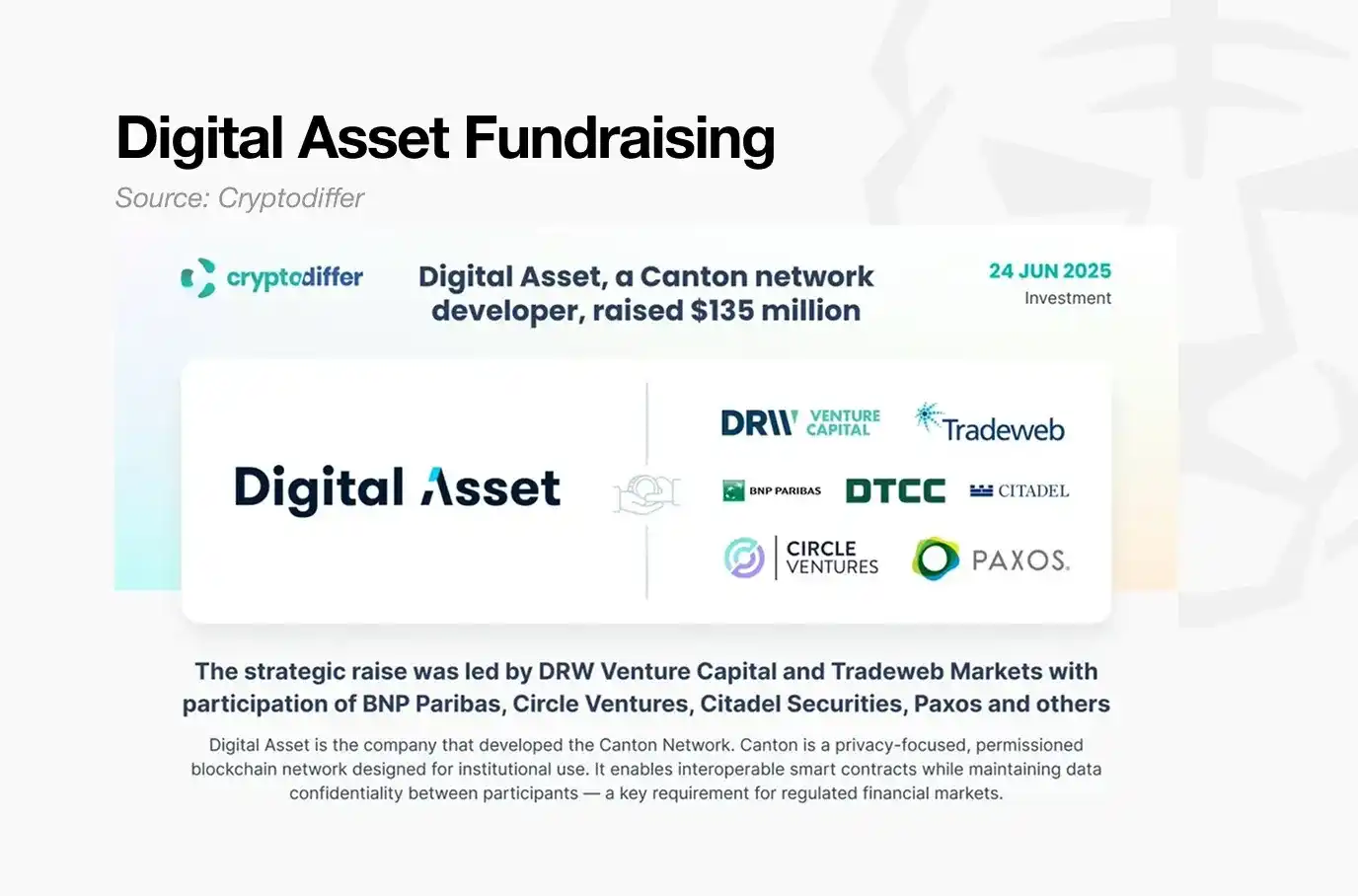
Another key factor is that Canton, from the outset, has focused on scaling its ecosystem with real-world deployments, supported by early partnerships with financial institutions.

Most notably, its partnership with DTCC establishes a pathway for assets managed by the traditional financial system to extend into a Canton-based environment. DTCC handles approximately $3.7 quadrillion in transactions annually, highlighting the practical feasibility of the Canton Network's approach.

Ultimately, the Canton Network provides a structural solution designed to meet three institutional requirements simultaneously: privacy protection, regulatory compliance, and integration with the existing financial system.

2.3. Kite AI: Building the AI Economy That Has Not Yet Arrived

Unlike the previous two examples, Kite AI currently has limited practical application. However, from the future perspective of AI agents operating as economic actors, its structural logic remains compelling.

There is broad consensus in both Web2 and Web3 about an agent-driven future. Few question scenarios where AI agents handle tasks like booking hotels or buying groceries on behalf of users.

However, such a future requires infrastructure that allows AI agents to independently initiate and execute payments. Existing transaction systems are designed for transfers between people, and for efficiency among human participants.

Therefore, for AI agents to operate as autonomous economic entities, new mechanisms are needed, including identity verification and automated payment frameworks.
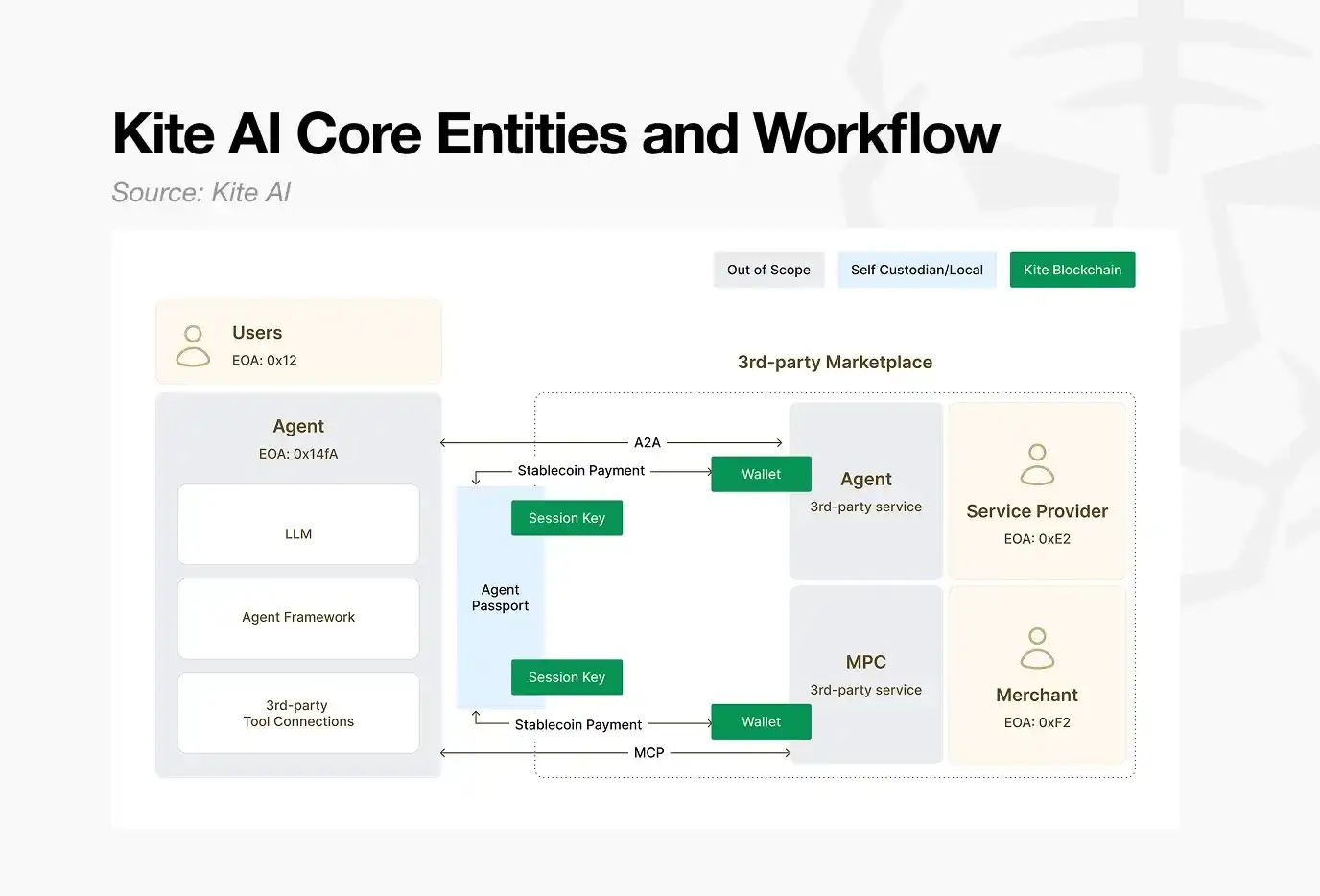
Kite AI is building payment infrastructure for this environment. Its core components include an "Agent Passport" for identity verification and the x402 protocol functionality for enabling automated payments.

The vision proposed by Kite AI cannot be deployed at scale currently, simply because the future it targets has not yet materialized.

Nonetheless, the project's realism stems from a broader premise: when this widely anticipated future arrives, the underlying technology it is developing will be necessary. This alignment with a widely accepted development trajectory gives the project structural credibility, despite its current limited use.

3. Three Key Questions for Assessing Practical Feasibility

Although these three projects have different timelines, they share a common characteristic: real-world feasibility.

Evaluations of the same project often diverge. Some believe it solves a real problem, while others see it as overhyped. To bridge this interpretation gap, at least three core questions must be asked:
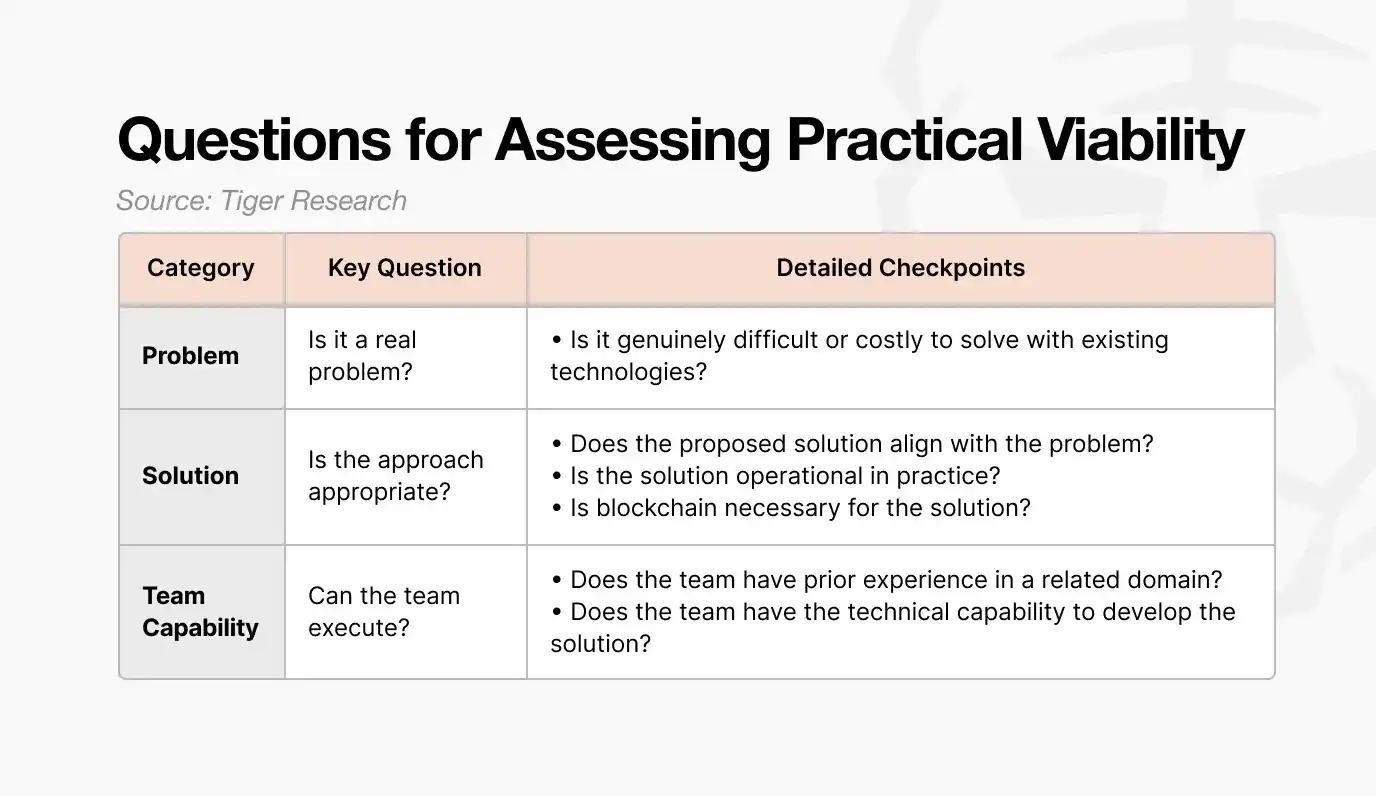
Source: Tiger Research

  1. What problem does it solve? Is the problem the project targets real and is there market demand for it?
  2. How does it solve it? Is the proposed solution structurally sound and executable?
  3. Who is executing it? Does the team have the capability and resources to turn the vision into reality?

Since most projects promote optimistic future narratives, answering these questions correctly requires time and effort. Filtering out misleading or incomplete information is not easy. Projects that cannot confidently answer these three questions may experience short-term price increases, but when the next downturn comes, they will likely disappear.

The current state of the cryptocurrency market is clearly unfavorable. But that doesn't mean it's all over. New experiments will continue, and the task is to assess what these efforts truly represent.

What matters most now is realism.

Preguntas relacionadas

QAccording to the Tiger Research article, what is the common characteristic of projects that survive in a prolonged crypto downturn?

AThe common characteristic is that they provide practical and realistic solutions to real, concrete problems, rather than relying on abstract narratives.

QWhat are the key factors to analyze when evaluating a project's realism, as outlined in the article?

AThe analysis should focus on three factors: the problem the project aims to solve, the structure of its proposed solution, and the team's ability to execute in practice.

QWhat specific market problem does Hyperliquid address, and how does it solve it?

AHyperliquid addresses the friction and lack of alignment with investor interests on centralized exchanges. It solves this by introducing a perpetual contracts decentralized exchange (perp DEX) that brings features like high leverage, fast execution, and stable liquidity on-chain through its HLP mechanism.

QHow does the Canton Network cater to the needs of institutional finance, as described in the report?

ACanton Network caters to institutional needs by providing a selective privacy model that supports regulatory compliance and confidentiality. It uses DAML language to allow configurable data disclosure for each participant, enabling institutions to share information only as necessary while maintaining transaction privacy and integrating with existing financial systems.

QWhat future infrastructure is Kite AI building, and why is it considered realistic even with limited current application?

AKite AI is building payment infrastructure for a future where AI agents act as autonomous economic entities. This includes an 'Agent Passport' for identity verification and the x402 protocol for automated payments. It is considered realistic because its vision aligns with the widely anticipated trajectory of AI development, making its underlying technology a necessary component for that future.

Lecturas Relacionadas

From Survival to Accelerated Growth: The Journey of Zcash's Three-Year Rise as Told by the Founder of ZODL

**From Survival to Accelerated Growth: Zcash Founder Details the 3-Year Rise** Three years ago, Zcash (ZEC) was a struggling pioneer in privacy technology, with a price near $30, low shielded supply (11%), and a community mired in governance disputes. Today, ZEC trades around $600, with over 31% of its supply (~$3B) in user-controlled shielded pools. This transformation resulted from breaking key constraints. First, **governance shackles were removed**. The old model guaranteed funding to two entities (ECC and ZF) regardless of performance, creating a monopoly. In 2024, ECC rejected further direct funding, forcing a change. The NU6 upgrade ended direct funding, allocating 8% to community grants and 12% to a protocol-controlled treasury for retroactive rewards, expiring in 2028 unless renewed by overwhelming consensus. The entities also relinquished their trademark-based veto power, freeing community governance. Second, the **product focus shifted** from pure cryptography to user growth. Previously, engineering excelled at privacy tech but failed to attract users. In early 2024, the team (later ZODL) pivoted to building products users wanted, like the Zodl wallet (default privacy, hardware support, cross-asset swaps). This drove shielded supply to grow over 400% in ZEC terms, with 86.5% of recent transactions being shielded, representing real user adoption. Third, the **narrative evolved** from the limiting "privacy coin" label to "unstoppable private money." This clarified Zcash's value proposition: a Bitcoin-like monetary policy with verifiable private payments via advanced cryptography. This structural narrative—protocol (Zcash), asset (ZEC), gateway (Zodl)—enabled broader exchange listings, institutional interest, and ETF filings. Finally, **organizational constraints were broken**. In early 2026, the ECC team left its non-profit structure after disputes over control, forming Zcash Open Development Lab (ZODL). ZODL raised $25M from top VCs (Paradigm, a16z, etc.), gaining the capital and agility of a startup to scale consumer products. Current metrics show strong momentum: social discussion volume for ZEC surged 15,245% in a year, with 81% positive sentiment. The focus is now on enhancing user experience (Zodl wallet), scalability (Tachyon project targeting Visa-level throughput with 25-second blocks), and post-quantum security (quantum-recoverable wallets coming soon). Zcash is positioned to become faster, more usable, scalable, and quantum-resistant.

marsbitHace 4 min(s)

From Survival to Accelerated Growth: The Journey of Zcash's Three-Year Rise as Told by the Founder of ZODL

marsbitHace 4 min(s)

Five Counterparty Risk Architectures: A Settlement-Layer Methodology for Classifying TradFi Models in Crypto Exchanges

**Summary:** This companion piece reframes the five TradFi-on-crypto exchange architectures, previously classified by "architectural fingerprint," through the lens of counterparty risk. The core question is: whose balance sheet bears the loss first in a stress scenario, and has it historically done so? Each of the five models corresponds to a distinct risk holder with its own documented failure modes. * **Model 1 (Stablecoin-Settled CEX Perpetuals):** Risk is held by the stablecoin issuer (e.g., reserve composition, bank connectivity) and the CEX's own book. History includes Tether's banking disconnections (2017) and reserve misrepresentations (CFTC 2021 Order). * **Model 2 (CFD Brokers):** Risk resides on the broker's balance sheet (B-book model). Regulatory differences (e.g., ESMA's mandatory negative balance protection vs. Mauritius FSC's lack thereof) define loss allocation rules, as seen in the 2015 SNB event (Alpari UK insolvency). * **Model 3 (Off-Chain Custody & Transfer Agent Chain):** Risk lies with the off-chain custodian/platform. User asset recovery depends on Terms of Use and corporate structure, exemplified by the Celsius bankruptcy ruling (2023) where Earn Account assets were deemed property of the estate. * **Model 4 (DEX Perpetual Protocols):** No single balance sheet bears risk. Loss absorption relies on a protocol's insurance fund and Auto-Deleveraging (ADL) mechanism, as demonstrated in the GMX V1 (2022) and dYdX v3 YFI (2023) incidents. * **Model 5 (Regulated CCP - DCM-DCO-FCM):** The most institutionalized model concentrates risk in the Central Counterparty (CCP). However, history shows CCPs can employ non-standard tools under extreme stress, such as mass trade cancellation (LME Nickel, 2022) or enabling negative price settlements (CME WTI, 2020). The report argues that regulatory choices and counterparty risk structures are co-extensive, not in an upstream-downstream relationship. It concludes with five separate observation checklists (not predictions) for monitoring the structural vulnerabilities of each risk model.

marsbitHace 21 min(s)

Five Counterparty Risk Architectures: A Settlement-Layer Methodology for Classifying TradFi Models in Crypto Exchanges

marsbitHace 21 min(s)

Trading

Spot
Futuros
活动图片