Thunderbolt Chen Lei Case: Dark Deals, Mistresses, and Cryptocurrency Black Money Under the Blockchain Frenzy

marsbitPublicado a 2026-01-15Actualizado a 2026-01-15

Resumen

Lei Chen, former CEO of Xunlei and its subsidiary Wangxin Technology, is facing a 200 million RMB civil lawsuit filed by the company in January 2026 for alleged damage to corporate interests. The case, accepted by a Shenzhen court, revives earlier accusations from 2020 that Chen embezzled company funds through fabricated transactions and false contracts, diverting tens of millions of yuan into illegal cryptocurrency speculation. Chen, a tech elite with a background at Google, Microsoft, and Tencent, led Xunlei's pivot to blockchain in 2017, launching the popular "Wanke Cloud" device and its associated "Wanke Coin" (later renamed "LinkToken"). The initiative initially boosted Xunlei’s stock, but internal governance issues emerged. An audit revealed Chen allegedly funneled money through a controlled supplier, Xingronghe, and used company resources for crypto trading—violating China’s crypto ban. The case also involves Chen’s close relationship with Dong Xia, a senior VP he appointed, with whom he had a child—contradicting his prior denials. Both left China in April 2020, hindering a criminal investigation that was later dropped. The civil case now seeks accountability, highlighting early crypto industry risks and corporate governance failures in Chinese tech.

Original Author: Ma He, Foresight News

In January 2026, Thunderbolt Company and its subsidiary Wangxin Technology filed a civil lawsuit against Chen Lei and his core team on the grounds of "dispute over liability for damaging company interests," seeking compensation of up to 200 million yuan. The case has been accepted and filed by the relevant court in Shenzhen.

This lawsuit stems from a series of allegations in 2020, including Chen Lei's suspected embezzlement of company assets through fabricated transactions and false contracts, as well as the misappropriation of tens of millions of funds for illegal cryptocurrency trading. To evade investigation, Chen Lei left the country in early April 2020 and has since remained overseas for an extended period, leading to the criminal investigation being dropped due to difficulties in obtaining evidence.

This incident not only exposed the internal governance chaos at Thunderbolt but also reflected the wild growth and regulatory risks of early Chinese internet companies venturing into the cryptocurrency space.

Chen Lei began learning programming in high school, enrolled in the Computer Science Department of Tsinghua University for college, pursued further studies in the United States, gained experience at Google and Microsoft, and then returned to China to join Tencent. Chen Lei is a standard sample of a technical elite.

In 2014, he joined Thunderbolt as Chief Technology Officer (CTO) when the company was facing a decline in its download business. As a former Microsoft employee, Chen Lei excelled in distributed computing and cloud computing technologies, which aligned with Thunderbolt's core P2P download business. From 2015 to 2017, he served as Thunderbolt's co-CEO, and in July 2017, he officially became CEO and director.

At this time, the global blockchain boom was rising, Bitcoin prices were soaring, and Chinese companies were actively exploring this emerging field. Chen Lei led Thunderbolt's transformation toward blockchain, viewing it as the key to the company's revival.

Wankeyun: From Glory to Decline

Thunderbolt's landmark product in the cryptocurrency space was "Wankeyun." In October 2017, Thunderbolt launched the Wankeyun hardware, a smart shared storage device where users were rewarded with "Wankey Coins" for contributing idle bandwidth and storage resources.
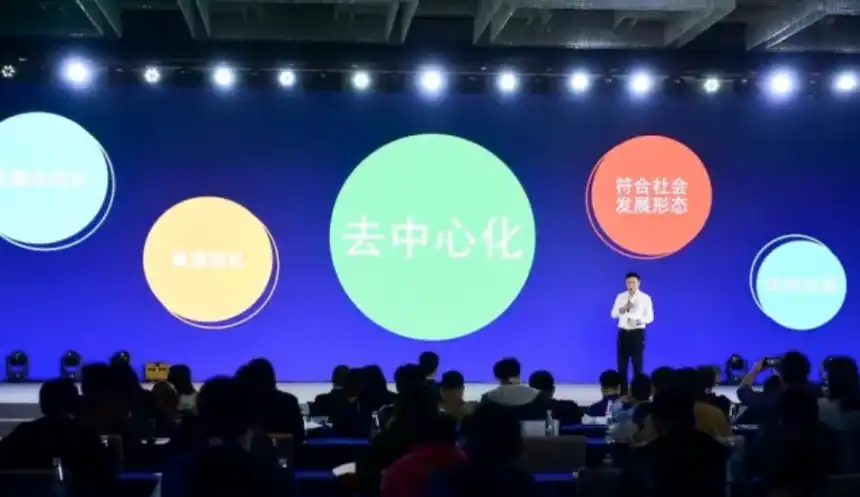
This model quickly ignited the market, with Wankeyun sales surging and the price of LinkToken soaring hundreds of times at one point. At its peak, the daily revenue from Wankeyun devices exceeded 100 million yuan, and the originally 399-yuan Wankeyun devices were resold for as much as 3,000 yuan even as second-hand items. The initial unofficial opening price of LinkToken was 0.1 yuan, and it once rose to nearly 10 yuan.

Chen Lei repeatedly emphasized in public that this was Thunderbolt's innovation in "shared economy + blockchain," aimed at building a distributed computing ecosystem. Thunderbolt also established a blockchain laboratory to promote projects like Onething Chain, attempting to position itself in the field of decentralized storage and computing.

However, in late 2017 and early 2018, due to the impact of the 94 ban and the announcement by the China Internet Finance Association, Wankey Coin was renamed "LinkToken." The price of LinkToken continued to fall, leading to protests from some investors.

Having a Child with a Lover, Misappropriating Tens of Millions for Cryptocurrency Trading

Thanks to the blockchain布局, Thunderbolt's stock price once soared from $4 to $27.
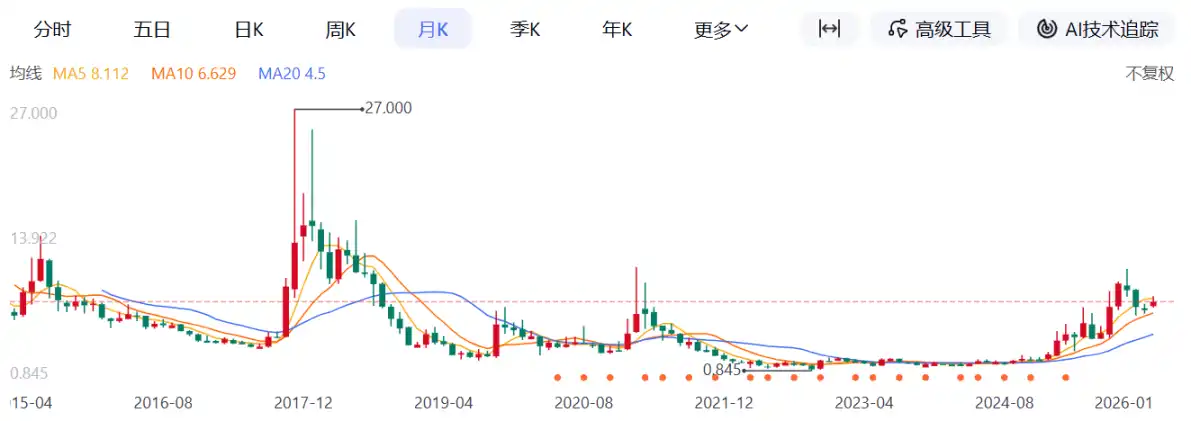
Chen Lei's cryptocurrency布局 seemed successful but埋下hidden dangers: company resources were倾斜toward blockchain, internal management was loose, and fund flows were unclear. Entering 2019, Thunderbolt's blockchain business faced bottlenecks. The global crypto market corrected, Chinese regulation tightened, and Wankeyun sales declined. Chen Lei attempted to expand edge computing through subsidiary Wangxin Technology, but internal conflicts gradually emerged.

According to informed sources, Chen Lei had a close relationship with then Senior Vice President Dong Xia, who recruited many fellow townspeople and relatives from Heilongjiang into key positions, forming a "small circle."

This provided the soil for subsequent corruption allegations. In April 2020, Thunderbolt's board suddenly dismissed Chen Lei, citing suspected job-related embezzlement. The new management's audit found that Chen Lei transferred funds through the company "Xingronghe" (a Thunderbolt bandwidth supplier) that he actually controlled. Xingronghe was established in 2019 and had frequent transactions with Wangxin Technology. Chen Lei was suspected of fabricating transaction links and creating false contracts to embezzle approximately 200 million yuan from the company.

More notably, there were allegations of misappropriating funds for cryptocurrency trading. The audit showed that Chen Lei was suspected of misappropriating tens of millions of company funds for illegal cryptocurrency trading activities explicitly prohibited by the state.

Specific details include: through close associates like Dong Xia, placing personnel in departments such as finance and procurement to create false reimbursements and overpaid salaries, with the funds ultimately flowing into the cryptocurrency market. At the time, Bitcoin prices were rebounding from lows in early 2020, and Chen Lei may have used this for speculation. This behavior violated China's ban on virtual currency transactions and涉嫌job-related embezzlement.

Additionally, Chen Lei and Dong Xia had a child together during their tenure, and their relationship was not purely professional, further fueling suspicions of利益输送.

Public information shows that Dong Xia once served as Senior Vice President of Thunderbolt Group and Marketing Vice President of Wangxin Technology, overseeing core departments such as business marketing and human resources, reporting directly to then CEO Chen Lei. The two had early interactions during the Tencent Cloud era (Dong Xia was once an ordinary public relations staff member at Tencent Cloud). After Chen Lei joined Thunderbolt in 2014, Dong Xia was gradually promoted and became an important confidant. As early as during Chen Lei's tenure, there were internal rumors that the two were lovers (or had an improper relationship).

The Thunderbolt board once questioned Chen Lei face-to-face, and he guaranteed with his "Christian reputation" that they were merely colleagues with no other relationship.

However, after Chen Lei was dismissed, the company's audit and investigation found that Chen Lei and Dong Xia had a child together during their tenure at Thunderbolt. This directly contradicted Chen Lei's previous guarantee, confirming that the two had an intimate personal relationship and formed a tight利益共同体.

To evade investigation, Chen Lei left the country with Dong Xia in early April 2020, transferring equity at low prices to relatives, making it difficult for Thunderbolt to pursue accountability.

In October 2020, Thunderbolt reported to the Shenzhen Public Security Bureau that Chen Lei and others were suspected of job-related embezzlement, and the police filed a case for investigation. The company issued a公告calling for Chen Lei to return to the country to cooperate, but to no avail. The criminal case was dropped at the end of 2022 due to Chen Lei's overseas stay and obstacles in obtaining evidence.

Five years later, in 2026, Thunderbolt restarted civil litigation, with the focus still on fund transfers and misappropriation for cryptocurrency trading. New evidence shows that Chen Lei dismissed dozens of core employees before his dismissal, causing brain drain and compensation losses.

If this case is won, it may provide an example for corporate governance in China. Chen Lei started with Thunderbolt's blockchain innovation and ended with涉嫌misappropriating funds for cryptocurrency trading, reflecting the opportunities and pitfalls of the early cryptocurrency space. Thunderbolt once revived with the blockchain concept but collapsed due to regulation and internal corruption. Chen Lei's case serves as a warning that technological innovation must comply with regulations, and personal ambition that crosses boundaries will inevitably lead to serious consequences.


Lecturas Relacionadas

After Three Consecutive Quarters of Decline, Can the Crypto Market Find a Window for Stabilization in Q3?

The cryptocurrency market has just concluded its worst-performing quarter since 2022, with total capitalization dropping 12.6% to $2.1 trillion. All core metrics indicate capital is leaving the sector, not just rotating within it. Bitcoin fell 14.2% and Ethereum dropped 25.4% in Q2, breaking their previous correlation with US tech stocks. A key driver is the reversal in US spot Bitcoin ETF flows, which saw a net outflow of approximately $4.67 billion in Q2, including a record monthly outflow near $4.5 billion in June. While recent data suggests long-term holders are accumulating again, sustained ETF outflows mean continued selling pressure. Market focus is now singularly on the Federal Reserve. The upcoming July FOMC meeting is seen as the most critical event for Q3. A dovish signal could support Bitcoin reclaiming a $68,000-$84,000 range, while a hawkish stance might establish a new trading band around $50,000-$56,000. Additionally, regulatory uncertainty persists, with the progress of the crucial *CLARITY Act* stalling in the Senate, reducing its perceived 2026 passage probability to 40-45%. Despite the broad downturn, a few sectors showed growth. Prediction markets saw nominal volume surge 48.7% year-over-year to $113.8 billion, and tokenized collectibles transaction volume rose 143% quarterly to $1.4 billion. The Real-World Asset (RWA) tokenization sector also continued steady growth, now representing ~$28.1 billion in on-chain value. The market's foundation for an extreme crash appears limited, with Bitcoin price hovering near its 200-week moving average. However, the trading paradigm has shifted from narrative-driven speculation to decisions based on price action, policy developments, and interest rate expectations, making a broad sentiment-driven rally unlikely in the near term.

marsbitHace 8 hora(s)

After Three Consecutive Quarters of Decline, Can the Crypto Market Find a Window for Stabilization in Q3?

marsbitHace 8 hora(s)

BIT Trading Moment: BTC Still Suppressed by Weekly 200 EMA, Rejection May Restart Decline; Storage and Semiconductors that Surged Last Night Begin Falling in Evening Trading

**Crypto & Stock Market Wrap: Bitcoin Tests Resistance, Stocks Retreat After AI Surge** Bitcoin consolidates around $66,000, facing key resistance near $68,000—an area seen as a major psychological and technical hurdle where previous rallies have failed. Analysts note the cryptocurrency is caught between its 200-week moving average (~$63,333) and 200-week EMA (~$68,328). A clear break above $68k is needed to signal a stronger bullish trend, while a rejection could lead to a retest of $63k support. Market sentiment remains cautious, with low futures open interest pointing to a low-liquidity rebound rather than a full bull market. Bitcoin spot ETFs saw another $203 million inflow. US stock futures pointed lower after a strong Tuesday session led by a massive rebound in semiconductors and memory stocks. The rally was fueled by renewed optimism about AI-driven hardware demand, with Micron, SanDisk, and SK Hynix surging. However, those gains reversed in pre-market trading. Super Micro Computer (SMCI) soared over 20% after hours on strong guidance and a record backlog. Other standouts included Rocket Lab and nuclear energy plays Oklo and X-Energy. Rising oil prices (Brent above $91) and climbing Treasury yields (10-year near 4.64%), however, are reigniting inflation concerns and acting as a headwind for equities. In Asia, markets were mixed. South Korea's KOSPI pared early gains to close slightly higher as semiconductor stocks like SK Hynix gave back initial surges. Japan's Nikkei edged lower as the yen hit a fresh 38-year low against the dollar, raising fears of potential market intervention. Key events to watch include the Samsung Galaxy launch, AMD's AI event, and a slew of major tech earnings from Alphabet, Tesla, and IBM after the close on Wednesday, followed by the ECB meeting and Intel's earnings on Thursday.

marsbitHace 8 hora(s)

BIT Trading Moment: BTC Still Suppressed by Weekly 200 EMA, Rejection May Restart Decline; Storage and Semiconductors that Surged Last Night Begin Falling in Evening Trading

marsbitHace 8 hora(s)

Former CFTC Chairman, Circle President Tarbert: Preaching Long-Termism While Cashing Out $30 Million Himself

Former CFTC Chairman and Circle President Heath Tarbert has consistently advocated for a long-term vision in public, urging patience from investors as Circle’s stock price has fallen significantly from its peak. However, it has been revealed that since Circle’s IPO, Tarbert has continuously sold his CRCL shares through pre-arranged trading plans, cashing out approximately $30 million, without making any public market purchases. This contrast between his public messaging and personal actions has drawn criticism. Tarbert joined Circle in July 2023 as Chief Legal Officer, leveraging his regulatory experience to help guide the company through its IPO and expansion. Despite promoting stablecoins as long-term infrastructure, he established a 10b5-1 trading plan just before Circle went public, leading to substantial stock sales over the following year. In March 2026, he initiated another plan to sell more shares. His career trajectory highlights a pattern of moving between high-level regulatory roles and influential positions in the financial sector. After resigning as CFTC Chairman in early 2021, he joined Citadel Securities as Chief Legal Officer just 27 days later, during a period of intense regulatory scrutiny for the firm. He later joined Circle, aiding its efforts to navigate regulatory challenges for its public listing. While Tarbert's expertise in policy and compliance is valuable to companies like Circle, his actions—advocating long-term confidence while personally divesting—raise questions about the alignment between his public statements and his private financial decisions, leaving investors who followed his advice to bear the market risks.

marsbitHace 9 hora(s)

Former CFTC Chairman, Circle President Tarbert: Preaching Long-Termism While Cashing Out $30 Million Himself

marsbitHace 9 hora(s)

Gate Research Institute: The 'Wall Street-ization' Wave of Crypto Financial Products – Competition or Integration?

The article titled "Gate Research Institute: Are Crypto Financial Products Sparking a 'Wall Street' Wave—Competition or Convergence?" explores the evolving relationship between the crypto ecosystem and traditional finance (TradFi). The piece begins by reflecting on Bitcoin's original 2009 vision of decentralization, disintermediation, and moving away from banks. It then contrasts this with the 2024 landscape, where key crypto assets like Bitcoin are increasingly held through Wall Street products like ETFs issued by giants like BlackRock. The article questions whether this signifies that TradFi is systematically taking over the rights to issue, price, custody, and distribute crypto financial assets. The core argument is that this is not a zero-sum takeover but rather a bidirectional convergence where each side addresses the other's weaknesses. Crypto offers 24/7 global markets, programmable settlement, and open access but lacks compliant channels, institutional-grade custody, deep fiat liquidity, and mainstream distribution. TradFi possesses these but is constrained by legacy systems, limited operating hours, and slow settlement. Two primary convergence paths are highlighted: * **Path A (CEX to TradFi):** Exemplified by Gate, which has progressed from offering tokenized stocks and CFDs to providing direct, real stock trading (US, Hong Kong, South Korea) within its platform, using USDT. * **Path B (TradFi to Crypto):** Exemplified by Robinhood, which has integrated crypto trading, acquired exchanges like Bitstamp, and is moving traditional assets like stocks onto the blockchain via tokenization and its own Layer 2. Both paths are ultimately competing to become the next-generation, unified financial account—a "super account" where users can seamlessly trade cryptocurrencies, stocks, ETFs, RWA (Real World Assets), and tokenized treasury products in one interface. The growth of RWA and tokenized treasuries (e.g., BlackRock's BUIDL) is presented as the asset-layer fusion, providing stable, yield-bearing assets on-chain and acting as a bridge between the two worlds. In conclusion, the "Wall Street-ization" of crypto is framed as a mutual transformation. Decentralized ideals persist in the protocol layer, while at the application layer, a more efficient, global, and accessible unified capital market is emerging from this convergence. The future competition lies not between crypto exchanges and stockbrokers, but between platforms vying to offer the most comprehensive asset coverage, liquidity, and user experience within a single account.

marsbitHace 9 hora(s)

Gate Research Institute: The 'Wall Street-ization' Wave of Crypto Financial Products – Competition or Integration?

marsbitHace 9 hora(s)

Trading

Spot
活动图片



