Thousands of people around the world are selling their identities to train AI, but at what cost?

marsbitPublicado a 2026-03-23Actualizado a 2026-03-23

Resumen

A global investigation reveals a growing gray market where thousands of people worldwide are selling their biometric data—voices, faces, call logs, and daily videos—to train AI models for small payments. Examples include individuals in South Africa, India, and the U.S. earning modest sums through apps like Kled AI, Silencio, and Neon Mobile. While this provides crucial income, especially in economically strained regions, it raises serious concerns about privacy, exploitation, and long-term risks. Contributors often grant broad, irreversible rights to their data, potentially exposing them to deepfakes, identity theft, and unauthorized commercial use. Experts warn that this practice is unstable, offers no career progression, and primarily benefits tech companies in wealthier nations, leaving workers vulnerable with little recourse. Cases like an actor discovering his AI likeness promoting medical products without consent highlight the ethical and personal consequences of this emerging data-for-cash economy.

Author: The Guardian

Compiled by: Deep Tide TechFlow

Deep Tide Introduction: This investigative report reveals a rapidly growing gray industry: thousands of people worldwide are earning money for AI training by selling their voices, faces, call records, and daily videos.

This is not a general discussion about privacy controversies, but an investigation with real people, real amounts of money, and real consequences—an actor who sold his face later saw "himself" promoting an unknown medical product on Instagram, with people in the comments evaluating his "looks."

When the data hunger of AI companies combines with global economic disparities, it is creating an unequal transaction.

Full text as follows:

One morning last year, Jacobus Louw, who lives in Cape Town, South Africa, went out for his usual walk, feeding seagulls along the way. But this time he recorded a few videos—filming his footsteps and view as he walked on the sidewalk. This video earned him $14, about 10 times the country's minimum wage and equivalent to half a week's food expenses for this 27-year-old.

This was a "city navigation" task Louw completed on Kled AI. Kled AI is an app that pays users to upload photos, videos, and other data for training AI models. In just a few weeks, Louw earned $50 by uploading photos and videos from his daily life.

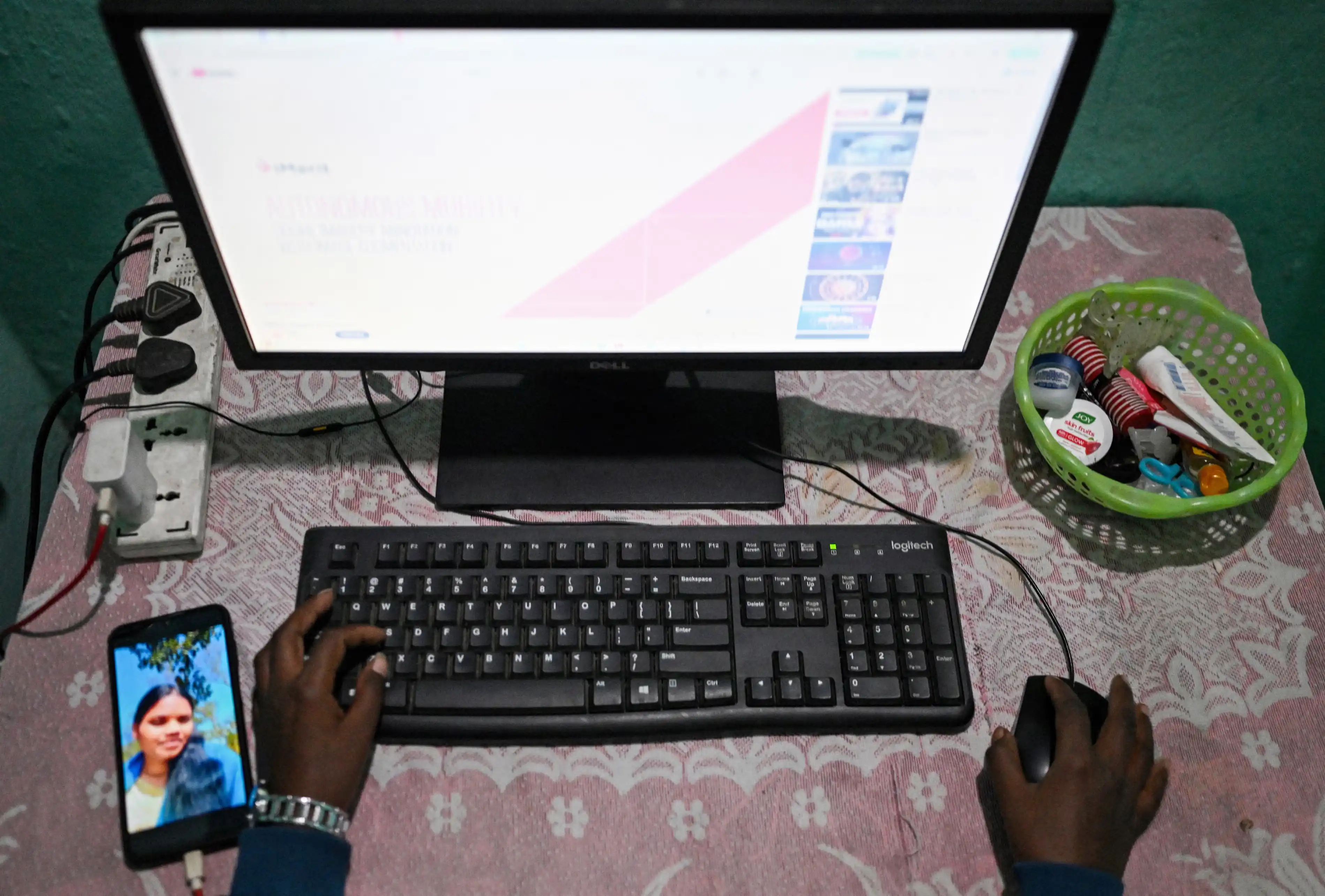
Thousands of miles away, in Ranchi, India, 22-year-old student Sahil Tigga regularly earns money through Silencio—an app that crowdsources audio data for AI training, accessing his phone's microphone to capture ambient noises like inside restaurants or busy intersections. He also uploads recordings of his own voice. Sahil makes special trips to unique locations, such as hotel lobbies not yet recorded on Silencio's map. He earns over $100 per month from this, enough to cover all his food expenses.

In Chicago, 18-year-old welding apprentice Ramelio Hill sold his private phone conversations with friends and family to Neon Mobile—a conversational AI training platform that pays $0.50 per minute—earning a few hundred dollars. For Hill, the calculation was simple: he believes tech companies already have vast amounts of his private data, so he might as well get a share of the profits.

These "AI training gigs"—uploading surroundings, personal photos, videos, and audio—are at the forefront of a new global data gold rush. As Silicon Valley's hunger for high-quality human data exceeds what can be scraped from the open internet, a booming data market industry has emerged to bridge this gap. From Cape Town to Chicago, thousands of people are micro-licensing their biometric identities and private data to the next generation of AI.

But this new gig economy comes at a cost. Behind the few dollars earned, these trainers are fueling an industry that may ultimately render their skills obsolete, while exposing themselves to future risks of deepfakes, identity theft, and digital exploitation—risks they are only beginning to understand.

Keeping the AI Gears Turning

AI language models like ChatGPT and Gemini require massive amounts of material to continuously improve, but they are facing a data shortage. The most commonly used training data sources—C4, RefinedWeb, and Dolma—which comprise a quarter of the highest-quality datasets on the web, are now restricting generative AI companies from using their data to train models. Researchers estimate that AI companies could run out of available fresh, high-quality text as early as 2026. Although some labs have begun training models with synthetic data generated by AI itself, this recursive process leads to models outputting error-filled "garbage," eventually causing a collapse.
This is where apps like Kled AI and Silencio come in. In these data markets, millions of people are feeding and training AI by selling their identity data. Beyond Kled AI, Silencio, and Neon Mobile, AI trainers have many choices: Luel AI, backed by the famous incubator Y-Combinator, acquires multilingual conversation material at about $0.15 per minute; ElevenLabs allows you to digitally clone your voice and make it available for others to use at a base rate of $0.02 per minute.

Bouke Klein Teeselink, an economics professor at King's College London, says AI training gigs are an emerging work category that will grow significantly.

AI companies know that paying people for data licensing helps avoid copyright disputes that might arise from relying entirely on web-scraped content, Teeselink says. AI researcher Veniamin Veselovsky adds that these companies also need high-quality data to model new, improved behaviors for their systems. "For now, human data is the gold standard for sampling outside the model's distribution," Veselovsky added.

The humans driving these machines—especially those in developing countries—often need the money and have few alternatives. For many AI training gig workers, taking on this work is a pragmatic response to economic disparity. In countries with high unemployment rates and depreciating local currencies, earning dollars is often more stable and lucrative than local jobs. Some struggle to find entry-level work and are forced into AI training out of necessity. Even in wealthier countries, rising living costs make selling oneself a logical financial choice.

Cape Town-based AI trainer Louw is well aware of the privacy cost. Although the income is unstable and not enough to cover all his monthly expenses, he is willing to accept these conditions to earn money. He has suffered from neurological diseases for years, making it difficult to find work, but the money he earned from AI data markets (including Kled AI) allowed him to save $500 to enroll in a spa training course to become a massage therapist.

"As a South African, receiving dollars is more valuable than people think," Louw said.

Mark Graham, a professor of internet geography at Oxford University and author of "Feeding the Machine," acknowledges that for individuals in developing countries, the money may have practical significance in the short term, but he warns, "Structurally, this work is unstable, has no upward mobility, and is essentially a dead end."

Graham added that AI data markets rely on "a race to the bottom in wages" and a "temporary demand for human data." Once that demand shifts, "workers will have no security, no transferable skills, and no safety net."

Graham said the only winners are "the platforms in the Global North, which capture all the lasting value."

Full Authorization

Chicago-based AI trainer Hill has mixed feelings about selling his private phone calls to Neon Mobile. About 11 hours of call content earned him $200, but he said the app often goes offline and delays payments. "Neon always seemed suspicious to me, but I kept using it just to earn some extra pocket money to pay bills," Hill said.

Now he is reconsidering whether the money was really that easy. Last September, Neon Mobile went offline just weeks after launching, after TechCrunch discovered a security vulnerability that allowed anyone to access users' phone numbers, call recordings, and transcripts. Hill said Neon Mobile never notified him of this situation, and now he is worried his voice could be misused online.

Jennifer King, a data privacy researcher at Stanford University's Institute for Human-Centered Artificial Intelligence, is concerned that AI data markets are not clear about how and where user data will be used. She added that without understanding their rights or being able to negotiate them, "consumers face the risk of their data being reused in ways they dislike, do not understand, or did not anticipate, with almost no recourse."

When AI trainers share data on Neon Mobile and Kled AI, they grant a full authorization (global, exclusive, irrevocable, transferable, and royalty-free) allowing the platform to sell, use, publicly display, and store their likeness, and even create derivative works based on it.

Kled AI founder Avi Patel said his company's data agreement limits use to AI training and research purposes. "The entire business model relies on user trust. If contributors think their data might be misused, the platform cannot function." He said the company vets buyers before selling datasets, avoiding cooperation with "suspicious-intent" organizations, such as the pornography industry, and "government agencies" they believe might use the data in ways that violate that trust.

Neon Mobile did not respond to requests for comment.

Enrico Bonadio, a law professor at City, University of London, pointed out that these agreement terms allow the platform and its clients to "do almost anything with that material, permanently, without additional payment, and contributors have no practical way to withdraw consent or renegotiate."

More worrying risks include: trainers' data being used to create deepfakes and identity impersonation. Although data markets claim to strip identifying information (such as names and locations) from data before sale, biometric patterns are inherently difficult to anonymize meaningfully, Bonadio added.

Seller's Remorse

Even if AI trainers could negotiate more detailed protections for how their data is used, they might still regret it. In 2024, New York-based actor Adam Coy sold his likeness for $1,000 to Captions—an AI video editing software now renamed Mirage. His agreement stipulated that his identity would not be used for any political purposes, not for promoting alcohol, tobacco, or pornography, and the license would last for one year.

Captions did not respond to requests for comment.

Soon after, Adam's friends began forwarding videos they found online featuring his face and voice, which had garnered millions of views. In one Instagram video, Adam's AI replica claimed to be a "vaginal doctor" promoting unverified medical supplements for pregnant and postpartum women.

"It's embarrassing to explain this to others," Coy said.

"The comments were weird because they were evaluating my appearance, but it wasn't even me," Coy added. "My thinking when I made the decision (to sell my likeness) was that most models would scrape data and portraits from the internet anyway, so I might as well get paid."

Coy said he has not taken any AI data gigs since. He said he would only consider doing it again if a company offered significant compensation.


Preguntas relacionadas

QWhat is the main concern raised in the article about people selling their personal data for AI training?

AThe article highlights that while individuals earn money by selling their biometric identities and private data (like voice, face, and conversations) to train AI models, they face risks such as deepfakes, identity theft, and digital exploitation, often without fully understanding the long-term consequences or having recourse if their data is misused.

QWhy are AI companies turning to data markets like Kled AI and Silencio for training data?

AAI companies are facing a shortage of high-quality training data from the open internet due to restrictions on datasets and potential copyright issues. Data markets provide a way to acquire fresh, human-generated data directly from individuals, which is considered the 'gold standard' for training AI models to improve their behavior and avoid using synthetic data that can lead to model degradation.

QHow do economic disparities play a role in the growth of AI training gigs?

AEconomic disparities drive the growth of AI training gigs because people in developing countries, or those facing high unemployment and currency devaluation, can earn valuable dollars from these platforms. For many, it is a pragmatic response to financial need, offering income that is more stable and lucrative than local jobs, even though the work is unstable and lacks long-term career prospects.

QWhat are some specific risks mentioned regarding the authorization agreements signed by AI trainers?

AThe authorization agreements often grant platforms global, exclusive, irrevocable, transferable, and royalty-free rights to use, sell, display, and create derivative works from the contributors' data. This means trainers have little control over how their data is used long-term, and risks include data being used for deepfakes, identity impersonation, or in ways they did not anticipate, with no practical way to withdraw consent or renegotiate.

QCan you provide an example from the article where an AI trainer regretted selling their data?

AActor Adam Coy from New York sold his likeness for $1000 to Captions (now Mirage) with specific restrictions, but later found his AI replica used in Instagram videos promoting unverified medical supplements, with millions of views. He felt embarrassed and noted that the comments were evaluating his appearance based on the AI clone, which was not actually him. He stated he would only consider such gigs again for significant payment due to the negative experience.

Lecturas Relacionadas

Understanding CPO (Co-Packaged Optics) in One Article: Why Nvidia Is Willing to Spend $3.2 Billion on a Fiber?

NVIDIA and Corning announced a multi-year strategic partnership on May 6, 2026, with NVIDIA committing up to $3.2 billion to support Corning's U.S. expansion. This investment will triple Corning's manufacturing plants and significantly boost its optical fiber and communications production capacity. The core driver behind this massive investment is the fundamental shift from copper to optical interconnect technology within AI data centers. As GPU clusters scale, copper wires face critical limitations: severe signal attenuation over distance, high energy consumption for signal integrity, and excessive heat generation. Optical fiber, transmitting light instead of electrical signals, solves these issues with minimal loss, near-light speed, and lower power needs. The article outlines a three-stage evolution of data center interconnect: 1. **Traditional Copper Interconnects:** The mainstream solution of the 2010s, now being phased out due to scaling bottlenecks. 2. **Pluggable Optical Modules:** The current mainstream, where modules convert electrical signals to light externally. This process still introduces energy loss and latency. 3. **CPO (Co-Packaged Optics):** The next-generation technology where the optical engine is integrated directly with the GPU chip package. This drastically reduces the electrical signal travel distance to mere millimeters, slashing power consumption and latency while boosting data density. NVIDIA CEO Jensen Huang has identified CPO as an essential core technology for AI infrastructure. NVIDIA's investment signifies a strategic shift from being a buyer to actively controlling its supply chain for critical components. With demand for specialized optical fiber far outstripping supply—evidenced by soaring prices—securing long-term manufacturing capacity has become a competitive necessity. While Corning's expansion may pressure some suppliers, a projected global fiber supply gap of 5-15% over the next few years creates a significant opportunity window, particularly for Chinese manufacturers competitive in optical preforms, chips, and modules. Ultimately, NVIDIA's move is not about chasing a trend but an engineering imperative. The transition to light-based interconnects like CPO is driven by the physical limits of copper, marking a definitive step in the ongoing AI computing revolution.

marsbitHace 10 min(s)

Understanding CPO (Co-Packaged Optics) in One Article: Why Nvidia Is Willing to Spend $3.2 Billion on a Fiber?

marsbitHace 10 min(s)

KOL's Perspective: Why Is SOL Set to Rise from This Point?

**Summary: Why SOL is Positioned for Growth at This Level** The article argues that SOL is poised for an upward move from its current price point, citing several key factors. Primarily, SOL has just broken out of a 4-month consolidation phase. This breakout signals a return of risk appetite to the broader crypto market, as SOL is seen as a key indicator of overall crypto health. The token's ownership has reportedly shifted from short-term traders and tourists to long-term accumulators, leading to low volume. Any meaningful increase in trading activity could thus trigger significant upward momentum. Fundamental strengths include strong institutional adoption, integration with DeFi and RWAs (Real-World Assets), and the potential benefits from the Clarity Act. Despite its high volatility—having dropped 70% from its all-time high but still up 12x from its bear market low—SOL is highlighted as one of the few tokens from the last cycle to reach new highs. It boasts a robust ecosystem of applications, users, and protocols. Future catalysts include the expected influx of AI developers following the Miami Accelerate conference, which focused on AI on Solana. Furthermore, Solana is positioned as the premier chain for memecoin activity, a trend expected to continue and drive network usage and fees. The article concludes that recent price action reflects a healthy transfer to long-term holders, setting the stage for growth.

marsbitHace 1 hora(s)

KOL's Perspective: Why Is SOL Set to Rise from This Point?

marsbitHace 1 hora(s)

Those Pre-Bitcoin PoW Protocols Have Recently Been Reimplemented

This article details a recent surge in replicating pre-Bitcoin Proof-of-Work (PoW) protocols, specifically focusing on Hal Finney's 2004 RPOW (Reusable Proofs of Work). Within five days in May 2026, multiple independent builders in the Bitcoin/cypherpunk community launched projects inspired by this early electronic cash proposal. The initiative began with Fred Krueger's `rpow2.com`, a centralized but auditable system that replaced RPOW's original IBM 4758 hardware with Ed25519 signatures. Initially a faithful replica, it later adopted Bitcoin-like features (21M supply cap, difficulty adjustment) and a controversial 5.24% founder allocation. This sparked rapid forks, including `rpow4.com` which incorporated full Bitcoin parameters, a prediction market (`rpowmarket.com`), and a DEX (`rpow2swap.com`). Concurrently, Mike In Space created a prototype of Wei Dai's 1998 b-money proposal (`b-money.replit.app`), pushing the historical exploration even further back. The article contrasts these centralized, server-dependent experiments with Bitcoin's core innovation of decentralized, trustless consensus. It also highlights a parallel development: the `HASH` project on Ethereum, which uses smart contract hooks to enable a purely fair-launch, browser-mineable PoW token with 0% allocations to team or VCs. The collective activity is framed as a meme-driven, educational exploration of cypherpunk history rather than a serious financial movement, with all projects heavily disclaiming any investment value.

marsbitHace 1 hora(s)

Those Pre-Bitcoin PoW Protocols Have Recently Been Reimplemented

marsbitHace 1 hora(s)

South Korean Exchanges 'Battle' Regulators, Challenging the Boundaries of Enforcement and Legislation

South Korea's cryptocurrency industry is engaged in a rare, direct confrontation with regulators. The Financial Intelligence Unit (FIU), the primary anti-money laundering (AML) watchdog, has recently imposed heavy penalties on major exchanges like Upbit and Bithumb for alleged violations involving unregistered overseas VASPs and AML procedures. However, exchanges are now actively challenging these actions in court and through industry associations. In a significant shift, the Seoul Administrative Court ruled in favor of Upbit's operator, Dunamu, overturning part of an FIU-ordered business suspension. The court found the FIU's penalty criteria and justification insufficiently clear. Similarly, the court suspended the enforcement of a six-month business suspension against Bithumb pending a final ruling, citing potential irreversible harm to the exchange. Beyond legal battles, the industry is contesting proposed legislative amendments. The Digital Asset eXchange Alliance (DAXA) strongly opposes a draft rule that would mandate Suspicious Transaction Reports (STRs) for all crypto transfers over 10 million KRW (~$6,800). DAXA argues this "poison pill" clause violates legal principles and would overwhelm the STR system, increasing reports from 63,000 to an estimated 5.45 million annually for major exchanges, thereby crippling effective AML monitoring. This conflict highlights a structural tension in South Korea's crypto governance: comprehensive digital asset laws are still developing, while regulators rely heavily on AML enforcement. The industry's move from passive compliance to active legal and legislative challenges signifies a new phase, pressing for clearer rules and more proportionate enforcement. While short-term disputes may intensify, this clash could ultimately lead to a more mature and sustainable regulatory framework for South Korea's vibrant crypto market.

marsbitHace 1 hora(s)

South Korean Exchanges 'Battle' Regulators, Challenging the Boundaries of Enforcement and Legislation

marsbitHace 1 hora(s)

Trading

Spot
Futuros

Artículos destacados

Cómo comprar PEOPLE

¡Bienvenido a HTX.com! Hemos hecho que comprar ConstitutionDAO (PEOPLE) sea simple y conveniente. Sigue nuestra guía paso a paso para iniciar tu viaje de criptos.Paso 1: crea tu cuenta HTXUtiliza tu correo electrónico o número de teléfono para registrarte y obtener una cuenta gratuita en HTX. Experimenta un proceso de registro sin complicaciones y desbloquea todas las funciones.Obtener mi cuentaPaso 2: ve a Comprar cripto y elige tu método de pagoTarjeta de crédito/débito: usa tu Visa o Mastercard para comprar ConstitutionDAO (PEOPLE) al instante.Saldo: utiliza fondos del saldo de tu cuenta HTX para tradear sin problemas.Terceros: hemos agregado métodos de pago populares como Google Pay y Apple Pay para mejorar la comodidad.P2P: tradear directamente con otros usuarios en HTX.Over-the-Counter (OTC): ofrecemos servicios personalizados y tipos de cambio competitivos para los traders.Paso 3: guarda tu ConstitutionDAO (PEOPLE)Después de comprar tu ConstitutionDAO (PEOPLE), guárdalo en tu cuenta HTX. Alternativamente, puedes enviarlo a otro lugar mediante transferencia blockchain o utilizarlo para tradear otras criptomonedas.Paso 4: tradear ConstitutionDAO (PEOPLE)Tradear fácilmente con ConstitutionDAO (PEOPLE) en HTX's mercado spot. Simplemente accede a tu cuenta, selecciona tu par de trading, ejecuta tus trades y monitorea en tiempo real. Ofrecemos una experiencia fácil de usar tanto para principiantes como para traders experimentados.

388 Vistas totalesPublicado en 2024.12.12Actualizado en 2025.03.21

Cómo comprar PEOPLE

Discusiones

Bienvenido a la comunidad de HTX. Aquí puedes mantenerte informado sobre los últimos desarrollos de la plataforma y acceder a análisis profesionales del mercado. A continuación se presentan las opiniones de los usuarios sobre el precio de PEOPLE (PEOPLE).

活动图片












