This blockchain creates a ‘green intersection’ between Web2 and a sustainable Web3

cointelegraphPublicado a 2025-12-09Actualizado a 2025-12-09

Resumen

Electroneum is an eco-friendly blockchain that addresses the high energy consumption and operational costs associated with traditional proof-of-work (PoW) systems like Bitcoin. Using a unique Proof of Responsibility (PoR) consensus mechanism with 32 trusted validators, it drastically reduces energy use. Fully compatible with the Ethereum Virtual Machine (EVM), Electroneum processes transactions in under 5 seconds at a cost as low as $0.0001 per transaction. It supports Web2-to-Web3 migration, as seen with platforms like AnyTask.com, which has over a million users. Partnerships with organizations like the One Ocean Foundation and Zypto demonstrate its real-world utility in green initiatives and financial inclusion. With nearly 1 million active addresses and over 300,000 daily transactions, Electroneum positions itself as a scalable, sustainable blockchain solution.

Sponsored Content

Eco-friendly project Electroneum provides a blockchain with ultra-low energy use and costs.

High electricity bills and a hefty carbon footprint have become defining challenges for many blockchains.

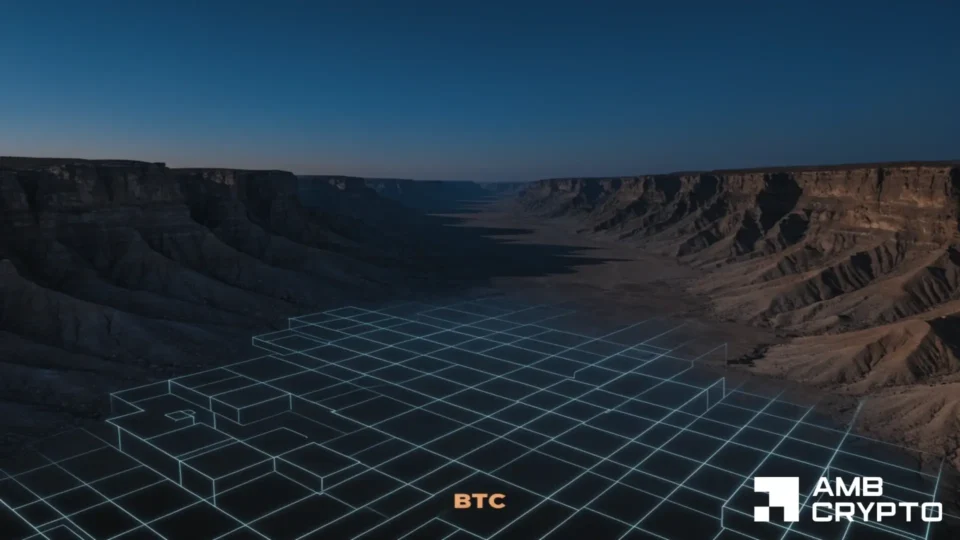
Bitcoin alone is estimated to consume between 150 TWh and 210 TWh of electricity annually. Its energy consumption is on par with that of many nations, such as South Africa, Thailand and the UAE, while doubling the consumption of Finland, Belgium and Austria. Moreover, Bitcoin’s electricity consumption increases by around 25% each year, stressing that its energy needs are an ever-growing concern.
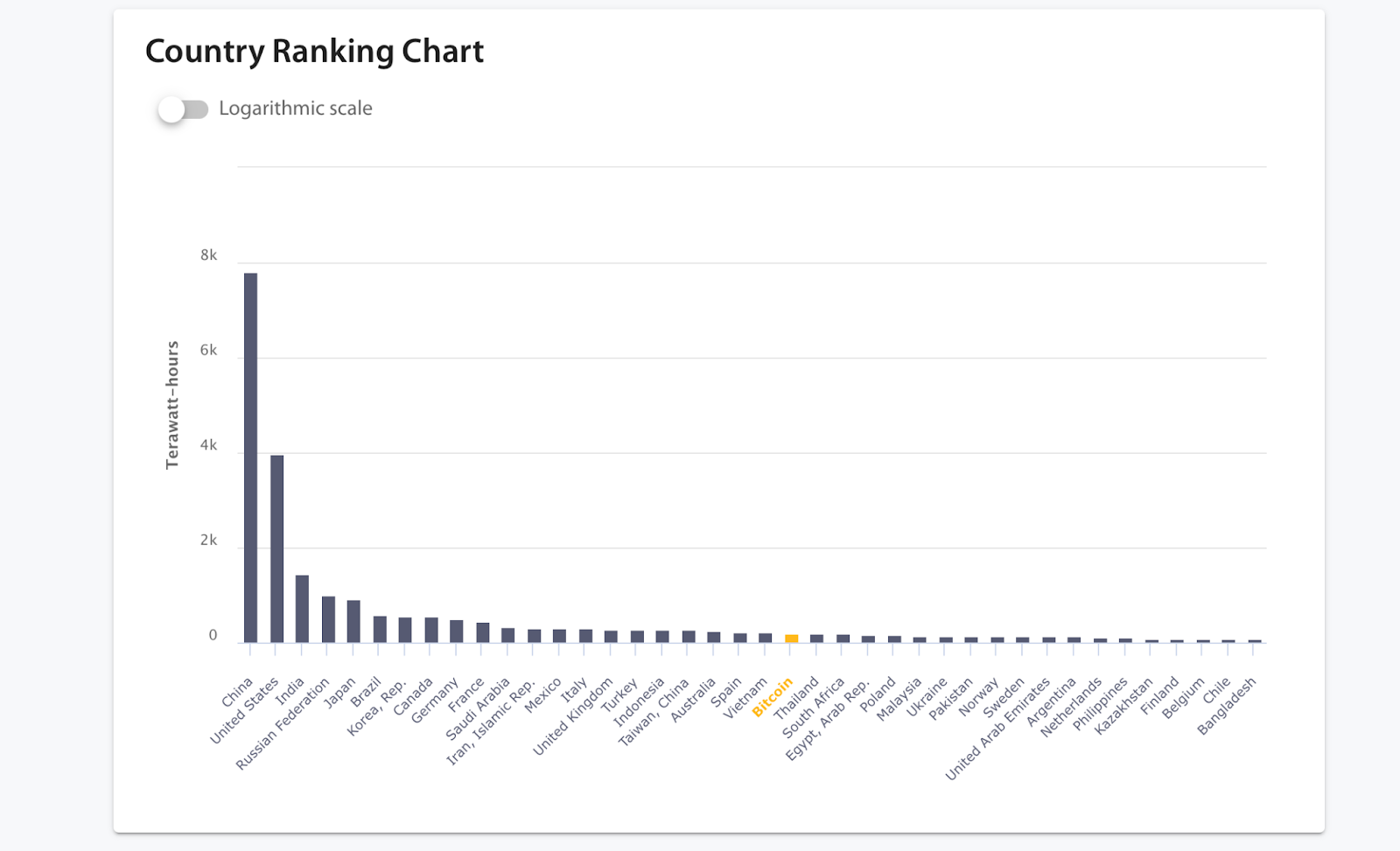
Bitcoin’s annual energy consumption compared to that of nations. Source: Cambridge Centre for Alternative Finance

The power-hungry design of proof-of-work (PoW) — Bitcoin’s consensus mechanism — also has serious financial side effects. High energy usage drives up operational costs and creates a barrier for smaller participants while also raising concerns among investors and corporate users striving to meet sustainability targets.

Proof-of-stake (PoS) chains like Ethereum have eased some of these concerns by replacing energy-intensive mining with staking, slashing power requirements and operational costs. Yet, scalability remains a major challenge that hinders global adoption of PoS networks. As transaction demand grows, PoS networks face congestion from time to time, leading to slower confirmations and higher fees.

Electroneum 2.0, a layer-1 blockchain with ultra-low energy consumption, provides a solution to ease these worries. It employs a unique consensus mechanism, called Proof of Responsibility (PoR), to cut energy consumption drastically. Designed to improve the shortcomings of traditional consensus systems, PoR introduces a set of trusted validators — currently standing at 32 — instead of miners and stakers to run the network.

Electroneum is also fully compatible with Ethereum Virtual Machine (EVM). Transactions finalize within 5 seconds, with a cost as low as $0.0001 worth of ETN per transaction. This results in a blockchain environment where developer accessibility meets sustainability, empowering Web2 companies and developers to migrate to Web3 without sacrificing performance for environmental responsibility.

A Web2 project adopting this blockchain solution is AnyTask.com. The project brings together freelancers and service seekers on a digital platform. With the integration with Electroneum, sellers receive payments in ETN on AnyTask.com. The platform has already crossed the 1 million user mark.

Green and Web3 — Win for the world

Electroneum’s partnership with One Ocean Foundation demonstrates the blockchain’s capability to contribute to green causes. Dedicated to marine conservation, the Foundation integrated Electroneum to bring verifiability to donations and tokenize green practices. The partnership was nominated for Areté Award, an excellence award for responsible tech innovation.

Beyond being a green solution, Electroneum appeals to projects with its high scalability as well. Zypto, an all-in-one crypto platform, recently joined forces with Electroneum. The collaboration will allow ETN holders to spend their crypto using a Visa or Mastercard payment card issued by Zypto. The move will also expand ETN’s utility and support its mission of financial inclusion.

Intersection between Web2 world to Web3 vision

The blockchain’s accelerated adoption is evident in statistics. Electroneum is en route to hit 1 million active onchain addresses, with daily transaction count already exceeding 300,000. Since its launch in 2024, nearly 2,000 smart contracts have been deployed on the network.

Electroneum also launched a joint NFT initiative with One Ocean Foundation, Blue Forest. This Electroneum-based NFT collection is dedicated to seagrass reforestation in the Mediterranean, with all proceeds going to the cause.

As Electroneum continues to grow its ecosystem and user base, its focus remains on maintaining a balance between innovation and responsibility. The combination of ultra low-cost transactions, energy efficiency and compatibility with existing Web3 infrastructure positions it as a viable choice for organizations seeking both performance and sustainability.

With ongoing collaborations that bring blockchain technology into practical, socially conscious use cases, Electroneum demonstrates how environmental awareness and digital progress can coexist. Its trajectory suggests a future where scalable and eco-conscious blockchain solutions become standard rather than an exception.

Lecturas Relacionadas

Google and Amazon Simultaneously Invest Heavily in a Competitor: The Most Absurd Business Logic of the AI Era Is Becoming Reality

In a span of four days, Amazon announced an additional $25 billion investment, and Google pledged up to $40 billion—both direct competitors pouring over $65 billion into the same AI startup, Anthropic. Rather than a typical venture capital move, this signals the latest escalation in the cloud wars. The core of the deal is not equity but compute pre-orders: Anthropic must spend the majority of these funds on AWS and Google Cloud services and chips, effectively locking in massive future compute consumption. This reflects a shift in cloud market dynamics—enterprises now choose cloud providers based on which hosts the best AI models, not just price or stability. With OpenAI deeply tied to Microsoft, Anthropic’s Claude has become the only viable strategic asset for Google and Amazon to remain competitive. Anthropic’s annualized revenue has surged to $30 billion, and it is expanding into verticals like biotech, positioning itself as a cross-industry AI infrastructure layer. However, this funding comes with constraints: Anthropic’s independence is challenged as it balances two rival investors, its safety-first narrative faces pressure from regulatory scrutiny, and its path to IPO introduces new financial pressures. Globally, this accelerates a "tri-polar" closed-loop structure in AI infrastructure, with Microsoft-OpenAI, Google-Anthropic, and Amazon-Anthropic forming exclusive model-cloud alliances. In contrast, China’s landscape differs—investments like Alibaba and Tencent backing open-source model firm DeepSeek reflect a more decoupled approach, though closed-source models from major cloud providers still dominate. The $65 billion bet is ultimately about securing a seat at the table in an AI-defined future—where missing the model layer means losing the cloud war.

marsbitHace 1 hora(s)

Google and Amazon Simultaneously Invest Heavily in a Competitor: The Most Absurd Business Logic of the AI Era Is Becoming Reality

marsbitHace 1 hora(s)

Computing Power Constrained, Why Did DeepSeek-V4 Open Source?

DeepSeek-V4 has been released as a preview open-source model, featuring 1 million tokens of context length as a baseline capability—previously a premium feature locked behind enterprise paywalls by major overseas AI firms. The official announcement, however, openly acknowledges computational constraints, particularly limited service throughput for the high-end DeepSeek-V4-Pro version due to restricted high-end computing power. Rather than competing on pure scale, DeepSeek adopts a pragmatic approach that balances algorithmic innovation with hardware realities in China’s AI ecosystem. The V4-Pro model uses a highly sparse architecture with 1.6T total parameters but only activates 49B during inference. It performs strongly in agentic coding, knowledge-intensive tasks, and STEM reasoning, competing closely with top-tier closed models like Gemini Pro 3.1 and Claude Opus 4.6 in certain scenarios. A key strategic product is the Flash edition, with 284B total parameters but only 13B activated—making it cost-effective and accessible for mid- and low-tier hardware, including domestic AI chips from Huawei (Ascend), Cambricon, and Hygon. This design supports broader adoption across developers and SMEs while stimulating China's domestic semiconductor ecosystem. Despite facing talent outflow and intense competition in user traffic—with rivals like Doubao and Qianwen leading in monthly active users—DeepSeek has maintained technical momentum. The release also comes amid reports of a new funding round targeting a valuation exceeding $10 billion, potentially setting a new record in China’s LLM sector. Ultimately, DeepSeek-V4 represents a shift toward open yet realistic infrastructure development in the constrained compute landscape of Chinese AI, emphasizing engineering efficiency and domestic hardware compatibility over pure model scale.

marsbitHace 2 hora(s)

Computing Power Constrained, Why Did DeepSeek-V4 Open Source?

marsbitHace 2 hora(s)

Trading

Spot
Futuros

Artículos destacados

Qué es WL

I. Introducción al ProyectoWorldLand es una L2 o cadena lateral de Ethereum, diseñada como una solución de abajo hacia arriba para mejorar el ecosistema de Ethereum.II. Información del Token1) Información BásicaNombre del token: WL (WorldLand)III. Enlaces RelacionadosSitio web:https://worldland.foundation/Exploradores:https://bscscan.com/address/0x8aaB31fbc69C92fa53f600910Cf0f215531F8239Redes Sociales:https://x.com/WorldLand_space Nota: La introducción del proyecto proviene de los materiales publicados o proporcionados por el equipo oficial del proyecto, que es solo para referencia y no constituye asesoramiento de inversión. HTX no se hace responsable de ninguna pérdida directa o indirecta resultante.

137 Vistas totalesPublicado en 2026.03.28Actualizado en 2026.03.28

Qué es WL

Cómo comprar WL

¡Bienvenido a HTX.com! Hemos hecho que comprar WorldLand (WL) sea simple y conveniente. Sigue nuestra guía paso a paso para iniciar tu viaje de criptos.Paso 1: crea tu cuenta HTXUtiliza tu correo electrónico o número de teléfono para registrarte y obtener una cuenta gratuita en HTX. Experimenta un proceso de registro sin complicaciones y desbloquea todas las funciones.Obtener mi cuentaPaso 2: ve a Comprar cripto y elige tu método de pagoTarjeta de crédito/débito: usa tu Visa o Mastercard para comprar WorldLand (WL) al instante.Saldo: utiliza fondos del saldo de tu cuenta HTX para tradear sin problemas.Terceros: hemos agregado métodos de pago populares como Google Pay y Apple Pay para mejorar la comodidad.P2P: tradear directamente con otros usuarios en HTX.Over-the-Counter (OTC): ofrecemos servicios personalizados y tipos de cambio competitivos para los traders.Paso 3: guarda tu WorldLand (WL)Después de comprar tu WorldLand (WL), guárdalo en tu cuenta HTX. Alternativamente, puedes enviarlo a otro lugar mediante transferencia blockchain o utilizarlo para tradear otras criptomonedas.Paso 4: tradear WorldLand (WL)Tradear fácilmente con WorldLand (WL) en HTX's mercado spot. Simplemente accede a tu cuenta, selecciona tu par de trading, ejecuta tus trades y monitorea en tiempo real. Ofrecemos una experiencia fácil de usar tanto para principiantes como para traders experimentados.

224 Vistas totalesPublicado en 2026.03.28Actualizado en 2026.03.28

Cómo comprar WL

Cómo comprar BASED

¡Bienvenido a HTX.com! Hemos hecho que comprar Based (BASED) sea simple y conveniente. Sigue nuestra guía paso a paso para iniciar tu viaje de criptos.Paso 1: crea tu cuenta HTXUtiliza tu correo electrónico o número de teléfono para registrarte y obtener una cuenta gratuita en HTX. Experimenta un proceso de registro sin complicaciones y desbloquea todas las funciones.Obtener mi cuentaPaso 2: ve a Comprar cripto y elige tu método de pagoTarjeta de crédito/débito: usa tu Visa o Mastercard para comprar Based (BASED) al instante.Saldo: utiliza fondos del saldo de tu cuenta HTX para tradear sin problemas.Terceros: hemos agregado métodos de pago populares como Google Pay y Apple Pay para mejorar la comodidad.P2P: tradear directamente con otros usuarios en HTX.Over-the-Counter (OTC): ofrecemos servicios personalizados y tipos de cambio competitivos para los traders.Paso 3: guarda tu Based (BASED)Después de comprar tu Based (BASED), guárdalo en tu cuenta HTX. Alternativamente, puedes enviarlo a otro lugar mediante transferencia blockchain o utilizarlo para tradear otras criptomonedas.Paso 4: tradear Based (BASED)Tradear fácilmente con Based (BASED) en HTX's mercado spot. Simplemente accede a tu cuenta, selecciona tu par de trading, ejecuta tus trades y monitorea en tiempo real. Ofrecemos una experiencia fácil de usar tanto para principiantes como para traders experimentados.

201 Vistas totalesPublicado en 2026.03.30Actualizado en 2026.03.30

Cómo comprar BASED

Discusiones

Bienvenido a la comunidad de HTX. Aquí puedes mantenerte informado sobre los últimos desarrollos de la plataforma y acceder a análisis profesionales del mercado. A continuación se presentan las opiniones de los usuarios sobre el precio de A (A).

活动图片