The Unluckiest Person: Zero API Calls, Secretly Charged 1 Billion Yuan by Anthropic

marsbitPublicado a 2026-07-13Actualizado a 2026-07-13

Resumen

A South Korean developer, remy_notes, was shocked to receive two invoices from Anthropic totaling over $17.8 million within 24 hours, despite being on a free plan with zero API usage and no linked credit card. His bank blocked the attempted charges. This case highlights a broader issue of billing errors in the AI industry. Auditing firm Vaudit, reviewing millions in AI bills, found significant erroneous overcharges, often related to issues like clients being billed for newer, pricier models instead of older ones they used, or being charged for failed requests and retry loops. While Anthropic claims overcharging is not widespread, major providers have refunded a large portion of disputed amounts. The incident adds to growing distrust, following previous billing controversies like the "HERMES.md bug" and a class-action lawsuit over opaque usage calculations for Anthropic's subscription plans. The complexity of AI pricing models creates a "black box" for users, leading to a new competitive frontier: billing transparency. As users turn to audits and lawsuits, clear and fair pricing is becoming a crucial part of the product experience.

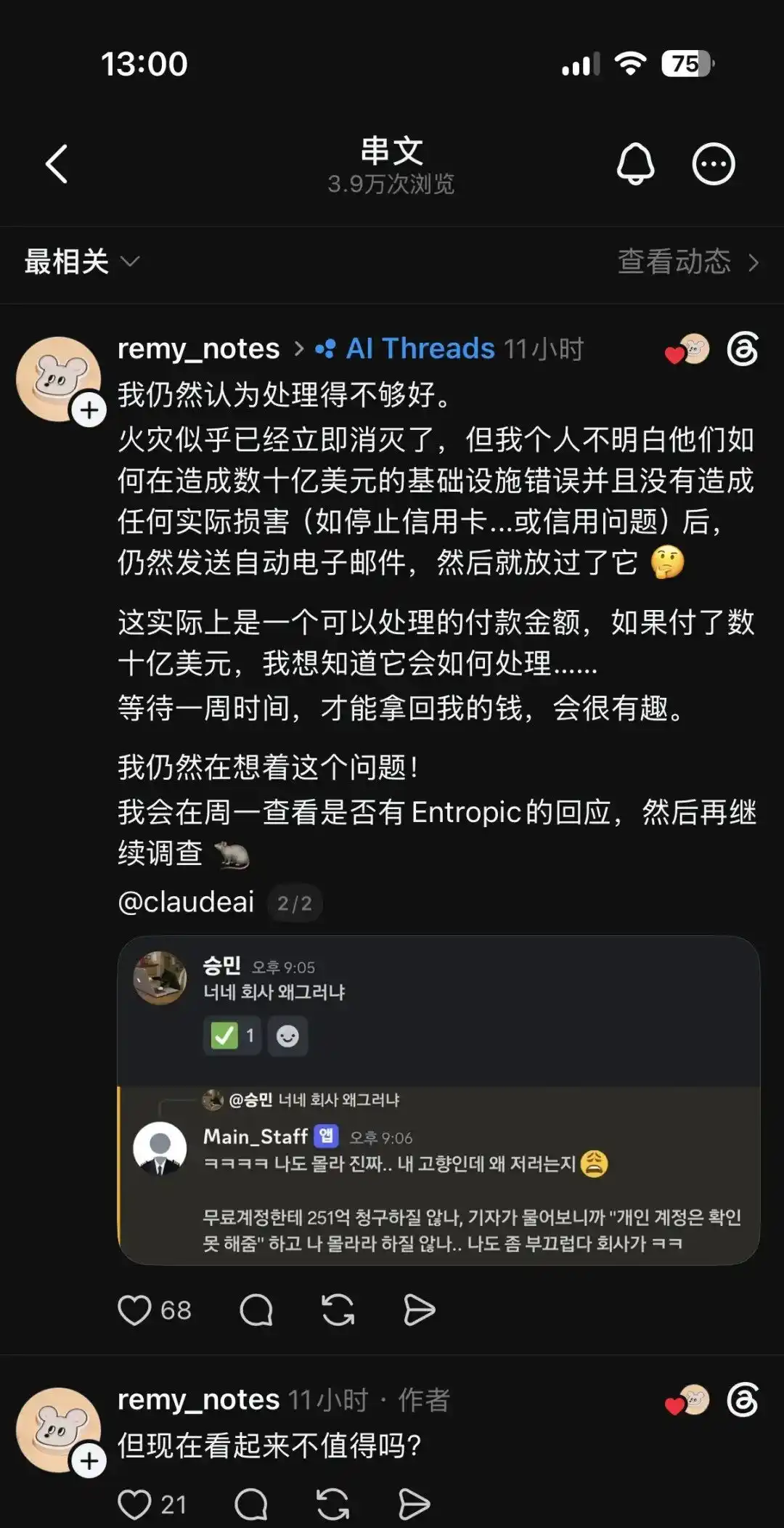
On July 8, the well-known Korean developer remy_notes posted two Anthropic invoice screenshots on Threads: the first for $1.669 million (approximately 11.3 million RMB), the second for $16.62 million (approximately 110 million RMB). The two invoices were issued less than 24 hours apart, with the amount increasing nearly tenfold.
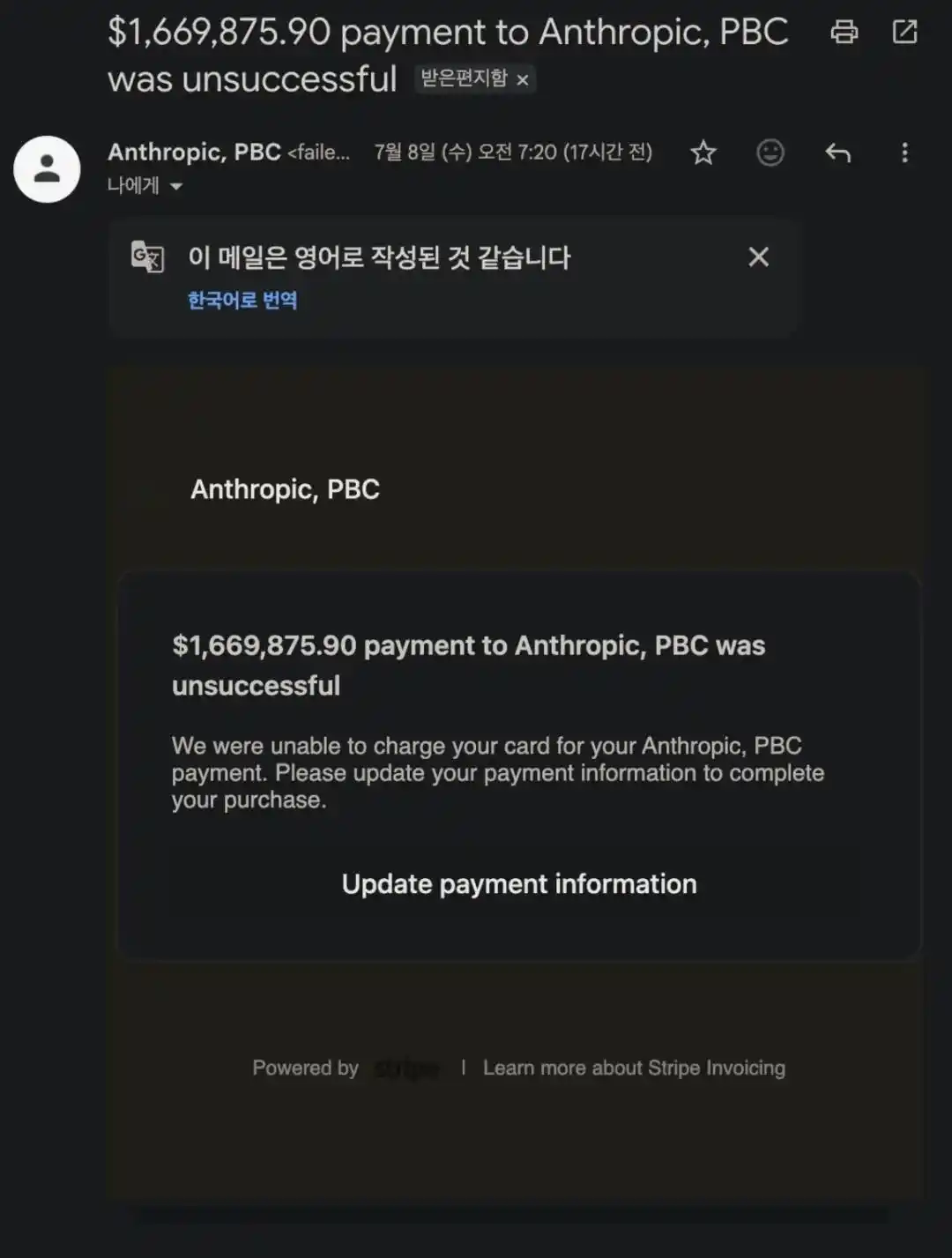
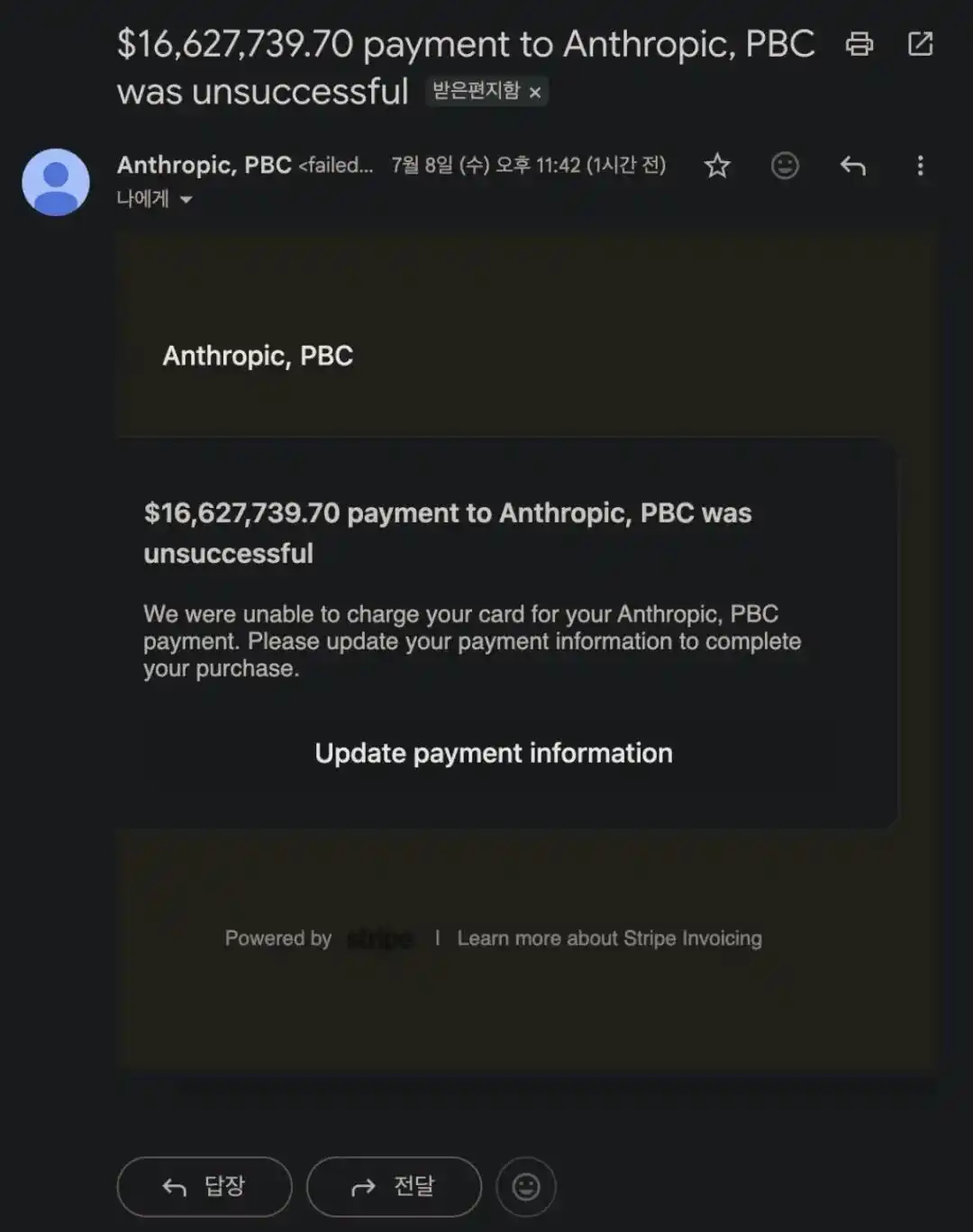
He initially thought it was a phishing email, but the sender address and payment links pointed to Anthropic's official Stripe domain.
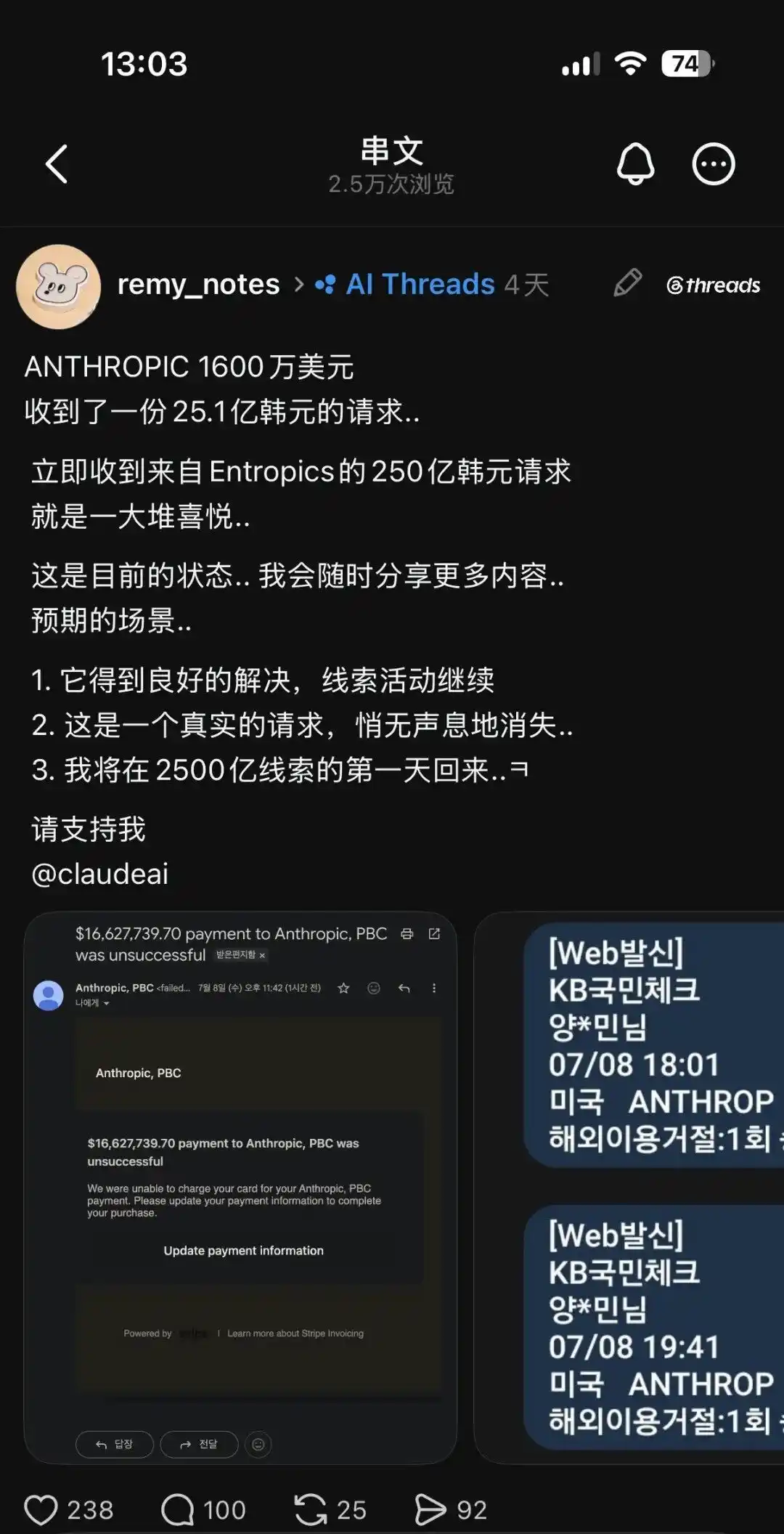
His KB National Bank debit card intercepted two overseas charge requests from the US merchant 'ANTHROP' on the same day—both were denied due to insufficient single-transaction limits.
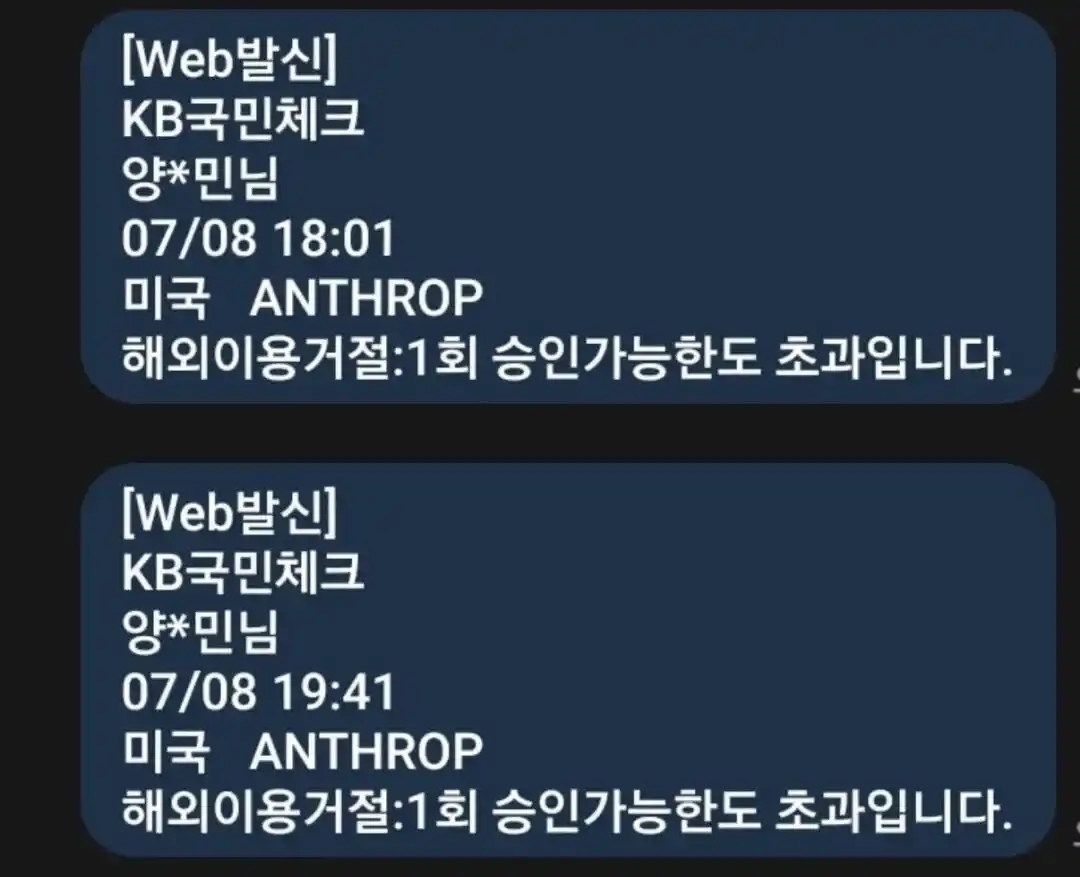
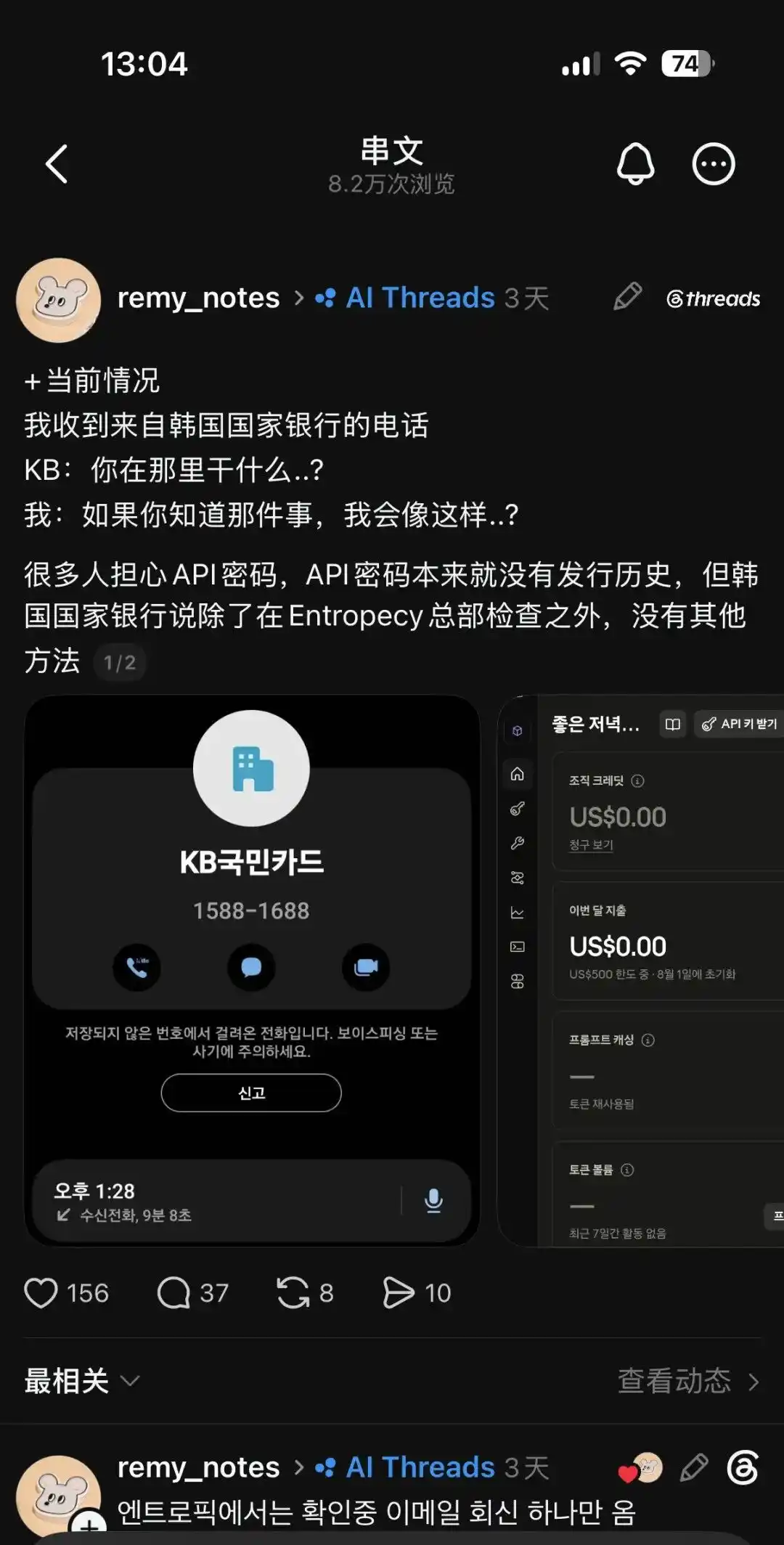
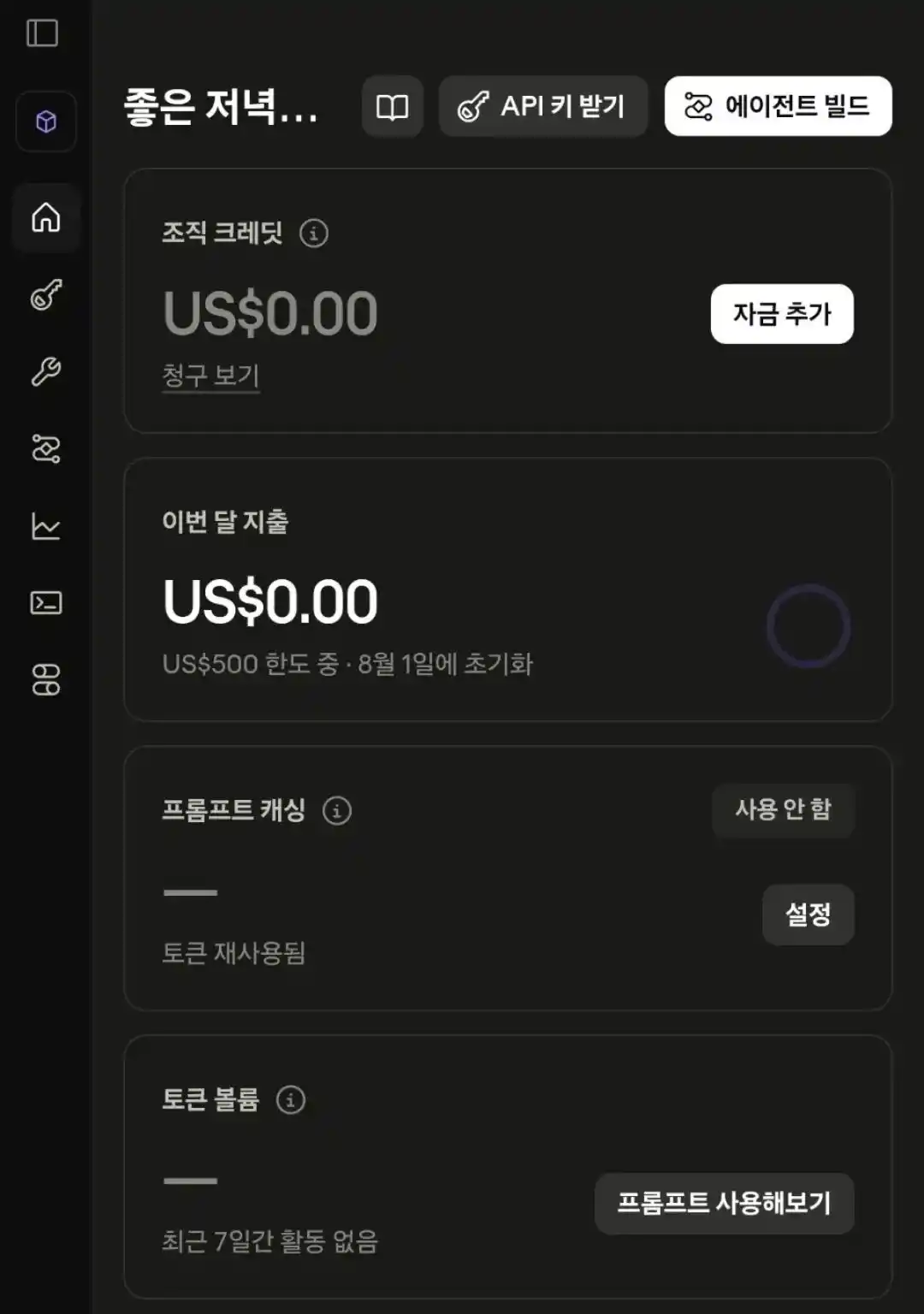
His account was on a free plan, with no credit card linked, and the backend showed zero API usage.
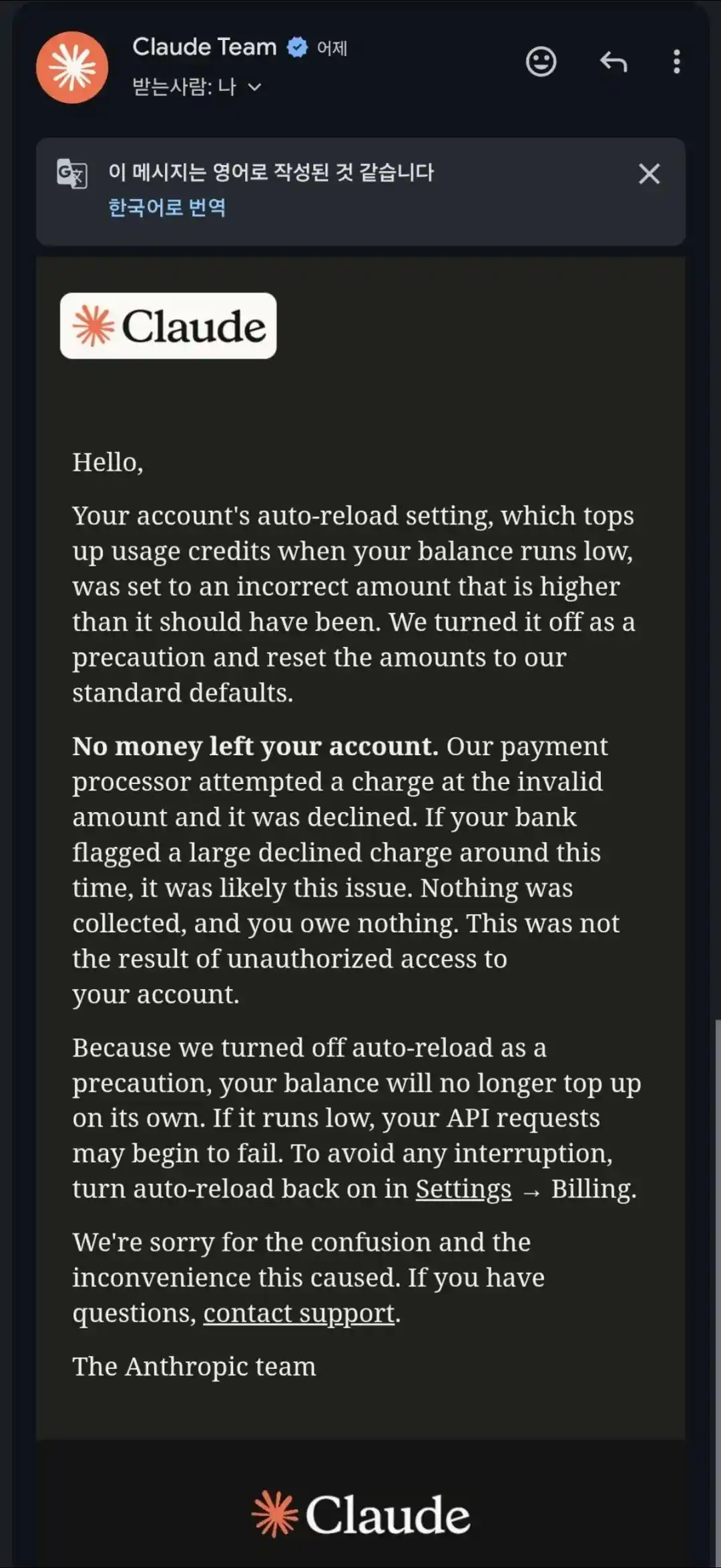
As of publication, Anthropic has not publicly explained the cause of this "phantom bill."
More Than One "Phantom Bill"

The figure of $16.6 million is shocking enough, but what truly deserves attention is the systemic issue emerging from it.

From March to June, AI bill auditing company Vaudit reviewed $34 million in AI bills from 60 companies and discovered approximately $1.7 million in erroneous overcharges, most of which were related to Anthropic's Claude Code.

Vaudit's clients include Panasonic, HP, and Honda, among others.

Vaudit CEO Michael Hahn

Vaudit CEO Michael Hahn described several common overcharging patterns to The Information:

Customers using older, cheaper models but being billed for the more expensive new models;

AI Agents or chatbots failing to complete requests or returning error messages, yet still incurring charges;

Agents repeatedly retrying tasks after failure (retry storms), with each retry being billed.

An Anthropic spokesperson responded, stating the company does not charge for unfulfilled requests or error messages, does not route user requests to older models, and that "overcharging does not seem to be a widespread issue."

However, following appeals from Vaudit and clients, Amazon, Google, Microsoft, Anthropic, and OpenAI refunded about 80% of the disputed amounts.

Hahn said these companies were "very cooperative" in handling billing disputes.

A noteworthy detail: some of Vaudit's audited clients did not purchase services directly from Anthropic but through cloud platforms like AWS, Google Cloud, or Microsoft Azure.

After the billing passes through an additional layer, the responsibility attribution becomes murkier.

Why AI Bills Are Becoming Increasingly Incomprehensible

The developer community's distrust of Anthropic's billing didn't accumulate overnight.

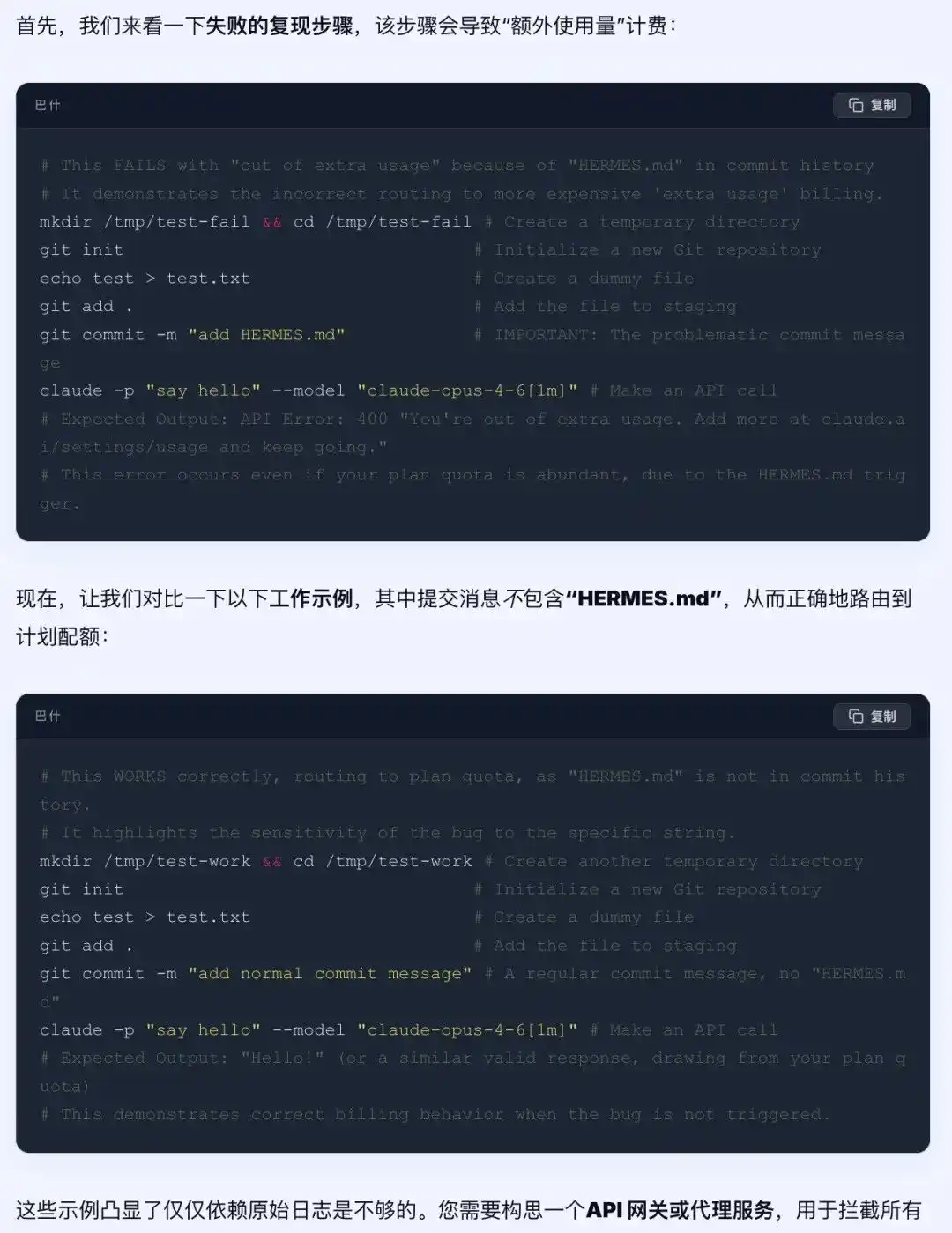
In April this year, developers discovered a billing vulnerability dubbed the "HERMES.md bug": when code commit records contained specific strings, Anthropic's backend would silently route requests that should have been deducted from the Max plan quota to a more expensive "additional usage" billing channel.

Users paid a $200/month subscription fee but were actually billed separately at the API rate.

Anthropic characterized it as an "authentication routing issue" but initially refused refunds, leading many developers to initiate credit card chargebacks.
On June 14, Washington D.C. user Karl Kahn filed a class-action lawsuit in the US District Court for the Northern District of California, alleging that Anthropic's usage promises for the Max 5x ($100/month) and Max 20x ($200/month) subscription plans were misleading.

Kahn claimed that during his use of the Max 20x plan, a single 5-hour programming session consumed 15% of his weekly quota.

The lawsuit argues that Anthropic's usage calculation method is opaque, making it nearly impossible for users to verify whether they are receiving the promised service.

The pricing changes for Claude 5 further amplified this distrust.

Released on June 9 as part of subscription plans, this Anthropic's most powerful publicly available model to date was stripped from them just 13 days later, converted to a usage credit system billed at the API rate ($10 per million input tokens, $50 per million output tokens) – twice the price of Claude 4.8.

Extended reading: Sudden! Anthropic Globally Disables Claude 5

It was also taken offline globally for 19 days due to US government export controls.

After restoration on July 1, the free window provided by Anthropic was only 6 days, later extended to July 12.

When "Safety" Doesn't Cover the Wallet

Anthropic's core brand narrative is "AI safety."

But for paying users, the definition of safety is expanding: it shouldn't only mean the model won't output harmful content; it should also include not being charged an inexplicable fee without your knowledge.

This isn't just Anthropic's problem.

AI service billing structures are inherently complex – model tiers, token usage, API call counts, retries, cloud platform markups, different paths for direct purchase and resale – all layered together, forming a black box that average users can almost never independently verify.

The emergence of auditing companies like Vaudit is itself a signal: AI bills have become so complex that a professional third party is needed to understand them.

Competitors are already sensing the opportunity.

At the June Build conference, Microsoft released MAI-Thinking-1. AI head Mustafa Suleyman told Bloomberg, "Many people are urgently looking for alternatives to Anthropic's expensive models."

OpenAI is reportedly considering significantly lowering token prices.

DeepSeek V4's output token price is about 1/90th of Claude Sonnet 4.6's, starting to be included in developers' cost comparison options.

Over the past year, AI companies won users with model capabilities.

In the next phase of competition, billing transparency will become part of the product experience.

When users start auditing your bills and questioning your pricing promises with class-action lawsuits, "our model is smarter" is no longer enough.

The problem Anthropic faces today, the entire industry will encounter – whoever makes their billing clear first will get the ticket to the next round of trust.

References:

https://www.internationalcyberdigest.com/anthropic-tried-to-phantom-charge-16-6m/

https://www.theinformation.com/newsletters/applied-ai/anthropic-customers-find-errant-charges-auditing-startup-says

This article is from WeChat public account "New Zhiyuan", author: ASI Revelation

Criptos en tendencia

Preguntas relacionadas

QWhat is the main issue reported by Korean developer remy_notes regarding Anthropic's billing?

AKorean developer remy_notes reported receiving two massive invoices from Anthropic within 24 hours—one for about $1.669 million and another for $16.62 million—despite having a free plan with zero API usage and no credit card linked. His bank blocked the attempted charges due to insufficient limits.

QWhat systemic billing problems did the AI audit company Vaudit discover among Anthropic and other AI providers?

AVaudit audited $34 million in AI bills across 60 companies from March to June and found about $1.7 million in erroneous overcharges, mostly related to Anthropic's Claude Code. Common issues included charging for newer, more expensive models when older ones were used, billing for failed or incomplete requests, and charging for repeated retries by AI agents.

QWhat legal action has been taken against Anthropic related to its billing practices?

AOn June 14, a user named Karl Kahn filed a class-action lawsuit in the U.S. District Court for the Northern District of California. The lawsuit alleges that Anthropic misled customers about usage limits and costs for its Max subscription plans, and that its billing calculations are opaque, making it nearly impossible for users to verify if they received the promised service.

QHow did Anthropic's handling of its Fable 5 model contribute to user distrust?

AAnthropic initially included its powerful Fable 5 model in subscription plans upon release on June 9, but removed it just 13 days later. It was then made available only via a much more expensive API-based credit system (costing twice as much as Opus 4.8). Coupled with a 19-day global takedown due to U.S. export controls and a very short free usage window, these actions eroded user trust in the company's pricing stability and transparency.

QAccording to the article, why is billing transparency becoming a key competitive factor in the AI industry?

AAs AI services grow more complex—with layered pricing based on models, tokens, API calls, retries, and cloud platform markups—their bills have become a 'black box' that users cannot easily verify. The emergence of audit firms like Vaudit and user lawsuits signal that transparent and understandable billing is now part of the product experience. The article suggests that in the next phase of competition, companies that master clear billing will gain a significant trust advantage.

Lecturas Relacionadas

Robinhood Provides the Answer: Why Ethereum Becomes the Optimal Solution After Traditional Businesses Enter

The article argues that as real-world, cash-flow-focused businesses enter the blockchain space, they are increasingly choosing the Ethereum L1 + L2 architecture as the optimal infrastructure solution, in contrast to earlier crypto projects built primarily around token sales. It uses Robinhood as a prime example: after testing its stock tokenization product on Arbitrum One, Robinhood launched its own dedicated blockchain, "Robinhood Chain," which is built as an Ethereum L2 using Arbitrum's technology, relying on Ethereum for data availability (via blobs), using ETH as its native gas token, and employing a standard bridge to Ethereum. The author, Ryan Berckmans, distinguishes between two types of participants with different incentive structures: 1. **The "Old Crypto Economy":** Projects whose primary goal is to create and sell a token, with value derived from utility expectations, speculative "monetary premium," or distant cash-flow promises. Their technology stack choices are often flexible and driven by grants, copycat opportunities, or the need for a new token narrative. 2. **The Emerging "Real-World On-Chain Economy":** Traditional businesses using blockchain to improve existing services or create new cash-flow streams. Their goal is to maximize business profits, not token appreciation. For them, blockchain is infrastructure, and they prioritize low risk, security, user reach, operational control, liquidity, and interoperability. For these real-world enterprises, building a standalone L1 is costly, creating a new "security and liquidity island." Ethereum's L1+L2 model splits their core needs: the L1 provides a highly decentralized, neutral, and liquid global settlement layer, while L2s offer a market of customizable, high-performance, operator-controlled execution environments. An Ethereum L2 grants most benefits of an independent chain (high TPS, control, custom features) while inheriting Ethereum's security, seamless access to its ecosystem and assets, and native, low-trust bridging. The piece concludes that this shift in market participants profoundly benefits Ethereum and ETH. As businesses build on Ethereum (directly on L1, via their own L2 like Robinhood Chain, or on shared L2s like Base), they onboard users, embed ETH into products, and deepen its network effects and monetary premium. The choice is driven not by ideological belief but by rational commercial judgment, making Ethereum L1+L2 the current default optimal solution.

Foresight NewsHace 52 min(s)

Robinhood Provides the Answer: Why Ethereum Becomes the Optimal Solution After Traditional Businesses Enter

Foresight NewsHace 52 min(s)

Trading

Spot

Artículos destacados

Qué es $WELL

WELL3, $$WELL: Revolucionando la Salud y el Bienestar con DePIN y AI Introducción En el paisaje de la tecnología digital que evoluciona rápidamente, el sector de la salud y el bienestar se encuentra a la vanguardia de la innovación, esforzándose por mejorar la atención al paciente y promover estilos de vida más saludables. Un jugador groundbreaking en este dominio es WELL3, un proyecto pionero de Web3 que busca revolucionar cómo las personas se relacionan con su salud. Aprovechando tecnologías como la Red de Infraestructura Física Descentralizada (DePIN), la Identidad Descentralizada (DID) y la Inteligencia Artificial (AI), WELL3 tiene como objetivo fomentar trayectorias de salud seguras y potenciadas por datos. Este artículo completo profundiza en los aspectos centrales de WELL3, $$WELL, explorando sus funcionalidades, creadores, inversores y características únicas. ¿Qué es WELL3, $$WELL? WELL3 sirve como una plataforma innovadora destinada a redefinir el enfoque hacia la salud y el bienestar. Enfocado en integrar DePIN y DID junto con sistemas de IA, el proyecto está diseñado para crear experiencias personalizadas para los usuarios, al tiempo que asegura la seguridad y privacidad de los datos de salud de los individuos. Con una cifra impresionante de más de un millón de usuarios pre-registrados, la misión principal de WELL3 gira en torno a mejorar el bienestar a través de trayectorias de salud seguras y basadas en datos. En su esencia, WELL3 emplea tecnologías avanzadas de blockchain para garantizar que los usuarios tengan control total sobre su información personal. Este proyecto no solo aborda los desafíos de la seguridad y accesibilidad de los datos, sino que también aspira a crear una comunidad vibrante conectada por un compromiso compartido con una mejor salud. Características Clave de WELL3: DePIN y DID: Estas tecnologías permiten la propiedad y autenticación segura de los datos, dando a los usuarios control total sobre su información. Integración de IA: Utilizando análisis de IA, WELL3 ofrece ideas y soluciones personalizadas adaptadas a las necesidades de salud individuales. Compromiso Comunitario: Facilita un entorno de apoyo donde los usuarios pueden conectarse, compartir experiencias y motivarse mutuamente hacia una vida más saludable. Creadores de WELL3, $$WELL La identidad del creador de WELL3 permanece no especificada en la información disponible. A medida que el proyecto avanza, pueden surgir más detalles que arrojen luz sobre las mentes visionarias detrás de esta iniciativa transformadora. Inversores de WELL3, $$WELL WELL3 ha recibido apoyo de una miríada de entidades de inversión influyentes, destacando su credibilidad y potencial en el espacio de la salud y el bienestar. Los inversores notables incluyen: Animoca Brands AWS Samsung The Spartan Group Blocore Fenbushi Capital Newman Group Soul Capital XY Finance Lumoz El respaldo de estas organizaciones establecidas demuestra una fuerte creencia en la misión de WELL3, proporcionándole los recursos necesarios para innovar y expandir sus ofertas. ¿Cómo Funciona WELL3, $$WELL? WELL3 opera fusionando tecnologías avanzadas en un marco multichain, asegurando una experiencia de usuario fluida e innovadora. A continuación, se presentan algunos factores que posicionan de manera única a WELL3 en el mercado del bienestar: 1. Propiedad Segura de Datos Con la integración de DePIN y DID, los usuarios pueden mantener el control total sobre su información personal de salud. Este nivel de seguridad es primordial en la era digital actual, donde las filtraciones de datos y el acceso no autorizado son rampantes. A través de WELL3, la propiedad de datos es descentralizada, permitiendo a los usuarios gestionar proactivamente su información. 2. Personalización a través de IA WELL3 implementa análisis impulsados por IA para proporcionar a los usuarios información de salud personalizada. Al aprovechar el poder de la IA, la plataforma puede ofrecer recomendaciones y soluciones individualizadas, alentando a los usuarios a alcanzar sus objetivos de salud de manera más efectiva. 3. Marco Multichain El proyecto WELL3 está diseñado para funcionar a través de múltiples plataformas de blockchain, incluyendo Bitcoin, Ethereum, Polygon, Solana, Blast y TON. Esta capacidad multichain asegura que los usuarios puedan interactuar con la plataforma sin problemas en diferentes redes, mejorando la accesibilidad y la usabilidad. 4. Token WELL Central en el ecosistema de WELL3 es el Token WELL, que cumple múltiples funciones incluyendo utilidad, gobernanza y recompensas. El token permite la participación en el ecosistema, apoya el intercambio de datos de salud y incentiva a los usuarios en función de su compromiso con la plataforma. Cronología de WELL3, $$WELL La trayectoria de WELL3 muestra hitos significativos en su desarrollo, cada uno contribuyendo al éxito general del proyecto. Aquí hay una breve cronología de eventos críticos en la historia de WELL3: 10 de febrero de 2024: WELL3 lanzó su proyecto NFT, ascendiendo rápidamente a la prominencia como la colección de NFT más grande en la cadena opBNB con más de 324,000 propietarios y alcanzando 8 millones de NFT creados para el 27 de abril de 2024. Venta Pública: El proyecto logró un notable valor total bloqueado (TVL) de aproximadamente 15,237.2 ETH en solo siete días, indicando un robusto interés y respaldo del mercado. Lanzamiento de WELL ID: La plataforma vio más de 900,000 usuarios registrarse para el WELL ID y su correspondiente lista blanca de NFT Ring, marcando una fase significativa de adopción dentro del ecosistema. Desarrollo de Alianzas: WELL3 estableció alianzas con entidades líderes incluyendo Animoca Brands, AWS, Samsung y otras para mejorar su ecosistema y expandir su alcance. Volumen de Transacciones: WELL3 ha facilitado más de $17 millones en transacciones, reflejando su creciente utilidad y compromiso dentro de la comunidad de salud y bienestar. Puntos Clave sobre WELL3, $$WELL Como una iniciativa progresiva que se desplaza hacia el mercado del bienestar, WELL3 ha identificado varios elementos vitales que contribuirán a su éxito continuo. Aquí hay algunos puntos clave a tener en cuenta: Tokenomics El token $$WELL tiene un suministro máximo de 42 mil millones, con un significativo 71% destinado a iniciativas comunitarias. Esta estrategia de distribución enfatiza el compromiso del proyecto con su base de usuarios y la sostenibilidad a largo plazo. Período de Bloqueo Para asegurar estabilidad dentro del ecosistema, los tokens se liberan en lotes durante un período de bloqueo de 24 meses, promoviendo la confianza y seguridad entre los usuarios. Desarrollo del Ecosistema La visión de WELL3 se extiende hacia la creación de un ecosistema integral y sostenible para fomentar un compromiso comunitario próspero, comportamientos que mejoren la salud y soluciones digitales que aborden las necesidades urgentes del dominio del bienestar. Ajuste de Mercado La industria del bienestar, valorada en $5.6 billones, presenta una oportunidad lucrativa que WELL3 busca aprovechar. Con una tasa de crecimiento anual anticipada de 5-10%, el proyecto está idealmente posicionado en medio de una creciente tendencia hacia estilos de vida conscientes de la salud. Dispositivos Portátiles La introducción del Anillo WELL3, un dispositivo portátil incentivado por criptomonedas, se alinea con la creciente demanda de datos de salud personalizados. Este dispositivo no solo mejora la experiencia del usuario, sino que también redefine lo que significa estar comprometido con la salud de uno en el contexto de Web3. Conclusión WELL3 representa un avance significativo en la integración de la tecnología blockchain dentro del sector de la salud y el bienestar. Al abordar cuestiones cruciales sobre la propiedad de datos, personalización y compromiso comunitario, esta plataforma innovadora ofrece una solución de vanguardia para mejorar el bienestar individual. Con un sólido respaldo de inversores notables y un compromiso con tecnologías pioneras, WELL3 está preparado para tener un impacto duradero en el paisaje del bienestar. Para aquellos que buscan navegar las complejidades de la salud en la era digital, WELL3 es, sin duda, uno a seguir mientras continúa evolucionando y creciendo.

70 Vistas totalesPublicado en 2024.07.14Actualizado en 2024.12.03

Qué es $WELL

Cómo comprar WELL

¡Bienvenido a HTX.com! Hemos hecho que comprar Moonwell Artemis (WELL) sea simple y conveniente. Sigue nuestra guía paso a paso para iniciar tu viaje de criptos.Paso 1: crea tu cuenta HTXUtiliza tu correo electrónico o número de teléfono para registrarte y obtener una cuenta gratuita en HTX. Experimenta un proceso de registro sin complicaciones y desbloquea todas las funciones.Obtener mi cuentaPaso 2: ve a Comprar cripto y elige tu método de pagoTarjeta de crédito/débito: usa tu Visa o Mastercard para comprar Moonwell Artemis (WELL) al instante.Saldo: utiliza fondos del saldo de tu cuenta HTX para tradear sin problemas.Terceros: hemos agregado métodos de pago populares como Google Pay y Apple Pay para mejorar la comodidad.P2P: tradear directamente con otros usuarios en HTX.Over-the-Counter (OTC): ofrecemos servicios personalizados y tipos de cambio competitivos para los traders.Paso 3: guarda tu Moonwell Artemis (WELL)Después de comprar tu Moonwell Artemis (WELL), guárdalo en tu cuenta HTX. Alternativamente, puedes enviarlo a otro lugar mediante transferencia blockchain o utilizarlo para tradear otras criptomonedas.Paso 4: tradear Moonwell Artemis (WELL)Tradear fácilmente con Moonwell Artemis (WELL) en HTX's mercado spot. Simplemente accede a tu cuenta, selecciona tu par de trading, ejecuta tus trades y monitorea en tiempo real. Ofrecemos una experiencia fácil de usar tanto para principiantes como para traders experimentados.

111 Vistas totalesPublicado en 2024.12.10Actualizado en 2026.06.02

Cómo comprar WELL

Discusiones

Bienvenido a la comunidad de HTX. Aquí puedes mantenerte informado sobre los últimos desarrollos de la plataforma y acceder a análisis profesionales del mercado. A continuación se presentan las opiniones de los usuarios sobre el precio de WELL (WELL).

活动图片