The Truth About Global Payments, Exposed by Airwallex

marsbitPublicado a 2026-05-28Actualizado a 2026-05-28

Resumen

Airwallex's founder, Jack Zhang, outlines the three primary paths in the global payments industry and explains why the company chooses the most demanding one: building its own global financial infrastructure. The article begins by highlighting a common industry problem: payment platforms appear homogenized on the surface, offering similar features like global acquiring and multi-currency accounts. However, their underlying capabilities differ vastly. Customers truly care about payment stability, compliance robustness, and reliable market entry support. Zhang identifies three strategic paths: 1. **Bypassing Traditional Systems (Web3/Crypto):** This path promises efficiency via stablecoins and blockchain settlement but struggles with mainstream adoption, significant regulatory friction, and a lack of competitive edge against established players, often leaving it with niche or non-compliant markets. 2. **Packaging Existing Infrastructure:** The most common route, where companies layer a modern interface over legacy banking and partner networks. While enabling fast expansion, it fails to solve core issues like dependency on correspondent banks and intermediary risk, merely postponing the need for solid foundations. 3. **Building Own Global Infrastructure:** The path chosen by Airwallex, Ant International, and others. It involves obtaining local licenses, establishing direct regulatory relationships, building local teams, and controlling the full technology stack. This "heavy...

Author: Gang Ge

After the last article was published, many people sent me private messages, with questions mainly falling into the following categories:

"A certain platform seems similar, is it reliable?"

"Isn't digital currency payment much less troublesome?"

"Is it really necessary for Airwallex to build such a heavy payment infrastructure?"
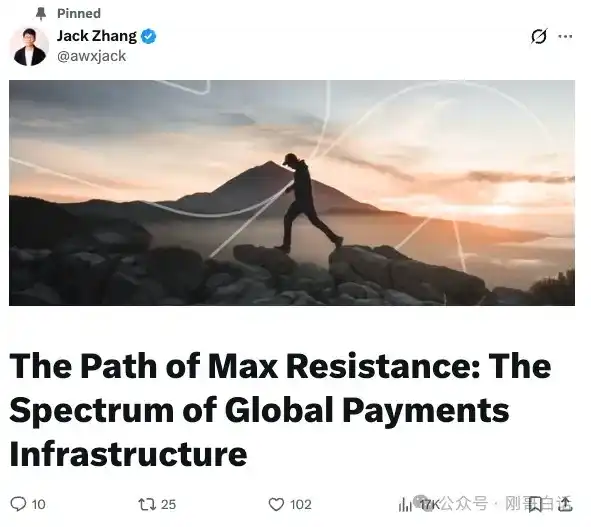
To answer these questions, we can look at the popular article posted by Airwallex founder Jack Zhang on the official WeChat account and X.com (formerly Twitter): " The Path of Maximum Resistance Is the Way Out: A Panorama of Global Payments Infrastructure ".

Figure 1: Jack Zhang's original tweet

This article not only explains why Airwallex chose the "heavy asset" path but also reveals a problem long kept secret in the global payments industry.

So what exactly did he talk about? Let me break it down for you below.
【Full text 2966 characters, estimated reading time 10 minutes】

01 Surface Homogeneity, Core Differentiation

When choosing a payment platform, corporate clients are often confused by a problem: several payment companies seem to offer similar capabilities.

For example, almost all of the hundreds of global payment companies use a similar script to introduce their products: instant settlement, global coverage, serving modern enterprises. Even the features and interfaces are becoming more alike.

  • Everyone has global acquiring: by connecting to a wrapped Visa/MasterCard channel, they can claim "support for 200+ countries and regions";

  • Everyone has global accounts: by partnering with a few banks, they can claim "one account for global collection, covering 20+ major currencies".
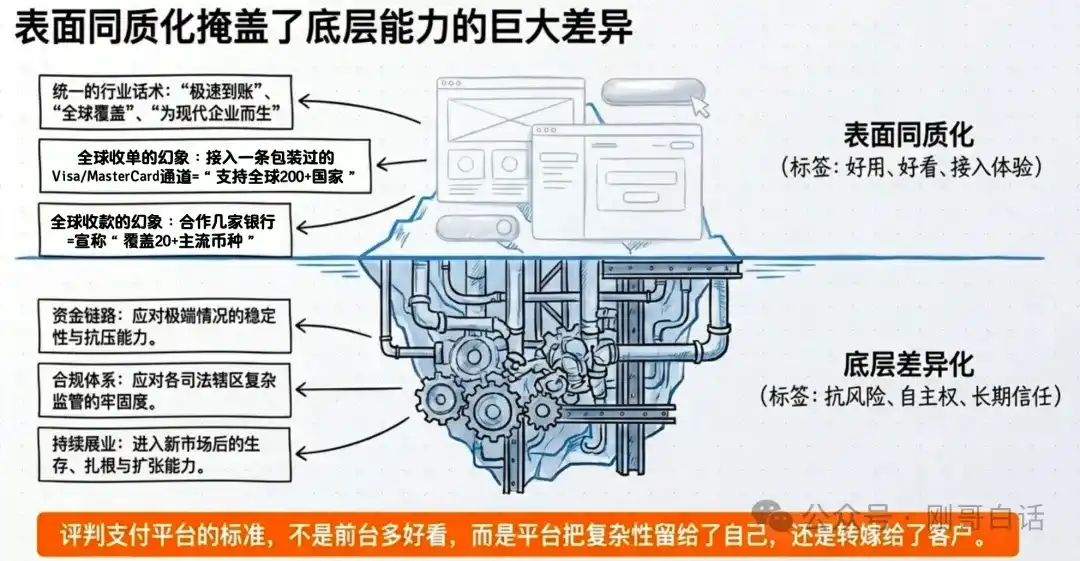
The problem is that while surface functions look more similar, the underlying capabilities are worlds apart.

Figure 2: Superficial homogeneity masks vast underlying differences

Users also cannot see the real differences between platforms from product descriptions, which is why they repeatedly scrutinize payment institutions on cost, background, licenses, and risks.

Ultimately, what corporate clients truly care about is not just the integration experience, but the stability of the fund flow, the robustness of the compliance system, and the ability to smoothly operate after entering new markets.
Therefore, to judge whether a payment platform is reliable, you must not only look at what the front end looks like but also see whether the platform keeps the complexity for itself or passes it on to the client.

02 Three Paths in Global Payments

Since core capabilities are not apparent from the front end, we must return to the underlying layer and deconstruct the common paths in this industry.

If we break down the mainstream players in the industry, there are roughly three paths.
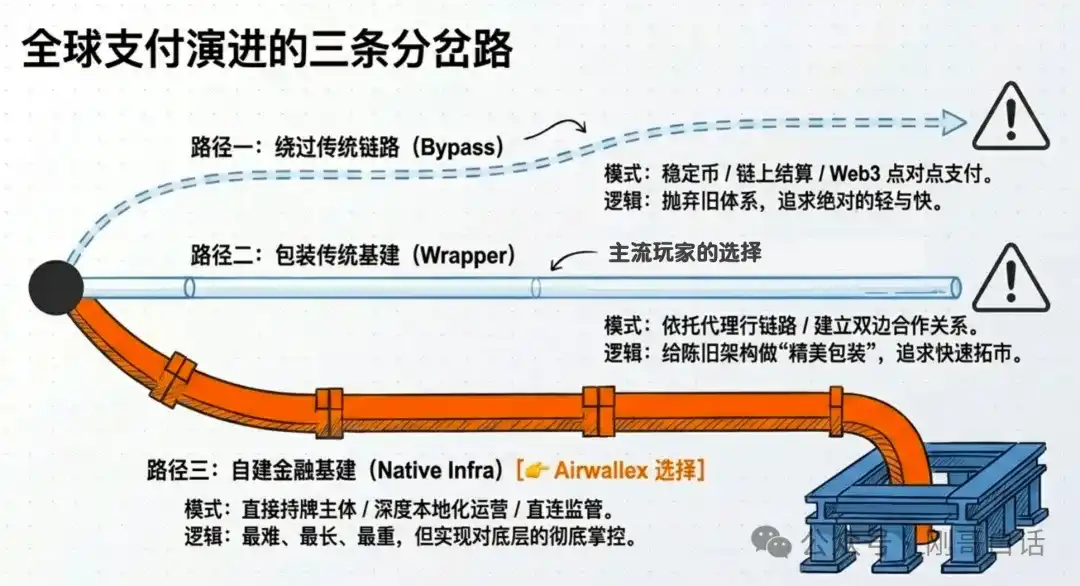
Figure 3: Three divergent paths in the evolution of global payments

2.1 The First Path: Bypassing Traditional Chains

The first path: Web3 digital currency payments.

This path typically tells the same story: stablecoins, on-chain settlement, programmable payments, peer-to-peer payments. Compared to traditional payments, it promises shorter paths, faster speeds, and lower costs; and it hopes to penetrate the consumer retail scene with a story of small, frequent transactions.

However, you'll find that very few digital currency payment players have survived on this path.
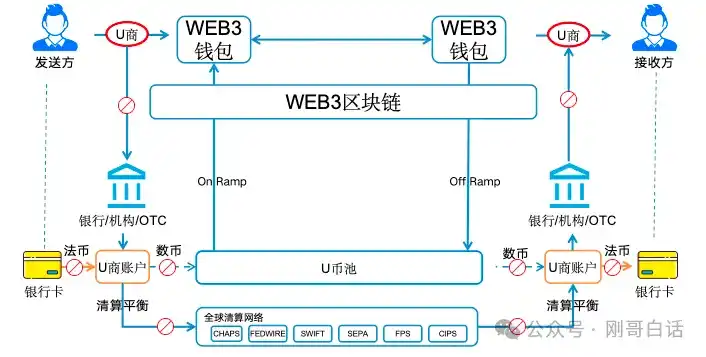
The core reason is not that this path lacks efficiency, but that in the face of mainstream payment platforms, new players have no substitution advantage, and too much regulatory friction makes short-term solutions difficult .

Figure 4: The first path: bypassing traditional chains with on-chain settlement

Now, mainstream global payment platforms not only possess global payment networks but also deeply integrate into local ecosystems worldwide, building operational teams, forming comprehensive advantages over digital currency payments in technology, service, compliance, and product.
  • Technical level: global payments settled instantly; merchant settlement to card with D1/D0 options;

  • Service level: payment costs are not high under high competition, with mature local operational teams serving clients to the last mile;

  • Compliance level: regulators in various jurisdictions have persistent doubts about its compliance, resulting in significant friction;

  • Product level: mainstream payment platforms also focus on stablecoin payments; as soon as compliance policies are established, products can be integrated and replaced at any time.

Therefore, new players on this path often find that the only options left are fragmented markets that mainstream payment institutions are unwilling to serve, and gray/black market clients they dare not serve .

This is also why many who started with dreams of Web3 payment entrepreneurship ultimately had to withdraw quietly.

2.2 The Second Path: Wrapping Traditional Infrastructure

This is the most traveled path in the industry: relying on partners and intermediaries to wrap a layer around the complex, outdated underlying architecture, then using better product experiences and faster marketing to drive market expansion.

The advantages of this path are also obvious: quick results, fast business expansion, rapid coverage growth, making it the natural choice for most players.

But the problem is that it primarily optimizes the front end, not rewrites the underlying layer.
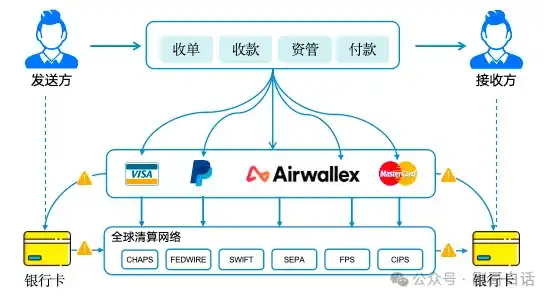
Jack Zhang's judgment on this point is direct: The core issues remain unchanged; correspondent banking chains, bilateral partnerships, compliance dependency risks—they all still exist.
He also believes: "A nice interface has long been standard, but it cannot shake the underlying logic of global payments."

Figure 5: The second path: aggregator gateways wrapping infrastructure

In fact, Stripe, the company with the fastest-growing global market value, had its acquisition of Airwallex rejected in 2019 and was rumored to acquire PayPal in 2026 (which was also reportedly rejected).

This at least illustrates one point: even an international payment giant that grew rapidly through "technology + light-asset connectivity" ultimately has to go back and learn the lesson of building infrastructure.

Often, the path that seems lighter doesn't avoid infrastructure; it merely delays it.

2.3 The Third Path: Building a Global Financial Infrastructure from Scratch

This is also the path chosen by companies like Airwallex, Ant International, Pingpong, and LianLian Global : obtaining licenses in jurisdictions where business is conducted, operating locally, maintaining regular communication with regulators, and keeping compliance, technology, and underlying networks as much as possible in their own hands.

This path is the most difficult because there is almost no shortcut. It requires sustained high investment, longer cycles, and also implies heavier responsibility.
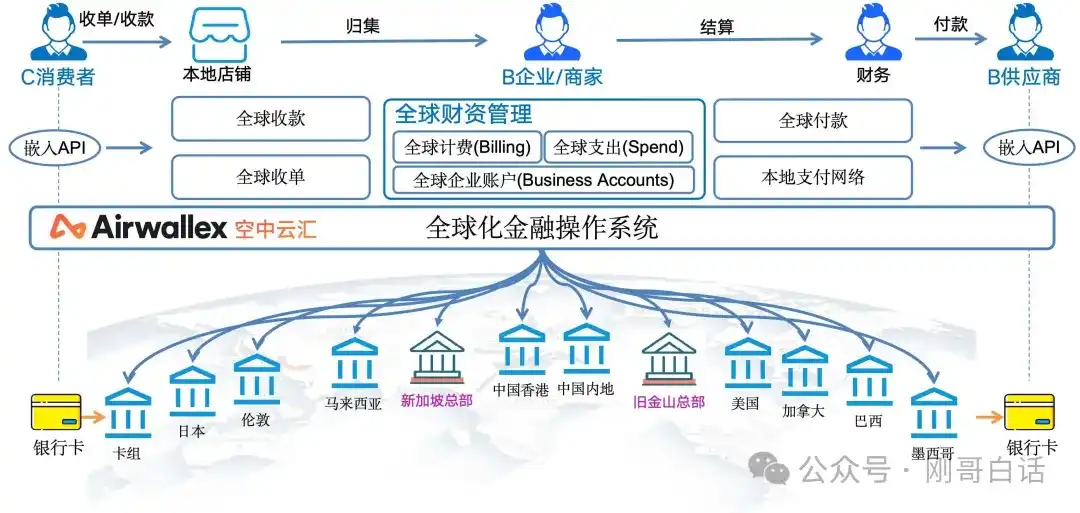
But Airwallex has been more resolute in this regard , self-developing the full-stack infrastructure and absolutely refusing to connect via agents or middlemen.
This means they must invest heavily worldwide to obtain licenses, maintain deep communication with local regulators as a licensed entity, continuously integrate with local compliance institutions, establish local teams, and serve clients to the last mile.

Figure 6: The third path: building global infrastructure from scratch

This kind of heavy-asset investment obviously makes many people think it's "not smart enough." Actually, who wouldn't want to take a shortcut? It just depends on what kind of value you want to offer clients. If the underlying capabilities are still held by others, the ones ultimately bearing the uncertainty will inevitably be the clients.

03 Platform's "Heaviness" for Client's "Lightness"

For enterprise clients going global, the most expensive thing is never a single payment fee, but the invisible risks in the fund flow chain that become fatal when problems arise.

For example, a market that was already running smoothly might suddenly have its bank account frozen; customers who have already paid for goods may have their funds stuck halfway by a correspondent bank, unable to settle; when regulatory rules upgrade, they must submit additional materials, deposits, or processes.

These problems may not occur daily, but one occurrence is enough to disrupt a company's rhythm.
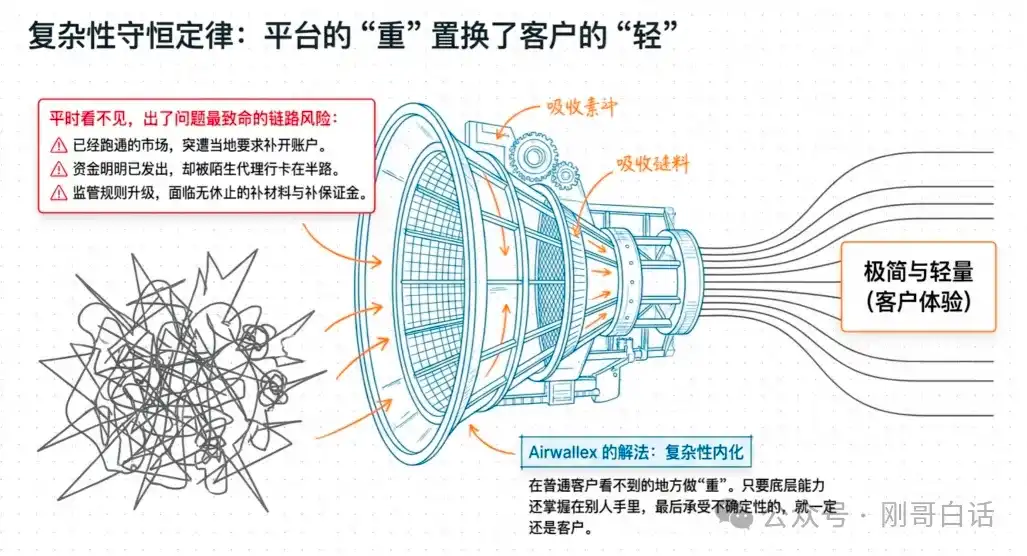
Figure 7: Platform's "heaviness" exchanged for client's "lightness"

Therefore, building solid infrastructure is essentially about keeping the complexity that would otherwise fall on the client within one's own system to digest, trading one's own "heaviness" for the client's "lightness."

04 What Do Clients Actually Get?

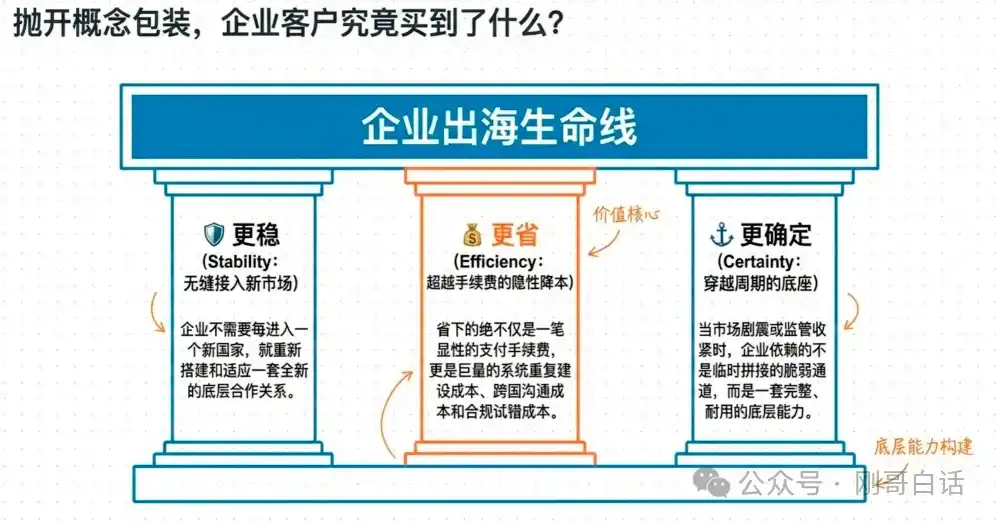
Enterprise clients are very pragmatic; they never buy concepts but the value they can obtain. In the cross-border payment field, the so-called value boils down to three things: more stable, more cost-effective, and more certain.

Figure 8: The real value enterprise clients need

  • More stable, because businesses don't need to adapt to a new set of partnerships every time they enter a market.

  • More cost-effective, not just saving on fees, but reducing a lot of duplicated system costs, communication costs, and compliance costs.

  • More certain, because when market conditions change or regulatory rules tighten, clients rely not on a temporarily patched channel, but on a more complete, durable, and cycle-proof underlying capability.

This is also why Airwallex's growth logic resembles compound interest rather than explosive growth.
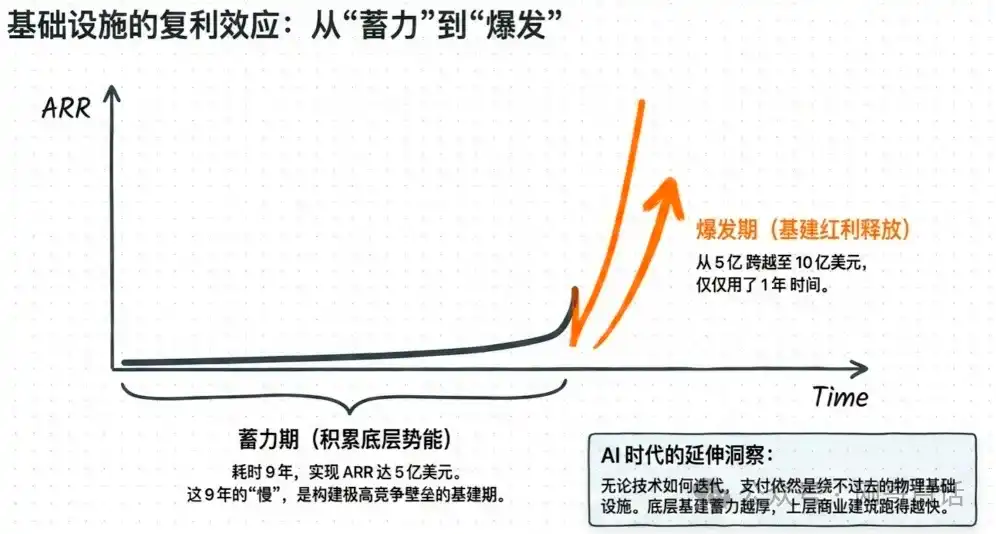
Figure 9: Compound interest growth brought by infrastructure investment

According to public information, Airwallex took 9 years to achieve $500 million in Annualized Recurring Revenue (ARR), but only one year to go from $500 million to $1 billion. The initial "slowness" was not inefficiency but rather accumulating underlying potential for future acceleration.

05 Final Words

Returning to the initial question, why does Airwallex build its own global financial infrastructure?
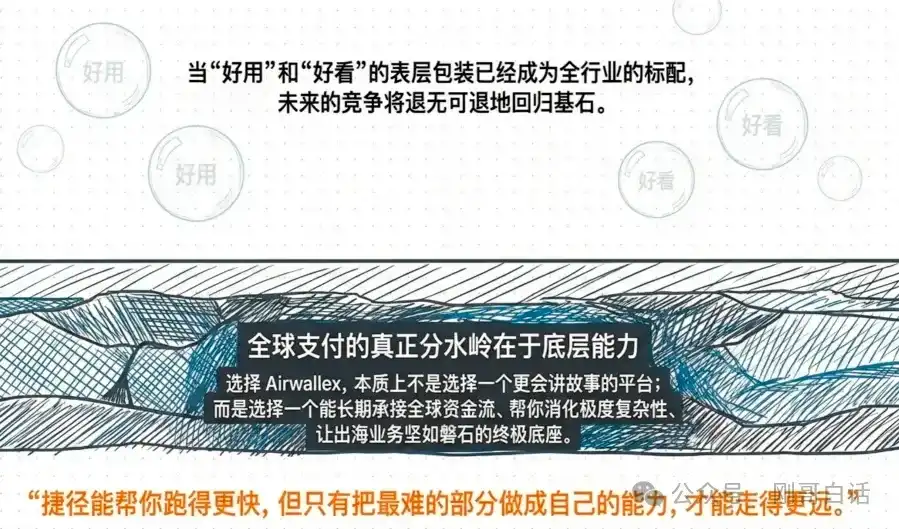
Because, the most difficult part is precisely the part that cannot be outsourced, is most worthy of long-term investment, and can create the most value for clients .

Figure 10: Underlying capability is the real watershed

For enterprise clients, choosing a global payment platform is essentially about choosing a long-term partner, a foundation that can digest complexity for you and help you operate your business more stably.

For the global payments industry, shortcuts can help you run faster, but only by turning the hardest part into your own capability can you go further.

【References】

【1】Original article on Airwallex official WeChat: The Path of Maximum Resistance Is the Way Out

https://www.airwallex.com/cn/blog/the-path-of-max-resistance-the-spectrum-of-global-payments-infrastructure

【2】Original article on Airwallex official WeChat: The Last Mile of Global Payments

https://www.airwallex.com/cn/blog/the-last-mile-of-global-payments

【3】Sina Finance: Reshaping the Future of Finance

https://finance.sina.com.cn/cj/2025-10-11/doc-inftnpwr8889861.shtml

Preguntas relacionadas

QAccording to the article, what are the three main paths for global payment companies, and which one does Airwallex represent?

AThe three main paths are: 1) Web3/Cryptocurrency payment bypassing traditional systems, 2) Packaging existing traditional infrastructure with a better interface (the most common path), and 3) Building independent global financial infrastructure. Airwallex, along with companies like Ant International, Pingpong, and Lianlian Global, represents the third path of self-building global infrastructure.

QWhat is the key reason mentioned for the limited success of Web3/digital currency payment platforms in replacing mainstream payment systems?

AThe key reason is that while potentially efficient, new Web3 players lack any substitution advantage over mainstream platforms. Mainstream platforms already possess global networks, deep local ecosystem integration, and have overwhelming advantages in technology, service, compliance, and product. Furthermore, Web3 platforms face significant unresolved compliance friction.

QWhat does the article suggest is the fundamental trade-off made by payment platforms like Airwallex that choose the 'heavy infrastructure' path?

APlatforms like Airwallex make a trade-off of using their own operational 'heaviness' (high investment, local licensing, compliance, self-built networks) to achieve the client's operational 'lightness'. They absorb complexity and risk within their own system to provide clients with greater stability, cost savings (beyond just fees), and certainty.

QWhat are the three core values that enterprise clients are truly seeking from a global payment platform, as outlined in the article?

AEnterprise clients seek three core values: 1) Greater Stability (not needing to rebuild relationships in each new market), 2) Greater Cost Efficiency (saving on system, communication, and compliance costs, not just transaction fees), and 3) Greater Certainty (relying on a durable, cycle-resistant underlying capability rather than temporary拼接/patched-together channels).

QHow does the article characterize the growth logic of Airwallex, and what evidence does it provide?

AThe article characterizes Airwallex's growth logic as being more akin to compound interest rather than explosive growth. It states that building foundational infrastructure creates underlying momentum. As evidence, it cites that Airwallex took 9 years to reach $500 million in Annual Recurring Revenue (ARR), but only one year to grow from $500 million to $1 billion, suggesting the earlier 'slowness' was accumulating potential for later acceleration.

Lecturas Relacionadas

Blocked Its Own Treasure, WeChat AI Steps Up

Tencent's stock surged over 10% on June 2nd amid reports that WeChat, with 1.43 billion monthly users, is finalizing tests for a native AI Agent. The reported feature, accessible by swiping right from the main interface, allows users to issue commands in natural language. The AI then decomposes tasks and automatically calls upon relevant Mini Programs within WeChat to complete actions like ordering food, booking tickets, or making payments, creating a closed-loop service execution system. This strategic shift follows the internal conflict and subsequent "blocking" of Tencent's standalone AI app, Yuanbao, by WeChat for violating sharing rules during a 2026 Spring Festival promotion. The incident highlighted a lack of internal consensus and exposed the weakness of competing in the standalone AI assistant arena against rivals like ByteDance's Doubao (345M MAU) and Alibaba's Qianwen. The new WeChat AI Agent aims to leverage WeChat's unique assets—its massive user base, standardized Mini Program APIs, WeChat Pay, and identity system—to move from simple content generation to actual task execution. Analysts note this changes the competitive landscape from model benchmarks to which AI can connect to more real-world services. However, success depends on key variables: the capability of Tencent's underlying Hunyuan model, managing massive inference costs, and redesigning incentives for Mini Program developers whose traffic might be bypassed. The move is seen as an attempt to keep user service intent within WeChat's ecosystem as AI begins to redefine how users access services.

marsbitHace 58 min(s)

Blocked Its Own Treasure, WeChat AI Steps Up

marsbitHace 58 min(s)

ByteDance Adopts Arm CPUs, Jensen Huang: So Sad I Didn't Buy Arm

**Summary:** At Computex 2026, Arm CEO Rene Haas announced that ByteDance and Oracle have adopted Arm's self-designed Arm AGI data center CPU. The company expects significant revenue growth from this product, projecting $20 billion in demand for the 2027/2028 fiscal years. Haas noted that restricting AI-capable CPUs from the US to China is nearly impossible due to their widespread applications. Arm's stock has surged dramatically this year, notably rising 16% after NVIDIA's Arm-based Vera CPU and RTX Spark announcements. A highlight was the informal, humorous on-stage conversation between Haas and NVIDIA CEO Jensen Huang. Huang joked about NVIDIA's failed attempt to acquire Arm and playfully lamented selling his Arm shares. Both executives showed a clear sense of camaraderie and shared regret over the missed merger. Key technical topics were discussed: 1. **AI PC Design:** Huang explained NVIDIA's RTX Spark superchip (with a 20-core Arm CPU) is designed for future AI agents that will autonomously run and use tools on PCs, blending local and cloud processing. 2. **Agent vs. OS:** Huang emphasized the operating system remains crucial, as AI agents rely on its APIs and tools to function. 3. **Growth Constraints:** He identified the shift to "useful AI" that generates profitable tokens as a primary driver for immense, almost limitless, computational demand. Haas outlined Arm's strategy across PC and data centers. For PCs, Arm collaborates with partners like NVIDIA and MediaTek, offering its compute subsystem (CSS) for custom SoCs. In data centers, its Arm AGI CPU (built on TSMC's 3nm process) has gained major partners including OpenAI, Meta, and now ByteDance and Oracle. Arm presented a multi-year roadmap for its in-house CPU line. The article concludes that while GPUs dominated the AI training race, the explosion of AI agents is shifting significant focus to CPUs for inference, state management, and tool orchestration. The industry is trending towards vertical integration, with companies like cloud providers designing chips and chip/IP firms offering full solutions, all competing to deliver more efficient computing per watt.

marsbitHace 1 hora(s)

ByteDance Adopts Arm CPUs, Jensen Huang: So Sad I Didn't Buy Arm

marsbitHace 1 hora(s)

New Wall Street Play: Yen Shorts Still Adding, But Japan Stocks Don't Rely on Carry Trade Unwinding

On June 3rd, USD/JPY hit 160.44, its highest level since July 2024, while the Nikkei 225 surged past 68,000 points. Contrary to popular narratives of an imminent "carry trade unwind" akin to August 2024, data reveals a more complex picture. Speculative net short positions in yen futures have actually increased, reaching -114,667 contracts by late May, suggesting traders are doubling down rather than retreating. Meanwhile, Japan's Finance Ministry conducted its largest-ever single-round FX intervention (11.73 trillion yen) in April-May but failed to hold the 160 yen line. The Nikkei's rally is not driven by carry trade dynamics. Foreign investors are aggressively buying Japanese stocks, with net purchases in 2026 running nearly 16 times higher than 2025 levels. This inflow is concentrated in AI and semiconductor-related stocks like SoftBank and Socionext, fueled by positive sector outlooks, rather than being a flight from unwinding yen shorts. Furthermore, the Nikkei has continued climbing despite the Bank of Japan's (BOJ) rate hikes to 0.75%. This disconnect exists because the current equity boom is fueled by AI-driven foreign investment, not reliant on cheap yen funding. However, this relationship remains fragile. Should the BOJ hike rates further (e.g., to 1.0%) while dollar weakness increases carry trade costs, the trajectories of the yen and Japanese stocks could reconverge, potentially triggering volatility.

marsbitHace 1 hora(s)

New Wall Street Play: Yen Shorts Still Adding, But Japan Stocks Don't Rely on Carry Trade Unwinding

marsbitHace 1 hora(s)

Broadcom's Q3 Guidance Misses Expectations by $12 Billion, After-Hours Trading Plummets Over 13%, AI Narrative "Cooling"?

On June 3, Broadcom released record Q2 FY26 results with revenue of $22.19B, up 48% YoY, and AI chip sales of $10.8B, up 143%. Adjusted EPS of $2.44 beat estimates. However, its Q3 AI semiconductor revenue guidance of $16B, while up over 200% YoY, fell roughly $1.2B (7%) short of analyst consensus expectations of $17.2B. This miss, coupled with slightly weaker-than-expected software revenue, triggered a severe market reaction. CEO Hock Tan maintained the FY26 AI revenue outlook of over $100B but did not raise it, disappointing investors who had priced in more robust growth. The stock plummeted over 13% in after-hours trading, erasing roughly $270B in market cap. The sell-off extended to peers like Marvell. A key concern for markets, particularly for Chinese optical module suppliers, was Tan's comment that the contribution of AI networking (e.g., Ethernet switches, optical interconnect chips) to AI revenue, currently near 40%, is expected to normalize to around 30% over time, signaling a potential peak in growth for that segment. Despite the guidance shortfall, Tan reiterated that AI demand remains "insatiable" and reaffirmed the long-term target of exceeding $100B in AI revenue by FY27. The reaction highlights the heightened sensitivity and premium valuation placed on AI-exposed stocks, where anything less than stellar guidance can prompt significant profit-taking. The broader question is whether this represents a cooling AI narrative or a correction in overstretched valuations.

marsbitHace 1 hora(s)

Broadcom's Q3 Guidance Misses Expectations by $12 Billion, After-Hours Trading Plummets Over 13%, AI Narrative "Cooling"?

marsbitHace 1 hora(s)

Trading

Spot
Futuros

Artículos destacados

Cómo comprar PEOPLE

¡Bienvenido a HTX.com! Hemos hecho que comprar ConstitutionDAO (PEOPLE) sea simple y conveniente. Sigue nuestra guía paso a paso para iniciar tu viaje de criptos.Paso 1: crea tu cuenta HTXUtiliza tu correo electrónico o número de teléfono para registrarte y obtener una cuenta gratuita en HTX. Experimenta un proceso de registro sin complicaciones y desbloquea todas las funciones.Obtener mi cuentaPaso 2: ve a Comprar cripto y elige tu método de pagoTarjeta de crédito/débito: usa tu Visa o Mastercard para comprar ConstitutionDAO (PEOPLE) al instante.Saldo: utiliza fondos del saldo de tu cuenta HTX para tradear sin problemas.Terceros: hemos agregado métodos de pago populares como Google Pay y Apple Pay para mejorar la comodidad.P2P: tradear directamente con otros usuarios en HTX.Over-the-Counter (OTC): ofrecemos servicios personalizados y tipos de cambio competitivos para los traders.Paso 3: guarda tu ConstitutionDAO (PEOPLE)Después de comprar tu ConstitutionDAO (PEOPLE), guárdalo en tu cuenta HTX. Alternativamente, puedes enviarlo a otro lugar mediante transferencia blockchain o utilizarlo para tradear otras criptomonedas.Paso 4: tradear ConstitutionDAO (PEOPLE)Tradear fácilmente con ConstitutionDAO (PEOPLE) en HTX's mercado spot. Simplemente accede a tu cuenta, selecciona tu par de trading, ejecuta tus trades y monitorea en tiempo real. Ofrecemos una experiencia fácil de usar tanto para principiantes como para traders experimentados.

438 Vistas totalesPublicado en 2024.12.12Actualizado en 2026.06.02

Cómo comprar PEOPLE

Discusiones

Bienvenido a la comunidad de HTX. Aquí puedes mantenerte informado sobre los últimos desarrollos de la plataforma y acceder a análisis profesionales del mercado. A continuación se presentan las opiniones de los usuarios sobre el precio de PEOPLE (PEOPLE).

活动图片