The Securities and Exchange Commission publishes crypto custody guide

cointelegraphPublicado a 2025-12-13Actualizado a 2025-12-13

Resumen

The U.S. Securities and Exchange Commission (SEC) has published a crypto custody guide outlining best practices and risks for storing digital assets. The bulletin compares self-custody with third-party custody, warning investors to understand policies like asset rehypothecation and commingling. It also details the pros and cons of hot wallets (internet-connected, vulnerable to hacking) and cold wallets (offline, but riskier if keys are lost). The move signals a shift from the SEC’s previously hostile stance under former Chair Gary Gensler. The crypto community welcomed the guide as a transformative step, with some noting the agency is now educating rather than opposing the industry. This follows recent SEC approval for DTCC to begin tokenizing traditional financial assets.

The United States Securities and Exchange Commission (SEC) published a crypto wallet and custody guide investor bulletin on Friday, outlining best practices and common risks of different forms of crypto storage for the investing public.

The SEC’s bulletin lists the benefits and risks of different methods of crypto custody, including self-custody versus allowing a third-party to hold digital assets on behalf of the investor.

If investors choose third-party custody, they should understand the custodian's policies, including whether it “rehypothecates” the assets held in custody by lending them out or if the service provider is commingling client assets in a single pool instead of holding the crypto in segregated customer accounts.
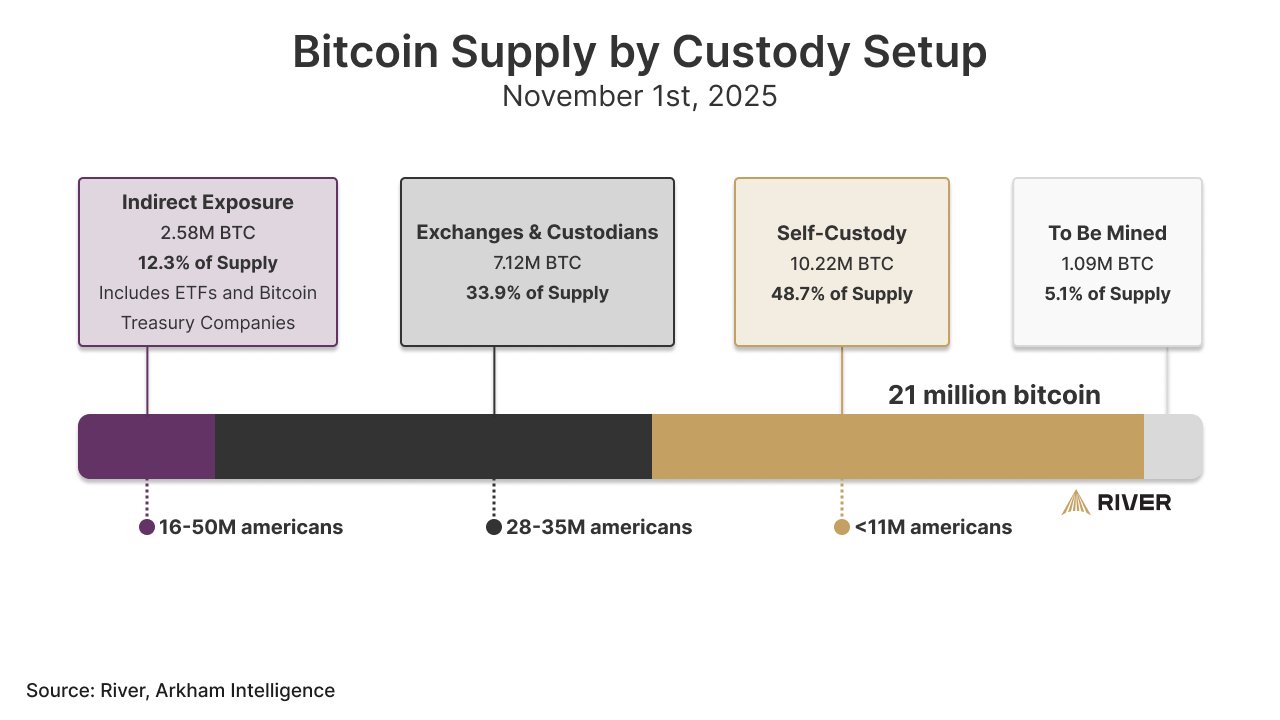
The Bitcoin supply broken down by the type of custodial arrangement. Source: River

Crypto wallet types were also outlined in the SEC guide, which broke down the pros and cons of hot wallets, which are connected to the internet, and offline storage in cold wallets.

Hot wallets carry the risk of hacking and other cybersecurity threats, according to the SEC, while cold wallets carry the risk of permanent loss if the offline storage fails, a storage device is stolen, or the private keys are compromised.

The SEC’s crypto custody guide highlights the sweeping regulatory change at the agency, which was hostile to digital assets and the crypto industry under former SEC Chairman Gary Gensler’s leadership.

Related: SEC sends warning letters to ETF issuers targeting untamed leverage

The crypto community celebrates the SEC guide as a transformational change in the agency

“The same agency that spent years trying to kill the industry is now teaching people how to use it,” Truth For the Commoner (TFTC) said in response to the SEC’s crypto custody guide.

The SEC is providing “huge value” to crypto investors by educating prospective crypto holders about custody and best practices, according to Jake Claver, the CEO of Digital Ascension Group, a company that provides services to family offices.
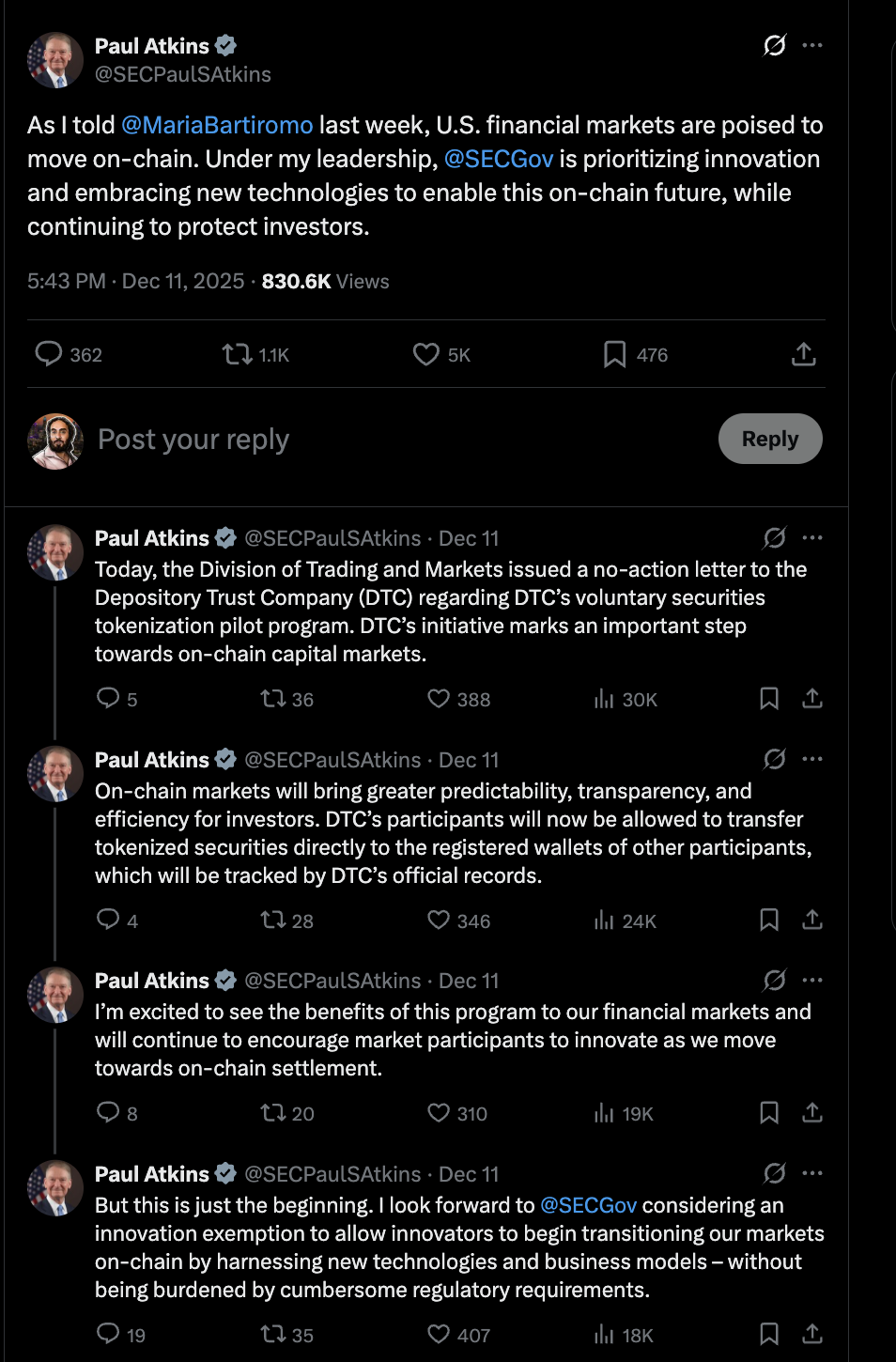
Source: Paul Atkins

SEC regulators published the guide one day after SEC Chair Paul Atkins said that the legacy financial system is moving onchain.

On Thursday, the SEC gave the green light to the Depository Trust and Clearing Corporation (DTCC), a clearing and settlement company, to begin tokenizing financial assets, including equities, exchange-traded funds (ETFs) and government debt securities.

Magazine: How Neal Stephenson ‘invented’ Bitcoin in the ‘90s: Author interview

Lecturas Relacionadas

AI "Transfer Station" Earning Millions Monthly? Five Questions Uncover the Truth of Token Arbitrage

The article "AI 'Transfer Station' Earns Millions Monthly? Five Questions Uncover the Truth of Token Arbitrage" explores the emerging business of API token transfer stations, which profit from global AI service price disparities and access barriers. These intermediaries purchase low-cost tokens from overseas AI providers (e.g., OpenAI, Claude) through grey-market methods—such as exploiting enterprise credits, bulk accounts, or subscription benefits—and resell them to Chinese users at a markup. Key drivers include the high cost of using top AI models (e.g., Claude Code costs ~$5 per million tokens), the performance gap between domestic and foreign models, and mismatches between subscription and API pricing. However, the practice carries significant risks: upstream token sources may be unstable or illegal; user data passing through intermediaries can be harvested or injected with hidden prompts; and models might be downgraded without disclosure. The market is evolving, with some operators now exporting cheaper Chinese models (e.g., Qwen3.5 at ~$0.11 per million tokens) to overseas users, leveraging price gaps. Yet, sustainability is low due to compliance crackdowns, instability, and reputational risks. Users are advised to employ detection methods (e.g., prompt adherence tests) and avoid sensitive data usage. The authors caution that while transfer stations offer short-term arbitrage, they lack long-term reliability and security compared to official APIs.

marsbitHace 9 min(s)

AI "Transfer Station" Earning Millions Monthly? Five Questions Uncover the Truth of Token Arbitrage

marsbitHace 9 min(s)

The Cost of an 11.5% Annualized Return: Will MicroStrategy's STRC Face a Moment of Reckoning?

This article analyzes the potential risks associated with MicroStrategy's (MSTR) use of structured financial products like STRC to leverage its BTC exposure. While these tools have enabled impressive returns (e.g., 11.5% annualized) and fueled significant capital inflows ($13.5B outstanding), they also create substantial annual dividend obligations (~$400M). The author argues that this structure, while effective in a bull market, could become a liability if BTC price stagnates or declines. The core risk is a potential negative feedback loop: the growing dividend burden from continued STRC issuance may eventually outweigh the benefits of increased BTC holdings. To meet these obligations, MicroStrategy might need to use new issuance proceeds for dividends instead of buying more BTC, which could disappoint equity investors. If the market capitalization (mNAV) falls below the value of its BTC holdings, the company could be forced to sell BTC instead of issuing new shares, potentially triggering a panic. The author estimates a potential inflection point in 6 months, where annual dividend costs reach $3-4B. At that stage, CEO Michael Saylor might face a difficult choice: sell BTC to meet obligations or sacrifice the credibility of the preferred shares by halting dividends. The article concludes that this financial engineering, while powerful, could ultimately "backfire" on MicroStrategy if market conditions turn.

marsbitHace 1 hora(s)

The Cost of an 11.5% Annualized Return: Will MicroStrategy's STRC Face a Moment of Reckoning?

marsbitHace 1 hora(s)

Trading

Spot
Futuros

Artículos destacados

Cómo comprar CFG

¡Bienvenido a HTX.com! Hemos hecho que comprar Centrifuge (CFG) sea simple y conveniente. Sigue nuestra guía paso a paso para iniciar tu viaje de criptos.Paso 1: crea tu cuenta HTXUtiliza tu correo electrónico o número de teléfono para registrarte y obtener una cuenta gratuita en HTX. Experimenta un proceso de registro sin complicaciones y desbloquea todas las funciones.Obtener mi cuentaPaso 2: ve a Comprar cripto y elige tu método de pagoTarjeta de crédito/débito: usa tu Visa o Mastercard para comprar Centrifuge (CFG) al instante.Saldo: utiliza fondos del saldo de tu cuenta HTX para tradear sin problemas.Terceros: hemos agregado métodos de pago populares como Google Pay y Apple Pay para mejorar la comodidad.P2P: tradear directamente con otros usuarios en HTX.Over-the-Counter (OTC): ofrecemos servicios personalizados y tipos de cambio competitivos para los traders.Paso 3: guarda tu Centrifuge (CFG)Después de comprar tu Centrifuge (CFG), guárdalo en tu cuenta HTX. Alternativamente, puedes enviarlo a otro lugar mediante transferencia blockchain o utilizarlo para tradear otras criptomonedas.Paso 4: tradear Centrifuge (CFG)Tradear fácilmente con Centrifuge (CFG) en HTX's mercado spot. Simplemente accede a tu cuenta, selecciona tu par de trading, ejecuta tus trades y monitorea en tiempo real. Ofrecemos una experiencia fácil de usar tanto para principiantes como para traders experimentados.

278 Vistas totalesPublicado en 2026.03.19Actualizado en 2026.03.19

Cómo comprar CFG

Qué es WL

I. Introducción al ProyectoWorldLand es una L2 o cadena lateral de Ethereum, diseñada como una solución de abajo hacia arriba para mejorar el ecosistema de Ethereum.II. Información del Token1) Información BásicaNombre del token: WL (WorldLand)III. Enlaces RelacionadosSitio web:https://worldland.foundation/Exploradores:https://bscscan.com/address/0x8aaB31fbc69C92fa53f600910Cf0f215531F8239Redes Sociales:https://x.com/WorldLand_space Nota: La introducción del proyecto proviene de los materiales publicados o proporcionados por el equipo oficial del proyecto, que es solo para referencia y no constituye asesoramiento de inversión. HTX no se hace responsable de ninguna pérdida directa o indirecta resultante.

134 Vistas totalesPublicado en 2026.03.28Actualizado en 2026.03.28

Qué es WL

Cómo comprar WL

¡Bienvenido a HTX.com! Hemos hecho que comprar WorldLand (WL) sea simple y conveniente. Sigue nuestra guía paso a paso para iniciar tu viaje de criptos.Paso 1: crea tu cuenta HTXUtiliza tu correo electrónico o número de teléfono para registrarte y obtener una cuenta gratuita en HTX. Experimenta un proceso de registro sin complicaciones y desbloquea todas las funciones.Obtener mi cuentaPaso 2: ve a Comprar cripto y elige tu método de pagoTarjeta de crédito/débito: usa tu Visa o Mastercard para comprar WorldLand (WL) al instante.Saldo: utiliza fondos del saldo de tu cuenta HTX para tradear sin problemas.Terceros: hemos agregado métodos de pago populares como Google Pay y Apple Pay para mejorar la comodidad.P2P: tradear directamente con otros usuarios en HTX.Over-the-Counter (OTC): ofrecemos servicios personalizados y tipos de cambio competitivos para los traders.Paso 3: guarda tu WorldLand (WL)Después de comprar tu WorldLand (WL), guárdalo en tu cuenta HTX. Alternativamente, puedes enviarlo a otro lugar mediante transferencia blockchain o utilizarlo para tradear otras criptomonedas.Paso 4: tradear WorldLand (WL)Tradear fácilmente con WorldLand (WL) en HTX's mercado spot. Simplemente accede a tu cuenta, selecciona tu par de trading, ejecuta tus trades y monitorea en tiempo real. Ofrecemos una experiencia fácil de usar tanto para principiantes como para traders experimentados.

223 Vistas totalesPublicado en 2026.03.28Actualizado en 2026.03.28

Cómo comprar WL

Discusiones

Bienvenido a la comunidad de HTX. Aquí puedes mantenerte informado sobre los últimos desarrollos de la plataforma y acceder a análisis profesionales del mercado. A continuación se presentan las opiniones de los usuarios sobre el precio de A (A).

活动图片