The RWA Narrative is Shifting: Why is Tokenized Gold Being Repeatedly Mentioned?

marsbitPublicado a 2025-12-26Actualizado a 2025-12-26

Resumen

The narrative around Real World Assets (RWA) is shifting from theoretical discussions about which assets can be tokenized to a more practical focus on which tokenized assets can achieve long-term viability and scale. Tokenized gold is increasingly highlighted as one of the most promising directions in RWA development. Gold possesses inherent advantages: it is a globally recognized store of value with established custodial, auditing, and settlement systems. The primary challenge for its on-chain adoption isn't proving its legitimacy but rather improving its accessibility, lowering transaction costs, and enabling seamless cross-border movement. Tokenization addresses the low liquidity and high friction associated with physical gold, allowing it to circulate like a digital asset within crypto financial systems. This trend is further amplified by the current macro environment marked by geopolitical uncertainty and inflation, which reinforces gold's traditional role as a safe-haven asset. The conversation is moving beyond feasibility to examine practical operational requirements: physical custody, verifiable reserves, data consistency between on-chain and off-chain systems, and compliance across jurisdictions. Early infrastructure platforms, such as Matrixdock's XAUm token, which is backed by LBMA-standard physical gold, are emerging. They emphasize building robust foundational layers—including verifiable reserves and regulatory compliance—rather than merely offering a trading ...

As real-world assets (RWA) gradually become a significant narrative direction in the cryptocurrency industry, the market's focus is undergoing a noticeable shift: discussions are no longer centered on "which assets can be tokenized," but are instead turning to a more practical question—which assets truly have the potential to operate successfully on-chain in the long term and achieve stable scale.

In the recently published "My Crypto Predictions for 2026," crypto trend observer Jay Yu listed Tokenized Gold as one of the most certain asset directions in the future development of RWA. In his predictive framework, tokenized gold is no longer seen as an edge experiment but is instead included in discussions at a more core asset level.

This judgment is not based on short-term market hype but stems from gold's inherent "starting conditions." As an asset that has long been accepted by the global financial system, gold has a mature custody, auditing, and clearing system. This means that when gold takes on an on-chain form, the real issue to solve is not "whether the asset is real or fake," but how to lower the barriers to holding and transferring it, and to achieve cross-regional and more efficient use.

From a practical perspective, physical gold lacks good liquidity in many scenarios. Cross-border transfers are costly, circulation efficiency is low, and there are operational and regulatory restrictions in some jurisdictions. In contrast, the on-chain form gives gold the possibility of "flowing like a digital asset" for the first time, making it easier to incorporate into the crypto financial system and asset portfolios. This is a key reason why researchers consider it one of the most likely RWA assets to succeed first.

The macro environment has further amplified this trend. Against a backdrop of geopolitical uncertainty, inflationary pressures, and sovereign debt issues, the market is refocusing on the core function of "value storage." Gold's traditional safe-haven attributes are once again brought to the forefront, and the tokenized form allows this attribute to directly enter on-chain scenarios for the first time, reaching more crypto users and institutions.

It is worth noting that discussions around tokenized gold are shifting from focusing on conceptual feasibility to testing actual operational conditions. The market is becoming more concerned with: How is physical gold custodied? Is reserve information verifiable? How are on-chain and off-chain data aligned? And whether the system has the capacity for long-term operation under different compliance environments.

Under this trend, some platforms that have built underlying infrastructure around gold tokenization early on are gradually entering the industry's spotlight. For example, Matrixdock, the RWA platform under Matrixport, launched the gold token XAUm, which is tokenized based on physical gold that meets LBMA standards, with a focus on underlying capabilities such as physical custody, on-chain verifiability, and long-term compliant operation. This approach emphasizes the improvement of infrastructure and system-level capabilities rather than merely staying at the transaction product level.

From a broader perspective, the next phase of RWA is no longer just about competing for issuance scale but is gradually evolving into a systematic test of asset selection, system stability, and long-term sustainability. The reason tokenized gold is frequently mentioned is that it presents a relatively clear and verifiable intersection between asset maturity, real-world demand, and on-chain usability.

Report source: https://x.com/0xfishylosopher/status/2003830142330900513?s=46

Criptos en tendencia

Preguntas relacionadas

QWhy is tokenized gold considered one of the most certain directions for RWA development?

ATokenized gold is seen as a highly certain RWA direction because gold is a globally accepted asset with mature custody, auditing, and settlement systems. Its tokenized form reduces holding and transfer barriers, enhances liquidity, and integrates seamlessly into crypto financial systems.

QWhat core functionality of gold is being emphasized in the current macro environment?

AIn the current macro environment, gold's role as a 'store of value' is being re-emphasized due to geopolitical uncertainty, inflation pressures, and sovereign debt issues. Its traditional safe-haven attributes are gaining renewed attention.

QHow does tokenization improve the liquidity of gold?

ATokenization allows gold to 'flow like a digital asset,' enabling cross-border transfers with lower costs, higher efficiency, and easier integration into crypto portfolios, addressing the liquidity limitations of physical gold.

QWhat practical operational conditions are now the focus for tokenized gold?

AThe focus has shifted to practical operational conditions such as physical gold custody, verifiability of reserves, alignment of on-chain and off-chain data, and the system's ability to operate stably under different regulatory environments.

QWhich platform is mentioned as an example of infrastructure for gold tokenization?

AMatrixdock, an RWA platform under Matrixport, is cited as an example. It offers the gold token XAUm, which is backed by LBMA-standard physical gold, emphasizing custody, on-chain verifiability, and long-term compliance.

Lecturas Relacionadas

Goldman Sachs: July Smashes Through Crowded Trades, U.S. Stock Bull Market Not Broken but Harder to Navigate

Goldman Sachs: July Sees Crowded Trades Unwound, U.S. Bull Market Intact but Getting Tougher. The U.S. stock market in July did not see an index-level crash, but rather a significant unwinding of speculative positions. While the S&P 500 remained stable—trading within a narrow 3.5% range and staying within 2% of its high—underlying market dynamics were volatile. Heavily crowded trades, particularly in high-momentum tech, AI-linked stocks, and Asian strategies, faced severe pressure and forced deleveraging. Data indicates this was a meaningful cleanse, not a minor adjustment. Global tech exposure saw its largest sell-off in over five years, leverage in Korean equity ETFs plummeted, and Goldman's prime brokerage recorded the largest gross exposure reduction since late 2022. Leverage on momentum factors among fundamental long/short clients fell to the 28th percentile of its one-year range. The AI trade narrative shifted from pure potential to a focus on tangible returns. While Meta failed to show clear AI monetization, Microsoft and Amazon provided evidence that massive capital expenditure is translating into scalable revenue and product growth, preventing a blanket sell-off of the AI sector. The Federal Reserve's more opaque communication style and volatility in long-end Treasury yields have introduced new friction, particularly for rate-sensitive growth and tech stocks. The broader outlook for U.S. equities remains favorable, supported by a strong economy, robust earnings, and substantial AI capital expenditure. However, risk/reward is no longer cheap, and the market's upward elasticity has weakened. The Nasdaq 100's trajectory—up 12% year-to-date despite significant pullbacks—illustrates that the bull trend persists but the path is becoming more difficult. The key lesson from July is that the market no longer rewards crowded, highly leveraged trades, requiring more disciplined and liquid portfolio approaches.

marsbitHace 59 min(s)

Goldman Sachs: July Smashes Through Crowded Trades, U.S. Stock Bull Market Not Broken but Harder to Navigate

marsbitHace 59 min(s)

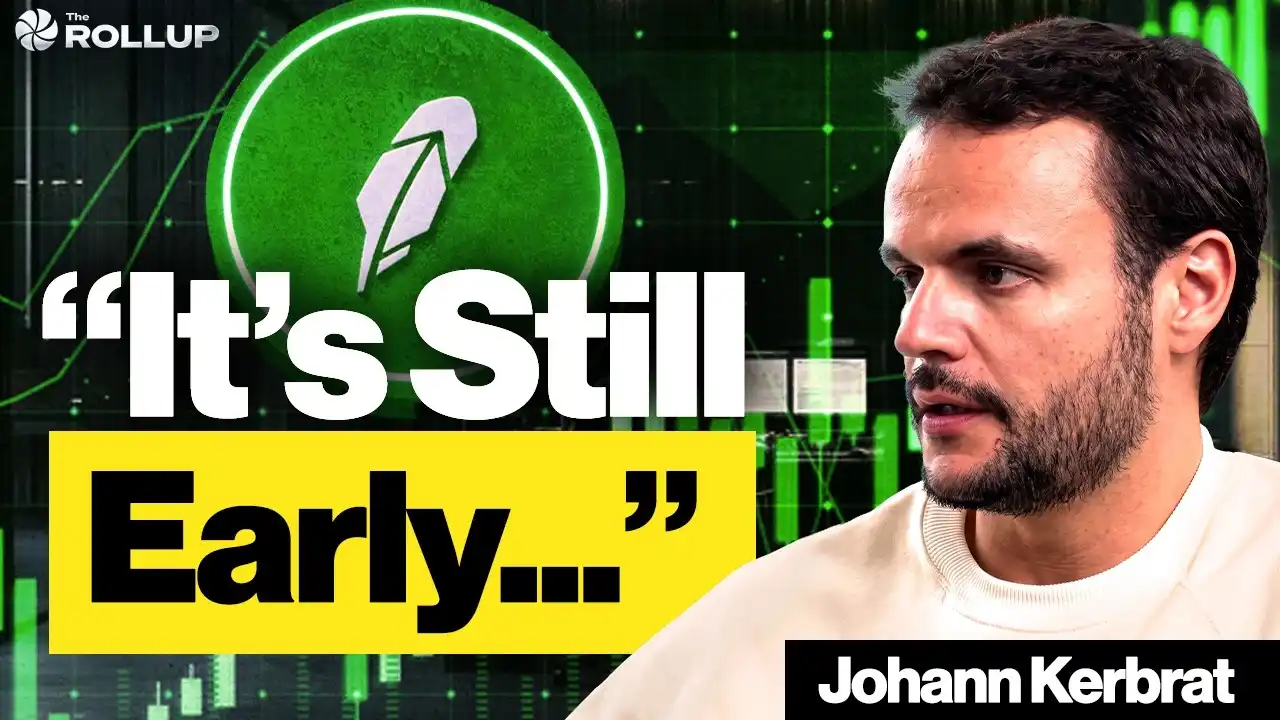
Interview with Robinhood Executive: Meme + Tokenized US Stocks as "Barbell" Customer Acquisition Strategy, All Business Lines Achieve Hundreds of Millions in Revenue

Interview with Robinhood executive Johann Kerbrat reveals the company's "barbell" customer acquisition strategy for its new Robinhood Chain, combining meme tokens with tokenized stocks. Three weeks after mainnet launch, the chain has seen over $3B in weekly DEX volume and 105M transactions. Kerbrat explains the logic behind the permissionless chain: meme tokens attract DeFi users, while tokenized real-world assets (RWA), currently over 90 US stocks and ETFs accessible in 120+ countries, serve global users. The goal is to bring Robinhood's 27 million funded accounts on-chain by simplifying DeFi with a user-friendly interface, exemplified by features like Robinhood Earn which offers yield without requiring wallet management. Built on Arbitrum's technology stack for its speed, low cost, and Ethereum's security, the chain focuses on financial products like Earn, spot trading, and perpetuals. Kerbrat downplays direct competition with platforms like Base, emphasizing the goal of expanding the overall market for on-chain assets. He details selective partnerships (e.g., Morpho, Lighter) based on compliance, unique UX, and differentiation. While regulatory clarity is pending for US perpetuals, the expansion continues via Bitstamp in Europe. Finally, Kerbrat positions Robinhood as a "super app" integrating stocks, options, crypto, banking, and AI trading, with all major business lines generating hundreds of millions in revenue. For the chain, current priority is driving adoption over maximizing gas fee revenue.

marsbitHace 3 hora(s)

Interview with Robinhood Executive: Meme + Tokenized US Stocks as "Barbell" Customer Acquisition Strategy, All Business Lines Achieve Hundreds of Millions in Revenue

marsbitHace 3 hora(s)

Fidelity Q3 Report: BTC, ETH, and SOL Continue to Build Bottoms; How Much Further Will This Crypto Bear Market Go?

Fidelity's Q3 Crypto Signal Report analyzes the current bear market, noting Bitcoin (BTC), Ethereum (ETH), and Solana (SOL) are in a prolonged bottoming phase. Key indicators like the weighted Net Unrealized Profit/Loss (NUPL) have turned negative (-0.01), signaling the market is slightly below its aggregate cost basis, with BTC acting as the primary stabilizing asset. BTC's dominance has risen to 68%, indicating a lack of capital rotation to other digital assets. Performance has been weak across the board, with BTC, ETH, and SOL down significantly year-to-date. Market sentiment is depressed, exacerbated by substantial outflows from spot ETPs and a challenging macro environment. The report compares the current ~203-day downtrend to historical ~300-day bottoming cycles, suggesting the process may be two-thirds complete, with late 2026 as a potential timeframe to monitor. For Bitcoin, NUPL at 0.09 indicates cautious sentiment, while momentum signals remain negative. The Yardstick metric points to potential undervaluation relative to network security (hashrate). Ethereum's NUPL is deep in the "capitulation" zone at -0.43, a historically positive signal for future returns, though its momentum and network fee revenue are negative. Solana shows the deepest NUPL at -0.72 but demonstrates relative resilience in on-chain activity and stablecoin transfer volume. The report concludes that while several metrics are near historical capitulation levels, a definitive market bottom has not yet been established. The path forward likely involves continued consolidation, with BTC's relative strength and fundamental on-chain usage for ETH and SOL providing key areas for investor observation.

marsbitHace 3 hora(s)

Fidelity Q3 Report: BTC, ETH, and SOL Continue to Build Bottoms; How Much Further Will This Crypto Bear Market Go?

marsbitHace 3 hora(s)

Trading

Spot

Artículos destacados

Cómo comprar O

¡Bienvenido a HTX.com! Hemos hecho que comprar O1 exchange (O) sea simple y conveniente. Sigue nuestra guía paso a paso para iniciar tu viaje de criptos.Paso 1: crea tu cuenta HTXUtiliza tu correo electrónico o número de teléfono para registrarte y obtener una cuenta gratuita en HTX. Experimenta un proceso de registro sin complicaciones y desbloquea todas las funciones.Obtener mi cuentaPaso 2: ve a Comprar cripto y elige tu método de pagoTarjeta de crédito/débito: usa tu Visa o Mastercard para comprar O1 exchange (O) al instante.Saldo: utiliza fondos del saldo de tu cuenta HTX para tradear sin problemas.Terceros: hemos agregado métodos de pago populares como Google Pay y Apple Pay para mejorar la comodidad.P2P: tradear directamente con otros usuarios en HTX.Over-the-Counter (OTC): ofrecemos servicios personalizados y tipos de cambio competitivos para los traders.Paso 3: guarda tu O1 exchange (O)Después de comprar tu O1 exchange (O), guárdalo en tu cuenta HTX. Alternativamente, puedes enviarlo a otro lugar mediante transferencia blockchain o utilizarlo para tradear otras criptomonedas.Paso 4: tradear O1 exchange (O)Tradear fácilmente con O1 exchange (O) en HTX's mercado spot. Simplemente accede a tu cuenta, selecciona tu par de trading, ejecuta tus trades y monitorea en tiempo real. Ofrecemos una experiencia fácil de usar tanto para principiantes como para traders experimentados.

405 Vistas totalesPublicado en 2026.06.19Actualizado en 2026.06.29

Cómo comprar O

Cómo comprar PROS

¡Bienvenido a HTX.com! Hemos hecho que comprar Pharos (PROS) sea simple y conveniente. Sigue nuestra guía paso a paso para iniciar tu viaje de criptos.Paso 1: crea tu cuenta HTXUtiliza tu correo electrónico o número de teléfono para registrarte y obtener una cuenta gratuita en HTX. Experimenta un proceso de registro sin complicaciones y desbloquea todas las funciones.Obtener mi cuentaPaso 2: ve a Comprar cripto y elige tu método de pagoTarjeta de crédito/débito: usa tu Visa o Mastercard para comprar Pharos (PROS) al instante.Saldo: utiliza fondos del saldo de tu cuenta HTX para tradear sin problemas.Terceros: hemos agregado métodos de pago populares como Google Pay y Apple Pay para mejorar la comodidad.P2P: tradear directamente con otros usuarios en HTX.Over-the-Counter (OTC): ofrecemos servicios personalizados y tipos de cambio competitivos para los traders.Paso 3: guarda tu Pharos (PROS)Después de comprar tu Pharos (PROS), guárdalo en tu cuenta HTX. Alternativamente, puedes enviarlo a otro lugar mediante transferencia blockchain o utilizarlo para tradear otras criptomonedas.Paso 4: tradear Pharos (PROS)Tradear fácilmente con Pharos (PROS) en HTX's mercado spot. Simplemente accede a tu cuenta, selecciona tu par de trading, ejecuta tus trades y monitorea en tiempo real. Ofrecemos una experiencia fácil de usar tanto para principiantes como para traders experimentados.

433 Vistas totalesPublicado en 2026.06.22Actualizado en 2026.06.29

Cómo comprar PROS

Qué es VERONA

I. Introducción al Proyecto VERONA es una blockchain construida para todos, en todas partes a través de la abstracción de cadenas. Utilizando su capa de Abstracción Generalizada, VERONA se distingue por integrar funcionalidades complejas de blockchain, como cuentas, firmas e interoperabilidad, directamente a nivel de protocolo. Este enfoque permite interactuar con aplicaciones de blockchain sin necesidad de entender las tecnologías subyacentes.1) Información Básica Nombre: VERONA (VERONA)III. Enlaces Relacionados Enlace al sitio web oficial: https://xion.burnt.com/ Libro Blanco: https://xion.burnt.com/whitepaper.pdf Exploradores: https://explorer.burnt.com/ Redes Sociales: https://x.com/burnt_xion Nota: La introducción del proyecto proviene de los materiales publicados o proporcionados por el equipo oficial del proyecto, que es solo para referencia y no constituye asesoramiento de inversión. HTX no se hace responsable de ninguna pérdida directa o indirecta resultante.

474 Vistas totalesPublicado en 2026.06.22Actualizado en 2026.06.22

Qué es VERONA

Discusiones

Bienvenido a la comunidad de HTX. Aquí puedes mantenerte informado sobre los últimos desarrollos de la plataforma y acceder a análisis profesionales del mercado. A continuación se presentan las opiniones de los usuarios sobre el precio de A (A).

活动图片