The real crypto adoption shows on Tuesday morning payments

cointelegraphPublicado a 2025-12-17Actualizado a 2025-12-17

Resumen

Although cryptocurrency ownership is widespread with over 560 million global users, only a small fraction actually use crypto for everyday payments. Most treat it as an investment rather than a medium of exchange. True adoption, the article argues, should be measured by behavioral metrics like time-to-first-spend, weekly active payers, and low decline rates—not just wallet counts. Kolo, an all-in-one crypto app, is presented as a solution aiming to bridge this gap. It combines a multi-network wallet with a Visa card integrated into Apple Pay and Google Pay, allowing users to spend crypto seamlessly at millions of merchants. The platform processes over 460,000 payments, primarily for routine expenses like groceries, dining, and subscriptions. It features quick onboarding, compliance with regulations, and offers Bitcoin cashback to incentivize spending. The core idea is that real adoption happens when crypto becomes a frictionless part of daily life, operating invisibly in the background of normal transactions.

Sponsored Content

Crypto occupies a stable place in global finance. A 2024 report from payments firm Triple-A estimates that approximately 562 million people worldwide own digital currencies, accounting for around 6.8% of the global population.

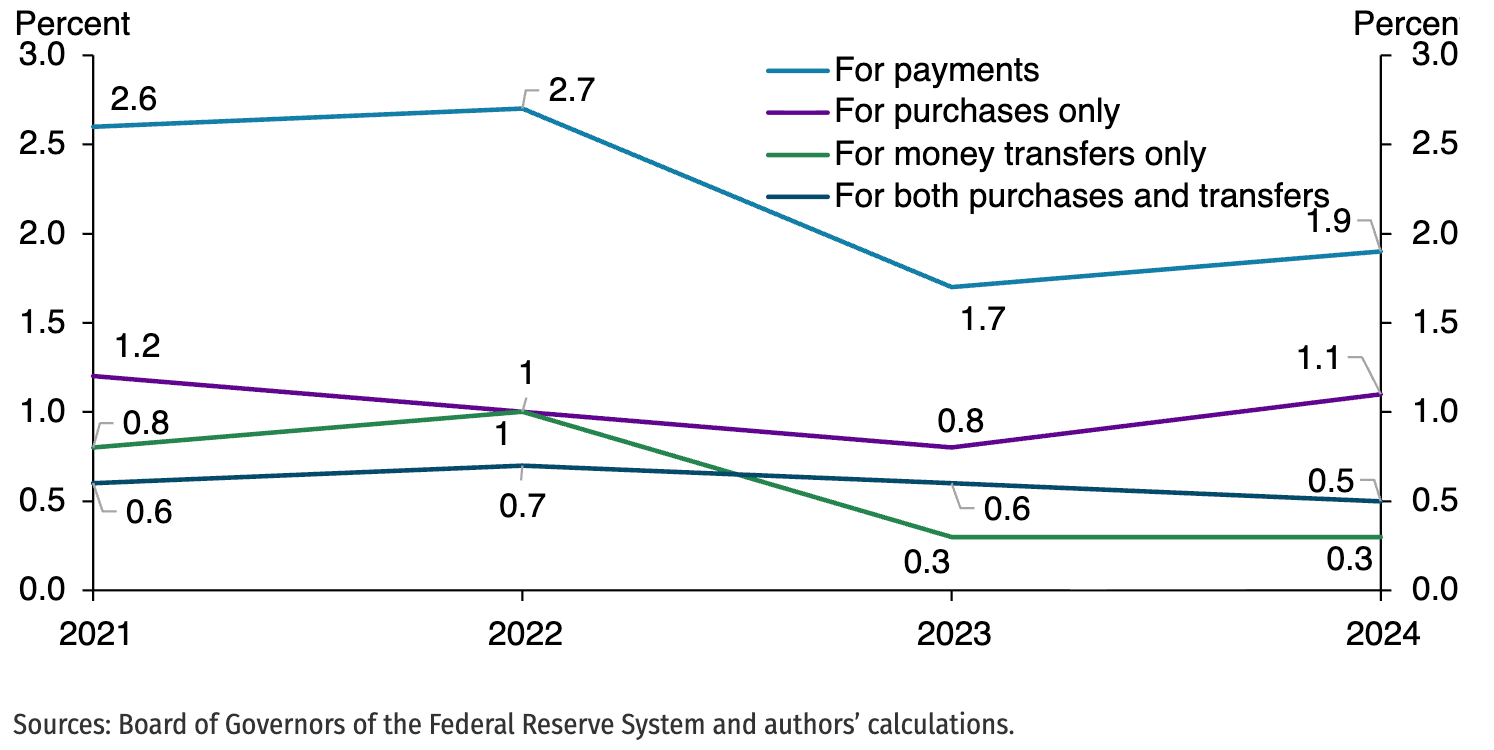
Yet payment behavior grows slowly. Research from the Federal Reserve Bank of Kansas City indicates that less than 2% of US consumers use cryptocurrency for payments, such as purchases or money transfers. Many people hold crypto as an investment or as a way to move value between services, and they still reach for bank cards at the supermarket.
Loyalty programs move in the opposite direction. A 2024 market intelligence report expects the global loyalty market to reach about $151 billion in 2024 and to grow toward roughly $215 billion by 2028.

When will the large base of crypto holders and the significant pool of loyalty spend begin to show up as simple weekday payments for groceries, rides and subscriptions?

Why wallet counts hide that answer

Projects usually point to easy success markers. Teams report the number of wallets, the number of cards they have issued and the amount of value in custody. These figures describe potential access, and they look strong on a slide, yet they fail to show whether people treat crypto as everyday money. A single enthusiast can create several wallets, keep balances on multiple exchanges and hold cards from more than one provider.

A tighter group of behavioral metrics gives a clearer view. Time-to-first-spend tracks how quickly new users complete a first successful payment after onboarding. Weekly active payers count people who make at least one payment in a week, and they highlight spending on groceries, transport or subscriptions. Fail and decline rate shows how many attempted payments fail at checkout, and it exposes gaps between onchain balances, offchain settlement and issuer risk rules.

Together, these three metrics form a product brief for builders. The ecosystem needs services that shorten time-to-first-spend, raise weekly active payer numbers and keep decline rates low at the places where people already shop.

What weekday spending looks like

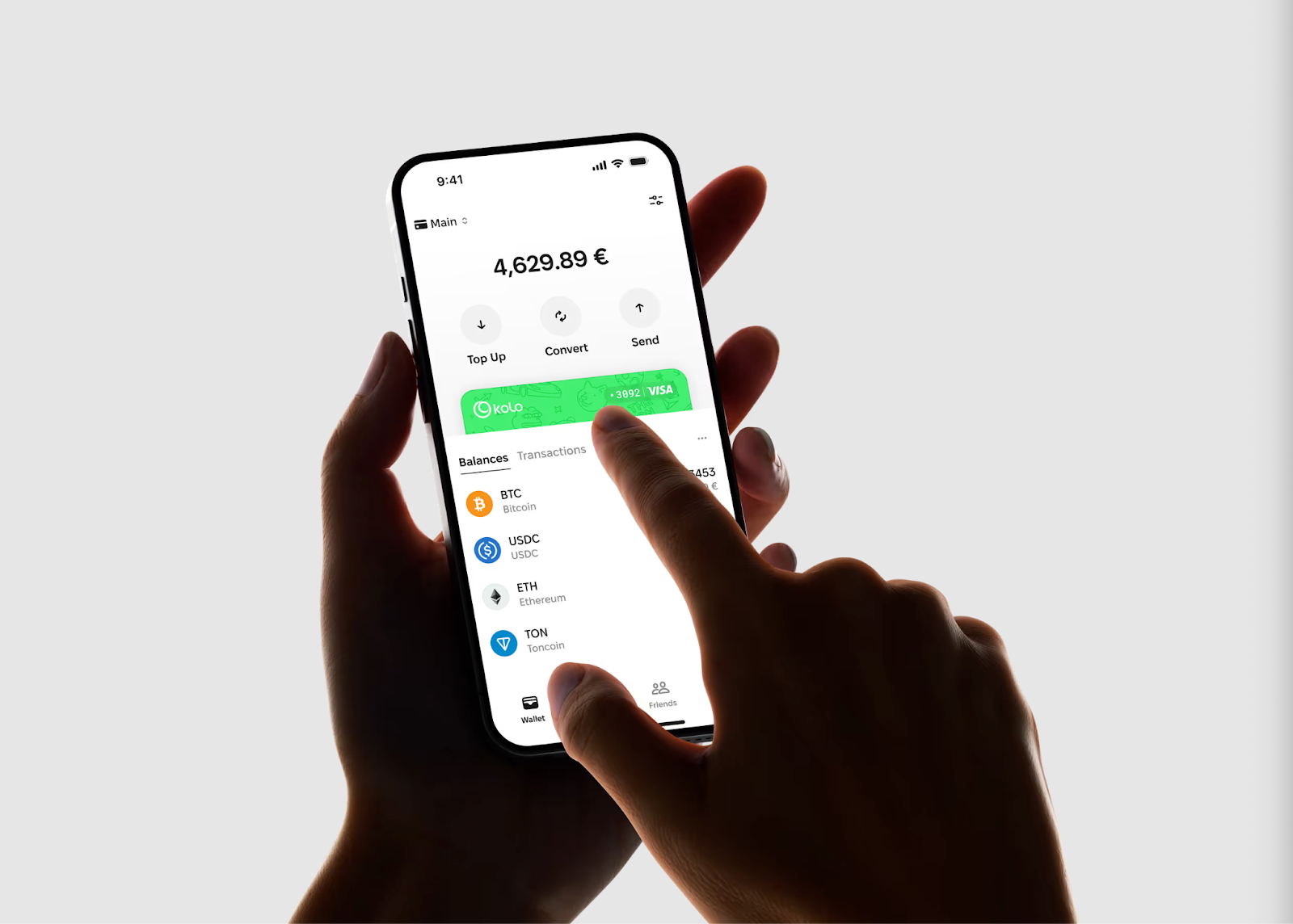
All-in-one crypto app Kolo offers a single solution to that brief. Kolo is a payment layer that bridges digital assets with everyday spending through a multi-network wallet and a Visa card that works with Apple Pay and Google Pay.

The newly launched Kolo Card has introduced a virtual Visa card that allows users to pay with cryptocurrency at millions of merchants and receive up to 5% cashback in Bitcoin (BTC). Users can pay for services such as Amazon, Instagram, Telegram, Netflix or Steam wherever Apple Pay or Google Pay is accepted.

Kolo has more than 100,000 wallets and around 50,000 monthly users. Most Kolo Card transactions fall into familiar spending categories such as restaurants, supermarkets, transport and digital subscriptions, with over 460,000 payments processed.

The typical Kolo transaction looks like a coffee run, a grocery top-up or a streaming renewal. Users move funds into the wallet, and they see that they can handle routine expenses with crypto in the background. That pattern matches the idea of weekly active payers.

Turning wallets into weekday payments

Kolo aligns its experience with these behavioral metrics. The product aims to help new users move from signup to the first successful payment in one flow and to keep using the card every week for familiar purchases. During checkout, the cryptocurrency is converted to the local currency with a single tap on the phone or smart watch of the user.

Key features include:

  • A digital wallet across 11 networks

  • Kolo Card for Apple Pay and Google Pay at millions of merchants

  • One-minute Know Your Customer (KYC) that unlocks the card and payment features

  • More than 15 different payment methods, including PIX, MPESA and many others

  • Up to 5% Bitcoin cashback that grows a BTC balance on every purchase

This structure aims for a short time-to-first-spend. A user can download the app, complete KYC in about a minute, receive a Kolo Card and start using it in under two minutes. They no longer need to move funds through multiple intermediaries.
Source: Kolo

Compliance and infrastructure sit at the core of that journey. Kolo operates with MiCA alignment and Travel Rule compliance, and it includes Anti-Money Laundering (AML) protections. These foundations help the team lower fail and decline rates because the card, the wallet and the back-end settlement share the same rules and risk view.

“For everyday users, stablecoins’ rise as a universal way to store and move value simply removes friction. Digital money finally exists in a digital form that feels natural,” said Pavel Luchkovskyi, CEO of Kolo, adding:

“Kolo just connects to this new layer: if someone holds a digital dollar or any virtual asset, they should be able to use it for regular payments as easily as tapping a card. And once that becomes normal, that’s when real adoption shows up.”

Kolo also uses rewards to reinforce everyday behavior. The Bitcoin cashback model links offchain payments to onchain savings. Users pay for ordinary purchases at physical or digital merchants, and they grow a BTC stack in parallel.

Rethinking success in the age of crypto payments

The story of crypto adoption often highlights wallet milestones and price charts. Another picture emerges when teams track how many people tap a phone on a Tuesday morning and complete a smooth crypto-backed payment.

Time-to-first-spend, weekly active payers and fail or decline rates give that picture structure. These metrics encourage builders and investors to treat UX, on-ramp design and merchant coverage as central levers for growth.

Kolo shows how this mindset looks in a live product. The company brings together a hybrid wallet, a globally accepted card, a variety of payment rails and Bitcoin rewards in one experience that fits existing payment habits. Cryptocurrency runs behind the scenes while users focus on their everyday lives.


Criptos en tendencia

Lecturas Relacionadas

Grayscale Reassesses Zcash: In the Era of AI Surveillance, What is Financial Privacy Worth?

Grayscale Research reevaluates Zcash (ZEC) in the context of AI-powered financial surveillance. The report posits that stablecoins, transparent blockchains, and AI analytics tools are increasing the traceability of digital finance, potentially reigniting mainstream demand for financial privacy as a core monetary attribute. While AI could drive a third wave of privacy concern, Zcash's investment thesis hinges on whether this theoretical demand translates into sustained adoption. Zcash, operational for nearly a decade, uses zero-knowledge proofs to offer users a choice between transparent and shielded transactions, placing control of information disclosure back in users' hands. Recent infrastructure improvements—like wallet enhancements, mining pool expansions, and protocol upgrades—have reduced usability barriers. On-chain data shows shielded transactions comprise ~90% of transaction count, with ~25% of circulating ZEC in shielded pools, indicating existing use. However, significant risks remain. These include regulatory hurdles for exchanges and custodians dealing with shielded assets, past protocol vulnerabilities (theoretical, now patched), long-term quantum computing threats, and execution risks for future scalability upgrades. Grayscale's analysis suggests ZEC's current low market share (~0.6% of the "digital currency" crypto sector) offers valuation upside *if* the market reprices privacy. A scenario analysis notes that capturing 5% of this sector could imply a ~9x valuation increase, though this is a simplified sensitivity test, not a price target. Ultimately, Zcash's opportunity lies in the unresolved question: in an AI-monitored era, what price will the market assign to financial privacy? Validating the thesis requires monitoring growth in real shielded usage, wallet usability, upgrade timelines, and regulatory accessibility, not just price appreciation.

marsbitHace 18 min(s)

Grayscale Reassesses Zcash: In the Era of AI Surveillance, What is Financial Privacy Worth?

marsbitHace 18 min(s)

AI Democratizes Hacking, Bitcoin Red Team White Hats Race in Speed-Based Attack-Defense Contest

AI is democratizing powerful hacking tools, putting them in the hands of those with little cybersecurity expertise. Cryptocurrency developers are now in a race to find system vulnerabilities before attackers do. The Bitcoin Red Team, a group of 20-25 volunteers including anonymous developers like Calle, has formed to urgently address these AI-augmented security threats within the Bitcoin ecosystem. Calle emphasizes that while the Bitcoin core protocol itself is secure, the real risk lies in the wallets, applications, services, and other third-party software built on top of it—the software most users interact with. Incidents like the Coldcard wallet hack and the emergence of powerful Chinese AI models have accelerated their proactive security auditing efforts. The team both accepts audit requests from Bitcoin projects and proactively scans major open-source projects. They report found vulnerabilities to developers and refine their classification standards. Notably, Calle states the team frequently uses Chinese AI models over US counterparts, as the latter's strict safety guardrails often block cybersecurity research tasks, hindering their utility for finding or fixing vulnerabilities. Calle warns that AI is erasing the information asymmetry that previously protected some vulnerabilities. It lowers the technical barrier, allowing non-experts to exploit simple flaws. He describes the current state of Bitcoin software as "on fire" and believes the direct financial incentive of cryptocurrency makes it a first target in this industry-wide shift, with other sectors to follow. The era of security through obscurity is over.

marsbitHace 38 min(s)

AI Democratizes Hacking, Bitcoin Red Team White Hats Race in Speed-Based Attack-Defense Contest

marsbitHace 38 min(s)

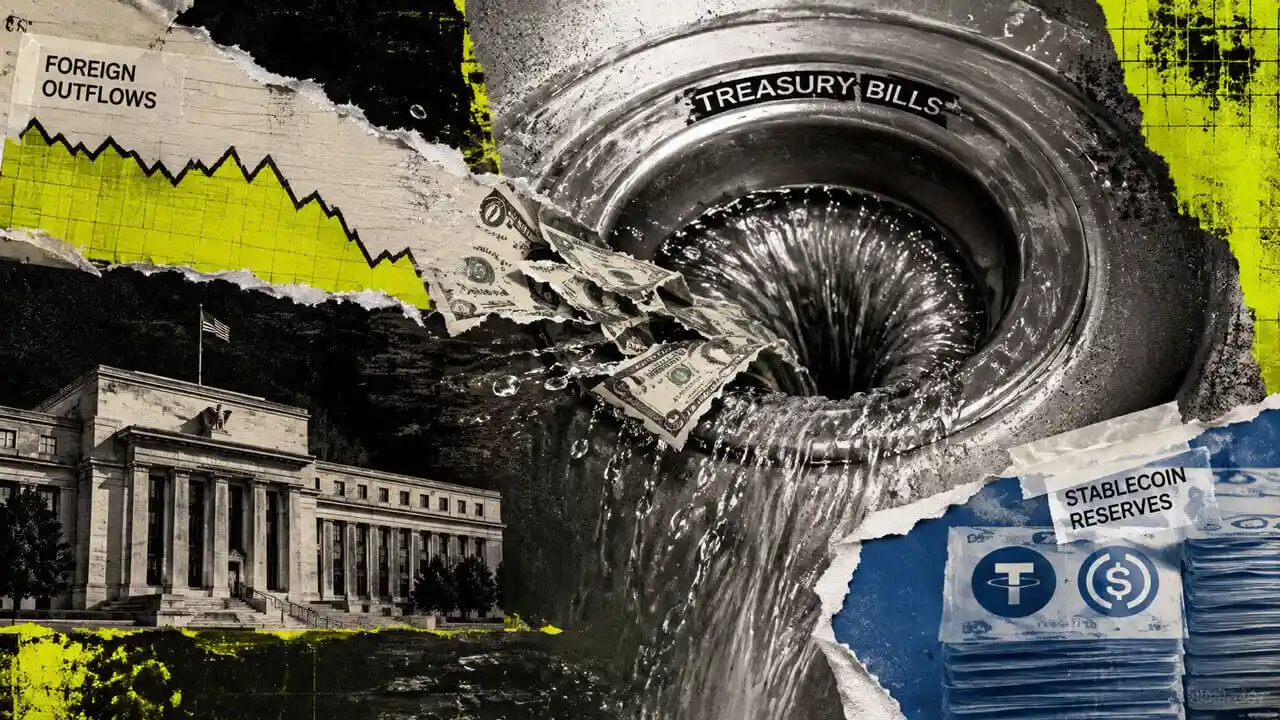
Foreign Capital Sells Off $29 Billion in Short-Term US Treasuries, Why is the US Betting on Stablecoins to "Take Over"?

In June, foreign investors netted $133.5 billion into U.S. financial markets but simultaneously sold $29 billion in short-term U.S. Treasury bills. This divergence highlights a strong preference for U.S. equities over government debt. While overseas buyers purchased $181.4 billion in stocks, demand for Treasuries weakened significantly. This trend explains why the U.S. is looking to stablecoins as a potential new source of demand for its debt. Stablecoin issuers like Tether and Circle back their tokens primarily with highly liquid assets, including short-term Treasuries. As users buy stablecoins, issuers convert that dollar demand into Treasury purchases. Recent U.S. legislative efforts, such as the proposed rules under the *GENIUS Act*, formalize this by mandating stablecoin reserves be held in assets like cash and short-term Treasuries. Currently, stablecoins represent a substantial existing buyer base. For instance, Tether alone held nearly $115 billion in direct T-bill exposure in Q2. However, recent stablecoin supply growth has been minimal and does not account for the $29 billion sell-off by foreign investors in June. For stablecoins to act as a meaningful counterbalance to waning foreign demand, their circulating supply would need to expand significantly. The next TIC report will be crucial to monitor whether foreign selling continues and if stablecoin growth begins to fill the demand gap. Ultimately, the U.S. is strategically positioning the regulated stablecoin sector as a potential new pillar of demand for its government debt.

marsbitHace 38 min(s)

Foreign Capital Sells Off $29 Billion in Short-Term US Treasuries, Why is the US Betting on Stablecoins to "Take Over"?

marsbitHace 38 min(s)

Trading

Spot

Artículos destacados

Cómo comprar SKDD

¡Bienvenido a HTX.com! Hemos hecho que comprar GraniteShares 2x Short SK Hynix Daily ETF (SKDD) sea simple y conveniente. Sigue nuestra guía paso a paso para iniciar tu viaje de criptos.Paso 1: crea tu cuenta HTXUtiliza tu correo electrónico o número de teléfono para registrarte y obtener una cuenta gratuita en HTX. Experimenta un proceso de registro sin complicaciones y desbloquea todas las funciones.Obtener mi cuentaPaso 2: ve a Comprar cripto y elige tu método de pagoTarjeta de crédito/débito: usa tu Visa o Mastercard para comprar GraniteShares 2x Short SK Hynix Daily ETF (SKDD) al instante.Saldo: utiliza fondos del saldo de tu cuenta HTX para tradear sin problemas.Terceros: hemos agregado métodos de pago populares como Google Pay y Apple Pay para mejorar la comodidad.P2P: tradear directamente con otros usuarios en HTX.Over-the-Counter (OTC): ofrecemos servicios personalizados y tipos de cambio competitivos para los traders.Paso 3: guarda tu GraniteShares 2x Short SK Hynix Daily ETF (SKDD)Después de comprar tu GraniteShares 2x Short SK Hynix Daily ETF (SKDD), guárdalo en tu cuenta HTX. Alternativamente, puedes enviarlo a otro lugar mediante transferencia blockchain o utilizarlo para tradear otras criptomonedas.Paso 4: tradear GraniteShares 2x Short SK Hynix Daily ETF (SKDD)Tradear fácilmente con GraniteShares 2x Short SK Hynix Daily ETF (SKDD) en HTX's mercado spot. Simplemente accede a tu cuenta, selecciona tu par de trading, ejecuta tus trades y monitorea en tiempo real. Ofrecemos una experiencia fácil de usar tanto para principiantes como para traders experimentados.

174 Vistas totalesPublicado en 2026.08.19Actualizado en 2026.08.19

Cómo comprar SKDD

Qué es SKUU

Diseñado para proporcionar el doble de los rendimientos diarios apalancados de las acciones de SK Hynix, este es un ETF apalancado de un solo día bajo GraniteShares. Es adecuado para inversores con una perspectiva alcista a corto plazo sobre SK Hynix para asignación táctica.

226 Vistas totalesPublicado en 2026.08.19Actualizado en 2026.08.19

Qué es SKUU

Cómo comprar SKUU

¡Bienvenido a HTX.com! Hemos hecho que comprar GraniteShares 2x Long SK Hynix Daily ETF (SKUU) sea simple y conveniente. Sigue nuestra guía paso a paso para iniciar tu viaje de criptos.Paso 1: crea tu cuenta HTXUtiliza tu correo electrónico o número de teléfono para registrarte y obtener una cuenta gratuita en HTX. Experimenta un proceso de registro sin complicaciones y desbloquea todas las funciones.Obtener mi cuentaPaso 2: ve a Comprar cripto y elige tu método de pagoTarjeta de crédito/débito: usa tu Visa o Mastercard para comprar GraniteShares 2x Long SK Hynix Daily ETF (SKUU) al instante.Saldo: utiliza fondos del saldo de tu cuenta HTX para tradear sin problemas.Terceros: hemos agregado métodos de pago populares como Google Pay y Apple Pay para mejorar la comodidad.P2P: tradear directamente con otros usuarios en HTX.Over-the-Counter (OTC): ofrecemos servicios personalizados y tipos de cambio competitivos para los traders.Paso 3: guarda tu GraniteShares 2x Long SK Hynix Daily ETF (SKUU)Después de comprar tu GraniteShares 2x Long SK Hynix Daily ETF (SKUU), guárdalo en tu cuenta HTX. Alternativamente, puedes enviarlo a otro lugar mediante transferencia blockchain o utilizarlo para tradear otras criptomonedas.Paso 4: tradear GraniteShares 2x Long SK Hynix Daily ETF (SKUU)Tradear fácilmente con GraniteShares 2x Long SK Hynix Daily ETF (SKUU) en HTX's mercado spot. Simplemente accede a tu cuenta, selecciona tu par de trading, ejecuta tus trades y monitorea en tiempo real. Ofrecemos una experiencia fácil de usar tanto para principiantes como para traders experimentados.

175 Vistas totalesPublicado en 2026.08.19Actualizado en 2026.08.19

Cómo comprar SKUU

Discusiones

Bienvenido a la comunidad de HTX. Aquí puedes mantenerte informado sobre los últimos desarrollos de la plataforma y acceder a análisis profesionales del mercado. A continuación se presentan las opiniones de los usuarios sobre el precio de A (A).

活动图片