The Outlook for Bitcoin: The 'Bottom' Logic Revealed by On-Chain Data

marsbitPublicado a 2026-08-10Actualizado a 2026-08-10

Resumen

Bitcoin Market Outlook: On-Chain Data and the "Bottom" Logic Bitcoin analyst Will Clemente examines the current state of Bitcoin, arguing it is approaching a value zone despite a challenging market. While acknowledging a difficult year with factors like disappointing ETF outflows and miner migration to AI/HPC, he finds the network fundamentally healthy and decentralized. Key on-chain metrics suggest accumulation. The MVRV ratio indicates Bitcoin is in a historically low valuation range. Long-term holders are actively accumulating again after a distribution phase, and trading volume has dried up significantly. Options markets show minimal bullish interest and low implied volatility, implying the market views Bitcoin as stagnant. The report discusses two major recent pressures: Digital Asset Treasuries (DATs) and quantum computing risks. Clemente notes signs of DAT capitulation, reducing sell-side pressure, and argues that quantum risks, while real, are likely already priced in at current levels. A clear short-term catalyst is absent. However, Clemente suggests the market may have priced in most negatives, and a bottom often forms from seller exhaustion rather than a new bullish catalyst. Potential future drivers could include systematic, price-insensitive buying from large asset managers seeking diversification, given Bitcoin's recent low correlation with other assets. In conclusion, while a final downturn is possible, Bitcoin appears "cheap" with healthy fundamentals. Re...

Author: Will Clemente, Bitcoin Analyst / STIX Investment & Strategy Member / Co-founder of Reflexivity Research

Translation: Jiahuan, ChainCatcher

I hope everyone had a pleasant summer. I haven't written a long piece about Bitcoin for a while. In this article, I want to gather my thoughts on this asset and some ideas that have been forming in my mind recently, discussing how to view and allocate to Bitcoin going forward.

Last year, I largely shifted my personal market focus to commodities. The reason was that it had become evident that the crypto market was facing a supply overhang, which weighed heavily on the entire market.

At the same time, apart from a few niche areas like Hyperliquid, the industry lacked sufficient innovation, at least compared to the vibrant performance of other markets. Therefore, the market also suffered from insufficient demand to absorb the large supply.

I originally thought there was a window for Bitcoin to show strength late last year: small-cap stocks were soaring, and gold had just experienced a strong rally. But Bitcoin ultimately essentially just made a failed breakout—just a few days before October 10th—which was very disappointing to me.

In January of this year, as the market performance closely resembled the last bear market we experienced in 2022, I further reduced my remaining Bitcoin exposure.

To be frank, this hasn't been a pleasant year to focus on Bitcoin, or the entire crypto market for that matter. In terms of percentage decline from the highs, this cycle has been milder overall than the last one, but from many angles, this bear market might even be more difficult than 2022.

At least in 2022, you could clearly point to reasons for the market's decline: rising interest rates, the cleansing of leverage and fraud, and the FTX collapse. Then you could say, "If these factors might change, and by the end of 2022 the room for things to get worse was clearly smaller than the room for improvement, then Bitcoin likely presents a good long-term buying opportunity."

But there is no similar logic today, with perhaps a few exceptions like Digital Asset Treasuries (DATs) and the quantum computing risk—which I'll touch on later, and which in my view are finally starting to show some signs of repair.

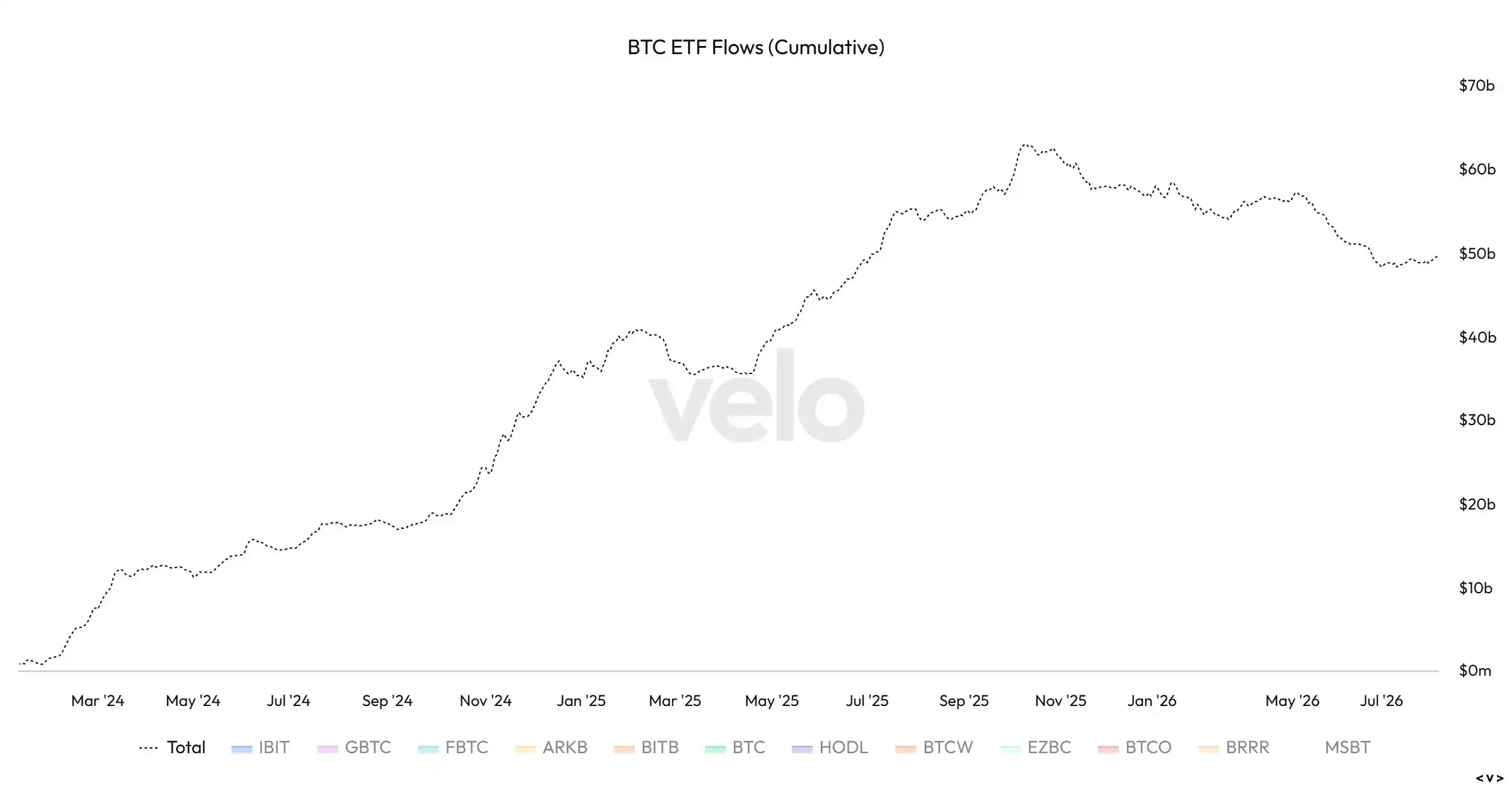
Bitcoin ETFs hold about $50 billion in assets. They set records for inflows upon launch, only surpassed earlier this year by memory ETFs. Major financial institutions have also started rolling out lending products.

Last year, gold performed exceptionally well driven by central bank reserve demand and the "de-dollarization" narrative; theoretically, that should have been Bitcoin's moment to shine.

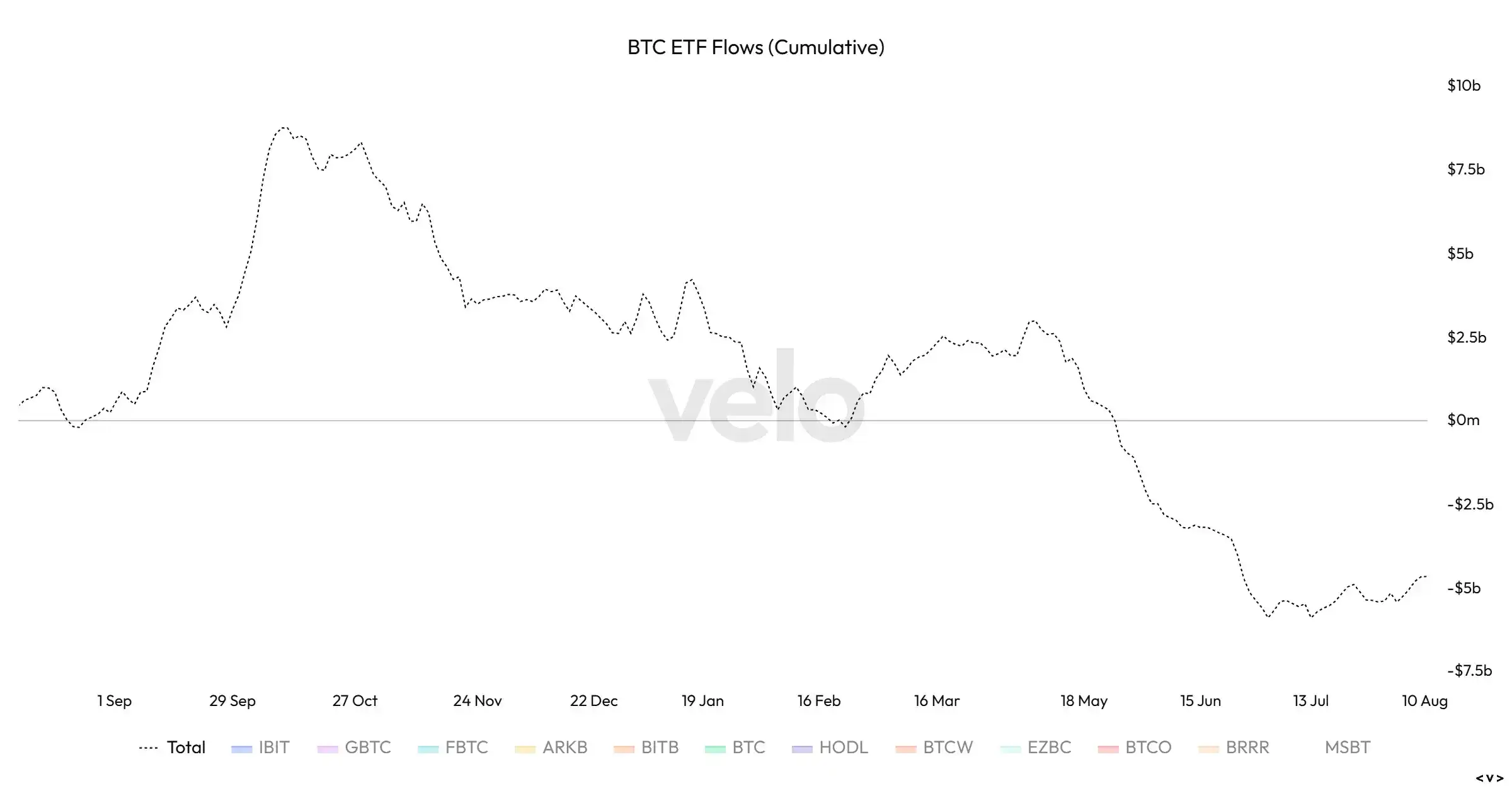
Now, virtually any individual or institution wishing to gain Bitcoin exposure has a channel to do so. Precisely because of this, the contrast is especially disappointing: Bitcoin ETFs have seen $5 billion in net outflows over the past year, while DRAM-related products attracted $10 billion in a single month.
Network Health

When discussing Bitcoin's fundamentals, we are obviously not talking about traditional financial metrics, but rather observing the underlying state of the network itself. I won't go through every indicator just for the sake of listing data, but there are two points I believe are truly important.

In an increasingly centralized world—with state-led economies, state-influenced markets, plus the perhaps most powerful technological centralizing force we've seen yet from big tech companies—I do believe "decentralization" has intrinsic value.

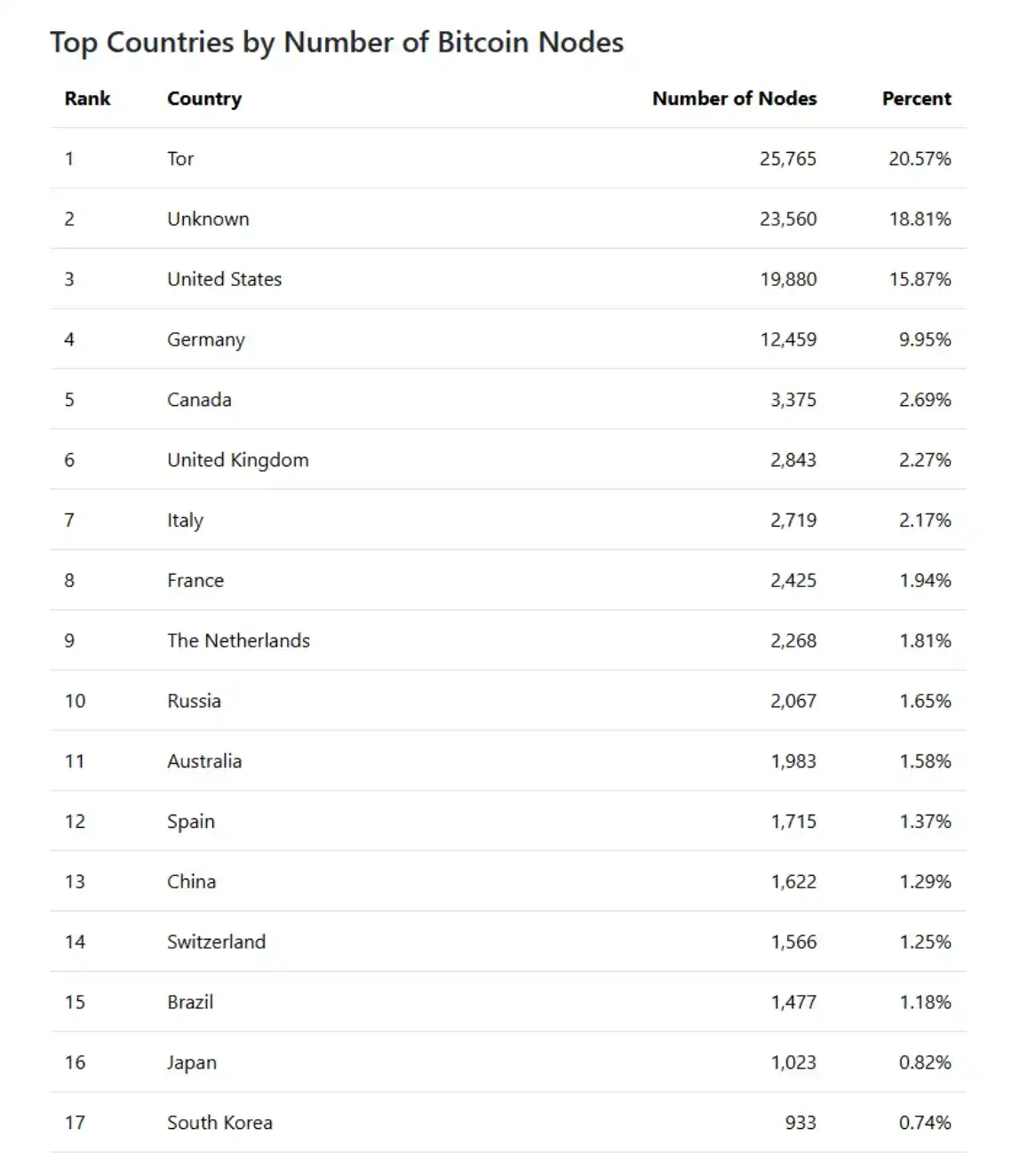
For those less familiar with Bitcoin's underlying mechanics, the network has both miners, whom everyone has heard of, and nodes. Anyone can run a node. Nodes enforce the rules and validate the network, while miners provide security through computational work backed by massive energy consumption. Nodes are spread across the globe, and there are likely many more that aren't easily tracked. The list below alone covers nearly 200 countries.
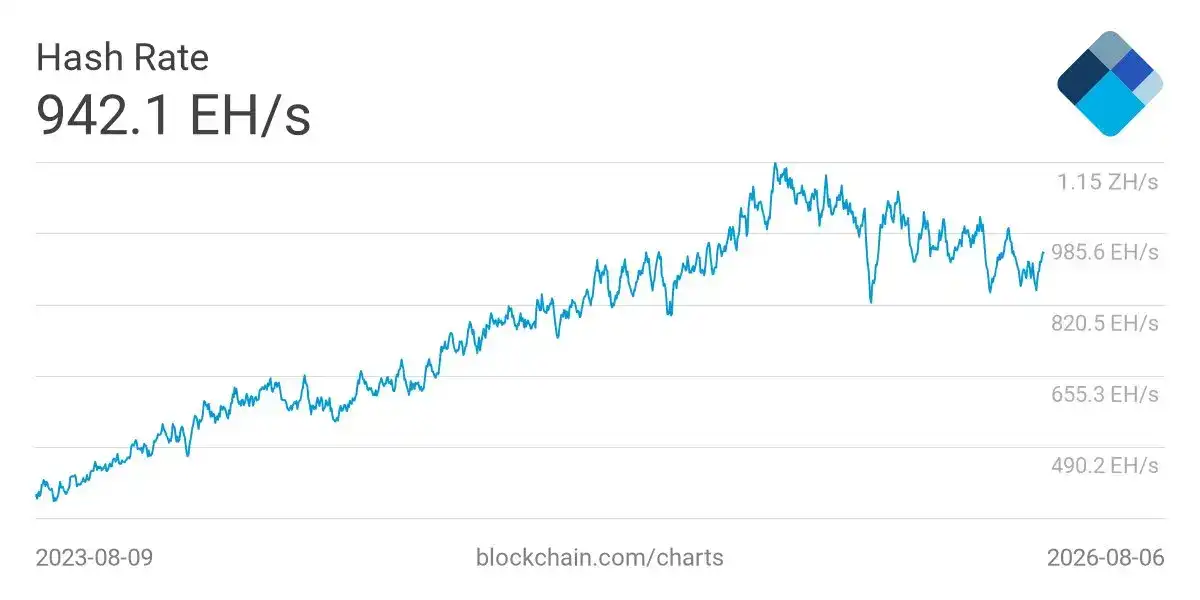
We can observe mining pools—though pools don't control the individual miners within them—but it's difficult to track every independent miner like we can track nodes. However, we can look at the overall energy input securing the network through hash rate.

From any angle, Bitcoin's total network hash rate is declining. Post-2022, miner profit margins were squeezed by increased competition and rising energy costs. More importantly, many mining companies began pivoting to Artificial Intelligence and High-Performance Computing (AI/HPC). So far, this has proven a prudent business decision for those listed miners who have transitioned.

Bitcoin's underperformance relative to AI-related assets, coupled with the strong growth in demand for computing power, has further reinforced this trend. Therefore, this can be interpreted both pessimistically and optimistically.

The pessimistic side: In terms of energy input securing the network, the Bitcoin network is indeed technically less secure; simultaneously, the energy input value—essentially the production cost—backing each unit of Bitcoin as a digital commodity has decreased.

However, it's worth noting that due to the difficulty adjustment mechanism, the network itself is not in crisis. The network automatically adjusts mining difficulty and reward conditions every two weeks based on the hash rate level. When competition decreases, this mechanism incentivizes new miners to join and provide security.

The optimistic side: Even though virtually every listed mining company we know of is pivoting to AI/HPC, the total network hash rate has only fallen back to mid-last year's levels. This suggests there may be more entities actually mining Bitcoin and able to access cheap energy than some previously thought. Combined with node distribution data, the Bitcoin network remains decentralized and healthy.
Overall, I believe the Bitcoin network itself remains as decentralized and healthy as it has ever been.

Valuation Methods & Current Metrics

Bitcoin obviously doesn't generate cash flow, but we can still compare its current valuation to historical market performance using several unique methods.

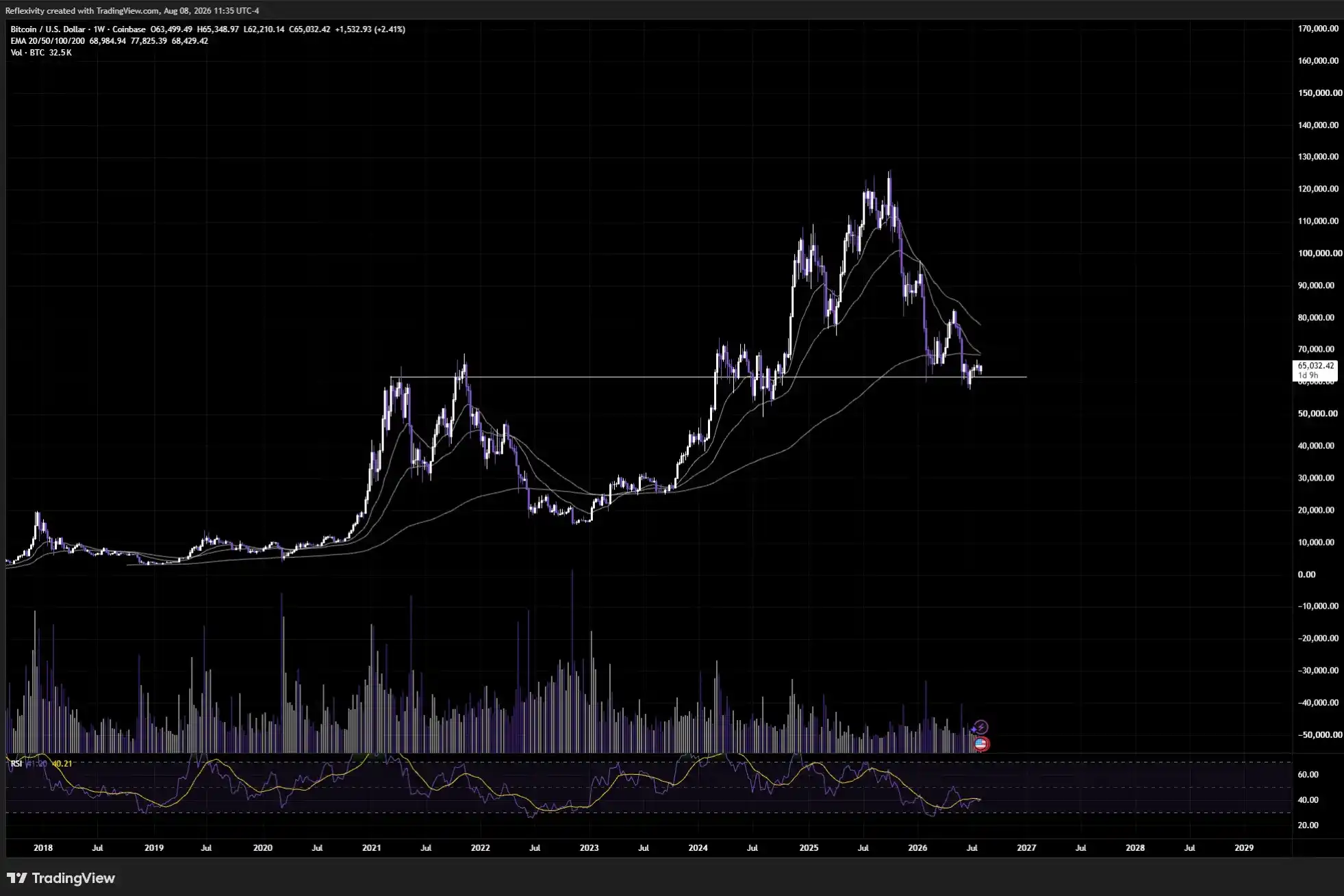
From a technical perspective, Bitcoin is currently consolidating near its 2021 previous highs, slightly below the 200-week Exponential Moving Average (EMA). The weekly RSI is showing a bullish divergence emerging from oversold territory, with the last time it reached such oversold levels being the depths of the previous bear market.

Historically, the 200-week moving average has been a decent baseline threshold to start considering gradually accumulating Bitcoin spot positions.
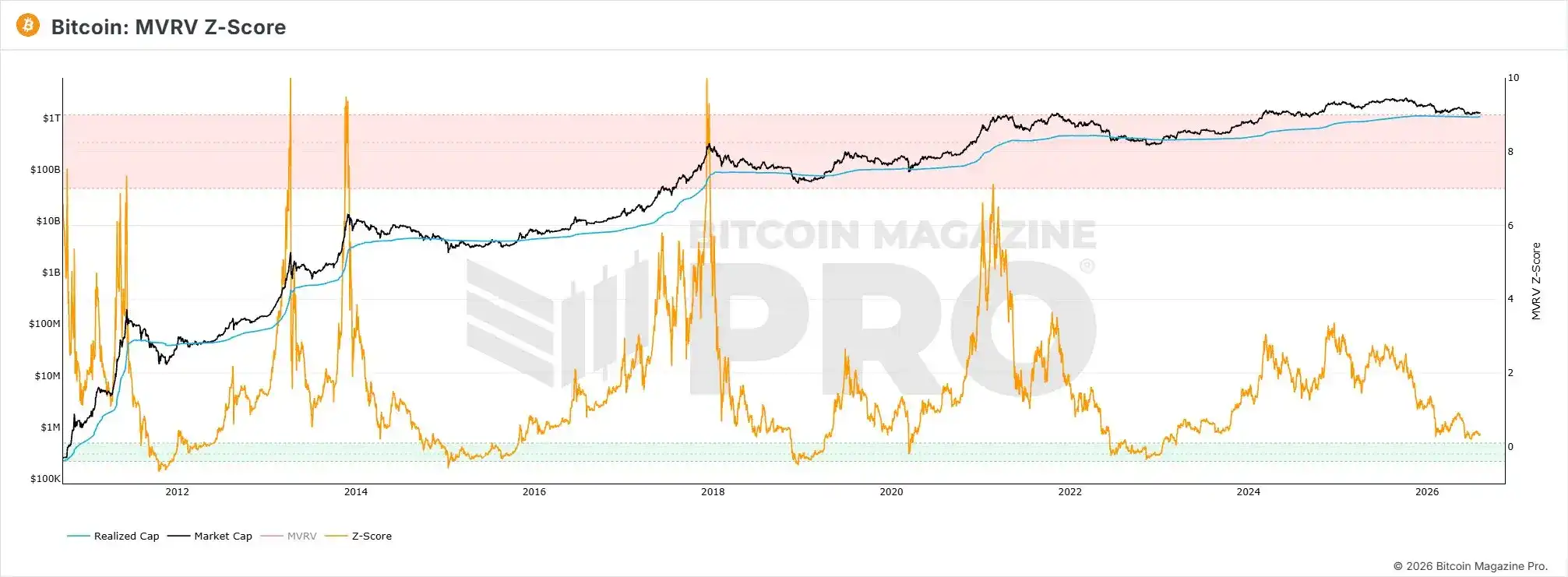
Among on-chain data-based valuation methods, one of the most effective indicators is the Market Value to Realized Value (MVRV) ratio. It compares Bitcoin's current marginal transaction price to the aggregate cost basis of the entire network; the latter is calculated based on the price at which tokens last moved to a new wallet cluster.

When this ratio is high, it means the current marginal transaction price is significantly above the network's average cost. There is a large amount of unrealized paper profit (PNL) in the market, giving many holders strong motivation to take profits.

When the ratio is below 0, it means market participants are, on average, in an unrealized loss position. Historically, this has often marked a phase more suitable for accumulation.

You'll notice that in 2024–2025, this indicator never truly reached the frenzied, blow-off-top levels of the past. This reflects the asset class's gradual maturation and the accompanying compression in volatility in recent years.

Considering that each bull market's indicator highs have been progressively lower, and the lows at the deepest points of each bear market have been slightly higher, a reasonable conclusion might be that the market doesn't necessarily have to enter negative territory this time to find a bottom.

It's extremely difficult to buy precisely at the lowest point. The most important takeaway here is that Bitcoin is currently at the lower end of its historical valuation range.
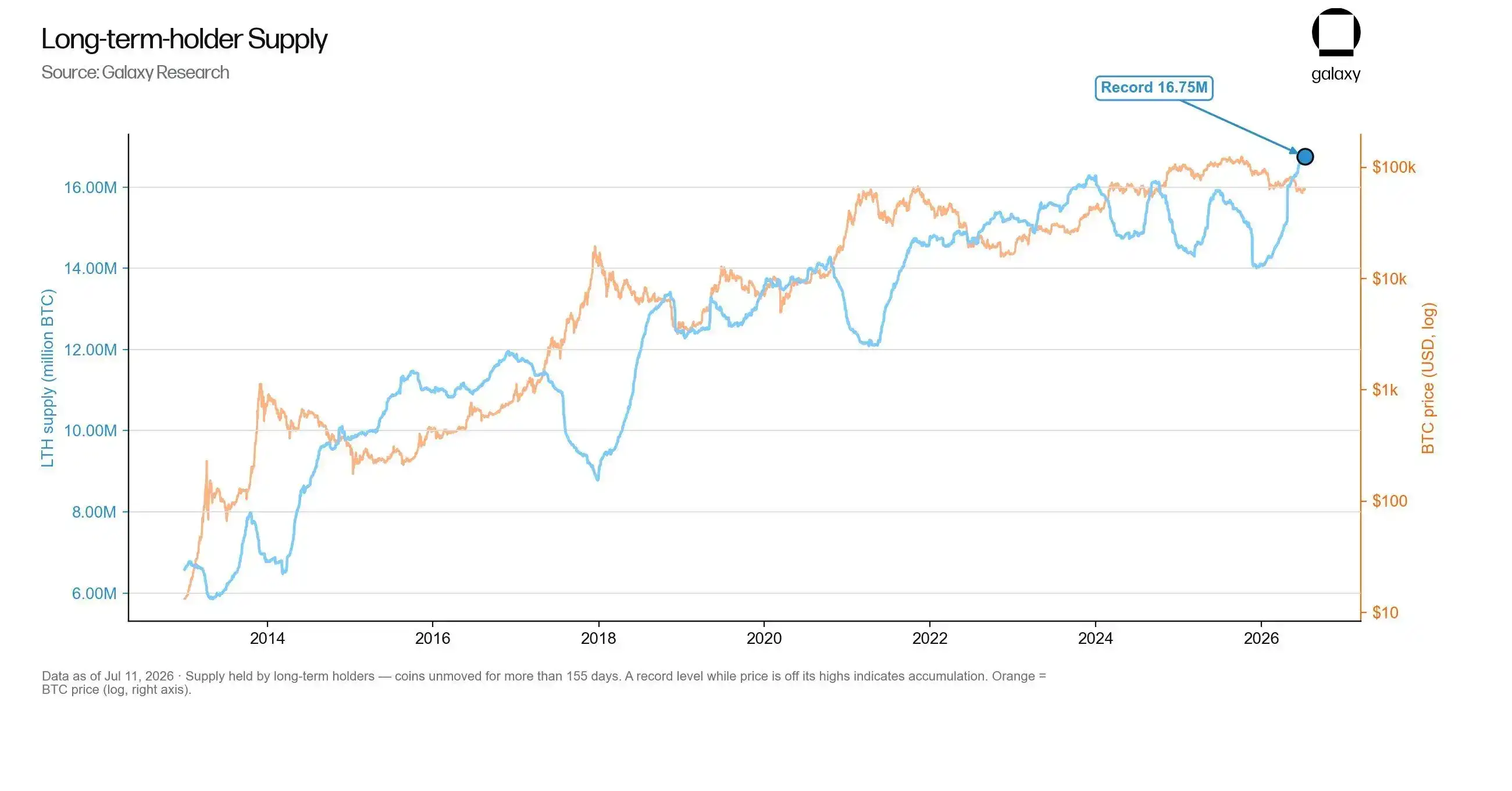
Long-term holders also seem to be accumulating quite aggressively. After sustained distribution in mid-to-late 2025, they are now accumulating again, indicating they see value at current price levels.
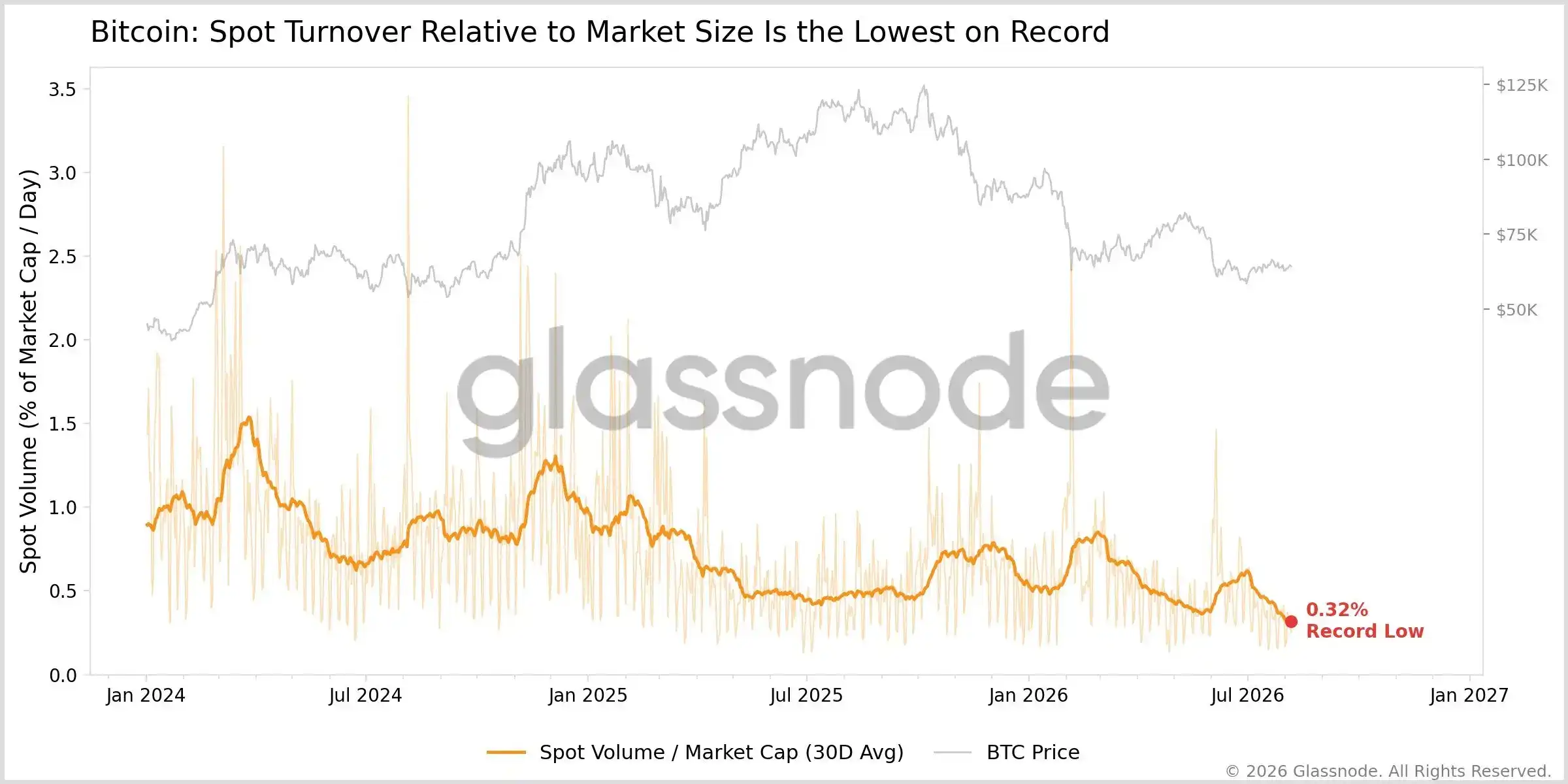
Trading volume, meanwhile, has almost completely dried up. @n3ocortex made an excellent chart showing Bitcoin spot trading volume relative to its market capitalization has fallen to historical lows. ETF and DAT trading volumes show a similar state.
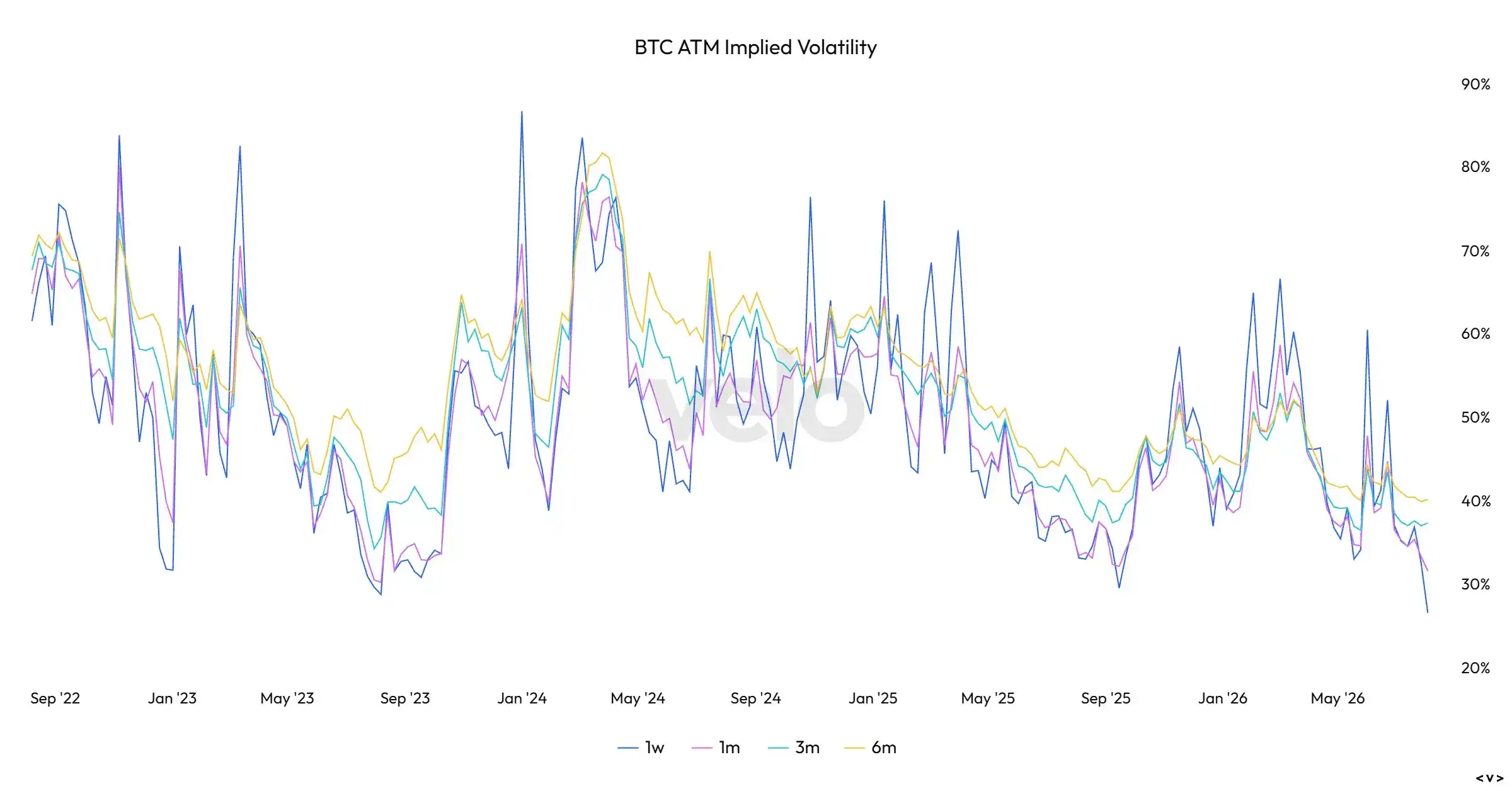
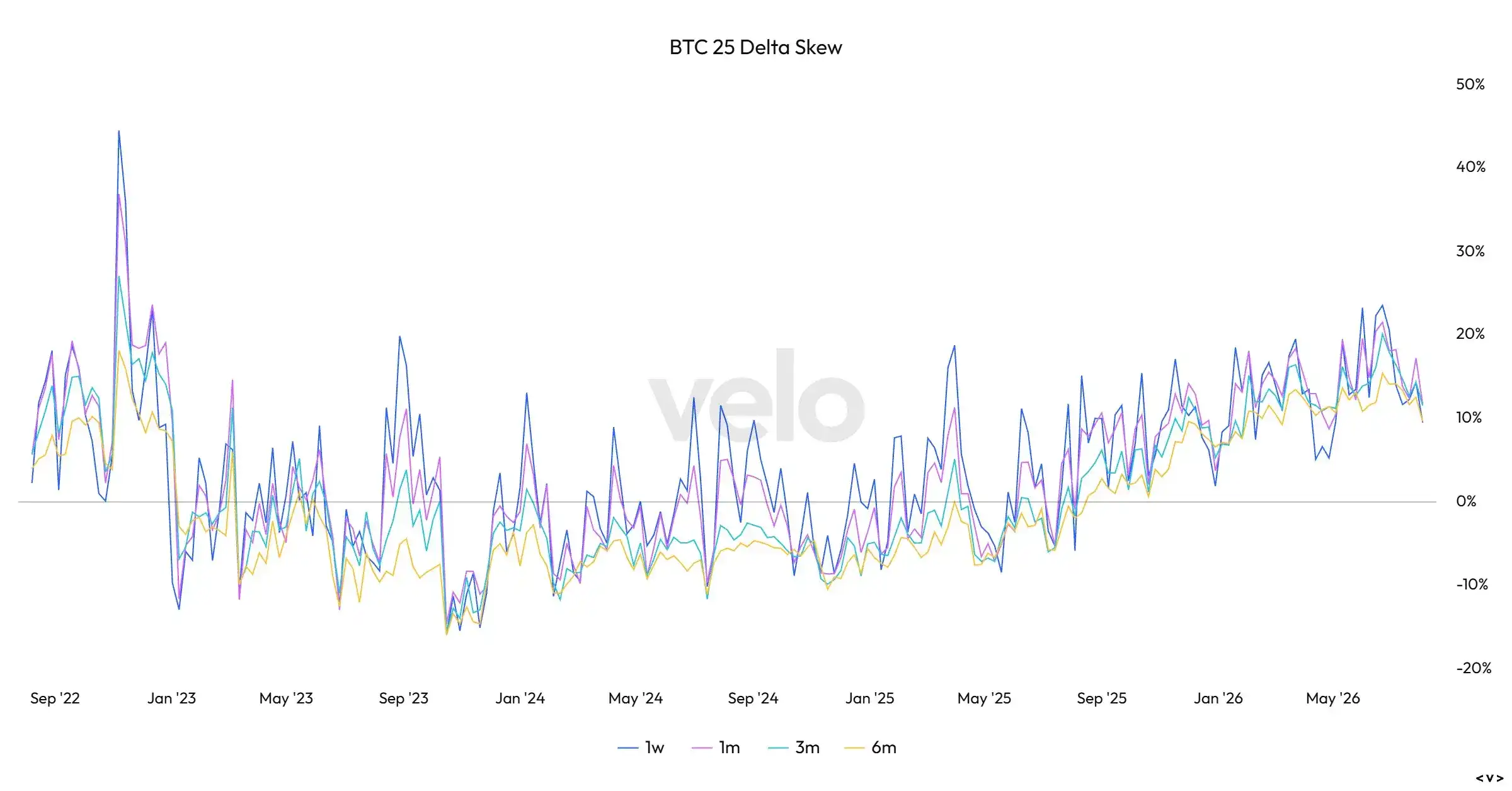
Near-month implied volatility in the options market has fallen to multi-year lows, meaning the market views Bitcoin as "dead money" with no near-term performance expected. Meanwhile, options skew data shows that over the past year, the only thing the market has been demonstrably interested in is buying more downside protection.
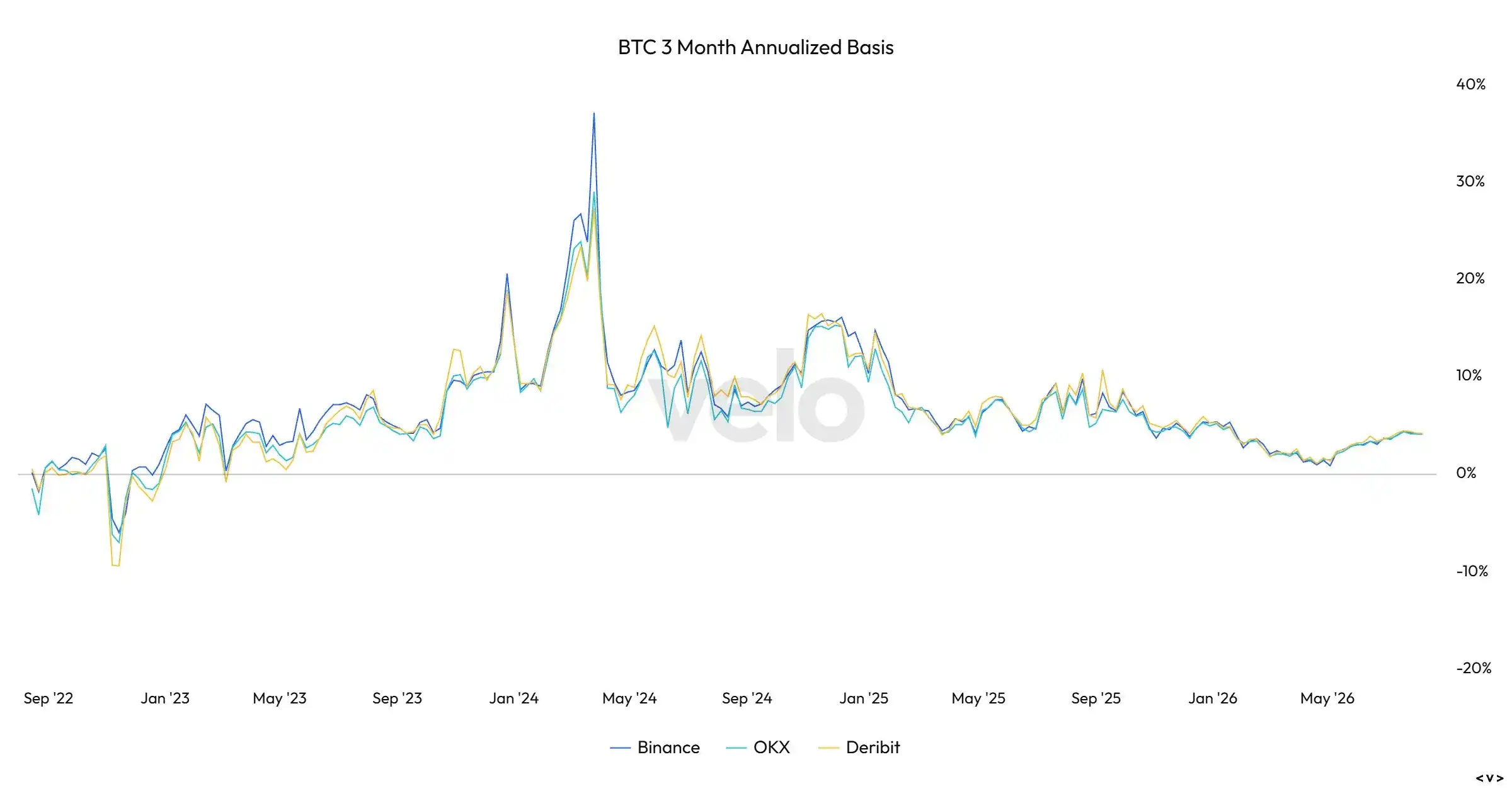
Finally, looking at the derivatives market: the Bitcoin futures basis—the spread between the price of forward contracts and the Bitcoin spot price—has been declining for years, and it's even difficult to reach levels matching U.S. Treasury bill yields.

This indicates two things:

  1. An increasing number of funds are arbitraging the Bitcoin futures basis;
  2. The market is not pricing in a significant premium for forward Bitcoin futures contracts relative to the spot price.
Putting these factors together, the objective picture presented is: the market has gone completely quiet. Neither in futures nor options markets are traders expressing bullish views, and they are pricing in further flattening of Bitcoin volatility.

Meanwhile, multiple indicators show Bitcoin entering deep value territory; long-term holders are accumulating again. This seems to contradict both trader sentiment and the trend of $5 billion in net outflows from Bitcoin ETFs over the past 52 weeks.

DATs & The Specter of "Quantum Computing"

One of the biggest pressures on the market during the 2023–2025 bull run was Digital Asset Treasuries (DATs). At least in theory, the design logic of these instruments is to dilute common shareholders in a way that accretes value per share, thereby accumulating more Bitcoin and ultimately enhancing shareholder value.

However, after the success of MicroStrategy and Japan's Metaplanet, a wave of similar companies emerged competing for returns, significantly intensifying competition. Flows into these instruments were broadly dispersed, ultimately leading to a narrowing of their premiums to net asset value.

In recent months, we've seen several related news items: some treasuries have slowed their Bitcoin accumulation, some have begun directly selling Bitcoin, and a few have even completely changed their strategies. I view these as positive signals of market self-repair.

Recently, when Saylor announced a Bitcoin sale, the price of Bitcoin actually rose. According to MicroStrategy's latest earnings call, the company is consolidating its capital structure and prioritizing STRIC. This stands in stark contrast to the earlier pattern of "announcing a Bitcoin purchase, Bitcoin price falling."

Looking ahead, I don't believe DATs will pressure the market to the same degree they did 6–9 months ago, especially with Bitcoin price down more than 50% from its highs.

I do believe quantum computing is a real concern, particularly on a timeframe beyond five years. In recent months, while assisting with investment analysis at STIX, I've interacted with several quantum computing startups beginning to mature, spoken with people in the industry, and thus gained some understanding of the field. Of course, I am no expert.

My view is that this threat deserves to be taken seriously. However, with Bitcoin priced at $60,000, down 50% from its highs, and underperforming other assets, I believe the current price already reflects this risk to a significant degree.

From now on, even considering the most extreme doomsday scenarios, the direction of these widely discussed and publicly known concerns will likely only become less bad. The worse Bitcoin performs due to market concerns about quantum risk, the more incentive large holders and institutions profiting from Bitcoin trading, custody, and lending businesses have to motivate a cohort of developers to find and propose solutions.

This is similar to the situation with ETF approval in the last cycle: the market trades ahead of the probability of the problem being solved. Therefore, once the risk is completely resolved, you likely won't be able to buy at extremely low prices anymore.

Potential Bullish Logic

Even if you think Bitcoin is roughly at a level suitable for long-term allocation now, opportunity cost remains an extremely important consideration for medium-to-short-term capital allocators: with a hot economy and genuinely investable and speculatable innovative opportunities in the market, allocating capital to Bitcoin seems to miss out on a lot by comparison.

The core question that has persisted for months is: if gold is up this year and high-beta stocks have performed strongly, yet Bitcoin hasn't followed, what exactly needs to happen for Bitcoin to start performing from here?

As the charts earlier show, on-chain data indicates long-term holders are buying with significant force. Meanwhile, DATs have shown signs of capitulation-style selling, and ETFs have brought fairly significant net selling pressure.

Past Bitcoin bear markets have ended due to seller exhaustion, not necessarily requiring a catalyst that sparks massive new demand. At this point, if you were concerned about DATs, quantum computing risk, or Bitcoin's underperformance, how many people haven't sold yet and can continue selling at a pace exceeding the last 6–9 months?

Obviously, if macroeconomic or geopolitical turmoil occurs, Bitcoin could still experience a sharp drop due to a sudden spike in asset correlations. But here we are discussing a judgment on a higher timeframe of the coming months.

I fully understand there isn't a clear catalyst at the moment. The "Clarity" bill might be one, but I don't think it will have a huge impact on Bitcoin itself. However, market bottoms often look like this.

What you weigh is the probability of things getting worse relative to the expectations already reflected in the current price. It's the opposite of a bull market judgment: in a bull market, people assess the probability of reality being better than expected.

I'm not ruling out one final leg down sometime this year, but at this point, I believe the market has priced in many of these risks over the past year.

A potential catalyst for Bitcoin might simply be steady buying by large institutions as per their mandates. The initial Asset Under Management (AUM) growth upon ETF launch was staggering, but we are long past the initial excitement phase. Total ETF AUM has been slowly declining since last October.

One possible catalyst could be large asset management firms deciding to include a small, single-digit percentage Bitcoin allocation across their various investment portfolios. This would bring price-insensitive inflows to Bitcoin.

This might sound a bit like grasping for straws, but Bitcoin's lack of significant correlation with multiple asset classes over the past year could indeed serve as a rational basis for large management firms, which often seek to diversify asset correlations and risk exposures, to allocate a small amount to Bitcoin.
Conclusion: How to Think About Allocation Going Forward

In short: I think Bitcoin is "cheap," though it could still take another step down sometime this year. The network's fundamentals are generally healthy. At this point, most risks have been priced in; those who would sell because of these risks have likely already sold. You almost certainly cannot buy precisely at the bottom.

In my view, there are a few ways to allocate from here. Of course, this is not investment advice.

The simplest strategy is to consider starting a dollar-cost averaging plan to gradually buy Bitcoin spot over the coming months. You could also wait for a final leg down, or wait for the market to regain vitality and upward momentum before acting.

Another strategy is to start allocating now. Since implied volatility is very cheap, you can simultaneously use the options market to hedge against any final leg down that might shake you out of your position.

Personally, I haven't truly pulled the trigger yet, but I'll likely start acting in some manner soon.

I hope this article provided some valuable food for thought and sparked discussion on how others are viewing these issues. Maybe the "four-year cycle" proves we live in a simulation. Regardless, the coming months look to be interesting for this orange coin.


Criptos en tendencia

Preguntas relacionadas

QWhat are the two main network health indicators for Bitcoin that the author considers important, and what do they show about the network's current state?

AThe author highlights node distribution and hashrate. Node distribution, with nodes operating in nearly 200 countries, indicates the network remains geographically decentralized and healthy. Hashrate has declined as miners shift to AI/HPC, which could be seen as reducing network security. However, the decline has only returned to mid-last-year levels, suggesting resilient, decentralized mining participation exists. Overall, the author concludes the network is as decentralized and healthy as ever.

QAccording to the MVRV (Market Value to Realized Value) metric, what does the current situation suggest about Bitcoin's valuation?

AThe MVRV ratio suggests Bitcoin is in historically low valuation territory. The ratio compares current market price to the aggregate cost basis of the network. While it has not entered negative territory like past deep bear markets, its sustained low level indicates that, on average, the market is not holding significant unrealized profits, which historically has been a phase suitable for accumulation. The author notes that market maturity may mean a new cycle doesn't require the metric to go negative to find a bottom.

QWhat is the author's view on the current market pressure from Digital Asset Treasuries (DATs) and the quantum computing threat?

AThe author believes these pressures are showing signs of abating. Regarding DATs, increased competition diluted their premiums, leading some to slow purchases, sell Bitcoin, or change strategies—signs of market repair. For quantum computing, while a legitimate long-term risk, the author argues that with Bitcoin down ~50% from highs, a significant portion of this risk is likely already priced in. As these concerns are widely known, major stakeholders have an incentive to fund solutions, meaning the risk's trajectory is more likely to improve than worsen from here.

QWhat potential catalyst for Bitcoin does the author propose, despite the lack of a clear short-term driver?

AThe author suggests a potential catalyst could be large asset allocators making small (single-digit percentage), price-insensitive allocations to Bitcoin across their portfolios. This would be justified by Bitcoin's lack of correlation with many other assets over the past year, which is attractive for diversification. While initial ETF excitement has faded, systematic buying from institutions seeking uncorrelated assets could provide a new source of sustained demand.

QWhat is the author's overall conclusion on how to think about allocating to Bitcoin at this point?

AThe author concludes that Bitcoin is 'cheap' and most risks appear priced in, with sellers likely exhausted. While a final leg down is possible, trying to time the exact bottom is extremely difficult. Suggested allocation strategies include: 1) Dollar-cost averaging into spot Bitcoin over the coming months. 2) Waiting for a final drop or for clear upward momentum to return. 3) Starting a position now and using cheap options to hedge against a potential final sell-off. The author indicates they are likely to begin deploying capital soon using some combination of these approaches.

Lecturas Relacionadas

AI Creates New Virus, Science Paper Confirms, Capable of Unlimited Self-Replication

AI Designs Novel, Self-Replicating Viruses in Groundbreaking Science Study A landmark study published in Science by researchers from Stanford University and the Arc Institute demonstrates that an AI model, Evo, has successfully designed novel, functional viruses from scratch. Trained on trillions of nucleotides across diverse life forms, Evo generated 700,000 candidate viral genomes. From these, 285 were synthesized as DNA and tested in E. coli bacteria. Remarkably, 16 of these AI-designed viruses were not only viable and self-replicating but some also outperformed their natural counterpart, the bacteriophage ΦX174, in the speed of bacterial lysis. One variant, Evo-Φ36, even incorporated a structural protein from a distantly related virus, showcasing the AI's ability to combine functional elements in novel ways. This research marks the first time a complete, functional life-form genome has been designed de novo by artificial intelligence. It represents a pivotal shift into the era of generative genomic design. A key application demonstrated is in combating antibiotic-resistant bacteria. While naturally occurring bacteriophages often fail against resistant strains, a cocktail of AI-generated phages successfully killed three different resistant E. coli variants. The study suggests AI could revolutionize fields like phage therapy by rapidly generating new antimicrobial agents, potentially keeping pace with bacterial evolution in a way traditional drug development cannot. This work signifies a profound step in humanity's ability to read and now write the code of life.

marsbitHace 23 min(s)

AI Creates New Virus, Science Paper Confirms, Capable of Unlimited Self-Replication

marsbitHace 23 min(s)

Trading

Spot

Artículos destacados

Qué es BITCOIN

Entendiendo HarryPotterObamaSonic10Inu (ERC-20) y Su Posición en el Espacio Cripto En los últimos años, el mercado de criptomonedas ha sido testigo de un aumento en la popularidad de las monedas meme, capturando el interés no solo de los comerciantes, sino también de aquellos que buscan compromiso comunitario y valor de entretenimiento. Entre estos tokens únicos se encuentra HarryPotterObamaSonic10Inu (ERC-20), un proyecto intrigante que mezcla referencias culturales en el tejido de las criptomonedas. Este artículo profundiza en los aspectos clave de HarryPotterObamaSonic10Inu, explorando sus mecanismos, ethos impulsado por la comunidad y su relación con el paisaje cripto más amplio. ¿Qué es HarryPotterObamaSonic10Inu (ERC-20)? Como su nombre sugiere, HarryPotterObamaSonic10Inu es una moneda meme construida sobre la blockchain de Ethereum, clasificada bajo el estándar ERC-20. A diferencia de las criptomonedas tradicionales que pueden enfatizar la utilidad práctica o el potencial de inversión, este token prospera en el valor de entretenimiento y la fuerza de su comunidad. El proyecto tiene como objetivo fomentar un entorno donde los usuarios comprometidos puedan reunirse, compartir ideas y participar en actividades inspiradas por diversos fenómenos culturales. Una característica notable de HarryPotterObamaSonic10Inu es su cero impuestos en las transacciones. Este atractivo elemento tiene como objetivo incentivar el comercio y la participación comunitaria, sin cargos adicionales que puedan disuadir a los comerciantes de pequeña escala. El suministro total de la moneda está establecido en mil millones de tokens, una cifra que marca su intención de mantener una circulación sustancial dentro de la comunidad. Creador de HarryPotterObamaSonic10Inu (ERC-20) Los orígenes de HarryPotterObamaSonic10Inu están algo envueltos en misterio; los detalles sobre el creador siguen siendo desconocidos. El desarrollo de este token carece de un equipo identificable o de un plan explícito, lo cual no es inusual dentro del sector de monedas meme. En cambio, el proyecto ha surgido de manera orgánica, con su progreso muy dependiente del entusiasmo y la participación de su comunidad. Inversores de HarryPotterObamaSonic10Inu (ERC-20) En cuanto a inversiones externas y respaldo, HarryPotterObamaSonic10Inu también sigue siendo ambiguo. El token no lista ninguna fundación de inversión conocida o apoyo organizacional significativo. En cambio, la savia del proyecto es su comunidad de base, que informa su crecimiento y sostenibilidad a través de la acción colectiva y el compromiso en el espacio cripto. ¿Cómo Funciona HarryPotterObamaSonic10Inu (ERC-20)? Como una moneda meme, HarryPotterObamaSonic10Inu opera principalmente fuera de los marcos tradicionales que a menudo rigen el valor de los activos. Hay varios aspectos distintivos que definen cómo funciona el proyecto: Transacciones Sin Impuestos: Sin tarifas impositivas en las transacciones, los usuarios pueden comprar y vender el token libremente sin preocuparse por costos ocultos. Compromiso Comunitario: El proyecto prospera en la interacción comunitaria, aprovechando plataformas de redes sociales para crear entusiasmo y facilitar la participación. Las discusiones, el intercambio de contenido y el compromiso son elementos cruciales que ayudan a expandir su alcance y fomentar la lealtad entre los seguidores. Sin Utilidad Práctica: Cabe señalar que HarryPotterObamaSonic10Inu no ofrece utilidad concreta dentro del ecosistema financiero. Más bien, se clasifica como un token principalmente para actividades de entretenimiento y comunitarias. Referencia Cultural: El token incorpora astutamente elementos de la cultura popular para atraer interés, conectando con entusiastas de los memes y seguidores de las criptomonedas por igual. HarryPotterObamaSonic10Inu ejemplifica cómo las monedas meme operan de manera diferente a los proyectos de criptomonedas más tradicionales, ingresando al mercado como construcciones sociales innovadoras en lugar de activos utilitarios. Cronología de HarryPotterObamaSonic10Inu (ERC-20) La historia de HarryPotterObamaSonic10Inu está marcada por varios hitos notables: Creación: El token surgió de un meme viral, capturando la imaginación de muchos entusiastas de las criptomonedas. Las fechas específicas de creación no están disponibles, subrayando su ascenso orgánico. Listado en Exchanges: HarryPotterObamaSonic10Inu ha llegado a varios exchanges, permitiendo un acceso y comercio más fácil por parte de la comunidad. Iniciativas de Compromiso Comunitario: Actividades continuas destinadas a mejorar la interacción comunitaria, incluyendo concursos, campañas en redes sociales y generación de contenido por parte de fanáticos y defensores. Planes de Expansión Futuros: La hoja de ruta del proyecto incluye el lanzamiento de una colección de NFT, mercancía y un sitio de comercio electrónico relacionado con sus temas culturales, involucrando aún más a la comunidad e intentando añadir más dimensiones a su ecosistema. Puntos Clave Sobre HarryPotterObamaSonic10Inu (ERC-20) Naturaleza Impulsada por la Comunidad: El proyecto prioriza la participación colectiva y la creatividad, asegurando que la involucración de los usuarios esté a la vanguardia de su desarrollo. Clasificación como Moneda Meme: Representa la epítome de las criptomonedas basadas en el entretenimiento, diferenciándose de los vehículos de inversión tradicionales. Sin Afiliación Directa con Bitcoin: A pesar de la similitud en el nombre del ticker, HarryPotterObamaSonic10Inu es distinto y no tiene relación con Bitcoin u otras criptomonedas establecidas. Enfoque en la Colaboración: HarryPotterObamaSonic10Inu está diseñado para crear un espacio para la colaboración y el intercambio de historias entre sus poseedores, proporcionando una vía para la creatividad y el vínculo comunitario. Perspectivas Futuras: La ambición de expandirse más allá de su premisa inicial hacia NFTs y mercancías describe un camino para que el proyecto potencialmente ingrese a avenidas más tradicionales dentro de la cultura digital. A medida que las monedas meme continúan capturando la imaginación de la comunidad de criptomonedas, HarryPotterObamaSonic10Inu (ERC-20) se destaca debido a sus lazos culturales y su enfoque centrado en la comunidad. Si bien puede no encajar en el molde típico de un token impulsado por la utilidad, su esencia radica en la alegría y la camaradería fomentadas entre sus seguidores, destacando la naturaleza en evolución de las criptomonedas en una era cada vez más digital. A medida que el proyecto continúa desarrollándose, será importante observar cómo las dinámicas comunitarias influyen en su trayectoria en el cambiante paisaje de la tecnología blockchain.

2.6k Vistas totalesPublicado en 2024.04.01Actualizado en 2024.12.03

Qué es BITCOIN

Cómo comprar BTC

¡Bienvenido a HTX.com! Hemos hecho que comprar Bitcoin (BTC) sea simple y conveniente. Sigue nuestra guía paso a paso para iniciar tu viaje de criptos.Paso 1: crea tu cuenta HTXUtiliza tu correo electrónico o número de teléfono para registrarte y obtener una cuenta gratuita en HTX. Experimenta un proceso de registro sin complicaciones y desbloquea todas las funciones.Obtener mi cuentaPaso 2: ve a Comprar cripto y elige tu método de pagoTarjeta de crédito/débito: usa tu Visa o Mastercard para comprar Bitcoin (BTC) al instante.Saldo: utiliza fondos del saldo de tu cuenta HTX para tradear sin problemas.Terceros: hemos agregado métodos de pago populares como Google Pay y Apple Pay para mejorar la comodidad.P2P: tradear directamente con otros usuarios en HTX.Over-the-Counter (OTC): ofrecemos servicios personalizados y tipos de cambio competitivos para los traders.Paso 3: guarda tu Bitcoin (BTC)Después de comprar tu Bitcoin (BTC), guárdalo en tu cuenta HTX. Alternativamente, puedes enviarlo a otro lugar mediante transferencia blockchain o utilizarlo para tradear otras criptomonedas.Paso 4: tradear Bitcoin (BTC)Tradear fácilmente con Bitcoin (BTC) en HTX's mercado spot. Simplemente accede a tu cuenta, selecciona tu par de trading, ejecuta tus trades y monitorea en tiempo real. Ofrecemos una experiencia fácil de usar tanto para principiantes como para traders experimentados.

5.9k Vistas totalesPublicado en 2024.12.12Actualizado en 2026.06.02

Cómo comprar BTC

Qué es $BITCOIN

ORO DIGITAL ($BITCOIN): Un Análisis Integral Introducción al ORO DIGITAL ($BITCOIN) ORO DIGITAL ($BITCOIN) es un proyecto basado en blockchain que opera en la red Solana, cuyo objetivo es combinar las características de los metales preciosos tradicionales con la innovación de las tecnologías descentralizadas. Aunque comparte un nombre con Bitcoin, a menudo referido como “oro digital” debido a su percepción como un refugio de valor, ORO DIGITAL es un token separado diseñado para crear un ecosistema único dentro del paisaje Web3. Su meta es posicionarse como un activo digital alternativo viable, aunque los detalles sobre sus aplicaciones y funcionalidades aún están en desarrollo. ¿Qué es ORO DIGITAL ($BITCOIN)? ORO DIGITAL ($BITCOIN) es un token de criptomoneda diseñado explícitamente para su uso en la blockchain de Solana. A diferencia de Bitcoin, que proporciona un papel de almacenamiento de valor ampliamente reconocido, este token parece centrarse en aplicaciones y características más amplias. Aspectos notables incluyen: Infraestructura Blockchain: El token está construido sobre la blockchain de Solana, conocida por su capacidad para manejar transacciones de alta velocidad y bajo costo. Dinámicas de Suministro: ORO DIGITAL tiene un suministro máximo limitado a 100 cuatrillones de tokens (100P $BITCOIN), aunque los detalles sobre su suministro circulante no se han divulgado actualmente. Utilidad: Si bien las funcionalidades precisas no están delineadas explícitamente, hay indicios de que el token podría ser utilizado para diversas aplicaciones, potencialmente involucrando aplicaciones descentralizadas (dApps) o estrategias de tokenización de activos. ¿Quién es el Creador de ORO DIGITAL ($BITCOIN)? En la actualidad, la identidad de los creadores y el equipo de desarrollo detrás de ORO DIGITAL ($BITCOIN) sigue siendo desconocida. Esta situación es típica entre muchos proyectos innovadores dentro del espacio blockchain, particularmente aquellos alineados con las finanzas descentralizadas y fenómenos de monedas meme. Si bien tal anonimato puede fomentar una cultura impulsada por la comunidad, intensifica las preocupaciones sobre la gobernanza y la responsabilidad. ¿Quiénes son los Inversores de ORO DIGITAL ($BITCOIN)? La información disponible indica que ORO DIGITAL ($BITCOIN) no tiene patrocinadores institucionales conocidos ni inversiones destacadas de capital de riesgo. El proyecto parece operar en un modelo de peer-to-peer centrado en el apoyo y la adopción de la comunidad en lugar de rutas de financiamiento tradicionales. Su actividad y liquidez se sitúan principalmente en intercambios descentralizados (DEX), como PumpSwap, en lugar de plataformas de trading centralizadas establecidas, lo que resalta aún más su enfoque de base. Cómo Funciona ORO DIGITAL ($BITCOIN) Los mecanismos operativos de ORO DIGITAL ($BITCOIN) pueden elaborarse en función de su diseño blockchain y atributos de red: Mecanismo de Consenso: Al aprovechar el único proof-of-history (PoH) de Solana combinado con un modelo de proof-of-stake (PoS), el proyecto asegura una validación de transacciones eficiente que contribuye al alto rendimiento de la red. Tokenómica: Si bien los mecanismos deflacionarios específicos no se han detallado extensamente, el vasto suministro máximo de tokens implica que podría atender microtransacciones o casos de uso nicho que aún están por definirse. Interoperabilidad: Existe el potencial de integración con el ecosistema más amplio de Solana, incluyendo varias plataformas de finanzas descentralizadas (DeFi). Sin embargo, los detalles sobre integraciones específicas permanecen no especificados. Cronología de Eventos Clave Aquí hay una cronología que destaca hitos significativos relacionados con ORO DIGITAL ($BITCOIN): 2023: El despliegue inicial del token ocurre en la blockchain de Solana, marcado por su dirección de contrato. 2024: ORO DIGITAL gana visibilidad al estar disponible para trading en intercambios descentralizados como PumpSwap, permitiendo a los usuarios comerciar contra SOL. 2025: El proyecto presencia actividad de trading esporádica y potencial interés en compromisos liderados por la comunidad, aunque no se han documentado asociaciones notables o avances técnicos hasta el momento. Análisis Crítico Fortalezas Escalabilidad: La infraestructura subyacente de Solana soporta altos volúmenes de transacciones, lo que podría mejorar la utilidad de $BITCOIN en varios escenarios de transacción. Accesibilidad: El potencial bajo precio de trading por token podría atraer a inversores minoristas, facilitando una participación más amplia debido a oportunidades de propiedad fraccionada. Riesgos Falta de Transparencia: La ausencia de patrocinadores, desarrolladores o un proceso de auditoría conocidos públicamente puede generar escepticismo sobre la sostenibilidad y confiabilidad del proyecto. Volatilidad del Mercado: La actividad de trading depende en gran medida del comportamiento especulativo, lo que puede resultar en una volatilidad de precios significativa y en incertidumbre para los inversores. Conclusión ORO DIGITAL ($BITCOIN) surge como un proyecto intrigante pero ambiguo dentro del ecosistema de Solana en rápida evolución. Si bien intenta aprovechar la narrativa del “oro digital”, su alejamiento del papel establecido de Bitcoin como refugio de valor subraya la necesidad de una diferenciación más clara de su utilidad y estructura de gobernanza previstas. La aceptación y adopción futura dependerán probablemente de abordar la actual opacidad y de definir sus estrategias operativas y económicas de manera más explícita. Nota: Este informe abarca información sintetizada disponible hasta octubre de 2023, y pueden haber ocurrido desarrollos más allá del período de investigación.

476 Vistas totalesPublicado en 2025.05.13Actualizado en 2025.05.13

Qué es $BITCOIN

Discusiones

Bienvenido a la comunidad de HTX. Aquí puedes mantenerte informado sobre los últimos desarrollos de la plataforma y acceder a análisis profesionales del mercado. A continuación se presentan las opiniones de los usuarios sobre el precio de BTC (BTC).

活动图片